




Likes
58
Share


@pifflestikkz
Follow
Day 78
Day 28 flower
19/07/24 Friday
Started the week with a good watering as she had a double feed end of last week. She took 4L de-chlorinated tap water pH 6 and no run off, added another 1L and see run off forming on all sides.
She is a happy, strong 💪 plant !!
The buds development is nice on this strain! I like to see the calyxes stacked like this, I'll get some macros tomorrow.
Smelling like lemon sherbet it's insane 🤯 or a old school sweety shop.
Day 79
Day 29 flower
20/07/24 Saturday
Nothing to report.
Day 80
Day 30 Flower
21/07/24 Sunday
Big feed again, de-chlorinated tap water pH 6 added nutrients.
Seeing her stack now 🤩
Smells getting stronger daily 🙌 💚
Added a short video.
Day 81
Day 31 Flower
22/07/24 Monday
De-chlorinated tap water only today pH 5.9 and watered in 5L had a little run off. She is getting so thirsty it's awesome!
She is starting to stack them calyxes.
Update on pictures and video 📸🤩
Day 82
Day 32 Flower
23/07/24 Tuesday
FEED again today , De-chlorinated tap water pH 6. Full 5L had about 300ml run off.
She is so thirsty !! 5L a day now.
But it's showing, calyxes are stacking beautifully, the trichomes production is nice and starting to have a magical effect with flash 📸 🤩
Day 83
Day 33 Flower
24/07/24 Wednesday
De-chlorinated tap water pH 6. Did 4L and started to see run off so left at that.
Day 84
Day 34 Flower
25/07/24 Thursday
END OF WEEK
She really has packed on weight this week, thirst and hunger is hard to keep up 😅
Smells phenomenal, looks insane.
Pic+Vid update

Likes
5
Share

@Terp-A-Derp
Follow
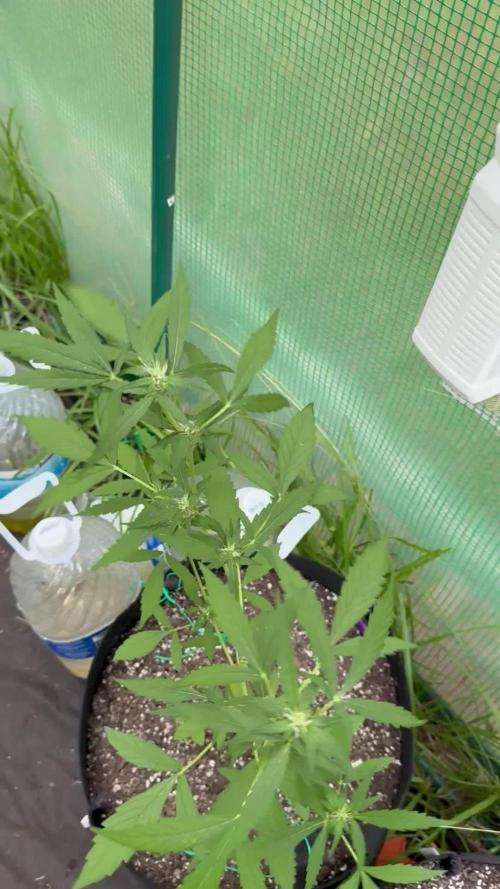
Had a little issue trying to bend the frost banger buds for more spacing.bud tired to brake off so I tried to keep it together like a splice (fingers crossed).Idk if topping the plants have helped or hurt me in the long run but hey there’s a first try for every ting. Tropical like temps this week hopefully they hold up too the heat well. Thanks for following

Likes
6
Share

@all_about_420
Follow
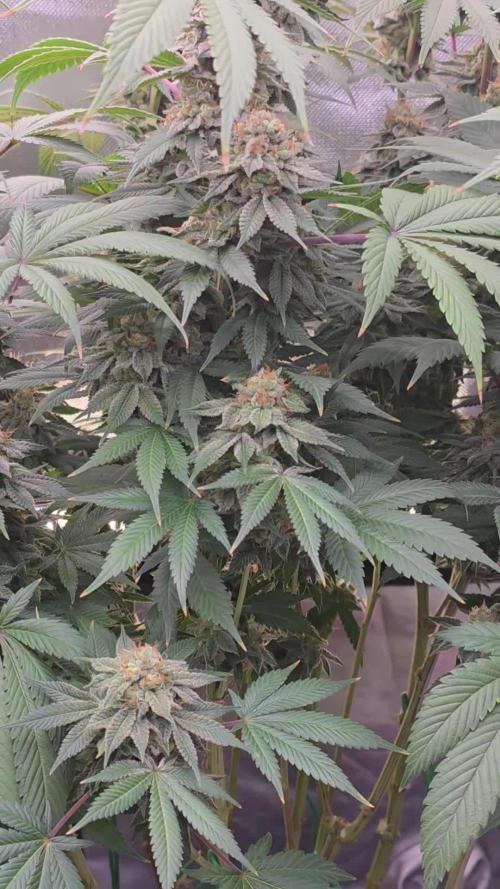
Das Finale rückt unaufhaltsam näher: Die Permanent Marker von Traphouse Genetics befindet sich nun kurz vor der Ernte und zeigt ein beeindruckendes Reifestadium. Aktuell wird die Pflanze intensiv gespült, um Nährstoffrückstände aus dem Substrat zu lösen und so das volle Terpenprofil sowie die Reinheit des Endprodukts zu maximieren. Ein genauer Blick auf die Trichome offenbart bereits die gewünschte milchige Trübung, während wir nun geduldig auf den perfekten Bernsteinanteil von 10 bis 20 % warten, um den idealen Erntezeitpunkt abzupassen. Die Buds sind massiv angeschwollen und verströmen ein Aroma, das die außergewöhnliche Qualität dieser Genetik ein letztes Mal unterstreicht, bevor dieser erfolgreiche Run seinen Abschluss findet.
Likes
25
Share


@Rob691
Follow
D-56 : The girls are great, beautyful and starting to stretch fast. No deficiency, no watering or feeding trouble, the temperature is a bit high but this variety are really comfortable with temperatures between 27 and 30°C, so I maintain it around 27-29°c during the day time.
The horizontal space is fully occupied already. But, I guess the Desfrans are growing vertically now. However, I'll continue to reasonably defoliate to let light and fresh air go through the canopy.
As I start the second flowering week, the flowers should apear... can't wait to see the first ones !

Processing
Likes
3
Share


@Budz420
Follow
Great start for week 10 did some defoliation,they look so happy and healthy, I had issues with the plants they responded well to LST and defoliation. I make sure to remove some leaves here and there. The most important thing to me me in this stage is to make sure they have perfect airflow.

Likes
3
Share


@Leonardo_DaGrower
Follow
As you can see from the pics she has entered her death cycle. I saw a lot of the buds tightening up this week and she gaining some density.

Likes
19
Share


@Bud_Baggins
Follow
2025/01/07
The little ones are growing diligently. Ami and Amber have developed a CalMag deficiency, so I’ve slightly increased the CalMag dosage.
2025/01/08
Today, I transplanted them into their final 18L pots. Maybe a bit early, but I think it's better too early than too late.
2025/01/11
The ladies are growing great, and the CalMag deficiency seems to be resolved. 😊

Processing
Likes
12
Share


@Tazard
Follow
We have a very full tent! Taz’s jungle 😂🤣. Check out the purple purple photos from day 20!!! Everyone looks absolutely beautiful I’m hoping that the white critical will be ready in 4-5 weeks. She’s going to have some fat colas!

Likes
3
Share


@I_roll_my_own_420
Follow
Hey everyone. Week 4 begins and all looks tasty. I have cut all the useless branches at thw bottom, as u can see on pic. or video. Also took away some of the fan leaves. The smell is wonderful, plants are looking tough and healthy. Stay high and have a good day.


Likes
16
Share


@Canadian_Bud
Follow
1-2-2022
A solution has been found and implemented. A simple quick project that cost little and not much time to make. Works very well. She is responding to her new environment and soon she will be into her new home in true Aeroponic spray only fashion. 😎
Likes
8
Share


@4leksz
Follow
This Week i changed the solution and flush with flora kleen once again.
I have significant nute burns on many plants EC was rising on 1.7 optimum was on 1.4 to 1.5.
Maybe the reason for this is the Lights
I turn them up to 600w each now consuming 1300w with the led roundabout i need to make white foil over the tanks to get them not too hot inside.
Big Bud have sorted out because he was dying and have put the biggest plant in one tank alone so they is doing beautiful :)
Ph is Stable to 6.1 to 5.8 in each tank
So far looking forward on many problems solving and knowing for the next run :)
Happy Green Sunday :D


Likes
5
Share


@CanarianGrow92
Follow
Week 5 flowering for our gorilla cookies from fastbuds 420!
The buds are starting to get fatter day by day, we continue with our food program. This week again we gave sugar shot, sticky fingers, bloom booster, silica, amino and master root all from xpert nutrients.
All good at the moment 🤗
Likes
4
Share


@ShambhalaGardens
Follow
Everything is looking good. Gave these girls a shot of recharge and fish shit. Prepping there new homes and getting ready to transplant.

Processing
Likes
27
Share


@Silverback_Guerilla
Follow
2/10:
I watered today with about 3/4 gallon each, plus cal-mag, signal, bembe, armor si, a little open sesame, and their final dose of endoboost.
The short one never did stop making the hook leaves on all her new growth, but she seems happy..budding faster than anybody else..
2/11:
Wife home sick today....postponing construction project to raise the lights.
2/12:
Today, I tackled the project to raise my ceiling another foot. In addition to that project, I installed and hooked up my new AC Infinity 6" intake fan. It's pulling in fresh air from the soffit vent on the eave of the attic, and currently feeding the garden with 46f fresh air. I'm able to easily maintain daytime temps in the lower 70f's now. I am able to drive the nighttime temps as low as I want. The only issue is that the outdoor RH varies quite a bit, so I ordered a 30-pint dehumidifier to put in the top of the closet.
I sprayed everybody with boomboom spray to try and mitigate the light burn damage that is likely to ensue.
2/13:
The taller one is still stretching a little bit, but the 2-footer is just budding up.
2/14:
I fed them today with about 3/4 gallon each including grow big, big bloom, tiger bloom, cal-mag, signal, bembe, humic acid, and I switched over from Open Sesame to Beastie Bloomz. Raised the lights another couple of inches. I did some training on them and defo'd a little bit.
2/15:
Installed the new dehumidifier and rigged the continuous drain on it...works great.
2/16:
I rotated the edge plants and removed some old leaves. I added another 22w 3000k 4' bar light under the canopy.
2/17:
I rearranged the garden and defoliated a little bit. That's it for week 8-

Likes
7
Share

@FROZENGARDENER710
Follow
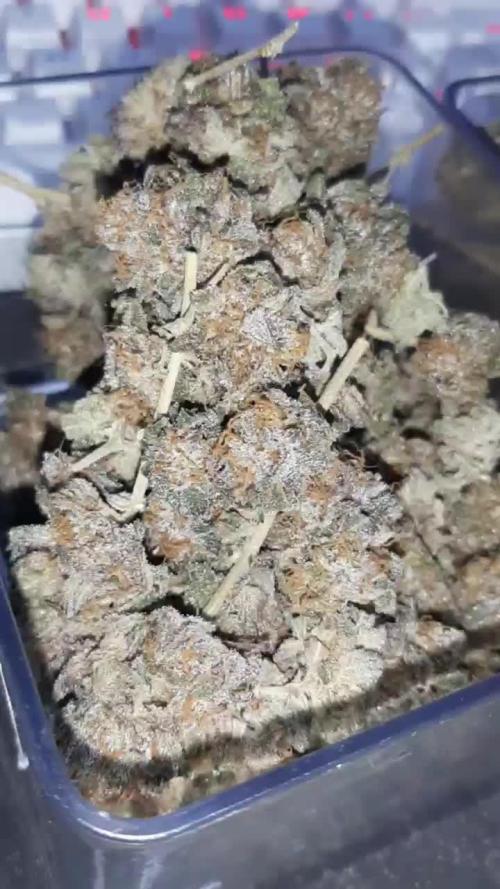
Water only for the girls, fading is starting but I couldn't finish due to pest and heat problems even in organic substrate. Some clones hermed and developed completely differently, each bud even coming from the same mother plant. A strain for those who like a lot of resin and easy trimming, a very strong and good flavor. I would recommend it without hesitation. What worries me is that other grower friends received 1 seed and most were not plants similar to mine, and most with negative feedback. Anyway, excellent work by Pure Instinto!


Likes
11
Share


@DeepRootsGrowTrees
Follow
FORBIDDEN 🚫 RUNTZ by FASTBUDS
Week #4 Overall June 22nd-29th
Week #3 Veg
She's looking good this week she's a busy plant with side growth no issues this week. Stay Growing!!
Fastbuds FORBIDDEN 🚫 RUNTZ
Likes
4
Share


@AustinRon
Follow
OG 4Q24 Flower Week 9
Orangegasm (Fem) [ IRIE Genetics ]
12/12 @ Bolt (Day 21)
Germination: 20 November 2024
#3A Earliest Harvest Date: 9 February 2025
#3B Latest Harvest Date: 19 February 2025
_________________________________________
Start of Week: [Wed Feb 5, 2024 CR2 4Q24 57:F:8:1]
End of Week: [Tue Feb 11, 2024 CR2 4Q24 63:F:8:7]
OrangeGasm Fertigation:
- MAX: EC: [ 2.4, mS] #Ramping Down
- LightIntensity MAX: [ 850, µMol/m2/s]
______________________________________
OBJECTIVES
- Ramp EC from 2.4 - 1.0
- Start rolling off Primer A&B/Silica Skin to Resin Bloom . . .
__
Wed Feb 5, 2025
OG 4Q24 57:F:8:1
EC: 2.3
Notes:
#5 looks like a 60 day plant, if so - consider Saturday Harvest …
Runoff
- [x] Amount: [ 0.125 , gal]
- [x] EC: [ 4.4 , mS/cm]
- [x] EC∆: [ 2.5 , mS/cm] # Fried Yet? ;-}
Harvest Dehu
- [x] Amount: [ 1.5 , g]
__
Thu Feb 6, 2025
OG 4Q24 58:F:8:2
EC: 2.3
Refresh Reservoir
- [x] Amount: [ 2 , g]
- [x] EC: [ 2.3, mS/cm]
- [x] Primer A&B: [ 31, ml]
- [x] Silica Skin: [ 15 , ml]
__
Fri Feb 7, 2025
OG 4Q24 59:F:8:3
EC: 2.3
__
Sat Feb 8, 2025
OG 4Q24 60:F:8:4
- [x] Disassemble, Clean Reservoir and Pumps, Reassemble
Refresh Reservoir
- [ ] Silica Skin: [ 15 , ml]
- Dropping Silica Skin due to (sparse to medium) granular precipitate
- [x] Amount: [ 6 , g]
- [x] EC: [ 2.1, mS/cm]
- [x] Primer A&B: [ 100, ml]
EC: 2.1
@1900 - Clear Manifold Filter. (Mainline should be cleared on 1845 feed
__
Sun Feb 9, 2025
OG 4Q24 61:F:8:5
- [x] Dilute to EC 2.0
- Flooded Tent, 2 Gallons PLUS of Runoff. Happy Plants.
- Shout Out Shop-vac. ;-}
EC: 2.0
__
Mon Feb 10, 2025
OG 4Q24 62:F:8:6
EC: 1.8
HAND APPLICATION
Prepped One Gallon of 12-8-7-5 @ 1.8 mS/cm w/ PhotoSynthesis Plus, SLF-100
Reclaimed Dehu Water, ~2 Gallons
Refreshed Reservoir, 2 Gallons Rooted Leaf Hydro no Silica Skin, EC: 1.8 mS/cm
Reduced watering to 5 min, then 1 - 1 -1 -1 -1 -1 -1 -1
(It’s not like they’ve been under-fertigated)
__
Tue Feb 11, 2025
OG 4Q24 63:F:8:7
EC: 1.7
- [x] EC: [ 1.7, mS/cm2]
- [x] Refresh Reservoir
- [x] amount: [ 2.5, gal]
Runoff
- [x] Amount: [ 0.5, gal]
- [x] EC: [ 3.6, mS/cm2]
- [x] EC∆: [ 0.9, mS/cm2] # Better than 2.5!
PLANT POSITIONS
3 5 1 7
4 2 6 8


Likes
13
Share


@Kayotic
Follow
😥 ended up giving Strawberry Cheesecake away
Northern Lights
Day 66
Week 5 of flower
Currently in 2x2 with Sweet Seeds Red Poison Auto
Zkittles is a fuckin beast!!
Day 70
Week 6 of flower
So much has happened since last update.
Currently alone in 3x3 , still closer than I'd like to the light, but not seeming to mind.
Watering every other day. Very curious to see how this one turns out. Pretty much the reason I gave 2 away and had to keep rearranging.
