


Likes
Comments
Share


@Professor_Chaos
Follow
Beginning of week..
Forgot to update end of last week.. but here she is!... So this week she should still be stretching and (hopefully) the slowdown should be the following week.. she is doing good.. water, feed, water, feed, etc. But not daily.. I do water, feed, skip, water, feed, skip, etc. I do that so the day after feeding 1 gal., she gets a day to dry out. Then I water 1.25 gal. to help rinse salts and build-up.. then feed the next day again.. so she isnt left too long without a feeding.. but I'm sure things would be fine if I watered/fed daily.. just a bit of a hassle for me now.. collecting rainwater and cutting it with 25% crappy tap water works great.. but a hassle lol.. she is happy and so am I! You can see in the pics that the stiples are turning purple are red.. just the stiples.. not the leaves.. not the pistils.. also noticed that on my last run with ETHOS Cookies and Mandarin Cookies.. pretty.. hopefully she will be very colorful!
Almost mid week..
Wow.. literally no trichomes yesterday but this morning they are damn near on every bud site! Wow.. rubbing trichomes and sniffing gives me such joy and a hint of what to expect at harvest.. very sweet so far.. yessss! So excited!
Mid week...
Stretching quite a bit but she shouldn't get too much out of control. Running the WAKYME J-2000 at roughly 60% power and 12" - 14" above the canopy. She is receiving 1000 micromols at the center and about 550/600 micromols around the edges and corners are getting about 500 - 550 micromols.. entire plant is getting GREAT PAR! She is stretching so much that every 2 - 3 days, I need raise the light quite a bit.. I'd say she is stretching about 4 - 6 inches every 2 - 3 days. Fucking incredible, in my opinion. rubbing the trichomes.. aw man.. rubbing those GORGEOUS trichomes and getting a wiff of what she should be producing in the very near future is just mind blowing how complex and strong ETHOS terpenes are (at least the 3 that I have grown out). I couldn't be any happier with this strain.. or any ETHOS strain! ETHOS Genetics is easily in the top 5 of cannabis breeders, if not number 1.. I've got the OG Kush Autoflower waiting to be germinated soon.. can't wait to see what that girl can do, as well. It will be my first autoflower from ETHOS.. pics of her look EPIC AS FUCK!.. Anyways.. I'm just abusing my keyboard right now thanks to some Mandarin Cookies from ETHOS genetics.. super complex terpenes as well..
Mid week..
She got herself a good feeding today. The runoff pH has been coming out about .3 - .4 higher than going in.. the watering before today I went ahead and watered at 5.8.. runoff came out at 6.3.. perfecto! Today, went in at 6.2 and runoff came out 6.2... dos perfectos! Aye! So far, this girl is not disappointing at all! So much trochomes production just in the last 24 - 48 hours! Smells so freaking amazing!.. should be pretty fruity! I can't wait!!!
End of week..
I've been kinda tweaking the nutes a bit.. I can see all the nute burn (trying to avoid overfeeding) but still trying to transition from grow to bloom.. actually, I thinkI can go to full on bloom now. She isnt stretching as much anymore. She had slowed quite a bit.. but perfectly lol.. so yeah.. gonna stop feeding grow nutes at this point.. and also cut out the MYCO+ because its only used in veg and transition. I'm going to add in some FloraNectar to make up for the molasses that was in the MYCO+.. no bloom boosters.. at least right now. Runoff is coming out perfectly.. sometimes it may drift to 6.5 but it has never gone out of range (6.5+).. if it stays at 6.5 for too long I end up watering/feeding at 5.8 at couple times and its back down to 6.1 or 6.2.. other than that.. no issues! On to the next week!...

Likes
22
Share


@Lovebud
Follow
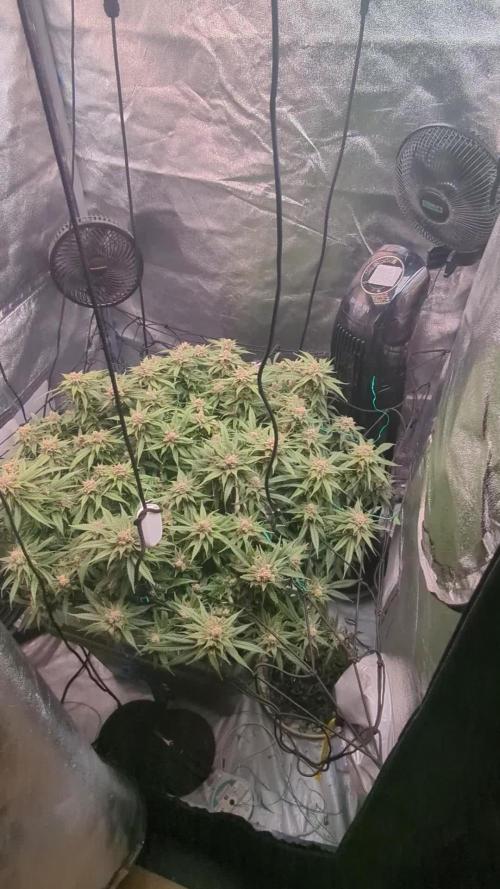
Day 50 ( 17 of 12/12 ) Well Everything in the groom is growing Very well, We did have a little cal/mag issue to deal with but thats sorted now , Will be doing another update tomorrow as this one was late . Ive also upgraded the extraction to a 6" systemair , Kinda gutted though as now i have to fork out more on a variac 3 or 5 step type controller for it :(
The mills c4 has been started now . Also 3 of the plants got a bit tall so i Super cropped them
So far these have been a stress free grow props to @dinafem

Likes
8
Share

@NoHarry
Follow
It’s a bit sad to realize that "Autumn" has officially arrived. The trichomes have gone cloudy, the leaves are fading, and I’m out here wiping away a tear. This girl, whom I’ve been spending every day with for almost half a year, is finally wrapping up her cycle. Well, it’s been a beautiful ride, and Think Fast proved to be an incredibly strong and resilient strain. I’ll break down my full thoughts and review of the genetics during harvest week.
By the way, the next update will drop right after the dry, I know you guys are all waiting to see the final dry weight. But for now, it's time to flush. The lights are dialed down a bit, the reservoir is filled with pure RO water, and my heart is filled with pure, bittersweet blues. Don't lose track of me, we’ll meet again in about 15 days!
In the meantime, drop your guesses below - how much do you think we’ll see on the scales? Honestly, I can’t even begin to guess.

Processing
Likes
10
Share


@PisBaked
Follow
Everything is looking amazing! All plants are at 4.5wks -5wks old now. Growth is extremely rapid.
PPMS/PH of run off is less than what's going in! Still feeding to run off daily; vacuuming out the water everytime!! They're starting to need close to a gal. each :D
I have defoliated & continue to pinch lower plant growth to lolly pop each branch -- I find this the best method hands down for autos..
The canopy for the most part is even with the exception of LSD-25, Fruit Punch, & most importantly; the one GSC (fast buds) -- it is a fucking monster as you can see (tallest plant by FAR).
Cant wait to see the buds on what appears to be a Sativa dominate GSC pheno -- this plant was under the same 630w's worth of CMH along with the other GSC -- because it keeps growing, and was starting to developing light burn on leaves closer to the CMH's I've since switched spots with a GG#4 & it's now under two 600w LED's; growth continues to stretch on her, but I'm less concerned now that it's under less intense lighting, with a bigger distance from the lights .
Other than that, things are looking to be on track for an epic harvest. Once buds start forming, I will drop the temps on the AC gradually to bring out the colors in GSC/LSD/Fruit Punch -- with lights/fans on full blast I can hold temps as low as 70f / 30% RH with the AC at less than 50% -
Will be uploading more pics this weekend!


Likes
2
Share


@K1RA1337
Follow
Started 12/12 4 days ago on the leaves it has problem i dont know what it is 😒

Likes
2
Share


@EtnoGrow
Follow
everything is going very well, the girls have developed, we have found a hermaphrodite, what a surprise my colleague got when he found one with eggs, what a scare! I saw a video of a Mexican whose technique consists of breaking the male balls and letting the flower clean and do it every day as soon as new shoots come out, there comes a time when they no longer grow and only the female hairs follow, I will see that That's how it goes, if I can, when I visit the indoor, a photo of the hermaphrodite will be taken, only one of the girls, I don't know if she got stressed or what happened, the others continue to flower normally, big beautiful females, I'm amazed, how many showed my first crop, I see it great what do you think friends
Likes
17
Share


@FirstTimer007
Follow
Had some isus with high humidity had no prob till day 33 of flower but sorted out back on track again dehumidifier rescue lol.o yee forgot to say added new light spider farmer sf4000 sick very happy with mars hydro and spider farmer sf4000 top noch lights .any one who is thinkimg to buy led light very very recomend happy growing

Likes
9
Share


@RadDad
Follow
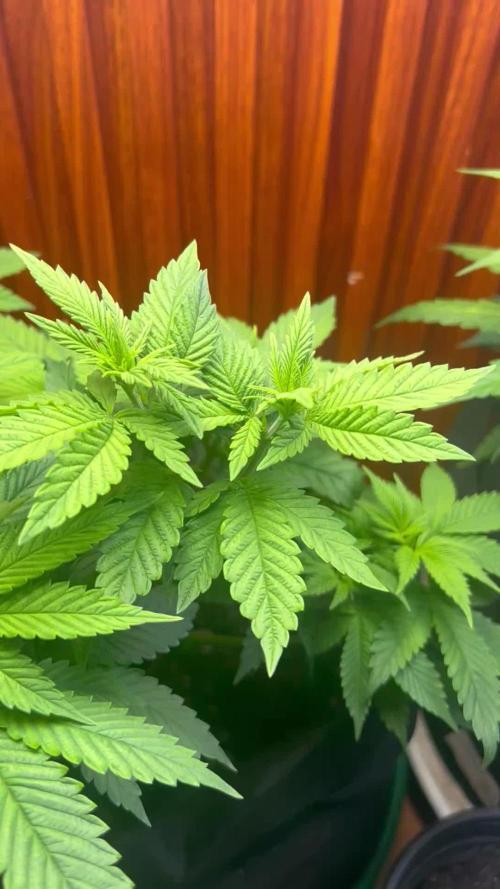
Welcome to week 6 y'all. Things continue to progress nicely, this little lady has started to grow flowers and at present I count about 11 bud sites on the canopy. The flowers are developing nicely and it looks like they have some dark purple colouring around the flower... neat. In addition to the LST I've been doing some light defoliation. Nothing major just a leaf here or there to expose flowers to light. She's really low but really flat not the prettiest plant but strong.
Looking ahead to this week I ordered a new grow light from Mars Hydro which should get those buds to fatten up nicely. I might increase the water a bit and continue to feed with Dutch Science Nutrients' Bloom Baby Bloom and adjust LST not much more defoliation should be required until later on like week 8 I think.





Likes
28
Share


@GERGrowDesigns
Follow
A Special Project from Germany and Welcome to Veg Week 4 of GoodTimesGenetix Blue Cream Haze
I'm excited to share my grow journey with you from my
GoodTimeGenetix Seeds .Im the First Person outside my Friends Company who got hands on this Strain .
He Managed over a long time to Cross these Strains:
-Blue Dream (Blueberry x Super Silver Haze - Female)
-Ice Cream Haze (Gelato x Wedding Cake x Crockets Haze - Male)
They Done a lot of Tests for a Nearly Perfect Stabilisation of this Genetic and Feminized them aswell .
This one is Professionell Created In Germany , Growed in Germany and presented To the World on Grow Diaries.
Here’s what I’m working with:
• 🌱 Tent: 120x60x80
• 🧑🌾 Breeder Company: GoodTimesGenetix
• 💧 Humidity Range: 60
• ⏳ Flowering Time: 8-9 Weeks
• Strain Info: 23%THC
• 🌡️ Temperature: 26
• 🍵 Pot Size: 0.1
• Nutrient Brand: Hy-Pro
• ⚡ Lights : 600W x 2
I would truly appreciate every bit of feedback, help, questions, or discussions – and of course, your likes and interactions mean the world to me as I try to stand out in this exciting competition!
Let’s grow together – and don’t forget to stop by again to see the latest updates!
Happy growing!
Stay lifted and stay curious!
Peace & Buds!
Likes
12
Share


@VeeDro203
Follow
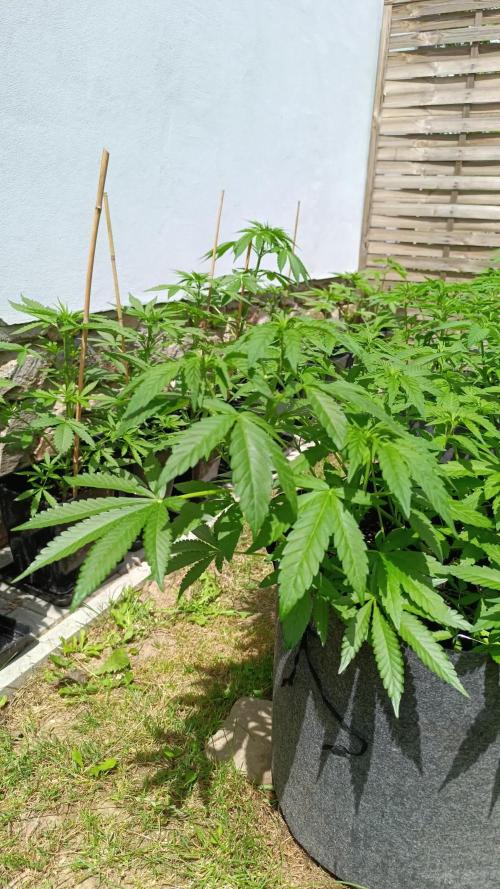
After seeing what Weekend at Garry's was coming along, I took another clone!! 👌
Also 1 lemon grab, 2 creature panics broke soil!!



Likes
6
Share


@Lickey
Follow
Still losing leaves from the bottom. Humidity is high at around 65%. Buds are still developing very fast. Just at 21 days into flowering I’ve bumped the lights up to 100%.
Likes
6
Share


@Skunkstar
Follow
Really into the aggressive stretch now going to be doing some defolation this week there looking in good shape for it going to slightly increase the ec to 1.6 a week after defolation as to the defolation I will ease off the ec for this feed to over the stress week three I shall lollypop them all and clean up the girls and won't touch them after that last defolation in the end of week 3 I also foiler fed with the shogun boost

Likes
9
Share


@RSAFirstOrganicGrow
Follow
It’s still been a trial & error process, while “training” I’m constantly afraid of hurting the plant haha.
But so far I’m satisfied, if I could get 10 decent grams out of her I’d be happy.
Weather has been picking up nicely but still some cold evenings 7-10 d.celcius.
Started feeding her some Black Strap Molasses.
I forgot to add that I’m really not sure whether she is in flowering or not. & would cutting of like 3 fan leaves be a problem?

Likes
9
Share


@GoldenArrow
Follow
Kok gubresi sonlandirildi. Big bud ve b 52 ye 2 hafta aranin ardindan baslandi evet azot biraz fazla geldigini farkindayim fosfor ve potasyum agirlikli ilerlemeye devam ve bebeklerin bulunduklari ortam geregi boceklenme olmamasi icin duzenli sekilde neem yagi takviyesine devam ediyoruz emegimizin karsiligini alicagimiz bir hasat olucak kalite hic bir zaman tesaduf degildir..
Likes
22
Share


@ButterfliesLittleFarm
Follow
Hello Diary.
We have reached the end of the journey.🙌 Fat Banana exceeded my expectations in every way. Smell, taste, yield. In the end I got a little less than 70g of dried flowers which is above average for my farm. 💪
Here's how it all went since the last call.
28/11/2020 - Day 65.
Harvest. I checked with a microscope and most of the trichomes are milky and about 5% have turned brown. Everything is ready. After the last photo shoot, I cut the plant at the very bottom of the stalk.
Before that, I prepared a handmade cardboard box in which I would put the branches to dry for a minimum of 10 days.
After hanging the branches in the box, I put the box back in the grow box, between Haze Berry who had further extended their stay at the Farm.
Temp / Humidity on the farm - 24.5 degrees and 38% humidity.
10/12/2020 - Day 77.
After 12 days of drying, I took the dry branches out of the box and pruned the rest of the dry leaves. I put the dried flowers in jars, put in moisture fighters for better moisture regulation and for better curing.
Temp / Humidity on the farm - 25.5 degrees and 39% humidity.
20/12/2020 - Day 87.
Tasting. Great smoke, fruity tropical flavor.
A brief overview of the whole story.
Fat Banana Auto (Royal Queen Sees) - 18/09/2020 - Sprouted - 28/11/2020 - Harvest - Total 72 days.
Three weeks of vegetation and six weeks of flowering.
I did a small defoliation twice.
A total of 68 g of yield.
The best strain so far on my Farm.
Finally, I would like to thank James from the Royal Queen Seeds, for his support, seeds and nutrients. And I would like to thank all of you who support me and give advice with the help of which I also grow along with my plants. Many thanks to everyone and see you soon with the new diaries.🙌
