The Grow Awards 2026 🏆
Likes
Comments
Share
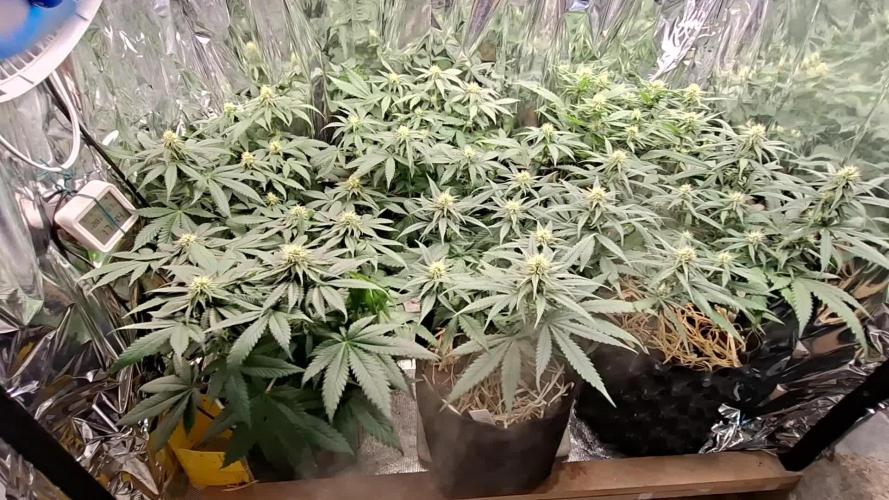
Did my last topping on a few branches that were left took most of the big fan leaves off to open them up more i forgot to do a week lol.
Likes
3
Share
Well. First week of flushing done. She looks great. Trichomes are all going cloudy, no Amber's yet though. Should be harvesting her next week. Probably going to re veg and mother her
Likes
12
Share
@ciansta
Follow
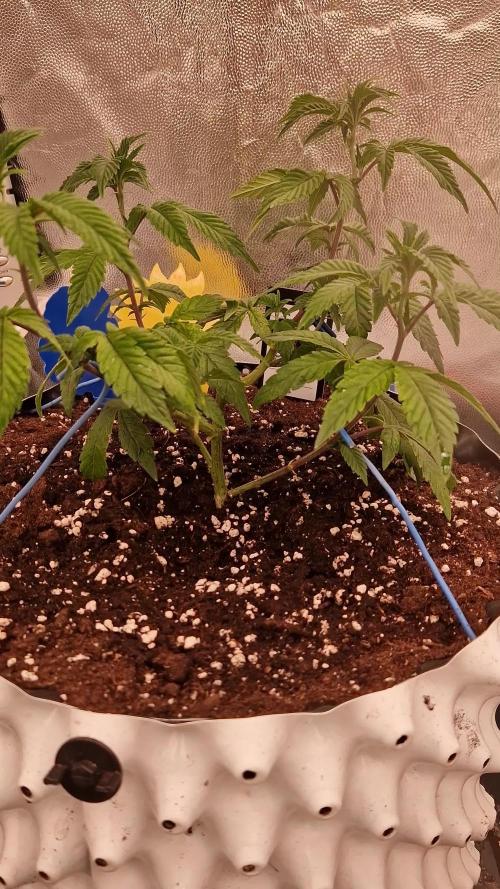
Onto the second node now and the plant is looking really good :)) I have great hope for this Northern Lights auto I'm so happy too be growing this strain again!!
Processing
Likes
21
Share
@rhodes68
Follow
8/10 Week 4 and doing well She is displaying how she will grow now, dont think any need for further topping. Nuets as is 8/12 Moved the light up to 30" just looking for a veg sweet spot 8/13 Looking good so increased nuets to 10 and 10 of cocotek A&B Lots of growth tips rising from the leaf tucking we always do 8/14 Defoliation day not a lot removed but enough to open the tops to light. Flipping in 3... 8/15 Recovered from all defoliation and growth tips aplenty in the light Increased nuets to 12ml/gal each of cocotek AB, drinking more now Pic tonight Flipping in 2... 8/16 Continue defoliation, minor and selective to expose growth tips. Flipping in 1...
Likes
22
Share
@NanoLeaf
Follow
End of Week 5 Brewed a nice veg-specific compost tea and the ladies loved it. Trying to make sure the soil stays nice and moist to keep the microbes happy and letting the top 3 cm of the topsoil dry before each watering. The ladies have gained some momentum and they're growing at a rapid pace . I also performed some HST by tucking fan leaves and softly pinching and bending some of the stems to open up the canopy whilst keeping the stress at a minimal. Pest Report: Didn't have much issues up until now... I noticed about 5-10 tiny little thrips on some of the leaves and I applied an organic microbial insecticide (Agro Organics Bio-Insek, Google it!) that seems to have taken care of the problem. Now I will apply it weekly to make sure those buggers are ELIMINATED.
Likes
24
Share
14 day dry | Curing in Grove bags, filled 7 QP bags & got 56g of keif out the trim bin from only 2 plants! More pictures coming! STAY FROSTY GROWMIES
Likes
3
Share
Likes
15
Share
(germination through first week of seedling 11/29-12/10) Days 1 to 7 Starting a new grow with two Royal Queen, Purple Queen Seeds (thank you Royal Queen for making this possible) I plan to be rough with these plants and top them both to 8 colas. This journal will be different than my last (alot less detail) but I will still look for new opportunities to learn something new that I can share. I also plan to take at least 5 pics per week with 1 video and 1 'pretty' cover pic per week, however I also plan to delete the excess details at the end of each week. I had these seeds for about 4 months now. They have been stored in the fridge inside a paper bag. I took the seeds out of the fridge and let the rest on the counter for two days before dropping them in water. After a seed inspection of which I noticed some unatural bumps on the shell of one, but no cracks or splits, I dropped them both in purified water for 19 hours. Since the shells still hadn't cracked, I then transferred both seeds to paper towels with the belly button side up and pressed them against the glas side to make the tap root grow straight down. These seeds took 2 days to show a crack in the shell from the time that I placed them into the paper towel - Once they cracked, I cut the middle of Rapid Rooter starter pods and placed the tap root down inside the pods. I then closed the pods with ends of toothpicks and placed them in an incubator until they showed a tap root growing out from the bottom of the pods. That took a total of 4 days from paper towel to transplant day (now called Day 1) where they were about 1 to 1.5 inches above the soil line after I planted them in 1 cup pots. Dynomyco Mycorrhizal Inoculant was already mixed into the ph balanced soil that had been growing Happy Frog mycorrhizae for about a month. I used 8.75ph purified water with the soil to create a soil with 6.3ph (this soil has been notorious for being extremely low on ph and by week 4 to 5 after second topping the first fan leaves show a calcium deficit.)
Likes
5
Share
I feel sorry about myself for not being able to give her the shape I wanted in the time I had settle of vegetative stage, the smell is absolutely gorgeous for a sativa plant, if you smell her you could think she's a pure blueberry strain, very very sweet and floral aroma, hope to keep working with her in many more runs, indoors and outdoors as well!! 💯 Let's see how this beautiful haze keeps developing those flowers! 💛❤️💚👨‍🌾
Likes
9
Share
Week 6 for Black Lebanon by SSSC, Like i mentioned on the previous Sunday update, she was transplanted a day after the post. I was planning on not giving water for the first week to let the roots do some growing.... the rain gods had a different plan 😂 Its been storming rain ever since day after transplant now 5 days i think 😂😂 So that didn't go to plan but hoping no rain next week fingers crossed. I also think i topped her again some point last week. Cant wait for her roots to get moving in the new home.
Likes
33
Share
@MrStryker
Follow
Week one of flower in the books I watered Monday with grow nutrients !! Then watered late in the week with phd water and molasses now I’ve switched to my bloom nutes as of this morning I did find that my ph meter is off glad I found the problem early on in flower could’ve been bad later on Oan in another 5 days I’ll do one more defoliation after that I won’t bother them again till harvest !!! Let me know what you guys think
Likes
Comments
Share
@Pyrogrows
Follow
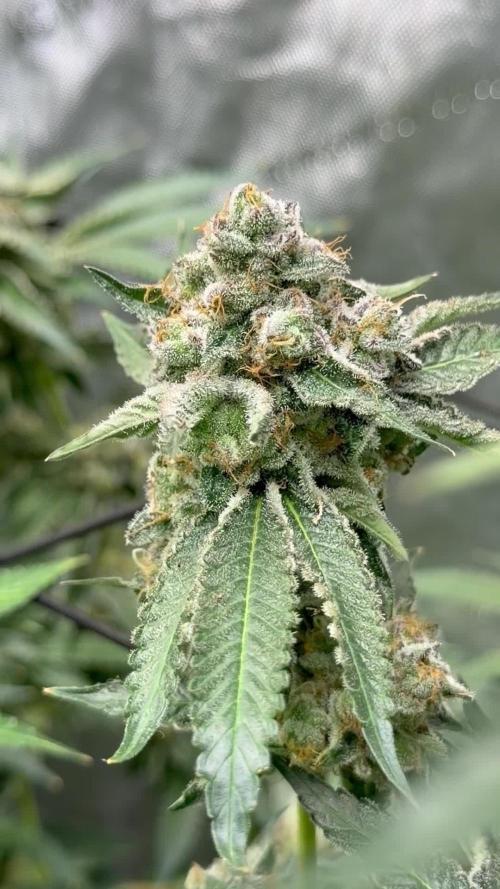
Final days of flowering! Just some cool trichome pics and a video for ya'll 😍 real nice flowers Week update: the mould is getting really tricky now i hope they make it to the finish..
Likes
25
Share
what can I say over 7 ft tall now which is impressive in this drought with only the pittance of water I've been giving them once a week. Just goes to show you that my water conservation techniques work. They are both starting to smell like a hint of chocolate and peanut butter. Can't wait to see how these ones smoke. They are also into full pre flower and should be in full flower by next weekend.
Likes
31
Share
@Chubbs
Follow
SuperSativaSeedClub PurplePunchOGauto Week9 What up grow fam. Weekly update on these three. Two of the three seem to be growing good as the other has been fighting me since the beginning. I decided this week to transplant from 1gal pots to 3gal to see if maybe it'll fix my leaf burning issue. Over all super excited to see what the next couple weeks will bring. All in all Happy Growing
Likes
24
Share
Week 7 Veg - January 16/21 to 22/21 ***** Week 7 will be their last week being able to take them out of the tent😟 SCROG netting going in on the weekend ahead. Not really a lot to report this week as the girls are doing well and I am just wanting their side branches to grow longer to help filling in the canopy anyway. Performed more LST this week and bending over the branches daily. Didn’t do any HST this week, will once the net is in and I have a better visual of how the branches need to bend. They have come a long ways over the last 2 weeks when you look back at pictures. They have filled out with more side branching and other than battling a little purple striping on the main stems they seem pretty happy. Leaf colour is good and should be in good shape for the flip soon. Will go through all of week 8 before flipping so hopefully week 9 will be transition week and week 10 the start of flower.......have to get through next week first though😀👍 Switching over to tap water again. I have been struggling with calcium and magnesium deficiencies on all grows for the last year. I can’t seem to get the right amount added back to the RO water I use in all feedings. So running with straight water again now. Ppm coming out is 325 so I will work with that. Going to explore my own RO system in the house rather than bottled water, a system that adds back calcium, magnesium, and iron. It’s been flowing okay for the first week and will continue on for now. Using RO water I have been feeding full strength on the nutrients and have been working on backing them down a bit to compensate for the starting point of 325 now. They have continued to be fed once a week roughly and supplemented with calmag and microbes. Little more detail....... Jan 16/21, Day 43 Veg - 3L each of full line at full strength in RO water - 1150ppm and 5.8pH given to the girls - didn’t add any other nutes other than IPP line. Jan 17/21, Day 44 Veg - dry out day - pulled down all the girls again tonight to train them outwards. - Jan 18/21, Day 45 Veg - 3L for each girl today with tap water and CalMag @ 1ml, Microbes @ 2ml, Nature’s Candy @ 1.5ml - 700ppm and 5.7pH is what that works out to. - have to use a considerable amount of pH down to adjust the tap water, over 6ml in 16L Jan 19/21, Day 46 Veg - measured the girls today, GSCHB Is 12” tall. They were topped already😀 - dry out day for the girls. - pulled two large fan leaves from her. They were just getting the way too much of lower branches light. Jan 20/21, Day 47 Veg - 2.5L each with plain tap water - 295ppm and 5.8pH. - all the girls are looking big and bushy today.......they are ready for flip soon. Jan 21/21, Day 48 Veg - dry out day for the girls. Jan 22/21, Day 49 Veg - pulled all the girls down again......repeating the same LST each day manually rather than tying down for now. - this should be water day but leaving for today as I am going to lolipop the lower branches and a heavier leaf stripping tomorrow. - will feed tomorrow as they will benefit more. Very solid week ETS......the girls are taking off and expect to see lots of leaves popping out over the next couple of weeks😀👍 Work on the side branching to come up higher closer to the tops next week.......continue tap water and give a feed with Epsom Salts new week
Likes
45
Share
My homework. Rubisco regeneration is intrinsically linked to nitrogen supply because Rubisco is a major sink for nitrogen in plants, typically accounting for 15% to over 25% of total leaf nitrogen. The regeneration phase itself consumes nitrogen through the synthesis of the Rubisco enzyme and associated proteins (like Rubisco activase), and overall nitrogen status heavily influences the efficiency of RuBP regeneration.Structural Component: Nitrogen is an essential building block for all proteins, and the sheer abundance of the Rubisco protein makes it the single largest storage of nitrogen in the leaf. Synthesis and Activity: Adequate nitrogen supply is crucial for the synthesis and maintenance of sufficient Rubisco enzyme and Rubisco activase (Rca), the regulatory protein responsible for maintaining Rubisco's active state. Nitrogen deficiency leads to a decrease in the content and activity of both Rubisco and Rca, which in turn limits the maximum carboxylation rate, Vmax, and the rate of RuBP regeneration Jmax, thus reducing overall photosynthetic capacity. Nitrogen Storage and Remobilization: Rubisco can act as a temporary nitrogen storage protein, which is degraded to remobilize nitrogen to other growing parts of the plant, especially under conditions of nitrogen deficiency or senescence. Nitrogen Use Efficiency (NUE): The allocation of nitrogen to Rubisco is a key determinant of a plant's photosynthetic nitrogen use efficiency (PNUE). In high-nitrogen conditions, plants may accumulate a surplus of Rubisco, which may not be fully activated, leading to a lower PNUE. Optimizing the amount and activity of Rubisco relative to nitrogen availability is a target for improving crop NUE. Photorespiration and Nitrogen Metabolism: Nitrogen metabolism is also linked to the photorespiration pathway (which competes with carboxylation at the Rubisco active site), particularly in the reassimilation of ammonia released during the process. To increase RuBisCO regeneration, which refers to the process of forming the CO2 acceptor molecule Ribulose-1,5-bisphosphate (RuBP) during photosynthesis, the primary methods involve optimizing the levels and activity of Rubisco activase (Rca) and enhancing the performance of other Calvin-Benson-Bassham (CBB) cycle enzymes. Biochemical and Environmental Approaches: Optimize Rubisco Activase (Rca) activity: Rca is a crucial chaperone protein that removes inhibitory sugar phosphates, such as CA1P (2-carboxy-D-arabinitol 1-phosphate), from the Rubisco active site, thus maintaining its catalytic competence. •Ensure optimal light conditions: Rca is light-activated via the chloroplast's redox status. Adequate light intensity ensures Rca can effectively maintain Rubisco in its active, carbamylated state. •Maintain optimal temperature: Rca is highly temperature-sensitive and can become unstable at moderately high temperatures (e.g., above 35°C/95F° in many C3 plants), which decreases its ability to activate Rubisco. Maintaining temperatures within the optimal range for a specific plant species is important. •Optimize Mg2+ concentration: Mg2+ is a key cofactor for both Rubisco carbamylation and Rca activity. In the light, Mg2+ concentration in the chloroplast stroma increases, promoting activation. •Manage ATP/ADP ratio: Rca activity depends on ATP hydrolysis and is inhibited by ADP. Conditions that maintain a high ATP/ADP ratio in the chloroplast stroma favor Rca activity. Enhance Calvin-Benson-Bassham (CBB) cycle enzyme activity: The overall rate of RuBP regeneration can be limited by other enzymes in the cycle. •Increase SBPase activity: Sedoheptulose-1,7-bisphosphatase (SBPase) is a key regulatory enzyme in the regeneration pathway, and increasing its activity can enhance RuBP regeneration and overall photosynthesis. •Optimize other enzymes: Overexpression of other CBB cycle enzymes such as fructose-1,6-bisphosphate aldolase (FBA) and triose phosphate isomerase (TPI) can also help to balance the metabolic flux and improve RuBP regeneration capacity. Magnesium ions, Mg2+, are specifically required for Rubisco activation because the cation plays a critical structural and chemical role in forming the active site: A specific lysine residue in the active site must be carbamylated by a CO2 molecule to activate the enzyme. The resulting negatively charged carbamyl group then facilitates the binding of the positively charged Mg2+ion. While other divalent metal ions like Mn2+ can bind to Rubisco, they alter the enzyme's substrate specificity and lead to dramatically lower activity or a higher rate of the non-productive oxygenation reaction compared to Mg2+, making them biologically unfavorable in the context of efficient carbon fixation. The concentration of Mg2+ in the chloroplast stroma naturally increases in the light due to ion potential balancing during ATP synthesis, providing a physiological mechanism to ensure the enzyme is activated when photosynthesis is possible. At the center of the porphyrin ring, nestled within its nitrogen atoms, is a Magnesium ion (Mg2+). This magnesium ion is crucial for the function of chlorophyll, and without it, the pigment cannot effectively capture and transfer light energy. Mg acts as a cofactor: Mg2+ binds to Rubisco after an activator CO2 molecule, forming a catalytically competent complex (Enzyme-CO2-Mg2+). High light + CO2) increases demand: Under high light (60 DLI is a very high intensity, potentially saturating) and high CO2, the plant's capacity for photosynthesis is high, and thus the demand for activated Rubisco and the necessary Mg2+ cofactor increases. Mg deficiency becomes limiting: If Mg2+ is deficient under these conditions, the higher levels of Rubisco and Rubisco activase produced cannot be fully activated, leading to lower photosynthetic rates and potential photo-oxidative damage. Optimal range: Studies show that adequate Mg2+ application can enhance Rubisco activation and stabilize net photosynthetic rates under stress conditions, but the required concentration is specific to the experimental setup. Monitoring is key: The most effective approach in a controlled environment is to monitor the plant's physiological responses e.g., leaf Mg2+ concentration, photosynthetic rate, Rubisco activation state, and adjust the nutrient solution/fertilizer to maintain adequate levels, rather than supplementing a fixed "extra" amount. In practice, this means ensuring that Mg2+ is not a limiting factor in the plant's standard nutrient solution when pushing the limits with high light and CO2. Applying Mg2+ through foliar spray is beneficial to Rubisco regeneration, particularly in alleviating the negative effects of magnesium (Mg) deficiency and high-temperature stress (HTS). While Mg can be leached from soil, within the plant it is considered a mobile nutrient, particularly in the phloem. Foliar-applied Mg is quickly absorbed by the leaves and can be translocate to other plant parts, including new growth and sink organs. Foliar application of: NATURES VERY OWN MgSO4 @ 15.0g L-1 in a spray bottle. Foliar sprays are often recommended as a rapid rescue measure for existing deficiencies or as a supplement during critical growth stages, when demand for Mg is high. Application in the early morning or late evening can improve absorption and prevent leaf burn. The starting point [of creativity] is curiosity: pondering why the default exists in the first place. We’re driven to question defaults when we experience vuja de, the opposite of déjà vu. Déjà vu occurs when we encounter something new, but it feels as if we’ve seen it before. Vuja de is the reverse—we face something familiar, but we see it with a fresh perspective that enables us to gain new insights into old problems.
Likes
2
Share
Likes
Comments
Share
The clones are doing ok. I might have the humidity to high because they haven’t had water this week, the soil is still moist from the transplant. Once the roots hit the bottoms of the pots they should spread out causing the foliage to explode. In week 8 I’ll come back and edit and tell myself I told me so. Happy growing folks
Likes
14
Share
@TunaWeed
Follow
trimmed after stopping growth. the plants are doing well, removed the lower branches.
Likes
19
Share
@nonick123
Follow
Día 13 (06/05) Nos acercamos al final de la fase plántula. A ver si ahora empiezan a crecer de forma explosiva! He sido muy estricto con los riegos, dejando que el top hasta el nudillo se seque completamente! Día 14 (07/05) Hago una mejora en la tienda. Hasta ahora tenia intracción pasiva, pero ahora he instalado una turbina para que impulse aire fresco dentro de la tienda Día 15 (08/05) Con el calor que hace me sorprende que las macetas sigan aguantando la humedad, pero al hundir el nudillo sigue húmeda. Mañana haré un riego de nuevo Día 16 (09/05) Relleno el top con sustrato para compensar la compactación y dar mas soporte a las plantas Riego con 300 ml solo H20 - pH 6,2 Día 17 (10/05) Baño de sol de dos horas. Día 18 (11/05) Baño de sol de dos horas Día 19 (12/05) Riego 750 ml H2O + Regulator 0,15 ml/l + CaMg-Boost 0,25 ml/l + Startbooster 0,25 ml/l - pH 6.2 💦Nutrients by Aptus Holland - www.aptus-holland.com 🌱Substrate PRO-MIX HP BACILLUS + MYCORRHIZAE - www.pthorticulture.com/en/products/pro-mix-hp-biostimulant-plus-mycorrhizae