


Likes
Comments
Share


@b_deal
Follow
This week was amazing guys. I literally watched the buds getting fat day by day. I am still feeding with a similar program and adding Aptus Regulator once per week to boost silica and some other minerals like molybdenum and boron. I'm flowering my plants in a hot environment with CO2 boost. PPFD is high to support these settings and thankfully my the pots aren't getting hot. No fungus gnats or any other pests, no root rot and bad smell. Everything is perfectly neat and buds are exploding. My expectations from this harvest is really high and I'll keep adding CO2 for another week.
Some fellow growers asked for CO2 and PPFD measurements. I am sharing these information on this week's pictures. I got my CO2 meter fixed and I tested the CO2 PPM in different places of the canopy. Typical value for this grow tent with this CO2 setup is around 1100-1350. Temperature is fluctuating between 28-31 and the average PPFD on the bud sites is 1100 micro moles.
I'm sharing CO2 measurements right under the fan, where you expect it to show the lowest value. Then I'll also share the CO2 PPM value coming out from the air pipe, which is normally attached to the grill of the fan. Direct output is now around 5500PPM and in the first two days, the meter shows 10000PPM which is the max value that it can reads. This bucket yeast CO2 reactor lasts for four days and I'm refreshing the mixture twice a week. This is huge CO2 with a fairly low cost compared to propane burners or CO2 tubes.
Edit: I refreshed the CO2 bucket today and got you guys a video of the direct output. The system is outputting more than 10000PPM of CO2 and the meter can't measure it for the first two days. This CO2 method is a killer one for tent grows. Very low cost for very high CO2 concentrations.
Hope these information helps. Happy growing 💪


Likes
22
Share

@GermanGrower416
Follow
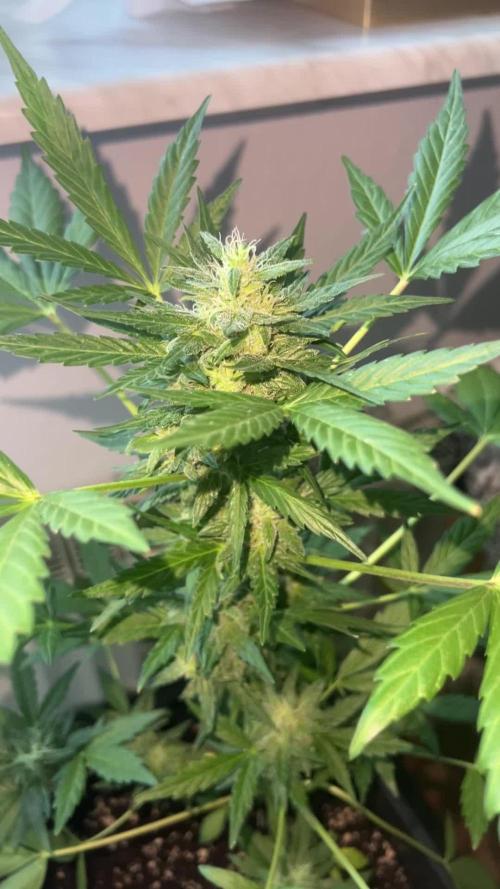
Ich muss bei diesem Grow wirklich fast nichts machen, Sie macht ihr Ding auf der Fensterbank alleine.
Habe ein paar Thripse auf den Blättern, bleibt leider nicht aus bei Outdoor grow bzw Fensterbank.
Gieße mit Plagron Bloom, Green Sensation und ein bisschen Calmag, bislang keine Mangelerscheinungen.

Likes
25
Share


@herewegrow
Follow
Ordered a scale the other day so should have some more numbers tomorrow! Not going to sample anything until I get the scale, then I'll update with some more details.

Likes
11
Share


@TiRobotProds
Follow
Cela es ma deuxième session automatique et je peut dire que Cette plante est incroyable, magnifique grandit vigoureusement plein de pistils 🎄🎄
La température est de 26°🌡️ pour 55% d'humidité🌅, sur les photos vous pouvez voir une carence en potassium pour cela j'ai commencé à engraisser au Méga PK 50-33 voyons dans les semaines à suivre si cela s'aggrave merci a toi de m'avoir lu bonne croissance a tous.

Processing
Likes
3
Share


@zombikush81
Follow
Beginning 5 weeks of flowering, I will soon share a video of the two bitches

Likes
5
Share


@ChiloteAnonimo
Follow
Día 01 de su octava semana de flora.
Pandemia kush y la Trimosa x mimosa sin apical se van a cortar a mediados de esta semana.
El resto por cuestión de tiempo voy a apurarlas cortandolas en 10 días más.


Likes
7
Share

@Fank0
Follow
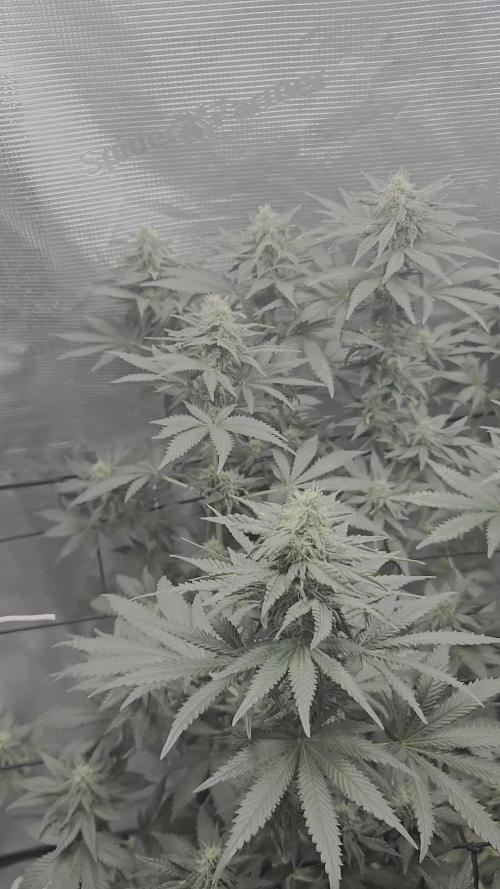
Shogun naberá druhý dych, vitalita stúpa. Ostrihane spodné listy a malinké paličky

Likes
13
Share


@mr_smooke
Follow
Here we are on day 28.
On day 23 i spoted Spider Mites. Next day i been spray leavs whit neem oil, for now SM are gone i hope they will not come back. She coming along nicely😁🤩🤘✌️


Likes
10
Share


@Elpicor
Follow
Plant showing first sign of extra nitrogen, I'm trying to fix it with algae and
Processing
Likes
3
Share


@Bankir
Follow
На этой неделе частично срезал и высушил часть растихи. Остальную часть буду держать до коричневых трихом.


Likes
24
Share


@MadeInGermany
Follow
Hey everyone 😃.
On 09/10/20 she was placed in the flower tent at 12/12 h 😀.
You have developed incredibly well with the Green Buzz Liquid Nutrients 👍.
I am very curious how it will develop in the coming week.
Until then, I wish you all a good time and stay healthy 🙏🏻.
You can buy this Strain at
https://www.amsterdamgenetics.com/product/kosher-tangie-kush/
You can buy this Nutrients at
https://greenbuzzliquids.com/
Type:
Kosher Tangie Kush
☝️🏼
Genetics:
Kosher Kush
X
Tangie
👍
Vega lamp:
2 x Todogrow Led
Quantum Board 100 W
💡
Bloom Lamp :
2 x Todogrow Led
Cxb 3590 COB 3500 K 205W
💡💡☝️🏼
Soil :
Canna Coco Professional +
☝️🏼
Fertilizer:
Green Buzz Liquids :
Organic Grow Liquid
Organic Bloom Liquid
Organic more PK
More Roots
Fast Buds
Humic Acid Plus
Growzyme Big Fruits
Clean Fruits
Cal / Mag
Organic Ph - Pulver
☝️🏼🌱
Water:
Osmosis water mixed with normal water (24 hours stale that the chlorine evaporates) to 0.2 - 0.4 EC. Add Cal / Mag 2 ml per l water every 2 waterings . Ph with Organic Ph - Pulver to 5.8 .

Likes
6
Share


@Saltoa
Follow
hello again everyone, I'm in my mastery period now. Let the lights turn on, let the show begin. The target is 4x autoflower 400 grams.200 watt LED extra additional light will be added in the flower. Are you ready to go to the destination with me?
Likes
11
Share

@BushDoctor740
Follow
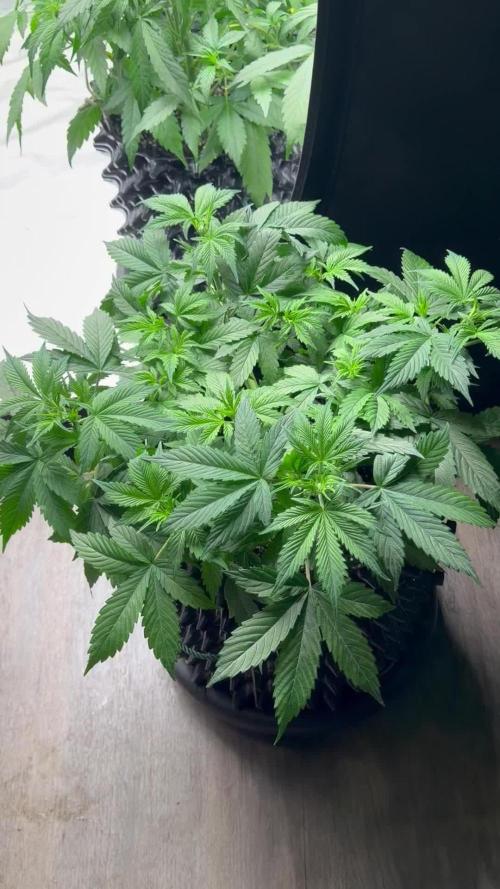
Week 5 I’m noticing some signs of flower on all 3 ladies.Ive lowered the humidity slightly and I’m bending and manipulating branches to get some more light penetrating.I will increase the light intensity in maybe a few days.They are still taking shape and I’m expecting that stretch to come on soon

Likes
2
Share


@Naujas
Follow
Well, this is another new journey with @FastBuds, I know they are great, so this time I will grow 2 girls in a tent, each one will have a separate diary, and here her first week has already passed, everything looks pretty good, in a week she will be transplanted into a 15 liter pot :).

Likes
8
Share


@Buddering
Follow
Looks like this will be her final week! She won't last long. Maybe 10.5 weeks of flowering in all. Smelling nice. And finally starting to get that beautiful lavender/chocolate color of her father (although, a little too late).


Likes
3
Share


@MayJorGrowers
Follow
Techniques acquired!! Guys... we really need some rain. The area were in is experiencing record high temperatures and its getting hotter and hotter everyday. :( Nevertheless the girls have prevailed and come out strong! A moment of silence please for ben, she will be missed.....
Now it's time for techniques. The LST is the main technique we are trying to go for and it seems to be working well for them. The HST was not intentional lol I just accidentally bent Osaka's stem and she started to flourish so I tried it on Prince and it seems to be working very well. Don't you just love how resilient plants are??
Were still keeping the watering to the same and the nutrient level did go up a little but only for the ones that are still standing...
Likes
19
Share


@eldruida_lamota
Follow
Vamos familia, empieza lo bueno, y es que estás gorillas si han estirado, la primera semana de floración, aportamos algo de big bud para ir amoldándolas.
Es una cepa que se comporta bastante bien en indoor, tallo grueso y bastante distancia entre internudos, deseando ver que flores nos da.
ph controlado en 6,5 ahora va todo fenómeno, temperaturas ideales, humedad correcta 50 % , y pronto la bajaremos a 40 %.
Hasta ahora lo que hay, próximamente nos vemos familia.