Likes
4
Share
@Nillenium
Follow
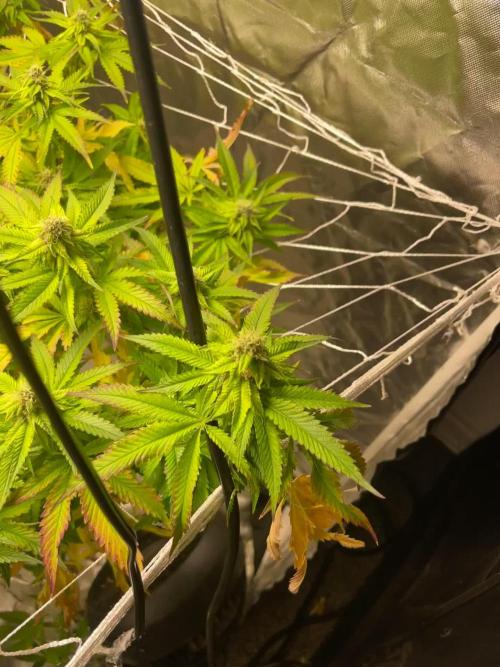
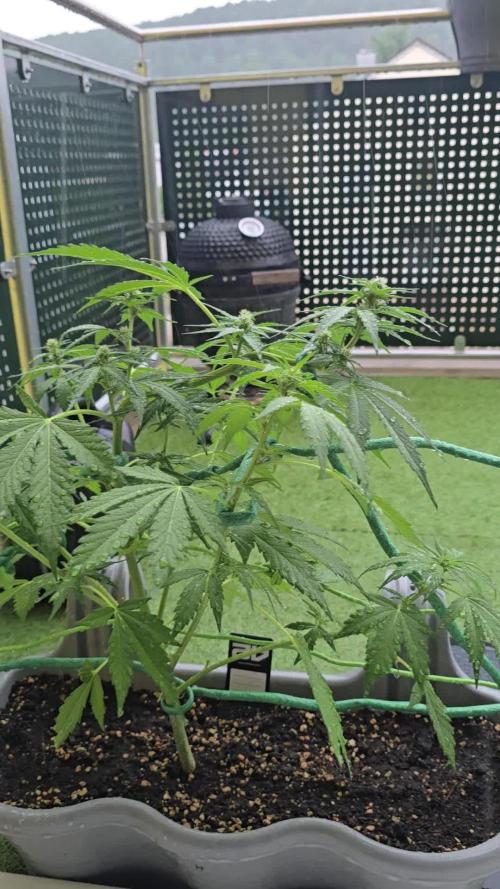
Woche 3 verlief nach Plan. Ich habe immer wieder die neu gewachsenen Sonnensegel vom Hauptstamm entfernt. Gegen Ende der Woche habe ich mit leichtem LST begonnen. An Tag 21 habe ich die ersten mini Stigmen der Vorblüte entdeckt.
Likes
25
Share
ANTHOCYANIN production is primarily controlled by the Cryptochrome (CR1) Photoreceptor ( !! UV and Blue Spectrums are primary drivers in the production of the pigment that replaces chlorophyll, isn't that awesome! 1. Diverse photoreceptors in plants Many civilizations, including the sun god of ancient Egypt, thought that the blessings of sunlight were the source of life. In fact, the survival of all life, including humans, is supported by the photosynthesis of plants that capture solar energy. Plants that perform photosynthesis have no means of transportation except for some algae. Therefore, it is necessary to monitor various changes in the external environment and respond appropriately to the place to survive. Among various environmental information, light is especially important information for plants that perform photosynthesis. In the process of evolution, plants acquired phytochrome, which mainly receives light in the red light region, and multiple blue light receptors, including his hytropin and phototropin, in order to sense the light environment. .. In addition to these, an ultraviolet light receptor named UVR8 was recently discovered. The latest image of the molecular structure and function of these various plant photoreceptors (Fig. 1), focusing on phytochrome and phototropin. Figure 1 Ultraviolet-visible absorption spectra of phytochrome, cryptochrome, phototropin, and UVR8. The dashed line represents each bioactive absorption spectrum. 2. Phytochrome; red-far red photoreversible molecular switch What is phytochrome? Phytochrome is a photochromic photoreceptor, and has two absorption types, a red light absorption type Pr (absorption maximum wavelength of about 665 nm) and a far-red light absorption type Pfr (730 nm). Reversible light conversion between the two by red light and far-red light, respectively(Fig. 1A, solid line and broken line). In general, Pfr is the active form that causes a physiological response. With some exceptions, phytochrome can be said to function as a photoreversible molecular switch. The background of the discovery is as follows. There are some types of plants that require light for germination (light seed germination). From that study, it was found that germination was induced by red light, the effect was inhibited by subsequent far-red light irradiation, and this could be repeated, and the existence of photoreceptors that reversibly photoconvert was predicted. In 1959, its existence was confirmed by the absorption spectrum measurement of the yellow sprout tissue, and it was named phytochrome. Why does the plant have a sensor to distinguish between such red light and far-red light? There is no big difference between the red and far-red light regions in the open-field spectrum of sunlight, but the proportion of red light is greatly reduced due to the absorption of chloroplasts in the shade of plants. Similar changes in light quality occur in the evening sunlight. Plants perceive this difference in light quality as the ratio of Pr and Pfr, recognize the light environment, and respond to it. Subsequent studies have revealed that it is responsible for various photomorphogenic reactions such as photoperiodic flowering induction, shade repellent, and deyellowing (greening). Furthermore, with the introduction of the model plant Arabidopsis thaliana (At) and the development of molecular biological analysis methods, research has progressed dramatically, and his five types of phytochromes (phyA-E) are present in Arabidopsis thaliana. all right. With the progress of the genome project, Fi’s tochrome-like photoreceptors were found in cyanobacteria, a photosynthetic prokaryotes other than plants. Furthermore, in non-photosynthetic bacteria, a homologue molecule called bacteriophytochrome photoreceptor (BphP) was found in Pseudomonas aeruginosa (Pa) and radiation-resistant bacteria (Deinococcus radiodurans, Dr). Domain structure of phytochrome molecule Phytochrome molecule can be roughly divided into N-terminal side and C-terminal side region. PAS (Per / Arndt / Sim: blue), GAF (cGMP phosphodiesterase / adenylyl cyclase / FhlA: green), PHY (phyto-chrome: purple) 3 in the N-terminal region of plant phytochrome (Fig. 2A) There are two domains and an N-terminal extension region (NTE: dark blue), and phytochromobilin (PΦB), which is one of the ring-opening tetrapyrroles, is thioether-bonded to the system stored in GAF as a chromophore. ing. PAS is a domain involved in the interaction between signal transduction-related proteins, and PHY is a phytochrome-specific domain. There are two PASs and her histidine kinase-related (HKR) domain (red) in the C-terminal region, but the histidine essential for kinase activity is not conserved. 3. Phototropin; photosynthetic efficiency optimized blue light receptor What is phototropin? Charles Darwin, who is famous for his theory of evolution, wrote in his book “The power of move-ment in plants” published in 1882 that plants bend toward blue light. Approximately 100 years later, the protein nph1 (nonphoto-tropic hypocotyl 1) encoded by one of the causative genes of Arabidopsis mutants causing phototropic abnormalities was identified as a blue photoreceptor. Later, another isotype npl1 was found and renamed phototropin 1 (phot1) and 2 (phot2), respectively. In addition to phototropism, phototropin is damaged by chloroplast photolocalization (chloroplasts move through the epidermal cells of the leaves and gather on the cell surface under appropriate light intensity for photosynthesis. As a photoreceptor for reactions such as escaping to the side of cells under dangerous strong light) and stomata (reactions that open stomata to optimize the uptake of carbon dioxide, which is the rate-determining process of photosynthetic reactions). It became clear that it worked. In this way, phototropin can be said to be a blue light receptor responsible for optimizing photosynthetic efficiency. Domain structure and LOV photoreaction of phototropin molecule Phototropin molecule has two photoreceptive domains (LOV1 and LOV2) called LOV (Light-Oxygen-Voltage sensing) on the N-terminal side, and serine / on the C-terminal side. It is a protein kinase that forms threonine kinase (STK) (Fig. 4Aa) and whose activity is regulated by light. LOV is one molecule as a chromophore, he binds FMN (flavin mononucleotide) non-covalently. The LOV forms an α/βfold, and the FMN is located on a β-sheet consisting of five antiparallel β-strands (Fig. 4B). The FMN in the ground state LOV shows the absorption spectrum of a typical oxidized flavin protein with a triplet oscillation structure and an absorption maximum wavelength of 450 nm, and is called D450 (Fig. 1C and Fig. 4E). After being excited to the singlet excited state by blue light, the FMN shifts to the triplet excited state (L660t *) due to intersystem crossing, and then the C4 (Fig. 4C) of the isoaroxazine ring of the FMN is conserved in the vicinity. It forms a transient accretionary prism with the tain (red part in Fig. 4B Eα) (S390I). When this cysteine is replaced with alanine (C / A substitution), the addition reaction does not occur. The effect of adduct formation propagates to the protein moiety, causing kinase activation (S390II). After that, the formed cysteine-flavin adduct spontaneously dissociates and returns to the original D450 (Fig. 4E, dark regression reaction). Phototropin kinase activity control mechanism by LOV2 Why does phototropin have two LOVs? Atphot1 was found as a protein that is rapidly autophosphorylated when irradiated with blue light. The effect of the above C / A substitution on this self-phosphorylation reaction and phototropism was investigated, and LOV2 is the main photomolecular switch in both self-phosphorylation and phototropism. It turns out that it functions as. After that, from experiments using artificial substrates, STK has a constitutive activity, LOV2 functions as an inhibitory domain of this activity, and the inhibition is eliminated by photoreaction, while LOV1 is kinase light. It was shown to modify the photosensitivity of the activation reaction. In addition to this, LOV1 was found to act as a dimerization site from the crystal structure and his SAXS. What kind of molecular mechanism does LOV2 use to photoregulate kinase activity? The following two modules play important roles in this intramolecular signal transduction. Figure 4 (A) Domain structure of LOV photoreceptors. a: Phototropin b: Neochrome c: FKF1 family protein d: Aureochrome (B) Crystal structure of auto barley phot1 LOV2. (C) Structure of FMN isoaroxazine ring. (D) Schematic diagram of the functional domain and module of Arabidopsis thaliana phot1. L, A’α, and Jα represent linker, A’α helix, and Jα helix, respectively. (E) LOV photoreaction. (F) Molecular structure model (mesh) of the LOV2-STK sample (black line) containing A’α of phot2 obtained based on SAXS under dark (top) and under bright (bottom). The yellow, red, and green space-filled models represent the crystal structures of LOV2-Jα, protein kinase A N-lobe, and C-robe, respectively, and black represents FMN. See the text for details. 1) Jα. LOV2 C of oat phot1-to α immediately after the terminus Rix (Jα) is present (Fig. 4D), which interacts with the β-sheet (Fig. 4B) that forms the FMN-bound scaffold of LOV2 in the dark, but unfolds and dissociates from the β-sheet with photoreaction. It was shown by NMR that it does. According to the crystal structure of LOV2-Jα, this Jα is located on the back surface of the β sheet and mainly has a hydrophobic interaction. The formation of S390II causes twisting of the isoaroxazine ring and protonation of N5 (Fig. 4C). As a result, the glutamine side chain present on his Iβ strand (Fig. 4B) in the β-sheet rotates to form a hydrogen bond with this protonated N5. Jα interacts with this his Iβ strand, and these changes are thought to cause the unfold-ing of Jα and dissociation from the β-sheet described above. Experiments such as amino acid substitution of Iβ strands revealed that kinases exhibit constitutive activity when this interaction is eliminated, and that Jα plays an important role in photoactivation of kinases. 2) A’α / Aβ gap. Recently, several results have been reported showing the involvement of amino acids near the A’α helix (Fig. 4D) located upstream of the N-terminal of LOV2 in kinase photoactivation. Therefore, he investigated the role of this A’α and its neighboring amino acids in kinase photoactivation, photoreaction, and Jα structural change for Atphot1. The LOV2-STK polypeptide (Fig. 4D, underlined in black) was used as a photocontrollable kinase for kinase activity analysis. As a result, it was found that the photoactivation of the kinase was abolished when amino acid substitution was introduced into the A’α / Aβ gap between A’α and Aβ of the LOV2 core. Interestingly, he had no effect on the structural changes in Jα examined on the peptide map due to the photoreaction of LOV2 or trypsin degradation. Therefore, the A’α / Aβ gap is considered to play an important role in intramolecular signal transduction after Jα. Structural changes detected by SAXS Structural changes of Jα have been detected by various biophysical methods other than NMR, but structural information on samples including up to STK is reported only by his results to his SAXS. Not. The SAXS measurement of the Atphot2 LOV2-STK polypeptide showed that the radius of inertia increased from 32.4 Å to 34.8 Å, and the molecular model (Fig. 4F) obtained by the ab initio modeling software GASBOR is that of LOV2 and STK. It was shown that the N lobes and C lobes lined up in tandem, and the relative position of LOV2 with respect to STK shifted by about 13 Å under light irradiation. The difference in the molecular model between the two is considered to reflect the structural changes that occur in the Jα and A’α / Aβ gaps mentioned above. Two phototropins with different photosensitivity In the phototropic reaction of Arabidopsis Arabidopsis, Arabidopsis responds to a very wide range of light intensities from 10–4 to 102 μmol photon / sec / m2. At that time, phot1 functions as an optical sensor in a wide range from low light to strong light, while phot2 reacts with light stronger than 1 μmol photon / sec / m2. What is the origin of these differences? As is well known, animal photoreceptors have a high photosensitivity due to the abundance of rhodopsin and the presence of biochemical amplification mechanisms. The exact abundance of phot1 and phot2 in vivo is unknown, but interesting results have been obtained in terms of amplification. The light intensity dependence of the photoactivation of the LOV2-STK polypeptide used in the above kinase analysis was investigated. It was found that phot1 was about 10 times more photosensitive than phot2. On the other hand, when the photochemical reactions of both were examined, it was found that the rate of the dark return reaction of phot1 was about 10 times slower than that of phot2. This result indicates that the longer the lifetime of S390II, which is in the kinase-activated state, the higher the photosensitivity of kinase activation. This correlation was further confirmed by extending the lifespan of her S390II with amino acid substitutions. This alone cannot explain the widespread differences in photosensitivity between phot1 and phot2, but it may explain some of them. Furthermore, it is necessary to investigate in detail protein modifications such as phosphorylation and the effects of phot interacting factors on photosensitivity. Other LOV photoreceptors Among fern plants and green algae, phytochrome ɾphotosensory module (PSM) on the N-terminal side and chimera photoreceptor with full-length phototropin on the C-terminal side, neochrome (Fig. There are types with 4Ab). It has been reported that some neochromes play a role in chloroplast photolocalization as a red light receiver. It is considered that fern plants have such a chimera photoreceptor in order to survive in a habitat such as undergrowth in a jungle where only red light reaches. In addition to this, plants have only one LOV domain, and three proteins involved in the degradation of photomorphogenesis-related proteins, FKF1 (Flavin-binding, Kelch repeat, F-box 1, ZTL (ZEITLUPE)), LKP2 ( There are LOV Kelch Protein2) (Fig. 4Ac) and aureochrome (Fig. 4Ad), which has a bZip domain on the N-terminal side of LOV and functions as a gene transcription factor. 4. Cryptochrome and UVR8 Cryptochrome is one of the blue photoreceptors and forms a superfamily with the DNA photoreceptor photolyase. It has FAD (flavin adenine dinucle-otide) as a chromophore and tetrahydrofolic acid, which is a condensing pigment. The ground state of FAD is considered to be the oxidized type, and the radical type (broken line in Fig. 1B) generated by blue light irradiation is considered to be the signaling state. The radical type also absorbs in the green to orange light region, and may widen the wavelength region of the plant morphogenesis reaction spectrum. Cryptochrome uses blue light to control physiological functions similar to phytochrome. It was identified as a photoreceptor from one of the causative genes of UVR8 Arabidopsis thaliana, and the chromophore is absorbed in the UVB region by a Trp triad consisting of three tryptophans (Fig. 1D). It is involved in the biosynthesis of flavonoids and anthocyanins that function as UV scavengers in plants. Conclusion It is thought that plants have acquired various photoreceptors necessary for their survival during a long evolutionary process. The photoreceptors that cover the existing far-red light to UVB mentioned here are considered to be some of them. More and more diverse photoreceptor genes are conserved in cyanobacteria and marine plankton. By examining these, it is thought that the understanding of plant photoreceptors will be further deepened.
Likes
43
Share
[DAY 71] - 5/12/2022 - TS1000 40 cm distance - 100% dimmer: 144 watt; - Light cycle 20/4; - Height: 68 cm from clay (the other one is 80 cm from clay); - 23° C - 70% RH during light - 19° C - 75% RH during night; - EC 1 - PH 6; - Defoliation. [DAY 72] - 6/12/2022 - 23° C - 70% RH during light - 19° C - 75% RH during night; - EC 1.3 - PH 6; - This week I changed the ratio between A (1.5ml/l) and B (2.5ml/l). [DAY 73] - 7/12/2022 - 22.5° C - 70% RH during light - 18° C - 80% RH during night; - EC 1.1 - PH 6. [DAY 74] - 8/12/2022 - 22° C - 70% RH during light - 18° C - 80% RH during night; - EC 1 - PH 6; - Tomorrow I will give her a big nutrients booster. [DAY 75] - 9/12/2022 - 22° C - 70% RH during light - 20° C - 75% RH during night; - EC 1.3 - PH 6; - Video. [DAY 76] - 10/12/2022 - 24° C - 68% RH during light - 21° C - 75% RH during night; - EC 1.6 - PH 5.9. [DAY 77] - 11/12/2022 - 24° C - 67% RH during light - 19.5° C - 73% RH during night; - EC 1.7 - PH 5.8.
Likes
Comments
Share
@DrGrow420
Follow
The plants have continued to grow very fast this week, easily doubling in size again. I moved them closer to the light to 80 cm from 90cm. Watering as needed and I am keeping the soil surface moist with light watering twice a day. I fed some Biobizz Biogrow and some organic teas this week. Low stress training was very effective and the plant responded well except one which stated quite short. I will see if it bounces back or it may be stunted.
Likes
4
Share
@MADMANk
Follow
Think these will be done by end of week 8 possibly, adding UV + IR for terpes and pushing for an earlier finish! 🍋
Likes
18
Share
2022-09-06 All Pistil changed, and Buds are maturating. They are smelling like cedar wood and green carrots The Buds are covered with sticky Trichomes------most are milky Plant is still green, so i think 10-12 more Days for the Ladies website for for my Fertilisers: https://greenbuzzliquids.com/en/shop/ Code: mrs_larimar Shes a cross between: 👉Female Pineapple ( old School Skunk variation) X reverted male Durban Poison from Dutch Passion 👉Means this will be extrem vigor , strong, big Plants, with alot of resiliance On the Breeders Page are alot of great Information to this Genetics, here is only a part of it, and the Link to it: https://supersativaseedclub.com/cannabis-seeds/pineapple-poison.html#/26-seeds-3_feminized_seeds • Pineapple Poison has a very complex and unique terpene profile, fit for any connoisseur looking for some special weed that will capture your senses • She is a Sativa-dominant hybrid cannabis variety with a pungent aroma with mainly fruity, sweet and herbal tones. Her taste is very tropical with hints of aniseed and mint • Pineapple Poison has an average flowering time of about 8 weeks and can be grown in a wide variety of growing conditions and climates, making her very suitable for the beginner • It’s a robust strain that can be grown indoors as well as outdoors. She can handle both cold and hot temperatures like a champ and is known to produce a high yield, especially when grown outdoors.
Likes
8
Share
So proper calculation!! It’s exactly 5 weeks today since germination! Been getting cold temperatures during lights out period!! So just introduced a oil heater.. when lights are out now I’m keeping a desk fan running all the time with the carbon filter fan also! Oil heater comes on when lights go out but is only reaching a temperature of 21 degrees which is better than 14-15 that I had been getting without the heater! Still unsure weather I should be putting into flowering stage yet but that’s what I’ve decided to do! Getting bigger leafs still and unsure if to trim? One of my stems did snap as maybe a little to hard on the lst! It’s made the perfect clone tho! So done some research into clonex??? Another topic that’s tricking my brain!! Introduced more light into my grow tent also which is a fan operating 600w led grow light! Not sure if the light I already have and a led one will make a difference as there not the same?? But still they look healthy??
Likes
22
Share
@Aedaone
Follow
We had rain morning Day 1 and the previous night. Early morning Day 2, around 2-3 a.m., we had thunderstorms with strong winds and heavy rain. This was followed by sunshine that afternoon. Despite the 5% rain forecast for day 3, we had a thunderstorm. It produced heavy rain and strong winds. For about a hour in the morning Day 3 and that evening showers. Day 4 was all day sunshine with a lite breeze. That was excellent turn of weather to dry out the soaked soil. Day 5, 6, and 7 we had sunshine and a breeze. I added 2.5 ml of ferrous sulfate per gallon of soil on day 1. I added a second dose of 2.5ml ferrous sulfate per gallon of soil top dressed on day 5 for a total of 5ml/gallon of soil, top dressed for the week. I added 1.3 ml/gallon of soil(10ml) blood meal, top dressing on day 5. I watered on day 6 and 7. The ferrous sulfate really began to work on day 6. On day 7 they had a healthy even green color and are rdy for the stretch to begin flower. These plants surviving and thriving through the challenging spring weather and grower proves how resilient these fastbuds genetics are.
Likes
29
Share
Otra vez vuelvo actualizar estas green poison de sweetseeds , tercera semana de crecimiento, ahí van , con buen porte , lástima cayó una en combate pero quedan 3 ejemplares, veremos que tal crecen bajo un ts3000 de Mars Hydro. . Se han trasplantado a final de semana a su depósito real 11L. . La humedad anda entre 60/70% la temperatura está entre 23/26 grados y como siempre el ph , ya que es de lo más importante,está en 5,8/6,0. . AgroBeta: 0,8 ml x L Growth black line , vía radicular. 0,2 ml x L Tucán , vía radicular. 0,15 ml x L Flash Root , vía radicular. 0,05 ml x L Gold Joker, vía radicular. . Hasta aquí la tercera semana se estás green poison, espero que os guste , buenos humos familia 💨💨💨.
Likes
29
Share
Ya visteis , cultivo fácil, de principio a fin, pocos errores una pérdida tan solo de 4 ejemplares y por dejadez. Pero enserio si todo se hace correctamente vais a flipar lo rápido que van y después lo buenas que están. Humedad en el secado por debajo de 45% y temperatura media de 23 grados. Hasta aquí es todo fumetillas, que paséis un final de año de lujo entre buenos humos.
Likes
6
Share
@GrowingSA
Follow
This week has been hectic ...my gorrila breath mothers started randomly flowering ...i have no idea whats going on ....its not a auto and im pretty sure theres more than 12 hours light a day .....its January in Africa! ! So im gonna take as many cuttings as i can and pollinate them what's left over with ... amnesia zkittlez auto that my girlfriend is growing .....from 420 fast buds.....
Likes
19
Share
Welcome to my Fast Buds sponsored shootout and living organic soil v coco side by side. I also plan to use this grow to my full advantage regarding a few age old nagging questions about methods. I have had a keen interest in L.O.S ( supersoil) since reading a few threads a while back on how amazing and productive it can be. After too much research and procrastinating I had to give it a go. I have been a decades coco/nft grower and recently threw my hat in the rdwc ring too. I have avoided soil due to the overwatering worry ( heavy handed chimp brain !) and the best potting soil/feeds. Catching up on the advances in indoor soil gardening and organics led me too subcools supersoil recipes to name a few but being a town dweller with farms everywhere around me still drew blanks on a lot of the ingredients needed and where the hell I could even begin to get them from. Thankfully , commercial savvy has now made buying it in ready to use and with a full range of beneficial bacteria ect available in amendments from a grow shop here in the uk. ecothrive have realised the potential for us to dive into this medium with all the mixing , measuring and resourcing. I bit the bullet and £150 later I now have 4 x37Litre pots that will be used for as long as I want to feed the soil for without EVER needing nutrients again potentially. The coco has also had charge mixed in to encourage the bennies to colonize there too. I will be using the shogun nutes that I know do the business with coco to compare with for yield , growth and taste. I have 3 seeds each of 4 Fast Buds Strains to use as a control for the grow and am journaling each strain in their own diaries. This statement will be used to start each one as the information is identical at this point but following this I will do them individually. I am now starting their second week since opening the seed packets , straight into soaked and shook root riot cubes and into the heated propagator. They had all showed their heads by end of day 3 and a couple needed helmet surgery to open up without being hindered . I have has them in the prop for a few days but they needed to get settled as they were popping roots out all over the cubes. They have now been in their final pots for 2 days complete and starting their 3rd today at day 8 since planting in cubes. I am impressed with the speed and success of these girls already (12 of 13 germinated) . Well done fast buds. So here we go folks , any comments , ideas ,questions , advice are always welcome and I hope we can have some fun experimenting with defol v non defol , topping v fimming v bending and any other curiosities along the way. I plan on using a quadline for them all to keep a control for the comparisons too. Be green folks Welcome aboard and a huge thank you to Fast Buds for the opportunity to try autos.
Processing
Likes
39
Share
The plants (especially the Blueberry Headband) is drinking a lot! Roots are looking great and bud production is excellent! CBD is now developing trichomes and a great lemony aroma. The CBD deficiency is gone now that there is more Calcium and Magnesium. Dinamed Plus from Dinafem Seeds (1) and Blueberry Headband (1)from Humboldt Seeds. https://www.dinafem.org/en/dinamed-cbd-plus/ https://www.humboldtseeds.net/en/blueberry-headband/ Lighting https://www.horticulturelightinggroup.ca/products/260w-qb-v2-led-kit DWC Nutients https://generalhydroponics.com/floraseries FloraGro 1 ml/l FloraBloom .5 ml/l FloraMicro 1 ml/l Diamond Nectar: N/A https://generalhydroponics.com/diamond-nectar Cal Mag: 2 ml/l https://generalhydroponics.com/calimagic SuperThrive: .5 ml/l https://superthrive.com/ https://hylineproducts.com/products/hygrozyme/#one Grozyme: 2.5 ml/ltr Tarantula https://www.advancednutrients.com/products/tarantula/ Epsom salts BHB EC: 1.3 CBD EC: !.1 Root Rot Tea 8 liters RO water 5 ml (1 tsp) organic sulphur free molasses 5 ml Alaskan Organic grow fertilizer (or something comparable) 5 ml Alaskan bloom fertilizer (or something comparable) 5 ml Seaweed or kelp fertilizer Handful of composted horse pucky (Worm castings, sea soil, Gaia General Purpose and Bat Guano Phosphate optional) * add after brewing 1 ml Advanced Nutrients Tarantula
Likes
53
Share
Week 1 Report: Nurturing the Essence of Blackberry Auto Greetings, fellow cultivators! It's time for a detailed Week 1 report on the progress of my Blackberry Auto. This little marvel is not just a plant; it's a canvas for a nutrient symphony, a masterpiece in the making. Our journey starts with a delicate transplant into a petite pot filled with nutrient-rich soil and a generous touch of Mycor Mix. This mix, boasting various mycorrhizae species, is the secret sauce for expanding the root system and paving the way for efficient nutrient uptake. The stage is set for a robust foundation! Enter the Regulator – the elixir for plant strength and resilience. With each watering, this cornerstone of my nutrition program acts as a transporter, enhancing nutrient absorption and bioavailability. The patented formula dances with natural plant mechanisms, ensuring the right nutrition at the right time. It's not just watering; it's a performance of nutrient precision! As the week unfolds, the magic of CaMg-Boost unfolds. This organo-mineral powerhouse prevents calcium and magnesium deficiencies while orchestrating a symphony of powerful fruit set and development. A key player for a firm and high-quality end product, CaMg-Boost is the maestro of mineral balance in my cannabis opera. Week 1 is where the magic happens with All-in-One Liquid. This 100% mineral-based fertilizer is a versatile companion, adaptable from the vegetative phase to the flowering/maturation phase. Its unique manufacturing process laughs in the face of pH-variations, embracing a wide pH-range. The plant is not just fed; it's serenaded with a harmonious blend of essential nutrients. The week crescendos with Startbooster, a specially formulated organic root and growth stimulator. This 100% biological potion, enriched with active organic ingredients, becomes the conductor of root development and vegetative growth. Microbial life joins the orchestra, enhancing root hair development, conditioning the soil, and providing bioavailable nutrition during this crucial vegetative phase. As I stand witness to the dance of nutrients and the growth of Blackberry Auto, I'm reminded that cultivation is not just a science; it's an art. Join me in this horticultural symphony, where every nutrient is a note, and every leaf is a stroke on the search for green perfection! Genetics Blackberry Auto @Fast_Buds Food - @aptusholland @aptus_world As always thank you all for stopping by, for the love and for it all , this journey of mine wold just not be the same without you guys, the love and support is very much appreciated and i fell honored and blessed with you all in my life
Likes
1
Share
Alles in ein war es eine sehr unschön anzubauen Pflanze. Ich hatte ab Woche 5-6 massive Probleme mit PH Werten. Was ich dann aber erst später herausgefunden hatte. Trotz einpendeln hab ich noch trocken um die 20 25 g herausgekommen aktuell wird fermentiert ein bisschen probiert hab ich auch schon. Geschmacklich einfach der Knaller. Ich freue mich schon auf die nächste Zusammenarbeit mit Seedsupplier 🕉️💚
Likes
57
Share
@nonick123
Follow
Día 76 (08/07) Riego con 1 Litro H2O + Regulator 0,15 ml/l + K-Boost 1 ml/l + CaMg-Boost 0,3 ml/I + TopBooster 0,3 ml/l - pH 6.2 Ultimo riego con nutrientes. Empezamos el flush (aunque no soy muy partidario del flush, voy a probar las indicaciones de Aptus) Día 77 (09/07) La planta empieza a llegar al final de ciclo, porque ha reducido el consumo de agua en los últimos días Riego con 750 ml sólo H20 - ph 6.2 Día 78 (10/07) Riego con 750 ml sólo H20 - ph 6.2 La senescencia está llegando. Efectivamente solo le faltan unos días para la cosecha! 😍💥💨😁 Día 79 (11/07) Riego con 750 ml sólo H20 - ph 6.2 Revisión con el microscopio 60x! Los tricomas están 80% trasparentes + 20% de turbios. La cosecha se va a demorar unos 4-5 días más Día 80 (12/07) Riego con 750 ml sólo H20 - ph 6.2 He sufrido un ataque de gusanos y tengo que eliminar tres cogollos... Los últimos días no he podido estar encima de ella tanto como me gustaría... 😞 Día 81 (13/07) Riego con 750 ml sólo H20 - ph 6.2 Vuelvo a revisar los tricomas y sigue sin estar lista.... Status tricomas: 50% turbios + 50% trasparentes Día 82 (14/07) Hace mucho calor aqui! 37 ºC Riego con 1000 ml sólo H20 - ph 6.2 💦Nutrients by Aptus Holland - www.aptus-holland.com 🌱Substrate PRO-MIX HP BACILLUS + MYCORRHIZAE - www.pthorticulture.com/en/products/pro-mix-hp-biostimulant-plus-mycorrhizae