


Likes
Comments
Share


@Cheeba_Inu
Follow
December 15, day 1, seedling healthy with taproot growing 1.5 inches out of rapid rooter. Transplanted to seedling container. Under 25w Sansi LED untill it is ready for veg lighting. 5 gallon final container prepped with buffered coco/perlite.
December 18, day 4. Seedling has had some issues with transpiration, probably due to not enough flushing of the coco. The result is damage to the tips/necrosis of the first true leaves. I flushed the medium and the seedling seems to be recovering. It is sending out more roots and growing at a steady pace. I also moved the seedling into its final pot. This feels a little premature, but it was over growing it's humidity dome. In the final pot it can be covered by clear plastic to maintain humidity.
December 19, day 5, new growth is healthy which I am happy about. I will cross my fingers that my quick adjustments fixed the transpiration issues. I am hoping to get it huge and have it trained across the whole 2x4 tent, and it needs to avoid getting stunted for that to happen. 💪🌱
December 20, day 6, I had a bit of a scare when I accidentally knocked my humidity meter and it fell right onto the seedling! The poor thing was knocked right over. It seems to be fine, just leaning a little bit over which will hopefully correct itself in the next few days.
December 21, day 7, healthy growing 🌱👍

Likes
82
Share


@BigBadLion
Follow
Hey guys! 👏
Hope everyone is doing well! This week was interesting. I made a small flush because I wanted to know how much salt my plants had in the soil (considering I've fed my plants with a lot of nutrients the past few weeks) aaaaand the results were quite interesting! They obviously had tons of salts! Here are the results of the runoff water:
Falco
5.94 pH
1139 ppm (2278 us/m)
Max
5.85 pH
2352 ppm (4704 us/m)
Roko
5.64 pH
2453 ppm (4906 us/m)
Boomer
5.72 pH
1765 ppm (3530 us/m)
Surprisingly enough the plants that had the "worst" runoff values were the plants who had the most foliage and their leaves were the greenest. The pH "loss" of all the plants was also within the expected margin so that's good! 👌 The buds look beautiful and I also noticed some of the plant leaves are starting to turn purple 😍 the smell is also getting stronger and it's quite citric, I love it!
Anyway, that's all for now. Thanks for reading! 🙌

Likes
21
Share


@DeepRootsGrowTrees
Follow
SATIVA DREAM by KANNABIA
Week #22 overall
Week #6 Flower
This week has been a good week no major issues this week she's looking good and has that sativa smell about her!! Stay Growing!!
Kannabia.com
SATIVA DREAM

Likes
28
Share


@TheHighentist
Follow
It's officially week 4 of veg.
What a ride! These ladies DO NOT give up and neither did i.
Second grow, it is a learning curve.
With all the growth stunned, i am a bit impatient.
BUT the good news is the smallest have starting growing again.
Anyways...
👽👉19/9 New automation program for this week. (See pictures for app screenshots for automation and datalogger)
Temps - 21night/29day
RH% - 60RH night / 68RH day
My plan is to decrease the humidity at night, to increase the vpd.
The same goes for my light output and nutrients.
Changing the variables gradually over time.
👽👉20/9 I topped two more plants.
The growth is gradually getting better. They should be ready for their first real feed tomorrow. (Only top fed them last watering)
👽👉21/9 ** First real feed.
-They reacted well to a last lose dose top feeding, so this time i will give them a full feed, but same low dose.
-Programmed new automation based on VPD Graf (see pictures) Set to 1.0 VPD. // Inkbird app, i am adjusting the RH% to the temp in the tent.
-Did some experimental LST on one of the smaller ones.
Dont have a co2 meter, but have co2 bag. But it has not been added as a variable to the climate calculations.
👽👉22/9 The new automation program has proven efficient and working(for now). Now its interesting to see the plants adapting the constant VPD.
👽👉23/9 Did some more LST work to keep the tallest ladies at level.
👽👉24/9 Visiting the ladies and checking up on the lst work. Tucking in leaves, plotting my next move.
*Water day. they shared 5 Liter, where the bigger ones got more.
PH 6.4 - EC 1.52 (Last water was PH 6.4 - EC 1.37)
1.5ml/L Bio heaven+Bio fish. (Next time they will get 2ml/L)
👽👉25/9 Turned up the lights from 75% to 100%. Temps are about to rise higher. might as well let the ladies get used to it.
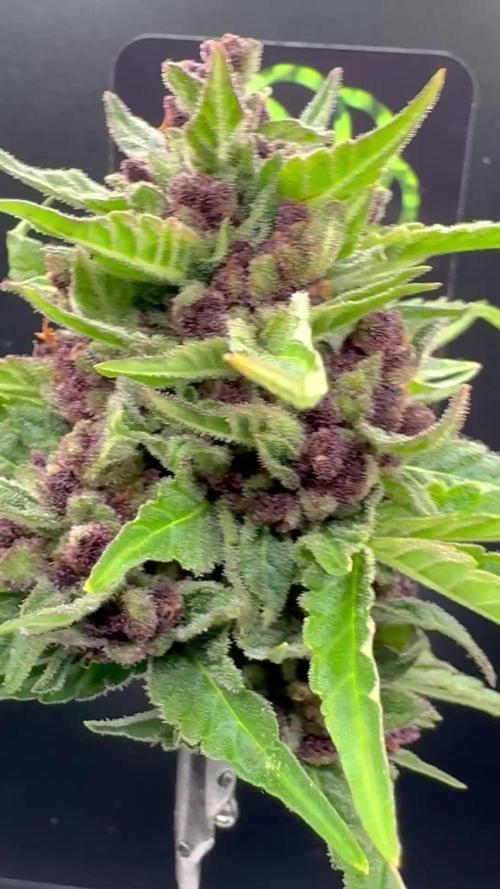


Likes
27
Share

@DeepRootsGrowTrees
Follow
Week #13 Gelato-K By Kannabia
Week#13 Feb1st-Feb 8th
Week #2 of Flower she's really a nice plant busy with even growth she has many tops trichomes coverage is looking great already.
Likes
24
Share


@Green_Tool
Follow
Riegos diarios de 50 ml día y 50 ml noche, EC a 0.4 Calmax
1 Vez a la Semana riego solo agua más Great White + Orca


Likes
6
Share

@Splint
Follow
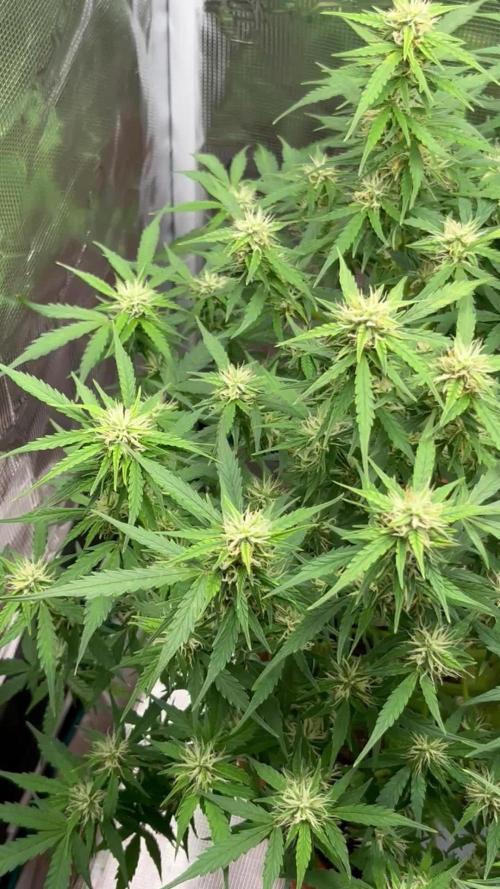
Everything seems to be going great so far! I’m extremely happy with this grow, lots of new trichomes have shown up this week and the smell is still strong.
She’s adapted to the change in lighting really well.
I’m still removing some excess leaves from time to time to avoid mold growing.
Otherwise no problems this week!


Likes
17
Share


@bsplayerone
Follow
Time to start feeding her! She is doing ok but a little smaller compared to other diaries. I figure its because the heat. I’m hoping this is the week she starts to run. Wish me luck!!
Likes
7
Share


@StickyFingah420
Follow
Se acerca el fin para esta hermosa LCC, los tricomas están casi en el punto justo y la cenecencia se logró con éxito, ahora solo esperar un poco más y estaremos cosechando con casi 76 días desde que salió a la superficie 🤓


Likes
34
Share


@AshBrand
Follow
12/1/21 - Day 15 of flower. We made it to week 3! We are done with Open Sesame and have moved on to Beastie Bloomz. Pictures will be added soon. They look so good! On track and we’ll just let them bud.
12/2/21 - Wow! They look great today. Plucked some leaves off today and gave them a feeding. Check out the video I posted for today.
12/3/21 - Looking good today. A little stretch on Lemon Kush and Sour OG but they look amazing still. This is going to be a badass harvest! We bumped the light to 100% power as well. We will run this out until harvest.
12/4/21 - Looking good. Buds are getting bigger by the day.
12/5/21 - Today we noticed the humidity is a high and condensation is forming on the walls of the tent. We will be buying a dehumidifier soon.
12/6/21 - They are all looking good! Everything is on autopilot.
12/7/21 - Last day of week 3 flower. Tomorrow starts day 28. We are so excited!

Likes
15
Share

@Chucky324
Follow
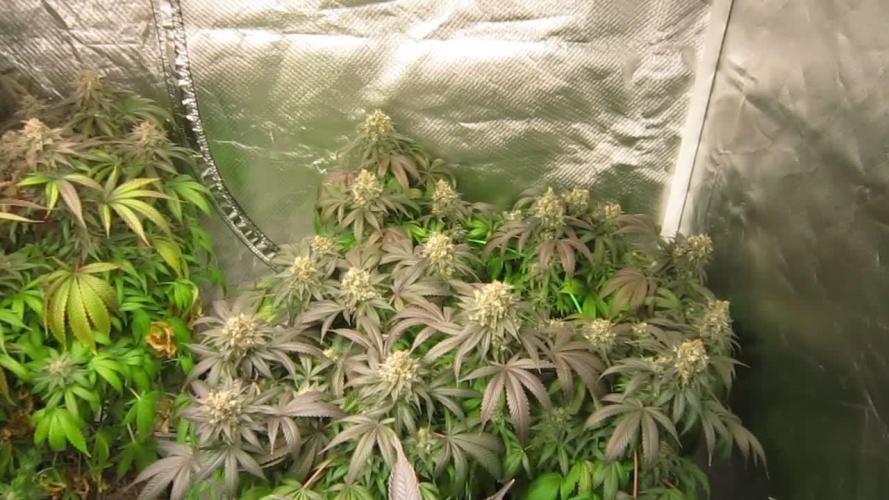
Hello. These is the last pics before harvest.
I'll start harvesting tomorrow.
Back in a couple of weeks with the harvest report and smoke report and total grams.
OK. Keep Growing Straight.
Chuck.
Likes
3
Share

@GERGrowDesigns
Follow
Dear Growers ,
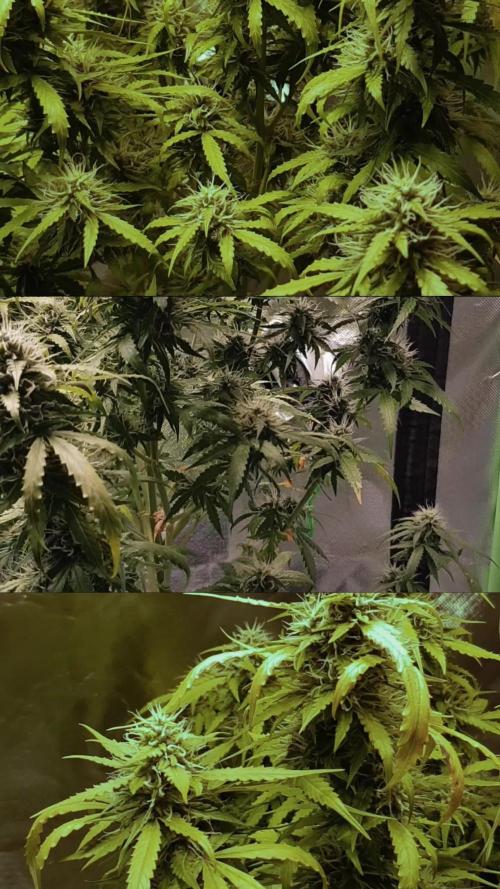
Over the next weeks, we’re excited to share a very special project with you: Sensi Seeds Supreme Jack F1 Automatic 2025 Release
With dedication, knowledge, and hands-on practice, we’ll guide you step by step through the journey—watch with us as growth, development, and small wonders unfold before your eyes.
Whether you're a beginner or an expert, you are warmly invited to join, ask questions, and share your own experiences along the way!
Project Setup & Conditions:
• Brand/Manufacturer: Sensi Seeds
• Tent: 120cmx60cmx80cm
• Light: 2x 200 Watt Full Spectrum
• Humidity: 45%
• Soil: Narcos Organix Mix
• Nutrients: Narcos Products
• pH Value: 5.8
A Special Thanks To
Sensi Seeds
for the amazing collaboration, trust, and generous support in making this project possible. Your contribution is truly appreciated!
Congratulations on Your Own Projects!
We celebrate your growth, your creativity, and the passion you bring to the table. It’s truly inspiring to witness at Each visit .
Stay curious and keep up Growing —we look forward to welcoming you back for the next chapter soon!
Likes
66
Share


@DogDoctorOfficial
Follow
So far so good they are handling quite good , keeping ,y Ppfds around 1400 on average with some points closer to 1600 Umols/m2s 😜🤦♂️💪💪💪 always believing hahahaha
Day 32 Flower and all seems to be running on track , leafs are tip burned just as i like , this means im pushing them to they’re limits , more they wold go in lock mode and that as we all know is not a good thing 😆
Day 32 Flower and I’m starting to think in defoliation again, i know im not supposed, but as always i will read my garden and leaf strip as many times needed during flower or no flower time 😆😜😅💚 let’s see how they grow but i fell they need space asap already 😆💚💚💚
Trying big numbers on the Ppfd department and see how far they can take without supplement extra CO2, i mean i have the bags they help but lol
Ppfd- 1400 Umol/m2s
VPD- 1.51 kPa
Girls :
Tropicana Poison @sweetseeds - 7X
Chocolate Skunk @00seeds - 2X
Badazz Cookies OG @seedsman- 3X
Lights 2X Lumatek Zeus 465W Compact Pro @ 100%
All i Grow is medicine for myself, i do it with love for the love 💚💚💚
Growers love to you all


Likes
7
Share


@Cultivatorcarlos
Follow
december 20th gave her half a gallon of dechlorinated tap water phd to 6.6 with 1/2 tsp of bloom nutes to each 3 gallons of water. runoff tested at 6.3 ph. she was showing a few deficiencies


Likes
26
Share

@TrickzGrowz
Follow
Servus Moin!
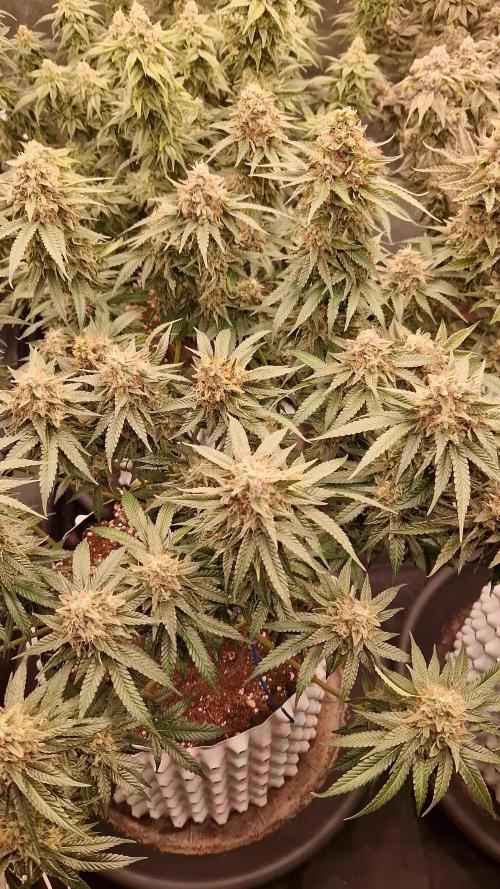
Die Buds entwickeln sich langsam richtig aus. Sie sind aber jetzt schon riesig und richtig fest.
Super klebrig und mega süß im Geruch.
