


shorts_status_processing


@MallorcaBreeders
Follow
Esta semana empiezo con la poda de bajos, y a clonar esos bajos para guardar genética y quedarme la mejor planta del cultivo. en unos días empieza la floración. un saludo compañeros


@Jerrza
Follow
So yeah here we in week 3 starting some LTS btw i’m growing on plagron terra grow some in not adding any nutrients yet i’m gonna use like more nutrients on my nexr grow but for the first time i took it all easy


@Tidzs
Follow
Buon inizio anno a tutti!
02/01/2023 La fioritura è ufficialmente iniziata, tutte le piante hanno mostrato il sesso e iniziare a far uscire i primi fiorellini
03/01/2023 Aprendo il box appena accese le luci nonostante aver dato una massiccia dose d'acqua il 01/01/2023 le piante avevano nuovamente sete come si può notare dalle due foto, fatte una prima dell'irrigazione e una circa un ora dopo l'irrigazione, notevolmente più vispe!
05/01/2023 Ora mai alle piante piace bere almeno una volta ogni due giorni, quindi anche oggi sono state annaffiate, 8 litri senza fertilizzare
07/01/2023 Anche oggi dati altri 8 litri di acqua senza fertilizzare
08/01/2023 Purtroppo ho trovato quello che sembra essere una sacca maschile su una pianta, per sicurezza e non rovinare il raccolto ho preferito eliminarla, per provare a coprire lo spazio lasciato vuoto nella rete ho piegato un pochino qualche ramo delle piante vicine.


@123Grow
Follow
It time for push and tuck. I did the feeding for transition ( 1:1:1 ratio). I watch them for about 3 hours, then turn the lights out for 24-36 hours. This depletes the hormone that says veg and switches to flowering.
Espoma seed starter mix : 1 TBSP
Jobe’s Citrus Fruits : 1 TBSP
3 TBSP earth worm castings
1/4 tsp recharge
Aerated for 30 hours at 68 degrees ( nice and frothy 😂😂)
1 gallon of water 750-765 ppms at 1:1:1 ratio. This will last for the first 6-7 days, then we switch to 1:3:2 ratio. I will list what I use for 1:3:2 as it will change from week to week.
10-18 Lights are out for 30 hours and we will see how they look. Lights go back on at 6am EST.
10-19 The lights are kicking. Did some tucking. I did 30 hours of dark before introducing 12-12 light schedule. I can see some of the pre-flower hairs sticking out. 8-8-8 at 760 something ppm’s went well. This is the first run I will be hand feeding the plants throughout flower. I relied on dry amendments and had some success, but I think I can push the bar higher having more control over the feedings. I will be doing a total of 8 feedings.
10-22 The trellis is filling up!!! I added photosynthesis plus to the mix and some fulvic/humic acid. All the ladies are praying up.


@MadeInGermany
Follow
Info:
Unfortunately, I had to find out that my account is used for fake pages in social media.
I am only active here on growdiaries.
I am not on facebook instagram twitter etc All accounts except this one are fake.
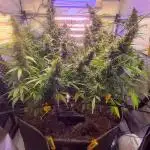
Flowering day 44
since time change
to 12/12 h.
Hey guys :-) .
The lady is developing very well.
The buds keep getting thicker and smell better and better :-).
This week it was poured twice with 1.2 l each (sewing materials, see table above).
The tent was cleaned and everything checked.
Stay healthy 🙏🏻
You can buy this Nutrients at :
https://greenbuzzliquids.com/en/shop/
With the discount code: Made_in_Germany you get a discount of 15% on all products from an order value of 100 euros.
You can buy This Strain at :
www.Zamnesia.com
☝️🏼☝️🏼☝️🏼☝️🏼☝️🏼☝️🏼
Strain
Gelato clone from mother (Zamnesia )
☝️
Genetics: Wedding Cake x Gelato x Gelato 33
Vega lamp:
2 x Todogrow Led
Quantum Board 100 W
💡
Bloom Lamp :
2 x Todogrow Led
Cxb 3590 COB 3500 K 205W
💡💡☝️🏼
Soil :
Canna Coco Professional +
☝️🏼
Nutrients :
Green Buzz Liquids :
Organic Grow Liquid
Organic Bloom Liquid
Organic more PK
More Roots
Fast Buds
Humic Acid Plus
Growzyme Big Fruits
Clean Fruits
Cal / Mag
Organic Ph - Pulver
☝️🏼🌱
Water: Osmosis water mixed with normal water (24 hours stale that the chlorine evaporates) to 0.2 EC. Add Cal / Mag to 0.4 Ec Ph with Organic Ph - to 5.8 - 6.4



@Ultraviolet
Follow
Yellow butterfly came to see me the other day; that was nice.
Starting to show signs of stress on the odd leaf, localized isolated blips, blemishes, who said growing up was going to be easy!
Smaller leaves have less surface area for stomata to occupy, so the stomata are packed more densely to maintain adequate gas exchange. Smaller leaves might have higher stomatal density to compensate for their smaller size, potentially maximizing carbon uptake and minimizing water loss. Environmental conditions like light intensity and water availability can influence stomatal density, and these factors can affect leaf size as well. Leaf development involves cell division and expansion, and stomatal differentiation is sensitive to these processes. In essence, the smaller leaf size can lead to a higher stomatal density due to the constraints of available space and the need to optimize gas exchange for photosynthesis and transpiration. In the long term, UV-B radiation can lead to more complex changes in stomatal morphology, including effects on both stomatal density and size, potentially impacting carbon sequestration and water use. In essence, UV-B can be a double-edged sword for stomata: It can induce stomatal closure and potentially reduce stomatal size, but it may also trigger an increase in stomatal density as a compensatory mechanism. It is generally more efficient for gas exchange to have smaller leaves with a higher stomatal density, rather than large leaves with lower stomatal density. This is because smaller stomata can facilitate faster gas exchange due to shorter diffusion pathways, even though they may have the same total pore area as fewer, larger stomata. Leaf size tends to decrease in colder climates to reduce heat loss, while larger leaves are more common in warmer, humid environments. Plants in arid regions often develop smaller leaves with a thicker cuticle and/or hairs to minimize water loss through transpiration. Conversely, plants in wet environments may have larger leaves and drip tips to facilitate water runoff. Leaf size and shape can vary based on light availability. For example, leaves in shaded areas may be larger and thinner to maximize light absorption. Leaf mass per area (LMA) can be higher in stressful environments with limited nutrients, indicating a greater investment in structural components for protection and critical resource conservation. Wind speed, humidity, and soil conditions can also influence leaf morphology, leading to variations in leaf shape, size, and surface characteristics. Small leaves: Reduce water loss in arid or cold climates.
Environmental conditions significantly affect gene expression in plants. Plants are sessile organisms, meaning they cannot move to escape unfavorable conditions, so they rely on gene expression to adapt to their surroundings. Environmental factors like light, temperature, water, and nutrient availability can trigger changes in gene expression, allowing plants to respond to and survive in diverse environments.
Depending on the environment a young seedling encounters, the developmental program following seed germination could be skotomorphogenesis in the dark or photomorphogenesis in the light. Light signals are interpreted by a repertoire of photoreceptors followed by sophisticated gene expression networks, eventually resulting in developmental changes. The expression and functions of photoreceptors and key signaling molecules are highly coordinated and regulated at multiple levels of the central dogma in molecular biology. Light activates gene expression through the actions of positive transcriptional regulators and the relaxation of chromatin by histone acetylation. Small regulatory RNAs help attenuate the expression of light-responsive genes. Alternative splicing, protein phosphorylation/dephosphorylation, the formation of diverse transcriptional complexes, and selective protein degradation all contribute to proteome diversity and change the functions of individual proteins.
Photomorphogenesis, the light-driven developmental changes in plants, significantly impacts gene expression. It involves a cascade of events where light signals, perceived by photoreceptors, trigger changes in gene expression patterns, ultimately leading to the development of a plant in response to its light environment.
Genes are expressed, not dictated! While having the potential to encode proteins, genes are not automatically and constantly active. Instead, their expression (the process of turning them into proteins) is carefully regulated by the cell, responding to internal and external signals. This means that genes can be "turned on" or "turned off," and the level of expression can be adjusted, depending on the cell's needs and the surrounding environment. In plants, genes are not simply "on" or "off" but rather their expression is carefully regulated based on various factors, including the cell type, developmental stage, and environmental conditions. This means that while all cells in a plant contain the same genetic information (the same genes), different cells will express different subsets of those genes at different times. This regulation is crucial for the proper functioning and development of the plant.
When a green plant is exposed to red light, much of the red light is absorbed, but some is also reflected back. The reflected red light, along with any blue light reflected from other parts of the plant, can be perceived by our eyes as purple.
Carotenoids absorb light in blue-green region of the visible spectrum, complementing chlorophyll's absorption in the red region. They safeguard the photosynthetic machinery from excessive light by activating singlet oxygen, an oxidant formed during photosynthesis. Carotenoids also quench triplet chlorophyll, which can negatively affect photosynthesis, and scavenge reactive oxygen species (ROS) that can damage cellular proteins. Additionally, carotenoid derivatives signal plant development and responses to environmental cues. They serve as precursors for the biosynthesis of phytohormones such as abscisic acid () and strigolactones (SLs). These pigments are responsible for the orange, red, and yellow hues of fruits and vegetables, while acting as free scavengers to protect plants during photosynthesis.
Singlet oxygen (¹O₂) is an electronically excited state of molecular oxygen (O₂). Singlet oxygen is produced as a byproduct during photosynthesis, primarily within the photosystem II (PSII) reaction center and light-harvesting antenna complex. This occurs when excess energy from excited chlorophyll molecules is transferred to molecular oxygen. While singlet oxygen can cause oxidative damage, plants have mechanisms to manage its production and mitigate its harmful effects.
Singlet oxygen (¹O₂) is considered a reactive oxygen species (ROS). It's a form of oxygen with higher energy and reactivity compared to the more common triplet oxygen found in its ground state. Singlet oxygen is generated both in biological systems, such as during photosynthesis in plants, and in cellular processes, and through chemical and photochemical reactions. While singlet oxygen is a ROS, it's important to note that it differs from other ROS like superoxide (O₂⁻), hydrogen peroxide (H₂O₂), and hydroxyl radicals (OH) in its formation, reactivity, and specific biological roles. Non-photochemical quenching (NPQ) protects plants from damage caused by reactive oxygen species (ROS) by dissipating excess light energy as heat. This process reduces the overexcitation of photosynthetic pigments, which can lead to the production of ROS, thus mitigating the potential for photodamage. Zeaxanthin, a carotenoid pigment, plays a crucial role in photoprotection in plants by both enhancing non-photochemical quenching (NPQ) and scavenging reactive oxygen species (ROS). In high-light conditions, zeaxanthin is synthesized from violaxanthin through the xanthophyll cycle, and this zeaxanthin then facilitates heat dissipation of excess light energy (NPQ) and quenches harmful ROS.
The Issue of Singlet Oxygen!!
ROS Formation: Blue light, with its higher energy photons, can promote the formation of reactive oxygen species (ROS), including singlet oxygen, within the plant.
Potential Damage: High levels of ROS can damage cellular components, including proteins, lipids, and DNA, potentially impacting plant health and productivity.
Balancing Act: A balanced spectrum of light, including both blue and red light, is crucial for mitigating the harmful effects of excessive blue light and promoting optimal plant growth and stress tolerance.
The Importance of Red Light:
Red light (especially far-red) can help to mitigate the negative effects of excessive blue light by:
Balancing the Photoreceptor Response: Red light can influence the activity of photoreceptors like phytochrome, which are involved in regulating plant responses to different light wavelengths.
Enhancing Antioxidant Production: Red and blue light can stimulate the production of antioxidants, which help to neutralize ROS and protect the plant from oxidative damage.
Optimizing Photosynthesis: Red light is efficiently used in photosynthesis, and its combination with blue light can lead to increased photosynthetic efficiency and biomass production.
In controlled environments like greenhouses and vertical farms, optimizing the ratio of blue and red light is a key strategy for promoting healthy plant growth and yield.
Understanding the interplay between blue light signaling, ROS production, and antioxidant defense mechanisms can inform breeding programs and biotechnological interventions aimed at improving plant stress resistance. In summary, while blue light is essential for plant development and photosynthesis, it's crucial to balance it with other light wavelengths, particularly red light, to prevent excessive ROS formation and promote overall plant health. Oxidative damage in plants occurs when there's an imbalance between the production of reactive oxygen species (ROS) and the plant's ability to neutralize them, leading to cellular damage. This imbalance, known as oxidative stress, can result from various environmental stressors, affecting plant growth, development, and overall productivity.
Causes of Oxidative Damage: Abiotic stresses: These include extreme temperatures (heat and cold), drought, salinity, heavy metal toxicity, and excessive light. Biotic stresses: Pathogen attacks and insect infestations can also trigger oxidative stress. Metabolic processes: Normal cellular activities, particularly in chloroplasts, mitochondria, and peroxisomes, can generate ROS as byproducts. Certain chlorophyll biosynthesis intermediates can produce singlet oxygen (1O2), a potent ROS, leading to oxidative damage. ROS can damage lipids (lipid peroxidation), proteins, carbohydrates, and nucleic acids (DNA). Oxidative stress can compromise the integrity of cell membranes, affecting their function and permeability. Oxidative damage can interfere with essential cellular functions, including photosynthesis, respiration, and signal transduction. In severe cases, oxidative stress can trigger programmed cell death (apoptosis). Oxidative damage can lead to stunted growth, reduced biomass, and lower crop yields.
Plants have evolved intricate antioxidant defense systems to counteract oxidative stress. These include: Enzymes like superoxide dismutase (SOD), catalase (CAT), and various peroxidases scavenge ROS and neutralize their damaging effects. Antioxidant molecules like glutathione, ascorbic acid (vitamin C), C60 fullerene, and carotenoids directly neutralize ROS. Developing plant varieties with gene expression focused on enhanced antioxidant capacity and stress tolerance is crucial. Optimizing irrigation, fertilization, and other management practices can help minimize stress and oxidative damage. Applying antioxidant compounds or elicitors can help plants cope with oxidative stress. Introducing genes for enhanced antioxidant enzymes or stress-related proteins over generations.
Phytohormones, also known as plant hormones, are a group of naturally occurring organic compounds that regulate plant growth, development, and various physiological processes. The five major classes of phytohormones are: auxins, gibberellins, cytokinins, ethylene, and abscisic acid. In addition to these, other phytohormones like brassinosteroids, jasmonates, and salicylates also play significant roles.
Here's a breakdown of the key phytohormones:
Auxins: Primarily involved in cell elongation, root initiation, and apical dominance.
Gibberellins: Promote stem elongation, seed germination, and flowering.
Cytokinins: Stimulate cell division and differentiation, and delay leaf senescence.
Ethylene: Regulates fruit ripening, leaf abscission, and senescence.
Abscisic acid (ABA): Plays a role in seed dormancy, stomatal closure, and stress responses.
Brassinosteroids: Involved in cell elongation, division, and stress responses.
Jasmonates: Regulate plant defense against pathogens and herbivores, as well as other processes.
Salicylic acid: Plays a role in plant defense against pathogens.
1. Red and Far-Red Light (Phytochromes):
Red light:
Primarily activates the phytochrome system, converting it to its active form (Pfr), which promotes processes like stem elongation and flowering.
Far-red light:
Inhibits the phytochrome system by converting the active Pfr form back to the inactive Pr form. This can trigger shade avoidance responses and inhibit germination.
Phytohormones:
Red and far-red light regulate phytohormones like auxin and gibberellins, which are involved in stem elongation and other growth processes.
2. Blue Light (Cryptochromes and Phototropins):
Blue light:
Activates cryptochromes and phototropins, which are involved in various processes like stomatal opening, seedling de-etiolation, and phototropism (growth towards light).
Phytohormones:
Blue light affects auxin levels, influencing stem growth, and also impacts other phytohormones involved in these processes.
Example:
Blue light can promote vegetative growth and can interact with red light to promote flowering.
3. UV-B Light (UV-B Receptors):
UV-B light:
Perceived by UVR8 receptors, it can affect plant growth and development and has roles in stress responses, like UV protection.
Phytohormones:
UV-B light can influence phytohormones involved in stress responses, potentially affecting growth and development.
4. Other Colors:
Green light:
Plants are generally less sensitive to green light, as chlorophyll reflects it.
Other wavelengths:
While less studied, other wavelengths can also influence plant growth and development through interactions with different photoreceptors and phytohormones.
Key Points:
Cross-Signaling:
Plants often experience a mix of light wavelengths, leading to complex interactions between different photoreceptors and phytohormones.
Species Variability:
The precise effects of light color on phytohormones can vary between different plant species.
Hormonal Interactions:
Phytohormones don't act in isolation; their interactions and interplay with other phytohormones and environmental signals are critical for plant responses.
The spectral ratio of light (the composition of different colors of light) significantly influences a plant's hormonal balance. Different wavelengths of light are perceived by specific photoreceptors in plants, which in turn regulate the production and activity of various plant hormones (phytohormones). These hormones then control a wide range of developmental processes.


@ChewiesGrow420
Follow
Today on day 17 from date of birth Iam preparing a worm casting tea. In a cheese cloth bag ,Made up of 2 cups of worm castings 2 tablespoons of unsulfured molasses,2 tablespoons of mineralized phosphate (bat shit) ,2 tablespoons of soluble seaweed extract . 2 tablespoons of alfalfa meal 2 tablespoons of all purpose 4-4-4 all Gia green products other than. I also sprinkled in some great white premium mycorrhizae inton2 gallons of water. Tea will brew for 24 hours before applying.


@NiBaMeCa420
Follow
unprecedented how fast they grow they grow on average off 10 cm per day which I have never experienced on soil but had many problems to keep the pH under control I do notice that less is more on rdwc now that I have reduced the nutrition, the pH remains a lot more stable 4 days ago they transferred to 12 12 now comes the fun part I also ordered a co2 set so from next week we will add co2 to the space


@Audi_grows98
Follow
Gorilla cookies has been thriving and starting her transition into flower,super excited to see this one chunk up🔥💚
Cherry cola is transitioning very nicely,taking very well to the feedings and all training. Super excited to see this one chunk up as well🔥 Both cultivars are right on schedule and thriving nicely 💚


@cmstacker01
Follow
167 grams for 2 plants. went 9 weeks,
Had a bit budrot in one of the phenos at week 10.
Very easy to grow, not a big stretcher
imo.
Maybe double it size.
Havee a gassy pheno and a fruity pheno.
If you look for a outstanding indica with extra on the taste e and smell and a heavy hitter...search no further


@Cultivatorcarlos
Follow
Week 4 was actually pretty smooth. she was showing nitrogen and potassium deficiencies because she was being terribly underfed and because i had weened her off the veg nutes WAY too soon. I found the dyna gro nutrient schedule and ive been following that. i will definitely be following the schedule much better next round as i wasnt actually aware they had a schedule out. Shes currently week 5 day 1 and shes already fat af and super trichomey.s he still got at least 2 weeks left. she might be ready by week 7 honestly tho who knows guess well see. Ive been giving her 1 gal each time of dechlorinated tap water just straight water. it has been phd to 6.6 ph. runoff tested at 6.3 ph. will probably flush one last time before continuing the bloom feed.


@Selkot
Follow
End of summer and the end of the term
A satisfying double run, both indoors (4 × Apple Strudel) and outdoors (1 × Strawberry Gorilla) :
680 g trimmed and cured in total, now quietly maturing until the smoke test.
The outdoor yield remains modest, as the Northern European climate and sunshine levels don’t (yet) allow for a large harvest. But I already know what to do to improve the numbers next year: a much lighter substrate, nutrient doses adjusted to slower growth than indoors, and finding a spot with 100% full-day exposure.
Now, a little break for a few weeks before starting a few more seeds 😊
shorts_status_processing


@MO_Gardens
Follow
Still trucking along. I had my light turned up a bit high for the first week, I turned them down a few days ago and all the plants seemed to enjoy it. Nothing else to report really.
shorts_status_processing


@Sider79
Follow
Some Faded bottom leaves . Temps are lower . Not sure if my questions are seen but moving forward with my first Auto Blow Dream grow.


@SpaceGorilla_01
Follow
Hey guys
Didn't get this up at the weekend sorry but here we go lil peak in the indica garden.
So we've encountered a slight issue what we thought was autos is actually photos so its out a lil pressure on in the garden bit stressfull for me as im not a photo man none other the less I am pushing tru so I no what im doing.
So we've culled 7 gals last week 😪😪 I no I no im prepared for the comments and unfortunately today we have culled another 3 2 of which are on my own organic Ammendments and are genetics issues and the other 1 is on another feed other tha indica I dnt show these pics as this is our indica grow the other pocs get posted in Insta @Space_Gorilla_Grows_Autos .
So we will leave tht there like I say been very stressful..
back to topic the photo gals on indica feed are massive soooo bushy loads of sites due to sell ed defoliateation as I say I would of trained them well avin kown they were photos 📷
but hey they are doing excellent both our cindy 99s and our 🍊 🍦 so ill be taking some cutting gs off for sure 👍
Really happy with how things are going despite the hicups but when you working with the best in the buizz @indica.nutrients what else would you expect take a look at the pics and lil vid ... the vid is only short as we've got another issue the 5x5 pit is nit fit for purpose and so in it has been replaced by the hydro shop they got knto the supplier and they av sent out a more premium version ✌️🙌👊💚🙏


@Chupadeos
Follow
Se ha realizado un lavado de raíces,debido a la calor las flores les está costando engordar por lo demás muy bien ,no tengo quejas para el estrés que están sufriendo


@Naujas
Follow
116 days!!!!! and here she is ready to reveal her inner beauty, taste, smell, and effect :)It was an amazing journey with @Weedseedsexpress, the girl was just amazing throughout her growth, she was satisfied with everything I gave her :) This is my first girl with such beautiful colors of leaves and flowers, she is simply unique :) Her smell is so strong that a day after she was cut and now, as I write this comment, I can still smell her aroma in my house, it is amazing, it reminds me of a big "party" :D So thank you @Weedseedsexpress for the opportunity, I will be open to your suggestions in the future - you are amazing :) and now I can't wait to taste her :) then I will provide her dry weight, stay tuned :) good luck to everyone :).


@GreenHobbit
Follow
The Hobbit Hole – Woche 10
Woche 10 ist geschafft – und langsam wird es im Hobbit Hole richtig spannend.
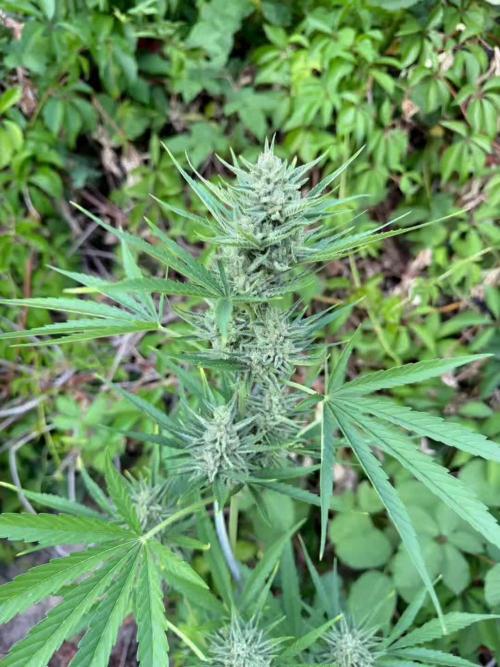
Die drei Damen gehen inzwischen deutlich unterschiedliche Wege. Cinderella steht weiterhin sehr vital da und trägt inzwischen eine ganze Reihe schöner, frostiger Blüten. Unter dem Mikroskop zeigt sie überwiegend milchige Trichome, allerdings auch noch einige klare Köpfe und bislang kaum Amber. Sie bekommt also definitiv noch Zeit.
Purple Punch gefällt mir diese Woche besonders gut. Die Blüten werden zunehmend kompakter und die dunklen bzw. violetten Farbtöne kommen immer stärker durch. Auch hier zeigt das Mikroskop hauptsächlich milchige Trichome mit noch einigen klaren Köpfen. Wirklich viel Amber ist noch nicht vorhanden – auch sie darf weiterreifen.
Gelato bleibt dagegen die deutlich reifste der drei. Die Pflanze geht sichtbar in ihren herbstlichen Fade und unter dem Mikroskop sind inzwischen neben vielen milchigen Trichomen bereits eindeutig bernsteinfarbene Köpfe zu finden. Trotzdem werde ich sie noch nicht ernten. Ich möchte sie bewusst etwas weiter ausreifen lassen und bin gespannt, wie sich das Trichombild in den nächsten Tagen verändert.
Besonders erfreulich nach dem wechselhaften Outdoor-Wetter: Alle Pflanzen sind vollständig abgetrocknet und weiterhin ohne sichtbare Anzeichen von Bud Rot oder anderer Fäulnis. Das bleibt jetzt natürlich einer der wichtigsten Punkte bei den täglichen Kontrollen.
Ab jetzt entscheidet weniger der Kalender und immer mehr das Mikroskop. Die nächsten Tage könnten vor allem bei der Gelato interessant werden.
🇬🇧 English
Week 10 is complete – and things are getting really exciting in the Hobbit Hole now.
The three ladies are clearly starting to follow different paths. Cinderella still looks very healthy and has developed plenty of beautiful, frosty flowers. Under the microscope, most trichomes are cloudy, although there are still quite a few clear heads and hardly any amber so far. She definitely needs more time.
Purple Punch is one of my favorites this week. Her flowers are becoming increasingly compact and the darker, purple shades are showing more and more. The microscope also shows mainly cloudy trichomes with some clear ones remaining. There isn’t much amber yet, so she will continue to ripen as well.
Gelato, on the other hand, is clearly the most mature of the three. The plant is visibly entering her autumn fade, and under the microscope I can now see plenty of cloudy trichomes together with the first clearly amber heads. I’m still not harvesting her yet. I deliberately want to let her mature a little further and see how the trichome ratio develops over the coming days.
The best news after the changeable outdoor weather: all plants have dried completely and there are still no visible signs of bud rot or other fungal problems. This will remain one of the most important things to check every day from now on.
From this point forward, the calendar becomes less important and the microscope takes over. The next few days could be especially interesting for Gelato.


@jayizrollin
Follow
Ended up pulling about 65 grams from Top Gun2, another 55 from the Top Gun1 I harvested earlier, fun grow, I was lazy with this diary as I was more excited for gorilla cookies, I’ll try to keep to one diary from now.
