


Likes
Comments
Share


@Medgrow93
Follow
Had mold at the very end so ended chopping then down early. Delicious smell. Smells like vomit or piss and gets stronger as they continue to cure.

Likes
2
Share

@GingerGarageGrow420
Follow
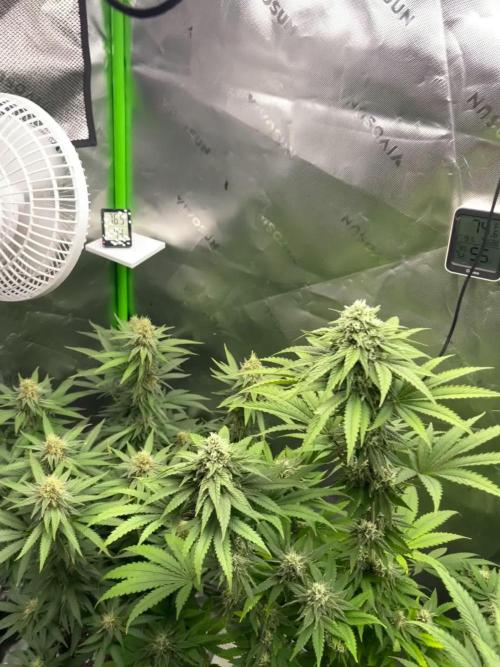
Strain: Chill Out OG F4
Day 35 Flower
Day: 84 from sprout
Medium: Fox Farm Ocean Forest
Light: Vivosun VS2000 at 75%
VPD: 1.5 kPa
Light Distance: 12 inches
Watering: By hand, ~oz daily
Nutrients: pH Perfect Advanced Nutrition Grow, Bloom, Micro 2 ml / L, 1 ml / L big bud
Pistols and terps looking great
Processing
Likes
96
Share


@The_Projexx
Follow
So this marks the beginning of week 4! At then end of week 3 I noticed a bit of over watering as well as possible nute burn (early early stages) so this week I'm decreasing the dosages on EVERYTHING and I'm going to let my baby's dry out ! This will be their final week in the 5" square pot as I'm going to move them into their new and final homes. I want to thank everyone who comes and stops by my diaries you guys are wonderful people and I've learned so much already ! So keep on keeping on and remember to check my diaries daily for updates !!
Anyone checking out the pictures it isn't mites or any of that I been having a battle to get them to my standard of clean since the transplant. Slow and gentle is the way so no damages are done ! :)
-Happy Growing !

Likes
61
Share


@Natrona
Follow
Auto Opium week 8 8/11-17
For my outside ladies, Opium, Auto Opium, Fractal, and Lemon Cake not much changed. They continue lovin life outside. These ladies are maturing as many fans are yellowing and falling off.
Temps are comfortable following Storm Debbie., in the 80 with low humidity Auto Opium is thin and spindly, branches continue to bend so I added hoop supports. I sure hope she makes it to the end in one piece. If necessary, I remove the colas and chuck into the freezer.. Buds are fattening up, trichomes are minimal at this time but some fragrance is starting to be noticed.
Thank you @DivineSeeds
Thanks for the visits, likes and comments, I appreciate all the plant love💚.
Have fun & love what you grow 💚
Sending you good vibes of love, light, and healing 💫
💫Natrona 💫

Processing
Likes
2
Share


@GrowXown
Follow
Seedling popped on 08/09 its been a bit of slow growth at the moment after seedling has popped i had it in a solo cup for about 5/6 days an transplanted into final pot on 17/09 . Hoping for some rapid growth for the next few weeks.👊
Likes
3
Share

@ChubbyBudBros
Follow
-
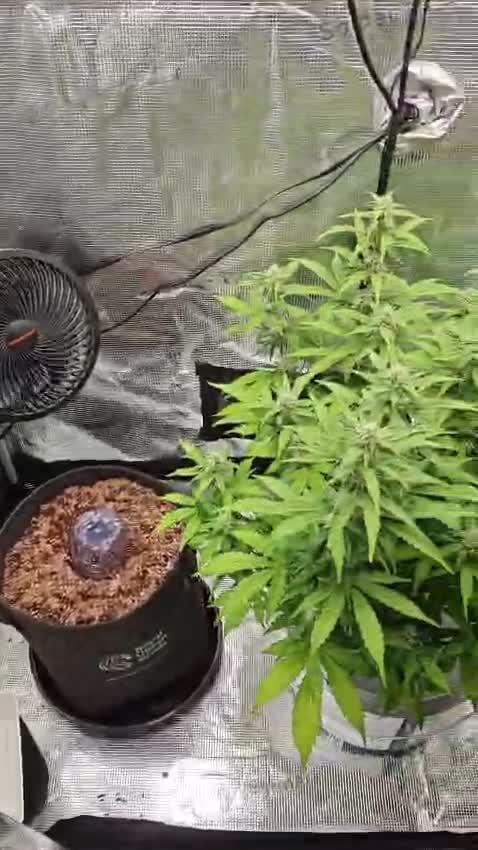
Day 57
Noticed quite a dramatic drop in pH today, went from 6.0 to 5.3 in one day. I noticed one of my bubblers was blocked, put in a new one and it's fixed now, hope the issue was due to that. the plant is doing good otherwise. Brought the pH back up to 6.2 now.
Day 58
Was happy to see today that the pH drift has been fixed! Seems like the broken bubbler was the problem. pH only dropped down to 6.1 today.
I topped the reservoir up with some 6.1 pH water to keep it there. Happy this is fixed now .
Day 59
Sadly the water bubbler was not the issue :/. pH dropped down again from 6.1 to 5.3. I fear that she is just drinking so much compared to how small the water reservoir is, which makes the nutrient concentration very strong, brining down the pH. I did a res change today, Let's see what it looks like tomorrow.
Day 60
pH went up to 6.5 today after the water res change, which seems to be how it always goes. It goes up the first 1-2 days then it drops hard the next days after. I gave it 6.1pH water today topped the res up more than usual because I will be gone for 2 days, hopefully the pH will stay somewhat stable until I get back.
Day 62
Back from my long weekend! The reservoir still had about 1 liter in it, she been drinking a lot. Came home and immediately refilled the reservoir. Noticed pH had also dropped so 5.1!! With the newly added water now it's sitting at 5.9 now. Seems like she is doing well however. Some of the of lower fan leaves yellowed a lot more but that is probably due to all the flowers developing right now.
Day 63
Water topped up again with 1.5 liters of pH 6.6 water, which brought the pH back up to 6.1.


Likes
6
Share


@I_roll_my_own_420
Follow
Hey growers, another week finished. Plants got much bigger and buds are growing nicely. Smells starts to be fruity and plants are looking beautiful. Cheers!

Likes
70
Share


@Roberts
Follow
Big Fat Wedding Cake is growing great under the Spider Farmer G5000/UVR40 lights, in the Athena blended line nutrition. I started adding ph to mix over last week. She is developing some colas now, and looking very healthy. The grow has been going pretty smooth. Thank you Spider Farmer, Athena, and DutchFem Seeds. 🤜🏻🤛🏻🌱🌱🌱
Thank you grow diaries community for the 👇likes👇, follows, comments, and subscriptions on my YouTube channel👇. ❄️🌱🍻
Happy Growing 🌱🌱🌱
https://youtube.com/channel/UCAhN7yRzWLpcaRHhMIQ7X4g
Spider Farmer Official Website Links:
US&Worldwide: https://www.spider-farmer.com
CA: https://spiderfarmer.ca
UK: https://spiderfarmer.co.uk
EU: https://spiderfarmer.eu
AU: https://spiderfarmer.com.au
G5000 Light Amazon Link:
amzn.to/4643esa
UVR 40:
https://www.amazon.com/dp/B0BR7SGTHS
Discount code: saveurcash (Stackable)

Likes
7
Share

@TheFamilyShire
Follow
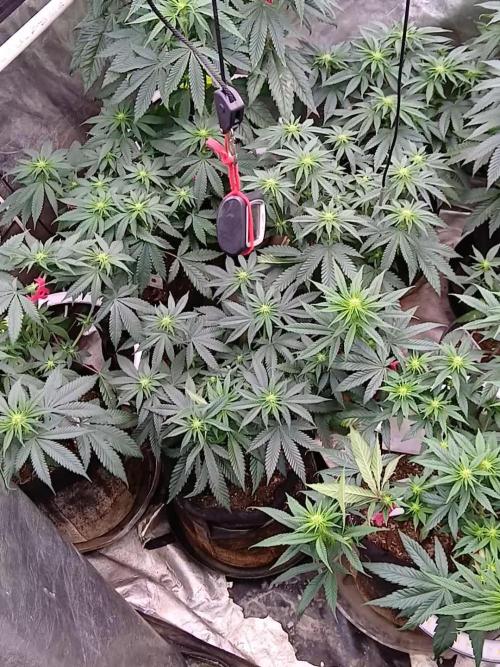
I accidentally left the under canopy lights on like 4 or 5 hours during the dark cycle day 3 or 4 of flower. I caught it and turned them off.
They all looked like they was still sleeping. Fingers crossed. Ive been having to water them every 3 days. I expect now that I turned on the under canopy they will drink faster. Love these Elufah lights.
Made a couple videos.
I also have 3x clones of the 2 b blunt. Im keep her alive for the foreseeable future.
Stay tuned.....

Likes
Comments
Share

@ojulhao
Follow
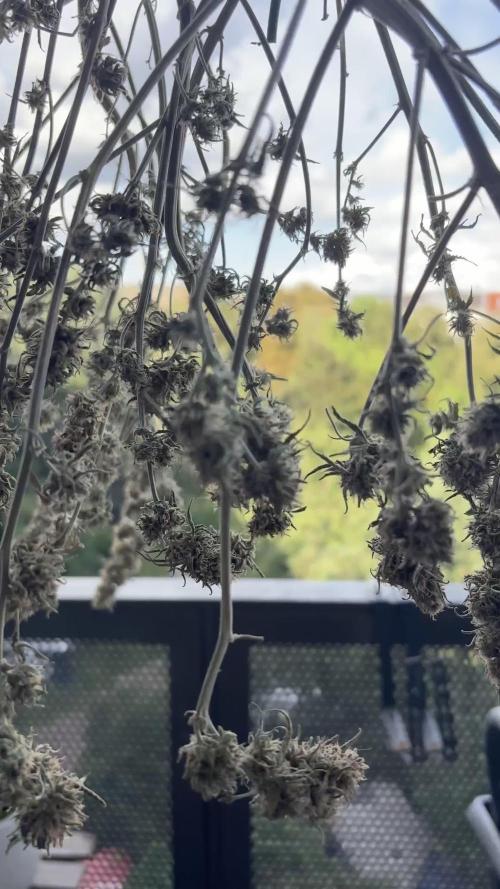
I harvested the three plants by the end of week 11. Unfortunately, due to some problems, they were already without many leaves and looked very stressed. I couldn't find out what the problem was. I had stopped the nutrients some weeks before, flushed, but nothing improved their health. I decided to harvest before they became worse. My assumption is that they were very stressed due to the very intense heat we had in the city during this summer.

Likes
71
Share


@Nor_Cal_Kannabliss
Follow
So these Cream Cookies were really easy to grow! Almost too easy that I neglected them for a week or so and then found two of them covered in Aphids. We tried everything we could to save #1 & #2 but It was a battle that we eventual lost. They are in a bag in the freezer getting ready to be bubble hash. #3 to my awe and surprise has survived through thick and thin. Good and Bad. And will be my only smokeable "flower" from this run. That said I will run these again but inside in a controlled environment as it seems my FastBud Girls were prone to the aphids and caterpillars.
Reguardless I'm super impressed with the structure and just look of the plant overall. Can't wait to smoke #3!!!
The frozen bag of hash weighs in at 203g and includes the mutant #3 smoothie auto from my other diary which also was overrun with aphids. *Will update with dry numbers*

Likes
4
Share
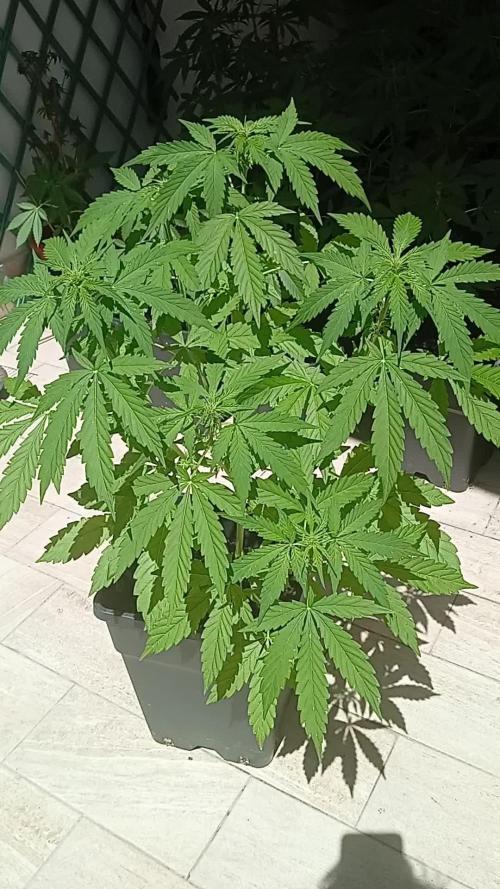

@Grasshopper96
Follow
Let's start flowering oh my peshmerga squad, thiss Is a Hope for free and indipendente Kurdistan,and peace in mid orient than ukraina, when a run start to flower i belief most , the flowering of weed Is a message of peace older than man and woman 💛
I decide: thiss morning i do pooja to Shiva for the peace in the Word for the frist time, no for me but for all the Planet, this afghan kush grow up me?! And my Spirit?!
PS the photos are picked saturday, tomoroow i do Better photo
Likes
10
Share


@thevalar007
Follow
First week of flower, going well in the SCROG. Nothing fancy, just a 4x4 AC Infinity trellis. Will add a custom 2nd trellis if needed. She stunted in veg due to a bit of overcrowding causing less than ideal environment in her spot, but I fixed that by raising her, creating more space for her, and light defoliating. Other strains in this grow- Skywalker OG, Bruce Banner, Apple Betty, and Runtz. Check out my other diaries for those.

Likes
23
Share


@DeepRootsGrowTrees
Follow
MATARO BLUE by KANNABIA
WEEK #19 overall
Week #5 Flower
This week nothing bad to report she's budding and looking good just hoping she finishes strong!! Stay Growing!!
Kannabia.com
MATARO BLUE


Likes
1
Share


@GrowPro3500
Follow
The S.O.1 gets still only Water and calmag.
I love how she turns purple now…I dont know is it about the Pheno Or that I did something right or wrong but i love it.
The s.0.2 get now biobizz like plan.
She is the biggest one with the Most Buds but also the smallest at all.
S.0.3 is about Day 65 and i think my Favorit with S.0.1
I think the 1 one only Need one more week but the other two about two or three.
I’m more than happy about my first grow ever and will run this strain again as my second run to get better
Can’t wait to harvest woohoo


Likes
25
Share


@Grey_Wolf
Follow
Who Am I ???
MSNL seeds Amnesia Fast
4th July 2021
Hi there everybody , I hope you are all staying safe and well where ever you are in this World we live in 😃
The Amnesia Fast is still handling the Winter weather really well with no signs of damage or undue stress 👊
I gave her some Guano pellets and Worm castings Liquid ( see above video )
I've also introduced a reversed sex cutting of the Australian deadhead which I hope will eventuate into some
Amnesia x ADH fem seeds to play with later on. 😎
I still am not keen on re erecting my grow tent and lights etc for atleast another 2 weeks just incase I get an unwanted visit
from the Five0 😕
That is all I have for this weeks update , check out MSNL seeds great range and Thanks for stopping by 👍

Likes
11
Share


@Jays_Not_Here_Man
Follow
A good week for the pink lady, no issues, the heatwaves have subsided a bit and there is a cold front that moved in. The RH has been steady, between 50-55%. I have decreased the nutrients further to just a bit of micro and cal mag. I have begun my process of “flushing” where I increase the water volume to allow for a 10-15% runoff. I find that this does not strip or shock the plant of nutrients it is still needing to fatten up. I do this for the last 4-5 feeds ending with straight phd water.
