Likes
Comments
Share
@hooolian
Follow
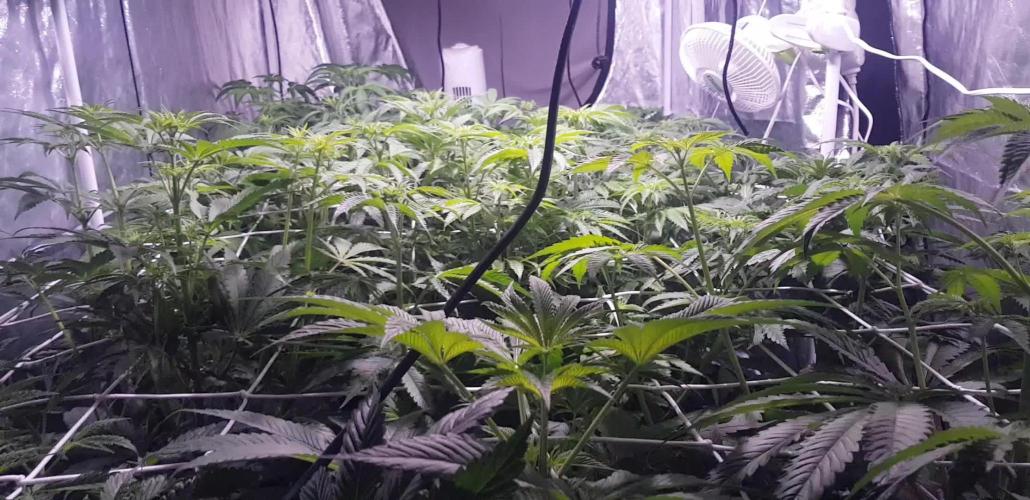
30/12/21: final week of veg - the plants have responded better to the increased intake fan speed lowering the temperature overall. no more yellowing leaves. been on a dose of 0.5 bio bloom to prepare for flower. I have switched the lighting schedule today as they enter flower. the plants are responding well to the nutrients and the light - with tall stems and the topped kolas have sprouted well. I have added a carbon dioxide bag to increase CO2 intake.
Likes
18
Share
Green light is radiation with wavelengths between 520 and 560 nm and it affects photosynthesis, plant height, and flowering. Plants reflect green light and this is why they appear green to our eyes. As a result, some growers think that plants don’t use green wavelengths, but they actually do! In fact, only around 5 – 10% of green light is reflected from leaves and the rest (90 – 95 %) is absorbed or transmitted to lower leaves [1]. Green wavelengths get used in photosynthesis. Chlorophyll pigments absorb small amounts of green wavelengths. Light that doesn’t get absorbed is transmitted to leaves that are shaded out from direct light. This means that leaves at the bottom of the canopy get more green light than leaves at the top. A high proportion of green wavelengths compared to other colors tells lower leaves that they are being shaded out, so they are able to react accordingly. Lower leaves may react by opening or closing their stomata or growing longer stems that help the leaves reach brighter light [1, 2, 3]. When it comes to growing cannabis, many cultivators are interested in the quality of light used for the flowering stage. In many plants, flowering is regulated by two main photoreceptors: cryptochrome and phytochrome. Both photoreceptors primarily respond to blue light but can also respond to green, although to a lesser extent. Green can accelerate the start of flowering in several species (although cannabis has yet to be tested) [1, 4, 5]. However, once flowering has begun, it’s important to provide plants with a “full spectrum” light that has high amounts of blue and red light, and moderate amounts of green, in order for photosynthesis to be optimized. Green light mediates seed germination in some species. Seeds use green wavelengths to decide whether the environment is good for germination. Shade environments are enriched in green relative to red and blue light, so a plant can tell if it is shady or sunny. A seed that senses a shaded environment may stay dormant to avoid poor growing conditions [1]. Some examples of plant species where researchers have documented this response are: ryegrass (a grass that grows in tufts) and Chondrilla (a plant related to dandelion) [1, 6]. Although green wavelengths generally tell plants NOT to germinate, there are some exceptions! Surprisingly, green wavelengths can stimulate seed germination in some species like Aeschynomene, Tephrosia, Solidago, Cyrtopodium, and Atriplex [1, 6, 7]. Of course, light is not the only factor affecting seed germination – it’s a combination of many factors, such as soil moisture, soil type, temperature, photoperiod, and light quality. When combined with red and blue light, green can really enhance plant growth [1, 8]. However, too much green light (more than 50% of the total light) can actually reduce plant growth [8]. Based on the most current research, the ideal ratio of green, red, and blue light is thought to be around 1:2:1 for green:blue:red [9]. When choosing a horticultural light, choose one that has high amounts of blue and red light and moderate amounts of green and other colors of light. Not many studies can be found about the effect of green light on cannabis growth or metabolism. However, if one reads carefully, there are clues and data available even from the very early papers. Mahlberg and Hemphill (1983) used colored filters in their study to alter the sunlight spectrum and study green light among others. They concluded that the green filter, which makes the environment green by cutting other wavelengths out, reduced the THC concentration significantly compared to the daylight control treatment. It has been demonstrated that green color can reduce secondary metabolite activity with other species as well. For example, the addition of green to a light spectrum decreases anthocyanin concentration in lettuce (Zhang and Folta 2012). If green light only reverses the biosynthesis of some secondary metabolites, then why put green light into a growth spectrum at all? Well, there are a couple of good reasons. One is that green penetrates leaf layers effectively. Conversely red and blue light is almost completely absorbed by the first leaf layer. Green travels through the first, second, and even third layers effectively (Figure 2). Lower leaf layers can utilize green light in photosynthesis and therefore produce yields as well. Even though a green light-specific photoreceptor has not yet been found, it is known that green light has effects independent from the cryptochrome but then again, also cryptochrome-dependent ones, just like blue light. It is known that green light in low light intensity conditions can enhance far red stimulating secondary metabolite production in microgreens and then again, counteracts the production of these compounds in high-intensity light conditions (Kim et al. 2004). In many cases, green light promoted physiological changes in plants that are opposite to the actions of blue light. In the study by Kim et al. blue light-induced anthocyanin accumulation was inhibited by green light. In another study it has been found that blue light promotes stomatal opening whereas green light promotes stomatal closure (Frechilla et al. 2000). Blue light inhibits the early stem elongation in the seedling stage whereas green light promotes it (Folta 2004). Also, blue light results in flowering induction, and green light inhibits it (Banerjee et al., 2007). As you can see, green light works very closely with blue light, and therefore not only the amount of these two wavelengths separately is important but also the ratio (Blue: Green) between these two in the designed spectrum. Furthermore, green light has been found to affect the elongation of petioles and upward leaf reorientation with the model plant Arabidopsis thaliana both of which are a sign of shade avoidance symptoms (Zhang et al. 2011) and also gene expression in the same plant (Dhingra et al. 2006). As mentioned before, green light produces shade avoidance symptoms which are quite intuitive if you consider the natural conditions where the plants grow. Not all the green light is reflected from the highest canopy leaves in nature but a lot of it (50-90%) has been estimated to penetrate the upper leaves at the plant level ((Terashima et al., 2009; Nishio, 2000). For the plant growing in the understory of the forest green light is a signal for the plant of being in the shade of a bigger plant. Then again, the plants growing under unobstructed sunlight can take advantage of the green photons that can more easily penetrate the upper leaves than the red and blue photons. From the photosynthetic pigments in higher plants, chlorophyll is crucial for plant growth. Dissolved chlorophyll and absorb maximally in the red (λ600–700 nm) and blue (λ400–500 nm) regions of the spectrum and not as easily in the green (λ500–600 nm) regions. Up to 80% of all green light is thought to be transmitted through the chloroplast (Terashima et al., 2009) and this allows more green photons to pass deeper into the leaf mesophyll layer than red and blue photons. When the green light is scattered in the vertical leaf profile its journey is lengthened and therefore photons have a higher chance of hitting and being absorbed by chloroplasts on their passage through the leaf to the lower leaves of the plant. Photons of PPFD (photosynthetic photon flux density) are captured by chlorophyll causing an excitation of an electron to enter a higher energy state in which the energy is immediately passed on to the neighboring chlorophyll molecule by resonance transfer or released to the electron transport chain (PSII and PSI). Despite the low extinction coefficient of chlorophyll in the green 500–600 nm region it needs to be noted that the absorbance can be significant if the pigment (chlorophyll) concentration in the leaf is high enough. The research available clearly shows that plants use green wavelengths to promote higher biomass and yield (photosynthetic activity), and that it is a crucial signal for long-term developmental and short-term dynamic acclimation (Blue:Green ratio) to the environment. It should not be dismissed but studied more because it brings more opportunities to control plant gene expression and physiology in plant production. REFERENCES Banerjee R., Schleicher E., Meier S. Viana R. M., Pokorny R., Ahmad M., Bittl R., Batschauer. 2007. The signaling state of Arabidopsis cryptochrome 2 contains flavin semiquinone. The Journal of Biological Chemistry 282, 14916–14922. Dhingra, A., Bies, D. H., Lehner, K. R., and Folta, K. M. 2006. Green light adjusts the plastic transcriptome during early photomorphogenic development. Plant Physiol. 142, 1256-1266. Folta, K. M. 2004. Green light stimulates early stem elongation, antagonizing light-mediated growth inhibition. Plant Physiol. 135, 1407-1416. Frechilla, S., Talbott, L. D., Bogomolmi, R. A., and Zeiger, E. 2000. Reversal of blue light -stimulated stomatal opening by green light. Plant Cell Physiol. 41, 171-176. Kim, H.H., Goins, G. D., Wheeler, R. M., and Sager, J. C. 2004.Green-light supplementation for enhanced lettuce growth under red- and blue-light emitting diodes. HortScience 39, 1617-1622. Nishio, J.N. 2000. Why are higher plants green? Evolution of the higher plant photosynthetic pigment complement. Plant Cell and Environment 23, 539–548. Terashima I., Fujita T., Inoue T., Chow W.S., Oguchi R. 2009. Green light drives leaf photosynthesis more efficiently than red light in strong white light: revisiting the enigmatic question of why leaves are green. Plant & Cell Physiology 50, 684–697. Zhang, T., Maruhnich, S. A., and Folta, K. M. 2011. Green light induces shade avoidance symptoms. Plant Physiol. 157, 1528-156. Wang, Y. & Folta, K. M. Contributions of green light to plant growth and development. Am. J. Bot. 100, 70–78 (2013). Zhang, T. & Folta, K. M. Green light signaling and adaptive response. Plant Signal. Behav. 7, 75–78 (2012). Johkan, M. et al. Blue light-emitting diode light irradiation of seedlings improves seedling quality and growth after transplanting in red leaf lettuce. HortScience 45, 1809–1814 (2010). Kasajima, S., et al. Effect of Light Quality on Developmental Rate of Wheat under Continuous Light at a Constant Temperature. Plant Prod. Sci. 10, 286–291 (2007). Banerjee, R. et al. The signaling state of Arabidopsis cryptochrome 2 contains flavin semiquinone. J. Biol. Chem. 282, 14916–14922 (2007). Goggin, D. E. & Steadman, K. J. Blue and green are frequently seen: responses of seeds to short- and mid-wavelength light. Seed Sci. Res. 22, 27–35 (2012). Mandák, B. & Pyšek, P. The effects of light quality, nitrate concentration and presence of bracteoles on germination of different fruit types in the heterocarpous Atriplex sagittata. J. Ecol. 89, 149–158 (2001). Darko, E. et al. Photosynthesis under artificial light: the shift in primary and secondary metabolism. Philos. Trans. R. Soc. B Biol. Sci. 369 (2014). Lu, N. et al. Effects of Supplemental Lighting with Light-Emitting Diodes (LEDs) on Tomato Yield and Quality of Single-Truss Tomato Plants Grown at High Planting Density. Environ. Control Biol. 50, 63–74 (2012).
Likes
27
Share
Week 9ish. They are stacking up nicely now, and just trying to give them a bit of a boost by adding some Atami Bio Bloombastic that I had sitting in my cupboard. So let's see how things pan out..... Hopefully just give them a bit of a kick in the right direction. Not used bio Bloombastic before. 9/11 chopped one baby last night as I noticed she had a small infestation of thrips. So got rid of her before they spread to the rest of them.
Likes
30
Share
BIG BIG apologies to Heather from fast buds & to Growdiaries & anyone who follows. The past few months have been a massive struggle, not just with temperatures & growing weed but on a personal level. My wife has been very poorly & with covid and everything going on, it's put a massive strain on us all!! I've tries to maintain an active presence on Instagram but that's about all I've physically had time for. I've put this update together today, so far into the grow now it almost seems pointless. I lost my original Mimosa due to high temps & high RH. Moving into the attic at that time of year was a mistake. It has cost me a small fortune to keep things alive. I've had to purchase an air con unit, more fans & just more of everything to be honest. My purple punch is almost ready to harvest, any time within the next couple of days, followed shortly by Bruce Banner & Kosher cake. I wont be winning any awards for this Diary & I feel bad as I was supposed to be show casing what 420 Fast buds has to offer & I've failed...miserably. I hope you can make sense of all the pictures I've included....just a mass photo frenzy over the past few weeks. Thanks to everyone & all your comments. Wishing you all the best. One Love ❤️
Likes
51
Share
Vamos familia, otra vez de vuelta, y es que vaya como se están poniendo las cookies gelato de royalqueenseeds, parecen caramelos repletos de polen. Variedad híbrida que al parecer tiene floración rápida y si no mirar cómo están con 6 semanas de floración, pronto lavado de raíces. . La humedad esta al 45% la temperatura está entre 21/28 grados , y como siempre el ph , ya que es de lo más importante,está en 5,8/6,0. . AgroBeta: 1 ml x L Flowering black line , vía radicular. 0,2 ml x L Beta shark, vía radicular. 0.5 gr x L mega PK , vía radicular. 0,8 ml x L Terminator, vía radicular. 0,5 gr x L Engordacogollos, vía radicular. 0,3 ml x L Tucán , vía radicular. 0,1 ml x L Betazyme, vía radicular. 0,3 ml x L Tricoma, vía radicular. 0,05 ml x L Gold Joker, vía radicular. 0,2 ml x L Silver, vía radicular. . Hasta aquí todo familia 🕸️ , un saludo y buenos humos fumetillas💨💨💨.
Likes
9
Share
**Encontrarás la traducción a español al final de la descripción** From/Desde: 30/09/19 || To/Hasta: 06/10/19 From day/Desde día: 29 || To day/Hasta día: 35 Ocean Grown Cookies Diary / Diario de las Ocean Grown Cookies: https://growdiaries.com/diaries/38831-oceangrown-cookies-blues-sisters If you like this week, please hit a like, it costs you nothing! 👊. Thanks in advance 😉! -----IMAGES & VIDEOS----- V1: TimeLapse week video, at second 24 I changed the lights to full operation (notice the color change), so since mid week I'm using the full 180W instead the 90W for growing. Also today (Week 11), I purchased the Platinum P450 model to replace the P300 I have. I still don't know if I'm going to place both lights together to end this grow, or if just replace the P300 and use it to grow another plant in my 60x60 tent. P6: al the plants are bending a bit, I just placed a tutor over the BlueBerry B because is the one that is bending itself more. Just a 3D printed base with a chinese chopstick. -----WEEK SUMMARY----- This week I changed the lights to full flora mode as is recommended by the manufacturer for late vegetative grow. They are still growing at a very good speed more than a cm per day, soon I will perform a full LST on one of them and also I will place the SCROG mesh to try to match the height of the colas. At time the 4 plants (All the cookies) are +/- the same height, but soon the BlueBerries will be bigger than the Oceans. I see a bit overfeeding in the leaves aspect, it must be due to the guano and volcanic soil I added to Soil mix. In a couple of weeks they will look very beauty and healthy. -----WATERING CALENDAR----- 05/10/19 DAY 34 - 1 l with all week nutrients @ (1.3 EC | PH 6.2 | 24.9ºc) *****ESPAÑOL***** Por favor, si te gusta esta semana dale un like, no te cuesta nada 👊. ¡Gracias por adelantado 😉! -----IMÁGENES & VÍDEOS----- V1: Video TimeLapse semanal, en el segundo 24 cambio las luces a full flora (se nota en el cambio de color de la imagen), así que a partir de mitad de semana empezaré a usar los 180W de mi luminaria en vez de los 90W que venía consumiendo en crecimiento. Esta semana (Semana 11) he comprado una mejora de luces, he comprado el modelo P450 de Platinum que reemplazará al P300 que estoy usando. Aún no se si voy a dejar ambas luces juntas para acabar este cultivo, o si simplemente reemplazaré el P300, y este lo usaré para crecer otra cosa en mi armario de 60x60. P6: Las plantas se están doblando un poco, sólo he colocado un tutor en la BlueBerry B pues es la que más se está doblando de todas. Simplemente he impreso una base en 3D y le he puesto un palillo chino. -----SUMARIO SEMANAL----- Esta semana cambio el modo de la luminaria a flora, pues es lo recomendado por el fabricante para la última etapa de crecimiento. Siguen creciendo a una velocidad excelente, más de 1 cm por día, pronto pondré la malla de SCROG para intentar ajustar la altura de las cola. Por el momento las 4 plantas (todas las cookies) son más o menos d la misma altura, pero pronto las BlueBerry pasarán en altura a las Ocean. Puedo ver un poco de sobrealimentación por el aspecto de las hojas, debe ser debido a la tierra volcánica y el guano que le añadí al sustrato. En un par de semanas se verán super sanas y bonitas. -----CALENDARIO DE RIEGO----- 05/10/19 DÍA 34 - 1 l con todos los nutrientes semanales @ (1,3 EC | PH 6,2 | 24,9ºc)
Likes
26
Share
Day 64 (First Grow, Flowering Phase): Hey everyone! We’re on day 64, and the flowering phase is in full swing. The buds are forming beautifully, and the plants have grown 5-10 cm above the SCROG net, creating a lush canopy. The humidity is steady at around 50% or lower, which is ideal for this stage. To recap, we've been maintaining an even canopy with the SCROG net and our Timor shield mantis continues to keep pests at bay naturally. Our plants are thriving, thanks to the even light distribution and careful humidity control. We're considering installing a second fan in a few weeks to improve airflow and potentially adding a second SCROG net to support the plants as they continue to stretch during flowering. This should help stabilize the plants and ensure they get the support they need as the buds get heavier. Any tips or advice for the next steps? Let us know in the comments!
Likes
15
Share
15/08/24 (FD 22): Started to give my girls some more bio bloom to boost Phosphate & flower development, for now they seem to handle the extra nutes with no problem what so ever! Also the stretch seems to be done and they reached 1m in height. I wonder how tall they would have gotten if I wouldn't have topped them in week 3? There is one really weird mutation in the big girls which results in a flat stem with a bend and stunted top...I am really curious to see flower development on this one! I hope they will reach their maturity in 6 weeks so I can harvest before October when it will get humid & rainy! Stay tuned
Likes
14
Share
That’s the day! I just flip her into 12/12 under 3 leds panel with 315 true watts I think I will put her under HPS after stretch I removed few fan leafs for more light
Likes
14
Share
Purpling on one plant, lots of light-colored fan leaves on the others. The buds keep growing and maturing. The seed source says 9 weeks but I am aware they often take longer. I wonder if the top buds will eventually grow to the size of the preflower buds.
Likes
149
Share
Hi all the happy people here in GrowDiaries. This is my second cultivation ever and it will be fun to try a bigger space than my closet grow. First, I'm just going to say I'm done with the construction of my new growroom. I put some pictures on the construction here in week one. The room is 2.14 meters by 1.7 meters and has a ceiling height of 2 meters. It provides a floor area of ​​3.6 square meters. I use a 54 Watt Lightwawe T5 for germination and 2 Pcs 400 Watt HPS lamps. I have a channel fan that replaces the room air about 40 times an hour to get a comfortable theme in the room, the air enters a fresh air intake from the outside. The air is purified through a carbon filter to then leave the room to the rest of the basement. Then I use that heat to heat the rest of the basement. I will use 8 pcs 15 liter Autopots to grow with and a 100 liter water tank that supplies the pots of water and nutrition. I will grow completely organically in soil and will watercure my buds to get the best possible medicine for me. But there are no cultivation rooms to be displayed here, so I continue with what is most important. I am very excited to see how the new growroom will work and how this Blue cheese Auto from Royal queen seeds will turn out. Blue Cheese automatic cannabis seeds are a cross of Blueberry Automatic and Cheese Automatic that has been perfected over five years of breeding and careful selection. The result is a feminized, autoflowering strain with superior yield, flavor, and effects to either of its distinguished parent strains. THC: 16% CBD: Low Yield Indoor : 325 - 375 gr/m2 Yield Outdoor: 60 - 110 gr/plant Height Indoor: 40 - 70 cm Height Outdoor: 60 - 110 cm Flowering: 7 - 8 weeks Harvest month: 9-10 weeks after planting Genetic Background: Blueberry x Cheese x Ruderalis Type: Sa 35% In 40% Ru 25% Effect: Cerebral and uplifting Climate: Mild ----------------------------------------------------------------------- 2017-10-01. New week, video of the girls is added. The stretch is over and the start to produce buds. Girl Nr 1 is 51 cm high, Nr 2 112 and Nr 3 is 31 cm. -------------------------------------------------------------------------------------------------- 2017-10-06. Added some closeup pics.
Likes
7
Share
Week 8 Update: Northern Lights Autoflowers Garden Overview & Environmental Notes: The deck setup is handling late May on the Eastern Plains beautifully. The intense high-altitude sun is perfect for fueling quick development on these autoflowers. The atmospheric action has been classic Colorado—watching some spectacular afternoon storm build-ups, localized rain shafts, and distant lightning patterns out across the plains while the garden stays secure. Plant Metrics & Development (The Transition to Flower): The biggest news for Week 8 is that the Northern Lights sisters are officially shifting gears! We are moving past pure vegetative growth and stepping right into the early transition to flower. Both plants are showing pre-flower development at the nodes and the tops are starting to bunch up as they prepare to stretch. * Charlotte (C Flag): She is clearly displaying early flower development along her main stem and side branches. Her main top is stacking tightly under the sun, holding a stocky, well-spaced structure. * Makayla (M Flag): She is also pushing hard into the transitional phase. Her top growth is distinctively bright green and clustering into early bud sites, showing a healthy vertical profile with a thickening main stem and fan leaves perfectly fanned out to catch the high-altitude rays. Feeding & Maintenance: We are keeping things strictly organic on the deck, running the FOOP nutrient line—including the Veg, Bloom, and Sweetener components—to feed the active microbes and support robust root development. Now that the transition to flower is fully underway, the upcoming feeding schedules will begin leaning into those bloom and sweetener components to support early bud development. The custom halo rings are keeping the root zones perfectly satisfied during this crucial developmental pivot. Looking Ahead: With the sisters officially transitioning, the next couple of weeks should bring some noticeable vertical stretch. They will continue to anchor the deck rotation as we prepare for the late-June relay race strategy to bring the next batch of plants into the mix. Update 5.30.26: Charlotte and Makayla are starting their bloom! First pistils I've seen this year. Always an exciting day.
Likes
13
Share
Added nutrients to top off reservoirs everything looks good …I am content so far with testing will be dropping light schedule to 11 on 13 off to accelerate bud development hopefully shortening flowering time
Likes
25
Share
week intel: we reached the peak of flowering stage and need to cause a little more e.c stress from this week so e.c stress is twice a week i reduced the amount of Nitrogen and calcium and stopped feeding silicate in other hand i raised the amount of base nutrient and booster short story version: more K & P - less N stresses : a little E.C stress around 1.6 and 1.7 twice a week from this week feeding: i feed them 3 times this week with this order : day 1 : i feed them high with base nutrients(calcium & micros (half dose) + Bloom) about 822 ppm - 1.6 e.c to cause a little stress. day 3 : i feed them low dose of Top-Max + B-52 around 525 ppm - 1 e.c to let them recover a little but not fully recover still a little stress will caused. day 5 : i feed them high dose of Feeding Booster around 850 ppm - 1.7 e.c to cause e.c stress again guide of the week : from this week we can cause more E.C stresses. e.c stress if done correctly is one of the very few ways to increase quality in all aspects ( color , aroma , taste , bud structure , resin contents ) but if you over do it , listen carefully brother : it can reduce quality in every aspect so always look for signs and never reach the red line.
Likes
1
Share
Trying to limit the stretch. Not worried about height as much as width. I might remove plant clips once stretch slows. Full AN run. Adding big bud (removing ignitor). Running candy and tasty next week. Bud factor X week 3
Likes
5
Share
The garden is really doing well. Flowers are getting bigger almost daily. I got to order another tent to dry in because they are all finish at different times but I’m ok with that. Still dealing with a little bit of a calmag issue I think. I got one plant I’m going to give a dose to when my lights come on later. I’m waiting on my dehumidifier to get here so I can run my vpd up to try and increase some resin production. I’m excited to grow these lemon cherry cookie seeds I got. I’m happy with my first indoor grow. The wedding glue #2 could have used some more defoliation but she wouldn’t quite stretching
Likes
16
Share
@aldewo
Follow
Heute geerntet Blütetag 56, da fast alle Trichome milchig sind und die ersten sind auch schon Bernstein im oberen Bereich. Bei der Ernte kam ein sehr starker citrus Geruch 🍋. Bitte das Video anschauen, da sieht man gut den Frost . Heute ist sie noch in der gefriere und morgen wird gewaschen 💪🏻🥦. Update 1 Heute gewaschen mit der Hash Vac Methode 💪🏻
Likes
11
Share
Likes
67
Share
Ciao ragazzi finalmente è giunto il momento del raccolto! Questa volta ho deciso di appendere a testa in giù la pianta intera a farla seccare sicuramente ci vorrà più tempo ma voglio provare se secca in modo più omogeneo!!! Continuate a seguirmi ✌️✌️ Lasciate un like 👍👍 Maryjane23 🤪🤪
Likes
53
Share
Hello, my amazing green-thumbed friends! Welcome to the Week 1 flower report for our beloved P.C.R.s. The transition from veg to flower is a magical time, and our plants are already showing signs of their future glory. Let’s dive into the exciting details of this week! Entering the Flower Stage Our P.C.R.s have officially entered the flowering stage, and the transformation is already visible. The stretch has begun, and you can see the plants reaching up, preparing to produce those beautiful buds we’re all waiting for. This stage is all about supporting their growth and ensuring they have everything they need to thrive. NutriSpray Magic This week, we’ve been diligently spraying Aptus Holland NutriSpray, and the results are phenomenal. NutriSpray is like a spa treatment for our plants, providing essential micronutrients directly to the leaves. It helps with nutrient uptake, reduces stress, and boosts overall plant health. Our P.C.R.s are absolutely loving it, standing tall and proud with their leaves praying to the light. Nutrient Transition With the start of the flowering stage, we’ve made some important adjustments to our nutrient regimen. We’ve stopped using StartBooster and replaced it with TopBooster, which promotes flowering and bud formation. Additionally, we’ve introduced P-Boost, a phosphorus booster that enhances root development and flower production. TopBooster: Encourages larger and more abundant flowers. P-Boost: Provides essential phosphorus for robust root and flower development. NutriSpray: Continues to support overall plant health and stress reduction. Optimal Conditions Maintaining the perfect environment is crucial as we move into the flowering stage. Our TDS is now at 360, with a pH of 5.9 and a temperature of 21°C for watering. These conditions are optimal for nutrient uptake and overall plant health, ensuring our P.C.R.s have everything they need to produce those beautiful, resinous buds. Care and Attention Paying close attention to our plants during this stage is key. Regularly inspecting for any signs of stress or nutrient deficiencies and adjusting care as needed ensures our plants stay happy and healthy. The love and care we put into this process are reflected in the vibrant health of our plants. In Conclusion Week 1 of flowering has been all about setting the stage for a bountiful harvest. With the help of Aptus Holland NutriSpray, TopBooster, and P-Boost, along with our careful attention, our P.C.R.s are off to a fantastic start. The excitement is building, and I can’t wait to see how they develop in the coming weeks. Shout Outs A huge shout out to @aptusholland, our main sponsor, for their incredible products that keep our plants thriving. Another big thank you to @artgenetix for creating the phenomenal P.C.R. strain. And to the wonderful community at Grow Diaries and all our followers, your support and enthusiasm keep us going. Let's continue to grow together! Until next time, happy growing, and may your gardens be full with love and green! Genetics - P.C.R. @Art_Genetix_Team https://artgenetix.world/ Nutricion @aptusholland https://aptus-holland.com/ LED Power @Lumatek and @viparspectra As always thank you all for stopping by , for the love and for it all, i fell blessed to have you all with me for one more love journey Thank you Thank you Thank you , you guys are great and have been amazing , thank you for everything ! #aptus #aptusplanttech #aptusgang #aptusfamily #aptustrueplantscience #inbalancewithnature #trueplantscience #dogdoctorofficial #growerslove
 With true love comes happiness , Always believe in your self and always do things expecting nothing and with an open heart , be a giver and the universe will give back to you in ways you could not even imagine so ! Growers love to you all