




Likes
10
Share


@TegridyCal
Follow
The automatic Amnesia Haze started very well, the new leaves come out quickly and grow very quickly, the organic fertilizers seem to work, we have just started with Easy grow and we are very happy of the result.
Likes
Comments
Share


@DaddyPrime2
Follow
10/9/24 more colors are showing. its mostly just purpley pink on the tips of the fan leaves but its spreading a bit and she should have a week or so left depending on how mold and everything happens
10/13 this may be the last week. weve got continous rain coming and theyre coming up on the final stretch. i want them to go 60+ days for more color but may chop
10/14 chopping the rest of her. shes got nice cloudy trichomes. taking the tops and gonna leave the bottoms to ripen. i may try to reveg her

Likes
10
Share


@GrowLowAuto
Follow
Continuing to water every other day/when dry. Watered with Real Growers Recharge on 5/12/22. New 200w led grow light came in and is looking great!
Processing
Likes
3
Share


Likes
20
Share

@All_our_small_plants
Follow
Bewässerung: 1000 ml jeden 3 Tag in der zehnte Woche
pH-Wert: 6
EC-Wert: 1.2 mS/cm
Temperatur: 20ºC
Luftfeuchtigkeit: 65%
Schädlingsbekämpfung: im Moment haben wir keine Anzeichen von befall wir haben nur mal zur Prävention etwas Sand gegen die Schnecken um die Pflanze gemacht, dies verhindert das diese sich nähern. Wir haben aber auch Raubmilben ins spiel gebracht zur vorsorge gegen Spinnmilben und andere Schädlinge 😷
PPFD: Direktes Sonnenlicht
DLI: Direktes Sonnenlicht
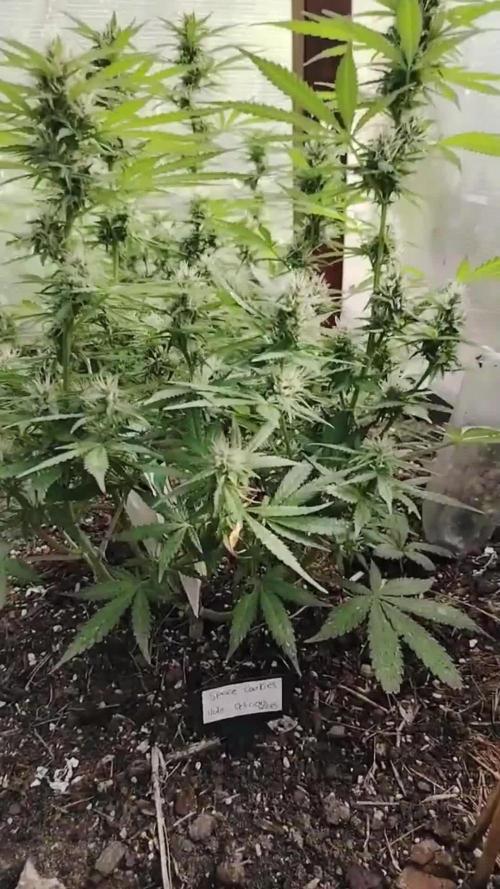
-Tag 63 bei der Space Cookies #2 werden die Blüten immer dichter 😍
-Tag 65 Space Cookies #3 Bildet immer dichtere Blüten und sie sieht sehr gut im vergleich zur #2 aus
-Tag 67 der Space Cookies #3 So wie es aussieht und wenn das Wetter mitmacht ist sie in 2 bis 3 Wochen ernte reif.
-Tag 69 Heute haben wir die Space Cookies #2 mit ca. 5l Wasser und 500ml Brenneseljauche gegossen 😏

Likes
2
Share


@Drtomb
Follow
Flipped the girls and lowered the screen. Moved the tops to the sections I wanted. Changed the nutes. Buckle up, sit back and subscribe. It'll be a fun journey I promise.

Likes
51
Share
@Arcadium
Follow
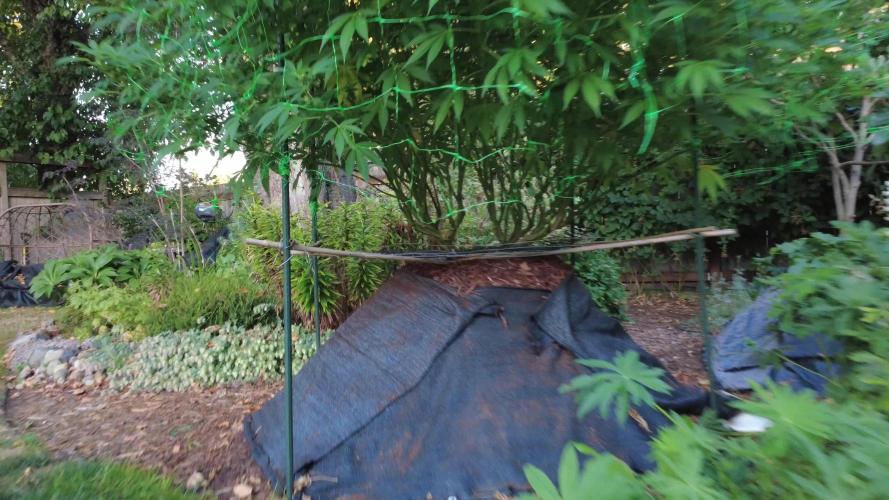
Delayed update, had some time off, she's looking great, can't belive how frosty she is already! I crashed my drone so this will be the last drone shots until parts come in.
Amazing weather, hot, dry, lots of sun, she's happy for sure. Some light defoliating inside cannopy, majority's been done already, I'll probably just let the rest ride it out. Will start BT spray in a few days once the upcoming rain subsides.
Doing a shot of Kelp, Silica, Monster Maxx and Molasses weekly till harvest. Compost tea next week as well as another top dress, in the home stretch. Should eek put another 4 weeks easy, may shoot for longer if the budrot isn't an issue and the rain stays away.

Likes
55
Share


@Bread_n_Buds
Follow
And here we are at the end of this magnificent journey on the spaceship Black Orchid Automatic, a phenomenal strain from Zamnesia, it is the last beauty harvested more or less at the same time as the others but shown separately for the amount of important photos that I am taking.
Please take a look at the macros (micro) and let me know what you think.
This week I'm talking about the harvest of the third and last lady, the purple one, very purple to be clear.
She grew a lot, she matured quite quickly and produced a lot of resin. The flowers are quite hard and of a wonderfully wonderful color.
The smell is very particular probably from the purple / cookies / cake area but the strong point of this beauty are the trichomes. The girl offers a park of trichomes of a disarming beauty, the more I shot the more I wanted to shoot, I was left speechless for real. We have purple stuff in the stem, purple noba in the gland, totally purple stuff in the stem with amber gland, glands in various shades of purple. Wonder for real. There is still something transparent but it had to come venia, like animals feel earthquakes I start to feel the mold in advance, or maybe I'm paranoid, anyway we are mostly cloudy, something amber and a thousand shades of purple and something even transparent.
For me it's fine like this baby. Harvest time, in the drying room.
I strongly recommend you to try this strain both in the feminized version and this one in the photoperiod version, if this plant doesn't convince you wait to see the next two that I will publish in the next two weeks but they have already been harvested.
The taste is still CALI in sense of purple part of cookies family. We feel like we're teleporting to Los Angeles with Snoop making a blunt, incredible California flavor, to be clear in a coffee shop in Amsterdam you would pay 25 to 30 euros per gram.
Everything has always been grown with Plagron Pro Mix soil which I found exceptional, I was used to using Light Mix but I had probably underestimated the power and cleanliness of going 100% organic. It has an absorption coefficient that I find very pleasant, it dries with less aggressiveness than the light mix so you will not have that phenomenon that when the plant is too dry the water goes down. With this soil it is more difficult as it is more difficult to have midges. In my MODEST opinion pre-fertilized are fertile ground for ground midges with this soil I have had ZERO GNATS, before ever.
Information and personalized cards on the Plagron website
---- at the link --- https://plagron.com/en
The plant has eaten the 100% Organic feeding of Plagron: Alga Grow and Alga Bloom as basic nutrients, the rooting Power Roots, the amino acids of Sugar Royal, the Enzymes of Pure Zym that eat the dead parts in the soil, Power Buds that always gives us immense satisfaction with rapidity of start of flowering and composition of the buds, the legendary Green Sensation that now needs no introduction, a name a guarantee. Also the foliar Vita Race used for the first time with success.
The fertilizer kits that you can find on the Zamnesia website are perfect for this purpose, there is everything. Choose them based on their mineral/organic composition and the soil you have chosen.
at the link --- https://www.zamnesia.io/it/11457-plagron-easy-pack-natural.html
The growbox is the DS120w by Secret Jardin as well as the DF16 ventilation system and all the fans
at the link --- https://www.secretjardin.com
The light was supplied in the past by Viparspectra and it went crazy but it came back to me to produce very well too...
at the link --- https://www.viparspectra.com
A fantastic selection of seeds, a headshop and a selection of exceptional accessories on the world of cannabis, many other things about mushrooms, health, well-being and all the beautiful things that nature offers only on the Zamnesia website
at the link --- www.zamnesia.com
Instagram ----
@zam.nesia - @zamnesiawebshop - @zamnesia_usa - @bread_n_buds
Likes
14
Share


@Downunder90
Follow
## Week 9 Update: Flowering Phase Progress 🌿🌟
### 🌱 No Visible Flowering Yet 🌱
Welcome to Week 9! We're fully in the flowering phase now, with the light schedule at 12 hours on and 12 hours off. While we haven't yet observed any distinct flowering traits such as pistils or calyxes, the plants are continuing to grow and develop as expected.
---
### 🌿 Current Plant Status 🌿
**Greenhouse Super Lemon Haze 🌞**
- **Growth:** The plant is showing robust vegetative growth, with a well-developed canopy.
- **Flowering Progress:** No visible signs of flowering yet, but the plant is preparing for the transition with healthy growth and vigorous energy.
**Humboldt Seed Bubba Kush 🌿**
- **Growth:** This plant is maintaining its compact, bushy structure, ideal for supporting dense flower production.
- **Flowering Progress:** Still no noticeable flowering characteristics. The plant seems to be focusing on building strength and stability.
**Blueberry Muffin 🥞**
- **Growth:** Continues to develop a strong, dense canopy.
- **Flowering Progress:** No clear signs of flowers at this stage. The plant appears to be adjusting to the new light schedule and focusing on foundational growth.
---
🌱 Nutrient and Supplement Update 🌱
To support the plants through this transition phase, the following nutrient and supplement regimen has been applied:
Power Roots (PLAGRON): 1 ml/l to enhance root development and overall plant vigor.
Pure Zym (PLAGRON): 0.5 ml/l to promote root health and improve nutrient uptake.
Terra Bloom (PLAGRON): 2 ml/l to provide essential nutrients for budding and flowering.
Power Buds (PLAGRON): 0.5 ml/l to stimulate bud formation and increase flower density.
Orgatrex (Bio Tabs): 2 ml/l to ensure a balanced nutrient profile and support plant health.
🌱🌱Feeding Schedule:🌱🌱
Adjusting the nutrient mix to ensure balanced support through early flowering, despite the absence of visible flower development.
🌱Environmental Conditions:
🌱Temperature & Humidity:
Carefully monitored and adjusted to support healthy growth and prepare for flowering.
T🌱raining & Defoliation:
Ongoing: Continuing with LST and selective defoliation to maintain an even canopy and ensure proper light penetration.
---
### 🌸 Looking Ahead 🌸
While we haven't seen any flowering signs yet, the plants are progressing well in their transition to flowering. It's not uncommon for the first signs of flowering to take a little longer, especially if the plants are still focusing on strengthening their overall structure.
In the coming weeks, we should begin to see the initial signs of flowering as the plants shift their energy from vegetative growth to bud development. I'll keep a close eye on their progress and make any necessary adjustments to ensure a successful flowering phase.
Stay tuned for next week's update as we continue to monitor and support the plants through this important stage!
Happy growing! 🌟💚


Likes
15
Share

@MuckmanMelts
Follow
huge heads on all plants I’m going to say 100 colas in this tent. Yes 100. Not one nook or cranny isn’t filled with a big ole branch. Proud of my scrog. About to get a mountain of hash of these babies. Stinky fruit peel/ straight gas/ lil gmo not really to spicy. More funk and gas than anything else. Long trichromes indicated a good washing strains! I can’t wait to process!
Update: pulled trigger and chopped front left pheno. Ez 600 wet grams cut within 30 minutes. Super sticky I went through 3 pairs of gloves was very very gentle ripping and cutting calyx to dime to quarter size nugs. Disposed of fans only sugar left. Process tmrw morning!!!!! Very exciting!
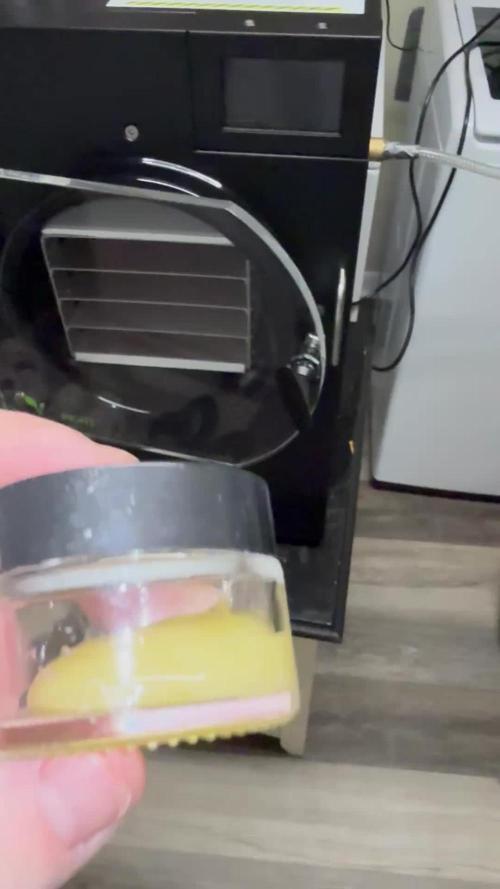
Update: washed single font plant trichs all cloudy basically lil early but washing for rosin I’m trying to experiment with each plant and trichrome maturity. Yield on point for 500-600 wet grams. I’m predicting 50 grams bubble hash. We will see. Stay tuned
Update: I’m crying tears of joy. No caption needed.
Processing
Likes
6
Share


@MrPubieHead
Follow
DAY EIGHT
It seems to be going well, I think. The temperature and humidity have been right about where I want them; 79 F and 60% plus or minus a few. I added a DIY LED I made from the small bar LEDs I had initially used for germination. Not very pretty but any added wattage is appreciated. This will only be temporary. I also added a bit of coco coir to each cup topped with ocean forest.
DAY NINE
Plants look healthy, a little droopy but it was after dark period. Gave them some water. No real changes.
DAY TEN
Plants are looking good. I did not water them today because the soil seemed okay. Humidity and temp are stable. I posted a video to show off my ghetto lighting system.
DAY ELEVEN
No adverse changes noted. Watered them well after their dark period. Temperature has been averaging about 81 F with 65% humidity. I haven’t changed the setting of the fans, lighting, or humidifier.
DAY TWELVE
No changes made. I gave them a light watering and lightly compacted soil a bit. I plan on transferring them to 5 gallon pots soon.
DAY THIRTEEN
I gave them 24 hours of light (not by design) before I transplanted the two girls from their solo cups around 3 o’clock this afternoon. I decided to put them each into 5 gallon fabric pots with a base of Fox Farm Ocean Forest. I gently cut the bottom rim off the solo cup using pruning scissors, then cut straight up the side. I was able to pull the cup apart without disturbing the roots and soil hardly at all. I did not loosen the soil at this time, as I was afraid to touch the roots at all.
I had a small spray bottle with spring water and two tbsp of Dynomyco dissolved in it, which I sprayed half the contents onto each of the root balls. I also sprinkled a bit into the soil and mixed.
I basically have the bottom third of my 5 gallon fabric pots a pretty even mix of Fox Farm Ocean Forest, vermiculite, perlite, and coco coir. Then the rest was 90%+ FFOF soil. I put a bit of vermiculite on top of the soil around the seedling to give it some support.
As far as watering, I gave the soil a bit of spring water when the pot was halfway full, enough to dampen it. I then watered it again once the plant was transferred a pretty good amount, probably 16 ounces or so of spring water with a bit of aloe in it.
Now they will sit in the dark for 4 hours, and I will keep the temperature and humidity around 78F and 65% give it take a bit.
DAY FOURTEEN
They don’t look they are dying; I guess that’s a good sign. They seem okay in their final pots. Temperature slowly dropped to 70 F for a couple hours when I was out earlier. It’s back to its stable 79ish. No adverse findings.


Likes
14
Share


@Toughpuff
Follow
Was an awesome plant to grow and one of my favourite to this day , the smell of it is like you’re a kid again eating purple fun dip it’s unreal . He grew very odd at first but ended up taking off when it was around flowering 💯😁 the look of this girl is so eye catching and I cannot wait to try it out .


Likes
35
Share


@XxxAuto
Follow
Again thanks too Fastbuds, for this amazing strain.... it's SOOOOOOOO fucking good !!!!!!!! 😘😍 and a beautiful lady
Likes
5
Share


@cookingwithninja
Follow
Plants are currently drying
2+ months later. And next project au79

Likes
6
Share


@Silverback_Guerilla
Follow
TUESDAY 7/16:
I graduated two of my hybrids to 3 gallon pots and moved them outdoors today.
Both were Candy Cane x Amnesia Autos that had been in solo cups. They were both extremely well rooted and should do just fine. I watered them in with spring water and a little extra bokashi, dolomite, and azomite and wished them well.
I hope to graduate a couple of the Candy Cane x C4's tomorrow or the next day, but it will be another week before the other CC x C4, the Candy Cane x Early Miss, and the Candy Cane (S1) are ready.
Neither Candy Cane x White Widow seedling made it...😥
WEDNESDAY:
I transplanted another Candy Cane x Amnesia and a Candy Cane x C4(purple pheno) into 3 gallon pots today. I watered them in with Azomite, Dolomite, Biochar, Kelp Me Kelp You and sprayed them with Boom Boom Juice a few times early in the morning. By noon, they were standing at attention and growing a millimeter a minute. They are loving the sunshine.😎
Tomorrow, I'll transplant another Candy Cane x C4 and another Candy Cane x Amnesia.
The Candy Cane x Early Miss is a misshapen miniature mongrel, but I'm hoping she snaps out of her funk and gets busy growing soon. The Candy Cane(S1), and the last two Candy Cane x C4's are tiny little runts..I'm hoping the Boom Boom Juice I misted them with all morning will kick them into gear....🙏
I was really hoping to have at least one Candy Cane x White Widow in the grow too, so I went ahead and floated another bean last night..it had sunk by this morning. Fingers crossed...
THURSDAY:
I transplanted another Candy Cane x C4 and another Candy Cane x Amnesia into 3 gallon pots today. Out of Bio Tabs, so mixed up some of my recharged soil with a little extra coco coir, perlite, bokashi, biochar, and a handful of compost, along with some Osmocote Plus, then watered them in with azomite, dolomite and Kelp Me Kelp You.
The day of sunshine did seem to kick the Candy Cane x Early Miss into gear, but I didn't really see much growth on the other CC x C4 or the Candy Cane (S1)..what did grow is really twisted up like the Early Miss hybrid..I'm thinking that I must've used too much Mycotrex and/or Great White on the new seedlings. They have all been rooted like crazy, but several had weird-looking, slow-starting, twisted foliage.😕
So the current line-up of hybrids in this diary consists of:
4 * Candy Cane x Amnesia Auto (planted)
2 * Candy Cane x C4 (planted)
1 * Candy Cane x Early Miss (not yet planted)
1 * Candy Cane x Amnesia Auto (not yet planted)
1 * Candy Cane (S1) (not yet planted)
FRIDAY:
Inspected for pests and repositioned them a few inches over so that they get another half hour of sunlight per day. I sprayed the area with Ortho again and bought a little air bubbler to aerate water for compost tea.
SATURDAY:
They've all put on a couple of inches since Thursday. I mixed up a fairly weak batch of Big Bloom and Grow Big plus some Kelp Me Kelp You and douched them with about a half-gallon right as the sun was coming up. I also prepared a foliar feed using Big Bloom and Kelp Me Kelp You and sprayed them well as the sun came up, and again after it was going down. I also started aerating 4 gallons of water today...will add the compost tea tomorrow morning and let it cook for 24 hours.
The Candy Cane x Early MIss is a few days away from being planted and moving outdoors, and one of the remaining Candy Cane x C4's is a few days behind her. The other Candy Cane x C4 and the Candy Cane (S1) probably won't make it, but that's fine..I had really only planned to grow 5 hybrids plus a photo and a Zkittlez auto.
Also, the Candy Cane x White Widow bean may yet come up.
SUNDAY:
I foliar fed them and sprinkled a little more Silicium Flash on top of the soil of all my plants and also mixed about 4 grams of Bactrex into a jug with 3/4 gallon of bottled water and douched them with about 2 pints each. That should really get the beneficial bacteria and fungus kicked into overdrive.
I started brewing a 4 gallon batch of compost tea today. Since I don't have any Orgatrex, I am using a little Big Bloom, Kelp Me Kelp You, and Grow Big in the tea in addition to the PK Compost Booster tea from Bio Tabs. I'll add Mycotrex to it about 2 hours before it finishes and thoroughly dowse them all tomorrow morning.
MONDAY:
I fed the outdoor ones each about a liter of compost tea and foliar fed them a couple times as the sun came up, and gave each of the remaining seedlings in the cabinet about 2 shot glasses full each and foliar fed them as well.
It looks like I've finally got a Candy Cane x White Widow Auto seed to sprout...fingers crossed that she takes off normally. If she does fully emerge, she's already waaaay behind the rest...🙏
Late last night one of my cats ate half of one of the biggest leaves on my Early Miss hybrid, but she's okay..actually starting to grow. I may actually plant her outdoors tomorrow.👍
It's been a decent week for them...tomorrow begins a new week.
Likes
20
Share

@India_Calcoen
Follow
5-10-2025
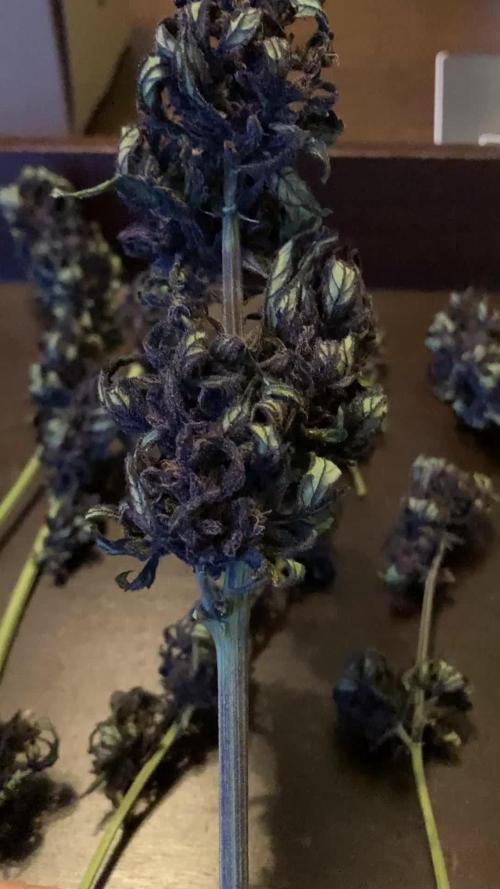
I harvested my Purplematic CBD and washed the buds with a mixture of baking soda and lemon juice. Some caterpillars 🐛 came out of the buds 😱!! I hung the branches up to dry in a spare dark room with a ventilator. After 10 days of drying the branches still wouldn’t snip. I think the room was too cold and too humid. Next time I’m using a dehumidifier.
Likes
17
Share


@Fitzwell
Follow
I took all the leaves off and started the drying process. I only LSTed for the first 30 days. Once a week I took leaf off. The plant made so many leaves so removing them was the best way to get light to my cola stacking were all the bud come from. See you after it dry's
Footage before i chopped her down.
https://youtu.be/MtVcWSeCFEk
