


Likes
Comments
Share


@PajaritoUY
Follow
Esta planta es fuerte y estoy disfrutando mucho de su crecimiento, bien ramificada y con flores formándose incluso en la parte inferior. una gran joya

Likes
15
Share


@Noob_quest
Follow
So all good this week,
All are still looking healthy & happy apart from the weirdo SP2. There’s amber trichomes so it’s coming down on the weekend. Such weird thing so small & weird but matured really quickly. Gonna dry & then attempt to smoke it - damn straight. Who knows might be chronic right.
Also just starting to see some yellowing on bottom leaves of SP3. Was planning a top dress this week anyway but may have left it a few days late.
Still this is the longest I’ve kept them looking this healthy and I’ll know for next time so I’m still happy.
The big drama this week was a giant fucken Hornet got in the tent while I had it open watering the girls. It was MASSIVE like bigger than my thumb. I wasn’t brave enough to deal with head on but gave it smack with 3 ft bamboo cane and ran out the room and shut the door behind me. I think it’s flew out the window and is gone. But that was 2 days ago and I’m still shitting myself everytime I open the tent in case it’s in there waiting to get me.
Running out of the better we’d from last grow so starting to count days to harvest lol. All good though.
Thanks for reading have a great week 😊

Likes
2
Share


@TS_Greens23
Follow
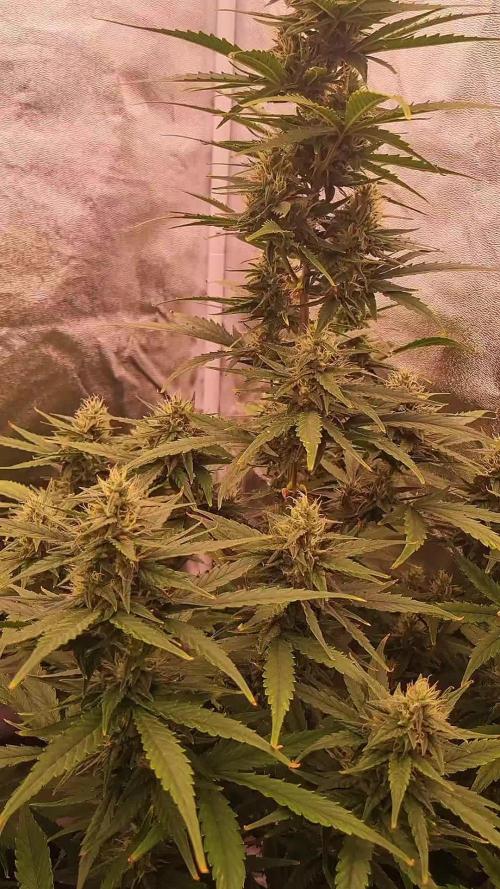
Another good foundation week for this Mimosa Cake Auto,,,showing good potential for a great canopy,,,which is what im

Likes
12
Share


@420DeepGrow
Follow
Gracias al equipo de AnesiaSeeds, Marshydro, XpertNutrients y Trolmaster sin ellos esto no sería posible.
💐🍁 Coco Jambo:
Con una composición genética 60% Sativa y 40% Indica, Coco Jambo es tu billete dorado a un verano sin fin, ofreciéndote una escapada a un mundo donde el sol nunca se pone en tu felicidad.
Con unos niveles de THC que oscilan entre un relajante 30% y un estimulante 34%, Coco Jambo es un faro de euforia que guía a sus usuarios en un viaje a través de olas de serenidad y vibrante alegría. Su aroma es una celebración de los sentidos; imagina el momento de euforia al abrir un coco y descubrir que rebosa de las frutas tropicales más suculentas.
🌻🚀 Consigue aqui tus semillas:
https://anesiaseeds.com/es/product/coco-jambo/
💡TS-3000 + TS-1000: se usaran dos de las lámparas de la serie TS de Marshydro, para cubrir todas las necesidades de las plantas durante el ciclo de cultivo, uso las dos lámparas en floracion para llegar a toda la carpa de 1.50 x 1.50 x 1.80.
https://marshydro.eu/products/mars-hydro-ts-3000-led-grow-light/
🏠 : Marshydro 1.50 x 1.50 x 1.80, carpa 100% estanca con ventanas laterales para llegar a todos los lugares durante el grow
https://marshydro.eu/products/diy-150x150x200cm-grow-tent-kit
🌬️💨 Marshydro 6inch + filtro carbon para evitar olores indeseables.
https://marshydro.eu/products/ifresh-smart-6inch-filter-kits/
🍣🍦🌴 Xpert Nutrients es una empresa especializada en la producción y comercialización de fertilizantes líquidos y tierras, que garantizan excelentes cosechas y un crecimiento activo para sus plantas durante todas las fases de cultivo.
Consigue aqui tus Nutrientes:
https://xpertnutrients.com/es/shop/
💻 Trolmaster Tent-X TCS-1 como controlador de luz, optimiza tu cultivo con la última tecnología del mercado, desde donde puedes controlar todos los parametros.
https://www.trolmaster.com/Products/Details/TCS-1
📆 Semana 3:
Muy buena semana, he aplicado un riego solamente con agua de manantial para reducir la cantidad de sales acumuladas en el sustrato y se ha notado una mejoria .
Creo que le quedan unas dos semanas por estirar, parece que va a ser una buena cosecha.
Se mantiene un buen control del cuarto de cultivo gracias a @marshydro y @trolmaster.
Mantengo las dosis de 1/3 de nutrientes recomendados por el fabricante.
Potencia del foco 80%

Processing
Likes
17
Share


@Hoodoo
Follow
2020-08-11 Another week gone by... Plant 01 is still fattening up, drinking normally. Plant 02 has been completely choked out of the lights so it's not doing very well. Keeping the nutrients the same as they are both pretty steadily drinking. Some death amongst the lower leaves on plant 02 and the buds are getting trichomes but not getting very fat. Plant 01 is very dense and sticky af. Excited to harvest in a couple weeks!
The tent is definitely ugly as hell and the vegetative state clearly went on for about 2 weeks too long (first time grower) while I messed up the nutrients and other things that caused them to grow slowly. The 2nd plant never really recovered. I have continued defoliating and super-cropping plant 01 away from the light and keeping the distances even... It's an ugly canopy, can't wait for the next one so I can get it right!!

Likes
59
Share


@TheCannaProphet
Follow
~ AirCube Active Oxygen Ebb/Flow System sponsored by GrowAce, featuring Tropicana Cookies by FastBuds ~
Well guy's and gal's here we go again on another exciting Autoflower run together! This time will be different as I will be doing a 'Hydroponic' run utilizing the AirCube Active Oxygen Ebb/Flow System by GrowAce, who were kind enough to sponsor me for this run, so it should be interesting to see what results I get and have some fun along the way!
•Let me first tell you about this 6 Pot Ebb/Flow system from GrowAce:
"The AirCube system is the one and only Ebb & Flow grow system on the market that combines the benefits of air pruning with a fully automated Ebb+Flow system! With the AirCube's proprietary fabric pot in bucket design, this system is guaranteed to outgrow any other Ebb + Flow system on the market. The results speak for themselves- grow MASSIVE roots that result in MASSIVE fruits!
Air Pruning- Air Pruning only happens with fabric pots. As the roots reach the fabric walls of the pot, they penetrate and grow into the breathable fabric. Once penetrated, the roots are exposed to air, which causes the tips of the root to dehydrate and naturally prune themselves. This natural pruning process forces the roots to grow tons of lateral fibrous feeder roots. This results in a plant that utilizes the entire root zone and fills the entire pot with tons of roots. These fibrous feeder roots are incredibly effective in uptaking water and nutrients, resulting in a plant that grows healthier and more vigorously!
Oxygen Benefits- Without oxygen, nutrient absorption cannot occur. On a molecular level, oxygen is needed to transmit nutrients across the cell walls and into the roots of a plant. With the AirCube's proprietary bottom lifted draining design, the system actively draws all of the water out of the bucket pulls vital oxygen into the root zone.
Maximum Versatility with Any Grow Medium: The AirCube System is the only system on the market that allows you to use any growing medium you like. Use coco coir, soil, peat moss, perlite, vermiculite, hydroton, rockwool or any other medium you wish! This system is the most versatile Ebb and Flow bucket system in today's hydroponics industry.
Temperature Control- with the fabric pots constructed with highly porous polypropylene fabric, heat dissipates easily and effectively. Unlike standard plastic pots, heat isn't trapped in the root zone. Heat in standard plastic containers can reach temperatures of up to 125 degrees. When this type of heat is trapped and unable to escape, it can damage your plant's health and limit the potential of your harvest. Growing in the AirCube System, plant roots grow cooler, healthier, and more vigorous.
Largest Pots in its Class- this system features 5 Gallon grow buckets, the largest pot size of any other ebb and flow hydroponic system in the market.
Modular and Expandable- start with 6 grow buckets and expand up to 36 grow buckets with the optional 105 gallons PopTank reservoir!"
For my medium and nutrients I decided to also switch things up from my regular Organic runs, going with Plagron Nutrients and Root Royale 70/30 Coco/Perlite. When filling the fabric pots with medium, I first added just under a gallon of horticulture perlite from Nor-Cal as a base layer to ensure good drainage and then filled the remainder with the Root Royale.
•Now for the outstanding, award winning strain from my friends at FastBuds... Tropicana Cookies Auto:
I'll be running Tropicana Cookies Autoflower which is a 60/40 Indica/Sativa Hybrid. "Tropicana Cookies Auto is the perfect variety for growers of all levels, especially beginners as this strain performs very well outdoors and indoors, and can produce up to 500 gr/m2 in 56-63 days without needing extra maintenance. Reaching up to 110 cm, this strain grows fairly tall with medium-sized branching, showing its mixed heritage. Definitely the right choice for those with a high tolerance looking to get their hands on the strongest autoflowers out there. You can expect an extremely powerful and long-lasting high that’ll boost your mood and give you that extra push you need to start your days on the right foot. This variety offers the whole range of citrus and woody flavors with a strong candy-sweet background that will keep you coming back for more and more."*
*References: GrowAce.com, 2fast4buds.com
______________________________________________________________________________________________________________________________________________________________________________________________________________________________________________________________________________________________________________________________________________________________________________________________________________________
The Setup:
• AC Infinity 4x4 tent
•AC Infinity Cloudline T6 Exhaust Fan w/ Controller 67
•HLG 650R w/UVA Bar *** For some reason GD does NOT have a listing for the USA version of the 650R so I selected the closest match to it.
•AirCube Active Oxygen Ebb/Flow 6 pot System
•DL Wholesale Root Royale Coco Lite 70/30 coco/perlite
•TrolMaster Hydro-X Controller for light
•AutoPilot APC8200 co2 controller fed by a 50# tank
•16" Hurricane oscillating fan and 8" floor fan
•Tent cooling via filtered outside air delivered by AC Infinity Cloudline T6 fan
•BlueLab instruments: PH Pen and Truncheon Nutrient Meter
______________________________________________________________________________________________________________________________________________________________________________________________________________________________________________________________________________________________________________________________________________________________________________________________________________________
Weekly Updates:
10/22- The Tropicana cookies are going into their third week of veg, and their fourth week since breaking ground. All three are looking great, with the #1 pheno having the darkest green coloration and super tight node spacing, and the #2 which is looking super healthy, with much wider node spacing. The #3's color is not yet where I'd like to see it, but it has been steadily improving over time.
Their feedings of Plagron nutrients continue three times daily and I'm monitoring the reservoir before each, adjusting the nutrient level to 650-700ppm @ 5.9-6.2 ph. The tent environment has remained dialed in with the VPD averaging 1.40kpa over the last seven days.
10/24- Today I drained, cleaned and flushed the AirCube reservoir and 'brain bucket', then filled it with 70L of 74℉ well water. After filling I added the Plagron nutrients separately and also began adding in Plagron Royal Rush.
The Tropicana Cookies are responding well to the feeding schedule, and are also tolerating the increased light output which I now have set to 80% along with setting the co2 levels to 1100-1400ppm.
10/26- The #1 pheno has some huge shade leaves that are blocking her side branches, and are an absolute bitch to keep tucked out of the way. I'm contemplating removing a few to allow the side branches more light so that they'll be able to grow out.
Today I added 1/2 tsp. of Yucca Extract to the reservoir which will aid in feeding by acting as a surfactant, increasing the wetting ability of the solution.
I am continuing the feedings of Plagron nutrients three times daily, and I'm monitoring the reservoir before each, adjusting the nutrient level to 650-700ppm @ 5.9-6.2 ph. The solution temperature is maintaining a steady 73-75℉. As a side note; as the weather gets colder I may install a heat mat, controlled by a thermostat, under the reservoir to ensure proper temp's in it.
10/28- There goes another week for the FastBuds Tropicana cookies and they're all shaping up to be beautiful cultivars, with some slight differences between them which makes the grow interesting!
Our weather has warmed up the past couple of days. Because of this I've had to lower the light output to 55% in order to keep the tent temp's below 82℉. The Tropicana Cookies are showing zero sign of heat stress so I'm not terribly concerned, especially as the weather will be dramatically cooling off in a day or two.
The #2 and #3 pheno's are showing signs of the beginning of flower, ans I went ahead and removed four of the huge shade leaves on the #1 as they were too big to tuck and blocked a ton of light from the side branches. Hopefully now the #1 will start to bush out with all the additional light reaching into the interior of the plant. I'm also continuing to tuck shade leaves daily on all three girls, and have been gently bending down their side branches as well.
I upped the nutrient ppm level to 800 with the addition of Plagron's Royal Rush 8-0-0 which will continue in their feeding through flower. I'll also be adding Plagron Green Sensation in another 7-10 days which will also continue through flowering. I hope to see you next week... Growers Love!💚
💚 Thank you for checking out my passion in life! Please visit as often as you wish and I hope you enjoy this journey as much as I know I will! Grow what you love, Love what you grow!💚
Likes
7
Share

@Samsationalseeds
Follow
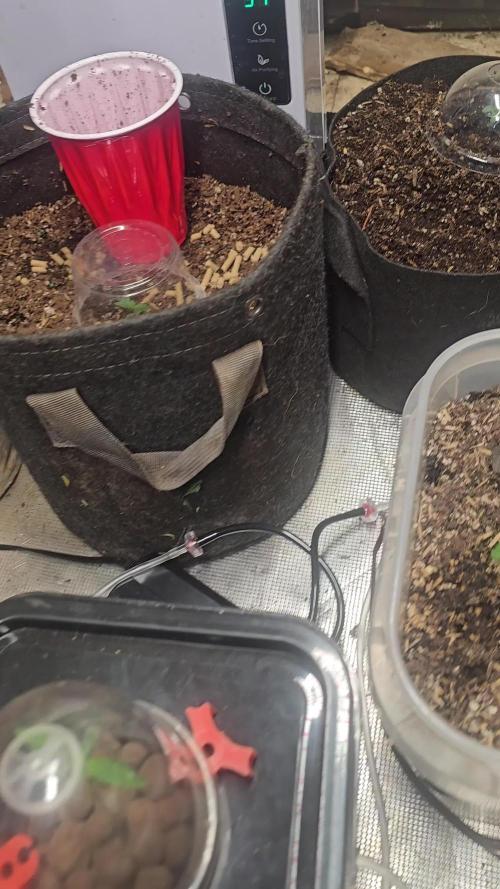
Week 3 most of the photos are in the plastic containers to grow in before being transferred outside
Likes
40
Share


@valiotoro
Follow
easy trim✂️
The buds are Absolutely perfect,exactly what i was looking for🤩
Green pheno : cookie,diesel & gelato🍪⛽️🍦
Purple pheno : flower,sweet & honey🌸🍯
After 7 days on the dry rack she was ready for the jar to start the curing process.😋


Likes
4
Share


@CalGonJim
Follow
1/4/26 1:26 AM. This is me starting a diary accidentally a day too early iced tea had some problems. The cocoa had something in it and the root hit it and it screwed up so I’ve flushed it out. I put another seed in and she’s doing just great. I’ve never had this happen before so I must’ve. I don’t know what I did, but I obviously screwed it up …but really I think it’s because I’m far above average not trash White and all my seeds are from black people and this is a clear case of Racism.😡😂😂😂 I’m gonna write a book about my struggles. I think you’re all gonna really enjoy it.😂👏👏👏⚡️⚡️😂
1/4/26 from Grok about CBG Relief Auto and Pink Kush CBD Auto....
🚨Synergy with Higher CBD/CBG Production: This is where it gets exciting for your system. CBD and CBG plants (low-THC by nature) respond well to biostimulants like 👨🔬aminos because they emphasize therapeutic/terpene-focused traits over high-THC⚡️ potency. Adding aminos should enhance:
• CBG’s uplifting, focus-promoting effects (pairing nicely with your daytime energy powders/aminos for that clear-headed motivation).
• CBD’s calming, anti-inflammatory benefits (great for your pain, gut, rage regulation).
• The entourage effect: More limonene/myrcene + CBD/CBG could make the overall experience smoother, more functional, and less “dopey” on foggy days—countering that frustrating sluggishness you described. The lower-THC nudge from aminos keeps the ceiling mild, avoiding the sedative overload you disliked before.
• Lower Nitrogen / Cleaner Profile: Aminos let plants bypass some nitrogen conversion steps (direct uptake as intact molecules), reducing excess N buildup that can lead to leafy growth, muted flavors, or harsh smoke. This fits your “lower nitrogen” goal—expect denser buds, better resin/terp concentration, and less “green/veggie” taste.🚨
1/4/26 2:42AM The tub in 237 is clogged, AGAIN ..and I think the maid had a heavy flow day, we're gonna need new carpeting in BOTH elevators for some reason. And keep the butler out of the dogs room, he'll get carpel tunnel again!!


Likes
76
Share


@BB_UK
Follow
Took a while to get there but OMG little note quick! So I started her in a 1 litre pot and stuck her on top of a 1.5L Pepsi bottle with the top chopped off! And she yielded heavily for that amount of soil a whopping! 224.63 wet weight so can’t wait to see what she holds dry because them buds were like boulders! So dense! I will be back to document her dry weight and then a couple of weeks later with the update on the smoke report! But I know it’s going to be so loud! She has deep pungent aromas like gassy and sweet! She’s going to be a powerhouse! She was a little over as today a banana developed but that just tells me “well done” timing just right! She’s a little long for my taste of auto but I do suggest anyone grow her she’s amazing! In the end!


Likes
27
Share


@RDWCGrowing
Follow
6/13/2023
Week 10- Day 1 of Flower (Day 131 overall) (Day 70 of Flower)
Auto Pilot Day 6.. Checked the Trichomes and the bud density and both are looking good.. Definitely needs a little more time for the Trichomes to be where I like, so based on my check I think we are still looking right around the end of the competition 22June to be done and ready for harvest. I do like that the fade is coming in the leaves nicely, so my chart I think is dropping off the Nitrogen exactly like it is supposed to.
6/14/2023
Week 10- Day 2 of Flower (Day 132 overall)
Auto Pilot Day 7.. Decided I would take some contrasting pics today with my light up to 100 and my light all the way on Dim. I hope you enjoy the pics.
6/15/2023
Week 10- Day 3 of Flower (Day 133 overall)
Auto Pilot Day 8.. Decided to take a look at the Trichome's today and Check to see where they are at and honestly if I might ho ahead and start my flush tomorrow and harvest on Sunday.
6/16/2023
Week 10- Day 4 of Flower (Day 134 overall) (Day 74 of Flower)
Today I pulled an Armageddon however instead of darkness they are going to get 48 hours of light. The reason why they are going to get light instead of dark is when I was taking out the netting a lot of the buds were so heavy they fell over and exposed some areas I really want to get some light to... so 48 hours of light at 40% while I watch what should be a beautiful final fade as the plant eats up the last Nutes. If anything goes wrong I can abort take the photos and cut so will pay really close attention to how it is looking over the next 48 hours.
Added 30 Gallons of PH only Water.
Reduced Lighting to 40% removed program time off. 48 hours of light.
6/17/2023
Week 10- Day 5 of Flower (Day 135 overall) (Day 75 of Flower)
I had someone tell me that a few growers had done as I did and Gone Armageddon on the plants. Filling it with PH only and said the plants did not respond well and they were taken out of the comp at the very end because they felt like the pictures just wouldn't come out right. Even though I did go Armageddon, The PPM is at 353PPM with the residue of what was left in the buckets after draining as well as what I am getting from the TAP so I think they are doing good but I am checking them every few hours to see how they seem to be doing and I think they are doing good still and are on track.
I also started prepping the area for the pics tomorrow
T-24 Hours until Chop
6/18/2023
Week 10- Day 6 of Flower (Day 136 overall) (Day 76 of Flower) (Harvest Day)
What a day.. what a day.. what a day.. as I was setting up and trying to figure out how I was going to get my pics #3 stems started breaking, it fell over and other stems broke.. So no really stunning competition photo for her, she had such a nice purple fade.. #2 stayed up in the Tent so that is the one I had to go with to submit for the contest. I wet trimmed them as they went into the tent and they took up three rows hanging in tent. I also decided I wanted to try some so I put a little in the freeze dryer for a 48 hour smoke test.. I will weigh it and add that to my total weight for the plants when it is all done.

Likes
6
Share


@Dengued
Follow
Day 63...buds fattening up nicely...currently experiencing worst pollution on the planet with AQI of 300+ for most of the week which i fear is affecting growth..,..the buds look a lot browner in the pics, than i reality.. due to the post-apocalyptical tinge to the sky as the sun sets, though the smog


Likes
40
Share


@SubliminalSociety
Follow
Yo growmies,
It's getting hot this week. Lots of sun makes the ladies stretch. They grew by 10cm in height and are getting super bushy. I've been defoliating a lot here and there as well as cutting off some weaker branches to give the main colas more support. Where is she heading? Nobody knows

Likes
40
Share


@Kitties_and_Colas
Follow
She's getting close, we gave he last splash of bloom earlier in the week, water only from here on out :)

Likes
1
Share


@Smithsgrow420
Follow
Seen a lot more growth this week, starting to fill the tent up nicely
Happy growing
Likes
4
Share


@KGS-SEED
Follow
the temperature has risen to 32 degrees.. but flowering continues without problems.I have no way to lower the temperatures, just over a month and they should be ready.
I made a mistake by adding the top dress, thinking it would help during the flowering stage. But since the plants only spent one week in supersoil before I switched to flowering, I added a tablespoon per 7 liters during the third week of 12/12 light. Given how short the vegetative phase was, I’ve realized that the top dress wasn’t necessary.
waiting until the end of September for the next run
the height of only 150 cm of the growbox does not help in counteracting the heat.
Tropicana Banana make a nice top


Likes
260
Share


@SlowpokeFuegobud
Follow
🐒 🍌 🌴🐒 🍌 🌴🐒 🍌 🌴🐒 🍌 🌴🐒 🍌 🌴🐒 🍌 🌴🐒 🍌 🌴
Welcome to week 6!! 😘
DAY 38
Watered with pH-ed water + humics + fastbuds + growzyme + bigfruits + vitalize 💧
DAY 40
Foliar spray with Nutrispray 💦
DAY 42
Watered with 1ml grow + 3ml bloom + 2ml roots + 3ml humic + 4ml growzyme + 3ml calmag + living organics topdressing 💧
FLOWERINGGGGG!!! 🌺 🌻 No joke, they all pre-flowered (all 4 strains) 4 days after receiving the valerian extract for the first time (also the much younger Donkey!!).
You can get the Fastbuds from Green Buzz, it contains valerian extract. 💚 🌹
Thanks, my growmies for visiting and reading and commenting, I love reading your comments! Mwah! 😘
Thank you, @Kannabia, for sponsoring this grow, aaaaand for the amazing gift pack! 😍 I hope to make you proud! 🧡
Special shouts out to my fantastic sponsor @GreenBuzzNutrients! Thank you for trusting me with your awesome products, I'm a longtime fan! 💚 🙏 Green + juicy growmie hugs to my Greenbuzzers!! 😘
Grower Love everybody!!!11 💚 💚💚💚💚💚💚💚
Wishes do come true, they just take a lot of time sometimes.. ✨
If you wish to try Green Buzz Nutrients, there's a 25% discount code hidden down there in the week comment somewhere.. 😎
__________________________________________________________________
https://www.kannabia.com/en/feminized-cannabis-seeds/monkey-grease
Monkey Grease
At Kannabia Seeds we have put all our effort into bringing out our own feminized Monkey Grease, a cross between Monkey Grease x White Widow, focusing above all on giving it its own personality in flavor and aroma (frankly unmistakable).
Its own personality
At Kannabia Seeds we have put all our effort into bringing out our own feminized Monkey Grease, a cross between Monkey Grease x White Widow, focusing above all on giving it its own personality in flavor and aroma (frankly unmistakable) and, of course, in Highly demanded characteristics, such as high resistance to diseases and pests, and adaptability to all types of growing conditions, making it close and easy to grow to the widest possible range of growers. The result is a really powerful and versatile indica-sativa marijuana seed, with a powerful relaxing effect, ideal for those moments when you want to disconnect from the madding crowd.
Cultivation of Monkey Grease
Which cultivation method would be most appropriate for this variety? Good question… and one that is easy to answer. Its versatility and adaptability make it a true all-rounder, with remarkably uniform results, whether you choose SOG, SCROG, hydroponics or guerrilla growing. Moreover, we invite you to experiment and play, varying the techniques from moment to moment, and to draw your own conclusions. We are convinced that in all cases, apart from minor variations, the results will always be optimal, giving remarkable yields and in a short time.
Attention should be paid to its high bud production, which can be fat, dense and heavy, although its sturdy branches are able to bear heavy loads without major problems. If you are a fan of extractions, our Monkey Grease is also optimal, given its high production of caramelised resin.
If it is already amazingly productive indoors, this variety excels on its own merits outdoors, where it can easily reach 200 cm in height, and can reach between 700 and 800 grams per plant.
It is therefore an easy and grateful plant, which demands little from its gardeners, making do with simple basic care, and with little or no propensity to develop diseases or mildew, or to attract pests (despite its striking aroma!).
Taste and effect of Monkey Grease
Our Monkey Grease stands out first and foremost because of its powerful, strong smell, which is hard to camouflage. A penetrating aroma that unfolds, in a balanced way, on the palate in the form of a wide range of spicy and sweet flavours, reminiscent of wild honey, nougat and cinnamon, and distant notes of milk chocolate. A delicious treat to be savoured calmly, without haste, as a preamble to its pleasant effect: extremely relaxing and narcotic, powerful, ideal for meditation and moments of introspection and meditation.
Don’t be in a hurry with Monkey Grease. It can be your perfect ally to treat those stress and anxiety problems, but for that you must let yourself go, surrender to its charms, especially if you are inexperienced.
________________________________________________________
Setup:
60x60x180 cm Zelsius
Greenception GC4 128W
4 Cluster OSRAM + CREE LEDs (380, 455, 630, 660, 720, 760nm)
6400k (cold-white to cover the basic load during the growth)
2100k (warm-white to cover the basic load during the blossom)
The module groups can be switched individual as follows:
⬤ Module I: growth 1x 32 watt
⬤ Module II: full spectrum: 2x32 watt
⬤ Module III: Bloom: 1x 32 watt
⬤ Module I is optimized for the growth phase. A relatively high amount of blue and white support a dense growth.
⬤ Module II suits for the growth as well as blooming phase. Optimal plant light full spectrum.
⬤ Module III is optimized for the bloom. A high portion of red and an additional infrared push.
Green Buzz Nutrients https://greenbuzzliquids.com/
❗ Use code GD42025 for generous 25% discount (for orders of minimum 75€) 💚
Plagron Growmix
Carbon Active Granulate 240cm³/h
tab water pH 8 - EC 0,25 with Calmag to 0,5
Advanced Hydroponics pH minus Grow + Bloom to pH 6.5 💧
🐒 🍌 🌴🐒 🍌 🌴🐒 🍌 🌴🐒 🍌 🌴🐒 🍌 🌴🐒 🍌 🌴🐒 🍌 🌴
