Likes
Comments
Share


@Dthebudguy
Follow
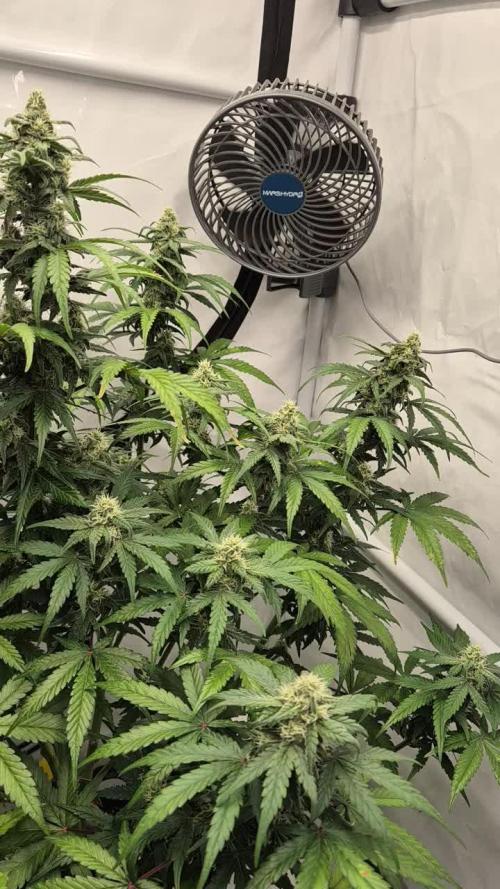
Bud development is going well smell is just starting to be noticeable happy with the grow great structure

Likes
8
Share


@555ABKY555
Follow
hi guys the little ones are progressing well a little tropical mirage has turned around and is taking a little longer all in all a natural selection proceeds automatically revealing to us which plants will then be taken for large pots and any seeds.


Likes
2
Share


@DTHGenetics
Follow
Training main stems down to expose second ones looking good week 8 they are in 10 gallon now watering 2 cups or more if needed every 2-3 days

Likes
5
Share


@Daniel_Tri95
Follow
I have been taking more videos on my grow than photos I hope you enjoy 😊
Remember
It’s 420 somewhere™️

Likes
75
Share


@Reyden
Follow
Ho tagliato proprio oggi questa magnifica Runtz RQS che mi ha dato bellissime gemme dall odore tropicale e dalle cime belle piene di resina che non vedo L ora di assaporare con il mio nuovo Vaporizzatore appena riparato ehehe 👨🍼
Sono rimasto sorpreso dalla linea di fertilizzanti organici RQS per la loro facilità di impiego che non mi hanno dato nessun problema durante il ciclo di crescita…
Spero di poter usare una lampada più potente per il ciclo invernale perché ho da mettere diverse piante questa volta è voglio pompare con 450/600W per sfruttare lo spazio a disposizione 🧞♂️🤳🏻🎄


Likes
197
Share

@squalino
Follow
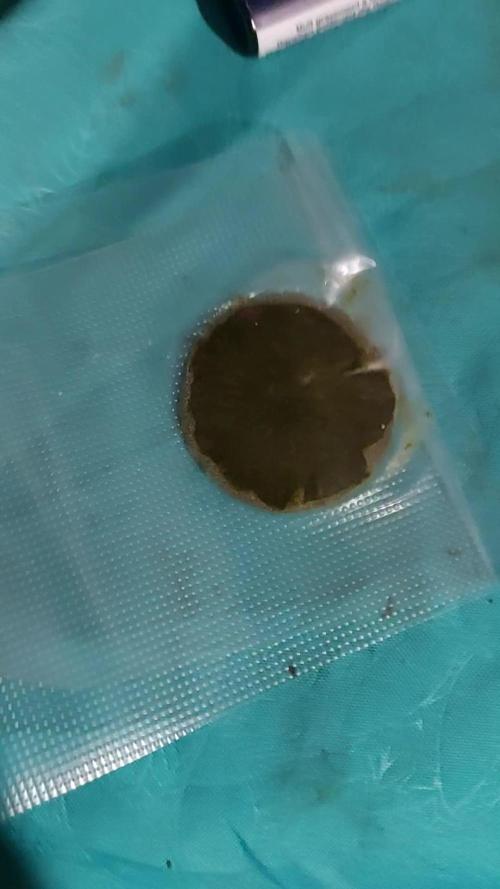
haschisch fait à la presse
j'ai refait la même chose avec le reste de mes feuilles. voila le résultat que du bonheur en boule 🤣🤣
ps fait que 4 à 5 fois .apres risque quelle se remet en poudre si elle se deseche de trop .

Likes
7
Share


@Breadboard_Johnson
Follow
Bubba Kush Pre 98 is an easy plant to grow. She gave me no hassles or worries even in a warmer climate than she would like.
The leaves are a dark green color naturally.
Yield wasnt much, I am waiting for buds to dry and cure to provide the dried weight.
I did not feed them any nutrients.
The one got so dense that I had to move it indoors to avoid bud rot - im almost convinced it was an autoflower and they made a mistake at the seedbank because it was short and flowered out of nowhere.
Outdoor buds were sundried - to lower THC for novice and paranoid smokers, I tried the smoke and it was a very pleasant high - removed anxiety, stress, overthinking, and relaxed my body. Perfect.

Likes
7
Share

@Organic473
Follow
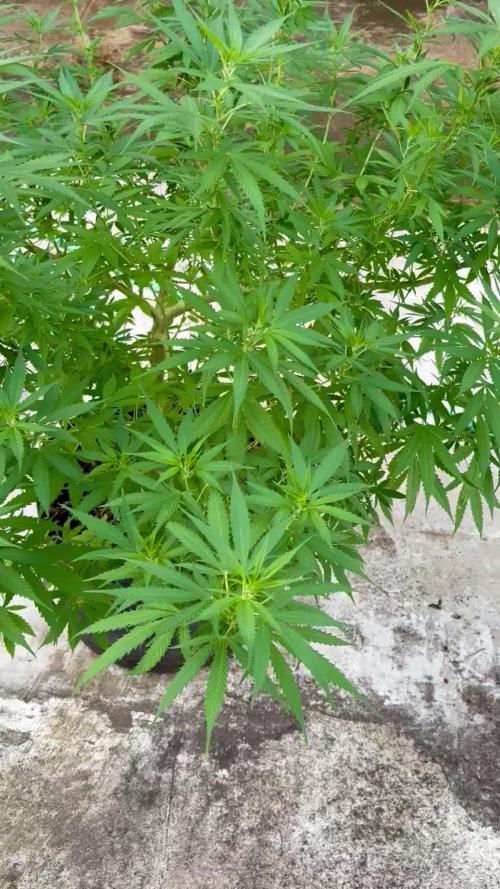
I am awaiting her soil to dry out and I will be transferring her to the 25 gallon pot. She is ready for flowering.


Likes
2
Share


@51sGarden
Follow
Posting this as I’m on the last few days of the 3rd week from germination
Great progress, a lot of roots for such a short period but not too much plant growth, will start watering daily instead of watering every 2-3 days
Topped the girls today (Day 18 from germ) and starting to do mainline on all the Bubba kush.

Likes
80
Share

@SundancerS
Follow
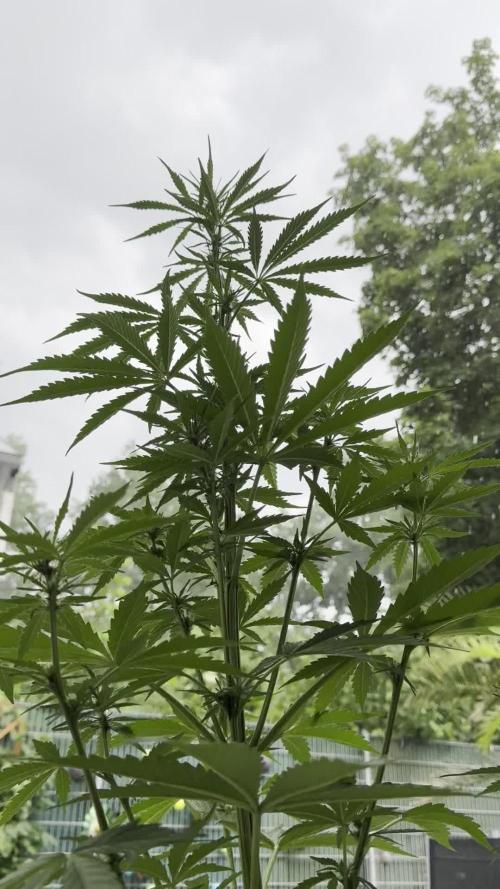
Die Pink Rozay bestätigt diese Woche endgültig, dass sie ein echtes Sommerkind ist. Kaum kratzen die Temperaturen an der 30 Grad Marke, drückt sie aufs Gas und wächst gefühlt direkt Richtung Mond. Das Höhenwachstum ist beeindruckend, aber mindestens genauso schön sind ihre riesigen Sonnensegel. Die Blätter wirken gesund, kräftig und sehen fast so aus, als wollten sie möglichst viel Sommer auf einmal einsammeln.
Die Vorblüte zeigt sich mittlerweile sehr deutlich und damit war es Zeit für den Wechsel auf Green House BioBloom nach Düngeplan. Jetzt hoffen wir, dass die Dame ihre Energie langsam etwas weniger in die Höhe und dafür mehr in die kommende Blütenproduktion investiert. Wobei wir sie mittlerweile gut genug kennen, um zu wissen: Das es auf jeden Fall gut wird. .
Das warme Wetter sorgt außerdem für ordentlich Durst. Aktuell verschwinden rund 2,5 Liter Wasser pro Tag, was zeigt, wie aktiv sie gerade arbeitet. Insgesamt präsentiert sich die Rozay wieder einmal als robuste, vitale Pflanze mit starker Genetik. Sie sieht hervorragend aus und macht genau das, was man sich von einer Outdoor-Dame im Hochsommer wünscht. 😘
Likes
12
Share


@medicalcannabelfast
Follow
We are on week 10 and the trichome production is in overdrive on theses girls ..
Likes
142
Share


@MadeInGermany
Follow
Hey everyone :-)
This week it smells more and more sweet and fruity in the whole room 😍.
There is actually not much to report, everyone is now under 12/12 :-).
This is the last grow that comes in the entire diary.
From now on, each plant will be added to the diary 👍.
I wish you all a lot of fun watching, stay healthy 🙏🏻 and let it grow 😎👌


Likes
18
Share


@Jackweed77
Follow
5 week of flowers ...))
I defoliated the girls....work in progress....💚
I see so many buds I hope everything will proceed for the best because the girls have just stretched too much .... also made some emergency folding to those who had come very close to the lamp ....

Likes
Comments
Share


@BIYEI
Follow
Planta Madre en Conservacion Maximo 6 Meses mismos parametros de Nutrientes y Condiciones
Esquejes Comienzan el Proceso de Enraizamiento
06/01/2025 Se comienza corte de ramas secundarias a planta madre, se realiza el procedimiento adecuado en corte, preparacion del tallo y aplicacion de hormona, se colocan en un domo germinador con ventilacion cerrada obscuridad total primeras 24hrs y se mantiene con humedad relativa de 90% y 20 y 26 grados Celcius.
Likes
31
Share


@Rastarasta
Follow
Week 18
Hello again everybody
I’ve to mention: Spain was awesome and Spannabis too
My buddy watered them while I was away and he made the job. Last year someone else watered my plants and killed my whole mother tent but this time everything is fine
Today is day 34. They got their tea today:
10l water pH6.5 add 150g Compost, 25g earthworm cast, 20ml Molasses and a tablespoon of bat guano. Let it bubble about 30h.
Two girls (Bubblegum) got a bit stressed. One dried out a bit too much and the girl in the left corner got some brown stains on their top fan leafs. I think it’s a bit too tight for her and so I put in another ventilation for more airflow.
And to keep it real, I got some light bleached buds. Maybe 5 or so, this happened to me on the OG’s and to defend myself, the distance is more 25cm from lamp to the tops.
OH I LOVE MY SANLIGHT LED’s :D
So, nothing more to say for now
Until next time :)
The Rasta
Likes
9
Share


@Vega0284
Follow
Chopped them today, great coloring so far, really excited to see how they turn out by the end. There weren't any issues this week as it was just a flush and a few days of darkness. I've got to get better at lollipoping and maintaining the skirt in the future. Definitely a lot of wasted energy and nutrients going into flowers that never budded out.

Likes
10
Share


@Barcelona_Farmers710
Follow
Buenas Farmers!
Otra semana más y pasaremos a Flora, esperando a ver si podemos obtener nuevo equipo de @todoGrowled para llevar el verano más llevadero... Después de recuperase de las Plagas empieza coger buen color esto.🍁
Likes
15
Share


Likes
4
Share