


Likes
Comments
Share


@Organic473
Follow
Ants 🐜 Love It! Peter Tosh nah’ lie because these ants won’t leave the girls alone especially when they’re ripping but moving forward I would grow in a greenhouse because I am having other pest problems.

Likes
8
Share


@HappyGrower420
Follow
103 day and still counting. What an autoflower :) i will start flushing tomorrow.Hopefully in next 2 weeks finish.she half amber pistilis on main buds.

Likes
Comments
Share

@Putinhuilo
Follow
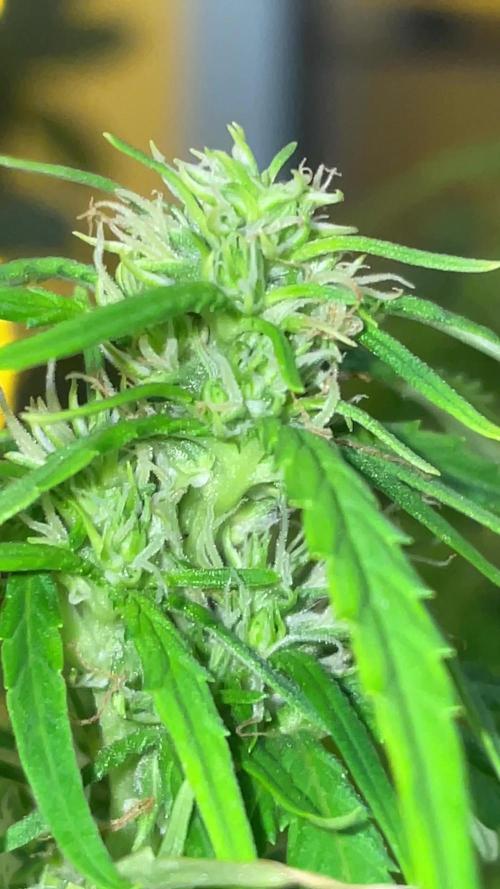
I started 7 week now I add 1000-1200 ml of water and just waiting she start smell a little bit and start make crystals

Likes
54
Share


@JuanHaze_Arg
Follow
Se empiezan a asomar los primeros pistilos
28/03 Aplicación de estimulador de floración foliar.💨 Se pulverizan 100cm3 de agua + cal mag + big one 2ml x L EC: 0.7 PH: 6.1
Empieza el estiramiento típico de la prefloracion.
29/03 se riega 🚿 con 2 litros de agua y se obtienen solo 100cc de drenaje. La solución de riego constaba de 50% de agua de osmosis inversa + calmag + 50% de la red + 1,5 ml x L de top auto Se realiza defoliación en zona baja
31/03 se riega con agua de la canilla EC:1.2 PH:6.1 hasta que salieran unos 300 cm3 de agua por el drenaje para medir. Drenaje: EC:2.1 PH:7
2/04 día 33 las veo un poco pálidas en la zona de arriba, se estiraron muchísimo estos días, creo que tiene hambre
3/04 Se agregan 40 gramos de BioBloom de Green House Feeding es el sustrato. Se riega🚿 con 2 litros de agua 2/3 agua de la canilla dejada reposar 24hs 1/3 agua de lluvia +2.5Ml de CalMag x L.
Últimos días de la 5 ta semana de vida y primera de floración.

Likes
2
Share


@GhostBlvckPhant0m
Follow
Week 10 for Wockesha she is finally at her end. All phenos look beautiful with different tones of purple through out the bud. All the Pheno had dense buds. Some phenos had better frost factor and some had better weight factor. Will do a whole plant hang dry for 2-3 weeks and then to a jar cure!
Likes
34
Share


@AshBrand
Follow
10/20/21 - They all look great today. We are moving up to week 2 in the feeding schedule. The plants will hopefully start going big after a few feedings with Grow Big.
10/21/21 - Looking good. The Sour OG is definitely growing and turning back to green. Fed with nutrients and misted all plants.
10/22/21 - They all look great today. It’s obvious they are growing, especially the Platinum Wedding Crasher. We topped them this evening :)
10/23/21 - Looking spot on. Topped a few more plants and took some light blocking leaves off. Fed with nutrients also.
10/24/21 - They all look very perky today. They are growing so fast. We’ll be adding a second ScrOG net for flower in about 3 weeks.
10/25/21 - They all look really good today. Very perky and obviously growing :) In a couple days we’ll be moving to week 3 of nutrients.
10/26/21 - Looking really lush today. Very green and perky. The soil was dry so we finished week 2 of nutrients. On to week 3 tomorrow.

Likes
Comments
Share

@lebrongrows
Follow
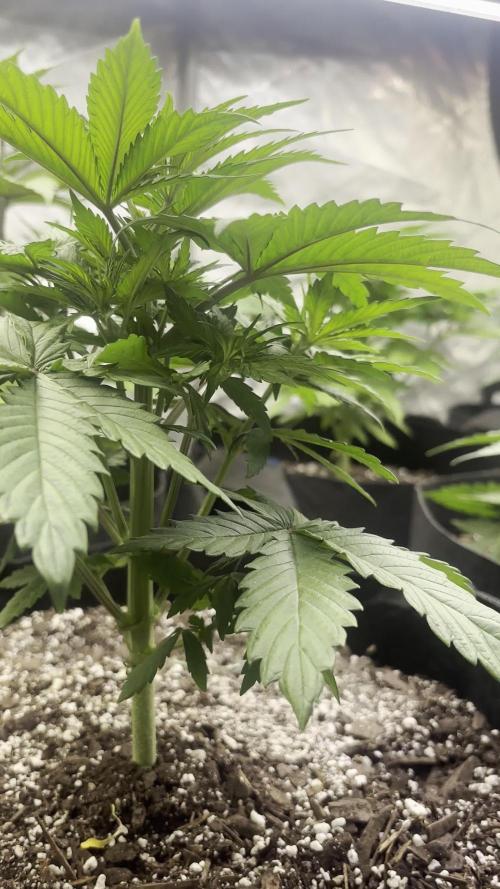
2/11: Now officially been 3 weeks since plant. Overall pretty happy with how things are going. I realized I had been slightly overwatering the plants a week ago, so I left them to dry a bit for 5 or so days, and watered them lightly yesterday morning. Will probably water them tomorrow, and this time I'm thinking of adding in a very light dose of nutrients for the first time. Overall, plants look fairly healthy. We have 2, maybe 3 phenotypes, one being super bushy and dense, the other less so but still fairly compact. The plants had been a bit droopy the last week, which is why I waited to water for a bit, but it seems they are perking back up slowly. The bushier phenotype also seems to droop a bit more. One of the plants is significantly smaller than the others, while still looking fairly healthy. Its somewhat on track in terms of number of fan leaves, it just doesn't have the vertical and horizontal growth of the others. My roommates said they kinda fucked up the roots when transplanting, so i'm hoping its just a bit stunted and will reel the others back in soon. Oh, and when I walked in the tent a few days ago in the morning, the temp was at 102f. I have no idea how it got to that, but it musn't have been for long because the plants seem fine other than maybe 4 tiny bleached spots on 2 of the plants. I'm hoping the plants get a bit leggier, as the new nodes under the bigger fan leaves are really struggling to get any light. I don't think I will do anything for now besides a very light dose of nutrients next feed, but might get into some lst, topping, and defoliage in the next week. Need to do some research to decide if we try mainlining, scrog, or other techniques. Light settings still the same also, might raise them a few inches in the next week.
2/15: Topped all the plants. Didn't have time to get lst material but will start that hopefully tomorrow or day after. Not sure if we should defoliate some of the upper fan leaves that are fully covering the new nodes coming in from under. Plants looked fairly droopy all day, I'm hoping its from underwatering, and i'm fairly confident it is. Watered them tonight, this time 0.75 gallons each, so almost double the amount of last time. Will probably stick to this amount for the next week or two. Still stuck to the same nutrient ratio: 5 tsp big bloom and 2.5 tsp grow big per 2 gallons (our watering bucket is 2 gallon). I think next feed will probably be straight water to flush the soil a bit, but not completely sure yet. Was also pretty confused as to why some of the pots had significantly more runoff than others. Hoping to continue to see growth, and less droop. The straggler is also finally starting to speed up a bit. Most plants are around 8-9 in tall besides the straggler, about half as tall.
2/17: Plants look very healthy overall. A lot less droopy, and definitely got some decent size now. Noticed one plant has some sort of bleaching that I'm fairly certain is cal mag deficiency. Makes sense since we haven't introduced any cal mag at all, so I will go buy some today. Gonna water tomorrow as the pots are already pretty much dry. Trying to add a video with detailed view of all the plants from different angles but doesn't seem like uploading is working
Likes
2
Share

@Drehpaper
Follow
Woche 11
Tag 71-77 / Blüte Tag 43-49
Luftfeuchtigkeit: 50
Tag: 27,8
Nacht: 24,7
PPFD: 879 im Schnitt
DLI: 38
Höhe: 55cm
VPD: 1,53 Tags / 1,19 Nachts
Lampe Abstand: 40cm
Lampe auf 70%
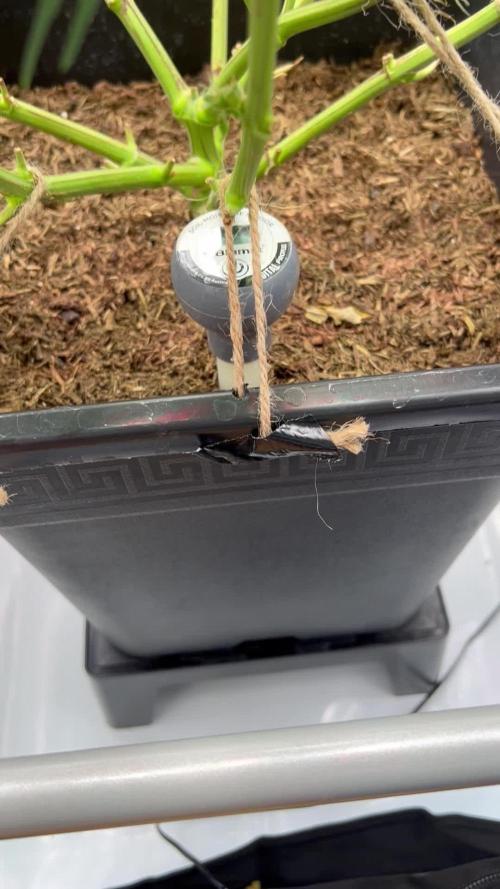
Woche sieben ist zu Ende und meiner Meinung nach lässt sie sich sehr viel Zeit. war wahrscheinlich mein Fehler, zu Hohe Temperaturen und ich hab es bisl zu gut mit Wasser und Düngung gemeint, sieht nicht mehr ganz so fresh aus.
Was meint ihr? Zu viel Licht? Zu viel Wasser? Oder doch die Hitze oder Überdüngung?
Zum Geruch, wenn ich das Zelt mal kurz offen stehen lasse riecht die Wohnung herrlich süßlich nach sehr sehr guter Wiese (Cannabis) so gut das meine Nachbarin sich gleich mal gemeldet hat und gefragt hat wo der üble Duft herkommt :).
Ansonsten sehr zufrieden, würd sagen da haben Dutch Passion (Antonio) sehr gute Leistung erbracht. Weiter so. Mein nächster Run wird sicher auch wieder was von euch werden.

Likes
16
Share


@LowzGrowz
Follow
Great Strain will run again
No Larf all dense nug
Great Fade
Frosty Purple tint nugs

Likes
10
Share


@Xspellsx
Follow
Here it is...Fucking bomb id definitely grow again Sadly this was a single bag seed it did HERM but late in the game so the seeds it did make which there weren't many are white and empty....got clones of his jet fuel so we will see the similarities.. Gave me about 3 ounces. Been smoking on it hard so hard to tell hahha aging well has a grapefruit smell that does not inhibit the taste which is fresh flowery chronic similar to a skywalker but much lighter
Likes
2
Share


@Marihumama
Follow
Cut of some leafs found some bugseggs on the bottom of some, but no infestation so no panic. Still no sunny weather.she is starting to look frosty pink and has a Sweet grapefruit smell. 😙

Likes
3
Share


@blackrain
Follow
Day 63, Coming closer to the end but with some problems that I've never had before, this is all because I ran out of CalMag and took most people's word that soil would be fine without it, not with biobizz all mix, which I will carry on using still but, it's quite rubbish soil to be honest.

Likes
73
Share


@Roberts
Follow
Lilly X White Widow is doing well under the Spider Farmer G5000/UVR40 lights. I just changed the light times to 12/12. I will be doing a solution change to a blooming nutrition in a few days. Everything is looking great. Thank you Athena, Spider Farmer, and Ripper Seeds. 🤜🏻🤛🏻🌱🌱🌱
Thank you grow diaries community for the 👇likes👇, follows, comments, and subscriptions on my YouTube channel👇. ❄️🌱🍻
Happy Growing 🌱🌱🌱
https://youtube.com/channel/UCAhN7yRzWLpcaRHhMIQ7X4g
Spider Farmer Official Website Links:
US&Worldwide: https://www.spider-farmer.com
CA: https://spiderfarmer.ca
UK: https://spiderfarmer.co.uk
EU: https://spiderfarmer.eu
AU: https://spiderfarmer.com.au
G5000 Light Amazon Link:
amzn.to/4643esa
UVR 40:
https://www.amazon.com/dp/B0BR7SGTHS
Discount code: saveurcash (Stackable)

Likes
67
Share


@m0use
Follow
This was a fun little project with a few ups and downs. Overall it was a success.
I managed to get 86 Seeds off of the two plants, this is a smaller number but given that I started the pollination about 2-3 weeks late I am impressed.
Top this all off with the fact I was using 10ppm silver solution for the majority of the reversing process and only had 30ppm for about a single week near the end.
Moving forward if I plan on reversing anymore plants I will be investing in some STS vs Silver solution. It's easier to use and has stronger results.
I also managed to get 25g of bug from the plants as well that I will infuse into some butter. Not to worry these are not the branches that where sprayed with silver and they have been cut off and disposed of in the composter.
When I decide to grow these out I'll try and create a new diary and test if the CBD/THC ratios remain intact, if the plants are viable. I have not tested the germination rate on these seeds and for all I know they are duds or will not resemble their back-crossed parents. This is my first seed making project and so much is new and unknown to me. Have had lots of help along the way from some good GD friends. Tried to post lots of photos and products I used.
The photos labelled [PREVIOUS HARVEST] where when I first grew this wonderful strain out. It has the same peppery kush smell and crazy deep purples as it first did. I did shock these plants with a heavy feeding that stunted them greatly, I also transplanted them when I should have started them off in their forever pot. This was all explained in the weekly entries when it happened and why. overall the autos are not heavy yielding but more average for an auto and that's ok with me. Its the smells, taste colours and CBD contest that draw me to it.
Somethings to note from the diary, most of the liquid nutrients are diving by how much water I gave them, typically 4L. Solid nutrients are divided per litre of medium in the pots or they are the total amounts I added. Just ask if you have Questions.


Likes
38
Share


@Green_Mountains
Follow
I took the tiny plant out of the tent due to state laws. She is happily sitting in a window... we'll see what happens with her!
Massive growth for both plants this week! They both doubled in size! I don't know whether to call my plants vegging, pre-flowering or flowering. I figured this was the last week of veg and next week is full on flowering!!
They both stink! Gassy for sure! I'll need to turn start using my carbon filter soon... I caught a few cool time lapse videos this week. Especially after feeding them last night!!
I fed them twice this week. The first time was at a third recommended dose and I jumped it to half yesterday. The leaves are clawing at the top of the plants... I think it is a lack of phosphorus due to me only watering them the last 2 weeks. Any thoughts out there?
I'd love advice about defoliating... I have a couple massive fan leaves I could remove to open the canopy for flowers... I just don't want to stunt the plant or rob the main cola of a major energy source... Thoughts are definitely welcome!
I tried my hand at LST... I think a few are working and a few aren't doing the job... Definitely need to figure this out! Again advice is welcome!
If you've made it this far... thanks!! Cheers!
Likes
7
Share


@Bluemels
Follow
Tag 53: So gut läuft es nicht die Blätter sind schon wieder so hell geworden, ich weiß auch nicht. Bin gerade etwas deprimiert 😪
Likes
126
Share


@FoTwenny
Follow
Fo' Twenny here with another Grow Diaries update! Today, I have a video update for ya'll recorded on 8/20.
8/20: Not much to report since the last update. She seems to be a happy girl. Leaves are starting to fade a little. Doing some very light selective defoliation, mainly in the center to allow more light penetration to lower parts of the plant. She's starting to put off more terps as she gets closer to the finish line. No complaints about this vigorous cultivar!
8/24: Photo update! Enjoy!

Processing
Likes
3
Share


@XxBILLZAxX
Follow
Water is 5.8 - Run off is perfect until I water 2 days later then it's 6.4-6.6
Trichomes still clear maybe 5% milky. I have the flawless finish so will only need to flush 1 week prior to snipping.
Likes
20
Share


@Boomdrawfyah
Follow
Dia 64 desde la germinación y 36 dias despues del trasplante así lucen de sanas las geneticas de paradise seeds junto con los productos de nutrición y elicitación de terranbis, han crecido bastante en las 5 semanas de trasplante ya pasan de 1,50 m. Seguimos trabajando para obtener los mejores resultados 👊🏼👊🏼🔥
