Likes
Comments
Share
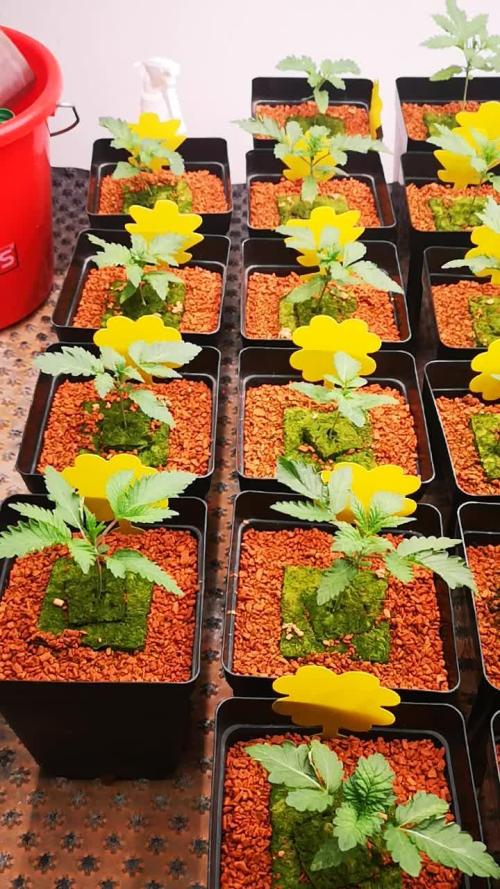
Me siento conforme creo que vamos bien en este cultivó, paso lento pero seguro.💪👊 19 enero transplante a maceta de 11 lts y ocupamos sustrato biobizz, agregaremos tambien en los riegos piranha de advance nutrientes.
Likes
23
Share
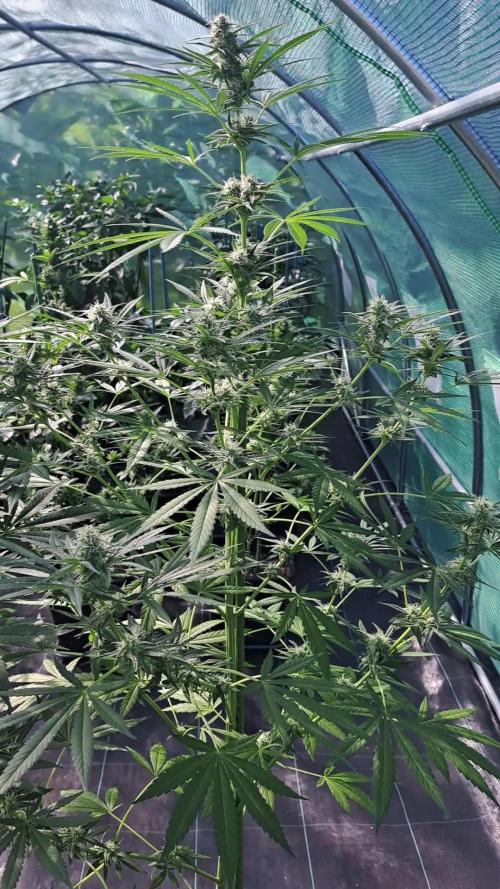
So, into day 9 of 12/12 and the girls have responded quickly. Bud sites appearing everywhere. Top dressed with some more nutrients, have had daily manicuring, i prefer little and often rather than 1 massive blast. I have turned the lights up to 85%, and will work it to 100 over the next week or so.
Processing
Likes
Comments
Share
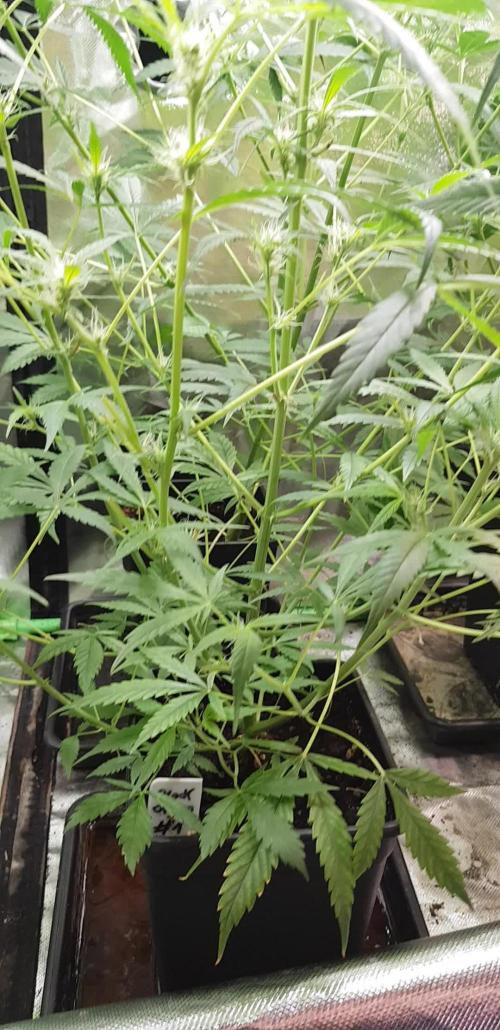
Week 8, day 57, bud 27 watered both with PH6.4 5ml/gal Cal/Mag, 10ml/gal Seaweed/Fish extract, 0.5ml/gal Orca, 1tbsp Molasses. Added bottom re-circulating Fan. Day 59, took pics.
Likes
1
Share
@Scrap
Follow
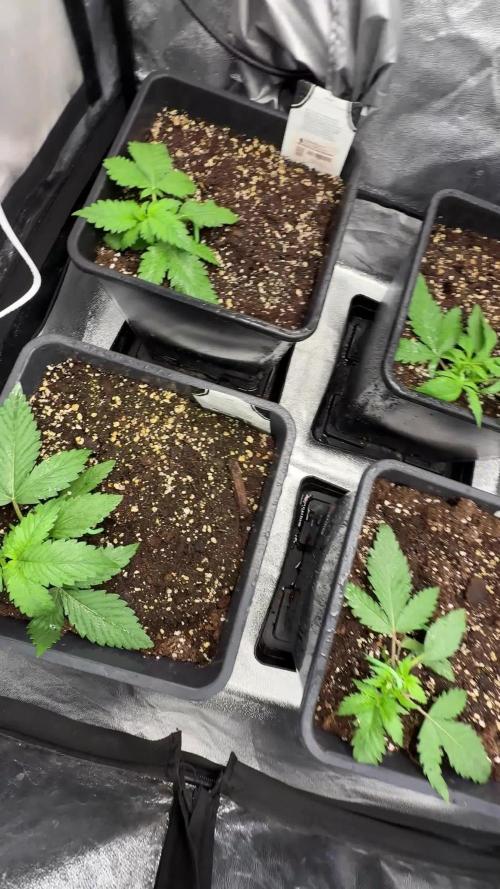
August 28 is officially day 1 for me. Every single one of these popped easily and came out of the soil with zero issues. The seedling stage stresses me out so I’m glad things are already off to a good start. Toking one down for good luck *puff puff pass*.
Likes
4
Share
Taking longer then I had planned but no rush she nearly done. Amber trichomes are visible so chances are this is last week next post should be harvest
Likes
11
Share
Processing
Likes
7
Share
Likes
6
Share
28.03.23- одна из девочек северного сияния в горшке 3 л начала цвести , вторая же из горшка 10 л активно ростки и не планирует останавливаться и получает лст до начала цвета . Обе получают раствор ппм 850 и пш 6 Только для разных стадий ! Ждем дальше ❤️ 01.08.23-обе девочки развиваются и кушают 👌🏻 Растение в 3 литра горшке активно цветет и получает раствор на цветение 850 ппм short flowering ph 6 Вторя в 10 литров горшке продолжает активно вегетировать получает раствор grow 850 ppm, ph 5.8 92.08.23-Обе девочки значительно выросли , та что находится в горшке 3 литра активно цветет и получает питание для цветения ! Ее размер примерно 40 см и она продолжает почти лол 😜 Девочка в горшке 10 литров набирает обороты в вегетативной стадии и получает лст ! Надеюсь она будет гораздо больше сестры 06.08.23-31 день жизни двух сестер ! Одна из них , та что в горшке 3 литра активно цветет и привыкает 60 см , вторая в горшке 12 л только вошла в предувет. Обе выглядят очень хорошо и получают полную дозу раствора greenhouse feeding short flowering 1000 ppm,6 ph. Сток стабилен и под контролем 09.08.23- Растение #1(в горшке 10 л) продолжает расти и получает лст тренировки , приобретая огромный размер . Растение #2 (горшок 3 л) сильно вытянулось и продолжает цвести . Обе получают разное питание для своих стадий развития .
Likes
14
Share
Yooooo what up gang!!! Thought I'd stop through and do an update for yall!!! SOOOOO: 1) she is getting really strong at the trunk and arms CropSalt hitting great!! 2) going to do clones in a week or so 3) the big tent will use the clones which is almost ready to go. 4) after they are rooted enough going to flip the small tent!! 5) will stay on top of this as much as possible!!! Thanks for stopping by gang!!!
Likes
21
Share
Привет друзья. Моей растихе сегодня 88 дней. Растение почти пришло в себя. 20.10 буду переводить на цвет. Начал применять LST технику на 19 дне и продалжаю применять её через день, а 18 августа добавил ДЕФОЛИЗАЦИЮ С 20.08 ДЕФОЛИЗАЦИЮ делаю каждые 3,4 дня С 20.08 LST технику делаю каждые 4.6 дней На сегодняшний день влажность 54% 5.09.2023 заметил высокий Ph 7.9 С 48 дня Ph не ниже 5.8 На сегодняшний день Ph 6.0 Начал кормить с 60 дня Canna Terra Vega PPM 450 Всем мира и добра! Не забудь поставить лайк❤️, если понравилась как прошла неделя И читайте наш TELEGRAM: https://t.me/smail_seeds #Smail_Seeds 😀
Likes
2
Share
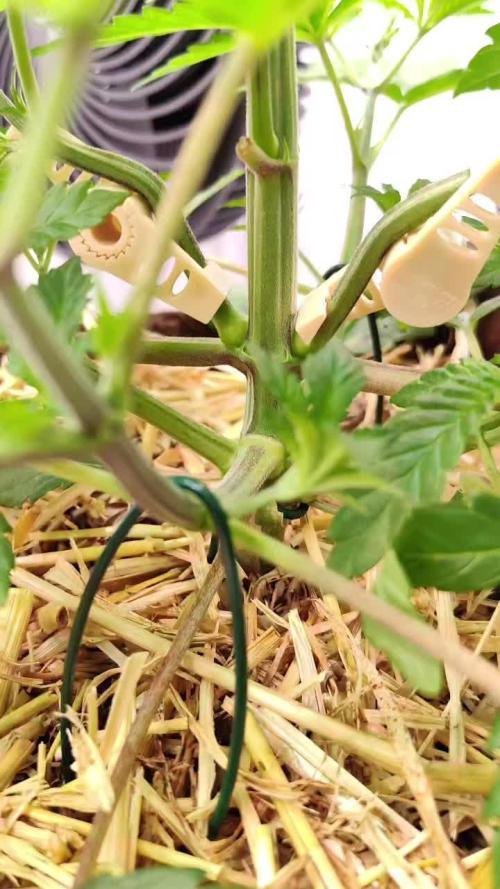
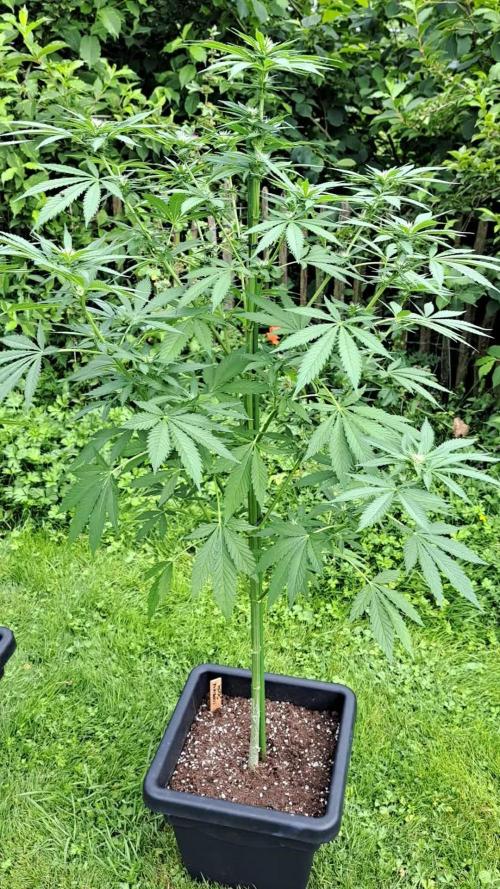
Topped once, turned off IR @ nights, slowed vertical growth back down, and took off both of the very lowest internodes on each plant. Eisenia fetida Stratiolaelaps scimitus Armadillidium vulgare Red wigglers (Eisenia fetida) are highly beneficial. They are considered an ideal choice for "no-till" or container-based organic growing because they live in the upper layers of soil, feeding on organic mulch rather than the plant's root system. Red wigglers accelerate the breakdown of organic amendments and produce high-quality, nutrient-dense worm castings directly in the root zone. Clover is another exceptional component of an organic rhizosphere, offering a sustainable, self-sustaining alternative to synthetic nitrogen fertilizers produced via the energy-intensive Haber-Bosch process. By forming a symbiotic relationship with Rhizobia bacteria, clover converts atmospheric nitrogen N2 into ammonium NH4, providing a steady, slow-release nutrient source that enhances soil health and reduces environmental impacts. Red clover offers superior nitrogen fixation and biomass production compared to white or yellow clover, making it the premier choice for maximum soil vitality, particularly for improving soil structure and providing a high-volume nitrogen credit for subsequent crops. If it is fully functional and efficient soil, the rhizophagy cycle is superior long-term than any synthetic delivery when it comes to preventing deficiencies, not because it's "better," per se. The medium will require a very high CEC to make it to harvest without re-fertilization. The rhizosphere acts as a dynamic, interactive exchange where plants and soil microbes trade resources based on immediate needs. When a plant lacks a specific nutrient, it changes its physiology and releases specialized chemical cocktails—root exudates—into the surrounding soil. These exudates, which include sugars, amino acids, and organic acids, serve as a "shopping list" to attract specific microorganisms, which in turn return higher levels of desired nutrients. There is nothing in comparison when using synthetic delivery, which can cause plants to stop producing exudates, effectively "starving" the beneficial soil life, over time turning the soil barren and void of microbial life. Responsible use, applying the right amount at the right time, can minimize these negative effects. Relying solely on synthetic fertilizers without replenishing organic matter is what typically leads to exhausted soil. The use of synthetic fertilizers can utilize the Cation Exchange Capacity (CEC) of the soil, but without a robust rhizosphere and active microorganisms, the efficiency of this process is significantly reduced. This makes synthetic growing more difficult to prevent deficiencies overall compared to an efficient organic living soil with a robust rhizophagy cycle, as there is no "one size, fits all" when it comes to different nutrient profiles of strains/genetics, making it trickier to "guess" and prevent creeping deficiencies. CEC does not contribute towards EC. Add more CEC using biochar, problem solved. If you keep pH between 6.3 and 6.7, hydrogen is exudated to cycle the medium's CEC for its needs. Keeping the pH between 6.3 and 6.7 creates an environment where plants release H+ to displace positively charged nutrients (like Ca2+, Mg2+, K+ held on soil particles or within artificial media this cycle through nutrients via the medium's Cation Exchange Capacity (CEC) Microorganisms generate a stable potential of approximately 0.5 V EC. The rhizosphere creates its own food, similarly to chelation, using 1000's of varying combinations to create its own food. Start to finish, just add water. Eventually, more materials will need to be added at the beginning of each new grow, but very attainable to go from seed to harvest without ever fertilizing. ATP is important when it comes to biomass accumulation. Cellular root respiration and cellular respiration are essentially the same biological process, the breakdown of glucose to create usable energy (ATP) in the presence of oxygen, just taking place in different parts of the plant. Synthetic (salt-based) grows have significantly lower levels of total rhizosphere respiration, often referred to as root-zone activity, compared to organic living soil grows. While the plant roots themselves may respire in both systems, the surrounding soil ecosystem in a living soil setup is vastly more active, teeming with bacteria, fungi, and beneficial microorganisms. 2 pools of ATP, it won't double in growth buuuut, but improving root respiration by ensuring high oxygen in the soil is crucial. Good aeration ensures roots can fully utilize glucose to generate the ATP necessary for nutrient uptake, leading to healthier and more productive plants, even if growth isn't exactly doubled. The ATP created using root respiration is dedicated to rootzone growth; the ATP created using regular cellular respiration in a synthetic system would have to dedicate a lot of ATP to the roots when there is little or no root respiration. It's true that there is less of an initial ATP cost in breakdown when nutrients are already in their final form (synthetic), but you lose a solid chunk of ATP when the entire plant is reliant on cellular respiration alone; a large portion of ATP is dedicated to root zones for "forced" nutrient uptake rather than traded. Making it overall less efficient, even if the initial cost of breakdown is higher. Not sure if I butchered that but one can hope It makes sense. Oxygen is of critical importance when growing in living soil compared to synthetic soil because it supports the metabolic needs of the microbial, fungal, and insect ecosystem, rather than just the root respiration required by the plant itself. While synthetic grows can survive in lower-oxygen environments with precise mineral feeding, living soil systems rely on aerobic microbes to decompose organic matter (microbial mineralization) to create plant-available nutrients, which is an oxygen-intensive process. While a specific fair percentage is difficult to guess, my experience points to a massive, compound difference between the two methods and the amount of oxygen required. All the ATP spared is used on more biomass, not only that, but the extra root respiration can achieve a much higher CO2 compensation point naturally than you could with synthetic and atmospheric CO2 alone. As a plant grows faster and increases in size, its demand for nutrients to support that growth increases, requiring a higher rate of nutrient uptake. As plants enter phases of rapid vegetative/floral growth, their metabolic demand for nutrients increases exponentially. Without a robust buffer zone—whether in the soil (cation exchange capacity) or in a hydroponic reservoir—deficiencies will occur rapidly because the instantaneous demand for specific nutrients can quickly exceed the rate of supply. A growing body of evidence suggests that organic living soil provides superior long-term soil health and environmental benefits compared to synthetic fertilizers, which are often criticized for promoting a cycle of dependency and degradation. While synthetic fertilizers offer short-term convenience and high yields, they often come at the expense of long-term soil health, sustainability, and increased corporate control over growers/ farmers. Organic living soil, while slower and requiring more care to establish, creates a sustainable, resilient, and, ultimately, more fertile environment. We don't really grow; we facilitate energy conversions, and energy is just numbers. Because the universe works the same way today as it did yesterday, there is a single, fundamental mathematical quantity that remains constant. We call this quantity energy. You cannot put "energy" under a microscope. You observe matter and forces (like heat, motion, or light), but energy is just a scalar number calculated to help predict how these things will change and interact. When an object falls, or when a battery powers your phone, matter shifts and changes form. Through it all, the universe ensures the "total score" of the numbers remains exactly the same. Once all water is removed, approximately 95% to 97% of a plant’s dry matter consists of carbon, oxygen, and hydrogen. These three elements form the structural backbone of all plants. NPK & all the rest 3-5%. Indigenous Amazonians created, or at least significantly enhanced, the fertile, dark soil known as Terra Preta de Índio (Portuguese for "Indian Black Earth") by incorporating biochar and other organic materials into the soil. This anthropogenic (human-made) soil technique, which dates back roughly 2,500 to 8,000 years, allowed ancient civilizations to flourish in regions with naturally poor, acidic, and nutrient-poor tropical soils.
Likes
19
Share
@gsimd
Follow
This week I continued to water using the Coast of Maine Squid Concentrate. I also added a DIY CO2 Generator. The plants are still much smaller than they should be due to early mistakes. Fortunately, I've learned a lot and am seeing good flower development this week. A huge thank you to @MalumProhibitum for offering some terrific advice on my grow. What a great member of this community.
Likes
10
Share
@Naujas
Follow
so I'll start by saying that I'm a "fool" :D it's not an automatic flower, it was clearly written on the package :D it just so happened that I planted two different ladies on the same day, and somehow it came together in my head that she was an auto :D but it turns out that she is a real female plant :) wedding cake fem :) well, nothing like that on day 46, I switched the light cycle to 12/12, and it's not a big problem that she is a photo, the only problem is that there are two of them growing in the tent and one of them is already a blooming auto flower, so she will also now only get 12 hours of light instead of 18 :) As my teacher @AsNoriu would say: smoke less than you plan :) :) :) overall, the girl is growing really well :) good luck to everyone :).
Likes
11
Share
Ahora a secar y curar, muy buena genética, fenotipo muy resistente, colores preciosos, bien de resina y olor muy marcado a bayas
Likes
7
Share
@Aleks555
Follow
Blue Gelato - Royal Queen Seeds After 124 days of growth and 76 days of flowering, it's finally time to harvest our incredible Blue Gelato from Royal Queen Seeds! The buds are absolutely massive, coated in resin, and the aroma is unbelievably strong—intensely potent, yet so addictive in its richness. It’s like nothing we’ve experienced before. We are completely blown away by this strain! We didn’t weigh the buds while they’re still wet, but once they dry, we’ll share the final weight. Judging by the size of these beauties, we’re expecting a generous harvest. A huge thank you to Xpert Nutrients for your ongoing support, top-notch service, and, most importantly, the incredible fertilizers that have helped us grow such powerful plants year after year. Your products are truly the secret behind these massive, potent results. We love Xpert Nutrients! We also want to give special thanks to Royal Queen Seeds for providing such fantastic genetics. Blue Gelato has exceeded all our expectations in terms of both growth and quality. And yes, we’ve already had the pleasure of sampling her, and let me tell you—this is premium-grade cannabis! The smoke is incredibly potent, much stronger than expected, and hits hard, leaving a long-lasting effect. It’s not just strong—it’s very strong, and the intensity keeps you floating for quite a while. It’s so powerful that you may find yourself wondering when the high will start to ease up. This is no joke—Blue Gelato is as dangerous as it is amazing, and it’s not one to be taken lightly. Thank you once again to Xpert Nutrients and Royal Queen Seeds for this phenomenal experience. We couldn’t be happier with the results and look forward to growing more of your amazing products!
Processing
Likes
36
Share
Hey everyone 🤗. Today they were planted in their 11 L pots 😀. Now the root growth can really accelerate. When repotting, a total of 3 g per liter of Green House Powder Feeding Bio Grow was added to the Canna Coco 😊. That's enough for 8-10 weeks :-). I'm curious what they are doing this week and I wish you all a lot of fun with the update :-). Stay healthy and let it grow 🌱🍀 You can buy this Strain at : https://sweetseeds.es/de/sweet-skunk-f1-fast-version/ Type: Sweet Skunk F1 Fast Version ☝️🏼 Genetics: Sweet Skunk Auto (SWS34) X Early Skunk 👍 Vega lamp: 2 x Todogrow Led Quantum Board 100 W 💡 Bloom Lamp : 2 x Todogrow Led Cxb 3590 COB 3500 K 205W 💡💡☝️🏼 Soil : Canna Coco Professional + ☝️🏼 Fertilizer: Green House Powder Feeding ☝️🏼🌱 Water: Osmosis water mixed with normal water (24 hours stale that the chlorine evaporates) to 0.2 EC. Add Cal / Mag to 0.4 Ec Ph with Organic Ph - to 5.5 - 5.8 .
Likes
5
Share
Day 46 of Flower, 93 since germination. Starting to check the trichomes with my new wifi microscope. Looks like Lemon Extract has a scattering of amber trichome heads, but only in bud nearest the light. All other look milky and glassy. I'm thinking Lemon Extract might harvest in one week. The others, maybe two weeks. Gave the ladies their last feeding today. Just PH balanced water from here til harvest.
Likes
21
Share
@Oldwied
Follow
The last week under the sun. Now there will be three days of darkness. Then it’s time to harvest. The Trichomheads looking good,
Likes
23
Share
Here we are with another masterpiece of the Zamnesia catalog, as usual automatics never disappoint and Trainwreck is a shining example. ** We remind all users that we grow two plants per strain, one worked with specific techniques and the other left to grow freely and beautifully or worked with uncut techniques to preserve speed. Description // This plant was left to grow, simple, nice and straight, with a lot of cleaning underneath, however in any case the lower part of the plant must remain clean. It is really big, big and fat with plump flowers, nice plump and with a resin at the right point, it is not incredible at the highest levels I must say the truth but for the temperatures I am facing it is truly excellent. I am about to move to a new location where I will be able to control everything much better for now I have been forced to adapt to the fortunate and pro-cannabis climate conditions of my area. The plants were a bit delicate at the start I recommend a bit more attention on the birth, overwatering, repotting if possible with autoflowering let's avoid them, let's avoid everything directly in a defined pot for autoflowering it is better. I highly recommend you try it. Trichomes and maturation // We did a thorough microscopic analysis 10x (and 10x x 1.6) and noticed a good percentage of milky/lumpy trichomes; The percentage of amber trichomes was non so good and still some transparent, but that's fine for us as we're not crazy about THC oxidation and hyper indica effects around here. Fertilizers and soil // We used the Plagron organic fertilizer range, all the recommended additives and Pro Mix soil, both unfertilized and organic. Calculate the dosage according to your needs on the website ------ https://plagron.com/ The nutrients are available in convenient packs on the Zamnesia website --------- https://www.zamnesia.io/en/11457-plagron-easy-pack-natural.html Take a taste of this strain, it's a cross of legendary strains https://www.zamnesia.io/en/11055-zamnesia-seeds-trainwreck-automatic.html Short Description Zamnesia // Trainwreck Automatic is the autoflowering descendant of the popular cannabis strain Trainwreck (a stunning cross of Thai and Mexican landraces). Much loved for its 70% sativa genetics and sativa-like effects, Trainwreck Automatic is as easy to grow as an indica (even in cold climates). This autoflowering strain goes from germination to harvest in 11–12 weeks, meaning you'll be harvesting sativa buds in no time. It prefers warmer climates, but thanks to its short life cycle, it can also be grown in more northern areas (provided it is germinated a few weeks early when growing outdoors) Trainwreck Auto offers delicious lemon and lime flavors that enhance the classic sativa profile of its parents. Furthermore, thanks to the spicy and earthy notes, the overall experience will be even more intense, regardless of whether you smoke or vape it. In terms of its effects, Trainwreck Auto is euphoric, uplifting and energizing. Fueled by a THC content of around 21%, this strain is perfect for socializing and best suited to smokers who prefer to stay active after consuming cannabis, rather than lazing around doing nothing. The whole world of cultivation and much more is from Zamnesia: just take a look at the site and you will find "all the best that nature has to offer" in various shapes and colors. -- // www.zamnesia.com
Likes
12
Share