


Likes
Comments
Share


@hooolian
Follow
14/02/22: the plants have had their final defolitation so they can really concentrate on building bigger buds in the final weeks before harvest. Some colas look ready and others not... have had to add my garden sticks to support the plants.

Likes
Comments
Share


@Batista
Follow
We noticed this week that she's growing much faster and the side branches too.
See the difference between the pictures April 18th - Topping view and April 20th- Topping view, and how much the side branches had grown.
Other than that, it was a week without major events :)
Sorry again for the pictures under the grow light.

Likes
57
Share


@LockDownGrow
Follow
ok so everything has gone fantastic , no nutrient burns at all , and have been slowly creeping up the base nutrients , i have stopped the cal mag and now adding house and gardens bud XL at full strength these girls are now in full swing of flower and i bought a new ph stick this week ,
i have found when PHing the feed bucket that its best too have air stones in the bucket , add all nuts and then ph but do not use the feed that day as if you check the next day the ph is off again so i left it 24 hours after i add more ph down , and it seems too make the measurements alot easier and stable , i have bent down the main stems " without damaging them onto my netting too A keep the canopy all the same high so my lighting is covering all plants at the same distance and also it allowed the side stems too reach up too ,
i also was sponsored another new led light by kingbo this week so have added another 600watt led too the grow , so now have two 600's and one 900watt , and temps are still fine sitting at 24c lights on and 19-20 off , so am pleased with that , this lady is by far the bushyist plant with the most branches she also didn't stretch much and is packed with bud sites ,

Likes
93
Share


@MadeInGermany
Follow
Welcome to the Zamnesia Spring Cup 🏆
Hello everyone :-)
A lot has happened this week 🤗.
It has developed very nicely and its roots have exploded properly 😍.
It is also slowly becoming lighter, since it has obviously been slowly consuming its nutrients from the soil :-)
That is why it was repotted today, mixing 3 layers with a total of 60-75 g Monster Bud Mix between the soil.
Then everything was mixed and distributed well, and the plant used.
Unfortunately I noticed too late that I didn't take any pictures of the root ball while repotting 🤦♂️🏻.
I look forward to seeing how it evolves this week. Above all, I am excited to see how she is doing with the Monster Bud Mix, as I have been used to mixing everything for each wash separately 😊.
During the course of this week I will also spontaneously decide whether I will give her an LST, topping fimming, etc., since I have to see how I am in the vegi phase, because the Spring Cup has a limited time 😁.
I wish you all a lot of fun watching, have a nice week, stay healthy 🙏🏻 and let it grow ☘️👍 .
Zamnesia Spring Cup 🏆
Type:
Runtz
☝️🏼
☝️🏼
Genetics:
Zkittlez x Gelato
👍
😍
Vega lamp: 2 x Todogrow Led
Quantum Board 100 W
💡
Bloom Lamp : 2 x Todogrow Led
Cxb 3590 COB 3500 K 220 W
💡💡☝️🏼
Soil : Canna Bio
☝️🏼
Nutrients : Monster Bud Mix
☝️🏼🌱💪🏻
Water: Osmosis water mixed with normal water (24 hours stale that the chlorine evaporates) to 0.2 EC. Add Cal / Mag to 0.4 Ec Ph with Organic Ph - to 6.0 - 6.3
💦💧

Likes
1
Share


@Herbsmanington
Follow
Same feeding as last week. They've grown alot since i started this diary, getting a bit


Likes
50
Share


@Hou_Stone
Follow
5th week I continue the defoliation for my 3 Noris Cakes. And I missed the cut on one them 😱, but she is slowly recovering...🙌
🌗Switching to flowering this week, I reduced the length of the day by 1 hour each day until reaching 12 hours night time / 12 hours daylight on the 33rd day!🌞
🌺On the 33rd day I apply a layer of organic nutrients mixed with a little soil that I add to the top of each pot.
I added 35 grams of BioBloom to each of my pots🌺
------------------------------------------------------------
💧Watering
I water all my pots the same day but with more or less water.
Simply by lifting them;
A light pot is a dry pot and will need more water,
A heavy pot is a wet pot and will need less water.
On average I water each pot with:
Day 29 : 0.5 L
Day 33 : 1 L with 0.8 grams of bio enhancer/L
I use tap water, adjust the ph to around 6 and water
------------------------------------------------------------
🔥❄️Temperature of the week :
Day : 19-23°C (Humidity : 65-80%)
Night : 14-17°C (Humidity : 75-85%)
Outside the tent it is around 16°C with 70% humidity
The humidity is a little too high, I hope it will drop a little and I won't have a problem with mold during flowering😅🤞
------------------------------------------------------------
🚀Equipment of the week ⭐️ :
Light FC3000 Mars hydro. power 95% at 50cm
Extractor 6 inch Mars Hydro. power 1/10. ON 24/24h
2 fans to circulate the air inside the tent. Each on for 30 minutes then off for 1 hour. this rhythm repeats itself in a loop
I'm removing my heat mat this week.
------------------------------------------------------------
📜Links :
Nori Cake seeds 🌱 :
https://shop.greenhouseseeds.nl/feminised-cannabis-seeds/nori-cake/
Mars Hydro : 5% off with my discount code "houstone5" 💪
https://www.mars-hydro.com/?acc=hou-stone
👨🚀My Instagram❤️️:
https://www.instagram.com/hou_stone420/
------------------------------------------------------------
Tanks for your visit😀💚
Likes
3
Share


@CaptonianMoneymaker
Follow
Grow very quickly little stretchy bud took off in bloom buds started small then just exploded after 4th week green house grow with 2 fans super clean buds patiently waiting on buds to dry
Likes
11
Share


@Kirsten
Follow
19.1.25:
I have watered all plants with 300ml of dechlorinated water PH'd to 6.3, with 1/3 jar of black strap molasses with Ecothrive Biosys-1g.
I am looking to increase the sugars for microbial life and plant processes.
It'll also add some extra Calcium, Magnesium and trace elements.
I also, watered all plants with Bloom nutrients.
Using dechlorinated water PH'd to 6.3 with the following nutrients: (ml/l) ;-
♡ 2ml Cal-Mag
♡ 2ml Ecothrive Flourish
♡ 2ml Xpert Nutrients Bloom Booster
♡ 2ml Biobizz Bloom
♡ 2ml Biobizz Top Max
♡ 1g of Ecothrive Biosys
I watered around 1-3 litres per plant. Depending on size and requirements.
I'm still spilling water containing the nutrient solution. 🙄
I am using this to rub into the leaves. I think a nice foliar massage won't do any harm, make the most of the situation.
The plants have become very hungry and thirsty. Increased the water by double.
I ran out of my TNC cal-mag. I decided to order the Xpert Nutrients brand, as I like their products. It isn't organic as far as I can tell, but I don't think it matters too much to me, to be honest.
I also want to top dress this week, so I bought some Green Leaf PK bud Booster dry amendment from Amazon, too.
I'll mix it with canna coco, perlite, worm castings, and Ecothrive Life Cycle.
24.1.25:
I went ahead and top dressed all the plants with 4.5 gallons of my supersoil custom mix.
This consists of the following substrate and dry amendments:
♡ 60% Canna coco
♡ 20% Worm castings
♡ 15 % Perlite
The remaining 5% consists of the following dry amendments;-
♡ 10g Ecothrive Biosys
♡ 1 Tsp RHS Mycorrhizal Fungi granules
♡ 3 Tsp Vitalink Bat guano
♡ 4 Tsp Diatomaceous earth
♡ 8 Tsp Ground Cinnamon
♡ 10g Green Leaf Bud Booster PK booster.
♡ 3 Tsp Ecothrive Life Cycle.
•Worm castings for some all round nutrition.
•Cinnamon for mildew and bug repellent.
•Canna coco base substrate.
•Perlite for adding oxygen to the root and soil system.
•Green Leaf Bud Booster PK Booster for blooming. Building strong big buds.
•Vitalink bat guano again for Bloom.
•RHS Mycorrhizal Fungi granules, to boost beneficial microbes.
•Ecothrive Life Cycle for lots of great benefits.
•Diatomaceous earth for Silica.
•Ecothrive Biosys, for an extra microbial boost.
24.1.25:
Gorilla Cookies is absolutely healthy and strong! I'm very pleased with this plant.
I was looking into topping autoflowers and had wanted to top her. Anyway I read some things, as a result of which I decided, last night, I wasn't going to do it.
So today came around, and I topped it. Totally forgot I wasn't going to do it 😅
I was really excited to experiment with topping in addition to LST. Now I guess we're all in! 🤞
Thanks for checking out my diary 🍃 ✌️


Likes
41
Share

@All_our_small_plants
Follow
Tag 167 heute haben wir nach einer Kontrolle bemerkt das es vermehrt zu Schimmel Bildung kam, und wir haben ein paar Bananen in den Blüten Gefunden, Vermutlich ist es zu viel Stress für die Lady. Mal warm dann wieder kalt, Hohe Luftfeuchtigkeit die ganze zeit. Wir haben nun ca.2,5 KG Nass Gewicht geerntet und werden aus diesem Hash machen, sobald es gefroren ist und wir es verarbeitet haben folgt nochmal ein update hier.
Alles in allem war es eine Interessante Pflanze und wir werden sie nochmal im indoor Testen.
Wir haben nun aus den 2,5 KG Frozen Hash gemacht. Dabei werden frisch geerntete Cannabis-Pflanzen sofort eingefroren und anschließend mit Eis und Wasser verarbeitet, um die Trichome (Harzkristalle) zu lösen und zu Haschisch zu pressen.
Wir haben dazu Bubble bags genommen, diese haben verschieden Micron-Größen: Typischerweise zwischen 25 µm und 220 µm. Je kleiner die Zahl, desto feiner das Sieb und desto reiner das Endprodukt.
Wir haben dazu ein kleines Video hochgeladen wo man den Ganzen Prozess sehen kann.
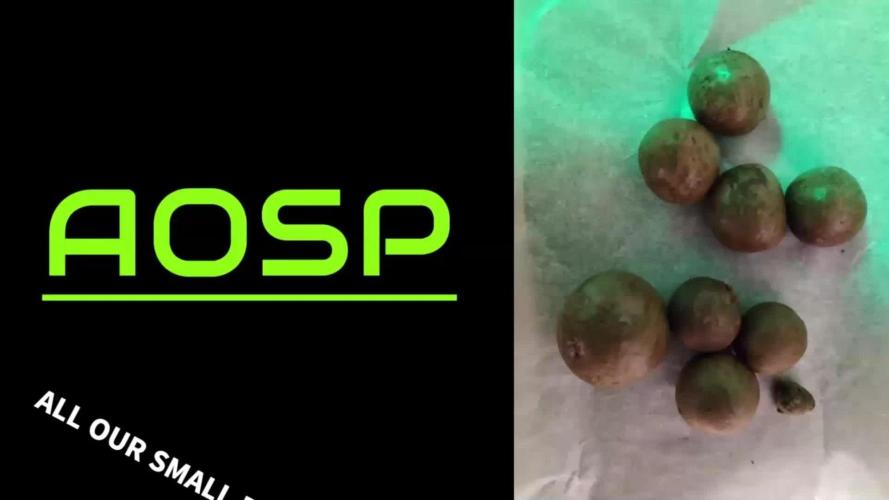
am ende haben wir dann ein paar schöne Temple Balls erhalten und diese waren einfach genial!!!

Likes
16
Share


@Cannabis_carlitos
Follow
Scrog netting is becoming a challenge, I am trying to fill bottom right corner but the plant continues to grow in all directions.
The areas that are filled keep growing, I have stopped topping and keep tucking.
I have put 4 clones in the corner because I do not want to wait anymore as my 2x4 will get too big during the flower cycle of this tent.
Turned off light and will keep off for 48 hours, officially starting the flip into flower cycle. Plants look good, no issues so this is the perfect time for me.
Wish me luck, I hear this strain loves to really stretch.
Fed nutes at 50%, they just got off a lockout so taking it easy, they'll tell me when to up the feed.

Likes
10
Share


@L_Choppa
Follow
Everything went well I had to lay off the water for a week the medium was a little over water finally water today with nutes I seen some good Development this week in buds sites and branch growth I did lst last week so they might not look as tall thanks any Criticism or advice is welcomed
Likes
147
Share


@MrJones
Follow
MrJones Black Berry OG
🔹🔹🔹🔹🔹🔹WEEKLY GOALS🔹🔹🔹🔹🔹🔹
🌞Environment - 75/80℉ and 55% Humidity
💧 Feeding - Using "Super Coco" amended soil. compost teas, Dechlorinated H20 PH/6.5 Fish Fertilizer, about 4 ounces of water per day.
🍃Training /
🕷️ IPM - Will be using Green Cleaner" 1 OZ per Gallon, and CannControl from Mammoth alternating between product each month for Integrated Pest Management.
💡Mars Hydro LED / 480W FC 4800
🔹🔹🔹🔹🔹🔹🔹🔹🔹🔹🔹🔹🔹🔹🔹🔹🔹🔹
▶️ Tuesday 12.29.20 Started these seeds in a mixture of 70/30 COCO 80% and Lobster Compost 20%, using my gemination cabinet, keeping RH at 55/60% and Temperature around 75/78F under a TS-1000 at 25% power.
▶️ Wednesday - 12.30.20 Keeping soil moist waiting for seeds to pop
▶️ Thursday - 12.31.20 Keeping soil moist waiting for seeds to pop
▶️ Friday - 01.01.21 Keeping soil moist waiting for seeds to pop, looks like 5 of the 6 are starting to push up
▶️ Saturday - 01.02.21 Keeping the soil moist the seedlings are about 1/2 inch tall, looking great, I have faith that the 6th seed will pop soon
▶️ Sunday - 01.03.21 Keeping the soil moist the seedlings continue to look great
▶️ Monday - 01.03.21 Keeping the soil moist, turned on a fan to add movement to the seedlings, along with BioBiz Root Juice.
▶️ Tuesday - 01.04.21 The new ladies are doing great already starting to move past 1 inch tall, sp the final seeds to pop were 5/6 that pretty damn good to me!
🔹🔹🔹🔹🔹🔹🔹🔹🔹🔹🔹🔹🔹🔹🔹🔹🔹🔹
📜 Cultivar Information - We have created this strain by crossing the best Black Domina available with Very Berry and our own Lost Coast OG Kush, this plant produces large colas with a super intense sweet berry flavor with a sweet-smelling aroma that varies from fruit and berries to sweet candy. This lady offers tight internal stacking giving a perfect structure for those super heavy colas, which is perfect for growth both indoors and out, if grown outside she is fairly resistant to mold and powdery mildew which is a real bonus with such large colas.
🔹🔹🔹🔹🔹🔹🔹🔹🔹🔹🔹🔹🔹🔹🔹🔹🔹🔹


Likes
Comments
Share


@The_Lonely_Farmer
Follow
So I received some fastflowering testers from the amazing fastbuds I cannot wait for these girls too show themselves and start growing 🌱
Thank you so much too the fastbuds team I'm very excited too see what they become 🤞 👀🙏
I have not yet decided which nutrients too use between shogun and aptus but I may use both let's see.
hope you will feel comfortable too advise as I go along any comments are welcome.
Any aptus nutrients users please feel free on giving tips as I think I will be using aptus
Stay blessed growmies 🙏🌱💚
Likes
21
Share


@Growhouse_MLT
Follow
Fast Buds Run !
Light at 75% intensity, will start increasing light intensity slowly by the end of the week.
17/04/24 - 4L RO Water with nutes per plant.
20/04/24 - 4L RO Water wit nutes per plant.
Notes -
16/04/24 - Blueberry Auto was bent a little bit too much the day before. Checked grow tent on the 16th and found that the plant was broken and hanging on a thread. Couple of days later and the plant looks like its recovering well.
19/04/24 - Used some LST clips to try and even out the canopy as much as i can.
20/04/24 - Will be on holiday the next few days so no pictures will be available next week until 24/04/24
Likes
6
Share

@infinitemysterymagic
Follow
7/20/25
D64 F22
7/21/25
D65 F23
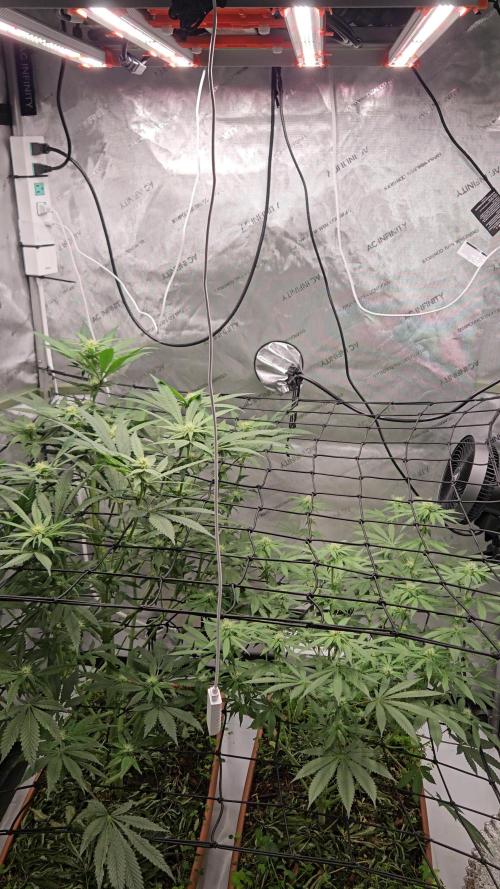
-water still in each reservoir
-both EBs growing nicely
7/22/25
D66 F24 RW SB
-SB reservoir empty
-1 gallon water with 1/8 tsp ascorbic acid down SB reservior
7/23/25
D67 F25
7/24/25
D68 F26 RW SB
-SB reservoir empty
-1 gallon water with 1/8 tsp ascorbic acid down SB reservior
-BB reservoir empty by end of light cycle
7/25/25
D69 F27
-going to leave BB reservoir dry until SB reservoir is dry, then top water with plain water 1 gallon each EB, after they drink what ends up in the reservoir from that watering, then I'll do a microbe top watering with fermented plant extracts pumpkin ferment and rootwise biophos
-I see no sign of gnats at all in this tent so the way I used wdg3000 worked, just use after any application of worm castings or compost and taper it off until not needed
7/26/25
D70 F28 TW
-added 1/8tsp ascorbic acid, quialla to 1 gallon of water
-top watered BB EB
-added 1/8tsp ascorbic acid, quialla to 1 gallon of water
-top watered SB EB

Likes
15
Share


@YOZYY
Follow
Did some defoliation very light just made sure nothing is blocking the lower nodes to much but other than that been feeding heavy then watering with just cal mag for two waterings then heavy. Next watering will be a 900 to 950 ppm mix.