


Likes
Comments
Share


@OrganicNature420
Follow
Germination date 🌱 28/11/2021
Day 85 23/02/2022
Strain 🍁 SinCity seeds Frosted Biscotti
(Biscotti Sundae x Whitenightmare)
THC% • Unknown
💡 Mars Hydro FC-E6500
• Power draw 650W + 5%
• Max coverage 5 x 5
• LED 3978 pcs high quality chips
• Max Yield 2.5g / watt
• Noise level 0 DB
• Removable Driver & Light bars
• Daisy chain
• Fast cool system
https://marshydroled.co.uk/ 🇬🇧
PROMO CODE • (organicnature420) DISCOUNT
https://www.mars-hydro.com/ 🇺🇲
PROMO CODE • (ORG420) DISCOUNT 👍🏻
⛺ Mars Hydro 150 x 150 x 200cm
📤📥 AC infinity 6inch
💧 10lt dehumidifier
❄️ 3.1kw air con system
💉 Nutrients GreenBuzzLiquids 🇩🇪
⭐⭐⭐⭐⭐
Organic Grow Liquid • 1-4ml until 2wk flower
Organic Bloom Liquid • 2-4ml flower stage
Organic More PK • 2-4ml +wk3 of flower
Organic Calmag • 1-2ml/lt whole grow
Fast Plants Spray • first 2wks at night lights off
More Roots • 2-5ml veg +2wks flower
Fast Buds • 5ml 12days before flower until wk1
Humic Acid Plus • 2-5ml whole grow
Growzyme • 2-5ml whole grow
Big Fruits • 2-5ml flower stage
Clean Fruits • 5ml flush 1wk
Ph powder
Root Gel
Living Organics
https://greenbuzzliquids.com/
PROMO CODE • organicnature420 15% off ✌️🏼
🥥 Growing Media • Coco Coir
Notes 📝
Frosting up nicely ❄️ girls loving the new temp conditions. Loving this grow 💚🌱
Go and give PharmaZ a follow and GreenBuzzLiquids and check out their grows and the future of nutrients.. Organic 💚
Discount codes in bio for Mars and GreenBuzzLiquids 👍🏻

Likes
11
Share


@Dendegrow
Follow
Radical Juice is getting really close now – about 80% of the trichomes are already milky on the buds! 🔬🌼 I’d say she’ll be ready within the next week or so. The smell? Absolutely insane – fruity, complex, and just mouthwatering every time I check on her 🍊🍇
This strain probably won’t be the biggest yielder, but it absolutely makes up for it with its unique terpene profile and flavor. It’s one of those strains that make you forget about grams and focus on quality over quantity! ✨🔥
Don’t miss the harvest and final results – follow along, and in no more than two weeks, we’ll see the magic revealed! ⏳✂️
---
Radical Juice ist jetzt echt weit – bei den Buds sind schon ca. 80 % der Trichome milchig! 🔬🌼 Ich denke, sie wird in etwa einer Woche erntereif sein. Der Geruch? Unbeschreiblich – fruchtig, komplex und jedes Mal einfach zum Reinbeißen! 🍊🍇
Ertraglich wird sie wahrscheinlich keine Rekorde brechen, aber dafür entschädigt sie mit einem unfassbar leckeren Terpenprofil. Eine dieser Sorten, bei denen nicht die Menge, sondern der Geschmack zählt! ✨🔥
Folgt mir, um nichts vom Endspurt zu verpassen – spätestens in zwei Wochen sehen wir das Endergebnis! ⏳✂️

Processing
Likes
15
Share


@LittleBigTrees
Follow
They havent grown much this week as the sun has been busy else where 🙄
This week should be better,,, I hope


Likes
2
Share


@sunshinegroww
Follow
So i had to chop this down due to hot water snd starts to foxtail quite a lot so i decided to chop allready can see some ambers so all is good very heavy colas and smells super sweet
Likes
39
Share


@SamDo
Follow
La culture c’est dans son ensemble bien passée. La critical+2.0 est une herbe plutôt facile à faire pousser. Je suis un peu déçu du rendement, mais je pense que cela ne provient pas de la génétique, mais plutôt de mon expérience qui demande à être améliorer encore. Et peu être aussi augmenter la puissance de la lampe pour obtenir des buds encore plus grosses.
Je ferais un update pour le smoke review.

Likes
10
Share


@BodyByVio
Follow
This week I top all 8 Green Poison ( 4dwc and 4 coco ) clones. They look healthy and happy and few days later I already start to low stress training (LST) them.

Likes
15
Share


@BushDoctor740
Follow
First off I want to give a big thank you to Zamnesia and Plagron for the awesome package right before Christmas 🎄.This may be one of the best gifts I will receive this year 😊.I will germinate these 5 seeds on New years and get the New year started off right.Well had a few things to wrap up but finally Jan 21st all 5 and added one extra Zamnesia Runtz bean so I will have a 6 plant auto run in the 5x5.
Day 1 Jan/20/2025 the Runtz have sprouted :)


Likes
23
Share


@Dabking
Follow
This is my 2nd grow of Runtz Auto by Zamnesia.
It's a fairly compact strain, smells fruity and this go around smells very similar to poison strains (red poison, Durban poison, ect). I believe the terpene is terpinolene. I wish I could test it😅.
Anyways,
She was chopped on day 80
Spent 7 days drying
Yield: 2.02 ounces dry weight
Huge thanks to plagron and Zamnesia. Thanks to the eternity Grow Cup. It was an honor. 🙏


Likes
17
Share

@Bread_n_Buds
Follow
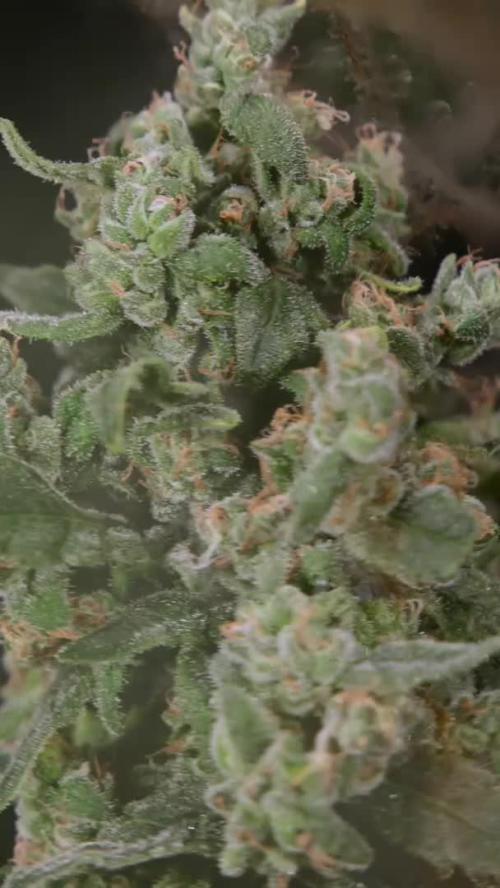
We loved this photoperiod Super Boof from Zamnesia right from the start.
This plant has developed an excellent cannabis body that has allowed it to give us beautiful flowers, with good density, a great scent, and excellent resin production, especially considering the hot periods it experienced.
Up until now, I haven't had the chance to control the temperatures with air conditioning, but I'll soon be able to do so at the new location, and everything will be even more precise. However, finding an ideal spot and making as few adjustments as possible remains the ideal solution. I love hillside locations; at most, you need to cool them a little in the summer and heat them a little in the winter, for sure. In any case, we're gearing up for full control; I'm still a home grower like everyone else.
Our plant has given us good trichome maturation, mostly milky/cloudy, just as I like it, with some amber and still a bit of clear stuff.
Always cultivated from start to finish with Plagron fertilizers in the 100% organic version, soil included.
Leafy's Strain of the Year ---- // https://www.zamnesia.io/en/13317-zamnesia-super-boof-seeds.html
Zamnesia Quick Facts // Here's your chance to grow one of the most sought-after strains of recent years: Super Boof, rightfully crowned Leafy's Strain of the Year 2024. Derived from Black Cherry Punch and Tropicana Cookies, this 70% indica-dominant hybrid takes the already exceptional traits of its predecessors to new heights. Grow it at home to find out for yourself.
The whole world of growing and more is at Zamnesia - just take a look around the site and you'll find "nature's best" in all shapes and colors.
New strains are awesome and old ones are no exception...
-- // www.zamnesia.com
Likes
64
Share


@Cheeba_Inu
Follow
As of March 27, Day 7 of the grow, the seedling is doing alright but showing minor cal-mag deficiency. I will be doing a little cal-mag foliar spraying to help get through this delicate period.
I turned on my HLG-100v2 light and have the seedling vegging under a 20/4 hour light schedule. I have transitioned up to .8EC as increasing the cal-mag in the coco is important after a week of low EC fertigation. I maintain a 5 gallon nutrient reservoir with an air stone and H202 to keep it sterile, and have a pump to automatically water 3 times a day for 20 second intervals.
March 29, Day 9: I am still trying to correct the minor cal-mag issues, but the Euforia is still growing at a pretty good speed so I am not too worried.
March 30, Day 10: running a humidifier under a clear dome to get the RH up for the seedling.

Likes
16
Share


@ChewiesGrow420
Follow
It is day 30 and we are finally seeing some growth starting after a few days of being locked out due to what I believe is from nutrient burn. Won’t go as heavy next top dress. I have ordered a soil ph pen which will be arriving tomorrow so that I can’t test my soil ph and the run off. Until then I have ph'd the water to 6.0 to hopefully stimulate more growth before flower. These plants are very short but stacked! I can’t wait to see how big they are at pre flower. After it’s 3rd week stretch. Reach for the skies bitches! Watering less aswell. I believe iam overwatering because I go days without seeing these girls. Exhale c02 bag doing well. Resembles mould at the moment. I want to take a moment to thank everyone who’s visited my diary. I hope to bring you great content! Always open to helpful suggestions. Stay tuned!
Day 34 and we are at pre flower. See those hairs comin. Now they all gonna streeeeeetch. Drop a comment, like, or just offer me some advice. We’re all family here ✌️. Doin a little LST now that the space between the nodes are far enough for me to feel comfortable doing so. There was no where to put them no matter how slow I tried haha. Also have each girl in something that resembles the cross face chicken wing from the WWE. Little fan on fan action. It’s like the leaves were meant to stuck together. The knotches in the leaves interlock I mean. I stretch the upper fan leaf to the one directly below it. Opening up both shoots. Hope they made sense lmao.
Likes
3
Share


@Jeerawat
Follow
This week starting to use net for scrog and next i will go to bloom phase 🔥🌻


Likes
3
Share


@Jamminbear
Follow
Flip the switch to 12/12. All ladies looking pretty good. @sereneoo22 Thank you for dropping by!! Water with Yucca/coco water/root wise Phos/ rootwise enzymes. ph to 6.2.
Day 4 #flowering #livingsoil #barneyfarms #lsdbarneysfarm #peyotecritical #pineapplechunkstrain Top#2 #mainlining #rosettastonexx #brothersgrimmseeds
#opticsled #urbnatural #timbergrowlights #trainingday #weedyoga
#composttea #boogiebrew #dragonflyearthmedicine #fatflowers #lushroots #Brilliantblack #NaturalMystik #Radiantgreen #redwrigglers #buildasoil
#mulching #coconutwater #aloewater #rootwisemycrobe #covercrop


Likes
14
Share


@Kakui
Follow
Exotic Genetix: Event Horizon (x3) y Toasted Toffee(x3).
Thug pug Genetics: Peanut Butter sunset(x3).
Una ves sean transplantadas a su macetero definitivo(5 litros) se comenzará con riego automático, drip to waste, y protocolo Crop Steering.
20 Octubre(15:30): 9 semillas en remojo, solución de 2 partes de agua de ósmosis + 1 parte de peróxido de hidrógeno 3%, 5.8pH, 0.6EC, 28°C~30°C. Antes ser puestas a remojar se lijaron las semillas para favorecer la absorción del agua.
21:30: puestas en toalla de papel con la misma agua de remojo, dentro de un contenedor de vidrio hermético y sobre una alfombra de calor a 28°C~30°C, para aumentar la actividad metabólica.
21 Octubre: Pre carga del coco, con solución de nutrientes Athena en 2.0EC y 5.7pH, saturación hasta lograr drenaje, el drenaje fue de 1.5EC y 5.6pH.
21:50: Todas las semillas presentan radicula de distintos tamaños(1cm aprox) son inmediatamente pasadas al sustrato.
22 Octubre: 21:10, se aprecian todas ya brotando, se mantiene el ambiente en 26°C~28°C y 70%+ de humedad.
23 Octubre: 9/9 semillas brotadas, se ven algunos Cotiledones.
24 Octubre: (9:30)8/9 cotiledones abiertos, altura entre 3cm~5cm, etapa de plantula iniciada.
Toffee n3 se atrofió por mala manipulación, espero que crezca aunque sea lento, si no, tendré que seguir solo con 8 plantas.
25 Octubre: Toffee n3 está viva!!! Estuve a punto de quitarla, y está mañana apareció sin su capucha, cotiledones afuera. Yujuuuu!!
26 Octubre: hoy tuvieron su primer riego con nutrientes Athena, 2.0EC y 5.8pH. Se regó hasta alcanzar drenaje, el drenaje fue de 1.9EC y 5.7pH.
27 Octubre: Se desarrollan a buen ritmo, algunas han estirado más que otras, alturas entre 4cm~7cm.
31 Octubre: Segundo riego, 120ml casa una, 2.0EC y 5.8pH, runoff de 2.3EC y 5.7pH.
2 Noviembre: Creciendo a buen ritmo, alturas entre 5cm y 9cm.
4 Noviembre: Riego 180ml cada una, 2.0EC y 5.8pH, runoff 2.8EC y 5.8pH, desde ahora se regarán más seguido, removí las primeras hojas, solo por comodidad para regar, de igual manera los primeros nodos y esas hojas se terminan podando pronto.
8 Noviembre: Riego 2.0EC, 5.8pH, 240ml cada una para aumentar el runoff, valores de runoff de 3.0EC y 6.0pH. Alturas entre 9cm y 14cm.

Processing
Likes
14
Share


@Stkz420
Follow
1 sour livers is smelling sweet and lemony other 1 smelling like a zesty liver🤔. Cant quite put my finger on the aroma coming from the northern hog but shes possibly in the best condition she ever has been.

