The Grow Awards 2026 🏆
Likes
Comments
Share
Likes
67
Share
Inhale for 13s, Exhale for 13s, Inhale for 8s, Exhale for 8s, Inhale for 5s, Exhale for 5s, Inhale for 3s, Exhale for 3s, Inhale for 1s, Exhale for 1s, Alignment. 1.618 A plant with both standard cellular respiration (occurring throughout the plant, including leaves and stems) and adequate root respiration will have a significantly higher ATP throughput than one restricted to only general cellular respiration in a limited way. Cellular respiration is the fundamental metabolic process that occurs in all living plant cells (roots, stems, leaves, flowers, seeds) to convert glucose into usable energy (ATP). It requires oxygen and produces carbon dioxide and water as byproducts. Root respiration is not a separate type of respiration, but rather a specific instance of cellular respiration occurring in the roots. Roots absorb oxygen from the air spaces in the soil to fuel their energy needs. Roots require a substantial amount of ATP for essential functions like nutrient and water absorption, as well as growth and maintenance of their tissues. The primary form of respiration in healthy plant roots is aerobic respiration, which is highly efficient, yielding up to 30-38 ATP molecules per glucose molecule. Anaerobic Respiration (Inefficient): If roots are deprived of oxygen (e.g., in waterlogged soil), they switch to anaerobic respiration, which is far less efficient, producing only 2 ATP molecules per glucose molecule and also generating alcohol, which can be toxic and kill the plant. Therefore, a plant with healthy, oxygenated roots performing efficient aerobic respiration in addition to the rest of the plant's cellular respiration has a much greater overall ATP production and energy capacity. A soil without organic matter will generally have a low Cation Exchange Capacity (CEC). Biochar is often prized for its potential to increase soil cation exchange capacity (CEC), but this effect is highly dependent on the specific properties of the biochar (feedstock and pyrolysis temperature) and the soil type to which it is applied. High-ash biochars, especially those produced at lower temperatures and applied to acidic or sandy soils, can significantly boost CEC by providing abundant binding sites for cations like calcium (Ca²⁺), magnesium (Mg²⁺), and potassium (K⁺). Biochar is more sustainable than typical organic matter for long-term soil improvement primarily due to its high stability and resistance to microbial decomposition, allowing it to persist in the soil for hundreds to thousands of years. This longevity provides a lasting positive effect on soil properties, particularly by increasing the cation exchange capacity (CEC) over time, while regular organic matter breaks down much faster. Biochar generally offers a much higher CEC than coco coir, though specific values vary greatly; while coco coir might sit around 40-60 cmol/kg, biochar can range from tens to over 200 cmol/kg, with sources like Acacia wood biochar or even coconut shell biochar often surpassing coco's capacity due to its porous structure, creating significantly more cation-binding sites for nutrients, making it superior for nutrient retention. Needs to be charged similar to coco but at a much higger rate. But shhhh.. it's a secret. Recommend a balanced ratio of key cations, particularly calcium (Ca), magnesium (Mg), and potassium (K). A widely accepted general "ideal soil" cation saturation ratio is approximately 65-85% Ca, 6-12% Mg, and 2-5% K. That's roughly what mine gets.
Likes
Comments
Share
Flowering Day: 32 Lollipopping method on Day 28
Likes
14
Share
@Biggy2k20
Follow
This week has proven to be a good week with signs of this plant exploding with size. Flushing has began as nutrients were reduced. I am looking forward over the next 2 weeks
Processing
Likes
17
Share
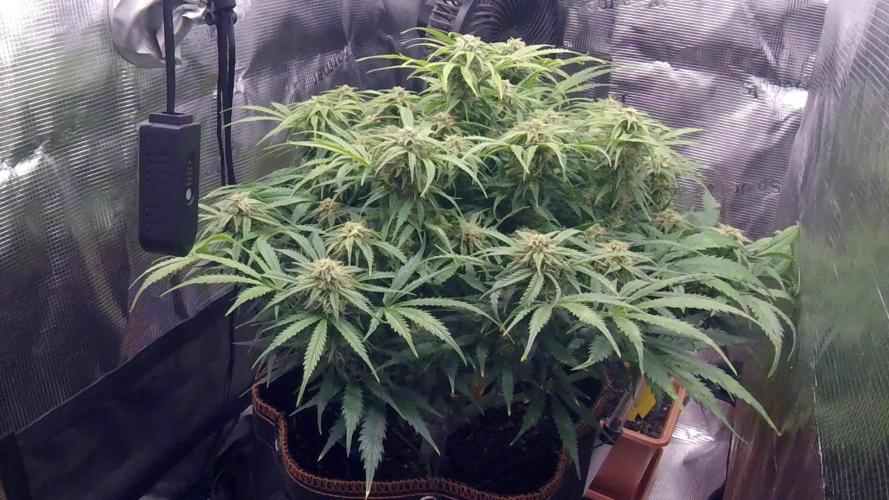
Take a look at nutes^^ Mad that my trellis showed up late in the mail; stuck with this canopy as i refuse to bend this late; its still a pretty solid canopy anyways trimmed some fans to expose couple more tops yesterday not too many though. Looks like i need to move the HID over to the right and throw a small LED on the left. This way i can do some testing with a couple different LED products like mars, viparspectra, or a newer one i just seen come out. let me know your thoughts; i feel like this 600w covers 4x3 nicely; and i have a 5x3 because the hood is a little small, the 1000w bulb comes with the same reflector so seemed useless to get the 1000w and expect it to cover more area. light runs cool with 6 inch 440CFM on lowest setting, i can get away with being quite close and i can hold my hand against the glass; even on superlumens setting. PHOTOS UP TMRW some photos have been uploaded 2/15/2018 3:14 pm EST feel free to give your opinion; or ask any questions relative to my grow your own and anything of that nature :)
Likes
24
Share
There is some yellowing on a couple plants on the leaves right above the base of the plant. I broke a branch in lady 1 , Alil yellowing on the a couple plants from the soil being Alil to hot. But the rest of them are perfect . Only issue with 2 of them and it’s my fault. These ladies have been rocking strong. Update soon. Peace out
Likes
18
Share
Here we are at the magic moment, the first hairs are coming out of the internodes and here and there, our Do Si DOs F1 Automatic reveals its sex and of course like all Zamnesia plants I will be the father of two beautiful girls. One is growing straight but I will show it to you later because I had so much fun making this one you see in the photo is a sort of bonsai worked with Topping at the beginning, then LST to create a main lining for three internodes, then anchoring topping and last on the lateral growing branches. Really pretty I can't wait to see it in flower We won't see the super productive trees of the autumn harvest but I'm willing to bet that we will have so much beauty and so much resin. Wait for the uncle BreadandBuds.... We are still using soil, feeding and all the recommended additives from Plagron 100% organic. We have moved on to the flowering start schedule that keeps the same Power Roots additives - Sugar Royal, Pure Zym and adds the flowering stimulant dear in my house for obvious reasons of Biscotti. Of course the basic fertilizer is now Alga Bloom. The Green Sensation when the flowers are already a bit swollen, do not start immediately. The Power Buds must immediately stimulate the start and development of the buds. ---- Decide on the right soil and calculate your fertilizer schedule based on the soil on the official website. -- www.plagron.com Try a seed of this strain that drives us crazy.. ---- https://www.zamnesia.io/en/10664-zamnesia-seeds-do-si-dos-f1-automatic.html Zamnesia Description // From the team at Zamnesia Seeds comes Do-Si-Dos F1 Automatic. Using consistent and reliable F1 genetics, this strain is not only incredibly easy to grow, but also offers potent and delicious buds. The plants remain small and offer a reliable growing experience that everyone will enjoy. All the best that mother nature can offer is on ---- www.zamnesia.com
Likes
42
Share
Thank you. Gave her a cocktail to help with stress. Added 1st net for lateral support, not so much now, but for later. Blue light is absorbed by photoreceptor proteins called phototropins, which trigger a hormonal response that causes cells on the shaded side to elongate, making the plant bend toward the light. Try and fill this side a little. She is quite big already, just needs to find her stride again after the undue torture. The mind is constantly working and producing, just like a factory. It's not just a passive recipient of information but an active producer of ideas, attitudes, and beliefs. The "ingredients" in this factory are the information you consume, such as books, conversations, and the media you engage with. The "products" are your thoughts, beliefs, and actions. The quality of the ingredients directly influences the quality of the output. To guard the door of your mind means to be selective about what you allow in. It involves actively choosing to consume positive and constructive information while filtering out negativity and harmful influences. If you don't guard your mind, others can "dump" whatever they want into it, leading to undesirable results in your life. You must take responsibility for the inputs to ensure you produce the outcomes you desire. 5 apex stems with 20-30 mini cola, let them develop a little, with the apical dominance shattered, all those 20-30 will all compete with each other as soon as that stretch is initiated. Key to a good stretch is making sure the plant is cycling efficiently, with large ATP conversions occurring lights out. For now, I'm keeping light intensity high. A plant will slow its vertical growth in very high light intensities, leading to a more compact form with thicker stems and leaves. This response is a protective mechanism against light stress, which can damage the photosynthetic apparatus and lead to symptoms like leaf scorching, yellowing, and brittleness. Instead of growing taller, the plant invests its energy into creating a more robust, stress-tolerant structure. Providing plants with necessary antioxidants helps protect the photosynthetic apparatus by scavenging reactive oxygen species (ROS) that cause damage from excess light. UV light exposure can impact the xanthophyll cycle by either enhancing its photoprotective role or causing damage, depending on the intensity and type of UV radiation. UV exposure can trigger the synthesis of more xanthophyll cycle pigments to increase the plant's capacity to dissipate excess energy, but it can also cause direct damage, particularly to Photosystem II, and may lead to a decrease in the de-epoxidation state (DEPS ratio) which indicates a reduced capacity to dissipate excess energy. Plants can respond to UV stress by increasing the synthesis of xanthophyll cycle pigments, such as violaxanthin and zeaxanthin, to improve their photoprotective capacity. UV-induced changes in xanthophyll cycle pigments can be linked to a plant's overall tolerance to high radiation stress. The xanthophyll cycle helps protect against photoinhibition, which is especially important when the plant is exposed to high levels of both UV and visible light. High doses of UV radiation can directly damage photosynthetic components, including the proteins, lipids, and pigments in the thylakoid membranes. Exposure to UV radiation can have a mixed effect on the de-epoxidation state (DEPS ratio) of the xanthophyll cycle pigments. In some cases, UV can inhibit the conversion of violaxanthin to zeaxanthin, resulting in a lower DEPS ratio and a reduced capacity for energy dissipation. However, the total pool of xanthophyll cycle pigments may increase, and this enhanced pool size could provide a greater potential for photoprotection despite a lower DEPS ratio. The xanthophyll cycle works alongside other mechanisms, such as the accumulation of flavonoids (UV screens), to protect the plant from UV-induced damage. Blue light repairs 100% UV-induced damage in plants through a process called photoreactivation, which uses a light-dependent enzyme called photolyase. This enzyme uses energy from blue and UV-A light to directly reverse the damaging pyrimidine dimers in the DNA caused by UV-B radiation, a key mechanism for maintaining the plant's genetic integrity. After carbon, light, water, temperature, and nutrients, the limiting factor of a plant's growth is often its own internal factors or the amount of a key ingredient. Chlorophyll concentration is one such factor, as the amount of this pigment limits how much light can be captured for photosynthesis. Other factors include chloroplast number, respiration rate, and the concentration of carbon dioxide in the atmosphere, as plants are often in a CO2-deficient condition. 60x60x18=64800seconds x 700 = 45,360,000moles. 45DLI Exposure to 165 µW/cm² of ultraviolet-B (UV-B) light for 3600 seconds = 1 hour, a extremely high, acute dose triggering stress responses and protective mechanisms. . The plant's photoreceptor protein, UVR8, senses the UV-B radiation. This triggers a signaling cascade that activates specific genes to protect the plant from damage. In response to the UV-B signal, the plant ramps up the biosynthesis of protective compounds like flavonoids, phenolic acids, and anthocyanins. These compounds absorb UV radiation and accumulate in the epidermal layers of leaves to shield inner photosynthetic tissues. The plant may increase leaf thickness or deposit more cuticular wax, creating a physical barrier to the radiation. The plant will produce more enzymatic and non-enzymatic antioxidants to neutralize the reactive oxygen species (ROS) produced by the UV-B radiation. The plant activates enzymes, including photolyases, to repair DNA damage caused by the UV-B. These repair mechanisms are critical for preventing permanent genetic mutations. While protective measures are activated, a high dose delivered over a short period can cause stress that overwhelms the plant's defenses. Photosynthesis is highly sensitive to UV-B. A high dose can inactivate Photosystem II (PSII), damage thylakoid membranes within the chloroplasts, and reduce chlorophyll content, which lowers the plant's overall photosynthetic capacity. Despite repair mechanisms, high UV-B doses can inflict persistent damage on the plant's DNA. The overproduction of reactive oxygen species can cause oxidative stress, leading to the oxidation of lipids and proteins and disrupting cellular function. I am playing in the enchanted forest.
Likes
5
Share
Yesterday i took off some Leafs down there. Looks Like a Bouquet now 😄 She's responding great to the Training i have her. I'm pretty exited how she'll do in the Future weeks 🤙🏽
Likes
23
Share
@SkunkyDog
Follow
Hallo zusammen 🤙. Sie wächst sehr schön und macht keine Probleme
Likes
16
Share
Desculpe não atualizar, Mais estou aqui para informa que aconteceu muitos imprevistos e demorou muito par elas ir para o dwc então aconteceu algums stress mais agora tenho certeza que vai da tudo certo obrigadoa todos por acompanhar meu diário
Likes
5
Share
@MrFriday
Follow
15.09.2024 DAY 20/1 RH 55-60 Room temperature day 26C Room temperature night 21-23C EC 320 pH 6.0 Water temperature 19.5-20C PPFD 400 Light cicle 20/4 VPD 1.3 Okay we are in Vegetative stage officialy. This week I'll keep the EC on the same level as the previous week becose following Athena program I'm supposed to keep this level ov EC for the first week in VEG. If I notice any deficiency I'll jump directly in week 2. For now the ladies are doing grate, it almost feels like they can use a little bit more fertilizer, but better less dan over fed, so I'm not taking the risk for now. By the way forgot to mention that now we are officially removing the supplemental LED and this little fighters are directly under the GML TARANTULA VOYAGER. DAY 21/DAY 2VEG RH 55-60 Room temperature day 26C Room temperature night 21-23C EC 305 pH 6.23 Water temperature 19.5-20C PPFD 400 Light cicle 20/4 I love to start training them as early as i cen. Day 2 and we are in LST. I don't plan on stopping or fiming anything in this run so basically we will see what is going the be result with basic LST and Scrog NET later in to flowering, when we put them in a separate buckets. Roots are more dan stable, Athena works amazing I don't know how it happens but my water is getting low and my EC doesn't change, they are so well absorbed and so stable in RDWC. I'm starting Stack this week and I'll foliar feed them 1-2 times a week. Probably every 3 days or kind of. DAY 22/DAY3 VEG RH 55-60 Room temperature day 26C Room temperature night 21-23C EC 275 pH 6.0 Water temperature 19.5-20C PPFD 400 Light cicle 20/4 VPD 1-1.3 I decided to stop the LST and keep the training for little later but accidentally topped/snapped one of the plants so basically it's too late and now one of them is topped. The good news is that it's early stage and it will have all the time to recover. Otherwise all the flowers are going great. I never experienced stems so strong and woody. I don't know is it becose of Athena or it's the genetic but this little plants in RDWC already have strong stems and obviously no cal-mag deficiency. I'll run 3 untopped plants vs one topped and obviously I'll have to gamble strong with scrogging and LST in the later stage. DAY 23/DAY 4VEG RH 55-60 Room temperature day 26C Room temperature night 21-23C EC 275 pH 6.2 Water temperature 19.5-20C PPFD 400 Light cicle 20/4 VPD 1.2-1.3 This strain is amazing and the combo Athena/RDWC gives amazing results I have never expected Root development on that level plus strong stems and leaves. DAY 24/DAY 5VEG RH 55-60 Room temperature day 26C Room temperature night 21-23C EC 335 pH 5.9 Water temperature 19.5-20C PPFD 400 Light cicle 20/4 VPD 1.2-1.3 Foliar feeding ATHENA is crushing it for me. I can't believe how well is working and this is just week one Veg. The flowers have strong stems and they go really healthy. I have started a foliar feeding with stack. I have never used foliar before and it will be interesting for me to see the results. I still can't believe the results only 24 days from seed pop. If we don't count this period it's week 2 and this is ridiculously fast. DAY 25/DAY6 VEG RH 55-60 Room temperature day 26C Room temperature night 21-23C EC 335 pH 5.9 Water temperature 19.5-20C PPFD 400 Light cicle 20/4 VPD 1.2-1.3 Brutal development so far one of the best I had, even the small sling (topped by mistake) is going pretty strong. Root development is amazing and so far everything is dialed in. DAY 26/ DAY 7VEG RH 55-60 Room temperature day 26C Room temperature night 23-25C EC 300 pH 6.1 Water temperature 18.5-19.5 PPFD 400 Light cicle 20/4 VPD 1.2-1.3 I manage to handle my environment, I'm still waiting for good heater since ACI still don't have it on my market I use different methods to keep my temperature stable. My humidity is pretty well set so I'm able to keep stable VPD of 1.2-1.3. I don't really follow the best recommended parameters, becose in my experience is better to be stable and more easy for the plant to adapt. pH is 6.2 I'm leaving it by purpose to fluctuate in order to be achieved full range of nutrients, so basically I correct the pH every two days. The root zone is perfectly clean and we'll oxygenated. Basically nothing can stop the progress on environmental side. The only question is do I want to increase the EC levels tomorrow. I'm one week forward in to the Athena feeding but it seems the flowers are more dan well so I'm asking myself with that well developed roots, can I push it a little bit more. I'll see tomorrow, new week new entry point I think🤗🤣
Processing
Likes
12
Share
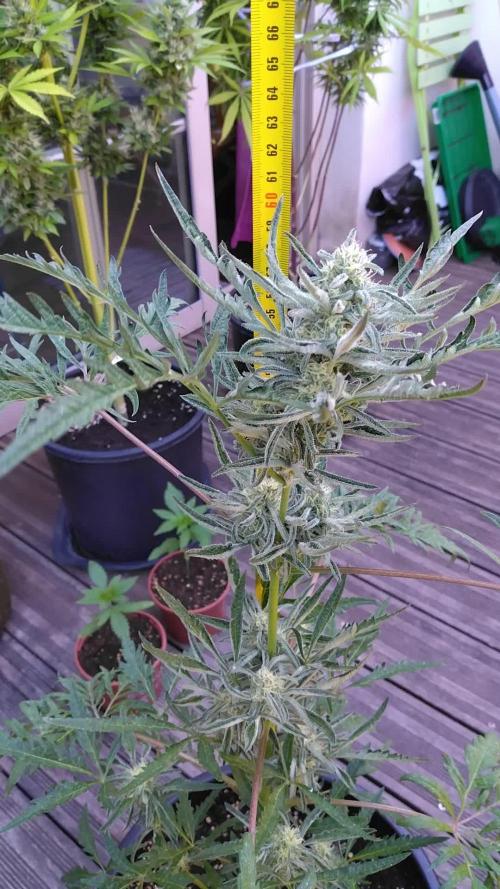
5/4: She stretched a few inches. I'll tie down her tallest branches in the next couple of days and when they get to the third node, I'll top her again. I gave her a little water with myco, kelp, molasses, cal-mag, silica, and humic acid. 5/6: I did a little LST on her today and fed her about a gallon of water with boomerang, grow big, big bloom, cal-mag, silica, and humic acid. This was the last time I'll give her any grow big or boomerang...there's plenty of good stuff to support good growth for at least a month in the Happy Frog dry fertilizer I'm using. 5/7: I foliar fed with big bloom, grow big, silica, fulvic acid, and molasses. 5/8: I did a foliar application of Axiom harpin proteins. 5/9: I did a foliar application of boom boom spray. 5/10: She's growing very well now, so I topped all her main shoots and tied them them down to encourage the lower branches to compete for apical dominance. I'll water her tomorrow if it doesn't rain. That's it for week 5
Likes
1
Share
Strain: Hillbilly Wedding Genetics: F- (Raspberry Moonshine) [Raspberry Kush x Old Time Moonshine] x M- (Wedding Cake x More Cowbell) [Girl Scout Cookies Forum Cut x (88G-13 x HP)] that old time moonshine.... I believe is a Dj Short creation. When I first started floating the idea to start growing the first thing that came to mind was find my favorite strain. BLUEBERRY! THAT DJ SHORT BLUE BERRY... Dj had just rereleased the OTM line.. I did not grab those beans but I am glad Ziplock got to it! I was graced with blueberry moonshine back in 07. 🤤 First time growing a strain with Girl Scout Cookies and a second chance with the 88G13 & HP Soaked for 36hrs had a glass with a lid(seems to be working for me) heatmat on top of drawer seeds are in set to 80 11/12 cracked open before planting{very abnormal for me}
Likes
16
Share
Aug 16: Lemon Cream Kush has stretched a bit and the buds are starting to fill in. Should be a decent yield and I’m looking forward to the tast of this one.
Likes
1
Share
Likes
6
Share
Start of week six we start seeing rapid growth from all plants in height and bud production. 1 of the ladies is an absolute freak but in all the good ways. Shes reaching a meter in length and is going to have 5 slender long kolers. The rest are all around the 80cm mark minus the two under achievers which are at the 70 cm mark which is amazing as the plants are supposed to be the size at harvest. Not changed much apart from excluding the voodoo juice nutrients ,adding another 600w light to the tent and a tiny bit of defoliation. My flat is starting to smell amazing. Sometimes I bury my nose in the outlet pipe and inhale a deep breath. Haaaah
Likes
6
Share
Week 9 for GMO 8 by atlasseed The indoor smaller plant is really starting to bulk up on the flower size for sure seems like maybe it has another week maybe 2 before being done. While the other plant is now outdoors because i ran out of room indoors & the bud on the outdoor one looks completely different likely because of the 40+ degrees sun outdoors ATM but doesn't have any burn leaves so that's great. Actually looking forward to seeing how she smokes... maybe she gets ran again in a few weeks? 😎