The Grow Awards 2026 🏆 






Likes
Comments
Share
@dekss
Follow
*LOS FERTILIZANTES SON HACIA LAS OTRAS PLANTAS NO TERMINADAS NO LA QUE SE CORTO ESA SOLO AGUA*
*reemplazo bio bloom por monster bloom como los dos son PK la planta se sobrefertiliza*
semana 10 y se va de corte la primera
contento de terminar mi primer diario entero en esta plataforma
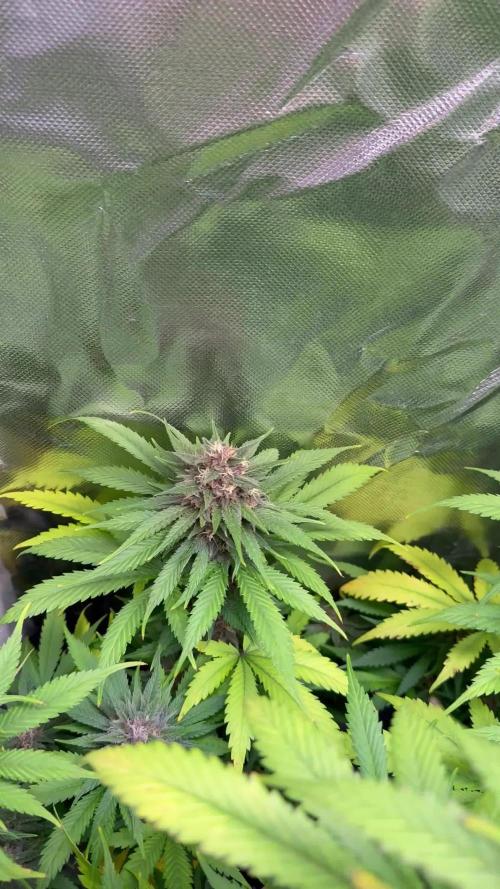
cogollos llenos de resina muy contento con la producción en 68 días desde germinación
*la planta en total creo un poco menos que el doble de lo que se corto pero fui sacándoselo de a poco antes*
ahora solo queda esperar secar
y las otras que vienen en camino
70.85 gramos en humedo contando tallos y una hoja de viento por rama
espero marcar unos 15 en solo cogollos y ya secos
LST en las dos ramas principales de una de las que viene siguiente muy compacta
en lo personal me gustan los cogollos con casi nada de hoja (de esto dependerá cuanto raspe en la garganta)
por lo que el humo entra sin dejar ninguna molestia muy suave y sativo

Likes
6
Share
@Treemos
Follow
Hi guys, sorry if I posted this week so late, but I was sooo busy!
This week, I began to give two first doses of Flawless Finish, to start clean the soil (and unlock Indra from its nutrient burn).
Aurora is growing really great, has a powerful smell and a white color when I get photo of her at night 😍
Indra began to grow again, after the use of Flawless Finish, the flowers are getting bigger and the smell is growing day by day, I will post her trichomes the next week!
Enjoy the photos guys, and thank you all for the help :)

Likes
127
Share
@DreamIT
Follow
There isn't much more to say about this fantastic strain. Hardy, easy to clone, quick to flower and absolutely delicious in every respect. It resists well to high temperatures, "accidental" over fertilization, and recovers soon after a period of drought. Easy and fast.
Likes
4
Share
@cwgrows
Follow
After finding a couple of unseen spots of mold while chopping I meticulously went through every single crevice of each nug from both plants and removed the few spots I found, this took about 10 hours straight (not including light trim and wash). Absolutely stoked with the results of this grow and so proud to have gotten both these girls all the way to the finish line!

Processing
Likes
33
Share
@burnerac
Follow
Day 92: Going to try a week without nutrients. The slurry test was good. I am either over or underwatering. Cannot seem to get it correct this time. However, after last night's watering, she is a lot less droopy.
Day 93: no pictures. Added one gallon pH6.5 water with 2 tablespoons Herculean Harvest.
Day 94: nothing to report other than she is drinking rapidly and looking healthier.
Day 95: added one gallon pH6.5 water with 2 tablespoons Herculean Harvest. Almost no runoff.
Day 96: added one gallon of pH6.5 water with nutrients
Day 97: nothing to report. Trimmed some leaves that never survived the yellowing.
Day 98: nothing to report. Decided to let her dry another day.

Likes
65
Share
@MadeInGermany
Follow
Flowering day 44
since time change
to 12 / 12 h
Hey guys :-)
The buds are becoming incredibly beautiful and smelling better and better ☺️.
Today there was again the full load of food and will be slowly driven down as soon as it comes to an end :-)
Was watered 3 times a week with 1.2 l each (nutrients see table above)
Otherwise everything was cleaned.
Have fun and stay healthy 💚💚💚
👇🏼👇🏼👇🏼👇🏼👇🏼👇🏼👇🏼👇🏼👇🏼👇🏼👇🏼👇🏼
You can buy this Nutrients at :
https://greenbuzzliquids.com/en/shop/
With the discount code: Made_in_Germany you get a discount of 15% on all products from an order value of 100 euros.
👇🏼👇🏼👇🏼👇🏼👇🏼👇🏼👇🏼👇🏼👇🏼👇🏼👇🏼👇🏼
You can buy this strain at :
https://www.barneysfarm.com/dr-grinspoon-5
Water 💧 💧💧
Osmosis water mixed with normal water (24 hours stale that the chlorine evaporates) to 0.2 EC. Add Cal / Mag to 0.4 Ec Ph with Organic Ph - to 5.8 - 6.5
MadeInGermany

Likes
25
Share
@GangbudsGenesgdl
Follow
11/01/21. inicio de semana riego con giga grow y forza cilicia
13/01/21 no se aprecia bien en la foto haha pero ya esta mostrando pequeños pistilos , se rego con
nutrientes rootz.mx gigagrow, forza silicia , y magna flor. 2ml por litro
17/01/21 cierre de semana. no e podido medirla pero se estiro un poco de las partes inferiores es una plantas muy grande con forma de pino.
ya
se notan los pequeños pistillos por todos lados


Likes
21
Share
@MrWolfe
Follow
They get topped again day 42, going to try and leave top two nodes per top instead of just 1, so each will go from 2-8 instead of 2-4, if they underdevelop I'll trim them off later. I think they'll be just fine though, saving any branches that reach out from primaries and lowers to make some.nice clones, so don't cut those yet, we will cut clones when we strip for flower.
Likes
73
Share
@Rando1314
Follow
Flushed HARDCORE this week!! Ladies are not looking well nor do they seem like they’re reacting to the flush well either!! Almost seems like they’re locked out but also having deficiencies! I could use some advice on this. 3/5 of the taller plants have yellowed out and the other 2 look great!! Pretty much all the same watering and neuts. I think the issue was that I’m using fabric pots and not allowing enough penetration to the bottom and it created a salt pocket. Correct me if I’m wrong
Updated a few more pics of the deficiency/lockout issues all the help is appreciated thanks to everyone whose chiming in and helping!! Y’all the real deal!!

Likes
5
Share
@Nocone_Purple
Follow
This week the Purple Lemonade is entering the crucial late bloom stage. The buds are already showing great color expression and are starting to put on noticeable weight. Trichomes are developing steadily, giving the flowers a frosty appearance, while the fruity, citrus aroma is becoming more pronounced. At this point I’m discontinuing Big Bud and switching to Overdrive for the next two weeks. Big Bud has already done its job during mid-flower by promoting volume and setting the bud structure. Overdrive is more suitable now, as it pushes the plant to increase resin, terpene concentration, and final density, ensuring the Purple Lemonade reaches its full potential before the flush.
Likes
9
Share
@Alejangrow
Follow
Did some defoliating. ✂️
Hopefully they're done stretching. ⬆️
Fed them recommended nutes 💉
Moving happily into the next week.😊
Likes
26
Share
@m0use
Follow
*=UPDATED=*
Not to much to add this week, I plucked a lot of the lower leaves off to prevent them from getting to close to the growing medium and having some disease issues, plus increases some air flow. Also plucked a few of the top fan leaves that where blocking the lower buds from the light. Don't think this is proper defoliation so I did not check it off as a grow technique.
The plants are really starting to smell more and get a lot of trichomes on them. When I'm in the case and smell each plant, they all have different terpene profiles. one is very lemon and pine with a hint of sweetness, one is quite sweet and berry like with lemon notes "my fav", another is just more so woodsy pine smell and the last one is mildly sweet smelling with something else I could not pinpoint.
one setback is the case fan I was using died out, i think the heat inside the tent and operating for so long got to it, it was an older fan to start off with so not overly surprising. It started to have a hot electric smell to it, like wires or rubber getting to hot. I manage the case heat by propping its door open on a angle. still keeps temps at 25c (77f)
Other then that I don't think they grew to big vs last week, one plant is starting to get some more purple in it, I like purple colour on buds. maybe the leaf plucking set it back a bit, can't imagine the plant would enjoy that happening to it.
Trying to post little fly over videos every week of the case to give better idea of plants and what they are looking like.
will try and get a macro lens closer to trichomes and see what they are doing in terms of clear cloudy and amber for next week, may give me a hint as if ill harvest week after that.
*=UPDATE=* I didn't want to wait till next week to post trichomes so took some photos with a clip-on Macro lens for my phone, not the best but looks pretty cool. mostly all cloudy from what I can tell. one plant has a bit of amber on its sugar leaves but not its bud.
Likes
64
Share
@MadeInGermany
Follow
Hi everyone :-)
This week I did extreme LST again, and I guided all the shoots to the middle :-)
Now the time should be perfectly bridged until there is space in the flower chamber, there will be in about 40 days :-) .
I wish everyone a good start to the new week, stay healthy and let it grow 😎🙏🏻☘️
Type:
Blue gelato 41 clone from mother (Barney's Farm)
☝️
Genetics: Blueberry] Thin Mint Girl Scout Cookies x Sunset Sherbert
👍
Vega lamp: 2 x Todogrow LED Quantum board 100 W.
💡
Flower lamp: 2 x Todogrow LED Cxb 3590 COB 3500 K 220 W.
💡 ☝️
earth:
Canna Terra Professional +
☝️
Fertilizer:
Canna Terra Vega, Canna Terra Terra Flores, Rizotonic, Cannazym, CANNA Boost, Pk 13/14, Canna Cal / Mag, Canna Ph - Grow, Canna Ph-Flores
☝️🌱
Water:
Osmosis water mixed with normal water (24 hours stale that the chlorine evaporates) to 0.2 EG. Add Cal / Mag to 0.4 Ec Ph with Organic Ph - to 6.0
💦 💧


Likes
7
Share
@Cogollo_eu
Follow
**Encontrarás la traducción a español al final de la descripción**
From/Desde: 19/04/19 || To/Hasta: 25/04/19
From day/Desde día: 57 || To day/Hasta día: 63
You can find the Gorillas Diary here (Texts are the same this week):
** Podéis encontrar el diario de las Gorilla aquí (Los textos son iguales esta semana):**
https://growdiaries.com/diaries/25675-makingmoney-with-gorilla-mm-vs-gorilla
-----IMAGES & VIDEOS-----
1 - Before defoliation
2 - Defoliation
3 - After defoliation
-----WEEK SUMMARY-----
(Following text was translated with tools and reviewed, sorry for mistakes, misspellings or nosense things)
As you can see I've done a defoliation this week. Yes, I have really gone over the top, I have removed many more leaves than I had, and the tails of the plants has not come to join at all due to the failed defoliation.
Being the first defoliation I do, I did not really know what I was doing and I went crazy. Now that it has been several weeks since I made this defoliation, I realize that I should not have removed the leaves from the nodes of the tails, because they have stopped growing and have not joined with their superior parts. Anyway, the plants are beautiful today and although they could be much better I feel very happy with them.
I know I've made 2 fatal mistakes in this grow
- The first has been the massive defoliation badly done, defoliation yes, but with head ... do not follow my example.
- The second failure that I see today, is that I did not leave enough growth time (18/6) after having made the last pruning and that has made the tails have been a length much less than what would have been desired, I think that 2 more weeks of growth would have been perfect.
-----WATERING CALENDAR-----
20/04/19 - 1,250 ml with Sensizym, Silica, Rhino Sk, Bud Ignitor, Big Bud, Bud Candy & Bud Factor-x @ PH6.4 & 1.2 E.C.
23/04/19 - 1,250 ml with All week nutrients - (Silica, Sensizym & Bud Ignitor) @ PH6.5 & 1.5 E.C.
*****ESPAÑOL*****
-----IMÁGENES Y VÍDEOS-----
1 - Antes de la defoliación
2 - Defoliación
3 - Después de la defoliación
-----SUMARIO SEMANAL-----
Como podéis ver esta semana he hecho una defoliación. Si, efectivamente me he pasado de listo, he quitado muchas más hojas de las que debía y las colas de las plantas no ha llegado a unirse del todo debido a la fallida defoliación.
Al ser la primera defoliación que realizo, no sabía muy bien que hacía y me lancé a lo loco. Ahora que han pasado varias semanas desde que realicé esta defoliación, me doy cuenta de que no debí de haber quitado las hojas de los nodos de las colas, pues estos han dejado de crecer y no se han unido con sus partes superioras. De todas maneras, las plantas están preciosas a día de hoy y aunque podrían estar mucho mejor me doy con un canto en los dientes.
Se que he cometido 2 errores gordos en este cultivo
- El primero ha sido la defoliación masiva mal realizada, defoliación si, pero con cabeza.... no sigáis mi ejemplo.
- El segundo fallo que yo veo a día de hoy, es que no dejé suficiente tiempo de crecimiento (18/6) después de haber realizado las últimas podas y eso ha hecho que las colas hayan quedado de una longitud muy inferior a la que hubiera deseado, creo que 2 semanas más de crecimiento hubiera sido perfecto.
-----CALENDARIO DE RIEGO-----
20/04/19 - 1.250 ml con Sensizym, Silica, Rhino Sk, Bud Ignitor, Big Bud, Bud Candy y Bud Factor-x @ PH6.4 & 1,2 E.C.
23/04/19 - 1.250 ml con todos los nutrientes semanales - (Silica, Sensizym y Bud Ignitor) @ PH6,5 & 1,5 E.C.


Likes
91
Share
@DogDoctorOfficial
Follow
These one was a big messy jorney, everything happened from almost kinling them, to almost no space for them to grow, LED broken middle flower and still perform like the queen champion she is!!!
I am felling her mature over cycles , i am thinking of her like a wine vine that gets better over time , these one in my humble opinion its a must in everyones garden <3 <3 <3
Wen harvesting these one i felt the need to break it all apart to prevent bud raw or anything we do not want on our medicine, i like to hang them all and let them dry but in these case there was no chance i was taking that big of a risk with these big fruits all over the place, what a blessed run, my rack is completely full, there was no more space , i mean no more space at all hahah amazing , thank you thank you thank you <3 <3 <3
As always thank you guys for your love , your time, your support and it all, i fell blessed and i am truly thankful <3 <3 <3
All info and full product details can be find in can find @
https://www.zamnesia.com
https://aptus-holland.com
#aptus #aptusplanttech #aptusgang #aptusfamily #aptustrueplantscience #inbalancewithnature #trueplantscience #zamnesiaseeds #growerslove
With true love comes happiness <3 <3
Always believe in your self and always do things expecting nothing and with an open heart , be a giver and the universe will give back to you in ways you could not even imagine so <3 <3 <3
More info and updates @
https://growdiaries.com/grower/dogdoctor
https://instagram.com/dogdoctorofficial
https://youtube.com/channel/UCR7ta4DKLFMg2xxTMr2cpIg
<3 <3 <3 Growers love to you all <3 <3 <3
Likes
49
Share
@masterofsmeagol
Follow
8/29 Knowing I was going to have to yo to the hospital er again this morning with my wife I got up early and watered. We are supposed to get an inch of rain tomorrow but the bags were totally light. If I was going to be around I might've held off watering. Instead I watered everything one gallon and figured the rain will make up for the other 10 percent hopfully that will do it.
8/30 Rained overnight. Plants were soaked. Flowers are swelling. I defoliated a shit ton of yellow leaves the other day. I still don't think I have anything fungal but I'm keeping an eye u e out and am considering doing an application of plant doctor. We are suppised to get an inch of rain tonight and tomorrow I guess. My biddy said i shouod cover my plants because next week is going to be "great growing weather" but with the rain and then the sun it could be a recipe for disaster since I have some large flowers. I got my father's leaf blower running but it was leaking gas. Brought it to the repair shop and a buddy let me borrow his for thus storm. I and hit the plants with it this morning. It is super strong though. I need to be careful not to blow it right out of the bag!!! Or break branches. Of course after u left it started raining lightly. A nice rain that plants like but it's stopped. I'm wondering if I should go over and blast them again to keep them dry but I know it's going to rain off and on and it'd going to rain tonight. I'll check the weather and decide from there. So far things are going good. Still have some yellowing leaves and a few normal pests but that is to be expected.
UPDATE: Stopped raining so I went over
and shook off the plants then put the leaf blower to them. I made sure to get the interiors before I went and had shook things again by hand. Storage us low bur i took a video. Cant upload toll tomorrow. Buds are growing at an insane rate but im losing some fan leaves that just yellow and die. Im sure its senescence but its still wortisome. We are supposed to have a real good week of growing weather coming so I hope that doesn't change. I'll update tomorrow. That leafblower works awesome though.
8/31 Went over to an extremely sunny windy morning. I didn't even need to shake plants or use the leaf blower since I did it after it Rained last night. I'm worried the wind night dry my bags out today so I'll be sure to keep an eye on them. I defoliated a shit ton of leaves but apparently it's just senescence. I need to check the last time I fed. Trich development is going good. The smell was incredible this morning! Each strain has its own unique smell to it. We are supposed to have a real good week for growing so I'm looking forward to it. May do a preventative plant doctor app but I think it will be alright. I'll keep this updated.
UPDATE: Went over around one and plants were bone dry. The wind was RIDICULOUS! I added a few individual stakes and tied a couple loose branches. I got my tarp out and considered covering the cagecto protect from the wind. However I didn't have time to sanitize if and they had already been through it all night and day alwuth no breakages. Plants are strong and supported well. At least I hope. Plus the tarp would block the rest of the direct sun the plants are getting right now. The wind looked like it dud its worst and the trellis and supports held. I did add extra supports higher up the plant to prevent breakages. Found a moth larvae (yellow) and squished him. Also found some aphids but a few lady bugs and three lady bugs larvae so I think I'll be OK. I am really excited for this year. Flowers are really exploding! FORGOT TO PUT THE MOST IMPORTANT THING. WATERED EVERYTHING TWO GALLONS EXCEPT THE 10. WHICH GOT ONE.
9/1 Forgot my phone on the daY I really needed it. It rained last night. The wind was the strongest i've seen in years. I would've tarped the cage but i couldn't find any of the bungee cords or zip ties. Probably good I didn't. No breaks. One plant had dark brown splotches ALL over the leaves! I picked them all off and took pictures and will consult my commercial buddy. I researched and asked a question on here. If it's septoria or something that could ruin my gorgeous garden I'd rather just junk the plant. It's big but it's the furthest behind flowering and I would not be heart broken if I had to get rid of that for the others. This week is supposed to be the best week we've had all summer so I'm expecting major growth. I'll update after conferring with other growers and making a decision. Looking online it seems like it could just be lack of nutes with the co dictionary we've been having. It IS time to feed and I haven't been feeding much. We'll see what he says.
UPDATE: AFTER RESEARCH AND CONSULTING WITH OTHER CONMERCIAL GROWERS I BELIEVE THAT THIS IS A NUTRIENT DEFICIENCY. I READ THAT RAPID TEMP FLUCTUATIONS AND HIGH WINDS CAN EFFECT THINGS LIKE THIS. IT DOES NOT APPEAR TO BE SEPTORIA (WHICH I'M EXPERIENCED WITH). I WAS THINKING ABOUT DOING AN APPLICATION OF PLANT DOCTOR BUT SINCE IT WAS SO FEW DAYS DURING THESE CONDITIONS IM GOING TO WAIT AND MONITOR THE PLANT. I DEFOLIATED ANY LEAF THAT WAS SUSPECT. FOUND AND KILLED A BUD WORM. I THINK THEY ARE STILL DIEING FROM THE BT. IT WAS LIKE STRETCHING UP FROM THE TOG OF A BIG NUG LIKE, "HERE I AM COME OUT ME OUT OF MY AGONY." ALSO FOUND LADY BUGS AND BEETLES AND THEIR LARVAE. IVE SEEN TGE VERY LOWER SECONDARY BRANCHES GET STRIPPED ON A COUPLE PLANTS BUT THATS WHY I LEFT THEM THERE. IF THEIR ARE EARWIGS THEY CAN HAVECTHE SHIT THAT I WAS GOING TO LOLLIPOP ANYWAY BECAUSE THATS WHAT THEY USUALLY GO FOR. THEY ARE DEFINATELY STRAIB DEPENDANT TOO. THEY LOVE ANYTHING BLUEBERRY BUT DONT TOUCH THE REST. MAYBE THERE IS JUST A COUPLE IN "THAT BAG". ILL HAVE TO GO AT NIGHT AND CHECK. IM EXCITED. MY FLOWERS ARE EXPLODING IN SIZE AND TRICHOME PRODUCTION. SEEIMG THAT I THINK THIS IS A NUTRIENT ISSUE AND MY FEEDING DAY WAS TODAY I FED EVERYTHING 1.75 PINTS OF NUTRIENT MIX TO EVERYTHING BUT THE 10 GALLON WHICH GOT LIKE 3/4 OF THE POWERADE BOTTLE. PLANTS SEEM HAPPY AFTER I FEED SO MAYBE I SHOULD UP THE FEEDING SCHEDULE. SINCE THE SOIL WAS ALREADY MOIST AND IT RAINED YESTERDAY I FED WITHOUT WATERING. HOPFULLY THAT WILL BE OKAY. I'VE DONE IT BEFORE.
Went back over at six and WOW! After this nice sunny day buds have swollen. Plants seemed to love the nutes. I think the nutes in my soil are fairly depleted so I just needed to adjust my feeding schedule. I didn't notice anymore calcium deficiency looking spots and I had defoliated a lot of leaves. Super excited moving forward. Pistols are changing color on one 10th p phenome and retracting into buds. This is is the fun time. As long as I can avoid the rot.
9/2 Says it didn't rain last night but my plants are dripping wet. If course the leafblower kept dying so I had to shake everything by hand. Hope that's good enough. Gonna be real sunny. Bags still had some heft to them. I'll check them later. Found a few leaves with what looks like the calcium deficiency on the sane plant and I just removed them. I really don't think it's anything to worry about. I'll update later.
UPDATE: Went back around 10 and everything looked good and was dry. Brought the leaf blower to be fixed. Should have it by the end of the day. Found and killed another pillar and some ants. Took a picture of a lady bug/beetle. This sunshine is making my buds explode!! I was thinking about checking again tonight but I think I can wait and water tomorrow. Bags are still fairly heavy. I did take another couple leaves off the plant that lopks like it might have a deficiency or something. The stalks are bigger than the bottom of a baseball bat. A couple almost like the fat end. Some 9f the best plants I've grown. I also took three short videos of a plant of each strain. Maybe if it's short it will upload quicker. Happy growing! UPDATE: I was back and forth today. I did some pruning and defoliation and then I noticed that my canary was light as hell. I waited until night and went back and had a couple starting to droop so i watered everything 2 gallons except the 10 and tub got 1. Everytime I see them it seems like they are bigger
9/3 Used the leaf blower this morning to get the dew off the buds. I shook them by hand before that. I'm noticing like a little army of lady bug larvae so any aphids I have are not going to be a problem. I have adults as well but is the babies that eat 10x what the adults do. I'm hoping they'll wipe put any bud worms. The weather is great this week all sunny. Making the buds explode in size and increasing terp production. This is the strongest smelling cannabis I've grown. Each strain. Has its own unique "funk" to it. Purple punch is really sweet and floral smelling. 10th planet is more gassy. I need to get some yellow sticky traps. I saw a couple fungus gnats on my canary. A late blooming blueberrycheese. It's the one that dries out the fastest but is more sativa leaning and drinks TONS of water. I have two that are that phenome. Losing yellow leaves but exploding with flowers. Noticed a couple more leaves with that calcium deficiency looking leaf. I just defoliated it. I'm really happy where I'm at right now.
9/4 Plants were covered in water this morning and the leaf blower wouldn't start. I shook everything off by hand. Each strain hasits own STRONG unique scent. One tenth planet phenome smells like bubble gum. I think I've got like two weeks and some of the flowers on ONE plant should be done. I'm planning to take the top half and then letting the bottom mature longer of its not whete I want it to be. The weather has been gorgeous. Sunny today. I'll need to water tonight I'm sure. UPDATE: WENT OVER AT 3PM AND PLANTS WERE DRY. WATERED EVERYTHING 2 GALLONS BIT THE 10 AND THE TUB. THEY GOT ONE. FLOWER DEVELOPMENT IS VISIBLE FROM MORNING TO NIGHT. I HAVE A TENTH PLANET THAT I BELIEVE WILL BE READY FOR HARVEST (AT LEAST THE TOPS) WITHIN A COUPLE WEEKS. PISTOLS ARE RETRACTING AND TURNING ORANGE ON THIS PHENOME AND RED ON THE OTHERS. I AM LOVING HOW THIS STRAIN LOOKS GROWING. I HAVE REAL HIGH HOPES FOR IT. I FAILED TOO MANY TIMES UPLOADING THE VIDEO AND PICTURES I TOOK SO ILL DO THAT TOMORROW. I CANT BELIEVE THE SWELKING GOING ON AND THE AROMA! THIS IS SUCH A WONDETFUL YLTIME OF YEAR. STILL FIND8NY SMALL SPOTS OF WHAT LOOKS LIKE CAL DEFICIENCY IN THAT ONE PLANT. IM STILL UNCERYAIN WHWT TO DO WITH THAT ONE.


Likes
7
Share
@herbalistssword
Follow
So close to ready, I probably could take her down now, but my thinking is that since this is a cbd strain, I'll leave her longer and get more of that couch lock. Flushing her so giving 0 nutrients, only phdown.
She is in the garage more than she is outside because the weather is so bad, so I improved her accommodation, put her under a couple of sky100s and surrounded with some reflective material I have, bundled the buds as close as possible to get more lights concentrated.
