


Likes
Comments
Share


@cheetah844
Follow
They look like about another month on most of them. I'm interested in how big the buds will get, I'm used to having a big main cola instead of an even canopy.
The dirty aquarium water has been doing great through flowering so far, no nitrogen toxicity.
3/11/22 - Defoliated for the last time!
Defoliated so there's no moisture buildup between leaves, preventing PM. There were so many leaves, it looked pretty like a beautiful bush - but my intuition told me that those are going to hold too much moisture. Now there is enough space for the buds to fill out with even airflow throughout.
They don't look as beautifully full after defoliation but they'll be cleaner & easier to trim come the end of flower.
Aquarium water only:
6.82pH
395 PPM
73.4⁰F
Nutrients added:
5Tbsp unsulphured molasses
¼tsp raw potassium
¼tsp raw phosphorus
2Tbsp concentrate Seaweed
1tsp mycorrhizal fungi powder
Aquarium water after nutrients:
5.83 pH
787 PPM
73.4⁰F

Likes
14
Share


@MRTHC
Follow
Ok. On flower day 47 started flush. Ended up using 5gallons to bring her down from 800ppm to about mid 500ppm. Will use RO water next flush dirt better results. Recent tricomes pics shows milky clear with a hint of Amber.... This sample came from 5" down the canopy. Also the has been an emergence of new white pistils at the top colas. On day 52 she was given ice at her roots.

Likes
8
Share


@Spliffing_Around
Follow
We continue to mix our own nutes, but I started also testing Nutra Hydro . One rack only for now. Next project is upcoming for organic beds or huge pots. STAT TUNED BROTHERS ANS SISTERS ! Grower love ❤️❤️❤️!!!!


Likes
18
Share

@TrickzGrowz
Follow
Sie hat super aufgeholt zu meinen anderen 2 Projekten und kann dann auch bald in den neuen großen Topf rein.

Processing
Likes
3
Share


@mr_smooke
Follow
One more week is behind us, buds are getting bigger, day by day. smelling incredible and is frosty A.F.Her pistils it starts to brown. On pics is 23 days in flowering

Likes
30
Share


@TragicTerps
Follow
I have been using LST in the form of a fan on medium speed to try and strengthen the main stalk of the plant as well as planter rotation to strengthen the main stalk for tie down LST.
So far I've been impressed with the rate of growth and the overall experiment. For what it's worth, the growth wth is very very similar to a hydroponics growth. I'm sure as the experiment continues I'll notice some big differences.
It does appear to have either a minor potassium deficiency or a little too much nitrogen. Will monitor and update as needed.
The above signs may have been trying to indicate the main stalk was weakening from too much weight from vertical grow rate. This would ultimately lead to a fractured stalk. Is this what happened or is it a fungus or disease problem?
Plant C sprouted within 48hrs and will be 6 days behind Plant A. End goal of harvest is still 360g from the two plants combined.
Both plants are looking very happy regardless of the toxicity or deficiency. Strong strain nonetheless.

Likes
21
Share


@JeyGanesha
Follow
Eccoci entrati nella 3°settimana di fioritura.queste papaia cookie mi stanno sorprendendo.belle e sicuramente buone.hanno una struttura ben forte. Stanno iniziando pure a profumare in modo spettacolare.buona buona davvero..
Quando sarà pronta vi dirò anche com'è a livello di gusto e effetto stupefacente 😂🤣😂🤣

Likes
3
Share


@Nofeckingclue79
Follow
Even though I decapitated 3 inch off the top of this plant by mistake it has still produced a good amount & the quality looks good as well. Will be back with a dry weight and smoke review ✌️ out Growmes 🙏👍

Likes
102
Share


@Natrona
Follow
Sour Jealousy Auto FastBuds 2025 Outside Grow
April 1-5 Germination
April 1-I put 1seed in glass of filtered water with 7.5 ml Hydrogen Peroxide in a dark cabinet. Watered each pot with 2 liters of ph water to get the soil dampened.
April 2 The seed is still floating
April 3pm I see a small crack in the shell. A good sign.
April 4 I see a little tail on the seed. Into the prepared final 5-gallon air pot. The soil is 40% Happy Frog, 40% Coast of Maine and 20% Mushroom compost. I added Dynomyco to the bottom 2/3 of the soil blend. I sterilized my long nose tweezers and carefully put them tail down into the soil. Dripped 15ml distilled water over the seed area and covered with a clear dome.
Your likes and comments are appreciated. Thanks for stopping by.
Growers love 💚🌿
💫Natrona💫


Likes
223
Share


@Tropicannibis_Todd
Follow
Well growmies this one is a keeper that's for sure 👈 couldn't of asked for better Genetics 😉
She lead the pack during the entire grow ....
Amazing Plant
👉 Big thanks to all my Growmies out there in GD land 👈 Much appreciated 🙏
Thanks To MarsHydro for the TS1000
👉I used NutriNPK for nutrients for my grows and welcome anyone to give them a try .👈
👉 www.nutrinpk.com 👈
NutriNPK Cal MAG 14-0-14
NutriNPK Grow 28-14-14
NutriNPK Bloom 8-20-30
NutriNPK Bloom Booster 0-52-34
Likes
22
Share

@Sundancers
Follow
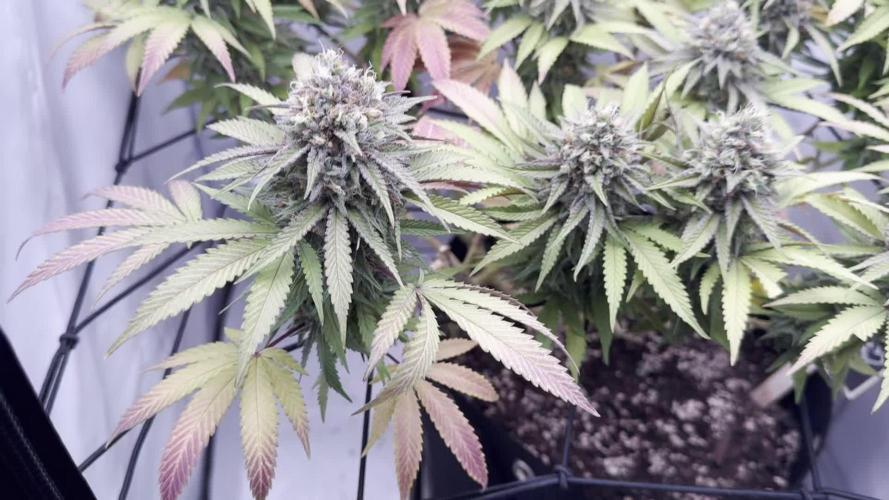
Einfach schön zuszusehen, wie die Sex Bud an Masse zulegt. Die Farben überaschen jedes Mal wenn man das Zelt öffnet. Der Geruch wird langsam merklich stärker.
Wir haben die ersten braunen Trichome entdeckt. D.h. wir gehen in den Endspurt.
👽

Likes
26
Share


@420DeepGrow
Follow
Sorprendido por la noticia de mi primera colaboracion con MarsHydro 😊🙏 y muy sorprendido tambien por el envio de las semillas por parte de Sweet Seeds.
La marca numero uno en focos 💡, carpas de cultivo ⛺️, extractores 🌬️ y demás aparatos que necesitas para tu cultivo.
Para esta aventura arrancaremos con 💡Mars Hydro TS 1000 Full Spectrum LED Grow Light 150W Regulable y 1 semilla autofloreciente a un ciclo de 20/4.
Verdaderos 150w con este TS1000, la mejor luz de cultivo LED para principiantes.
Ofrece una luz adecuada para 2-4 plantas 🌱. Su precio razonable, la marcada mejora del rendimiento y el control variable de la producción la hacen amigable para los nuevos cultivadores. Todo un tesoro para cualquier cultivador que este comenzando.
Usaremos tambien una carpa de 60x60x90, de nuestros amigos de MarsHydro, una carpa para los más exigentes.Con una solapa de cremallera mejorada, dobles cremalleras de metal con forro,reflectante diamante tipo Mylar, postes de metal para una estructura mas solida, no se puede pedir nada mas.
Garantizando una respuesta en solo 24 horas tanto si has usado antes la marca como si no.
Que decir de Barney's Farm uno de los mejores bancos de semillas a nivel mundial, con cepas que te sorprenderan.
Barney´s Farm, MOBY DICK ha evolucionado una vez más siendo cruzado con nuestro BF Super Auto #1.
Producción final impresionante, genética fuerte, robusta y perfectamente equilibrada creando una planta de energía Sativa dominante altamente resistente al moho.
La versión de Moby Dick Auto es ahora más compacta, con un ciclo de crecimiento autofloreciente más corto, pero poco se ha perdido en sus capacidades de producción, potencia y sabor.
💡 MarsHydro TS1000:
https://www.amazon.com/gp/product/B07PLY1WKK
⛺️ 60 x 60 x 90 MarsHydro:
https://www.amazon.com/dp/B081PN2QDN/
🌻 Moby Dick Auto:
https://www.barneysfarm.es/moby-dick-auto-562
📅 Dia 0: Germinacion con enraizante
📅 Dia 1: Siembra en maceta definitiva, riego con agua solamente, ya que siembro en sustrato y suele traer una EC de 1.5 - 1.8
📅 Dia 2: Riego con agua
📅 Dia 3: Descanso, ella esta feliz en su entorno MarsHydro
📅 Dia 4: Riego con agua
📅 Dia5: Descanso
📅 Dia 6: Descanso


Likes
15
Share


@CG420
Follow
Comenzamos semana nueva sin síntomas apreciables de flor .
Las plantas han crecido bastante esta última semana llenando totalmente la superficie de cultivo.
Esperamos terminar la semana viendo algún síntoma más en nuestras pequeñas.💚

Likes
55
Share


@pifflestikkz
Follow
Day 43
14/06/24 Friday
So today was the day for cloning 🤩
I've kept it basic, taken 4 sides as clones.
I've started their own diary now 👇💚
https://growdiaries.com/diaries/214698-divine-seeds-black-opium-grow-journal-by-pifflestikkz
I haven't exactly mainlined as I have far to much going on ATM. But, I have taken the principle, kept my mains, stripped back and topped all.
Resulted back to tie down LST.
Hoping she recovers quickly so we can flip on the 8 week mark🙌
Day 44
15/06/24 Saturday
Feed today 6.4
Day 47
18/06/24
Water today pH 6.4
Fully recovered from her massacre 💚
Since cloning and topping, she has started re development again 💪
Pushing herself out and up again 🙌
Day49
20/06/21 Thursday
Feed today pH 6.25
Did it outside,
Picture update 🤩

Likes
5
Share

@Growfather1
Follow
Hello everyone,
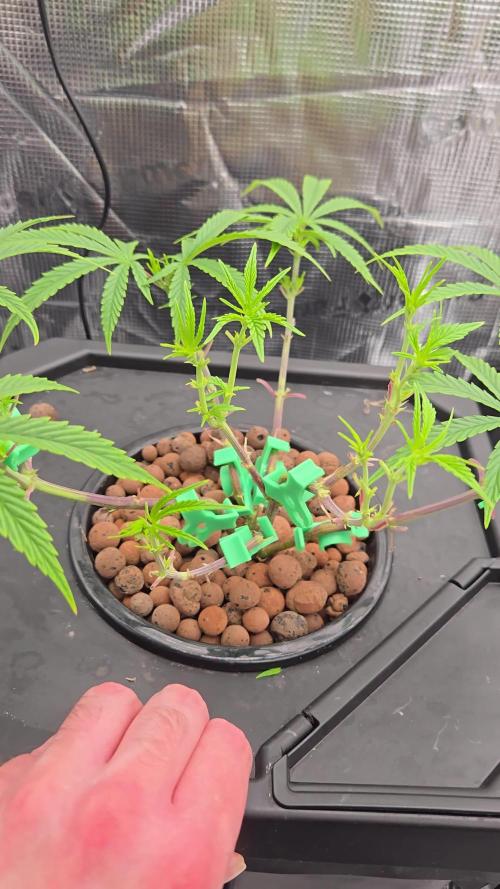
This week i decided to remove the peyote cookies from the dwc system because the roots kept dying and so i decided to translate her to coco soil.
I will start again after the summer with 2 dwc buckets for now i gonna continue with one, yesterday i changed the air pump to a stronger version because the spider farmer pump is way to loud and weak with the airflow.
The amnesia fast bounced back but i see the roots showing a brown color again i hope after the air pump change this will stop i will also stop adding canna rhizotonic to the water to make sure only minerals are in the water.
For the peyote cookies i gonna start a new diary.
Tomorrow i will update my other diary that grow is doing great.
Thanks for stopping by and have a nice week.


Likes
62
Share


@BodyByVio
Follow
Easy strain to grow, tolerant a high ppm.
Very good smoke. Buds are not very dense.

Likes
Comments
Share


@eldruida_lamota
Follow
Vamos familia, actualizamos la segunda semana de floración de estas Black Rainbow de Seedstockers, salieron las 3 de 3, 100% ratio éxito.
Aplicamos varios productos de Agrobeta, que son increíbles para aportar una buena alimentación a las plantas.
Temperatura y humedad dentro de los rangos correctos dentro de la etapa de floración.
La tierra utilizada es al mix top crop, por cambiar.
De 3 ejemplares seleccioné los 2 mejores para completar el indoor y trasplanté directamente a macetas de 7 litros, cambien el fotoperiodo a 12/12 y aplique una buena poda de ramas bajas, se ven bien sanas las plantas, tienen un buen color y progresan a muy buen ritmo por el momento, ya empezaron a formarse las flores.
Agrobeta:
https://www.agrobeta.com/agrobetatiendaonline/36-abonos-canamo
Hasta aquí todo, Buenos humos 💨💨💨

Likes
18
Share


@BufoAlvarez
Follow
Curing time. Doing it in jars. I feel like only half the product is full and thick and other half loose and stringy buds. I had many issues getting it right for my first time which I believe led to this. One is watering which I didn’t fully grasp until too late, other is over doing nutes, then I had temp issues. Learning a lot and really happy that I was able to harvest anything.


