The Grow Awards 2026 🏆
Likes
4
Share
@MRSGROW
Follow
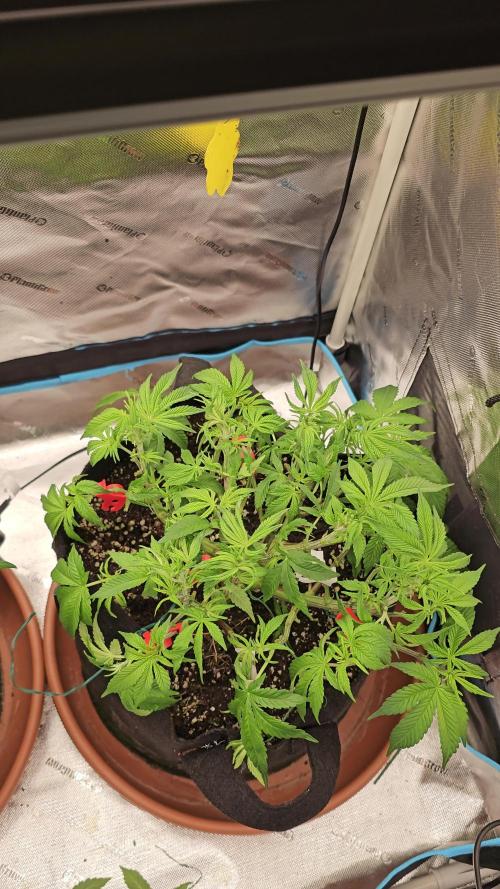
Hola amigos, comenzando la 3 semana de las nenas fueron regadas con top veg. Les comento que la luminaria utilizada es de una marca chilena, de 200w y tiene 2 chips led cob y 2 chips led 3500k.
Likes
23
Share
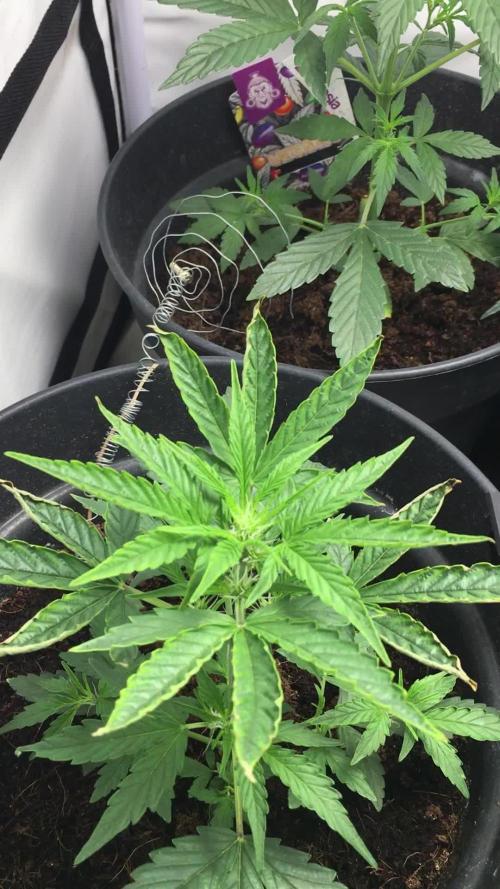
the past few weeks the girl scouts have been irrigated and fertilized but the little land used has made them dwarf, I performed lollipopping due to a redness that appeared on the leaves of one in particular now it is the most luxuriant. the skunk has really grown up in the background and the little shade has earned it its luxuriance
Likes
25
Share
Good week, slow going but huge plants, sativa side definitely showing on these ones. Careful with the nutrients and make sure to use cal mag. Thanks everyone
Likes
29
Share
@Lysidious
Follow
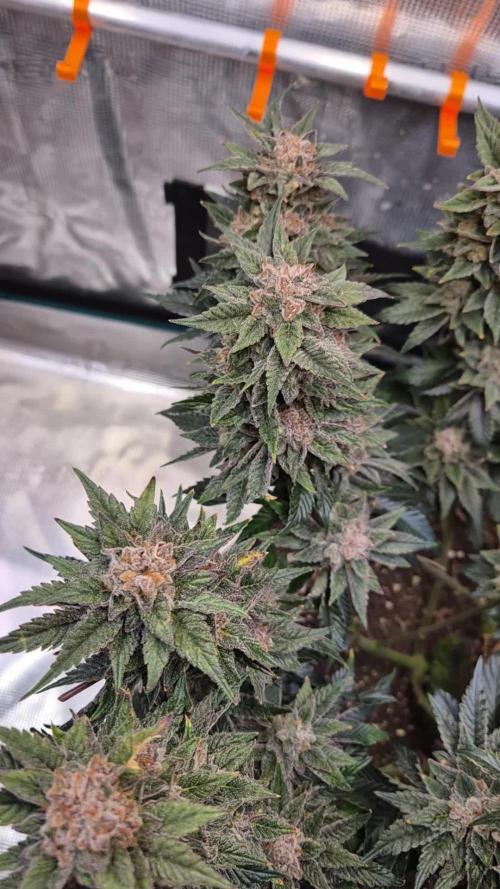
Not much crystal on her as yet but the pixies are sprinkling, I’m guesstimating around 9-10 weeks of flower needed.
Likes
31
Share
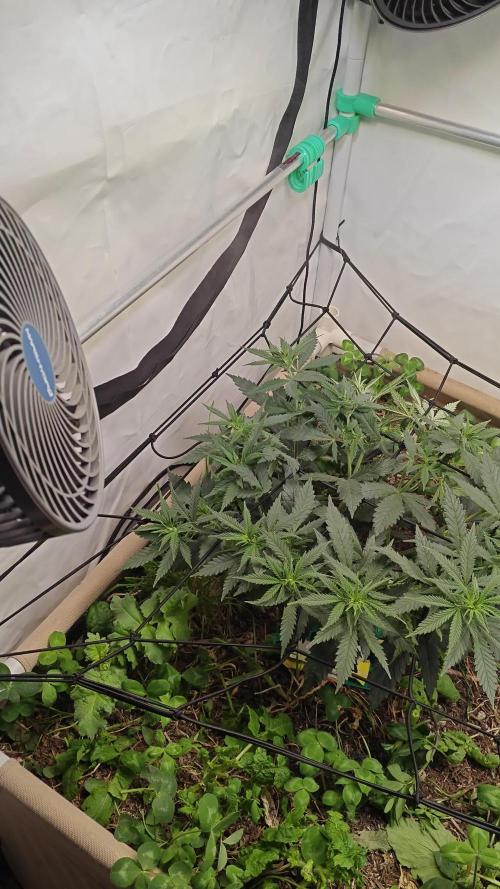
Stopped weaving to leave them about 6-8 inches above the canopy. Will be defoliating at some point next week to improve light penetration.
Likes
4
Share
@alexb420
Follow
been feeding pretty heavily, flipping in a week or 2. hardest plants i’ve grown so far
Likes
18
Share
Unfortunately due the smell. I spray organic eco oil. Some nasty little animals to avoid. GDP stating to get some nice rainy water. All Cloudy, few orange one appear. ❤️
Likes
210
Share
@nonick123
Follow
Bienvenidos a la semana #3 El crecimiento ha sido espectacular  Esta planta me está devolviendo el gusto de cultivar fotodependientes como cuando era joven, da gusto ver como crecen de forma exponencial día tras día Ha pasado un par de días de la semana en interior debido a la inestabilidad meteorológica.  Se ha mantenido en la maceta de 3 litros hasta el día #21 Día #22 (09/06). Hacemos el transplante a maceta de 15 litros La composición del substrato es: Base tipo Light mix + perlita (hasta 25 por ciento) + hummus de lombriz + micorrizas + guano de murcielago La idea era pasarla a una maceta de 7 litros y después de 20 días aprox a la maceta de 15 litros, pero estaba el cepellon lleno de raíces, y he decidido pasarla directamente a la maceta final, porque me parecía que había poco más espacio al pasar de 3 litros a 7 litros A ver cómo reacciona!    Este día #22 también ha vuelto al exterior hasta nuevo aviso meteorológico  Se planea hacer topping cuando alcance el quinto - sexto nudo para que no se vuelva de un tamaño incontrolable (que por otro lado estaría bien   ) Gracias por leerme y seguir mi diario!
Likes
49
Share
6/23 Due To The Two 8 Day weeks this week will only consist of five days to get me back on track. SEE LAST WEEK FOR DETAILS. I DID ANOTHER EIGHT DAY WEEK. I'LL DO THIS WEEK AS SIX DAYS. THAT WAY IM BACK ON SCHEDULE. WATERED 6/22. WENT BACK AT NIGHTCAND WATERED ANOTHER GALLON WITH 1/3 TSP Armor Si. I mixed the solution with kelp you kelp me but I dumped it out. I've mixed silica with other nutes before but I had read something earlier about bioavailability issues and I didn't want to risk it. My plants are the healthiest I've ever grown. I'm considering transplanting the large 10th planet that I'm light depping. I also need to develop my ipm and my nute schedule. Still gonna have to keep an eye onvthe water situation. Luckily I have a buddy in my corner that's co tinualkt Bern a great help. WENT BACK OVER AROUND NOON. BEAUTIFUL OUTSIDE AND THE PLANTS WERE LOVING THIS SUN. I DEFOLIATED SOME BURNED LEAVES AND MIXED A SOLUTION IF KELP ME KELP YOU THAT I PLAN TO FEED TO THE GARDEN TODAY. IM HAPPY WITH HOW THINGS ARE GOING. WE HAVE SOME RAIN AND THINDERSTORMS COMING. I NEED TO GET MY IPM UP AND RUNNING AND THE NUTES ONLINE. I ALSO NEED TO DECIDE IF IM GOING TO TRANSPLANT THE LIGHT DEP 10th PLANET. Went back over to put the girls to bed at six and if was still 90 degrees. The water from yesterday had dissipated. The tops were dust dry. I mixed two gallons of kelp you kelp me and fed it to the garden. Afterwards I pointed qbd found a couple plants that were more open to the wind were a little lighter. I know tomorrow will be very hot. Maybe quarter inch of rain. However after that it will rain (showers) off and on for days. I wanted to make sure the girls had what the needed to make it through tjis heat wave until they get that rain. I had another gallon mixed up and I'm thinking I should've given it to them. Oh well. I'd rather underwater than overwater any day. I did notice a burnt top on the plant furthest from the tarp that the sun JUST BARELY TOUCHES when the rest are in shade. I'll just raise the tarp a little. These are tiny problems. Can't upload video until tomorrow. 6/24 Good thing u gave the plants that water. I know it wasn't much but we didn't get any rain. Suppised to get a qtr in today and another qtr in tomorrow. Then rain a couple more days. It's working our really good for my watering schedule lol. Yesterday the girls got there first dose of a bottled nute. They got two gallons of kelp me kelp you (1/3 tsp per gallon) and another gallon of just phed water. I was going to do another gallon but held off due to the threat of syring rain. Didn't get it bur it looks like the plants loved the kelp. It had reached 90 yesterday. They look better today. It's 70 at 9 today. I LST the 10th planet in the 3 gallon. It's getting huge. I should start a separate diary for those three light dep plants. Its cool as hell watching this. One of the purple punches is flowering pretty good. I probably should start another diary for them. I'll be starting to feed my plants soon. Wondering if I should pinch plants again. TUCKED THE LITTLE GIRLS IN AT SIX AND SHOT A VIDEO AND TOOK SOME PUCTURES. PLANTS LOOKED PHENOMINAL! GOT HOME AND AROUND SEVEN IT JUST STARTED RORREBTIAL DOWNPOURS! THE TYPE OF RAIN THAT BREAKS STEMS. I SHOULDVE PUT MY OTHET TARP UP BUT I DIDNT. I WISH I HAD. IM A LITTLE NERVOUS. I KNOW THESE GIRLS ARE STRONG THOUGH! TOMORROW. ILL ROLL THE RARP UP AND SECURE THE BOTTOM FOR FAST ACCESS. IM ALSO GOING TO KOOK INTO FINDING A TOP FOR MY CAGE I CAN USE IN INCLIMENT WEATHER. 6/25 That little qtr in of rain we were supposed to get turned into torrential downpours and high winds. Luckily no REAL damage. If you watch the video you'll see what I mean. I'm going to havecto be cognizant moving forward. Noticed a few chunks from leaves butvplants are still healthy. I'm surprised how well these girls withstood this storm. They are certainly resilient. The 2 purple punch 1 10th planet that I'm light depping are flowering nicely now. They missed all the commotion from the storm as they were inside. It's smelling good. I'm happy. 6/26 It's what a friend would say is "maineing") out. That mistcthe plants love. I'm surprised the plants are doing as good as they have been considering the wind. Will be adding nutes soon. Need to add extra supports too. Light dep 6/27 Brief periods or torrential downpours. Light depped 3 gallon 0lants are under an overhanfcwhete the hatsxrain can't hurt them but they still get sun. They are really starting to flower now! I'm going to begin feeding with a base nute and a flower nute I think. I'm thinking about giving the light dep some open sesame or something similar. I need to set up a nute program soon but the plants ALL look so healthy! And it's been raining! I've only watered like once or twice since they've been in the big pots. I've seen zero pests aside from a chunk missing from a grasshopper. Usually by now I'd have battled half a dozen things and be battling another half dozen. However I was posing from clones. These are seeds and boy don't I see the difference!
Likes
142
Share
Hi everyone :-) This week a lot of nice things happened in the flower tent :-) Everyone looks super nice, and is growing stronger and more beautiful week by week 😍👌. The blue cheese smells like a dream ;-) As usual from this variety 👍. The kosher tangie is also very, very tasty 👏🏻. Both got Pk 13/14 this week for the last time :-) Everyone else is developing very well 👍, That will be the last diary with several strains together :-) In future everyone will come individually 👌. I wish you a lot of fun with the videos, have a nice weekend, stay healthy 🙏🏻 and let it grow 😎👌
Likes
9
Share
@Justrite
Follow
Chop day , will make full detailed harvest report in the next few weeks after dry and cured .
Likes
5
Share
This plant seems to have grown much denser and better than my first plant. I just got the ac infinity ventilation setup with controller 69 for my 2x2, still trying to learn, hopefully grow #3 goes even better. Stay tuned
Likes
3
Share
@JBOrganix
Follow
Super burnt lol. Ooops I'll still finish her off and hope for the best. Should still be some decent smoke 👌
Likes
6
Share
Sin duda son las que llevan la delantera en mi pequeño armario, ya estan en su maceta definitiva de 11 litos y con la poda Apical, ahora a esperar que crezca un poco mas para cambiar el horario de luz
Likes
52
Share
Its time to prepare for war. *Blows bagpipe* FISH SH!T THE ORGANIC SOIL CONDITIONER (used twice before and always noticed instantly) Fish Shit is a living product! It provides a complex Microbial profile that includes thousands of different species of bacteria, fungi, and protozoa. This profile is closer to a natural ecosystem than anything you will find on the market. Fish Shit helps release essential oils and terpenes which contribute to the building of a myriad of flavonoids. Flavanoids play a key role in the development of the most potent aromas and tasteful flavors of a plant and its fruit. Fish Shit contains beneficial microorganisms that help plants maximize nutrient uptake. It does this by transforming nutrients into more usable forms and keeping these nutrients in the soil longer. During photosynthesis plants naturally produce exudates (chemicals that are secreted through their roots). Through these exudates, plants can attract the types of good bacteria that are beneficial to them at different points in their growing cycle. These good bacteria cover the roots and act as a barrier to the invasion of disease-causing organisms that may harm the plant. What Are Enzymes? Before we dive headfirst into how, exactly, enzymes can benefit cannabis plants, it helps to understand a little about what these microscopic proteins do. Essentially, enzymes facilitate chemical reactions. They do so by binding with a substrate and forming or breaking molecular bonds. In this context, the substrate is the molecule upon which an enzyme acts to boost the efficiency of a reaction. •substrate /sŭb′strāt″/ •noun •The material or substance on which an enzyme acts. A surface on which an organism grows or is attached. An underlying layer; a substratum. Enzymes are proteins with complex 3D shapes that feature regions called active sites. When the substrate binds to these active sites, it forms an enzyme-substrate complex that causes a chemical reaction to take place, temporarily changing the structure of the enzyme and ultimately causing molecules to either come together or break apart. As a result, molecular products are released, and the enzyme returns to its original shape. Specific enzymes are capable of binding with certain substrates, as the substrate fits into the active site more or less via a lock-and-key principle. Although, new research suggests a more accurate theory of "induced fit", in which enzymes and substrates undergo structural changes to facilitate the reaction. If you take the human body as an example, we have an abundance of enzymes in our saliva and digestive system. These molecules bind with substrates in these regions (food particles), working to break down the food we eat into usable parts before converting them to energy. Enzymes in cannabis work in a similar way to the example highlighted above. Typically, enzymes occur in soil naturally, but if your soil mix is lacking organic material, or you're growing hydroponically, then adding enzymes directly to the substrate is crucial. By using them in cannabis growing, enzymes not only help break down essential nutrients into smaller, more readily available pieces, but they also support the digestion of dead root cells, clearing a direct path for nutrients. Overall, enzymes make it easier for your cannabis plants to absorb all the elements they need to reach their full potential. For growers, a plant that reaches its full potential means a bucketload of juicy buds come harvest. This is essential if you want to reuse a pot with old systems left over like mine. Common plant enzymes include: •Cellulase •Xylanase •Beta-glucosidase •Hemicellulase •Amidase Amino acids are a crucial, yet basic unit of protein, and they contain an amino group and a carboxylic group. They play an extensive role in the gene expression process, which includes an adjustment of protein functions that facilitate messenger RNA Nitrogen, phosphorus, and potassium are the three main pillars of nutrient solutions and fertilizers, but there are countless other nutrients that your cannabis plants need to produce the best possible harvest. Amino acids are one of them. You may have noticed that amino acids get a lot of attention from bodybuilders and other athletes. That’s because they play a key role in the synthesis of protein, which, as you probably know, is super important for sports recovery and muscle growth. Amino acids are the building blocks of protein and the foundation of both plant and animal life. But what do amino acids do for cannabis? WHY IS PROTEIN IMPORTANT FOR CANNABIS? Just like proteins are important for the human body, they are equally important for the growth and development of plants. For example, proteins help plants: •Facilitate the growth of intracellular plant structures •Promote energy generation •Stimulate metabolic processes •Facilitate the absorption and transportation of nutrients So, where do plants get these vital proteins from? Well, unlike humans, plants can’t source proteins or amino acids from other organisms. Instead, they need to create their own amino acids, and then use these to build protein. That's why gardeners, much like athletes, go wild for amino acid supplements. Amino acids help plants by… • Increasing their production of chlorophyll, which ultimately improves their ability to photosynthesize • Serving as an easily absorbable form of nitrogen • Stimulating the synthesis of key vitamins • Improving their resistance to pests and diseases • Boosting the strength of their cells Amino acids also serve as the precursors to auxins, a group of plant hormones produced in the meristems—the apex of the stems where new leaves and stems are born. Auxins play a key role in the plant, activating genes for plant growth and development by triggering a multitude of vital plant functions. In other words, they determine what its size and architecture will look like. Auxins influence the development of branches, flowers, and roots, and even help to regulate the photoperiod response of the plant. Some amino acids, like cysteine, also work together with antioxidants like glutathione to help cannabis plants deal with oxidative stress, which can be caused by high-intensity lighting, some nutrient solutions, and high levels of CO₂. Unlike humans, plants can synthesize all the amino acids they need to survive and develop properly. Unfortunately, however, amino acid synthesis is a really high-energy process, and plants may struggle to produce enough amino acids when exposed to stress. WHAT FACTORS AFFECT A PLANT’S ABILITY TO SYNTHESISE AMINO ACIDS? Any kind of stress can affect a plant’s ability to produce enough amino acids. This includes: • Drought • Temperature extremes • Poor soil health • Pests • Diseases • Poor lighting • Lack of space • Poor root health WHAT DOES ALL OF THIS MEAN FOR WEED PLANTS? If you want to push your plants to their extreme in terms of floral growth and resin production, you should look into amino acid fertilizers. By making amino acids readily available to your plants, they’ll be able to use crucial energy to grow and bloom, rather than focusing on synthesizing amino acids themselves. Game of Inches, this is another Plants can absorb amino acids via their roots and leaves. They can also benefit from amino acids during both their vegetative and flowering phases. The fastest way for plants to absorb amino acids is via their leaves. The foliar application of amino acids is believed to improve the transportation of nutrients, increase transpiration, and boost photosynthesis. Hence, I recommend feeding your plants with foliar amino acid fertilizers. When doing so, however, carefully measure the amount of fertilizer you use, as—like with any nutrient—overfeeding can damage your plants. FOLIAR FEED AND SOIL SOAK • 1 crushed queen anne carrot • Add 2 tbsp of NPK Raw powdered water-soluble cane molasses • 20ml h2o2 • 1 crushed radish • 0.25 tsp NPK Enzymes • 0.25 tsp NPK Amino Acids • 50ml coconut water ( nature's own amniotic fluid packed with amino, enzymes ) + The sound of songbirds. Onto the predators 1250 -Green Lacewings Lacewings are extremely voracious predatory insects that feed on several pests. In adulthood, it feeds on pollen and nectar. In the larval stage, it feeds on aphids, thrips, and mealybugs at all stages of growth. It can also attack spider mites in moderate quantities. It is initially an aphid predator, but very effectively controls thrips and mealybugs infestations. It is so voracious that in the absence of prey, it will feed on its congeners. Lacewings are cannibalistic if there is no food available for them. It is therefore important to introduce them into an infestation situation, and not just preventively. •congener /kŏn′jə-nər/ •noun •A member of the same kind, class, or group. •An organism belonging to the same taxonomic genus as another organism. •A thing of the same kind as. or nearly allied to, another; specifically, in botany and zoology, a plant or an animal belonging to the same genus as another or to one nearly allied. Ideal temperature 20°C – 26°C Ideal humidity 60% – 70% Predatory stage life cycle 21 days Introduction rate 4 weeks Storage Refrigerator Use Immediately Are there any specific instructions on how to use this predator? Lacewings are available on small paper cards that you can hang to plant stems. On the cards are dozens of eggs ready to hatch. There are also sterile eggs they can feed on once they have hatched before they are ready to disperse in the foliage. It is important to use them quickly upon receipt to avoid cannibalism. If you don't use them right away, you can store the cards in the refrigerator for 24 to 48 hours to prevent the eggs from hatching too quickly. Avoid storing them for longer than this or you risk losing eggs. 1250 eggs are divided into 7.5 cards, 2500 eggs on 15 cards, and 5000 on 30 cards. The application rate is one card per square meter of growing surface. Is this predator best used for preventive or curative treatments? Lacewings are used as a curative solution. Anything else I should know? Lacewing eggs hatch approximately 24-72 hours after the cards are exposed to room temperature. When they emerge, the lacewings are just 1.5-2 mm long. They are very small so they are difficult to see. Once hatched, they will stay on the cards for a few hours and then disperse in the foliage. You quickly lose sight of them if you have not witnessed the hatching. They then live in the foliage for about 3 weeks. Often, you will see them towards the end of their larval cycle. After feeding for 3 weeks, they will triple and even quadruple in size. At that point, they are easier to see. But they remain very discreet insects, it is not abnormal not to see them. Egg carcasses left behind on the cards do not disappear after the hatching has happened. It's normal to see eggs still on the cards. Visually it is very similar before and after hatching. Also, on the boxes, there are sterile ephestia eggs which are used to feed the lacewings once hatched. Not all lacewing eggs are viable either. Only a certain percentage of lacewing eggs will hatch. Once hatched, the eggs are white. You can observe this using a magnifying glass. With, 5000 Stratiolaelaps Scimitus It is used to prevent or control thrips pupae, fungus gnats larvae, and root mealybugs in the soil. It can also be used for red mites in bird farms or hen houses. The adult is about 1 mm long and is medium brown with a beige triangle on its back. Another fun fact about them is they can survive without prey. They can eat algae and plant debris. This is why they can reproduce and stay in plants for long periods. Ideal temperature 15°C – 23°C Predatory stage life cycle 18 days Introduction rate 2 weeks Storage Room temperature Use Within one week Are there any specific instructions on how to use this predator? Sprinkle directly on the growing media. They can live in all types of substrates like potting soil, coconut fiber, rock wool, cedar mulch, etc. Stratiolaelaps establish easily so they are permanently fighting pests. One introduction is generally enough unless you have an infestation. In this case, introduce them at least twice at a 2-week interval for best results. If you grow your plants in a 100% mineral substrate, it will have to be released more often since there is less organic matter than in traditional soil. Do I need to take any specific precautions? Stratiolaelaps breed in the top layer of the soil. So it is important not to disturb them in the first days following their introduction. They don't like temperatures below 8 ° C. So be sure not to introduce them in a water-saturated or cold environment. Release them 24-48 hours after your last watering. They are very sensitive to chemical acaricides and diatomaceous earth. These methods are incompatible with their use.
Likes
6
Share
Vamos familia, actualizamos la sexta semana de crecimiento de estas Papayton de FastBuds. La temperatura que estuvo entre los 24-26 grados y humedad dentro de los rangos correctos. Todavía estamos en el ciclo 16 horas luz, 8 oscuridad, estiraron bien y ensancharon bastante también, el color es verde sano. Se nota que los nutrientes de la marca Agrobeta hacen sus funciones. También realicé una poda de bajos que yo si las veo necesarias para explotar después la flor. - os dejo por aquí un CÓDIGO: Eldruida ,descuento para la tienda de MARS HYDRO. https://www.mars-hydro.com Hasta aquí todo, Buenos humos 💨💨💨
Likes
15
Share
Almost 30% amber. Almost there. Colourful beautiful. Red, purple, brown green.