


Likes
Comments
Share


@DaisyNabis
Follow
cada dia mas glotonas mis bellas, estoy aplicando riego casi día por medio, solo una vez a la semana las abono, el resto solo con agua. hice algunos amarres a los tutores ya que están en pleno crecimiento

Processing
Likes
26
Share


@eldruida_lamota
Follow
Que pasa familia, hemos vuelto para actualizar las skunk que ya tenemos cosechadas.
Que gran genética, y muy típica entre fumadores de hierba, un crecimiento más indico pero floración lenta bastante lenta, en teoría se supone que es Sativa, 17% thc en la tas con un tamaño medio pequeño pero flores mi compactas y dulces, un cultivo ni fácil ni difícil, sin más, bastante neutral para los cambios climáticos algo sensible con el aspecto alimentación.
La recomendaría en verdad, sobre todo para aquellos amantes del dulce.
Nos vemos en próximos proyectos fumetillas

Likes
25
Share


@XperencdGmanXG
Follow
took my old filters from my full ecosystem fish tank and rinsed them out in the water i gave to the girls. This will be just the same as using fish shit and it will make the buds big and sticky. Next week will tell if it worked.

Likes
14
Share


@Insta_SmokeyGrow
Follow
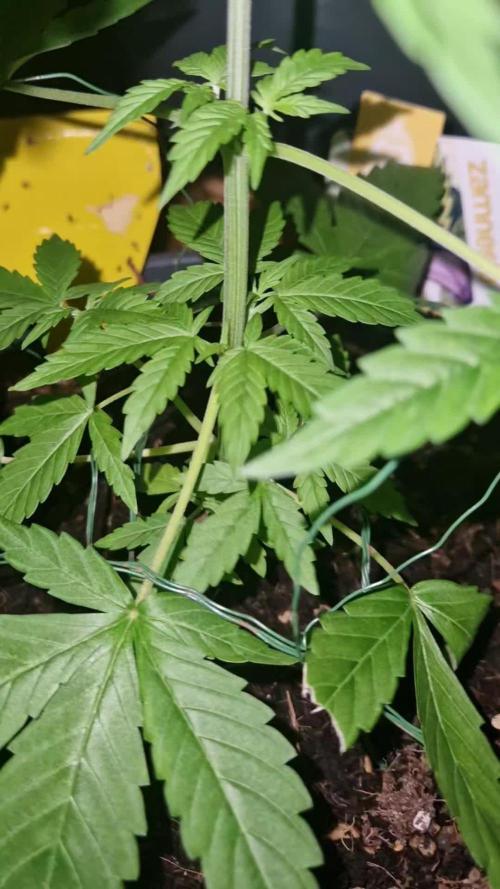
She’s getting updated more often on Instagram the tags @smokeygrow_ …..This week iv let her do her own thing she’s loving the Phlizon pl1000 hopefully get her under the 2020 240w pro soon the colours on this girl are unreal really showing her full potential I seriously think this is one of the nicest colours iv seen in the actual nugget it’s self 🍓🥤 what do you think 💭



Likes
19
Share

@LueRootsGrowGermany
Follow
Hallo liebe Community
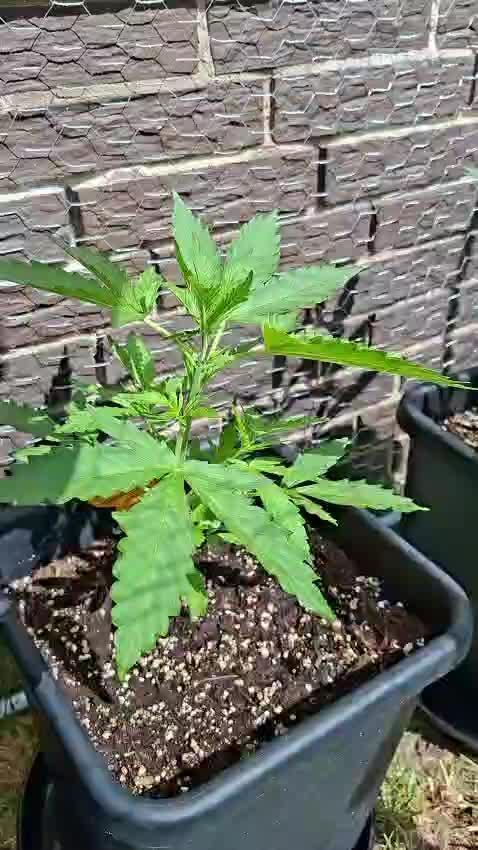
Aus Organisatorischen nicht vermeidbaren Gründen war ich nicht vor Ort und daher auch jetzt erst das kurze Update zu der Veg. 4 Woche.
Gepflegt hat Sie jemand, der selbst noch nie Cannabis angebaut hat. Die Hilfe weiß ich sehr zu Schätzen und bin mehr als nur dankbar! Es konnte hierzu alles nur telefonisch besprochen werden und aus der Ferne gehandelt. Ende der Woche zeigte Sie leichte Eisenmängel. Daraufhin wurde Bio- Heaven und Acti-Vera etwas nach oben angepasst.
Natürlich und verständlich sind einige Sachen wie das Gießen etc. nicht ganz optimal verlaufen. Dennoch stehen sie auch Freiland was mit dem zusätzlichen Regen und auch einmaligen Hagel nicht immer nur ein Optimum voraussetzt.
Zum Wachstum
Bisher macht sie sich gut. Stamm und Blattwuchs schreitet voran, trieb entwickeln sich.
Sie zeigt sich nicht so in der Höhe aber wird schön buschig.
Zum Gießen
Da das Wetter schlechter wurde, Kühler und nass, wurde die Gießmenge nach unten korrigiert. Somit sind es ca. 500 ml die noch täglich gegossen wurden. Auch Super Microbes 0,4 g/L wurde einmal verabreicht.
Viele Grüße an die Community und Kollegen!
LueRootsGrowGermany!

Likes
1
Share

@Lvnsource
Follow
Feed Log:
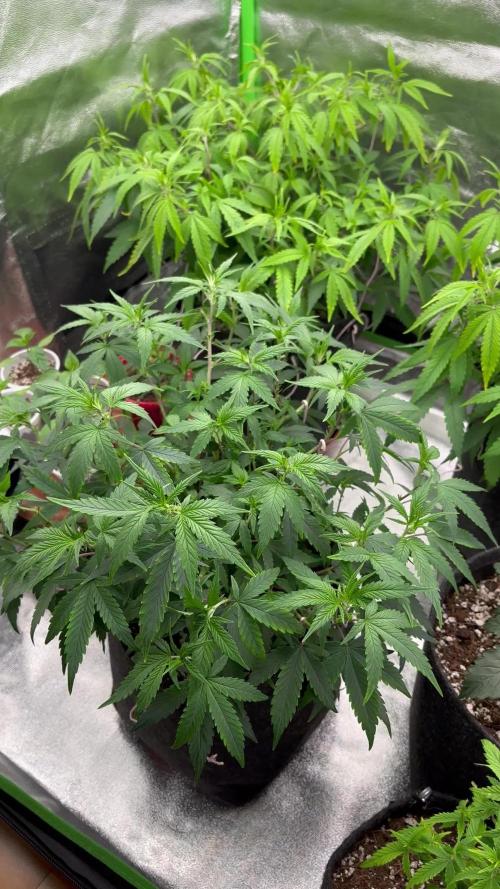
#1 D:52 - 5.5L - Si,[0],Vega[18ml],Ca/Mg,[2g & 1.5g],INPUT: [pH 6.1],[1.684 EC], OUTPUT: [1.892EC], pH [5.9] 2.1L ,Previous irrigation: D:46
#2 D:52 - 5.5L - Si,[0],Vega[18ml],Ca/Mg,[2g & 1.5g],INPUT: [pH 6.2],[1.654 EC], OUTPUT: [1.74EC], pH [5.9] 2.2L ,Previous irrigation: D:46
#3 D:40 - 2.5L - Si,[0],Vega[8ml],Ca/Mg,[1g & 0.8g],INPUT: [pH 6.3],[1.66 EC],
OUTPUT: [1.908EC], pH [5.9] 1L ,Previous irrigation: D:37
———————————————————————————
Around day 50, the plants (1&2) began showing nutrient deficiencies: likely potassium and magnesium, due to the soil having lost its nutrient charge. Two days after their first feeding, they are already looking healthier.
Nr. 3 got lucky; and managed to stay rather unscathed :)

Likes
69
Share


@DogDoctorOfficial
Follow
Eternity Grow Cup - Week 1 Flower Report
Welcome to the first week of flower in the Eternity Grow Cup! This is a crucial stage in the cycle, and we’ve made some important moves to set the girls up for success. Let’s dive into all the details and talk about the key elements shaping this transition.
48 Hours Dark Period & Transition to Flower
Before flipping to flower, we implemented a 48-hour dark period. In my experience, this technique helps the plants transition more smoothly and accelerates their hormonal shift into flowering. It’s a method that has consistently worked well for me, and I encourage growers to explore different approaches to find what best suits their setup.
The Power of Reds - Far Red & Deep Red
As part of this transition, we have introduced far red and deep red lighting. These are turned on 15 minutes before the main whites and stay on for 15 minutes after. The reason? This simulates the natural sunrise and sunset effect, which helps optimize the flowering response and enhances overall plant development. The red spectrum plays a crucial role in promoting stretch and enhancing bud formation early on.
Light Schedule - 11/13 Cycle
From the start of flower, we are running an 11 hours light / 13 hours dark schedule. Over the years, I’ve found this lighting strategy beneficial in inducing faster flower onset, increasing terpene production, and ultimately producing better-quality fruits. This is something I personally swear by, but as always, I encourage others to experiment and see what works best for their unique environments.
Spending Time with the Girls
One of my favorite parts of the grow is spending time with the plants, enjoying some good medicine, and simply being present in the garden. The connection we have with our plants is invaluable, and I believe they truly respond to the energy we bring. It’s a labor of love, and every moment spent with them contributes to their health and vitality.
Monitoring with TrolMaster TM + App
All data is being closely monitored using the TrolMaster TM + app, and I highly encourage everyone to check it out. Seeing all the details, tracking trends, and adjusting conditions accordingly is a game-changer. If you love data as much as I do, this is definitely something worth exploring.
Gear Spotlight - AeroFan Extraction
Let’s talk about one of the essential pieces of gear in this setup: the AeroFan Extraction System. This exhaust fan is an absolute beast, keeping the environment perfectly dialed in while looking sleek mounted on the wall. A good extraction system is key to maintaining ideal airflow, temperature, and humidity control, and this one has been doing an incredible job.
Current Environmental & Nutrient Data
Water pH: 6.0
Water EC: 1.36
Water Temperature: 16°C (a bit low, will be adjusting soon)
Soil EC: 1.44
Soil Temperature: 20°C (decent but could be slightly higher)
Maintaining the right balance of temperature, pH, and EC is essential for a successful flowering phase, so I’ll be keeping a close eye on these numbers and making any necessary adjustments as we progress.
Shoutouts & Community Love
A huge thank you to Plagron, Zamnesia, and Grow Diaries for making the Eternity Grow Cup possible! Massive appreciation to the entire community—supporters, competitors, lovers, and even the haters—you all keep this space thriving.
Let’s also take a moment to wish everyone the best of luck in the competition. The level of dedication and skill across the board is truly inspiring. Keep pushing, keep growing, and let’s make this an unforgettable run!
Join the Journey
For those who want the full experience, make sure to check out the YouTube channel! Some of the episodes are too big for Grow Diaries, but they’ll be available in 4K for the best viewing experience. Stay tuned for all the updates, and don’t miss out on the upcoming episodes.
Wishing everyone an outstanding week ahead! Let’s keep the energy high, and let’s keep growing strong! 🌱🔥
See you all in the next update!
Genetics - Runtz https://www.zamnesia.com/6000-zamnesia-seeds-runtz-feminized.html
Nutrients - Plagron https://plagron.com/en/hobby
- Aptus Holland https://aptus-holland.com/
Controls - Trol Master https://www.trolmaster.eu/
LED - https://www.futureofgrow.com/en
LED - https://www.thinkgrowled.com
Soil - https://www.promixgardening.com/en
Germination - Cannakan https://cannakan.com/?srsltid=AfmBOopXr-inLXajXu3QFgKXCXXos4F1oEvScjMKIB5MR5dk8-GJ-F49
DOGDOCTOR 15% off
Smoking Papers - https://ziggioriginal.com/
Terpene saver - https://grovebags.com/
As always thank you all for stopping by, for the love and for it all , this journey of mine wold just not be the same without you guys, the love and support is very much appreciloved and i fell honored with you all in my life
With true love comes happiness Always believe in your self and always do things expecting nothing and with an open heart , be a giver and the universe will give back to you in ways you could not even imagine so
As always, this is shared for educational purposes, aiming to spread understanding and appreciation for this plant. The journey with nature is one of discovery, creativity, and respect. Let’s celebrate it responsibly and continue to learn and grow together!
Growers Love To you All 💚
#EternityGrowCup #RuntzHunt #GrowersLove #CannabisCommunity #AptusHolland #ProMixSoil #TrolMaster #Zamnesia #Plagron #ZiggiPapers #Grovebags


Likes
4
Share


@alexb420
Follow
doing great! probably gonna run the blueberry muffin again, shit smells so good. blueberry waffles right now. the two khalifa mintz are still dank, musty OG, with light almost mango tones, no mint. hoping that comes out during dry and cure.


Likes
101
Share

@Schnabeldino
Follow
Conclusion:
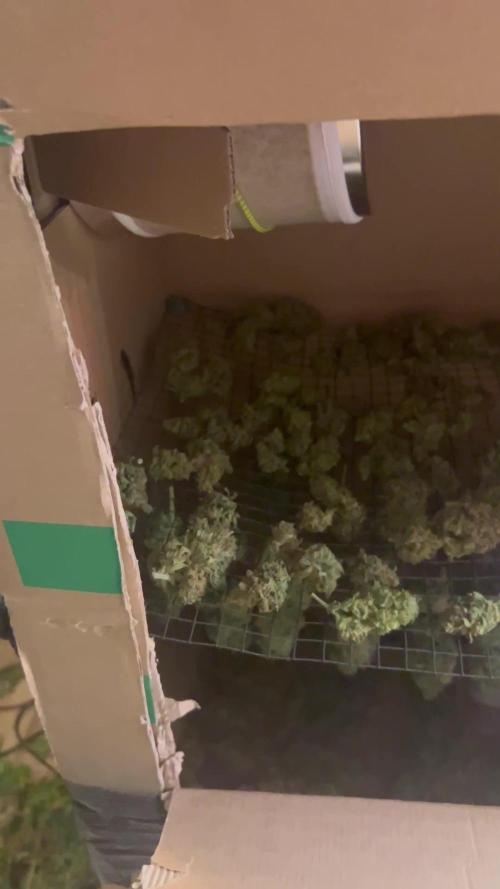
Apple & Bananas from Kannabia fully delivered – 454g of wet, premium-quality buds, plus extra popcorn buds for later use. While not the largest in size, the intensity of flavor, density, and resin production make this strain a true winner.
Photos are wet buds. Once they are dry, the smoke report will follow!!!
See you again in 2-3 weeks 😇😇

Likes
10
Share


@Mr_Ewell
Follow
9 weeks from sprout. Week 3 in flower.
Everything's going smooth.. i think. Had degrees up mid 90s for a couple days and plugged in the ac. My bedroom is cold as fuck now which has my closet ranging from 77 at night to 81 during the day. I really don't want any colder than that. They are starting to smell jus a little more these past three days. At first i didn't smell them unless i touched em for the most part.
Ppms staying between 2000 and 2300...
Playing the damn waiting game.
I got some free time tomorrow. Maybe ill take some of them close up glam-style shots of some buds starting to form.

Likes
67
Share


@GanjaReaper
Follow
Welcome back everyone,
As you can see are almost all seedlings growing. Some where still in the soil.
Might happend when giving water(seedlings can turn or get deeper), checked it out and they are alive and well.
All pictures are from day 4.
The humidifier had been added, so I had to adjust the room.
I spotted a corner of the room that gets dryer faster. I adjust the fan for now and see what happens.
Corners are always hard to get perfect. Sometimes the light, air, watering doesn't come there properly.
Seedlings don't need much nutrients, neighter do autoflowers. with normal soil I would recommend to only give water for 1-2 weeks, since it holds nutrients in it as well.
But since I'm using Cocos for this grow, I might have to add some basic nutrients in the upcomming week.
For this week I gave/give only water turns and Startbooster/rhyzotonic turns.
Update day 5:
- Lowerd the lights to avoid stretching, they are now at 75cm distance from lamp to pots.
I want them at 40-50 cm, but I don't want to rush it.
- Added another layer of cocos to avoid the soil from drying up therefore the roots from dying.
This will happen because of lowering the lamps down, the soil will get exposed more to heat.
As you can see, the humidifier is doing his thing haha. Pictures and videos where taken without the lights + fans on.
because of that, it will look like this. Still fun thought.
Arround 7 seeds didn't reach the surface yet, lets hope they make there way up soon.
Enjoy!
Likes
10
Share


@MrCogoyo
Follow
Buenos días rastas, me perdí por el trabajo, pero la planta va de maravilla, la tenía en un amaceta biodegradable y la transplante a una cubeta plástica de 19 litros, con todo y la maceta biodegradable, vi que la planta se estanco un poco, imagino hasta que las raíces se salieran del contenedor empezó a cambiar y crecer de nuevo 👌
Va creciendo sana, en un par de semana le voy a sacar esquejes, saludos.

Likes
18
Share


@Ultraviolet
Follow
Green light is radiation with wavelengths between 520 and 560 nm and it affects photosynthesis, plant height, and flowering. Plants reflect green light and this is why they appear green to our eyes. As a result, some growers think that plants don’t use green wavelengths, but they actually do!
In fact, only around 5 – 10% of green light is reflected from leaves and the rest (90 – 95 %) is absorbed or transmitted to lower leaves [1].
Green wavelengths get used in photosynthesis. Chlorophyll pigments absorb small amounts of green wavelengths. Light that doesn’t get absorbed is transmitted to leaves that are shaded out from direct light. This means that leaves at the bottom of the canopy get more green light than leaves at the top. A high proportion of green wavelengths compared to other colors tells lower leaves that they are being shaded out, so they are able to react accordingly. Lower leaves may react by opening or closing their stomata or growing longer stems that help the leaves reach brighter light [1, 2, 3].
When it comes to growing cannabis, many cultivators are interested in the quality of light used for the flowering stage. In many plants, flowering is regulated by two main photoreceptors: cryptochrome and phytochrome. Both photoreceptors primarily respond to blue light but can also respond to green, although to a lesser extent. Green can accelerate the start of flowering in several species (although cannabis has yet to be tested) [1, 4, 5]. However, once flowering has begun, it’s important to provide plants with a “full spectrum” light that has high amounts of blue and red light, and moderate amounts of green, in order for photosynthesis to be optimized.
Green light mediates seed germination in some species. Seeds use green wavelengths to decide whether the environment is good for germination. Shade environments are enriched in green relative to red and blue light, so a plant can tell if it is shady or sunny. A seed that senses a shaded environment may stay dormant to avoid poor growing conditions [1]. Some examples of plant species where researchers have documented this response are: ryegrass (a grass that grows in tufts) and Chondrilla (a plant related to dandelion) [1, 6].
Although green wavelengths generally tell plants NOT to germinate, there are some exceptions! Surprisingly, green wavelengths can stimulate seed germination in some species like Aeschynomene, Tephrosia, Solidago, Cyrtopodium, and Atriplex [1, 6, 7].
Of course, light is not the only factor affecting seed germination – it’s a combination of many factors, such as soil moisture, soil type, temperature, photoperiod, and light quality.
When combined with red and blue light, green can really enhance plant growth [1, 8]. However, too much green light (more than 50% of the total light) can actually reduce plant growth [8]. Based on the most current research, the ideal ratio of green, red, and blue light is thought to be around 1:2:1 for green:blue:red [9]. When choosing a horticultural light, choose one that has high amounts of blue and red light and moderate amounts of green and other colors of light.
Not many studies can be found about the effect of green light on cannabis growth or metabolism. However, if one reads carefully, there are clues and data available even from the very early papers.
Mahlberg and Hemphill (1983) used colored filters in their study to alter the sunlight spectrum and study green light among others. They concluded that the green filter, which makes the environment green by cutting other wavelengths out, reduced the THC concentration significantly compared to the daylight control treatment. It has been demonstrated that green color can reduce secondary metabolite activity with other species as well. For example, the addition of green to a light spectrum decreases anthocyanin concentration in lettuce (Zhang and Folta 2012).
If green light only reverses the biosynthesis of some secondary metabolites, then why put green light into a growth spectrum at all? Well, there are a couple of good reasons. One is that green penetrates leaf layers effectively. Conversely red and blue light is almost completely absorbed by the first leaf layer.
Green travels through the first, second, and even third layers effectively (Figure 2). Lower leaf layers can utilize green light in photosynthesis and therefore produce yields as well.
Even though a green light-specific photoreceptor has not yet been found, it is known that green light has effects independent from the cryptochrome but then again, also cryptochrome-dependent ones, just like blue light. It is known that green light in low light intensity conditions can enhance far red stimulating secondary metabolite production in microgreens and then again, counteracts the production of these compounds in high-intensity light conditions (Kim et al. 2004). In many cases, green light promoted physiological changes in plants that are opposite to the actions of blue light. In the study by Kim et al. blue light-induced anthocyanin accumulation was inhibited by green light. In another study it has been found that blue light promotes stomatal opening whereas green light promotes stomatal closure (Frechilla et al. 2000). Blue light inhibits the early stem elongation in the seedling stage whereas green light promotes it (Folta 2004). Also, blue light results in flowering induction, and green light inhibits it (Banerjee et al., 2007). As you can see, green light works very closely with blue light, and therefore not only the amount of these two wavelengths separately is important but also the ratio (Blue: Green) between these two in the designed spectrum. Furthermore, green light has been found to affect the elongation of petioles and upward leaf reorientation with the model plant Arabidopsis thaliana both of which are a sign of shade avoidance symptoms (Zhang et al. 2011) and also gene expression in the same plant (Dhingra et al. 2006).
As mentioned before, green light produces shade avoidance symptoms which are quite intuitive if you consider the natural conditions where the plants grow. Not all the green light is reflected from the highest canopy leaves in nature but a lot of it (50-90%) has been estimated to penetrate the upper leaves at the plant level ((Terashima et al., 2009; Nishio, 2000). For the plant growing in the understory of the forest green light is a signal for the plant of being in the shade of a bigger plant. Then again, the plants growing under unobstructed sunlight can take advantage of the green photons that can more easily penetrate the upper leaves than the red and blue photons. From the photosynthetic pigments in higher plants, chlorophyll is crucial for plant growth. Dissolved chlorophyll and absorb maximally in the red (λ600–700 nm) and blue (λ400–500 nm) regions of the spectrum and not as easily in the green (λ500–600 nm) regions. Up to 80% of all green light is thought to be transmitted through the chloroplast (Terashima et al., 2009) and this allows more green photons to pass deeper into the leaf mesophyll layer than red and blue photons. When the green light is scattered in the vertical leaf profile its journey is lengthened and therefore photons have a higher chance of hitting and being absorbed by chloroplasts on their passage through the leaf to the lower leaves of the plant.
Photons of PPFD (photosynthetic photon flux density) are captured by chlorophyll causing an excitation of an electron to enter a higher energy state in which the energy is immediately passed on to the neighboring chlorophyll molecule by resonance transfer or released to the electron transport chain (PSII and PSI). Despite the low extinction coefficient of chlorophyll in the green 500–600 nm region it needs to be noted that the absorbance can be significant if the pigment (chlorophyll) concentration in the leaf is high enough.
The research available clearly shows that plants use green wavelengths to promote higher biomass and yield (photosynthetic activity), and that it is a crucial signal for long-term developmental and short-term dynamic acclimation (Blue:Green ratio) to the environment. It should not be dismissed but studied more because it brings more opportunities to control plant gene expression and physiology in plant production.
REFERENCES
Banerjee R., Schleicher E., Meier S. Viana R. M., Pokorny R., Ahmad M., Bittl R., Batschauer. 2007. The signaling state of Arabidopsis cryptochrome 2 contains flavin semiquinone. The Journal of Biological Chemistry 282, 14916–14922.
Dhingra, A., Bies, D. H., Lehner, K. R., and Folta, K. M. 2006. Green light adjusts the plastic transcriptome during early photomorphogenic development. Plant Physiol. 142, 1256-1266.
Folta, K. M. 2004. Green light stimulates early stem elongation, antagonizing light-mediated growth inhibition. Plant Physiol. 135, 1407-1416.
Frechilla, S., Talbott, L. D., Bogomolmi, R. A., and Zeiger, E. 2000. Reversal of blue light -stimulated stomatal opening by green light. Plant Cell Physiol. 41, 171-176.
Kim, H.H., Goins, G. D., Wheeler, R. M., and Sager, J. C. 2004.Green-light supplementation for enhanced lettuce growth under red- and blue-light emitting diodes. HortScience 39, 1617-1622.
Nishio, J.N. 2000. Why are higher plants green? Evolution of the higher plant photosynthetic pigment complement. Plant Cell and Environment 23, 539–548.
Terashima I., Fujita T., Inoue T., Chow W.S., Oguchi R. 2009. Green light drives leaf photosynthesis more efficiently than red light in strong white light: revisiting the enigmatic question of why leaves are green. Plant & Cell Physiology 50, 684–697.
Zhang, T., Maruhnich, S. A., and Folta, K. M. 2011. Green light induces shade avoidance symptoms. Plant Physiol. 157, 1528-156.
Wang, Y. & Folta, K. M. Contributions of green light to plant growth and development. Am. J. Bot. 100, 70–78 (2013).
Zhang, T. & Folta, K. M. Green light signaling and adaptive response. Plant Signal. Behav. 7, 75–78 (2012).
Johkan, M. et al. Blue light-emitting diode light irradiation of seedlings improves seedling quality and growth after transplanting in red leaf lettuce. HortScience 45, 1809–1814 (2010).
Kasajima, S., et al. Effect of Light Quality on Developmental Rate of Wheat under Continuous Light at a Constant Temperature. Plant Prod. Sci. 10, 286–291 (2007).
Banerjee, R. et al. The signaling state of Arabidopsis cryptochrome 2 contains flavin semiquinone. J. Biol. Chem. 282, 14916–14922 (2007).
Goggin, D. E. & Steadman, K. J. Blue and green are frequently seen: responses of seeds to short- and mid-wavelength light. Seed Sci. Res. 22, 27–35 (2012).
Mandák, B. & Pyšek, P. The effects of light quality, nitrate concentration and presence of bracteoles on germination of different fruit types in the heterocarpous Atriplex sagittata. J. Ecol. 89, 149–158 (2001).
Darko, E. et al. Photosynthesis under artificial light: the shift in primary and secondary metabolism. Philos. Trans. R. Soc. B Biol. Sci. 369 (2014).
Lu, N. et al. Effects of Supplemental Lighting with Light-Emitting Diodes (LEDs) on Tomato Yield and Quality of Single-Truss Tomato Plants Grown at High Planting Density. Environ. Control Biol. 50, 63–74 (2012).

Likes
27
Share


@Bread_n_Buds
Follow
Our Zamnesia photoperiod plants have also started their journey into the magical flowering period, this is the first week.
So born on September 1st, on October 1st they went into flowering and these are the photos of the first week, when the ladies begin to understand that they have to do their magic.
---- The general environmental conditions are good, the heat has increased a little more but for the first weeks of flowering it is not a big problem, let's remember to never exceed 27 degrees centigrade in the last 4 weeks to avoid compromising the quality of the flowers. If necessary, open the growbox but never let it exceed 27-30 degrees
where 30 is already a lot. The positive thing is that as soon as the lights go out the change is already a little visible and as autumn progresses we will also improve. The humidity is fluctuating but we try to control it with two dehumidifiers when necessary, pushing both of them possibly not into the growbox but directly into the room. (I dehumidify the room and the air in the growbox should be dehumidified too)
--- We are at a top secret level here so I can tell you that it is called XXXX Test 2 and we really like how they are growing. They were practically identical so I decided to top one and let it grow like a bush keeping some branches underneath but not in main lining style. The other one is growing straight and beautiful as the sun. Very wide internodal distance, wide plant, definitely to be supported soon.
--- Fertilization schedule - The fertilizers are always Plagron and I am following the table that I generated on the site depending on the chosen substrate. Create your own card and follow it, never be presumptuous my friend as I have been in the past, follow the card and look at the plants, not all need the same amount of fertilizer. We have come to the time to give a good dose of iron in the first weeks of flowering, already of race life not sprayed but mixed with fertilizers. Alga Bloom is now running instead than alga grow
---- https://plagron.com/en
- Power Roots - 1ml/l
- Alga Bloom - 4ml/l
- Pure Zym - 1ml/l
- Sugar Royal - 1ml/l
- Vita Race - 5ml/l
--- Dehumidifier now runs between 50% and 55%
--- Plagron 100% Organic pack can be found on Zamnesia at: https://www.zamnesia.io/en/11457 -pla gron-easy-pack-natural.html
--- new strain coming soon no description of the strain because it is a secret
- Fully organic soil and nutrients -- https://plagron.com/en buy on www.zamnesia.io
- air system --- https://www.secretjardin.com/
- Growbox & Light —— www.Marshydro.eu
- Music and sound --- I made my girls listen to 432hz frequencies and music from www.radionula.com
- Z --- You can find these seeds, much more from the world of cannabis, mushrooms and an incredible series of accessories and gadgets on the reference site not only mine but of many growers
—— https://www .zamnesia.io
Likes
6
Share


@GrapevineGrower2
Follow
Week 4 flower went fine with all three humming along nicely in living soil. Watered to saturation after applying a 1" top dressing of worm castings, compost, and Langbeinite from Down to Earth. No need for further plant training, defoliation, or pruning. Now, just sit back and let these girls finish their run.


Likes
16
Share


@Samsemilla
Follow
Die erste Blütewoche startet.
Eigentlich wollte ich vor Einleitung der Blüte alle Männchen aussortieren, aber der Plan hat sich wie so oft geändert.
Zum Ende der Woche habe ich 7 Männchen aussortiert, es bleiben also 6 Weibchen.
Ich habe versucht die entstandenen Lücken aufzufüllen.
Es sind 3x Red Mandarine dazugekommen.
Leider musste ich die Wurzelballen "anpassen" damit alles passt - mal schauen ob sie den Stress verkraften.


