The Grow Awards 2026 🏆
Likes
Comments
Share
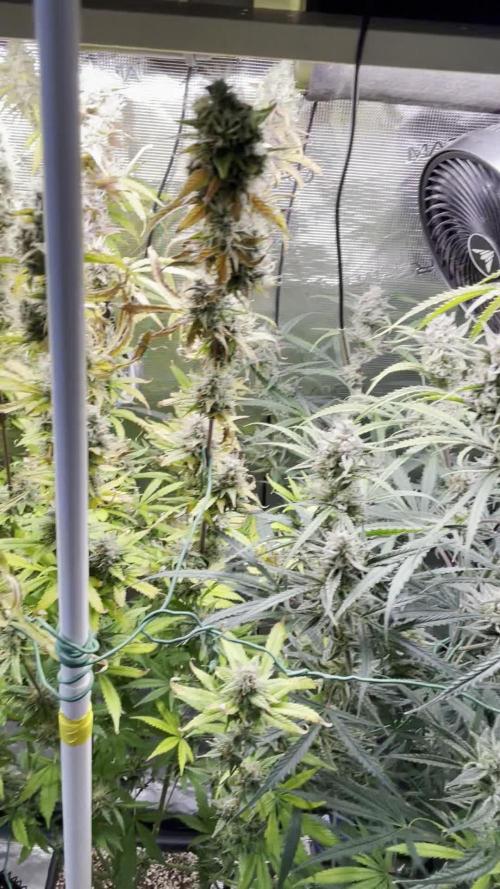
Candyman Day 85, Day 35 of flower! We have now hit week 5 of flower and they are starting to look and smell incredible 😍 very sweet but pungent gassy aswell. They are getting fatter by the day now. I think two will be done in 4-5 weeks 🤞🏻 I'm very happy with this brand of seeds 💯
Likes
18
Share
Our Do si Dos F1 Hybrid Autoflowering from Zamnesia are in great shape at the moment, they had a bit of a hesitant start but now they are in line or even better than others. They have done so well this last week (I love when they start like a rocket after having fueled up with fertilizers) that we have already reached the good internode for topping autoflowering plants which if you want to do it guys it should be anticipated as much as possible as I explain below. The other one will fly away straight to preserve the main cola which is the main dilemma of topping. The first question you have to ask yourself when topping is, Are you ready to give up the main cola? Applied Techniques - Given the numerous requests from growers, we decided to show you what happens when applying topping + Lst to autoflowering plants. It is very important to anticipate it as much as possible, autoflowering plants go into flowering at about the 5th intenod, you have to anticipate that moment to give the plant the chance to vegetate as much as possible. In general, when you see that there are two good lateral branches you can do topping, they will go into veg as much as possible and you will have a split plant, I have seen very beautiful results, especially in warm periods in which the plant tends to vegetate a lot, in winter we could have a bit of dwarfism but with a lot of resin for sure. So I cleaned everything and cut at the top leaving only the main growth line, called Main Lining, the florets will be lowered during growth and the plant will eventually be like "split" in the main line with the various branches. On photoperiodic plants, however, we will do topping repeatedly, which is not recommended with autoflowering plants so as not to lengthen the times of plants born to finish in 10 weeks too much. The second week (including a few days of germination) we gave Power Roots 1 ml/l, Pure Zym 1 ml/l, Sugar Royal 1 ml/l, Alga Grow 3 ml/l - Plagron nutrients are available at Zamnesia in convenient pack formats for all growing styles. I used this one with a simple search you can find the other products. ---- https://www.zamnesia.io/it/12119-plagron-top-grow-box-100-naturale.html Try a seed of this variety that drives us crazy... ---- https://www.zamnesia.io/en/10664-zamnesia-seeds-do-si-dos-f1-automatic.html Description Zamnesia // From the team at Zamnesia Seeds comes Do-Si-Dos F1 Automatic. Using consistent and reliable F1 genetics, this strain is not only incredibly easy to grow, but also offers potent and delicious buds. The plants remain small and offer a reliable growing experience that everyone will enjoy. Growbox and Air System - Secret Jardin DS120w + fans + exhaust fans and DF16 filters kit ---- https://www.secretjardin.com All the best that mother nature has to offer is at ----www.zamnesia.com
Likes
1
Share
La planta cubrió exitosamente toda la superficie, tiene un sistema radicular sano, el único detalle es que cuando se hace el cambio de agua y se quita la red la planta se estresa un poco al volver a colocar la red
Likes
25
Share
So my beautiful babies have had a busy week they had a trim got rid of the big fan leaves covering new bud sites and today they had monkey nutrients bloom A and Bloom B plus stress, rootshoot and calmag and they had there first day of 12 hours light and 12 hours dark I added another fan so they are loving life and the humidity is finally lower The smell is amazing inside the tent and the filter is keeping the smell inside the tent thankfully
Likes
9
Share
@Just_Weed
Follow
Day 1 - 7 L watering with around 1000 ppm and 6.5 ph Day 3 - 7 L watering with around 950 ppm and 6.4 ph Day 5- 7 L watering with around 850 ppm and 6.3 ph Day 7- 7 L watering with around 850 ppm and 6.3 ph During this and last week plants got a few burn tips so I am starting to reduce nutrients gradually and will finish of with 1-2 weeks of R/O water. First Peyote is getting big and is growing new sets of white hairs, Both Cheeses is much smaller and less frosty while Second Peyote is having lots of orange hairs and by the looks of it is only a few weeks away. Still Hoping to harvest all at the same time and will try to time the harvest in that timeframe so all plants are ready. So around 3-4 more weeks seems to be the case.
Likes
45
Share
2nd net is up. Early bud formations are promising. holding up to the extremes pretty well, some leaves taking minor damage, but overall, she is holding up, gave her 1 night at 50F see how she would react, stressful. Not advised as it messes with her metabolism, but I want to see if it triggers any anthocyanin response. Love to see her purp up but no signs yet. Homework. If Rubisco activity is impaired and it cannot properly function or regenerate its substrate, the plant's leaves are likely to turn a pale green or lime green, a condition known as chlorosis. Essentially, Rubisco activity is highly regulated and susceptible to various environmental and metabolic factors that can cause it to become inhibited, leading to an apparent failure in RuBP regeneration due to a lack of consumption. Rubisco regeneration is intrinsically linked to nitrogen supply because Rubisco is a major sink for nitrogen in plants, typically accounting for 15% to over 25% of total leaf nitrogen. The regeneration phase itself consumes nitrogen through the synthesis of the Rubisco enzyme and associated proteins (like Rubisco activase), and overall nitrogen status heavily influences the efficiency of RuBP regeneration. RuBisCO is a very large enzyme that constitutes a significant proportion (up to 50%) of leaf soluble protein and requires large investments in nitrogen. Insufficient nitrogen supply limits the plant's ability to produce adequate amounts of RuBisCO, thereby limiting the overall capacity for photosynthesis and carbon fixation. Maintaining the optimal, slightly alkaline pH is crucial for the proper function and regeneration of Rubisco. Deviations in either direction (too high or too low) disrupt the enzyme's structure, activation state, and interaction with its substrates, leading to decreased activity and impaired RuBP regeneration. (LIME GREEN CHLOROSIS) Structural Component: Nitrogen is an essential building block for all proteins, and the sheer abundance of the Rubisco protein makes it the single largest storage of nitrogen in the leaf. Synthesis and Activity: Adequate nitrogen supply is crucial for the synthesis and maintenance of sufficient Rubisco enzyme and Rubisco activase (Rca), the regulatory protein responsible for maintaining Rubisco's active state. Nitrogen deficiency leads to a decrease in the content and activity of both Rubisco and Rca, which in turn limits the maximum carboxylation rate, Vmax, and the rate of RuBP regeneration Jmax, thus reducing overall photosynthetic capacity. Nitrogen Storage and Remobilization: Rubisco can act as a temporary nitrogen storage protein, which is degraded to remobilize nitrogen to other growing parts of the plant, especially under conditions of nitrogen deficiency or senescence. Nitrogen Use Efficiency (NUE): The allocation of nitrogen to Rubisco is a key determinant of a plant's photosynthetic nitrogen use efficiency (PNUE). In high-nitrogen conditions, plants may accumulate a surplus of Rubisco, which may not be fully activated, leading to a lower PNUE. Optimizing the amount and activity of Rubisco relative to nitrogen availability is a target for improving crop NUE. Photorespiration and Nitrogen Metabolism: Nitrogen metabolism is also linked to the photorespiration pathway (which competes with carboxylation at the Rubisco active site), particularly in the reassimilation of ammonia released during the process. To increase RuBisCO regeneration, which refers to the process of forming the CO2 acceptor molecule Ribulose-1,5-bisphosphate (RuBP) during photosynthesis, the primary methods involve optimizing the levels and activity of Rubisco activase (Rca) and enhancing the performance of other Calvin-Benson-Bassham (CBB) cycle enzymes. Biochemical and Environmental Approaches: Optimize Rubisco Activase (Rca) activity: Rca is a crucial chaperone protein that removes inhibitory sugar phosphates, such as CA1P (2-carboxy-D-arabinitol 1-phosphate), from the Rubisco active site, thus maintaining its catalytic competence. •Ensure optimal light conditions: Rca is light-activated via the chloroplast's redox status. Adequate light intensity ensures Rca can effectively maintain Rubisco in its active, carbamylated state. •Maintain optimal temperature: Rca is highly temperature-sensitive and can become unstable at moderately high temperatures (e.g., above 35°C/95F° in many C3 plants), which decreases its ability to activate Rubisco. Maintaining temperatures within the optimal range for a specific plant species is important. •Optimize Mg2+ concentration: Mg2+ is a key cofactor for both Rubisco carbamylation and Rca activity. In the light, Mg2+ concentration in the chloroplast stroma increases, promoting activation. •Manage ATP/ADP ratio: Rca activity depends on ATP hydrolysis and is inhibited by ADP. Conditions that maintain a high ATP/ADP ratio in the chloroplast stroma favor Rca activity. Enhance Calvin-Benson-Bassham (CBB) cycle enzyme activity: The overall rate of RuBP regeneration can be limited by other enzymes in the cycle. •Increase SBPase activity: Sedoheptulose-1,7-bisphosphatase (SBPase) is a key regulatory enzyme in the regeneration pathway, and increasing its activity can enhance RuBP regeneration and overall photosynthesis. •Optimize other enzymes: Overexpression of other CBB cycle enzymes such as fructose-1,6-bisphosphate aldolase (FBA) and triose phosphate isomerase (TPI) can also help to balance the metabolic flux and improve RuBP regeneration capacity. Magnesium ions, Mg2+, are specifically required for Rubisco activation because the cation plays a critical structural and chemical role in forming the active site: A specific lysine residue in the active site must be carbamylated by a CO2 molecule to activate the enzyme. The resulting negatively charged carbamyl group then facilitates the binding of the positively charged Mg2+ion. While other divalent metal ions like Mn2+ can bind to Rubisco, they alter the enzyme's substrate specificity and lead to dramatically lower activity or a higher rate of the non-productive oxygenation reaction compared to Mg2+, making them biologically unfavorable in the context of efficient carbon fixation. The concentration of Mg2+ in the chloroplast stroma naturally increases in the light due to ion potential balancing during ATP synthesis, providing a physiological mechanism to ensure the enzyme is activated when photosynthesis is possible. At the center of the porphyrin ring, nestled within its nitrogen atoms, is a Magnesium ion (Mg2+). This magnesium ion is crucial for the function of chlorophyll, and without it, the pigment cannot effectively capture and transfer light energy. Mg acts as a cofactor: Mg2+ binds to Rubisco after an activator CO2 molecule, forming a catalytically competent complex (Enzyme-CO2-Mg2+). High light + CO2) increases demand: Under high light (60 DLI is a very high intensity, potentially saturating) and high CO2, the plant's capacity for photosynthesis is high, and thus the demand for activated Rubisco and the necessary Mg2+ cofactor increases. Mg deficiency becomes limiting: If Mg2+ is deficient under these conditions, the higher levels of Rubisco and Rubisco activase produced cannot be fully activated, leading to lower photosynthetic rates and potential photo-oxidative damage. Optimal range: Studies show that adequate Mg2+ application can enhance Rubisco activation and stabilize net photosynthetic rates under stress conditions, but the required concentration is specific to the experimental setup. Monitoring is key: The most effective approach in a controlled environment is to monitor the plant's physiological responses e.g., leaf Mg2+ concentration, photosynthetic rate, Rubisco activation state, and adjust the nutrient solution/fertilizer to maintain adequate levels, rather than supplementing a fixed "extra" amount. In practice, this means ensuring that Mg2+ is not a limiting factor in the plant's standard nutrient solution when pushing the limits with high light and CO2. Applying Mg2+ through foliar spray is beneficial to Rubisco regeneration, particularly in alleviating the negative effects of magnesium (Mg) deficiency and high-temperature stress (HTS). While Mg can be leached from soil, within the plant it is considered a mobile nutrient, particularly in the phloem. Foliar-applied Mg is quickly absorbed by the leaves and can be translocate to other plant parts, including new growth and sink organs. Foliar application of: NATURES VERY OWN MgSO4 @ 15.0g L-1 in a spray bottle. Foliar sprays are often recommended as a rapid rescue measure for existing deficiencies or as a supplement during critical growth stages, when demand for Mg is high. Application in the early morning or late evening can improve absorption and prevent leaf burn. The starting point [of creativity] is curiosity: pondering why the default exists in the first place. We’re driven to question defaults when we experience vuja de, the opposite of déjà vu. Déjà vu occurs when we encounter something new, but it feels as if we’ve seen it before. Vuja de is the reverse—we face something familiar, but we see it with a fresh perspective that enables us to gain new insights into old problems. Come walk in the enchanted forest.
Likes
2
Share
@Grow4ever
Follow
In der vergangenen Woche zeigte die Chocomint OG die ersten eindeutigen Blüteanzeichen. Parallel dazu traten jedoch deutliche Nährstoffprobleme auf. Mehrere Blätter zeigen zwischen den Blattadern nekrotische, bräunliche Gewebeschäden. Das Schadbild erinnert auf den ersten Blick an einen Magnesiummangel, unterscheidet sich jedoch klar durch das Fehlen typischer interveinaler Aufhellungen. Stattdessen handelt es sich um echte Gewebeverbrennungen. Auf Basis des Verlaufs und der bisherigen Düngemaßnahmen gehe ich von keinem Magnesiummangel aus. Wahrscheinlicher ist eine Kalium-Blockade. Diese dürfte durch eine zuvor erhöhte CalMag-Gabe entstanden sein, die zur Korrektur des Ca/Mg-Verhältnisses im ungebufferten Kokosanteil des Substrats eingesetzt wurde. Das Coco hat initial Calcium und Magnesium stark gebunden, was nun zu einer Überkompensation geführt haben könnte. Ähnliche Symptome traten bereits zu Beginn des Grows als klassische CalMag-Verbrennungen auf. Aktuell gehe ich davon aus, dass das Überschussverhältnis von Ca/Mg die Kaliumaufnahme hemmt und dadurch sekundäre Mangelsymptome bzw. Verbrennungen verursacht. Weitere Maßnahmen zielen nun darauf ab, das Nährstoffverhältnis zu stabilisieren und Blockaden schrittweise zu lösen, dazu gieße ich nun weiter ohne cal/mag und lasse etwas drain ablaufen.
Likes
14
Share
The smoke is beautiful! and that is without cure. Flavours of fuel and citrus coming through, hopefully they come out after cure. Buds are solid but not that dense. But trichome covered buds to the point that it was very difficult to trim for more than 5 minutes without cleaning off my scissors. Recommend growing 4 or more of these to get a good amount on hand. very little popcorn buds. will update with weights and smoke after drying and short cure. She was a pleasure to grow! likes the calmag. so frosty and greasy! When it has been a day with high temperatures don't be afraid to feed twice! While packing on the weight she can be very thirsty. If fed well she will reward you with frosty hard nugs! Give this strain a try!
Likes
81
Share
@Hou_Stone
Follow
Let's remember, in week 6 one of my king's tart had been broken in 2 because of the tension due to my bad LST. This plant grows much taller than the others. I'm trying to lower his height by doing HST. Currently she does not seem to complain about it. I preferred to remove my net this week, to more easily access my plants and water them. I hope the branches will hold I cut a lot of leaf this week. I hear different opinions that say it's beneficial others not... At least it will have the advantage of lowering the humidity. --------------------------------------------------------------------------- - Water: tap water at 300 PPM, I add 0.7G of Hybrid powder and 0.3g of booster PK+ per liter to reach 950PPM and I adjust the PH to 5.8. I watered daily until water drained from the pot (to release nutrients from previous waterings) and I take a 3-4 day watering break to let it dry out before resuming a daily watering schedule. -Daytime temperature: 22-26°C -Night temperature: 20-24°C -Humidity: 50-75% ( Too high but it's hard to lower it... I need advice please contact me if you have :) ) -Lamp: Mars Hydro FC3000. intensity 90% at 35cm from the top leaves -Room: Mars Hydro 100x100x180cm -Extractor: Mars hydro 402 CFM Max. power 3/10 -Substrate : 70% coco, 25% perlite, 5% vermiculite. My instagram : https://www.instagram.com/p/CuMhQ_BsjRP/?utm_source=ig_web_copy_link&igshid=MzRlODBiNWFlZA== Looking for MarsHydro equipment for your crop? 🔥 You can use my promo codes! 🙏😻 "houstone3" for: TS LED Grow Light, Tent, Ventilation for 3% off "houstone5" for: FC&FC-E&SP LED Grow Lights; Grow Tent Kits for 5% off https://www.mars-hydro.com/?acc=hou-stone
Likes
15
Share
@Roberts
Follow
I am starting a Melon Gum from Pure Instinto. I scuffed the seed ends. I dropped her in water. I will plant her in the rock wool once I get a tap root started. Thank you Pure Instinto, Athena, and Spider Farmer. Thank you grow diaries community for the 👇likes👇, follows, comments, and subscriptions on my YouTube channel👇. ❄️🌱🍻 Happy Growing 🌱🌱🌱 https://youtube.com/channel/UCAhN7yRzWLpcaRHhMIQ7X4g.
Likes
10
Share
Another good week getting ready. They are all very well, as envisaged last week I will switch to Extreme mode of the table Aptus. I hope not to make mistakes, my mixture is ready but I find it very busy, but I tell myself that I follow the guide Aptus. We'll see 😥😱
Likes
6
Share
Thursday this week has been good so far, I pulled each plant out yesterday and tidied everything up. I got rid of all the tiny lateral branches that didn’t make the cut and I got Rid of everything that was below about half way down the plant. Obviously the lateral branches that grew to the same height as the canopy are staying it’s just all the non starter stuff below. I annoyingly had my in take fan die on me. We’ll sort of, it just keeps tripping the fuse on my electric so I assume it’s from when I had my res flood onto the floor - I forgot it was there on the floor because it was hidden behind the res
Processing
Likes
17
Share
OK so update on this fantastic fast buds strawberry pie grown under the brittish company skyline leds There skyline 1000 mk1 Using house and garden nutrients in soil at a light cycle of 20/4 This seed was simply explosive from the very slick fast buds packaging too the Soil, Flowered around week 5 or 5, And from the very first week was covered in thick frosting, These two strawberry pies where like a powertrain from then on out packing on weight and frosting giving of a very skunky sweet gas smell that took over the whole enclosed area, These where alittle sensitive too light intensity in the early stages so I recommend giving them a good supplemental light for the first 2 weeks before introducing them too there flower light, They really do like too sulk if given too much light in the first 2 weeks, But other than that no issues too report, OK so now for the important part, This frostie delight once dried and only had a very short cure so far, But I do not sell anything I produce so they can cure for 12 months if its not smoked before, But its a very sweet skunk smell with hints of fruit, And the smoke is also very clean creamy friuty ice cream in fact its so smooth and creamy that even using my large chongz glass bong most of the time is very pleasant and easy on the lungs that even a novice smoker wouldn't cough, The terpins on this girl is special and as soon as you spark your lighter your mouth comes too life with this experience that is fast buds strawberry pie, The effect is instant and intense, But the intensity is not unpleasant and is NOT one that will make you feel paranoid, I am a medical grower and coming from me that's saying Alot, The high is insane, You breath out that terpin rich smoke and almost instantly This feeling of well-being and a happy vibe sweeps over you, And you can expect too zone out for a good 40 mins staring Into space without blinking, Feeling like your whole mind body & soul has been felt too marinade in pure xtc, I highly recommend this strain too anyone, And by far one of the nicest autos I've ever experienced,
Likes
Comments
Share
@TTerpz
Follow
One has a helmet hat gonna keep an eye out on her Update: Helmet hat came off 2/16 update: all 3 doing well
Likes
19
Share
@MrWolfe
Follow
Got them all stripped down and moved the lights closer. Not going to top them next time, they respond so much more to supercropping. Let me know what you think, if you could take a second to go follow on IG I'll be posting more and more there as I get some stuff to teach people.
Likes
2
Share
@Ninjabuds
Follow
Lemon cherry gelato is a good little plant., I like the structure. It has been in the large pots for a significant less amount of time that the others and it is already about the same size so it’s fast growing plant. It’s from Barney’s and everything from them has been amazing so I have high hopes
Likes
4
Share
I used to grow gorilla cookies before, but then they broke it, and now it's back to the old gorilla cookies, which is excellent in every way 💪👌🤤