Likes
Comments
Share
Week 3 of veg. In the books and they’re all motoring along nicely. The Alaskan Thunderfuck looks to be sorting itself out so we should have 4 plants for the chopping eventually. Just gotta get em there first. They’re showing no adverse reactions to the heavier nute feed at this stage of development which is yet another feather in the cap for Druid Berkana. I’m immensely impressed with this nute line. Just another boring week of veg. In the books. Can’t wait to see transition take over👍. Background Just a fem run we were able to sneak in to the dutchy cabinet for some extra bud stock. Strain details as follows: QCS: this actually a strain of Alaskan Thunderfuck (Not AK47 as advertised). GD doesn’t have that info up yet. We’ve had it before but never grown it. I remember it being a decent and somewhat sedative indica. Blimburn: This chocolopez strain is very interesting. We’ve been waiting at least 5 years to grow something reminiscent of a chocolate Thai. This one should fit the bill there nicely. AMS: Their Borderliner strain caught my eye so we naturally had to… give it try! No matter how it turns out, this seed co. Has been nothing short of stellar to work with. We’ve got a whole bunch more of their stuff in the hopper for testing on the next cycle🤟. Smiling Tiger: This is an S1 of my buddies cross called Holy Surfer. Still haven’t seen it bud out in pollinated yet but the structure is classic skunk with a big primary cola, tight node spacing and exceptionally vigorous leaf production. The smoke should be interesting and the terp profile is very pungent and sweet.
Likes
5
Share
Eccoci qui... Finalmente dopo uno stop per il lavoro torno ad aggiornare il diario con il capitolo finale... Sono stato davvero sorpreso da questa piccola che nonostante avesse una piccola carenza si è dimostrata molto vigorosa generando cime davvero compatte e resinose!!! Grazie a @MSNL e ad @Xpertnutrients per la collab e a tutti per il supporto🔥🌲❤️ NE VERRANNO DELLE BELLE
Likes
13
Share
meu scrog estava muito próximo ao meu vaso, meu regador com água de PH certo nao dava mais pra regar sem que molhasse as flores, tive que adaptar uma ponteira na mangueira e regar com uma água que nao sabia do PH, pior hora que fui fazer isso, problema de PH logo ultimo mês de flora, isso vai diminuir bastante meu rendimento, to tentando consertar!
Likes
34
Share
@Grey_Wolf
Follow
I smell dogshit 💩 Connoisseur genetics Dogshit deadhead haze 24th Jan 2022 This will be the last week of veg as she transitions into flowering 😀 I dosed her up with enough Bio bloom to last the first 6 weeks then by then I should have some guano I really hope those long branches fill in nicely with bud rather than being airy we'll have to wait and see. Thanks once again for stopping by 👍
Likes
6
Share
Week 5: The little ladies have moved into new digs (except the runt. She still resides in her little red solo. Her next home will be the 10 gallon potting bags. DP1,4 and 5 have all been moved to 6 inch potting containers with new potting mix. I know Miracle Grow potting mix isn't great. But it's what is available in the sticks. I started seeing some yellowing in the leaves of 1 and 4. I decided they were nutrient hungry because the cotykedons had shriveled and fallen off. The DP's forever home will eventually be a 25 gal potting bag. Plenty of room for those roots to stretch! Im expecting a good size plant. I'm not going for height. But with the growth capability, topping and training should be fruitful. If you look at the photo, you can see the progression of size the plants will go through, ending in the 25 gal bags. With the new containers and dirt, watering had increased to about 260mL per pot. Runt is still getting 60mL. I will be trying something. 4 plants = 2 trellis and 2 tie down methods. All 4 will get topped. Lets see what happens! Marigolds update: they went through a touch of shock moving to their forever homes. But I think they are coming back around. Keep close to find out what color they come up! -Keep growing and stay mindful. ✌️
Likes
4
Share
Likes
10
Share
Well it was one of patients being that I didn’t know there sex but it showed got a couple of pics showing what it should look like I also had to back the light up notice some bleaching on the tip but beside that all n all it was a good week I think
Likes
36
Share
Que dire mise à part que se strain est tous simplement magnifique ? Il porte bien son nom, il commence à être bien Frosty! Et la couleur violet commence à apparaître de plus en plus! Les bud sont beau et dégagent une belle odeur fruité, le plant a une sacré couverture résineuse, je pense qu’elle pourrais être parfaite pour faire des extraction! Cette semaine je lui ai donné un thé de compost oxygéné, on va voir comment elle va réagir. Recette du tco pour 20 litres. (Grammes : gr) 50gr biochar 250gr zéolite 3gr granulé Micro-Organisme IT45 10gr pollen d’abeilles 10gr levure de bière 3gr endomychorize 10gr consoude 20gr vers de farine 10gr cendre coque de ricin 12gr ortie microniser 15gr Kelp 10gr spiruline 10gr de cbd living soil 20ml de miel liquide 30ml de mélasse 20ml d’acide humiques et fluvic Mettre tous les ingrédients (sauf la mélasse ,l’acide h/f et le miel) dans un filtre 400micron, le placer dans un seau avec de l’eau (10litres). Rajoutez le miel et 10ml de mélasse Y mettre un micro bulleur alimenter sur une pompe à air et faire oxygéné le mélange pendant 24h. Rajout de 10ml de mélasse après 12h le début de la mise en route de la pompe. A la fin des 24h rajoutez le restant de mélasse et d’acide h/f, mettez y en plus 10litres d’eau au mélange. Reste plus qu’à arroser! Pour la Frosty j’y ai incorporé 7litre de mélange La veille j’ai préparé le pot à l’arrosage avec 500ml d’eau et 2gr de Bacillus IT35 Amyloliquefaciens X5 Bacillus Amyloliquefaciens : rhyzosphère, probiotiques. Aspersion et arrosage. Utilisable pour toutes cultures. La bactérie Bacillus Amyloliquefaciens se fixe dans la rhizosphère en se nourrissant des exsudats racinaires. En contrepartie, elle stimule la croissance racinaire en sécrétant des métabolites de croissance et solubilise le phosphore en sécrétant des phytases (enzymes). Effet probiotique consistant en l’utilisation de micro-organismes bénéfiques pour la nutrition et la santé des plantes. La spiruline, le plus riche et le plus complet des amendements organiques La Spiruline est une algue aquatique connue comme complément alimentaire, la Spiruline est aussi un amendement organique et écologique très complet. D'une grande qualité nutritive, elle apporte à vos plantes une quantité de nutriments, dont l'azote, phosphore, potassium, minéraux, acides aminés, vitamines, chlorophylle et protéine. Le charbon végétal actif est capable d’absorber jusqu’à cinq fois son poids propre en eau ainsi que les éléments nutritifs qui s’y trouvent. Il joue ainsi le rôle de catalyseur et d'amplificateur pour les fertilisants traditionnels, qu'ils soient d'origine organique ou minérale. Ce pourquoi il est idéal pour activer un sol et pour les thés de compost oxygénés. Le charbon végétal améliore la diffusion et la disponibilité des éléments nutritifs dans le sol et offre des conditions propices au développement des micro-organismes. Le Biochar peut être introduit dans une grande variété de sols. Il est particulièrement efficace dans les sols pauvres, difficiles et acides. Pour faire agir rapidement et efficacement sa capacité d’amendement, le charbon végétal est enrichi et biologiquement activé avec des micro-organismes. Le Biochar se comporte ainsi comme un structurateur et un activateur dans le but de valoriser les sols. Composition : • Charbon végétal actif 31%
• Matière organique 33%
• Matière sèche 75%
• C/N : 17
• PH : 7,2
• Azote (N) : 2,1 % dont 1,2 % azote organique
• Phosphore (P205) : 0,74%
• Potassium (K20) : 1,18%
• Calcium (Ca) : 6,8%
• Magnésium (MgO) : 0,65% Le pollen est l'ingrédient de base de la fabrication du miel par les abeilles. Riche en vitamines et minéraux, il est qualifié « d'aliment parfait », y compris pour les plantes ! Les zéolithes sont des roches cristallines, présentant des capacités d'adsorption particulièrement importantes vis à vis des polluants que l'on rencontre dans l'eau et dans certains liquides, ainsi que dans l'air et les gaz. Elles sont extrêmement poreuses comme les charbons activés et elles peuvent être chargées électriquement pour opérer comme des échangeurs d'ions. La zéolithe est un produit naturel qui respecte notre environnement. Utilisé dans le milieu industriel depuis de longues années déjà, ce minerai aux propriétés filtrantes particulières commence à se vulgariser dans le domaine de la piscine privée, de l'aquariophilie, des bassins d'agrément, de la récupération des eaux de pluie, ou encore de la culture des bonsaïs et autres plantations diverses par exemple... 4 points techniques majeurs : - Grâce à leur propriété hydrophile, les zéolithes peuvent adsorber l'eau jusqu'à 30% de leur poids total et sans aucune variation de volume : pas de gonflement en présence d'eau ni de craquement en cas de déshydratation comme certaines argiles. Les zéolithes sont d'ailleurs de puissants agents anti-mottant (anti-agglomérant). Cette propriété est très appréciée dans le cas des terrains de golf et autres aires de jeux. - Les zéolithes ne captent pas l'eau de façon irréversible, elles se comportent comme une réserve au voisinage des racines. Celles-ci peuvent capter l'eau en fonction de leur besoin. Les zéolithes permettent ainsi de réduire les besoins d'arrosage jusqu'à 35 %. - Une zéolithe se comporte comme une "Zone de Stockage" qui retient l'azote et les éléments minéraux nutritifs au voisinage des racines et les relâche lentement en fonction des besoins de la plante. Cela se traduit par une croissance harmonieuse mais rapide du végétal. - La capacité d'adsorption et l'énorme rapport surface/volume des zéolithes, vont permettre à la fois la rétention de la solution du sol et une bonne oxygénation au voisinage du système racinaire. Les zéolithes favorisent donc l'organisation biologique des sols en contribuant au développement de la micropopulation. L'apport en nutriments (N, P, K) est réduit de 20 à 25 %. Ces derniers, adsorbés par la zéolithe, sont beaucoup moins sensibles au lessivage et à l'évaporation. Composition minéralogique : * Chabasite 70 % * Phillipsite 2 % * Feldspath 5 % * Augite 3 % * Illite - Mica 2% Analyse atomique: * Sio2 52 % * AL2o3 17 % * CaO 5,7 % * K2O 6,1 % * MgO 2 %, * Na2O 0,6 % * Fe2O3 3,6 % Amendement calcaire, dolomie et gypse avec préparation microbienne à base de Bacillus Amyloliquefaciens IT45 et Saccharomyces cerevisiae LYCC6420 Formulation : micro granulés (1 – 1,6 mm) à base de rhizobactéries favorisant la croissance des plantes qui se multiplient et colonisent rapidement la zone des racines, et de levures Saccharomyces cerevisiae souche LYCC ayant un effet probiotique. Les PGPR produisent des enzymes qui solubilisent le phosphore à partir de complexes inorganiques et organiques dans le sol et stimulent la croissance des racines efficaces augmentant ainsi la zone d'interception des éléments nutritifs. Les levures LYCC permettent une occupation de la rhizosphère par une flore bénéfique. Composition :
• Matière sèche : 96,8%
• Matière organique : 91,5%
• N total : 6,6% dont N soluble dans l'eau 0,17%
• P total : 2%
• K total : 1,7% Micro-granulés : 
• Oxyde de calcium (CaO) total : 30%
• Oxyde de magnesium (MgO) total : 7%
• Anhydride sulfurique (SO3) : 13% La levure de bière est une matière vivante qui permet un meilleur fermentation pour les thés de compost oxygénés notamment conseillé pour accompagner les croissances ou apporter un gros coup de pousse pendant la floraisons.  La levure stimule la vie des sols également à l'arrosage direct en apportant tout aussi bien que dans le TCO sa population l'espèce micro-bactérienne positive pour votre sols ainsi que des oligo-éléments et diverse vitamines.   Composition : • 2,8% (N) total dont 1% (Norg), • 2,3% (P205) • 1,6% (K20) • 35% de MO • C/N : 8. PH : 8,4. Sous forme de poudre mouillable. Il contient des spores du champignon mycorhizien Rhizophagus Irregularis MUCL57891 avec des levures inactivées spécifiques. 2000 spores/gramme d’endomycorhize Rhizophagus Irregularis MUCL57891 et Saccharomyces Cerevisiae LYC6420 inactivée. Se connecte efficacement au système racinaire et forme un vaste réseau souterrain de filaments, qui agissent comme des extensions pour atteindre les nutriments et l’eau au-delà de la rhizosphère Composition : • Poudre contenant 2000 spores/g. d’endomycorhizes Rhizophagus irregularis  La Consoude (Symphytum Officinale) est une plante présentant de nombreuses propriétés. Particulièrement riche en Potassium (K) organique, la consoude est une alliée idéale pour les périodes de floraison. La consoude a tout pour plaire : riche en vitamine B12, elle agira également comme stimulateur racinaire, mais aussi comme biostimulant cellulaire, grâce aux alcaloïdes, aux allantoïnes et jusqu'à 30% de protéine ! 100% déjection de vers de ténébrions.
Très riche en microorganismes, le guano de vers de farine est une matière directement composté par les vers. En effet, c'est bien la digestion de matières végétales par des larves, insectes ou autres arthropodes qui valident le processus de compostage, que ce soit en zone de production de cultures d'insectes, pour le compost maison ou la dégradation de litière forestière. Les bactéries et autres champignons obtenus grâce au système digestif de nos vers, permettent la dégradation accélérée des éléments nutritifs dans vos supersoils, et les symbioses permettant l'assimilation des éléments nutritifs. Cette bio-activation intense mettra dans vos sols, à la disposition de vos plantes, un panel tellement varié de nutriments frais qu'il nous est aujourd'hui technologiquement impossible de pouvoir tous les nommer et de les compter.  Le guano de vers de farine fournit une grande polyvalence. Très équilibré, il s'utilise en entretien ou en apport ciblé seul ou en complément de d'autres amendements ou fertilisants organiques. Il agit comme un puissant activateur de sol et/ou de substrat. Cendre coque de ricin NPK 0,1-18,6-16,5. 0,1% (N-Azote), 18,6% (P205-Phosphore), 16,5% (K2O-Potasse), 11,7%(Ca0), 9,1 (Mg0) - Origine : Inde ACTION SOL • rend rapidement accessible au sol Phosphore, Potasse, Magnésium et Calcium. ACTION PLANTE • Apport aux stades agronomiques propices. • Produit riche en éléments fertilisants : combinaison NPK 35%. • Régularité de l’apport, milieu et fin de floraison. . Favorise la sénescence. Analyse chimique : • NPK 0,1-18,6-16,5 • N-Azote 0.1% • P205-Phosphore 18,6% • K2O-Potasse 16,5% • CaO-Calcium 11,7% • MgO-Magnésium 9,1% Ortie bio micronisée Stimule la vie du sol et la végétation. Composition : • 2,8% (N) total dont 1% (Norg), • 2,3% (P205) • 1,6% (K20) • 35% de MO • C/N : 8. PH : 8,4 KELP poudre
ascophyllum nodosum
- amendement sol Croissance et floraison - Meilleure germination - Meilleur développement racinaire Meilleure assimilation - Résistance aux stress osmotiques - Augmente la production de chlorophylle = plantes plus vertes = lumière mieux captée - Lutte contre le stress osmotique - Développement des Micro-Organismes dans le sol – Riche en vitamines, fer, iode, oligo-éléments, hormones de croissance auxines et cytokinines - Idéal en épandage et pour les thés de compost oxygénés. Important : notre Kelp est un goémon noir mais il n'est pas le varech bien moins fertile de la même famille qui est l'algue qui pullule et pollue la Bretagne, notre algue pousse uniquement à plus de 50 mètres de fond dans les grands courants froids au large de la Norvège.
Likes
5
Share
@Vichologo
Follow
Empezamos la recta final, ya corte las primeras dos, exceso de calor y agua dura (sin controlar ph) generaron defectos en las puntas de las 🍁.
Likes
14
Share
@SUMAN
Follow
Gorilla cookies auto's are doing 3days of darkness b4 harvest now I can focus on the photo periods
Likes
7
Share
@Prilyfe13
Follow
03/14/2026 Week 10! She looks fantastic. 39" tall now. I'm wondering what's going on with the sugar leaves. They are all super dark and drooping. The rest of the leaves look fine. I don't understand. Readings: pH: 6.35 EC: 1262 TDS: 631 Temp: 65.6° 03/15/2026 Readings: pH: 6.7 EC: 1068 TDS: 546 Temp: 62° I pHed the water. Now I'm letting it mix in with the roots. Which btw are higher up than the basket. I also added a second air stone. I read one of the problems could be lack of oxygen to the roots. That is very possible with the roots being as big as they are. So I added a second air stone. We'll see if it does anything extra. Her buds are nice and plump. There's a bit of clawing still. But not clawing. Some of the top leaves are bowing at the ends, like the theres too much leaf and the whole leaf can't really hold itself up anymore. I dunno. It's really only the big leaves. There's a couple with random claws. BUT, the sugar leaves are all dark green and down turned. It looks exactly like nitrogen toxicity, but I'm not using enough nitrogen for this to happen. And I can't find anything online that makes sense. Everything points to nitrogen toxicity with symptoms, but she's drinking less than eating. Her roots might be too big and she's not getting the oxygen she needs. Hopefully that'll do it. If not, I can try to lower the light intensity, but that's really taking away a whole lot of needed light in the lower canopy. I wish I could super crop the top. But I don't dare do anything like that. It'll stunt her bud production. Her leaf temp at the very top and main cola is at like 72°. From what I read, it's fine. So I don't think there's light stress. The pH has been kinda wonky with this one. That could be it as well. Update: SHIT! My pH pen broke. Gotta buy a new one. Should be here in 2 days. No clue what I'm gonna do in the meantime. I think I have a cheapo one I can use to get an idea of how close the pH is to 5.8 03/16/2026 Readings: pH: broken EC:935 cm TDS: 482 ppm TEMP: 69.2° After top off with nutes. Readings: pH: broken EC: 1038 cm TDS: 521 ppm Temp: 69.6° 03/17/2026 Readings: pH: 6.25 EC: 1075 cm TDS: 535 ppm Temp: 63.3° Readings after top off: pH: 6.03 EC: 1079 cm TDS: 539 ppm Temp: 63 6° Noooo! She's taking in less than nutrients. Is this an official lockout? Who knows. I hope it's not. The. I would need to flush for a day. It's not a huge deal, but I have to pump the water out in order to flush. And I can't get to the very bottom because the roots own it. Whole bucket is roots. So I always end up leaving a gallon in there. The environment is looking good. Not perfect, but good. 45% and 73°. I'd like it to be at 75°, but 73° is fine. It's really dry today and a bit chilly. Ok, it's freezing out. But the AI system adjusted as needed and all I had to do was fill up the humidifier. I shouldn't be running the humidifier at this point at this stage, but as I said, its really dry today. Like 29% dry. Plus it's not like it runs all day. It only runs then the RH drops down to 42%. Then it kicks in, blows around for a minute or 2 and then shuts off again. Barely any humidity needed. She looks great! Nice and tall. Unfortunately I didn't get rid of all the lower branches that just aren't making it. I would remove them now, but I don't want to shock the plant or stress her out in any way. I'll ask around. Maybe I can. They are legit 4 pistils in these lowers. There's quite a few too. I mean, I'll put them to good use. Easy to make concentrate with them. So I can't really complain. Anyway, she has really good color, but there's one leaf that has some rust on it. I looked it up and think it's a magnesium deficiency. So all I need to do is add some cal/mag. So if I have to do a flush, I might add the cal/mag to that water and let her suck up the cal/mag and not be rusty. No clue how much I need, but I'll figure it out. 03/18/2026 Readings: pH: 6.33 EC: 1024 cm TDS: 513 ppm Temp: 61.8° Well, I searched and searched and found absolutely zero sign of male parts. I took a few leaves off here and there. I really want to snip all the little budlets.The ones that don't stand a chance of maturing. But we are already into week 4 of flower. 5 more weeks to go. Anyway, she looks great! Buds are looking super fat. I can't wait til they are nice and fat. Branches are kinda thin, so I'll probably need my trellis net. If I installed my side bars, I would have a lot of space to cover. The environment looks pretty good today. No issues. But it's kinda cold out today and it's seeping in and chilling the buckets. Not a bad thing, but it won't get warm above the canopy. The foliage down below is too thick. So it's hovering around 72°. That's not too bad. It's not 75°, but it is within range. 03/19/2026 Readings: pH: 6.03 EC: 1020 cm TDS: 507 ppm Temp: 65.4° Top off jug readings: pH: 6.13 EC: 1203 cm TDS: 601 ppm Temp: 65.8° After top off readings: pH: 6.03 EC: 1002 cm TDS: 505 ppm Temp: 64.5° She's looking pretty good. The only issue I'm running into is new growth being nitrogen toxified. No clue how it's happening. I. Not using nitrogen. Well, cal/mag has nitrogen. And so does the base bloom. Other than that, she looks fantastic. Big buds. Gonna have a great time seeing how big they get. Hopefully we get some golfball sized buds. That'd be cool. The environment is perfectly fine. However, I'm very concerned with the light distance. It's like 6.5" from the canopy and I can't lift it any higher. I was considering takingrh event fan out, but there's no way I'll be able to do it without crushing the plants. Maybe next run, I'll remember to only use the filter centered in the tent. That should work out swimmingly. But not this run. And if I turn the light down anymore, it won't get through the canopy. I need a bigger tent. 03/20/2026 Everything looks good today. I have to check the readings, but that's about it. I plucked couple leaves here and there to bring more light to the other tops and deeper into the canopy. The environment is pretty good too. Annoyingly the inline fan is running full blast now. And there's no need for it. Good color, nice fat buds. Tall colas. Smell isn't there yet, but I'm expecting that any day now. Readings: pH: 5.78 EC: 1011 cm TDS: 506 ppm Temp: 64.1°
Likes
26
Share
The buds continue to get fatter everyday. They look very sticky as well. This really is a fun grow so far and the buds smell wonderful just wonderful Wow!!
Likes
3
Share
@Ninjabuds
Follow
I got me a new 2025 ELUFAH UAP-1500 for my 2x2 tent. This light has all kinds of cools features for a small 150watt light. It has a switch to change the spectrum and when you flip the switch the color of the light changes so much you can easily tell with your eyes that it changed alot
Likes
1
Share
Well I picked off all the fan leave hard defoliation, I don’t know this is new for me but I was wondering and thinking does this really work for me. I really feel for the plant but it’s crazy frosty this is a sativa so it gonna take awhile this is crazy cause they always health . But the other one is really short didn’t get as to tall but she is so icy . I feed very heavily and they love it 1100 ppm with amended soil. Be yeah I’m thinking I’m growing a lot of sativa lol
Likes
52
Share
This girl is nearing the end... Very happy the buds are the hardest.I have ever felt.. looking forward to this one.Hope everyone is doing well, happy growing ✌️
Processing
Likes
4
Share
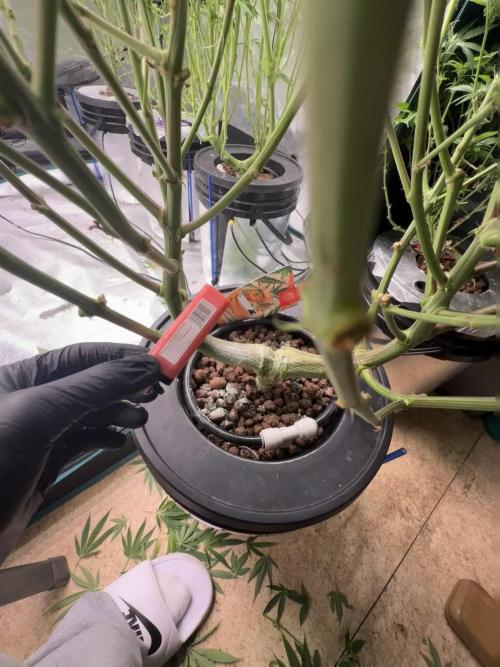
Inicio da 4° semana vamos no dia 20 com muita força, adicionei agora ao plano de alimentação rinho skin e sensizym para limpar as raizes para pernanecerem brancas e engrossar os ramos strain vigorosa 100% indica estou a gostar Como da pra ver no video houve um pequeno acidente a fazer lst, uni onde rasgou e pus papel vegetal a volta a segurar bem, vamos ver se ela cura.. continua com boa cor e nao se foi abaixo nem uma vez! Esperar uns dias, se nao curar vou cortar e fica um top acidental kkk Ja curou o pequeno corte que tinha no ramo principal, decidi exprimentar fazer um supercrop, é a primeira vez espero que tudo de certo.. Em geral esta ser uma boa semana nada a apontar nestas meninas, a ir muito bem! 😏😁
Likes
6
Share
@Lovemabud
Follow
The plant went crazy this week, easily doubled its size. Really happy with how its going, nice even canopy after the LST from weeks 2-4. I decided to fertilise this week with some left over Mills nutrients I had from a previous grow. Really think the plant appreciated it. Hopefully it shows me the appreciation with fat juicy buds.
Likes
39
Share
@J_diaz420
Follow
El día 27 de floración se vuelve a podar brotes bajos y se colocan tutores de varas 👍🍀