Likes
61
Share
@squalino
Follow
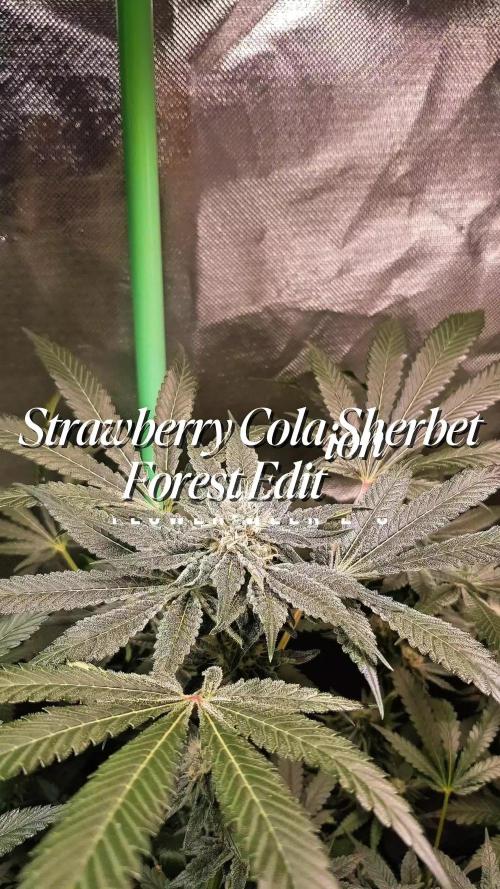
​📖 Chroniques de l'Oasis : La Marque Blanche ​đŸȘ Chapitre 7 : La RosĂ©e d'Étoiles du Rif ​Date : 8 Avril 2026 Âge : J+49 Taille : 66 cm (+4 cm depuis le 2 Avril) Le pĂ©riple continue. Je marche d'un pas lent et rĂ©gulier, car je sais que l'Oasis ne livre pas ses secrets en un jour. Il reste encore bien des lunes avant d'atteindre le cƓur du sanctuaire — au moins un mois de marche sous ce soleil du sanctuaire. Mais aujourd'hui, le paysage change. ​La Sultane, du haut de ses 66 cm, commence Ă  capturer la lumiĂšre d'une maniĂšre nouvelle. Ce n'est plus seulement du vert que je vois ; sous l'Ă©clat de la lampe, on dirait qu'une fine poudre d'Ă©toiles commence Ă  se dĂ©poser sur ses Ă©paules de velours. Cette poussiĂšres d'Étoiles scintillent, transformant chaque calice en un rĂ©ceptacle de dĂ©lice. Elle s'habille de cette rosĂ©e cĂ©leste, prĂ©parant sa parure pour la suite du voyage. â€‹đŸœïž Le Souffle de la VallĂ©e ​TempĂ©rature : 24,5°C jour / 21°C nuit (Le climat reste clĂ©ment et stable). ​HumiditĂ© : 50% (IdĂ©al pour laisser cette poudre d'Ă©toiles sĂ©cher et s'incruster). ​LumiĂšre : IntensitĂ© 75%, Ă  57 cm de la couronne (Le soleil se fait plus pressant, plus intime). ​ L'Élixir de vie (Nutrition) ​Le chemin demande de la force, et la Sultane puise dans ses rĂ©serves : le 06/04 ​Il y a 2 jours : 1 Litre d'eau (pH 6,3) avec 4 ml de PK 5-8. L'Ă©lixir de densitĂ© pour forger ses fleurs. le 08/04 ​Aujourd'hui : 3 ml d'Orgatrex. J'ai vu ses feuilles du bas jaunir, signe qu'elle sacrifie sa base pour nourrir son sommet. Cet apport d'azote est une main tendue pour l'aider Ă  garder sa vigueur sur la longue route qui nous reste. le 14/04 apport de l'Ă©lixir de vie 4ml pk 5-8 1 litres d'eau ph 6,3 📜 Anecdote du Rif : Les "Nuits de Cristal" ​Dans les montagnes du Rif, les cultivateurs les plus expĂ©rimentĂ©s ne regardent jamais leurs plantes en plein jour pour juger de la rĂ©sine. Ils attendent la nuit, munis d'une simple lampe Ă  huile ou Ă  la lueur de la lune. ​On appelle cela chercher le "Givre du Rif". Ils disent que si la plante "mange la lumiĂšre" le jour, elle "recrache des Ă©toiles" la nuit. Si, Ă  la lueur d'une flamme, la plante scintille comme si elle Ă©tait couverte de diamants pilĂ©s, alors ils savent que la recolte sera d'une puretĂ© exceptionnelle. Note du Nomade : "Le chemin est encore long, les horizons se succĂšdent. Mais sous cette pluie d'Ă©toiles, la marche devient plus lĂ©gĂšre. La Sultane n'a pas encore tout dit, et je serai lĂ  pour voir chaque grain de lumiĂšre se poser sur elle."
Likes
5
Share
@Sativa763
Follow
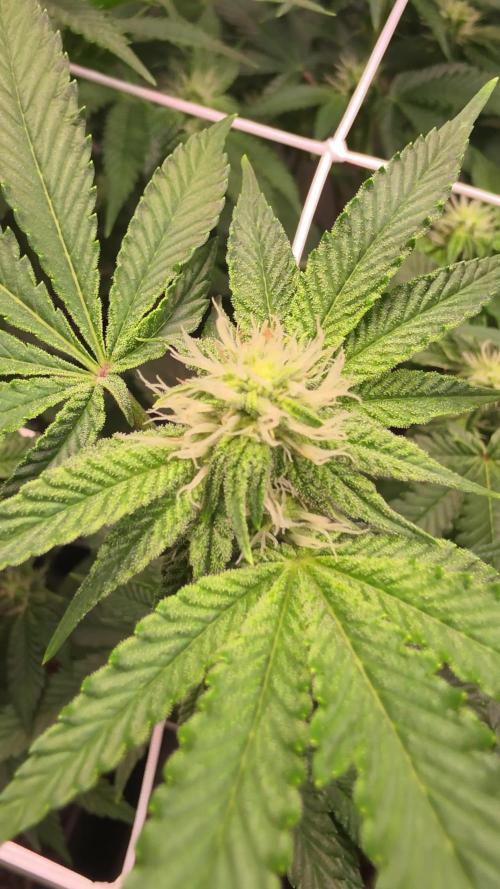
14 days after switch small stretch in the last few days. first pistils are starting to grow. taking of old big leaves in lower areas that receive no light or are overlaping to much, wonder if I should do some defoliation to the whole plant ? but looks good so will not do to much. will add some more photos later.
Processing
Likes
2
Share
@GrowXown
Follow
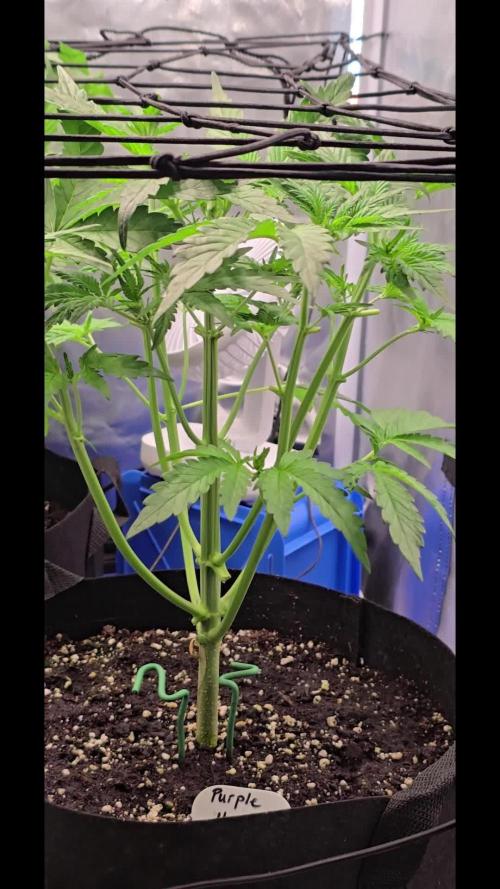
This seedling is finally showing signs of a growth spurt. Started with some feeds Bio Bizz Fish Mix is being mixed and trying to keep the Ph to 6.5-6.8
Likes
44
Share
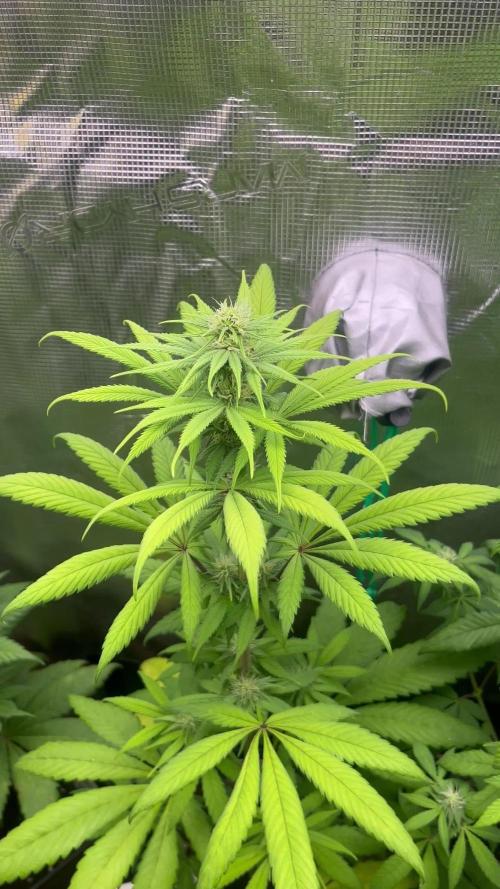
17 Oct 2021 Today is the 45th day of flower, and according to Humboldt Seed Company, my Ladies should be ready to harvest!! I took several trichome pics of each plant today to check and see if they are ready; and they are!! Awesome! I’ll upload all the pics today for your viewing pleasure. Week 15 officially kicked off yesterday, but today is the first entry of the flush in order to get my girls ready for harvest. Each of my plants received a gallon of water with properly adjusted pH. The initial pH for C1 was 6.9, C2 was 7.0, and C3 was 7.1. I added .2ml of pH DOWN to each gallon which adjusted all of them to 6.4. The TDS going in for C1 & C2 was 85 ppm, and C2 was 84 ppm. Runoff measurements were as follows: C1 - pH: 5.8, TDS: 1796 ppm. C2 - pH: 5.7, TDS: 2086 ppm. C3 - pH: 5.6, TDS: 1979 ppm. The tent temp was 82F, and humidity was 42%. My plants are doing great, and I’ll be flushing with fresh water for the remainder of the grow until it’s time to harvest in a week or two. Hopefully they’ll be done in time for the Diary of the Month contest, but in reality, I’ll just be glad when they’re done! Happy growing everyone!! 21 Oct 2021 I have been a lazy bastard lately. I wanted to water my plants two days ago, but didn’t. Then I wanted to water them yesterday, but again, I didn’t. There isn’t any reason really other than just plain laziness. Today I’ve decided to stop being lazy and to continue the flush of my lovely plants! Each plant is getting a gallon of properly pH’ed water and nothing else. The details for each gallon are as follows: Initial pH for C1 & C2 was 7.0, and C3 was 7.1. I added 0.2 ml of pH DOWN to each gallon which adjusted the pH of all 3 gallons to 6.3. That’s what they were given; a gallon of fresh water with a pH of 6.3. The TDS level going in was 58 ppm for C1, and 86 ppm for both C2 & C3. Runoff levels were as follows: C1 - pH 5.9, TDS 1234 ppm. C2 - pH 5.8, TDS 1326 ppm. C3 - pH 5.7, TDS 1182 ppm. The TDS level for all three plants fell significantly from the first flushing a few days ago. Hopefully the levels will continue to drop quickly so the harvest can commence! My ladies are all starting to show their age now by looking at their fan leaves. Some of them have begun that late flower stage dry out, but not many. The plants are still looking great and their buds are starting to weigh down some of the branches. I’m going to get a few more support sticks to keep them from being weighed down too much and breaking. I’d hate to lose anymore branches before I cut them off on purpose. We’re almost at the finish line fellow growers!! Best of luck to you all, and happy growing!
Likes
51
Share
đŸŽ©đŸŒˆđŸŹ NO TINY PURPLE PISTILS STICKING OUT LIK MY LAST RUN OF RUNTZ I DID BUT WE GONE SEE HOW THEY TURN OUT 👀 #BUDSHOOT
Likes
9
Share
@Roberts
Follow
Auto black Opium has had a rough start. She got her first lst today. New growth is looking good. Thanks again Divine Seeds, Spider Farmer, and Athena. đŸ€œđŸ»đŸ€›đŸ»đŸŒ±đŸŒ±đŸŒ± Thank you grow diaries community for the 👇likes👇, follows, comments, and subscriptions on my YouTube channel👇. â„ïžđŸŒ±đŸ» Happy Growing đŸŒ±đŸŒ±đŸŒ± https://youtube.com/channel/UCAhN7yRzWLpcaRHhMIQ7X4g.
Likes
6
Share
Likes
72
Share
_____ Week 12 | Day 85 - 92 | 5th week blooming 💼 ______ Day 85 🌞 oh yes... the smell when I open the tent becomes more and more intense. The buds also look more and more frosty... I think the extra side light pays off, where normally there is little or no light, the buds look just as frosty as the top colas. I hope you can see that well in the pictures... unfortunately I don't have much space to take good pictures of the pages... Only LPH 2 & 3 can be seen well from the front. Amnesia Haze: Amnesia, as expected, is much slower in development than LPH and Biscotti. Number 1 looks a bit wilder and scruffy than 2 and 3. Also from the development 2 and 3 are further and form already diligent trichomes Biscotti: both biscottis look identical, same pheno I think. development is very good and already looks very frosty Lemon Power Haze: LPH 2 & 3 look identical, with number 3 looking frostier and furthest along in terms of development. LPH number 1 looks totally different, the buds look quite small, and it also looks different. I have to think about something for watering. I love my plants but watering 8 pieces in such a small space is no fun hehe. At the moment I water them manually via a small water pump, the whole thing is very fast but I still have to dislocate myself every time to get to the back plants. this is not the yellow from the egg :D For the next grow, the plants have to be higher and I'm thinking of an automatic water supply. Actually, watering my plants calms me down when I do it with the watering can, but under different conditions...Possibly also fewer plants but more training. When the tent is empty again, I start to implement my plans. I'm also thinking about growing 1 or 2 plants in a DWC system. Whether I make something myself or buy something ready-made is not yet clear. If you have any tips, feel free to write to me. Day 86 🌞💧 - Today was feeding time again, as announced again after the 3rd day. I mixed a little more than 25 liters and provided each plant with ~3 liters Day 89 🌞💧 - Three days are over again and the plants are hungry again. 3 liter each Plant, small drain. ____________________________________________________________________________________________ Light - 12/12 h - 560 Watt - 2x 200 Watt Toplight - 4 x 40 Watt Lightbars PPFD - 900 - 1000 ”mol Temp. avg. - 22,1° Hum. avg. - 56,3 % RLH
Likes
17
Share
@Kirsten
Follow
14.1.25: I've been readjusting the LST. I just took all the pegs out and reshaped her. I got some new LST equipment in the mail today, have been glad to have more pegs. I got some clips too, but they don't seem to stay on 😕 I'm currently only using the pegs, I have some thicker soft wire, but I forgot I don't have pliers to cut it! Also I'm running very low on Biobizz nutrients, so that could be bad đŸ€ž 18.1.25: I have done another large defoliation on PPP1 and PPP2. Also, moderate defoliation on all other plants today. All LST ties and pegs are readjusted. I have turned up the light to 90%. Same distance of between 24-28 inches, depending on height of specific plant. I have increased the dosage of Biobizz Bio-Grow and Fish Mix to give an extra boost of Nitrogen as several plants were showing yellowing. They have responded very well to this. Unfortunately I ran out of my Biobizz nutrients and PH UP. I'm currently using Bicarbonate of Soda to increase the PH after the nutes PH comes out to about 4.1. Obviously, that uses a lot and I only had a 250ml bottle, which I used last run too. This run I have 9 plants. The only thing I'm worried about is the salt build up. Have you used it before? Or any other natural way to increase PH? Please let me know! I've also added Biobizz Fish Mix to help with the extra Nitrogen needed. Watering with 1ltr of dechlorinated water PH'd to 6.3 with the following nutrients;- ♡ 4ml Biobizz Fish Mix ♡ 4ml Biobizz Bio-Grow ♡ 2ml Biobizz Bloom ♡ 2ml Biobizz Top Max ♡ 2ml Cal-Mag ♡ 2ml Ecothrive Flourish. I water with this every 3 days. I did order some more Biobizz Bio-Grow and Bio Bloom. I found some at a reasonable price on Amazon. I still have about 800 ml of Biobizz Fish Mix left, too. It is fairly expensive this time as the plants are hungrier this run. I also got a new bag of Canna coco, which I may use to add a top dress with some dry amendments. Which hopefully will save some cash on the bottled nutrients and stretch out until the end of this run without having to buy anymore. I have purchased a funnel to pour the water. It is difficult, due to the shape of my LST, to water precisely. I have spilt it all over the tent several times 🙄 I've also ordered a 2 litre jug. Currently, I'm mixing water for 9 plants individually in a 1 litre jug. It's tideous. Hopefully, this will solve the issues. Cleaning the tent after watering every time isn't my idea of efficiency 😅 Thanks for checking out my diary 🍃 ✌
Likes
6
Share
The plant is still going strong, but I noticed that the colors have faded a bit. Not necessarily a bad thing, though—I realized the temperature difference between day and night was a bit too extreme, which probably caused unnecessary stress. It did look absolutely stunning with those colorful leaves, but stability is more important now.đŸŒ± Other than that, everything is going great! The buds are getting thicker, stinkier, and completely covered in frost.😍 The dominant smell is still pink pepper, which is really interesting. Sometimes I get a hint of something sweet, but I’m not sure yet if it will develop more over time.💚
Likes
10
Share
Die Umstellung auf 12/12 ist erfolgt, somit ist der Stretch eingeleitet. Jetzt haben sie gut 3 Wochen Zeit, um zuzuwuchern, bevor sie dann endgĂŒltig defoliert und gelollipoppt werden. Mal schauen, was sie an Höhe noch so zulegen...
Likes
7
Share
@JandM
Follow
Not much to say this week they only grew two inches last week so the stretch is over now. One of them is getting really frosty the other not so much but it is a little behind schedule since it sprouted crooked and took a little over a week to fix itself.
Processing
Likes
1
Share
Likes
52
Share
Lacewings seemed to have mostly killed themselves by flying into hot light fixtures. I may have left the UV on which was smart of me :) Done very little to combat if anything but make a sea of carcasses, on the bright side its good nutrition for the soil. Made a concoction of ethanol 70%, equal parts water, and cayenne pepper with a couple of squirts of dish soap. Took around an hour of good scrubbing the entire canopy. Worked a lot more effectively and way cheaper. Scorched earth right now, but it seems to have wiped them out almost entirely very pleased. Attempted a "Fudge I Missed" for the topping. So just time to wait and see how it goes. Question? If I attached a plant to two separate pots but it was connected by rootzone, one has a pH of 7.5 ish the other has 4.5. Would the Intelligence of the plant able to dictate each pot separately to uptake the nutrients best suited to pH or would it still try to draw nitrogen from a pot with a pH where nitrogen struggles to uptake? Food for stoner thought experiments! Another was on my mind. What happens when a plant gets too much light? Well, it burns and curls up leaves. That's the heat radiation, let's remove excess heat, now what? I've always read it's just bad, or not good, but when I look for an explanation on a deeper level it's just bad and you shouldn't do it. So I did. How much can a cannabis plant absorb, 40 moles in a day, ok I'll give it 60 moles. 80 nothing bad ever happened. The answer, finally. Oh great........more questions........ Reactive oxygen species (ROS) are molecules capable of independent existence, containing at least one oxygen atom and one or more unpaired electrons. "Sunlight is the essential source of energy for most photosynthetic organisms, yet sunlight in excess of the organism’s photosynthetic capacity can generate reactive oxygen species (ROS) that lead to cellular damage. To avoid damage, plants respond to high light (HL) by activating photophysical pathways that safely convert excess energy to heat, which is known as nonphotochemical quenching (NPQ) (Rochaix, 2014). While NPQ allows for healthy growth, it also limits the overall photosynthetic efficiency under many conditions. If NPQ were optimized for biomass, yields would improve dramatically, potentially by up to 30% (Kromdijk et al., 2016; Zhu et al., 2010). However, critical information to guide optimization is still lacking, including the molecular origin of NPQ and the mechanism of regulation." What I found most interesting was research pointing out that pH is linked to this defense mechanism. The organism can better facilitate "quenching" when oversaturated with light in a low pH. Now I Know during photosynthesis plants naturally produce exudates (chemicals that are secreted through their roots). Do they have the ability to alter pH themselves using these excretions? Or is that done by the beneficial bacteria? If I can prevent reactive oxygen species from causing damage by "too much light". The extra water needed to keep this level of burn cooled though, I must learn to crawl before I can run. Reactive oxygen species (ROS) are key signaling molecules that enable cells to rapidly respond to different stimuli. In plants, ROS plays a crucial role in abiotic and biotic stress sensing, integration of different environmental signals, and activation of stress-response networks, thus contributing to the establishment of defense mechanisms and plant resilience. Recent advances in the study of ROS signaling in plants include the identification of ROS receptors and key regulatory hubs that connect ROS signaling with other important stress-response signal transduction pathways and hormones, as well as new roles for ROS in organelle-to-organelle and cell-to-cell signaling. Our understanding of how ROS are regulated in cells by balancing production, scavenging, and transport has also increased. In this Review, we discuss these promising developments and how they might be used to increase plant resilience to environmental stress. Temperature stress is one of the major abiotic stresses that adversely affect agricultural productivity worldwide. Temperatures beyond a plant's physiological optimum can trigger significant physiological and biochemical perturbations, reducing plant growth and tolerance to stress. Improving a plant's tolerance to these temperature fluctuations requires a deep understanding of its responses to environmental change. To adapt to temperature fluctuations, plants tailor their acclimatory signal transduction events, specifically, cellular redox state, that are governed by plant hormones, reactive oxygen species (ROS) regulatory systems, and other molecular components. The role of ROS in plants as important signaling molecules during stress acclimation has recently been established. Here, hormone-triggered ROS produced by NADPH oxidases, feedback regulation, and integrated signaling events during temperature stress activate stress-response pathways and induce acclimation or defense mechanisms. At the other extreme, excess ROS accumulation, following temperature-induced oxidative stress, can have negative consequences on plant growth and stress acclimation. The excessive ROS is regulated by the ROS scavenging system, which subsequently promotes plant tolerance. All these signaling events, including crosstalk between hormones and ROS, modify the plant's transcriptomic, metabolomic, and biochemical states and promote plant acclimation, tolerance, and survival. Here, we provide a comprehensive review of the ROS, hormones, and their joint role in shaping a plant's responses to high and low temperatures, and we conclude by outlining hormone/ROS-regulated plant-responsive strategies for developing stress-tolerant crops to combat temperature changes. Onward upward for now. Next! Adenosine triphosphate (ATP) is an energy-carrying molecule known as "the energy currency of life" or "the fuel of life," because it's the universal energy source for all living cells.1 Every living organism consists of cells that rely on ATP for their energy needs. ATP is made by converting the food we eat into energy. It's an essential building block for all life forms. Without ATP, cells wouldn't have the fuel or power to perform functions necessary to stay alive, and they would eventually die. All forms of life rely on ATP to do the things they must do to survive.2 ATP is made of a nitrogen base (adenine) and a sugar molecule (ribose), which create adenosine, plus three phosphate molecules. If adenosine only has one phosphate molecule, it’s called adenosine monophosphate (AMP). If it has two phosphates, it’s called adenosine diphosphate (ADP). Although adenosine is a fundamental part of ATP, when it comes to providing energy to a cell and fueling cellular processes, the phosphate molecules are what really matter. The most energy-loaded composition for adenosine is ATP, which has three phosphates.3 ATP was first discovered in the 1920s. In 1929, Karl Lohmann—a German chemist studying muscle contractions—isolated what we now call adenosine triphosphate in a laboratory. At the time, Lohmann called ATP by a different name. It wasn't until a decade later, in 1939, that Nobel Prize–-winner Fritz Lipmann established that ATP is the universal carrier of energy in all living cells and coined the term "energy-rich phosphate bonds."45 Lipmann focused on phosphate bonds as the key to ATP being the universal energy source for all living cells, because adenosine triphosphate releases energy when one of its three phosphate bonds breaks off to form ADP. ATP is a high-energy molecule with three phosphate bonds; ADP is low-energy with only two phosphate bonds. The Twos and Threes of ATP and ADP Adenosine triphosphate (ATP) becomes adenosine diphosphate (ADP) when one of its three phosphate molecules breaks free and releases energy (“tri” means “three,” while “di” means “two”). Conversely, ADP becomes ATP when a phosphate molecule is added. As part of an ongoing energy cycle, ADP is constantly recycled back into ATP.3 Much like a rechargeable battery with a fluctuating state of charge, ATP represents a fully charged battery, and ADP represents a "low-power mode." Every time a fully charged ATP molecule loses a phosphate bond, it becomes ADP; energy is released via the process of ATP becoming ADP. On the flip side, when a phosphate bond is added, ADP becomes ATP. When ADP becomes ATP, what was previously a low-charged energy adenosine molecule (ADP) becomes fully charged ATP. This energy-creation and energy-depletion cycle happens time and time again, much like your smartphone battery can be recharged countless times during its lifespan. The human body uses molecules held in the fats, proteins, and carbohydrates we eat or drink as sources of energy to make ATP. This happens through a process called hydrolysis . After food is digested, it's synthesized into glucose, which is a form of sugar. Glucose is the main source of fuel that our cells' mitochondria use to convert caloric energy from food into ATP, which is an energy form that can be used by cells. ATP is made via a process called cellular respiration that occurs in the mitochondria of a cell. Mitochondria are tiny subunits within a cell that specialize in extracting energy from the foods we eat and converting it into ATP. Mitochondria can convert glucose into ATP via two different types of cellular respiration: Aerobic (with oxygen) Anaerobic (without oxygen) Aerobic cellular respiration transforms glucose into ATP in a three-step process, as follows: Step 1: Glycolysis Step 2: The Krebs cycle (also called the citric acid cycle) Step 3: Electron transport chain During glycolysis, glucose (i.e., sugar) from food sources is broken down into pyruvate molecules. This is followed by the Krebs cycle, which is an aerobic process that uses oxygen to finish breaking down sugar and harnesses energy into electron carriers that fuel the synthesis of ATP. Lastly, the electron transport chain (ETC) pumps positively charged protons that drive ATP production throughout the mitochondria’s inner membrane.2 ATP can also be produced without oxygen (i.e., anaerobic), which is something plants, algae, and some bacteria do by converting the energy held in sunlight into energy that can be used by a cell via photosynthesis. Anaerobic exercise means that your body is working out "without oxygen." Anaerobic glycolysis occurs in human cells when there isn't enough oxygen available during an anaerobic workout. If no oxygen is present during cellular respiration, pyruvate can't enter the Krebs cycle and is oxidized into lactic acid. In the absence of oxygen, lactic acid fermentation makes ATP anaerobically. The burning sensation you feel in your muscles when you're huffing and puffing during anaerobic high-intensity interval training (HIIT) that maxes out your aerobic capacity or during a strenuous weight-lifting workout is lactic acid, which is used to make ATP via anaerobic glycolysis. During aerobic exercise, mitochondria have enough oxygen to make ATP aerobically. However, when you're out of breath and your cells don’t have enough oxygen to perform cellular respiration aerobically, the process can still happen anaerobically, but it creates a temporary burning sensation in your skeletal muscles. Why ATP Is So Important? ATP is essential for life and makes it possible for us to do the things we do. Without ATP, cells wouldn't be able to use the energy held in food to fuel cellular processes, and an organism couldn't stay alive. As a real-world example, when a car runs out of gas and is parked on the side of the road, the only thing that will make the car drivable again is putting some gasoline back in the tank. For all living cells, ATP is like the gas in a car's fuel tank. Without ATP, cells wouldn't have a source of usable energy, and the organism would die. Eating a well-balanced diet and staying hydrated should give your body all the resources it needs to produce plenty of ATP. Although some athletes may slightly improve their performance by taking supplements or ergonomic aids designed to increase ATP production, it's debatable that oral adenosine triphosphate supplementation actually increases energy. An average cell in the human body uses about 10 million ATP molecules per second and can recycle all of its ATP in less than a minute. Over 24 hours, the human body turns over its weight in ATP. You can last weeks without food. You can last days without water. You can last minutes without oxygen. You can last 16 seconds at most without ATP. Food amounts to one-third of ATP production within the human body.
Likes
30
Share
So I transplanted her to a 5 gal pot. Did some defoliation and I am going to wait a week to flip her. Give it some time to recover. This lady has been a runt from the get go—- sticking with it, but I have so many plants that I started after that just just monsters
. Wish I would have done a couple more seeds of this
 âœŒïžđŸ’šđŸŒżđŸ’š
Processing
Likes
2
Share