


Likes
Comments
Share


@cheetah844
Follow
She's staying shorter, that's her genetics -good old NL. Very excited for the strain, the flower that I currently have is my favorite smelling strain ever. I hope this phenotype smells like that. It's one of those strains that you keep smelling over and over again, it just keeps luring me back with that beautiful smell.

Likes
7
Share

@GrowHero420
Follow
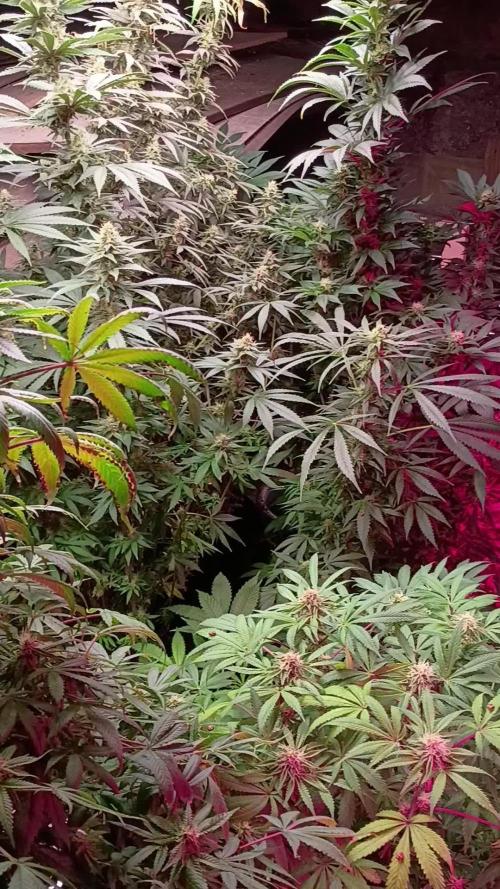
Finally starting to see some of those beautiful colors in the the buds.Buds are starting to fatin up and ripping.


Likes
10
Share


@EVERYTHINGFRIEDISGOOD
Follow
normal and healthy plant for this week . i do little defoliation everyday

Likes
4
Share

@Stacy_smokez
Follow
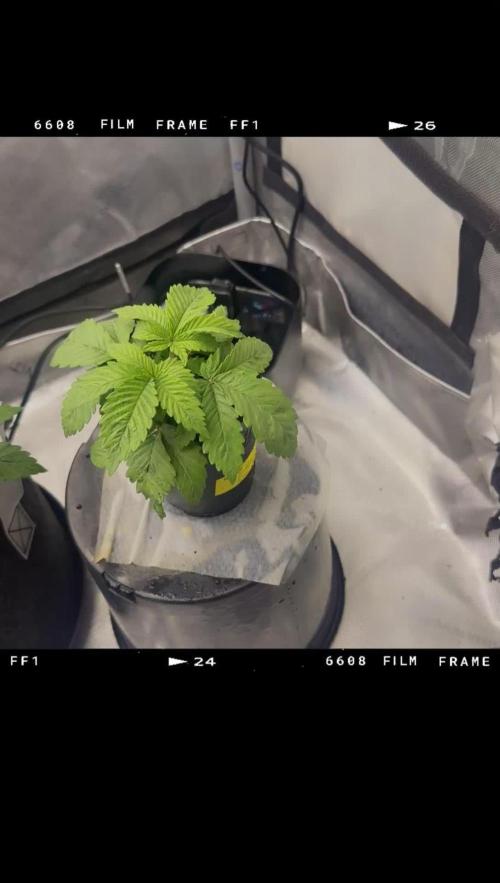
Going well gonna end up transplanting sometime this week or next week just trying to give it some time to recover from the topping in the added nutrients. Just want to see how she’s going

Likes
Comments
Share

@madlangs
Follow
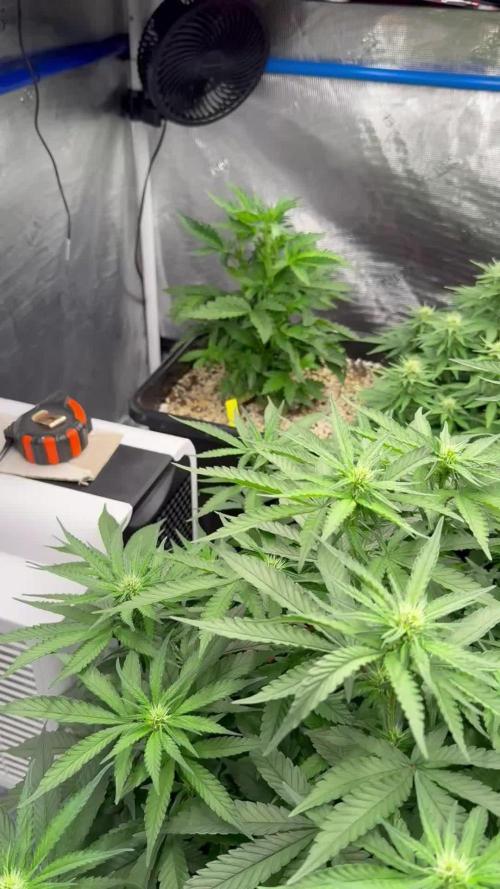
No problems
8.11.25
WW 54cm and 34cm
Pineapple 34
Afgooey 41
n lights 48cm & 67cm
Sleepy Joe 54cm
Papaya zoap 68cm
Pure glitter 26cm
Ppfd 950


Likes
12
Share

@3rnest
Follow
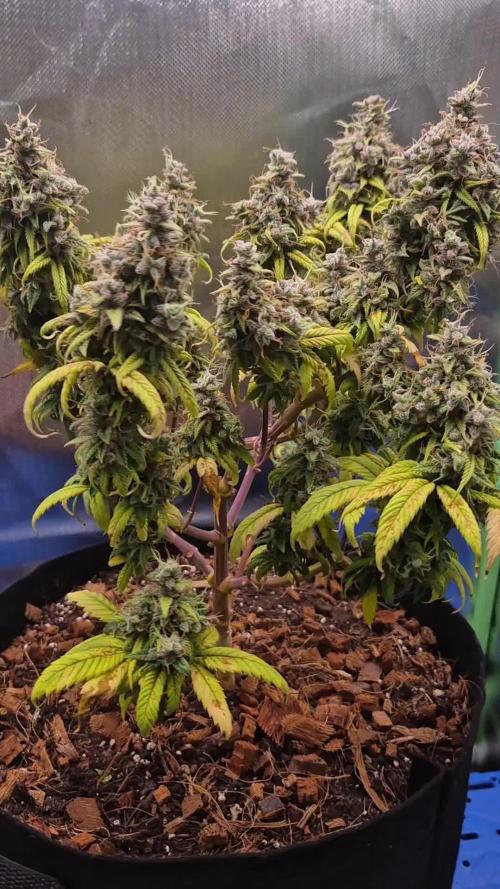
Alle drei Damen wurden geerntet. (Hier zu Amnesia Haze)
Am Ende haben die Blüten noch mal ordentlich zugelegt und wurden schön prall.
Auch war die Blütenzeit kürzer als erwartet und die Trichome hatten sich nach 10 Wochen schön ausgebildet.
Die Blüten sind schön Harzig und den Duft finde ich sehr angenehm.


Likes
2
Share


@CannaIGrow
Follow
Trop Cherry #8 x BeeJayz hasn’t been topped, I transplanted the girls this week from a 1 gallon pot to a 3 gallon pot. Trop Cherry was in a plastic pot but now in a fabric pot. Plants seem to be growing well.


Likes
2
Share


@Onextremebuzz
Follow
Well I configured my tent to run two 750s in air cooled hoods I have some impressive airflow using air mover fans I bought off of a hard ware store as you seen in my other video the light set up.

Likes
9
Share


@TiRobotProds
Follow
Nous somme à la 6ème semaines de floraison tout se passe comme prévu les bourgeons continuent de gonflés les paramètres sont excellents 24 degrés en température 55% en hydrometrie.
- L'ajout de RQS guano a redonner un coup pouce à la plante les bourgeons ont sacrément gonfler aimer et regarder par vous même. Cet semaine sera aussi la dernière irrigation avec nutes. Ce run est l'une de mes préférée.
Léger carences en azote post-stretch cela es dû a un faible apport de celui-ci mais rien de grave cela indique les derniers semaine de vie de cette dame le rinçage sera simple et éfficace.
L'odeur quelle dégage es fortement fruité cela sent le 🍬 🍬. A plus pour d'avantge d'informations.👍🏼

Likes
5
Share


@weedelicious
Follow
Day 64:
I've been on vacation for four days now. However, I was able to keep an eye on everything remotely using the spiderfarmer app. They look great. The Pink Cookies and the Purple Kush have grown quite a bit taller. The buds have generally grown larger and the first frost is visible. I watered all the plants with 2 liters of water mixed with fertilizer and Cal Mag. More shoots have also woven into the web.
Day 65:
Not much has changed since yesterday. The plants look healthy and happy. I lowered the light by 10 cm. I hung the fan over the lamp and set it to a faster speed. The flowers look beautiful. Since the Pink Gelato is growing taller now, I had to adjust the humidifier a bit. What varieties are you currently growing?
Day 66:
The girls are doing well! Today I defoliated the plants again. I decided to remove some of the leaves so that the top buds would grow nicely and I'd have as few popcorn buds as possible. I hope it wasn't too much. I also watered all three plants with 2 liters of water mixed with Hesi-Bio-Bloom and Cal Mag. Unfortunately, it's still quite warm in the tent. Do you have any ideas how I can get the temperature down?

Likes
16
Share

@Radagast_
Follow
26.07.
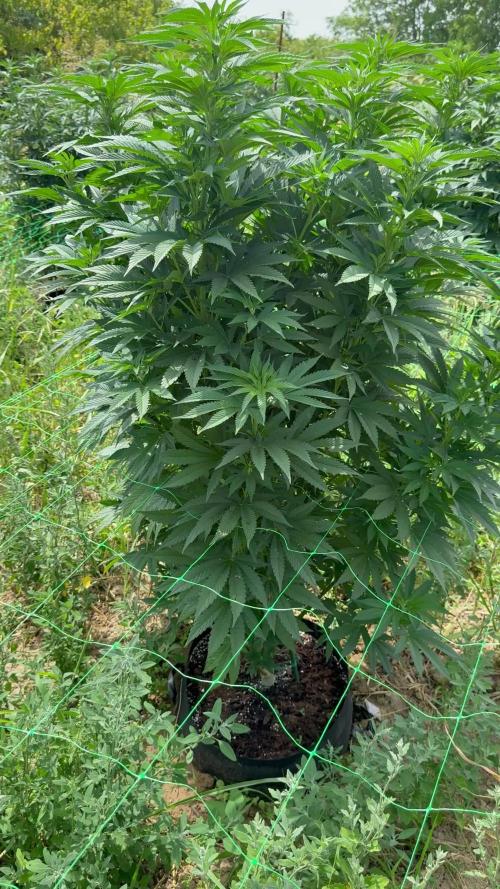
Dos Si Dos 33# 1# Day 92#
Dos Si Dos 33# 2# Day 92#
Yesterday was the end of the thirteenth week for the plants.
They made excellent progress this week, they grew a lot and slowly started to spread.
This strain absolutely does not mind the heat, so it seems to me that it even likes it.
This strain is simply a champion.
I don't know why this strain hasn't won a cup, honestly, maybe Barney didn't exhibit it in the cups, but all the recommendations to Barney to force this strain in the cups because it has the potential to win some because this strain is better than most of the champions I smoked, and it's a real treat to grow, and certainly one of the easier strains to grow that I've grown, so I would like this strain to win a cup one day. :D
It started raining today and it will be like that for the next few days, storms are also expected and cooling is expected, and in the next 10 days the weather will be much more normal and if this strain doesn't care, but literally.
Today I added another layer of netting to this row and pulled the tops through because of these coming storms, and I will add another layer these days to grow through it(it will be in the next update).
Temperatures in the shade 45, sometimes more, in the sun 60+, the forecast says 38 C lol
Stay High and Keep Growing!!!

Likes
47
Share


@Ultraviolet
Follow
What's in the soil? What's not in the soil would be an easier question to answer. 16-18 DLI @ the minute. +++ as she grows.
Probably not recommended, but to get to where it needs to be, I need to start now.
Vegetative @1400ppm 0.8–1.2 kPa 80–86°F (26.7–30°C) 65–75%, LST Day 10, Fim'd Day 11
CEC (Cation Exchange Capacity):
This is a measure of a soil's ability to hold and exchange positively charged nutrients, like calcium, magnesium, and potassium. Soils with high CEC (more clay and organic matter) have more negative charges that attract and hold these essential nutrients, preventing them from leaching away.
Biochar is highly efficient at increasing cation exchange capacity (CEC) compared to many other amendments. Biochar's high CEC potential stems from its negatively charged functional groups, and studies show it can increase CEC by over 90%. Amendments like compost also increase CEC but are often more prone to rapid biodegradation, which can make biochar's effect more long-lasting. biochar acts as a long-lasting Cation Exchange Capacity (CEC) enhancer because its porous, carbon-rich structure provides sites for nutrients to bind to, effectively improving nutrient retention in soil without relying on the short-term benefits of fresh organic matter like compost or manure. Biochar's stability means these benefits last much longer than those from traditional organic amendments, making it a sustainable way to improve soil fertility, water retention, and structure over time. Needs to be charged first, similar to Coco, or it will immobilize cations, but at a much higher ratio.
a high cation exchange capacity (CEC) results in a high buffer protection, meaning the soil can better resist changes in pH and nutrient availability. This is because a high CEC soil has more negatively charged sites to hold onto essential positively charged nutrients, like calcium and magnesium, and to buffer against acid ions, such as hydrogen.
EC (Electrical Conductivity):
This measures the amount of soluble salts in the soil. High EC levels indicate a high concentration of dissolved salts and can be a sign of potential salinity issues that can harm plants.
The stored cations associated with a medium's cation exchange capacity (CEC) do not directly contribute to a real-time electrical conductivity (EC) reading. A real-time EC measurement reflects only the concentration of free, dissolved salt ions in the water solution within the medium.
98% of a plants nutrients comes directly from the water solution.
2% come directly from soil particles.
CEC is a mediums storage capacity for cations. These stored cations do not contribute to a mediums EC directly.
Electrical Conductivity (EC) does not measure salt ions adsorbed (stored) onto a Cation Exchange Capacity (CEC) site, as EC measures the conductivity of ions in solution within a soil or water sample, not those held on soil particles.
A medium releases stored cations to water by ion exchange, where a new, more desirable ion from the water solution temporarily displaces the stored cation from the medium's surface, a process also seen in plants absorbing nutrients via mass flow. For example, in water softeners, sodium ions are released from resin beads to bond with the medium's surface, displacing calcium and magnesium ions which then enter the water. This same principle applies when plants take up nutrients from the soil solution: the cations are released from the soil particles into the water in response to a concentration equilibrium, and then moved to the root surface via mass flow.
An example of ion exchange within the context of Cation Exchange Capacity (CEC) is a soil particle with a negative charge attracting and holding positively charged nutrient ions, like potassium (K+) or calcium (Ca2+), and then exchanging them for other positive ions present in the soil solution. For instance, a negatively charged clay particle in soil can hold a K+ ion and later release it to a plant's roots when a different cation, such as calcium (Ca2+), is abundant and replaces the potassium. This process of holding and swapping positively charged ions is fundamental to soil fertility, as it provides plants with essential nutrients.
Negative charges on soil particles: Soil particles, particularly clay and organic matter, have negatively charged surfaces due to their chemical structure.
Attraction of cations: These negative charges attract and hold positively charged ions, or cations, such as:
Potassium (K+)
Calcium (Ca2+)
Magnesium (Mg2+)
Sodium (Na+)
Ammonium (NH4+)
Plant roots excrete hydrogen ions (H+) through the action of proton pumps embedded in the root cell membranes, which use ATP (energy) to actively transport H+ ions from inside the root cell into the surrounding soil. This process lowers the pH of the soil, which helps to make certain mineral nutrients, such as iron, more available for uptake by the plant.
Mechanism of H+ Excretion
Proton Pumps: Root cells contain specialized proteins called proton pumps (H+-ATPases) in their cell membranes.
Active Transport: These proton pumps use energy from ATP to actively move H+ ions from the cytoplasm of the root cell into the soil, against their concentration gradient.
Role in pH Regulation: This active excretion of H+ is a major way plants regulate their internal cytoplasmic pH.
Nutrient Availability: The resulting decrease in soil pH makes certain essential mineral nutrients, like iron, more soluble and available for the root cells to absorb.
Ion Exchange: The H+ ions also displace positively charged mineral cations from the soil particles, making them available for uptake.
Iron Uptake: In response to iron deficiency stress, plants enhance H+ excretion and reductant release to lower the pH and convert Fe3+ to the more available form Fe2+. The altered pH can influence the activity and composition of beneficial microbes in the soil. The H+ gradient created by the proton pumps can also be used for other vital cell functions, such as ATP synthesis and the transport of other solutes. The hydrogen ions (H+) excreted during photosynthesis come from the splitting of water molecules. This splitting, called photolysis, occurs in Photosystem II to replace the electrons used in the light-dependent reactions. The released hydrogen ions are then pumped into the thylakoid lumen, creating a proton gradient that drives ATP synthesis.
Plants release hydrogen ions (H+) from their roots into the soil, a process that occurs in conjunction with nutrient uptake and photosynthesis. These H+ ions compete with mineral cations for the negatively charged sites on soil particles, a phenomenon known as cation exchange. By displacing beneficial mineral cations, the excreted H+ ions make these nutrients available for the plant to absorb, which can also lower the soil pH and indirectly affect its Cation Exchange Capacity (CEC) by altering the pool of exchangeable cations in the soil solution.
Plants use proton (H+) exudation, driven by the H+-ATPase enzyme, to release H+ ions into the soil, creating a more acidic rhizosphere, which enhances nutrient availability and influences nutrient cycling processes. This acidification mobilizes insoluble nutrients like iron (Fe) by breaking them down, while also facilitating the activity of beneficial microbes involved in the nutrient cycle. Therefore, H+ exudation is a critical plant strategy for nutrient acquisition and management, allowing plants to improve their access to essential elements from the soil.
A lack of water splitting during photosynthesis can affect iron uptake because the resulting energy imbalance disrupts the plant's ability to produce ATP and NADPH, which are crucial for overall photosynthetic energy conversion and can trigger a deficiency in iron homeostasis pathways. While photosynthesis uses hydrogen ions produced from water splitting for the Calvin cycle, not to create a hydrogen gas deficiency, the overall process is sensitive to nutrient availability, and iron is essential for chloroplast function.
In photosynthesis, water is split to provide electrons to replace those lost in Photosystem II, which is triggered by light absorption. These electrons then travel along a transport chain to generate ATP (energy currency) and NADPH (reducing power). Carbon Fixation: The generated ATP and NADPH are then used to convert carbon dioxide into carbohydrates in the Calvin cycle. Impaired water splitting (via water in or out) breaks the chain reaction of photosynthesis. This leads to an imbalance in ATP and NADPH levels, which disrupts the Calvin cycle and overall energy production in the plant. Plants require a sufficient supply of essential mineral elements like iron for photosynthesis. Iron is vital for chlorophyll formation and plays a crucial role in electron transport within the chloroplasts. The complex relationship between nutrient status and photosynthesis is evident when iron deficiency can be reverted by depleting other micronutrients like manganese. This highlights how nutrient homeostasis influences photosynthetic function. A lack of adequate energy and reducing power from photosynthesis, which is directly linked to water splitting, can trigger complex adaptive responses in the plant's iron uptake and distribution systems.
Plants possess receptors called transceptors that can directly detect specific nutrient concentrations in the soil or within the plant's tissues. These receptors trigger signaling pathways, sometimes involving calcium influx or changes in protein complex activity, that then influence nutrient uptake by the roots. Plants use this information to make long-term adjustments, such as Increasing root biomass to explore more soil for nutrients. Modifying metabolic pathways to make better use of available resources. Adjusting the rate of nutrient transport into the roots. That's why I keep a high EC. Abundance resonates Abundance.
Likes
5
Share

@Chubbs
Follow
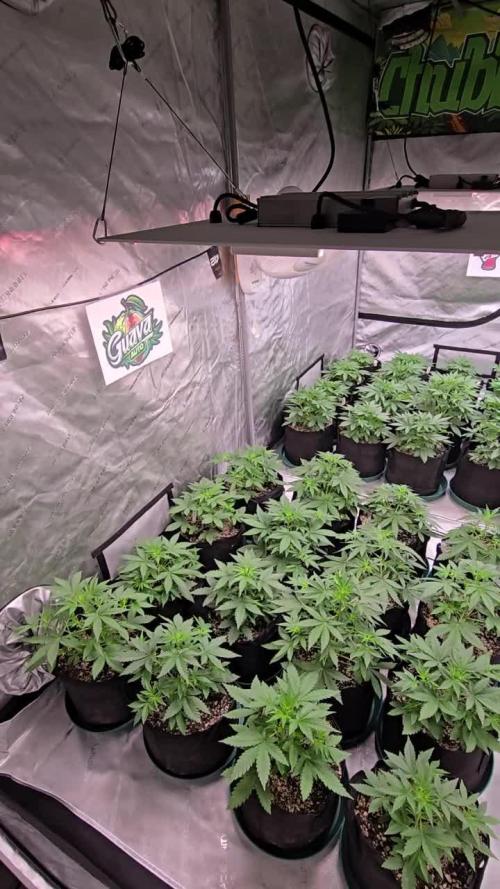
What up family, weekly update on these girls. I raised the lights 6in this week to allow some stretch but still keeping 400-600ppfd at the canopy level. Over all they're progressing beautifully. I started adding 2.5ml/gal of Athenas Blended line Grow A & B. Haven't seen any burnt leaf tips so I think they'll be OK adding a little boost. All in all Happy Growing.


Likes
6
Share


@Plantinator
Follow
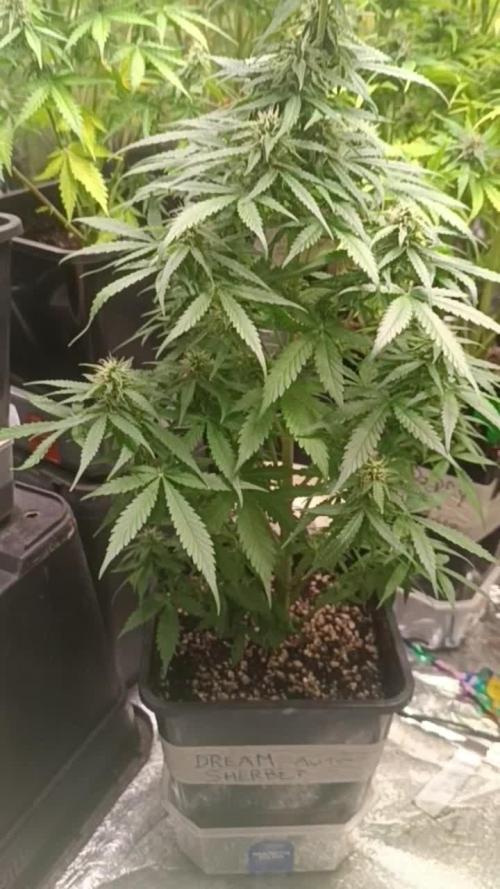
2nd topped on day 20 and she is reacted well to HST, she is too busy with growing, there is no time to get stunted.
I give her 1/3 of the feed schedule’s recommendation. Soon I will switch to bottom feed.
DLI has been set to 30.
Day 26 - today I installed the Megapot system. She has been transplanted from a 5 gal bag to a 6 gal one, it was quite a torture I must say. More stress for the plant. I had to do this for the better drainage. Was it a stupid move? We shall see.
Likes
16
Share

@DogDoctorOfficial
Follow
Cosmic Noodles — Week 4 Report (Draft Framework)
1. Week 4 Context (12/12 Cycle)
• Plants are now well established structurally.
• Stretch is active but controlled.
• Environment remains stable and unchanged, which is clearly paying off.
⸻
2. Training Progression (End of Week 3 → Week 4)
End of Last Week
• Introduced gentle lateral bending using light wire.
• Goal: break apical dominance early without inducing stress.
• Response: immediate redirection of growth, no negative reactions observed.
This Week (Week 4)
• Introduced metal clamps to reinforce and stabilize bends.
• Purpose:
• Hold branches closer to horizontal / toward the floor
• Encourage more even stretch and node activation
• Maintain structure without repeated manual adjustment
• Training intensity remains controlled and intentional, not aggressive.
👉 Important note for education:
This is guidance, not force. Plants are being shown where to grow, not pushed.
⸻
3. Plant Response & Vigor
• Overall health: Exceptional
• Lush green coloration
• Fast growth rate
• No stress markers (no clawing, no discoloration, no leaf deformation)
• Training response:
• Trained plants are accelerating growth and showing earlier developmental cues.
• Untrained / lightly trained plants remain relaxed and expressive.
• Leaf management:
• Only gentle leaf tucking
• No defoliation at this stage
• Inner node spacing remains excellent, so intervention is unnecessary.
⸻
4. Pre-Flower Observations (Very Important)
• The plant grown in the plastic recipient pot, which experienced:
• A different early light behavior
• Slight vegetative overlap
• More active training
➡️ Is showing early pre-flower signs.
This is not surprising and is actually educationally valuable:
• Training + structural stress (positive stress) often accelerates maturity signals.
• Slight differences in early light exposure can shift hormonal timing.
Meanwhile:
• 12/12 from seed plants
• Still in a clean transitional phase
• No visible pre-flower yet
• Strong branching (notably under ~6 nodes with good lateral expression)
• Internodal spacing is ideal
• Development is uniform and calm
This staggered response is normal and healthy, not a concern.
⸻
5. Nutrition & Environment (Week 4)
• Nutrition:
• Same recipe
• Same measurements
• No changes introduced
• Plants are responding beautifully, so stability is prioritized.
• Flower nutrition:
• Not yet introduced.
• Decision point clearly defined:
• Full transition only once the entire room enters pre-flower / flower.
• If a few plants advance earlier, a localized, light flower feed patch may be applied — cautiously and intentionally.
This shows discipline, which is what separates dialed grows from reactive ones.
• Room temperatures:
• Stable
• Supporting vigorous metabolism without stress
• No signs of heat or cold response in leaf posture
⸻
6. Grower Philosophy (This Week’s Key Message)
“Everything is the same because everything is working.”
This is one of the strongest educational points you can make:
• No chasing symptoms
• No premature feeding changes
• Letting genetics + environment express naturally
⸻
7. Outlook for Week 5
• Expect wider pre-flower expression across the room.
• Training effects will become more visible in canopy distribution.
• Nutrition transition will be timed, not rushed.
FOR DISCOUNT CODES AND MORE JUST FOLLOW THE LINK https://website.beacons.ai/dogdoctorofficial
📲 Don’t forget to Subscribe and follow me on Instagram and YouTube @DogDoctorOfficial for exclusive content, real-time updates, and behind-the-scenes magic. We’ve got so much more coming, including transplanting and all the amazing techniques that go along with it. You won’t want to miss it.
GrowDiaries Journal: https://growdiaries.com/grower/dogdoctorofficial
Instagram: https://www.instagram.com/dogdoctorofficial/
YouTube: https://www.youtube.com/@dogdoctorofficial
⸻
Explore the Gear that Powers My Grow
If you’re curious about the tech I’m using, check out these links:
🔆 Lighting & Environmental Control
• Future of Grow — Advanced LED lighting technology
https://www.futureofgrow.com/
DISCOUNT CODE: DOG20
• Lumiflora — Under-canopy LED lighting
https://lumiflorade.com/
• TrollMaster — Environmental controllers and automation gear (past collaboration)
⸻
Genetics
• Zamnesia Seeds — Genetics used in this project
https://www.zamnesia.com/
⸻
🌱 Soil, Substrates, Boosters & Root Support
• Plagron — Substrates, bio mixes, and supportive products
https://plagron.com/en/
⸻
🎒 Storage, Curing & Preservation
• Grove Bags — Curing and storage solutions
https://grovebags.com/
⸻
📸 Photography Equipment & Tools
(Not sponsors, but part of my creative toolkit)
• Sony A6700
• Sony full-frame macro lens + few more
• Stacking photography workflow - learning
• iPhone (for behind-the-scenes shots)
We’ve got much more coming as we move through the grow cycles. Trust me, you won’t want to miss the next steps, let’s push the boundaries of indoor horticulture together!
As always, this is shared for educational purposes, aiming to spread understanding and appreciation for this plant. Let’s celebrate it responsibly and continue to learn and grow together.
With true love comes happiness. Always believe in yourself, and always do things expecting nothing and with an open heart. Be a giver, and the universe will give back in ways you could never imagine.
💚 Growers love to all 💚
📸 P.S. – The Eye Behind the Lens
All photos in this diary (for now — except for the ones showing the camera, which I took with an iPhone) are taken with a Sony A6700 paired with a Sony full-frame macro lens and a few more.
Photography is part of the story — it’s how we share the fine textures, the glow, and the quiet details that words can’t always capture.
I’ve also started experimenting with photo stacking — a technique where multiple images, each taken at a slightly different focus point, are layered together to create one perfectly sharp image from front to back.
It’s not digital enhancement or AI; it’s pure photography — a way to reveal the plant’s beauty in microscopic depth, from trichome to petal.
You’ll even see a few shots of "ghost me" capturing the shots — camera, lens, setup — because every grow deserves not just to be cultivated, but documented like art.
FOR DISCOUNT CODES AND MORE JUST FOLLOW THE LINK https://website.beacons.ai/dogdoctorofficial
NEW DISCORD - Official Server Invite Link : https://discord.gg/ksjAkA5T74
