Likes
Comments
Share
ALRIGHTY THEN GROWMIES 😎 REMINDER I DO 2 UPDATES PER WEEK 👉WEEKLYROUNDUP👈👉MIDWEEKLY UPDATE👈 We just hit week 12 and all is well , have to admit she's just killing it super happy with how shes coming along 😃 ....... Just waiting on her to ripen up 👈 👉Had to bring out the Bamboo sticks a few week ago as she's putting on the weight 👈 And she's filling out the pot perfectly👌 Lots of tops 👈 👉NutriNPK NUTRIENTS USED FOR FEEDING 👈rain water to be used entire growth👈 Lights being readjusted and chart updated .........👍 I GOT MULTIPLE DIARIES ON THE GO 😱 please check them out 😎 THANKS FOR TAKING THE TIME TO GO OVER MY DIARIES 👍 👉IF ANYONE IS LOOKING FOR A PLACE TO HANGOUT VIA GROWDIARIES AND TALK GROWING AND JUST CHILL AND WHATEVER .....👈 👉I CREATED GROWDIARIES DISCORD SERVER !!!!!!!!!!!👈 LINK IS 👉 https://discord.gg/zQmTHkbejs AND SEE HOW IT PLAYS OUT !!!!!!!
Likes
3
Share
Everything went according to plan. From germination the plant displayed a very good development. With no training I believe she gave a very good yield. She always looked very strong with no signs of any risk.
Processing
Likes
7
Share
@Dunk_Junk
Follow
Flowering stretch almost done!! She is a good sized plant for a tiny 1 litre airpot.
Likes
25
Share
ANTHOCYANIN production is primarily controlled by the Cryptochrome (CR1) Photoreceptor ( !! UV and Blue Spectrums are primary drivers in the production of the pigment that replaces chlorophyll, isn't that awesome! 1. Diverse photoreceptors in plants Many civilizations, including the sun god of ancient Egypt, thought that the blessings of sunlight were the source of life. In fact, the survival of all life, including humans, is supported by the photosynthesis of plants that capture solar energy. Plants that perform photosynthesis have no means of transportation except for some algae. Therefore, it is necessary to monitor various changes in the external environment and respond appropriately to the place to survive. Among various environmental information, light is especially important information for plants that perform photosynthesis. In the process of evolution, plants acquired phytochrome, which mainly receives light in the red light region, and multiple blue light receptors, including his hytropin and phototropin, in order to sense the light environment. .. In addition to these, an ultraviolet light receptor named UVR8 was recently discovered. The latest image of the molecular structure and function of these various plant photoreceptors (Fig. 1), focusing on phytochrome and phototropin. Figure 1 Ultraviolet-visible absorption spectra of phytochrome, cryptochrome, phototropin, and UVR8. The dashed line represents each bioactive absorption spectrum. 2. Phytochrome; red-far red photoreversible molecular switch What is phytochrome? Phytochrome is a photochromic photoreceptor, and has two absorption types, a red light absorption type Pr (absorption maximum wavelength of about 665 nm) and a far-red light absorption type Pfr (730 nm). Reversible light conversion between the two by red light and far-red light, respectively(Fig. 1A, solid line and broken line). In general, Pfr is the active form that causes a physiological response. With some exceptions, phytochrome can be said to function as a photoreversible molecular switch. The background of the discovery is as follows. There are some types of plants that require light for germination (light seed germination). From that study, it was found that germination was induced by red light, the effect was inhibited by subsequent far-red light irradiation, and this could be repeated, and the existence of photoreceptors that reversibly photoconvert was predicted. In 1959, its existence was confirmed by the absorption spectrum measurement of the yellow sprout tissue, and it was named phytochrome. Why does the plant have a sensor to distinguish between such red light and far-red light? There is no big difference between the red and far-red light regions in the open-field spectrum of sunlight, but the proportion of red light is greatly reduced due to the absorption of chloroplasts in the shade of plants. Similar changes in light quality occur in the evening sunlight. Plants perceive this difference in light quality as the ratio of Pr and Pfr, recognize the light environment, and respond to it. Subsequent studies have revealed that it is responsible for various photomorphogenic reactions such as photoperiodic flowering induction, shade repellent, and deyellowing (greening). Furthermore, with the introduction of the model plant Arabidopsis thaliana (At) and the development of molecular biological analysis methods, research has progressed dramatically, and his five types of phytochromes (phyA-E) are present in Arabidopsis thaliana. all right. With the progress of the genome project, Fi’s tochrome-like photoreceptors were found in cyanobacteria, a photosynthetic prokaryotes other than plants. Furthermore, in non-photosynthetic bacteria, a homologue molecule called bacteriophytochrome photoreceptor (BphP) was found in Pseudomonas aeruginosa (Pa) and radiation-resistant bacteria (Deinococcus radiodurans, Dr). Domain structure of phytochrome molecule Phytochrome molecule can be roughly divided into N-terminal side and C-terminal side region. PAS (Per / Arndt / Sim: blue), GAF (cGMP phosphodiesterase / adenylyl cyclase / FhlA: green), PHY (phyto-chrome: purple) 3 in the N-terminal region of plant phytochrome (Fig. 2A) There are two domains and an N-terminal extension region (NTE: dark blue), and phytochromobilin (PΦB), which is one of the ring-opening tetrapyrroles, is thioether-bonded to the system stored in GAF as a chromophore. ing. PAS is a domain involved in the interaction between signal transduction-related proteins, and PHY is a phytochrome-specific domain. There are two PASs and her histidine kinase-related (HKR) domain (red) in the C-terminal region, but the histidine essential for kinase activity is not conserved. 3. Phototropin; photosynthetic efficiency optimized blue light receptor What is phototropin? Charles Darwin, who is famous for his theory of evolution, wrote in his book “The power of move-ment in plants” published in 1882 that plants bend toward blue light. Approximately 100 years later, the protein nph1 (nonphoto-tropic hypocotyl 1) encoded by one of the causative genes of Arabidopsis mutants causing phototropic abnormalities was identified as a blue photoreceptor. Later, another isotype npl1 was found and renamed phototropin 1 (phot1) and 2 (phot2), respectively. In addition to phototropism, phototropin is damaged by chloroplast photolocalization (chloroplasts move through the epidermal cells of the leaves and gather on the cell surface under appropriate light intensity for photosynthesis. As a photoreceptor for reactions such as escaping to the side of cells under dangerous strong light) and stomata (reactions that open stomata to optimize the uptake of carbon dioxide, which is the rate-determining process of photosynthetic reactions). It became clear that it worked. In this way, phototropin can be said to be a blue light receptor responsible for optimizing photosynthetic efficiency. Domain structure and LOV photoreaction of phototropin molecule Phototropin molecule has two photoreceptive domains (LOV1 and LOV2) called LOV (Light-Oxygen-Voltage sensing) on the N-terminal side, and serine / on the C-terminal side. It is a protein kinase that forms threonine kinase (STK) (Fig. 4Aa) and whose activity is regulated by light. LOV is one molecule as a chromophore, he binds FMN (flavin mononucleotide) non-covalently. The LOV forms an α/βfold, and the FMN is located on a β-sheet consisting of five antiparallel β-strands (Fig. 4B). The FMN in the ground state LOV shows the absorption spectrum of a typical oxidized flavin protein with a triplet oscillation structure and an absorption maximum wavelength of 450 nm, and is called D450 (Fig. 1C and Fig. 4E). After being excited to the singlet excited state by blue light, the FMN shifts to the triplet excited state (L660t *) due to intersystem crossing, and then the C4 (Fig. 4C) of the isoaroxazine ring of the FMN is conserved in the vicinity. It forms a transient accretionary prism with the tain (red part in Fig. 4B Eα) (S390I). When this cysteine is replaced with alanine (C / A substitution), the addition reaction does not occur. The effect of adduct formation propagates to the protein moiety, causing kinase activation (S390II). After that, the formed cysteine-flavin adduct spontaneously dissociates and returns to the original D450 (Fig. 4E, dark regression reaction). Phototropin kinase activity control mechanism by LOV2 Why does phototropin have two LOVs? Atphot1 was found as a protein that is rapidly autophosphorylated when irradiated with blue light. The effect of the above C / A substitution on this self-phosphorylation reaction and phototropism was investigated, and LOV2 is the main photomolecular switch in both self-phosphorylation and phototropism. It turns out that it functions as. After that, from experiments using artificial substrates, STK has a constitutive activity, LOV2 functions as an inhibitory domain of this activity, and the inhibition is eliminated by photoreaction, while LOV1 is kinase light. It was shown to modify the photosensitivity of the activation reaction. In addition to this, LOV1 was found to act as a dimerization site from the crystal structure and his SAXS. What kind of molecular mechanism does LOV2 use to photoregulate kinase activity? The following two modules play important roles in this intramolecular signal transduction. Figure 4 (A) Domain structure of LOV photoreceptors. a: Phototropin b: Neochrome c: FKF1 family protein d: Aureochrome (B) Crystal structure of auto barley phot1 LOV2. (C) Structure of FMN isoaroxazine ring. (D) Schematic diagram of the functional domain and module of Arabidopsis thaliana phot1. L, A’α, and Jα represent linker, A’α helix, and Jα helix, respectively. (E) LOV photoreaction. (F) Molecular structure model (mesh) of the LOV2-STK sample (black line) containing A’α of phot2 obtained based on SAXS under dark (top) and under bright (bottom). The yellow, red, and green space-filled models represent the crystal structures of LOV2-Jα, protein kinase A N-lobe, and C-robe, respectively, and black represents FMN. See the text for details. 1) Jα. LOV2 C of oat phot1-to α immediately after the terminus Rix (Jα) is present (Fig. 4D), which interacts with the β-sheet (Fig. 4B) that forms the FMN-bound scaffold of LOV2 in the dark, but unfolds and dissociates from the β-sheet with photoreaction. It was shown by NMR that it does. According to the crystal structure of LOV2-Jα, this Jα is located on the back surface of the β sheet and mainly has a hydrophobic interaction. The formation of S390II causes twisting of the isoaroxazine ring and protonation of N5 (Fig. 4C). As a result, the glutamine side chain present on his Iβ strand (Fig. 4B) in the β-sheet rotates to form a hydrogen bond with this protonated N5. Jα interacts with this his Iβ strand, and these changes are thought to cause the unfold-ing of Jα and dissociation from the β-sheet described above. Experiments such as amino acid substitution of Iβ strands revealed that kinases exhibit constitutive activity when this interaction is eliminated, and that Jα plays an important role in photoactivation of kinases. 2) A’α / Aβ gap. Recently, several results have been reported showing the involvement of amino acids near the A’α helix (Fig. 4D) located upstream of the N-terminal of LOV2 in kinase photoactivation. Therefore, he investigated the role of this A’α and its neighboring amino acids in kinase photoactivation, photoreaction, and Jα structural change for Atphot1. The LOV2-STK polypeptide (Fig. 4D, underlined in black) was used as a photocontrollable kinase for kinase activity analysis. As a result, it was found that the photoactivation of the kinase was abolished when amino acid substitution was introduced into the A’α / Aβ gap between A’α and Aβ of the LOV2 core. Interestingly, he had no effect on the structural changes in Jα examined on the peptide map due to the photoreaction of LOV2 or trypsin degradation. Therefore, the A’α / Aβ gap is considered to play an important role in intramolecular signal transduction after Jα. Structural changes detected by SAXS Structural changes of Jα have been detected by various biophysical methods other than NMR, but structural information on samples including up to STK is reported only by his results to his SAXS. Not. The SAXS measurement of the Atphot2 LOV2-STK polypeptide showed that the radius of inertia increased from 32.4 Å to 34.8 Å, and the molecular model (Fig. 4F) obtained by the ab initio modeling software GASBOR is that of LOV2 and STK. It was shown that the N lobes and C lobes lined up in tandem, and the relative position of LOV2 with respect to STK shifted by about 13 Å under light irradiation. The difference in the molecular model between the two is considered to reflect the structural changes that occur in the Jα and A’α / Aβ gaps mentioned above. Two phototropins with different photosensitivity In the phototropic reaction of Arabidopsis Arabidopsis, Arabidopsis responds to a very wide range of light intensities from 10–4 to 102 μmol photon / sec / m2. At that time, phot1 functions as an optical sensor in a wide range from low light to strong light, while phot2 reacts with light stronger than 1 μmol photon / sec / m2. What is the origin of these differences? As is well known, animal photoreceptors have a high photosensitivity due to the abundance of rhodopsin and the presence of biochemical amplification mechanisms. The exact abundance of phot1 and phot2 in vivo is unknown, but interesting results have been obtained in terms of amplification. The light intensity dependence of the photoactivation of the LOV2-STK polypeptide used in the above kinase analysis was investigated. It was found that phot1 was about 10 times more photosensitive than phot2. On the other hand, when the photochemical reactions of both were examined, it was found that the rate of the dark return reaction of phot1 was about 10 times slower than that of phot2. This result indicates that the longer the lifetime of S390II, which is in the kinase-activated state, the higher the photosensitivity of kinase activation. This correlation was further confirmed by extending the lifespan of her S390II with amino acid substitutions. This alone cannot explain the widespread differences in photosensitivity between phot1 and phot2, but it may explain some of them. Furthermore, it is necessary to investigate in detail protein modifications such as phosphorylation and the effects of phot interacting factors on photosensitivity. Other LOV photoreceptors Among fern plants and green algae, phytochrome ɾphotosensory module (PSM) on the N-terminal side and chimera photoreceptor with full-length phototropin on the C-terminal side, neochrome (Fig. There are types with 4Ab). It has been reported that some neochromes play a role in chloroplast photolocalization as a red light receiver. It is considered that fern plants have such a chimera photoreceptor in order to survive in a habitat such as undergrowth in a jungle where only red light reaches. In addition to this, plants have only one LOV domain, and three proteins involved in the degradation of photomorphogenesis-related proteins, FKF1 (Flavin-binding, Kelch repeat, F-box 1, ZTL (ZEITLUPE)), LKP2 ( There are LOV Kelch Protein2) (Fig. 4Ac) and aureochrome (Fig. 4Ad), which has a bZip domain on the N-terminal side of LOV and functions as a gene transcription factor. 4. Cryptochrome and UVR8 Cryptochrome is one of the blue photoreceptors and forms a superfamily with the DNA photoreceptor photolyase. It has FAD (flavin adenine dinucle-otide) as a chromophore and tetrahydrofolic acid, which is a condensing pigment. The ground state of FAD is considered to be the oxidized type, and the radical type (broken line in Fig. 1B) generated by blue light irradiation is considered to be the signaling state. The radical type also absorbs in the green to orange light region, and may widen the wavelength region of the plant morphogenesis reaction spectrum. Cryptochrome uses blue light to control physiological functions similar to phytochrome. It was identified as a photoreceptor from one of the causative genes of UVR8 Arabidopsis thaliana, and the chromophore is absorbed in the UVB region by a Trp triad consisting of three tryptophans (Fig. 1D). It is involved in the biosynthesis of flavonoids and anthocyanins that function as UV scavengers in plants. Conclusion It is thought that plants have acquired various photoreceptors necessary for their survival during a long evolutionary process. The photoreceptors that cover the existing far-red light to UVB mentioned here are considered to be some of them. More and more diverse photoreceptor genes are conserved in cyanobacteria and marine plankton. By examining these, it is thought that the understanding of plant photoreceptors will be further deepened.
Processing
Likes
12
Share
Likes
6
Share
End of week 4 and I have a bit more to report this week. On day 22 I topped this girl and she was a little slow to react, turns out my thermometer was in a bad spot and the girls were getting hammered by the heater 🤦‍♂️ lesson learned. Since re-positioning the thermometer they have bounced back and happy as Larry again, thank goodness. On day 27 i had brewed up my first compost tea and fed them a bit more than usual. The tea had a cup of Herbi's brew starter, a cup of work castings and a cup of organic compost. They loved it. I used the remains as a top dress afterwards. Today, on day 28, I defoliated and started LST, she's praying to the lights right now and I'm stoked! Hope you've all had a good week and thanks for checking in 🙏
Processing
Likes
20
Share
@Stash074
Follow
No complaints this week..leaves was starting to twist and show brown spots on Bruce banner and both cbd harlequin...did some research and came to conclusion its from Ph influctuation..especially being that I've been trying hard to get ph in ideal range the past week and half..I believe I finally got a grasp on it..also I'm starting to realize..if the plants look healthy...no need to panic from a higher ph in runoff in coco coir..so I'll definitely keep that in mind in the future..also I was will be sending these ladies into flowering tonight..I couldn't hold off any more lol..im ready to get this grow out of the way, so I can start my next 1..which will most likely be the same strains..being that I still have a few feminized seeds left..only next time they will actually be germinated all on the same day..I'll keep you updated in my next upload..here comes the best part..Flowering stage😎
Likes
18
Share
@Sti_Cazz
Follow
So Flowering has started, I defoliated a bit and started giving some Bloom and flower...the humidity is starting to stress me out because its super humid outside and getting some crazy RH (70/80%) I need to fix this before it becomes an issue. So I moved my clip on fan to the bottom to see if I could move the canopy a bit better. it lacks power though.
Likes
6
Share
@jaydee702
Follow
planted two branches from my last grow of Bubba CheeseCake.The ladies are Now in Full Veg ill be Topping them By Next weeks update.i dod a tinypot Grow on the Mother of these Clones so its going to be Super Sticky Growing it in Full sized environment the Strain Was Awsome even being Stressed with cramped conditions.This Grow Will be alot Better all around.
Likes
30
Share
10/23: Fed today with One, sweet & sticky, signal, beastie bloomz, silica, and a little Ca/Mg 10/27: Fed today with one, signal, sweet & sticky, silica, beastie bloomz, kangaroots, and humic acid. Lowered the lights to no more than a foot from any cola..most are 7-9" away.
Likes
11
Share
Semana 4 (del 23 al 29 de abril) Los espacios para las flores estan preparados, y las flores estan en pleno crecimiento. 25 de abril Riego con 1.2l x planta 2A + 2B + 1.5 Candy + 1.5 Big Bud + 1 overdrive + 1 B-52 + 0.16 Mammoth P + 2.5 Calmag Ph 6.1 EC: 1.2 T:20°C Periódicamente quitamos hojas que vamos viendo tocadas o que estorban. 25 de abril Los trips siguen ahí, no son muchos y parece que no prosperan demasiado pero estan ahi. Riego foliar con spruzit y tec fort para mantenerlo controlados y hoy esperamos que nos llegue diatomea para erradicarlos del todo. Quitamos las hojas que vemos que molestan o que son un poco inútiles porque no les da demasiada luz. Cada día que pasa se ven más flores y más grandes. • Malas noticias, el medidor de EC se averio y los vores del riego pasado fueron erróneos, pero ya tenemos nueva herramienta y solucionaremos los pequeños problemas causados. 29/4 Riego con 1.1l por planta 2 A + 2 B + 1.5 Big Bud + 1.5 Overdrive + 1.5 Candy + 2 Sensizym PH 6.1/6.2 EC 1.72/1.8 ms 18/19.8°C Ayer pusimos varias trampas adesivas azules para trips por si hay alguno que no vaya dando saltos de planta en planta. Hoy realizamos ultimo ( esperemos) riego antiplagas, usaremos 1.5ml•l de aceite de nem y 20g por litro de tierra de diatomea que por lo que dicen es mano de santo. Esta semana las temperaturas han subido un poco; en encendido oscilan entre 25-27°C, estos últimos días siendo más de 26-28°C. Todo sobre la marcha, algunas plantas como la bubba parece que se está adelantando porque es bastante rápida 50-55 dias, la Muffin berry ( que la teníamos en 1.2m ) la hemos tenido que doblar 45° para que no se nos vaya de altura. Por lo demás vosotros diréis 😁
Likes
16
Share
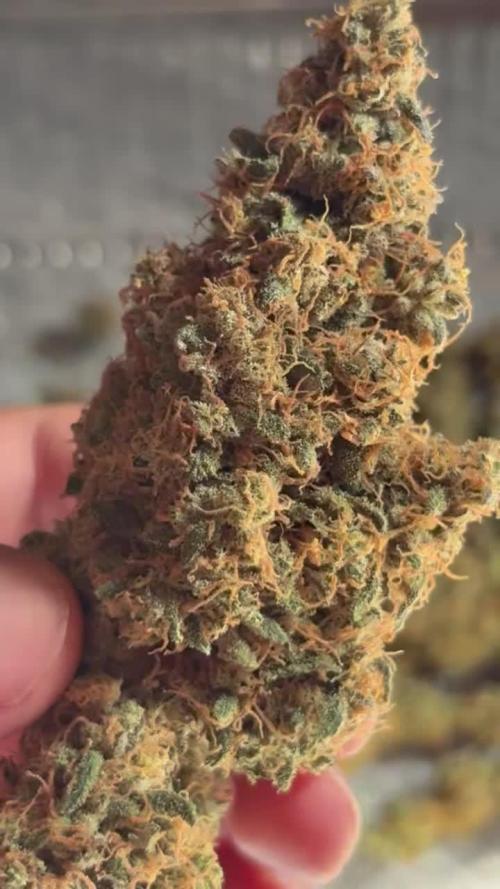
As the plant enters the fifth week of flowering, the first trichomes have begun to form. The buds have started to thicken considerably during this week. They are becoming denser and more robust, which indicates that the plant is channeling its energy into producing larger, more resinous flowers. Throughout the growth process, the cannabis plant has shown no signs of health issues. It has remained vigorous and resilient, with no observable deficiencies or diseases. To ensure optimal light penetration and airflow, the plant was lightly defoliated this week. The cannabis plant is progressing well in its fifth week of flowering. The formation of trichomes, the thickening of buds, and the plant's overall health are all promising indicators of a successful flowering phase.
Processing
Likes
10
Share
Likes
25
Share
I’m excited to see what RQS have to offer with this little Gem! I’ve been waiting to try another of Royals Automatics, Green Gelato is a strain I very much look forward to with desert strains being at the Top of my list 🥇 It’s been an eventful first few days.. (arnt they always!) she’s poked her head up yesterday so Day 1 is 30/03/20. Let’s see how this week treats her, I plan to keep a close eye on the environmental conditions and to ensure she’s being fed some gentle nutrients, CalMag to begin with followed by some BioBizz Grow for the extra nitrogen needed at this delicate time 👌 See you all next week, I hope with more leaves to show 🌱✌️ Peace and love, stay safe
Likes
15
Share
Приветствую всех, кто следить за мной. Ваша поддержка очень важна для меня. На следующий день после того как я обновил прошлую неделю дневника наступило время пересадить растения в более крупное ведро. Я покажу вам как использовать дешовые пивные стаканы для пересадки ваших растений. Вы можете посмотреть это на первом видео. Когда я пересаживал растения я дополнительно добавил микоризу в большое ведро. Одно из растений "ЛСД -феминизированное" всё ещё показывает замедленный рост, несмотря на то, что я решил подсветить его LED полный спектр. Так же я внёс базовое питание, корневые стимуляторы и стимуляторы роста, в добавок с гуминовыми кислотами. Я планирую сделать из эти растений много клонов и запустить новый дневник в другой палатке, а эти растения потом переставить в маленькую палатку. Если вам интересно следить за приключениями травки в России, подписывайтесь на мой дневник -------------------------------------------------------------------------------------------------------------------------------------------------------------------------------------------------- Greetings to all who follow me. Your support is very important to me. The day after I updated the last week of the diary, it was time to transplant the plants into a larger bucket. I will show you how to use cheap beer glasses to transplant your plants. You can watch it on the first video. When I transplanted plants, I additionally added mycorrhiza to a large bucket. One of the "LSD-feminized" plants still shows slow growth, despite the fact that I decided to highlight its full spectrum LED. I also added basic nutrition, root stimulators and growth stimulators, in addition to humic acids. I plan to make many clones of these plants and start a new diary in another tent, and then move these plants to a small tent. If you are interested in following the adventures of weed in Russia, subscribe to my diary.
Likes
7
Share
Stretch and fan leaf growth are out of control please send help.
Likes
10
Share
@SgtDoofy
Follow
2/20: Both pots are light and are looking droopy. Time for first day of feeding nutrients. I used 1tbsp unsulphured molasses mixed into a half strength mix of General Organics GO Box nutrients, following the first week of flower instructions. 2/21: Both plants are looking great this morning. Amnesia seemed to have grown more overnight! I'll need to watch the timelapse to see what happened. My lights are at about 80% at 12 inches above the plants. I'm going to increase it to 12 inches above the tallest cola. 2/22: May turn both lights to 100% soon, as the timelapse of the night didn't show much growth or movement. Otherwise looking good. 2/24: Woke up to Amnesia's lower leaves turning yellow, brown, and crunchy. Google research thinks its a PK deficiency, the last two letters if the N-P-K nutrient list. Discord users also believed it was a PK deficiency on their own accord. I may be able to remedy this by upping my main Biothrive Bloom to full strength to increase those nutrient numbers, and feeding her now. She's growing fast, I could see why she'd be hungry again after 4 days. Her pot wasn't quite all the way light before bed though. After today's feeding I'll go down to 3/4 strength on the Bloom for the next feeding. EDIT: After lifting Amnesias pot, she definitely is ready for feeding/watering. Probably starved a bit overnight in the hot tent. Later at night, Trainwreck began to droop, so I mixed up a half strength of nutrients and fed her a gallon over a half hour.
Likes
2
Share
Vamos familia, actualizamos la octava semana de floración de estas NoName de Seedstockers. La temperatura que estuvo entre los 24-25 grados y humedad dentro de los rangos correctos. En cuanto a las plantas pues estas últimas semanas cogimos un poco de trips y pues ahí ando combatiendo con planchas pegajosas de color azul, estiraron bien y ensancharon bastante también. Las flores se están llenas de tricomas estan madurando, aún con la plaga, por el momento todo correcto. Ya estoy regando solo agua, para limpiar las raíces y demás. Hasta aquí todo lo de esta semana , ya queda nada, buenos humos. - os dejo por aquí un CÓDIGO: Eldruida Descuento para la tienda de MARS HYDRO. https://www.mars-hydro.com Hasta aquí todo, Buenos humos 💨💨💨