


Likes
Comments
Share


@Esoteric_growing
Follow
Fantastic result, super super stinky. Potency totally exceeded my expectations. This rainbow candy cut of marmalade is soooo much better than I imagined it would be.
Likes
1
Share


@SessionMeister
Follow
I put the clones into bigger Pots once their roots were fully established. Immediately started LST and put in the clones at an angle so that light is distributed more evenly. Autos also growing well but Panty Punch is lacking because of crippled leaves. I still let her live to see how she develops. I plan to bend the clones in a circular shape so they grow into an even canopy.


Likes
13
Share


@YOUNGSTERBR
Follow
exagerei na rega até o meio da semana, deixei 4 dias sem rega e recuperaram, umas pelo estresse começaram mostrar défice de fósforo, fiz uma cobertura com torta de mamona, farinha de ossos, esterco de aves, humus de minhoca e calcário.
Qual foto colocariam de capa dessa semana?
Likes
56
Share


@Prilyfe13
Follow
April 26, 2024 Day 71
It's a new week and the start of late flower. It was also cleaning day. Both reservoirs have been cleaned out and are freshly loaded with new water.
This week we are focusing on watering and nutrients. I may start to drop the dose until flush, over this week and the next.
The light power will also be gradually dropped down over the next 2 weeks. Not much this week, I think I'll drop the DLI down to 43 mol/m²/d in the middle of the week. Next week I'll drop it down to 38 mol/m²/d. It all depends on what the plants look like.
The plants are getting ready to hunker down and finish up. Both have decent sized buds and just need to finish swelling. I'd say another 2 weeks maybe? Flushing will start at some point over the next 2 weeks as well. Flushing won't be much of a big deal as it's just cleaning the reservoirs and running a week of Flawless Finish.
The environment is changing a bit as well. I dropped the day temp down to 75° and the night temps to 65° or lower. Not cold enough to cause stress, but enough to get some purple I hope. The humidity is sitting at 47% and I'll be leaving it there unless somehow I can get it to go lower. For now it's pretty solid at 47% and everything looks great, so no need to worry.
I'll be taking trichome pics every few days. One pic for each plant. No point in loading up the whole photo gallery with even more daily pics. Plus, the progression of trichomes isn't fast enough to really notice daily. So every 3 days should be fine.
Grow System Environment:
Temp: 74.2°
RH: 47.7%
VPD: 1.49 kPa
April 27, 2024
Nothing happening today. Both ladies were inspected with no issues. I snipped a single leaf off of Banana Purple Punch B. Just one. Blocking bud sites.
Banana Purple Punch A has some massive buds. About the size of golf balls. Maybe a bit smaller. They are still swelling and have a good 2 weeks left. Pistils are still mostly white, so that's a good sign for larger buds and more trichomes.
Banana Purple Punch B is looking wonderful as ever. She doesn't seem to be suffering any issues with nutrient burn unlike her sister plant. She's perfectly healthy and has very nice bud production. The buds aren't quite as big as Banana Purple Punch A, but still nice and sizeable.
The nutrient burn seems to have stopped for Banana Purple Punch A. So that's good. It should be perfectly fine now.
Lighting is staying the same for the next couple of days. Although, I may keep it the same for the rest of the week.
The environment is excellent now. It's raining today and the humidity is still at 47%. I did get it down to 44% for most of the afternoon yesterday, so I may be able to keep it down after the rain stops. Or just wait for the afternoon and see what happens. Either way, the humidity is now at 47% and the temp is at 76.8°. The VPD is at 1.57 kPa. A tiny bit high, but still well within range. Last night's temp was a little high at 69°. I'll have to drop the temp lower again to get that 65° sweet spot.
Grow System Environment:
Temp: 74.4°
RH: 45.7%
VPD: 1.55 kPa
April 28, 2024
Not much to do today. I mixed a new batch of nutrients for both plants. The only difference is that I cut the Overdrive in half down to 2 ml/gal. Neither plant needs it, but now it's mixed and ready to go. I may end up filling the reservoirs tonight as it stands. Or later this afternoon. I don't think they will last til tomorrow morning.
Both plants are putting off a wonderful aroma. I honestly can't describe it. Like sweet and kind of a hint of banana and a bit heady.
Trichome production is picking up quickly. The pistils are starting to turn orange as well. They are definitely in the late flowering stage.
I think I'll start dropping the nutrients for the next watering. And I'll drop the DLI down to 40 mol/m²/d tomorrow I think. Not much else to say about nutrients or lighting, so moving on to the environment.
It's a warm humid day out and raining off and on. My whole environment is wonky, with humidity being at 57% and the temp at 77°. I turned the AC on about an hour ago and the temp went down to 75°, and humidity up to 60%. I think I'll crank the AC all the way down. And hopefully get rid of the humidity with the temp being a bit lower than perfect.
Update: I ended up adding about a half gallon of plain water to both reservoirs. Just Incase I have nutrient lockout or something. They should go through that by tomorrow afternoon. Maybe late evening.
Grow System Environment:
Temp: 75.6°
RH: 52.8%
VPD: 1.39 kPa
April 29, 2024
No watering today. I'm still waiting for the plain water work it's way through. However, I did drop the light power.
Both ladies look great. Big buds, great scent and nice color. I'm not seeing any fade yet, but the nutrient burn is still there. I hope it will fix itself with the plain water. And then maybe fading will start. These two need a good 2 weeks or so before harvest.
The lighting, as I said, was changed today. I dropped the power down to 70% to get as close as possible to 40 mol/m²/d. I may have to drop it another 10%. I'm not too sure. I'll check the DLI again when I'm more awake. (I'm finally on my second cup of coffee. Lol) Looks good though. Just around where I want it to be.
But there are a lot of spots where the DLI is a bit high at 43 mol/m²/d. The tallest tops are also kind of high at 45 mol/m²/d. Again, I'll double check on a couple hours, but it should be fine.
The environment is wonky again today. The temp is fine, but the humidity is still high at 60% and I don't see a way to drop it again. Not with the current weather. Hopefully I can get it down with some heat. The AC method did not work. Well, it maybe will work tonight. I'll be dropping that bad boy down to 59° tonight and hopefully it will do what I need it to.
Grow System Environment:
Temp: 74.2°
RH: 59.8%
VPD: 1.15 kPa
April 30, 2024
Watering day. The reservoirs were both nearly empty and there was just enough space for a full gallon in each one. It's the normal nutrient dose with Overdrive being at 2 ml/gal.
These two plants are looking mighty fine. Excellent bud swelling and trichome production. I'm definitely going to be wet trimming them instead of my normal dry trim. I may leave the bods on the branches and do a partial wet trim, or I guess mostly wet trim.
They smell great! Very strong aroma now. I swear they smell like artificial grape. I can't describe it any other way. Grape and pungent. Awesome.
So far the light seems to be fine. No reaching or showing any signs of lack of lighting. They look pretty happy. Although, Banana Purple Punch A is a bit sad from nutrient burn. Banana Purple Punch B however didn't seem to have much of a problem with the burn.
The environment is still pretty wonky. High humidity again. I can control the temp pretty easily, but the humidity is another issue. It's currently sitting at 56% and I'm holding the temp at 76°.
Grow System Environment:
Temp: 75.5°
RH: 57.0%
VPD: 1.26 kPa
May 1, 2024
Not a whole lot going on today. No water needed, no light changes. I rotated both ladies 180° so now they are getting light on other sides. I'll leave them like this for the rest of the grow I think.
Banana Purple Punch A actually fits better in the new position. Less wall touching and about the same neighboring plant touching. I also removed 3 leaves. Ones that were misshapen from being crushed against the tent walls.
Banana Purple Punch B seems to fit a little better in the new position, mostly because of her sister plant. More room on the outside and a little less room inside. No leaves were removed today. I'll reserve that for the last 2 days of the grow cycle. Then I'll do a massive defoliation and then a wet trim.
It's humid here right now and I need the space. Otherwise I'd stick with dry trimming. But I can't hold up the tent for 3 more weeks. I have other plants getting ready to be planted in their final containers. Like a week for that, I might be able to squeeze a week and a half, but that's it. They will have a space, but the main tent is where they will need to be. Not a 2x2 dry tent. I'll work it how I need to I guess.
Anyway, both ladies look great! Trichome production is coming along nicely as well. They are very smelly now and I love it. They are also still packing on weight I think. Not a ton, but the buds are clearly getting denser now that some of the pistils are starting to turn orange. I'd say another 2 weeks on these two.
As I said, the lighting hasn't changed at all. Not for another few days to a week. Then it will have another power drop. Until then, we are staying at a DLI of 40 mol/m²/d. It's roughly 38 mol/m²/d on the outer part of the canopy.
The environment is STILL wonky. I cannot for the life of me get that damned humidity down at all. Not with a dehumidifier, not with the heat cranked, not with the AC cranked. I'll try my big dehumidifier in my room, but the humidity is like 49% and frankly I'd rather the room humidity stay there. Much easier to breathe. However, the humidity in the tent is suffering at 59% while the temp is hanging out still at 76°
Grow System Environment:
Temp: 75.2°
RH: 56.1%
VPD: 1.27 kPa
May 2, 2024
Not a lot going on today. No watering needed, no trimming, nothing.
I found a broken bud on Banana Purple Punch A. It must have been from when it was against the wall, or too close to the other plants and got stuck on a branch while I was rotating. Oh well. It's a lower bud, so not huge.
It's also the last day of the week and that means new videos!
For the rest of the grow, I'll be making weekly videos of the individual plants. So that will.be this week and the next 2 weeks or so.
Banana Purple Punch A looks great aside from that one broken bud. Her buds are fat and thick. Super dense from what I can see. I would like to note that the fade hasn't started yet, so we still have that 2 weeks left. Unless it starts in the next day or 2, I'll be banking on 2 weeks.
Banana Purple Punch B is still compact as ever, but her buds are getting fatter everyday and of all the plants in the tent, she has done the best with the nutrients. Very little burn and didn't seem to be bothered by it. Maybe I did something early on to have such a small plant, but still. I think I can bank on 2 oz from each plant. Maybe 3 oz. It's really nothing compared to previous grows, but as I said before, as long as it's fire, I'm happy.
Trichome production on both plants is fantastic. They are loaded from top to bottom. And building more and more everyday. There's still plenty of time left for there 2 as well. Most of the trichomes are clear with about 20% being cloudy and sparsely amber. That's another sign that they need another couple of weeks. Maybe slightly less.
I increased the light power yesterday back up to 80%. I think I was a bit early on the intensity drop, so I'll drop it again in a few days I think. Around mid week coming up. Now we are running a DLI of 43 mol/m²/d inside and 40 mol/m²/d on the outside.
The environment kinda fixed itself, but not to the ideal climate. It's still at 55% humidity. Better than 60%, but still not good enough. It needs to be below 50%. However, I can still control the temp and I have it at 74.5°. I'll turn it up a bit and see if I can clear out the last 5% of the humidity.
Grow System Environment:
Temp: 73.7°
RH: 55.2%
VPD: 1.24 kPa
Update: I added a couple test videos to see if they would upload. Success!

Processing
Likes
17
Share


@Ashbash
Follow
Made a big error this week and forgot to water these guys for about 5 days.
They did not enjoy it and dried up a lot, but theyre not dead yet! The Zkittlez shouldnt have been affected too badly cos it was nearly done, i hope the lemon ak will revover tho and keep bulking up. I am going to cut down the Zkittlez this week, and leave the lemon a couple more. It looks much bulkier just not dense so gonna leave it a little longer.
Likes
2
Share

@Weed_Wizard
Follow
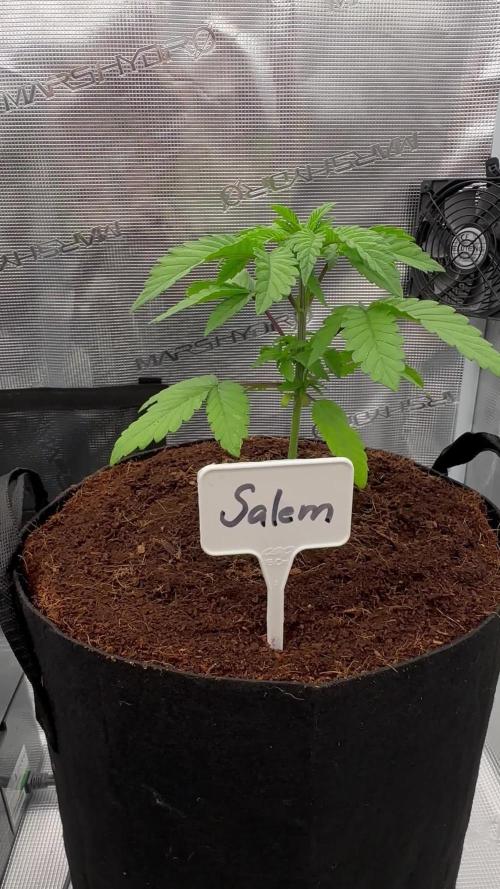
We had some days of hanging leaves after placing them in new pots, probably root stress. After some days they recovered and now they are doing well in their new homes 🌱✨

Likes
11
Share


@Mr_Motalovah
Follow
Hello Growers & Tokers!
We're getting closer and closer to that zenzational jungle!
Ladies are looking very healthy, no deficiencies, healthy leaves, roots are spreading nicely, all out good plants.
The tops came down this week, after topping they'll widen out and even the canopy.
I don't think I even need to train them, the branches seem to be going in to place by themselves.
My plan is to have an even canopy, table of colas, horizontal canopy, sea of green, call it what you may...
I'm looking to have about 6-10 colas per plant, In flower all I want to see in the canopy is buds, buds, buds.
They got some chunky leaves on them which will be taken off next week before switching them to flower.
These ladies are gonna get wide, bushes I'm telling you! 😍 😍
They're starting to give off a light sweet scent, lovely! 🤤
Take care out there and happy growing!


Likes
21
Share


@MrWolfe
Follow
They get topped again day 42, going to try and leave top two nodes per top instead of just 1, so each will go from 2-8 instead of 2-4, if they underdevelop I'll trim them off later. I think they'll be just fine though, saving any branches that reach out from primaries and lowers to make some.nice clones, so don't cut those yet, we will cut clones when we strip for flower.

Likes
1
Share


@bigsmoke42069
Follow
Week 5 of flowering 10/16/24
Changed nutrients to fit week 5
Buds are getting bigger and thicker.
Defoliated plants.
Watering 4 times a day (with 10%-20% runoff)
hand watering to full saturation of the media with 20% runoff at the end of the week.
Checking runoff EC every 3 days.
Lights now at max height and 90% power.
After replacing the exhaust fan timer, didn't notice ant issues.
Adding 2.5ml/gal of H2O2 (35%) to the reservoir to keep bacteria away.
Likes
22
Share


@wheedtobeus420
Follow
Day 21 she just got low stress trained so the light can reach more areas. Super excited to have her growing and being beautiful. Some of my favorite smoke around. Very impressed.
Likes
5
Share


@Topshelf_only
Follow
Another hot week and adding pk top to the feed schedule after a few fan leaves getting some slight brown spots middle of leaves. Flowers putting on plenty of weight.

Likes
11
Share


@GREENPHOENIX6262
Follow
Week - 4 - Thus far everything is running fine. Dropped a 4x4 Ac infinity net for better light coverage and introduced an Exhale 365 Co2 bag.
*End of Week 4 (Recap) - 08/21
Thus far all running smoothly - 1.5 - 2.0 Inch growth from Canopy
C02 bag running ( 2 weeks )
Pulled into trellis
Light Defo - Heavy nute feed


Processing
Likes
16
Share


@ElegantBuds
Follow
Hello growers.
This week rocket banana did good. She still grew a couple of cm.
She also has very long floweringhairs, and it looks cool.
I already grew a banana kind before and it looks a bit similar. The smell is getting stronger.
Also on a bad side, i had a herma in my tent so i hope no other plants aren’t pollinated. I removed the hermas.
See you next week!

Likes
6
Share

@Pilotpanthro
Follow
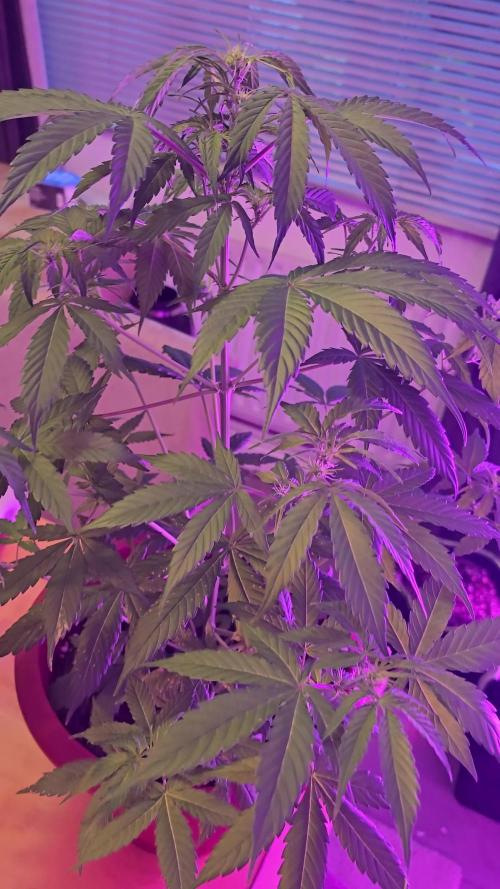
What a fantastic grow, this has now overtaken another plant thst was started 2 weeks before this F1, the growth on this plant is phenomenal !! Buds look like they have started to form nicely, as this is an auto i have taken to try and tuck levlaves in to open more light to buds below as I do not want to defoliate being an auto. Still amazed at the speed of this strain and already looking forward to next week's update for you all. 🌱

Likes
49
Share


@masterofsmeagol
Follow
6/9 I can't believe it but I had faith. The transplant yesterday LOOKED like it was fucked. I cleaned it up though and left it outside. This morning it was standing straight up. Both transplants were! I put tarps up to block the wind tunnel between buildings. It's still overcast and rainy. Sun isn't supposed to come out for a couple poke days. Chance of thubder storms tomorrow but I'm going to try to get everyone in their forever homes today. Or at least most of them. I plan to light dep a few right in the 3 gallon. I'm sure I'll be updating this after I get some work done.
UPDATE: I WENT OVER AND GOT THREE MORE TRANSPLANTED. THAT MEANS FIVE ARE OUTSIDE IN THE CAGE. TWO 10TH PLANET, 2 BLUEBERRY CHEESE AND A LITTLE PURPLE PUNCH. THE 3 GALLON POTS WERE RELATIVELY HEAVY SO I PICKED THE LIGHTER ONES TO TRANSPLANT. I LEFT THE ORHER TWO 10TH'S IN THE GARAGE WITH THE DOOR OPEN WITH THE REMAINING PLANTS. I ALSO ADDED WIND BREAKS AND SUPPORTS TO EVERYTHING. I WANTED TO GET EVERUTHING DONE TODAY BUT THERE MAY BE A THUNDER STORM SO IF I DONT GET IT DONE ITS NOT A BIG DEAL AND ILL FINISH TOMORROW. TRANSPLANTS WENT SMOOTH. I THINK THEY'LL GO EVEN SMOOTHER IF THEY DRY OUT A BIT. STILL HAVE THE 50 AND 40'S TO FILL. Took a bunch of videos but the don't want to load. I'll have to try tomorrow or later tonight.
UPDATE: I TOOK TONS OF PICTURES AND VIDEOS BUT THEY DONT WANT TO SEEM TO UPLOAD. IVE GOT SIX IN THERE FINAL HOMES OUTDOORS 20s and 30 gallon smart pots. Still have massive plants but I'm going to out those in the 50 and the 40. I'll finish this shit up tomorrow and get all the girls in their forever homes and if I don't have room for some I was planning on doing a light dep anyway so that will work out good. I learned a lot and transplanting went a lot smoother todsy than before. I feel really proud of myself. The last Transplant I did break a few leaves off that I didn't notice but whatever. I used tomato cages for suppirt on two and bamboo poles and string on the others. I'll add the vertical trellis as they grow. I'm proud of myself.
6/10 I got a lot done yesterday. Six are outside already. Two are in 20s in the garage. I'm planning on transplanting the rest today or tomorrow. I'll update later. Accidently uploaded lots of stuff on the wrong week. UPDATE: I TRANSPLANTED THAT SUPER TALL PURPLE PUNCH THAT I DIDNT TOP OR HST AT ALL INTO A 40 GALLON TUB. ROOTS WERE DRY AND THIS TIME IT ACTUALLY LOOKED LIKE THEY FELL AWAY. THE PLANT HOWEVER STAYED STANDINGVUP FINE. I THINK THIS PHENO IS GOING TO BE A TOUGH ONE. LOOKS GOOD LIKE AN HOUR LATER. I HAD THE 50 READY TO TRANSPLANT THIS MONSTER BLUEBERRY CHEESE I FIMed BUT THE POTS WERE SUPER HEAVY AND I FIGURED I NEEDED TO SLOW DOWN AND THINK. WE HAVE THUNDER STORMS COMING TONIGHT. TOMORROW IS GOOD. I MAY TRY TO FINISH UP TONIGHT BUT WE SHALL SEE. THE GOOD THING WITH DOING IT A FEW AT A TIME IS THAT IF SOMETHING HAPPENS OUTSIDE IVE STILL GOT A CROP INSIDE LOL. WHAT IM PLANNING TO DO IS EITHER LIGHT DEP THAT BIG BLUEBERRY CHEESE OR PUT IT IN THE FIFTY BUT IM PLANNING TO LIGHT 3 RIGHT IN THEIR 3 GALLON CONTAINERS. HAVENT DECUDED FOR SURE BUT IM THINKING THATS WHATS GOING TO HAPPEN.......of course videos won't upload and the ones that do are old videos. Damn. I need to sharpen my computer skills....and my growing skills. Especially transplanting. I suck at transplanting. I decided not to out all my eggs in one basket and left the 10th planet amd Blue berry cheese in the 20s in the garage. I pulled them out for light further but I'm ousting them back a little tonight. That way I'll have a back up if something catastrophic happens. I doubt it but better safe than sorry. I'm proud of what I've accomplished thus far. I've successfully uploaded my 1 minute plus video several times but it won't appear. Oh well. I'll try to load the videos tomorrow I guess. Just started raining. Just a light rain. Probably what fresh transplants like.
6/11 BEAUTIFUL outside. Today is the day. Most is done and I'll add the supports as trellis as they grow. This new grow space gets about twice as much sun as my old spot. The tar stops the burrowing insects. I'm getting everything out today. I just need to decide if I'm going to light dep that MASSIVE blueberry cheese or bite the bullet and put it in the fifty. Maybe I'll try to get some help from my cousin. Plants withstood the thunderstorm like Champs. I'll update as the day goes on. I planned better this year so I SHOULDN'T have an unmanageable jungle. UPDATE: WATERED THE 3 PLANTS LEFT IN THE 3 GALLONS (1 10th PLANET WITH GREAT BRANCH STRUCTURE AND TWO PURPLE PUNCH THAT WERE THE SMALLER ONES. IM GOING TO LIGHT DEP THEM. EVERYTHING IS OUTSIDE NOW IN A MIX OF 1/3 FOX FARM OCEAN FOREST, HAPPY FROG AND ROOTS ORGANIC 707 IN EQUAL PARTS. TRANSPLANTED WITH MYKOS. EVERYTHING IS OUTSIDE NOW. FINALLY DECIDED TO GET The MONSTER BLUE CHEESE I FIMed INTO ITS FOREVER HOME A 50 FALLON POT. IT WAS TGE EASIEST BEST TRANSPLANT OF THEM ALL. JUST LIKE AETTING A POT IN THE WHOLE. I DONT EVEN THINK THE PLANT NOTICED. ONE OF THE PURPLE PUNCHES HAD ROOTS OB ONE OF ITS LEAVES WHEN I LOOKED BUTVIT WAS STILL STANDING UO STEAIGHT. I KNOW SOME OF THE PLANTS LOOK DROOPY BUT WEVE HAD SEVERAL DAYS OF RAIN AND A MASDIVE THUNDER STORM. I BROUGHT OUT THE EARLIER TRANSPLANTS AS WELL. THEY ARE OUT OF THE SHOCK. WIND IS PRETTY HIGH BUT I DONT WANT TO ADD MORE TARPS. I THINK THINGS ARE SECURED GOOD ENOUGH FOR NOW. IM SUPER STOKED THAT TRANSPLANT WENT SO GOOD! Went back at 7:30pm. Some plants have a little bit of transplant shock and a little bit of burn but it's negligible considering they've been through a thunderstorm with pouring rain and extremely high winds. That blueberry cheese in the 50 transplanted so easy and still looks like it didn't even know the difference. I'll start light dep once I get a plan. Plants are recovering nicely but should something happen to one I could replace it. I'm interested in the light dep though and I've got a pretty good idea how to start.
6/12 The plants that had a little transplant shock are coming out of it. We had a thunderstorm and pouring rain the day of some of the transplants. Wasn't forecasted. High winds moved the plants around a bunch bit they are tough as hell. Everything is out now. Suppisedcto have showers the next few days. I'm putting together a feeding schedule abd setting up a spit to start light dep on the three plants I decided to flower early. The cage now gets twice as much sun as before. This is going to be a good year.
Went back over and plants are perking up and doing even better everytime I see them. I took a video but it might not upload until tomorrow. I may start a new diary for the light dep. I have a few places I'm thinking to use for light dep. I need to make a solid plan before I start so maybe a day or two. Trying to upload again but I doubt it.
6/13 Had a rushed morning but I watered the plants in the 3 gallons as they were dry. I had added more soil to a couple of the bags. The top soil is startingvtj dry out but the plants look good and we are supposed to get rain so I don't really want to water if it's going to be raining. I think I've found my light dep spot and schedule. I'll update after I do something.
WENT BACK OVER AND SPRAYED A LITTLE BIT OF WATER ON THE EXTREMELY DRY TOPSOIL THAT I HAD TOPPED SOME OF THE PLANTS OFF WITH. SHITTY THING IS THAT WAS ADDED AFTER THE THUNDER STORM SO IT MAKES IT HARDER TO JUSTE THE PLANTS WATERING NEEDS. I CAN TELL THAT ONE OFCTHE FIRST TEANSPLANTS IS STILL HOLDING WATER. I MEAN WE GOT A DOWNPOUR AND I DONT WABT TO WATER IF WE'RE GOING TO BE GETTING RAIN ANYWAY. IM GOING TO LOOK BACK OVER THE DIARY. THATS ONE GREAT THING ABOUT THESE. YOU CAN GO BACK AND CHECK YOUR WORK.
6/14 Glad I held off watering. It's raining today. Just showers. We haven't gotten any of that extreme wind we usually do. I have the plants supported but I still worry. Definitely more than I should. Plants are still doing good and acclimating to there homes. I have not started the light dep with the 3 gallons but I think I've found my spot. Once I start it will just be staying consistent putt8ng them in and out. I need to train them anyway. I have some research to do and a joint to smoke so I'll update later.

Likes
49
Share


@LockDownGrow
Follow
Really into the massive stretch now I am having too move the climate control probe and thermostat every day now and these girls will soon cover the WiFi camera too , probably growing around 2 or 3 cm per 24 hours at this stage , " day 4 of week 5 "
The tent is filling up nicely but the fbt7 is a clear winner so far , be is my cock up of snapping the main stem and fixing it ? The ftb7 is double the size of all the other 3 plants and is a very nice little bush , the smoothie has been very consistently healthy and vigorous and is around 22cm now and is one I did not lst , the BlackBerry has finally woken up and is now the same height as the others another plant I didn't lst , the c1 started very vigorously and was strong , them week 3 started too show signs of very early flower , she is now is fully fledged flower at week 5 and looking fantastic , and I was lucky enough too get all the side branches out and bend over the main cola too the netting and has made up for in lst what it lacked in size due too the early flowering ,
Likes
4
Share


@Staffedition
Follow
Привет друзья.✋
Наше знакомство продолжается с новым фотоцветущим растением от Smail_Seeds сорт TROPICANNA POISONZKITTLEZ XXL Regular F1 reg.
Сегодня растению 66 дней.
Перевёл на 12/12 1.10.2023
Перешло в активную фазу цветения
Растение очень хорошо развивается, ни каких сбоев в генетике не наблюдается😀
Сорт выводим сами.
Смотри мой профиль, у нас всегда есть что то интересное.
Не забудь поставить лайк❤️, если понравилась как прошла неделя
И читайте наш TELEGRAM: https://t.me/smail_seeds
#Smail_Seeds 😀
Likes
7
Share


@ShiftyGaijin
Follow
Running a partial flush this week to see if anything helps with the Caramelino leaf discoloration that continues to advance. I know I’m close, but being my first grow, getting jumpy to pull the trigger. Haven’t seen any amber trichomes yet. But getting a decent amount of opaque. The smells are absolutely out of this world. 😌✌️🏻
Likes
28
Share


@blazin_skywalker
Follow
2/4/19- Blue is right at the 5th node. I'm letting a little more growth happen so I have proper room to top without harming the nodes. Her leaves are nice, fat, and healthy!
2/5/19 - Decided to experiment with a FIM last night at midnight 😎 Let's see what happens! ✌️
2/6/19 - Reservoir Δ Day!
Likes
12
Share


@Sativagrad
Follow
In general, I liked growing this variety, the only thing is a lot of small leaves, it is not very convenient to cut, but the colas are very dense and weigh well, there are also many small stepsons, although I cleaned up during unnecessary time, powdery mildew appeared after the rain, which is difficult get rid of the large number of leaves on the plant, and it's very good)
