Likes
Comments
Share
@Fonzo412
Follow
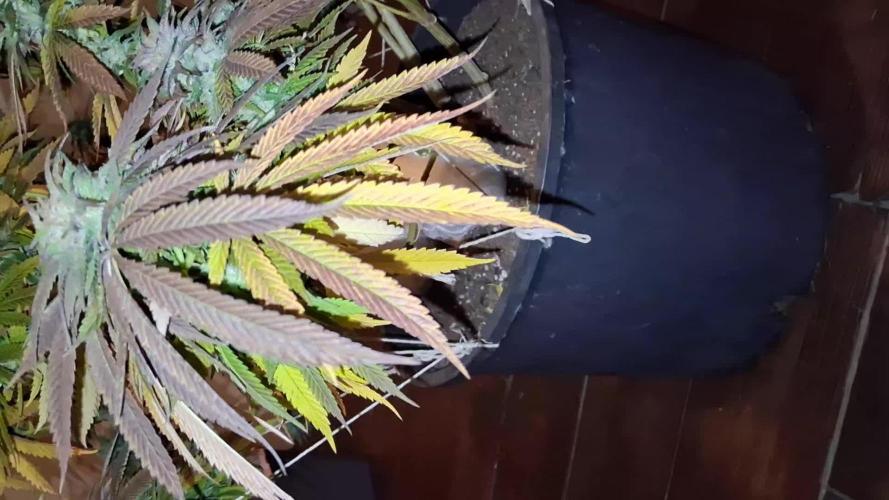
This will be the start of week #2 of seedling stage. Had an issue 😢 with my blue dream plant I believe I’ve might of over watered . It looks bad hopefully it can recover. Yield may be stunted really lagging behind. Also I have another blue dream seed so I’m thinking of starting that one fresh so I can pot into the finale medium. I didn’t want to use the cup but didn’t have enough soil at the time 🤷‍♂️ The strawberry 🍓 banana 🍌 auto and the power plant fem seems to be doing good 👍 so far. All in all I’m happy 😊 with how things have been going throughout my grow . I’ll will be feeding my plants nutrients and dropping the lights 💡 for the start of Veg next week. Let’s goooo… 😎😏
Likes
4
Share
Eccoci di nuovo qui!!! Super eccitato per questa nuova collab con Sweet Seeds, team davvero al top, che mi ha dato l’opportunità di testare questa nuova genetica e di condividere i progressi con tutti voi!!! Come sempre partiamo nei bicchieri per poi travasare.. Questa volta verrà svolto tutto sotto la Lumatek Zeus 465 ProC, mi aspetto molto da questo ciclo!! Settimana incredibile!!! Grazie a tutti per il supporto ❤️🍀🔥
Likes
2
Share
We become aware at such times of man's wonderful ability to bring seemingly unrelated elements into harmonic balance, and receive a glimpse into a world where everything exists in conscious sympathetic attunement to everything else. When we listen to a piece of music that seems to strike a beautiful chord somewhere inside us, or view a painting that simply glows with harmonic awareness well executed, we probably do not spare much time to contemplate the wonderfully intricate combination of vibrations that our sensors make it possible for us to perceive. We tend to appreciate the relationship between the parts of something by an awareness of the harmony or dissonance of the whole. This ability enables us to say "what a beautiful house!" instead of "analysis has proven that this collection of building materials exhibits certain elements of harmonic proportion." While this ability to instinctively appreciate the beauty of true harmony has an important role to play in evolution, a more analytical understanding of the laws involved can be most useful. This is especially so if we wish to create works of art where each part exists in true harmony, not only with the other part of that particular whole, but with the universe within which the creator and the created exist. Everything vibrates. From the most dense matter to the most subtle cosmic rays, everything which our senses allow our thoughts to become aware of, can be specified in terms of wavelength or frequency of vibration. These two terms define the same thing, but from different points of view. The following are the approximate wavelengths of various energy carriers: Cosmic rays 0.000,000,001 mm Gamma rays 0.000,000,1 mm X rays 0.000,500 mm Ultraviolet rays 0.003 mm Visible light 0.006 mm Infrared 0.01 mm Sound waves 1 meter Radio waves 300 meters Violet light 400 nm to 450 nm Blue light 450 nm to 500 nm Green light 500 nm to 570 nm Yellow light 570 nm to 590 nm Orange light 590 nm to 610 nm Red light 610 to 700 nm 1 nanometer (nm) = 0.000,000,1 cm = 1/10,000,000 cm If a guitar string is plucked and we hear a sound, it is not too difficult for the human mind to associate this sound with the vibration of the guitar string. With color it is quite different. It is difficult for us to conceive that the color of a substance is not an inherent property of the substance itself, but an indication picked up by our senses of that substance's ability to absorb or reflect the light which happens to be shining on it at that moment. Neither the matter nor the light is colored. What happens is that the brain learns to differentiate between the frequencies reflected or transmitted by the substance the eyes are focused on. The same thing happens with sound. When we say "Oh! Listen, they're playing my favorite song," what we really mean is: "My brain has stored within it a particular pattern of frequencies. I have compared the new information being received with this stored pattern and have deduced the answer that the two patterns are similar within certain specified tolerances." The 'pleasure' involved could have something to do with our running the pre-recorded pattern at the same time, in 'sympathy' with the new pattern as it is received. The word sympathy describes very well our ability to appreciate color and sound. It also describes the reason behind certain elements of harmony. For instance, if a substance vibrating at 100 cycles per second (tone 1) is in the proximity of another substance vibrating at 200 cycles per second (tone 2), we could perceive, if we had the right equipment, a certain sympathetic relationship between the two. We will see from this that there is a uniform doubling of the first tone seen in the second. At various points along the waves, the two are the same in amplitude. At other points, they are at opposite poles to each other. This doubled frequency has more points of similarity to the original than any other frequency except the original itself. If the equipment we had available for measuring these two frequencies was a soundboard amplifier and a pair of ears, then we would hear what would sound to us like one tone. If we had the opportunity to hear one at a time, we would hear that although they sound the same, one is higher in pitch than the other. This characteristic of 'the same but different in pitch', musicians have called the octave. Any two tones produced where one has exactly doubled the frequency of the other is called an octave. Speaking in ratios, an octave would appear then as the ratio 2:1 or 1:2, depending on whether we are talking of an octave up or down. A single note produced by almost any instrument will contain more than one wavelength or frequency. It will have a dominant frequency, the wavelength of which we would call the note's 'fundamental' or 1st harmonic. It will also have a varying number of upper harmonics, gradually fading in intensity into infinity or silence. Natural harmonics always have the same pattern of intervals between them. The interval between the 1st and 2nd harmonic is a perfect octave; between the 2nd and 3rd a perfect fifth; between the 3rd and 4th a perfect 4th; and so on, the intervals becoming smaller and smaller until they lose any relationship with the western 12 tone scale as it exists at the moment. Just as an octave has certain elements of sympathy with its fundamental, so some intervals have been noted to be more perfectly in sympathy with the fundamental than others. The ratio of the 'perfect 5th' or interval of 7 semitones, as it occurs in the harmonic series, is 3:2 or 2:3, while that of the 'perfect fourth" is 4:3 or 3:4. All the tones in the western 12 tone scale can be expressed in terms of the ratio between the upper tone and its fundamental. This would seem to be an ideal way of generating a scale from any given fundamental and several attempts have been made to do this, the Pythagorean system being probably the most well known. Although when working with a single tone instrument playing on its own, the Pythagorean formula works wonderfully well, if we had several instruments tuned this way together and asked them to play almost any western music, we would find that at times they sounded quite out of tune to each other. The lack of flexibility of the various scale systems based on the harmonic series has led to what is known as the 'tempered' scale. This uses as its primary unit of interval the ratio of the octave or 2:1. It then proceeds to divide the interval between any fundamental and its upper octave into 12 smaller intervals by applying the ratio: two to the one-twelfth power, to one (21/12:1). This equals 1.059463094, so by multiplying any frequency by this number, we will obtain the tempered semitone next up from our fundamental. We will also find that any tone twelve semitones up from any other tone, in a scale generated in this way, will have exactly double the frequency. If we took the note middle C on a piano and halved the wavelength, we would have the note C one octave above. If we halved this, we would have the C above, and so on. However, within about 6 octaves, we would find that although a 'sound' was being produced, no human ear could perceive it. If we kept on going, halving and producing upper octaves of our fundamental C, we would proceed through the infrared band, into the visible light spectrum. If we happened to be outside during the day, we would, for one octave only, see the note C with our eyes. The next octave above would already be in the ultraviolet band, and outside the eye's sensitivity range. If we can think of color as being an indication of a substance's vibratory rate or wavelength, we may begin to see a relationship that could exist between the color and sound spectrums. The logical extension of what has so far been said is that there exists a scale in the color spectrum that corresponds exactly to the scale in the sound spectrum, each color tone being an octave of the equivalent note in the sound range. This is not the end of the story but only the beginning. If we can for the moment accept that any wavelength in one band has upper and lower octave stretching out to infinity, then the next question is 'fine, but what shall we use as our fundamental? A particular color? A particular sound frequency?' The musicians among us will probably say 'A 440'. This means that the note A should vibrate at 440 Hertz, or 440 times per second. They would tell us that this is standard pitch has been adopted by most orchestras around the world; pianos are tuned to it, instruments are constructed to formulas based on it, and so to them it would probably seem the most appropriate place to begin. Some of these musicians may know of the battle that is still raging with regards to this being the standard, but few would know why A = 440 Hz was chosen except that it worked when it was set to be a suitable compromise between the many different pitches in use at the time. 432 Hz is said to be mathematically consistent with the patterns of the universe. Studies reveal that 432 Hz tuning vibrates with the universe’s golden mean PHI and unifies the properties of light, time, space, matter, gravity, and magnetism with biology, the DNA code, and consciousness. When our atoms and DNA start to resonate in harmony with the spiraling pattern of nature, our sense of connection to nature is said to be magnified. Another interesting factor to consider is that the A=432 Hz tuning correlates with the color spectrum, while the A=440 Hz is off. Audiophiles have also stated that A = 432 Hz music seems to be non-local and can fill an entire room, whereas A=440 Hz can be perceived as directional or linear in sound propagation. Once you adopt the idea that sound (or vibration in general) can have an equalizing and harmonizing effect (as well as a disturbing effect), the science of harmony can be applied to bring greater harmony into one's life or tune to specific energies. There is a form of absolute and relative harmony. Absolute harmony can, for example, be determined by the tuning of an instrument. The ancients tuned their instruments at an A of 432 Hz instead of 440 Hz - and for a good reason. There are plenty of music examples on the internet that you can listen to in order to establish the difference for yourself. Attuning the instrument to 432 Hz results in a more relaxing sound, while 440 Hz slightly tenses up the body. This is because 440 Hz is out of tune with both macro and micro cosmos. On the contrary, 432 Hz is in tune. To give an example of how this is manifested microcosmically: our breath (0,3 Hz) and our pulse (1,2 Hz) relate to the frequency of the lower octave of an A of 432 Hz (108 Hz) as 1:360 and 1:90. It is interesting to note that 432 Hz was the standard pitch of many old instruments and that it was only recently (19th and 20th century) the standard pitch was increased. This was done in order to be able to play for bigger audiences. Bigger audiences (more bodies) absorb more of the lower frequencies, so the higher pitch was more likely to “cut through”. One of the oldest instruments of the world is the bell ensemble of Yi Zeng (dated 423 BC), tuned to a standard F4 of 345 Hz, which gives an A= 432 Hz. The frequency of 345 Hz is that of the platonic year! Similarly, many old organs are tuned in A=432 as well; for example, St. Peter’s Capella Gregoriana, St. Peter’s Capella Giulia, S. Maria Maggiore in Rome. Maria Renold’s book “Intervals Scales Tones and the Concert Pitch C=128 Hz” claims conclusive evidence that 440 Hz and raising concert pitch above scientific “C” Prime=128 Hz (Concert A=432 Hz) disassociates the connection of consciousness to the body and creates anti-social conditions in humanity. The difference between concert pitch A=440 Hz and Concert A=432 Hz is only 8 cycles per second, but it is a perceptible difference of awareness in the human consciousness experience of the dream we share called existence.
Likes
4
Share
@Erich2025
Follow
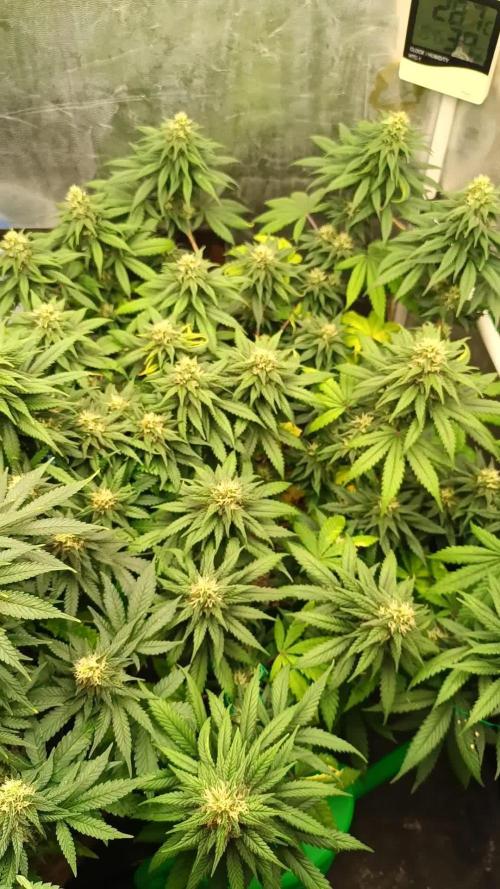
The plants are healthy and growing and stretching great. Dei are literally exploding in my tent. I changed light cycle to 12/12 now. And gave them the feeding they need to go into flower. Sorry for the bad quality of the pictures but as you may noticed since the new Iphone came out pictures are blurry on snapchat. After feeding you could sit down an watch them grow. 😎💪🌴🍪
Likes
12
Share
@Mo_Powers
Follow
not much happened this week. there was a lot of sunshine. a few stormy days and some rain. she is still doing well and is growing steadily and the flowers are starting to show more. she is now also getting biobizz bio-bloom
Likes
29
Share
Anche lei è l'ultima settimana di lavaggio radici.......oggi 29/09/2024 taglio questa Ayahuasca purple...ha un profumo fortissimo.... Oggi probabilmente inizierò a pulire tt le cime e poi.via un taglio netto 😂🤣😜👍💪
Likes
4
Share
@Sadom
Follow
08.08.: Blütetag 1 Heute habe ich nur noch die Triebe unter das Netz gebogen, damit alle ungefähr auf einer Höhe sind. Da der Platz nun sehr gut durch beide Pflanzen ausgefüllt ist, ist der Moment gekommen die Blüte einzuleiten. Die PBB hat schon so viele Stempel, sodass es so aussieht, als wäre sie schon in der Blüte. Daher denke ich, dass die PBB nicht lange für die Blüte brauchen wird. Wir werden es sehen. 12.08.: Blütetag 5 In den letzten Tagen seit Umstellen des Lichtzyklus und Einleiten der Blüte, sind beide Pflanzen ein gutes Stück über das Netz hinaus gewachsen. Aktuell gibt es nicht viel zutun. Leider sind einige Thripse auf den Pflanzen, aber ich habe bereits Raubmilben ausgebracht. Hoffentlich können sie die Thripse etwas in Schach halten. Außerdem habe ich die Bewässerungsdauer auf 20min, wenn das Licht angeht und nach 6h Beleuchtungsdauer, gestellt. Falls das nicht ausreichen sollte kann ich immer noch händisch nachgießen oder die Bewässerung anpassen. Den Beleuchtungsrhythmus habe ich so gewählt, dass abends um 10 Uhr das Licht angeht und morgens um 10 Uhr aus, damit die Lampe nicht während den heißen Sonnenstunden brennt. 13.08.: Blütetag 6 Die Stretchphase ist bei beiden Pflanzen noch voll im Gange. Aktuell wachsen sie durchschnittlich ca. 6cm am Tag. Ich bin gespannt, bei welcher Höhe sie ihren Stretch beenden. Das nächste Update gibts dann in Blütewoche 2.
Processing
Likes
33
Share
Day 64.. Just truckin along.. Noticed some nute burn on the leaf tips.. So im going back down to 1000ppm.. Plus the runoff was coming out at like 1700ppm at times.. Even after feed, water, water.. Maybe its just too much for a cup grow also.. Since the water is drunk up so quickly.. Im guessing all the salts are being left behind in the medium.. Plant is still healthy asf.. Calyxes should be fattening up pretty soon! Wish I knew what strain this was.. Ugh... Day 65.. Judging by the calyxes that have already swollen up.. These are gonna be some very nice, dense nugs.. Trichomes everywhere.. Seems like it may not be ready when they say Bloody Skunks are normally ready.. More like a sativa.. I really wish I would have got what I paid for.. For all I know this could be some CBD strain.. Ugh.. Still gonna grow it out and see what happens.. "You get what you get and you don't throw a fit" lol... ... Later... I been watering 2 - 3 times daily.. That's 1 negative thing about growing in cups.. This is my 3rd or 4th I've grown in a cup.. I'm impressed.. Although I do see it hurting yield slightly.. I guess we will see with what comes of this grow... Day 66.. Ok.. So maybe this is a Bloody Skunk... The leaves are starting to show purple.. The stems are deep dark purple in many spots.. Guess that different phenos can sometimes come out looking the exact opposite.. Still learning.. Whoops 😆 ... Later... She's chuggin water like crazy.. It has been pretty warm in the tent lately.. Hard to keep it down but 82F - 84F at the most.. But it sometimes will sit that high.. It has hit 86F - 88F.. I use 2 AcuRite Temp and Humidity Monitors.. One on top of the light and second just randomly placed in the corner on the pole about canopy height but both read only 1F difference. There are some leaves turning slightly purple.. Honestly, I think this light has been burning the tops.. Not very bad.. But I noticed alot of yellowing on my WW at the tops.. And just got worse toward the end.. And a little foxtailing as well, I think.. But I am seeing slight yellowing on the top leaves of this one.. Not bad.. But I do see it slightly.. Other than that.. And the abuse I have put her through.. She is happy and healthy asf.. Still not for sure but this very well may be a damn Bloody Skunk.. Let's see what happens... Day 68.. Just another day flowering.. Pistils are still white as can be.. Calyxes are still tiny but covered in trichomes.. The calyxes should start fattening up... Aaaany day now lol.. Seems like she's gonna be a long flowering girlie.. I've watered with just CalMag the last 3 days but the runoff PPM is still reading 900-1000.. Not sure whats going on.. Guess I should do a major flush and re-feed some time today. I'm thinking of trying out organic dry amendments in coco in the future.. Seems pretty simple.. Just need to time everything right which shouldn't be too difficult.. But anyways.. Its been a good week for the girl.. Nothing like keeping your lady happy! ... Later... I used a whole liter of pHed water without CalMag to flush and mixed up a new batch of nutes. I have added some Floralicious Plus to the mix also.. I'll note that on next weeks page. I only use 5 drops per Liter.. Which is about .25mL as it says to use.. Should help the trichome and terpene production. To be completely honest.. I'm not sure when to add Floralicious Plus.. After adding CalMag?? I've just been adding it after everything.. In this order... Silica, CalMag, Micro, Grow/Bloom, Bloom Booster, Floralicious Plus.. I havent noticed any lockout or anything.. So I guess it's working lol.. But I would still like to know the order it goes in case something starts fucking up. Day 69.. Not sure what these marks are.. It's only on this 1 leaf.. Noticed it yesterday and today it has gotten a little worse.. W... T... F... When I got home from work the tent got up to 90F.. The leaves looked lifeless.. I watered and got the temps down to 85F and 2 hours later she perked back up.. Scared me for a sec.. She's all good now.
Likes
53
Share
The Germination Odyssey of Blackberry Auto: A Grower's Diary Chapter 01 Greetings, fellow cultivators! Today, I bring you the enthralling tale of my Blackberry Auto's germination – a journey filled with anticipation, dedication, and a touch of magic. It all began with a tiny Blackberry Auto seed, a potential green marvel waiting to unfold. With the excitement of a horticultural explorer, I delicately placed the seed into the H2O oasis, where the dance of germination was set to commence. The water cradled the seed like a nurturing embrace, awakening the dormant life within. As the seed soaked in the liquid symphony, a subtle transformation took place. It absorbed the essence of life, swelling with the promise of a vibrant future. In those moments, I felt a connection with the very essence of growth – a humble seed evolving into a botanical masterpiece. The time had come to transfer this burgeoning life force into the next stage – the root riot. Placing the seed in this matrix of potential, I marveled at the intricate dance between life and the growing medium. The root riot cradled the seedling-to-be, creating a perfect haven for roots to stretch and explore. With the root riot as a launching pad, I introduced my Blackberry Auto to the dome of dreams. Inside this miniature greenhouse, the seedling began its ascent toward the light. Temperature: a cozy 28°C, humidity: a whopping 95%. The perfect conditions for a germination symphony, a crescendo of life echoing within the dome. Oh, the magic of 28°C! The ideal temperature for my Blackberry Auto to stretch its roots and unfurl its tiny leaves. It's fascinating how this golden number orchestrates the ballet of germination, a symphony of growth playing out in my humble cultivation space. As I stand before the thriving Blackberry Auto, I see not just a plant but a testament to the delicate balance of nature and nurture. The journey from seed to this radiant seedling is a reminder that each step is a chapter in a living story. In the coming weeks, I'll continue this saga – documenting every milestone, every challenge, and every triumph as my Blackberry Auto blossoms into a bountiful harvest. Join me in this horticultural adventure, where the language of plants is spoken, and the dance of growth unfolds. Stay tuned for more updates from the heart of my cannabis cultivation sanctuary! Genetics Blackberry Auto @Fast_Buds Food - @aptusholland @aptus_world As always thank you all for stopping by, for the love and for it all , this journey of mine wold just not be the same without you guys, the love and support is very much appreciated and i fell honored and blessed with you all in my life <3 <3 <3 With true love comes happiness Always believe in your self and always do things expecting nothing and with an open heart , be a giver and the universe will give back to you in ways you could not even imagine so <3<3 <3 #MissBlackberryAuto #fastbuds #aptus #aptusplanttech #aptusgang #aptusfamily #aptustrueplantscience #inbalancewithnature #trueplantscience Friendly reminder all you see here is pure research and for educational purposes only Growers Love to you all
Likes
7
Share
@Lazuli
Follow
So i had a lockout mid flower, i should have flushed earlier but in the end the buds got dense and fat
Likes
4
Share
@eurorack
Follow
Adding some PK 13/14 as its pushing out flowers well. No real issues, slightly yellow leaf tips on top of plant, I'm not overly concerned, I think I might have overdone the CalMag a little.
Likes
42
Share
Info: Unfortunately, I had to find out that my account is used for fake pages in social media. I am only active here on growdiaries. I am not on facebook instagram twitter etc All accounts except this one are fake. Flowering day 50 since time change to 12/12 h. Hey guys :-) The lady is in her final phase :-). The buds swell more and more and smell more and more fruity. You can now see how the lady turns her leaves yellow and uses up her last nutrients. The next time it is poured, it is poured with GBL Clean Fruits and 10% drain. Then it is allowed to stand again for 12-14 days before it comes into the darkroom before the harvest 👍. As always, the tent was cleaned and everything was cleaned up. I wish you a lot of fun with the update and stay healthy 🙏🏻 You can buy this Nutrients at : https://greenbuzzliquids.com/en/shop/ With the discount code: Made_in_Germany you get a discount of 15% on all products from an order value of 100 euros. You can buy this Strain at : https://sweetseeds.es/de/cream-caramel/ Type: Cream Caramel ☝️🏼 Genetics: Blue Black x Maple Leaf Indica x White Rhino 👍 Vega lamp: 2 x Todogrow Led Quantum Board 100 W 💡 Bloom Lamp : 2 x Todogrow Led Cxb 3590 COB 3500 K 205W 💡💡☝️🏼 Soil : Canna Coco Professional + ☝️🏼 Nutrients : Green Buzz Liquids : Organic Grow Liquid Organic Bloom Liquid Organic more PK More Roots Fast Buds Humic Acid Plus Growzyme Big Fruits Clean Fruits Cal / Mag Organic Ph - Pulver ☝️🏼🌱 Water: Osmosis water mixed with normal water (24 hours stale that the chlorine evaporates) to 0.2 EC. Add Cal / Mag to 0.4 Ec Ph with Organic Ph - to 5.8 - 6.4
Likes
65
Share
She's getting on well nice bud production a bit behind the zombie but has been from start nodes a stacking well she seems more bushy than the zombie not quite at the net yet will raise her on something if she doesn't make it removed a few leaves every now and then keep a nice air flow and light penetration she's stinking up the place really nice sweet smell looking forward to tasting her lol thanks for reading happy growing guys
Likes
9
Share
As I said in my video, triple check your measurements. I almost killed my girls for outside with some 3in1 canola oil for spider mite IPM. No matter how many years you have been gardening you can STILL make a mistake. Oh well one thing I have learned is to laugh these things off. Otherwise it will get you very pissed off and that is not the right energy to convey to your plants.
Likes
1
Share
@BunnyBud
Follow
I noticed that the drainage EC exceeded 2.6. I'll have to correct that. 🙊
Likes
6
Share
Amazing Colours! As you can see the colours on this plant at the end of its run are absolutely amazing. The buds didnt out as dense as I had hoped but I think thats just this pheno and we are busy hunting a denser pheno atm. what a great strain to grow though. no problems during the cycle of the plant and the colours make it so rewarding to grow! I would definitely recommend this strain to people who like fruity and colourful plants. Barneys never disappoints really;)
Likes
22
Share
04/08: 14ème jours de floraison. Des bourgeons partout. Grosses defoliation en fin de semaine.