


Likes
Comments
Share


@LoganatorDude
Follow
I am feeding with tps one and CalMag oac one time, then it’s back to regular tap water (well water) that comes at 8.5 pH with 156ppm of tds. The feed was approx a pH of 6.5. More importantly is the consistent soil pH which appears fixed at 6.8
I know it’s lazy! However…. I have noticed doing this to reveal to me that the soil pH is very stubborn and not easily changed by the pH of the water alone. Stuff in the water can definitely have an impact. But still, most feed waters I use don’t change the soil ph. I do make sure the pH is within a healthy range for soil, something between 6 and 7 I figure is ideal. I’ve found if there is enough lime in the mix, and as long as I don’t over feed soluble nutes, then the soil pH appears stable and fixed. With enough lime in the mix, I can ultimately arrest the soil pH at 7. It’s really cool. I thought adding too much lime would give me something potentially alkaline, and maybe it will. But I’ve added lots of lime before and still haven’t gotten past 7 pH. Maybe I didn’t add enough to go further? Nevertheless I’m not interested in going past 7.
I haven’t seen any issues with the speed of growth watering with 8.5 tap water, surprisingly. As I’ve said the soil pH would read 6.8 before and immediately after watering with the 8.5 tap. So….. I’m thinking the stability of the soil pH is a positive indication that the microbes are not being subjected to pH shifts, or at least nothing substantial.
I mean, at the end of the day when things are looking good, I feel like I must have something right.


Likes
14
Share


@Crazy_Doofus
Follow
Small plant, but fat top, so 20-ish grams it looks like 👍 can't wait!! ♥️

Likes
179
Share


@Tropicannibis_Todd
Follow
💩Holy Crap We Are Back At It And Loving It💩
Growmies we are at DAY 28 and she's just killing💀it👌
👉We are in the Preflower stretch 👈
So Shit , I gave them just a tad to much nutes on the last feeding 👈 But I have since fixed it
So I'm starting to pull her over and do some low stress training 🙃 and some defolation 😳
Lights being readjusted and chart updated .........👍rain water to be used entire growth👈
👉I used NutriNPK for nutrients for my grows and welcome anyone to give them a try .👈
👉 www.nutrinpk.com 👈
NutriNPK Cal MAG 14-0-14
NutriNPK Grow 28-14-14
NutriNPK Bloom 8-20-30
NutriNPK Bloom Booster 0-52-34
I GOT MULTIPLE DIARIES ON THE GO 😱 please check them out 😎
👉THANKS FOR TAKING THE TIME TO GO OVER MY DIARIES 👈
Likes
1
Share

@Walachiangrowdiary
Follow
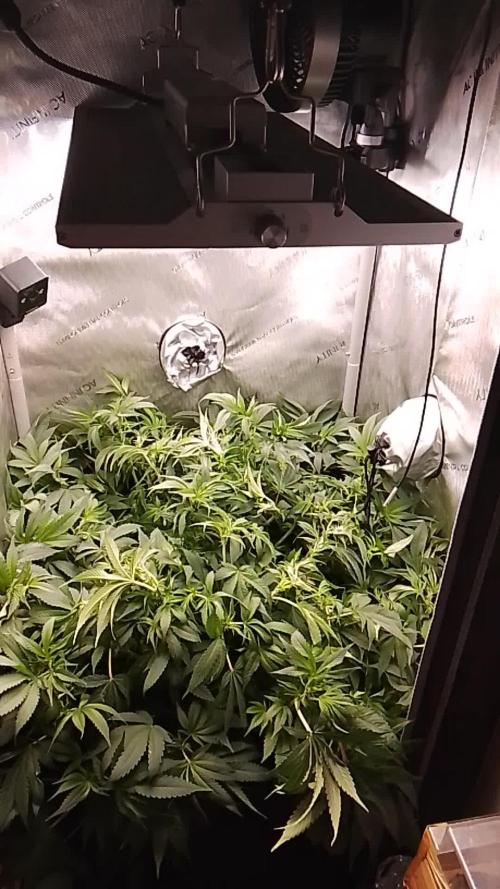
Im doing at the start of 1st week bigger defoliation fór better light penetration and air movement

Likes
3
Share


@elsolo1
Follow
- Fourth week
Decided to mainline in order to have her time to recover
Topped and trimmed according to suggestions
PH around 5.5, I usually have to check up and PH UP every day or two
Changed reservoir with a dosage of Base A- Base B- Vege- using 1.0 ML per Liter
Introduced K9 as feeding schedule from nutrient provider
Peroxide in order to help oxygen in water
No sexing yet


Likes
17
Share


@BLAZED
Follow
Week 3 (14-2 to 20-2)
14-2
Watering: Chemdog#1: 117 ml. Chemdog#2: 116 ml.
15-2
Watering: None.
No pictures.
16-2
Watering: Chemdog#1: 126 ml. Chemdog#2: 125 ml.
17-2
Watering: None.
18-2
Watering: None.
Today i will transplant the plants, i will mix 70% Coco coir with 30% Perlite.
The plants go into 18L AutoPots. I use the Airdome combined with an airstone.
I covered half of the airdome with coco, and the remaining half with clay pebbles.
The rest of the 18L pot filled with the coco mix, and the plants.
I gave both plants a 1.5L topfeed, and into the tent they go!
The light is at 70% strength, with a distance of 60 cm.
19-2
Temperature: 25.7 degrees (lights on) 20.4 degrees (lights off)
Humidity: 64% (highest) 45% (lowest)
Watering: None.
Light strength reduced to 60%
20-2
Temperature: 25.4 degrees (lights on) 20 degrees (lights off)
Humidity: 64% (highest) 50% (lowest)
Watering: None.
There is something weird going on with the leaves of the Chemdog #1.

Likes
24
Share


@gottagrowsometime
Follow
Was a pleasure to pull this lady this week.
She is 3 days into drying.
18.3c RH 57-63% in a dark bathroom
Buds are big and the plant itself you can smell from downstairs. House is filled with hints of Vanilla & fruity undertones.
Extremely high Calyx to leaf ratio.
More updates & pics coming and reports as it progresses.
20% off KANNABIAS amazing strains with code: ggst
https://kannabia.com/feminized-cannabis-seeds/candy-cream-go-fast

Likes
2
Share

@Jinxed
Follow
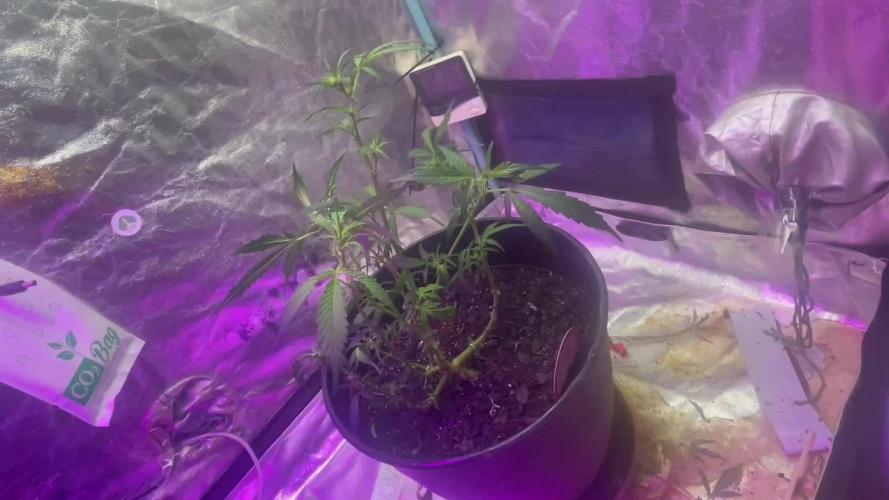
Weeks 7-8 .. Ending of 8.. I forgot to check in and they created a little forest 😅
Likes
31
Share


@MisterSix
Follow
Finally my QB 240W come and it's incredible bright. i flip it to 12/12 this week to make sure the small tent 90 x 90 x 180 not blowing up.
after 4 day i witness good stretch from the tree and the temp also decrease to 30 celcius average.
I'm happy with my grow so far hope to get 100 gram out of this harvest.
Likes
2
Share

@ShinWeed
Follow
.
🌱 Tag 28 - Eine Woche, die sich endlich wie Routine anfühlt
Seit dem letzten Update ist eine Woche vergangen und trotz kleiner Unruhe in den letzten Durchgängen hat sich das Setup diesmal deutlich stabilisiert. Kein pH-Chaos, keine Mischfehler im Tank, einfach konstante Versorgung und gleichmäßiges Wachstum.
Wir merken deutlich, dass sich unser Wachstum gerade verändert. Es geht nicht mehr nur darum, größer zu werden, sondern darum, Struktur aufzubauen. Die ersten Anzeichen der Blütephase sind da und der ganze Rhythmus verschiebt sich langsam in diese Richtung.
Noch ist es kein kompletter Wechsel, eher ein Übergangszustand. Aber wir arbeiten sichtbar anders weiter als noch vor einer Woche.
Wir wachsen weiterhin gleichmäßig und ohne Stresssignale. Die Blätter werden dichter, die Struktur klarer und intern passiert deutlich mehr, als man von außen direkt sieht. Diese Phase fühlt sich ein bisschen so an, als würden wir uns neu sortieren, bevor es richtig losgeht.
Das Wasser und die Nährlösung passen aktuell gut zu uns. Der pH wird konsequent auf 5,7 eingestellt und driftet über ein bis zwei Tage auf etwa 6,3, wo er sich dann stabilisiert. EC liegt konstant im Bereich 1,6–1,8.
Bisher kommen wir damit sehr gut klar und zeigen keine negativen Reaktionen.
👨🌾 Gärtner:
Diese Woche war unangenehm unspektakulär.
Ich hab mittlerweile den Dreh mit dem Wasser wirklich raus. pH-Management läuft inzwischen bewusst und reproduzierbar, nicht mehr nach Gefühl und Hoffnung. Die anfänglichen Probleme durch Hydrogencarbonate im Leitungswasser sind jetzt eingeplant statt überraschend.
Wichtigste Erkenntnis der letzten Tage:
Wenn man den pH sauber auf 5,7 einstellt und die EC-Spanne 1,6–1,8 hält, ist das System deutlich weniger anfällig.
Der leichte pH-Anstieg über 1–2 Tage auf ~6,3 ist inzwischen kein Problem mehr, sondern einfach ein bekanntes Verhalten des Systems. Nichts, was Panik auslöst. Eher so ein: „Ja gut, du bist halt so“-Moment gegenüber dem Wasser.
Und das eigentlich Beste:
Die Pflanzen reagieren darauf bisher stabil und ohne Beschwerden.
Likes
12
Share


@Big0zGrower420
Follow
Everything is going pretty smoothly so far. Had a lot of growth this past week, looking forward to how much more they will grow this current week.
Top dressed the two Jedi cookies, and did some minor defoliation on the larger plant.


Likes
53
Share


@Schnabeldino
Follow
The buds have developed very well this week.
I had to run the dehumidifier for a few days because it was too humid for me. I had had experiences with mold and therefore preferred to be more careful
I am very satisfied... The gorillas already look very sticky and shine silver, like a silverback gorilla.
The Honey Cream looks like I remember it...very fluffy and hairy calyxs
---------------------------------------------------------------------------------------------------
Controller AC Infinity Pro
- connector for the external light control, RJ-12
- 2 plugs with which I can control dehumidifier and humidifier.
- 2 fans run 24/7, 1 Oscillating from spider farmer
Light - 12/12 h
PPFD - 900-1000 µmol
VPD - 1,3 - 1,6
week average
RH: 54,8 %
Temp: 24,2 °
VPD: 1,38 kPa
Likes
74
Share


@Ferenc
Follow
Day 44, 2nd of November 2021:
Hi there.
So the plants had 2 days of darkness before the lamp was on again and from today it is 12/12.
Big change also is the power: It is now on full power which is 240W so 100% capacity.
Ventilation is different as well under the 12 hours period when the lamp is on it switches 1 hours on and after one hour off mostly to keep the temperature and of course because of fresh air flow. When the lamp is off it switches on in every 2 hours for 15 min at the same time with the extraction fan.
The extraction fan is on 12 hours when the lamp is, and then it switches on in every 2 hours for 30 min.
That's all a bit more water for them from today also. Humidity quite the same, temperature as well.
Fertilization changed, the BioBizz family raised up to be 2ml/L each so it is like 2ml/L of BioGrow, 2ml/L of BioBloom, 2ml/L of TopMax... see the ratio above.
Previously it was just 1ml per liter each.
The schedule of the fertilization has not changed happnes 2x a week except epsom salt just 1x a week.
Not much to mention as it just started.


Likes
2
Share

@JVKdopegrow
Follow
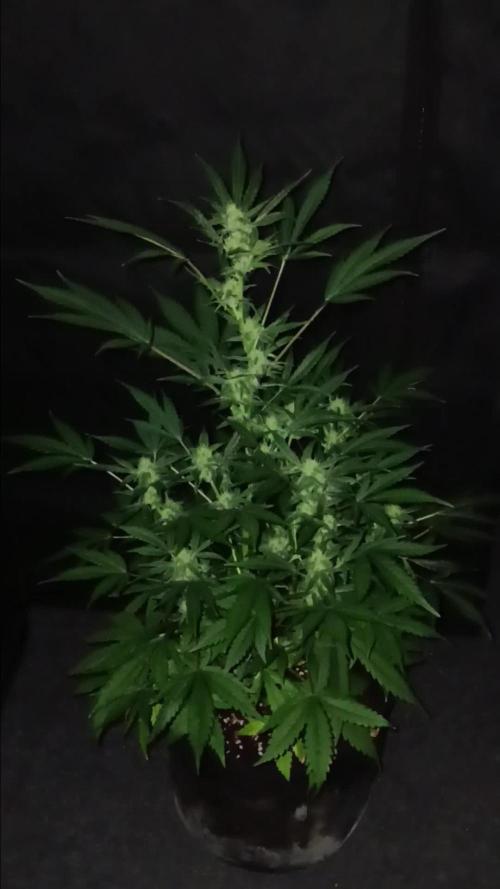
Stacking on all bud sites! Still stretching, drinking a bit more. This plant is a testament to the just leave 'em alone and let her grow style.
Processing
Likes
9
Share


@JohnnyGrower
Follow
Día 29
Esta semana se ha seguido con una fertilización con una aumentando la dosis de 2 ml a 3ml.. la dosis indicada por el fabricante es de 5ml por litro, la en unos días subiremos la dosis según lo indiquen nuestras nenas. Se ve buena respuesta de las plantas a la poda apical, dentro de la semana instalare la malla scrog kanovi para guiar los brotes de manera uniforme y llenar la carpa.
Fecha: 26 de marzo


Likes
28
Share


@Hawkbo
Follow
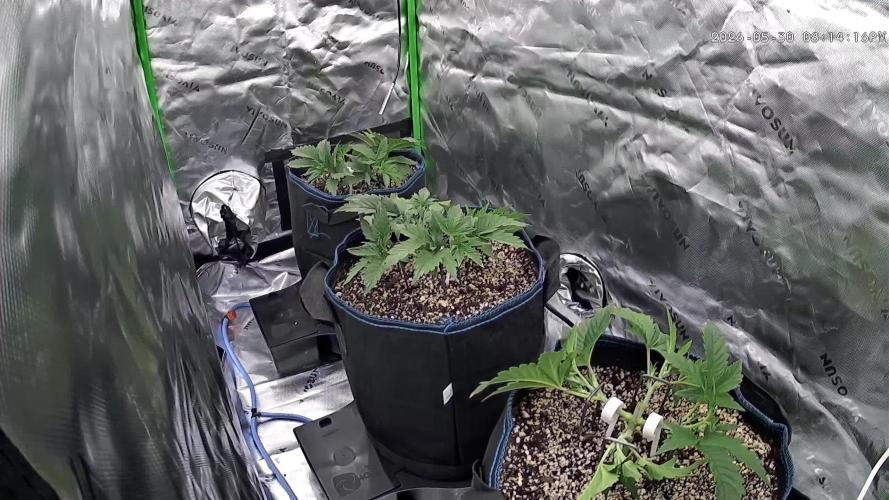
Sorry for the delay was in a wedding this weekend came home and been trimmin like a dog the past few days and didnt have time to do the update but I'll do another one before tuesday to get back on track. As of Friday sept 6 its day 46. In the video the plants from back left to right are ..
Gelato-> Cream Cookies -> Gelato
Middle row from left to right are Lemon A.K 1 -> 6 Shooter-> Lemon A.K
Front is Tester 5 -> Lemon A.K -> Tester 26
Likes
5
Share


@SmileyMorgen
Follow
5/21/22 - 5/27/22
5/22/22
Took a short video of my Zams progress today. I hope you enjoy.
5/25/22
Zam has hit a growth spurt this past 2rthours. She is measuring about 16" tall and 24' wide. Photos are not uploading on grow diaries today so I will add them.tomorrow
5/25/22
Added some lst clips today for 24 ours to bring in some.lugjtto the inner nodes.
5/27/22
My lady is finally fully in herfower stage. She has bee growing and average of 1-2" daily and is needing1 gal of notes every other day to top off her resivore