Likes
Comments
Share


@Solitude
Follow
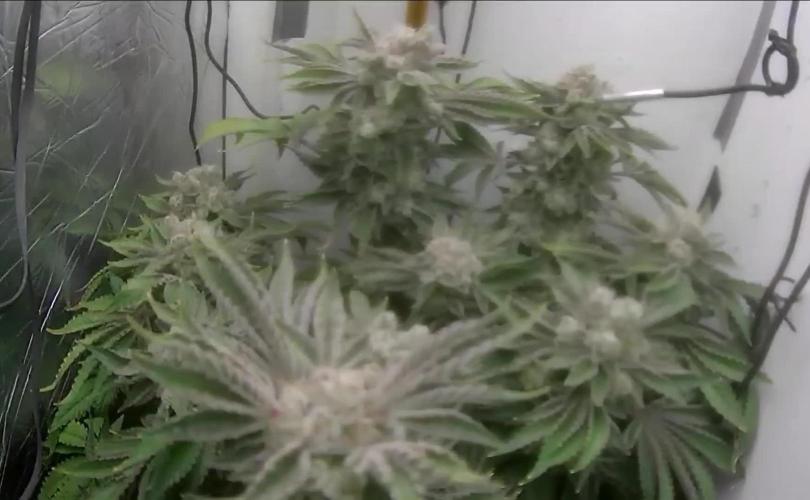
This cross between Cherry Pie and Chemdawg and do-si-dos It smells vaguely like brain cake. However, chempie has a stronger aroma than brain cake. strong terpenes of linalool, and the smoke was quite harsh and powerful with each hit. The nicest form and most substantial buds in this crop

Likes
7
Share


@Chillin_With_Sid
Follow
Stretch is coming to an end. And that's good because space was getting short. Plant was growing about 1/2in a day towards the end. Stretch was more than expected but soooo many bud sites. Defoliating every few days. Need to really get in there and do some work tomorrow. Very happy with things so far. Getting excellent development all the way down. Hopefully pics after defoliation will show this better. This is the 1st day of week 4.

Likes
29
Share


@Hasard
Follow
Last week !!!!
Day 91 : 62 days of flowering & 29 days of vegetative
I will cut them down tomorrow.
Let's harvest !!

Likes
15
Share


@Huckleberry39
Follow
She is 4 weeks into flower and doing awesome!!! I started seeing some discoloration on her tips so I cut the nutes by 25%. She is smelling great 👍!!! Buds are stacking and fattening up nicely!! So far this has been a great grow!

Likes
2
Share


Likes
14
Share


@DTHEREID
Follow
Three at my place and they are purple as can be! Gonna finish up beautifully in the next weeks. If I didn’t put these girls down they would be standing at least 60” tall. Insane how big these autos are.
These purple ones in my tent are entering week 4.
The other three out of the same pack are at my dads under my hps set up. These girls are about 50” just early on in flower

Likes
51
Share


@cheetah844
Follow
-SOAKING SEEDS STARTED AT 4:15PM on 4/2/22
All of them sank by the next day with a little stirring of the water - most of them were floating before I stirred the water then they sank & stayed underwater.
-PLANTING SEEDS STARTED AT 6PM on 4/3/22
Seedling Starter Soil:
1 Coco Coir Block (hydrated with 12cups aquarium water)
About 5 cups Vermiculite
4Tbsp Down To Earth Starter Nutrients
Mycorrhizal Fungi Spring Water - watering the hole with mycorrhizal before planting seed & then again after planted.
-AFTER THE FIRST SPROUT ON 4/5/22
Turned on seedling clip light to blue only, dimmest setting @ 20%. Keeping light on for 18/6 6am-12pm
- 4/6/22 INCREASED BLUE ONLY SEEDLING LIGHT TO 50%
It seems like they were slightly stretching for light **watch for light burn on cotyledon leaves**
-4/7/22 MORNING INCREASED BLUE ONLY SEEDLING LIGHT TO 100%
The plants are stretching even more I increased light to full 100%, it'll have to keep an eye on them & make sure they don't get light burnt or topple over from reaching
-4/7/22 AFTERNOON SWITCHED LIGHT TO GIIXER
The two tallest plant cotyledon started to droop to the side so I didn't want to take a risk continuing to try the clip light only on blue @ 100%. I have the Gixxer on only veg at a distance of 10" away from the tops of the cotyledon leaves. I also cracked the lid & put an oscillating fan on low just to give them a tiny bit of movement to strengthen their stems because they'll be tall and weaker with stretching.
*I tried using a new seedling light & it was a failure - they are now stretching due to that light. I switched back to my trusted seedling light & hoping they'll be back on track.*

Likes
16
Share

@Oyziphar
Follow
👽
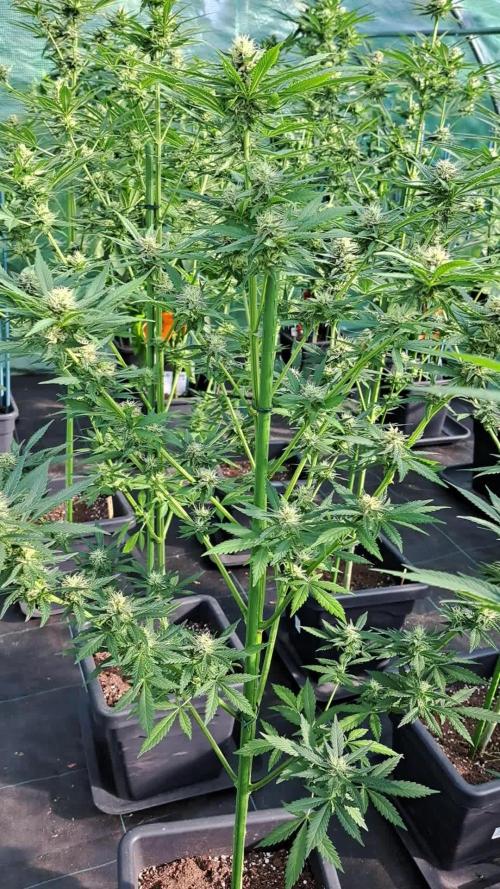
We had very sunny day this week 🌞🌞🌞, with very hot temperatures 🌶️🌶️🌶️
Fourth week of Light Deprivation
👉👉👉👉Every morning at 8:30 am I move the plants to the greenhouse.
👉👉👉👉Every evening at 8:30 pm I move the plants (together with some other strains) inside the growroom (which I don't use in the summer)
➡️ The plants have a distinct scent of citrus fruits, more specifically mandarins, clementines, or the scent of lemon verbena
➡️ I defoliated the plants
➡️ The plants are making new flowers everyday 🌻🌻🌻, trichomes are appearing, and every day they start to smell stronger 👃👃👃
👉Two times a week I boost the plants with gift of water enriched with OPF 7:2:3 ; Fulvic 25 ; Yuccah ; Biovin liquid ; Earthworm compost extract
⭐Big Thanks to Luc from Plant Health Solutions / Bioplantenvoeding dot nl ⭐
Plant #1 ; height : 140 cm
Plant #2 ; height : 128 cm
Plant #3 ; height : 111 cm



Likes
16
Share


@Bread_n_Buds
Follow
We have passed the month and we are madly in love with all our autoflowering plants, we have two per strain, one worked with a mainlining adapted according to the characteristics of the plant and one that grows straight, we can't easily give up the main cola.
For now we will show you those worked with the techniques that are more interesting to see and later planted earlier to make them finish more or less together with those that will grow straight and fast.
We really like our Green Cure CBD F1 worked with the Main Lining. It has an average interodal distance which allowed me to bend the lateral branches properly and obtain a great shape. I really like it to see.
So topping at the third internode, main lining, no pruning until the third internode and topping them again so we have multiplied the buds adequately.
The application of the techniques is a delicate moment also for fertilization. Topping slows down the growth of the plant a bit and does not make it require all that Grow fertilizer that is normally recommended. So you have to go really slow and understand when to reduce the nitrogen. Better to prepare the soil with fertilizers to mix with the soil probably. The problem is sweeping now that it is going into flowering, the plant has shown the first fluff, declared the sex, and the fertilizer will soon be needed indeed. You have to swell.
In any case everything is under control and I will demonstrate it to you during the flowering phase. Wait for the Uncle BreadandBuds and see what he does.
Remember the cold temperature makes the girls absorb food much more slowly than in summer so be careful to give the right amount and to dry the plant in maximum 2 days or you risk imbalances.
We are always using soil, feeding and all the recommended additives of Plagron 100& organic we have only lowered the amount of grow in this topping phase for the reasons given above.
---- Decide on the right soil and calculate your fertilizer card based on the soil on the official website.
-- www.plagron.com
Try a seed of this variety that drives us crazy..
---- https://www.zamnesia.io/en/10672-zamnesia-seeds-green-cure-cbd-f1-automatic.html
Description Zamnesia // Zamnesia's breeding team has harnessed F1 genetics to bring you Green Cure CBD F1 Automatic. This autoflowering cultivar is easy to grow, accessible and reliable for all levels of experience. Ready in just 11 weeks, growers can expect impressive yields of tasty buds with a clear-headed effect that's ideal for meditative moments.
All the best that mother nature can offer is on ---- www.zamnesia.com

Likes
7
Share

@GoodTimesOrganics
Follow
Welcome Back!💚
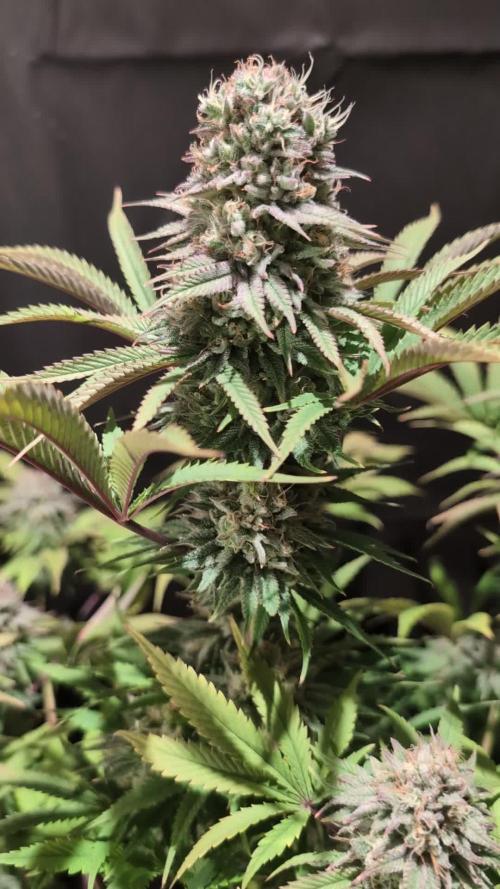
Die siebte Blütewoche ist vorbei und die finale Woche beginnt.
Die Trichome sind durchgängig milchig und nächste Woche wird es Zeit für das harvesten.
Es zeichnet sich eine schöne, Dichte Blütenstruktur ab, mit immer weiter ansteigendem Trichom Anteil.
Das Aroma ist nun ziemlich fruchtig und süß.
Da es aktuell vie Regnet, sind die Werte auch etwas anders. Die Luftfeuchtigkeit ist wieder etwas runter und die Temperatur ging auch etwas rauf.
———————
🌞 Temp: 24°C
🌚 Temp: 20 °C
💨 RH: 56%
VPD: 0,97kPa
😎PPFD: 830 mqm
———————
Stay Tuned! 💚

Processing
Likes
7
Share


@KarukeraOxymore
Follow
she likes the heat a lot, i added the co2 on the 21st day, i saw all the difference in the next hour, it's amazing how they can store so much light/she likes the heat a lot, i added co2 to the 21st day, i saw all the difference in the next hour, it's amazing how they can store so much light
* I still have not turned on the HLG 300
Likes
4
Share

@Minuteman_Organics
Follow
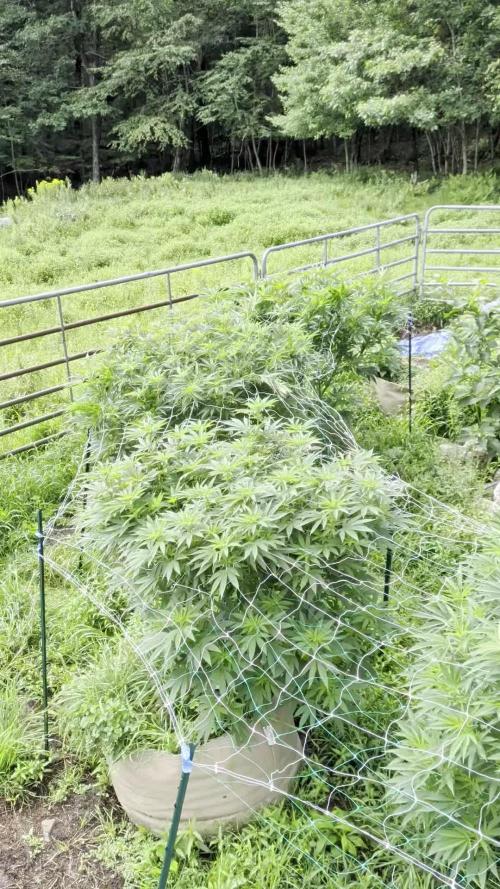
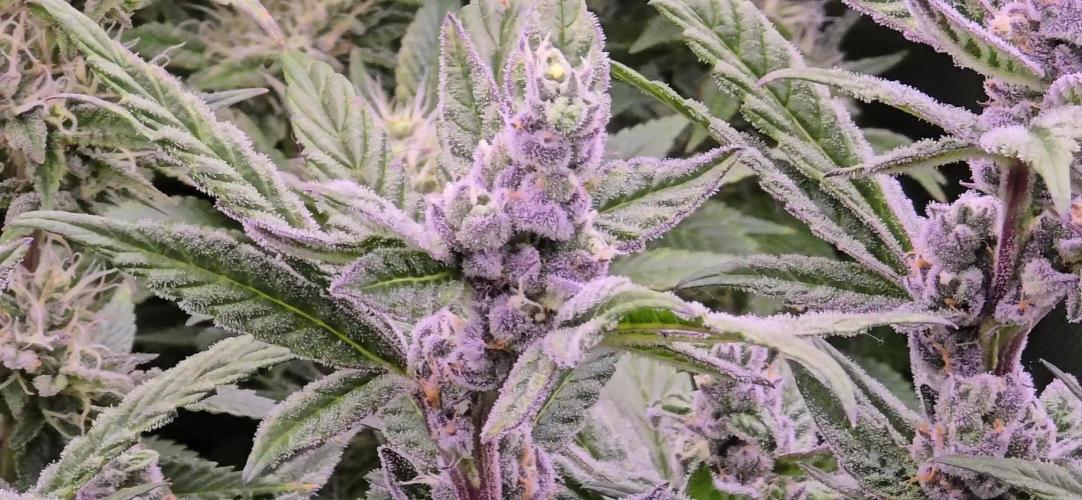
Another great week. I'd say the OG kush are absolutely in flower. One of them looks to be about 10 days in. The other maybe about 1 week. The rest are just starting to stretch. I'd say less than 7 days from the flip but I'm very happy with what I'm seeing.
Phytoplasma is a serious issue. I've been cutting tops where I see it. If I look down a branch and it has a few nodes with symptoms I'll just cull the whole branch. Not worth my time




Likes
34
Share


@Short_N_stockY
Follow
Welcome to week 5 of the LSD-25. We are officially in flowering 😍. This week there were just minor adjustments to the LST, a few fan leaves removed, and brewed compost tea for the feed. I was able to setup the GoPro again for a 24 hour time-lapse 👌
Brewed a gallon of compost tea for about 30 hours and fed her as lights turned on.
PK boosters 7g
Orgatrex 20ml
Bactrex 1 tsp
Mammoth P 1ml
Recharge 1 tsp
Alfalfa meal 1 tsp
Where are the purple buds? The purple on the stems are spreading but nothing on the buds. We'll just have to wait and see in the next few weeks. Stay tuned!
Likes
148
Share


@CrazyHorse
Follow
Hello friends, At last I find some time and I was able to fix a "days" 😛 Everything is going well and she looks very healthy. I have done a small defoliation of lower part of plant just for a maintenance a good health, canopy is in tact 😁💪😁
Update: Day 82
I will talk a little bit about conditions and my setup. For 5 weeks, I maintained Rh at 67% during the day cycle and around 75/80% during the night cycle. The temperature was kept at 24/26 °C during the day, and at 19/20 °C at night.
From this week, that is the 6th week of flowering, taking advantage of the weather and the lack of heatwaves the temperature is kept at 23 °C during the day and 16/17 °C at night, which for my darling is a perfect time for nighttime temperature drops. The air humidity is now between 57/63% Rh during the day, 65/70% Rh at night. I am pleased with the fact that I am able to maintain the conditions constantly without significant problems, even the heat waves turned out to be less problematic than I assumed 😱🙂 Thanks to the possibility of changing the fan capacity between 160/200 m3 and changing the efficiency of the air humidifier, I kept the conditions in the tent very effectively in a controlled manner. Now I will write a little about fertilizers, I use the Autopot system, i.e. a hydroponic system, a 15l pot and AirDome in side. I use BioNova + Canna enzyme fertilizers, my friends never before I grow so healthy plants as they do now on this BN + C set.
Amazing orange smell and high resin production is what makes me very happy 😁😁😁
Controlled conditions + good fertilizers + good LED lamp is probably the best "way" to enjoy beautiful buds 👍💪🤘
I am still waiting for my darling a few more weeks which are worth waiting until she will be ready 😇😇😇
I wish you a beautiful afternoon, You Lovely Girls Growers 😁😁😁


Likes
5
Share

@S_herby
Follow
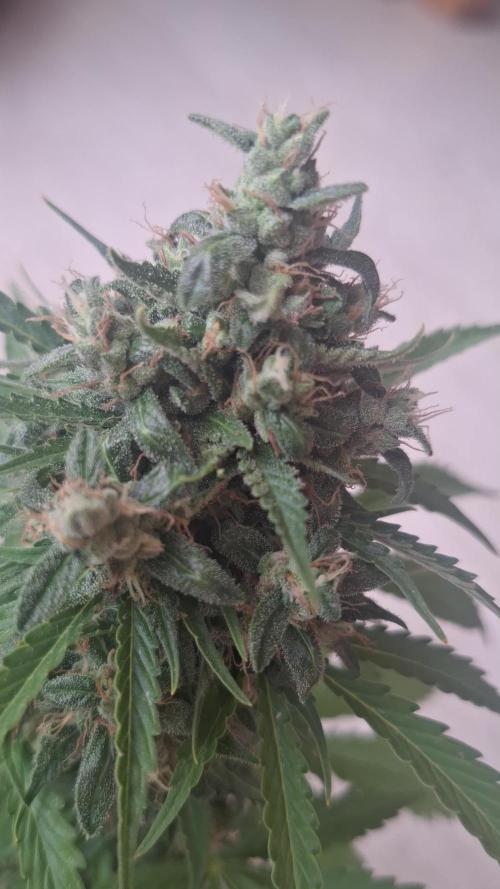
Week 10 started very well, maybe too much nitrogen during the flowering period, this caused a lot of sugar leaves to grow inside the buds! The cycle will end today or at most in 3 days.
GC is at week 8 (54 days)
OS is at week 10 (64 days)