


Likes
Comments
Share


@Cannabis_King
Follow
They are thru their first 2 weeks of flower and settling in for an awesome harvest I hope lol

Likes
22
Share


@RDWCGrowing
Follow
1/11/2024 Vegetation Week 1 Day 1- I have a root almost in the water.. Yay!! Top feeding is almost done. she is looking a little sad as I work the transition Top feeding but once the roots are fully in the water she will start to take off. Ensured my PPFD is set between 250-300 it is set to: 258
1/12/2024 Vegetation Week 1 Day 2- I have a root in the water.... NO TOP FEED TODAY SIR!!! now that a root is touching the water and she looks stable, I am not going to topfeed, I will see how she looks tomorrow and as long as everything looks good I am going to go ahead and do a change and week 1 fill on Nutes.. I know it is a couple of days in but the same Nutes go through Week 2 and get changed at Week 3 So I should be good to go.. I will just ensure I fill to root touching the water when I change tomorrow.
1/13/2024 Vegetation Week 1 Day 3- Water Change Day!!
I added 36 Gallons of Water to the system:
Silica= .5mil/gal= 18mil
CalMag= .75mil/gal = 27mil
FloraMicro=3.0mil/gal = 108mil
FloraGro=2.0mil/gal = 72mil
FloraBloom= 2.0mil/gal = 72mil
PH DOWN= 30mil
Very important thing with this system is to now wait the 24 hours for the system to adjust.. Do not make any further adjustments to your PH up or Down for 24 hours to allow time for the system to balance.
1/14/2024 Vegetation Week 1 Day 4- Today I just adjusted the PH to ensure that it was right at 6.0
1/15/2024 Vegetation Week 1 Day 5- Today I Cleaned up the lower damaged leaves from the transition from top feeding to roots in the water. She looks good today.
1/16/2024 Vegetation Week 1 Day 6- Today I just took a picture of the beautiful lady for Log. Other than that just normal day to day operations, check the pH, check the Humidifiers and fill as necessary, check level of water in the Res. Everything looks great. onto Tomorrow!!
1/17/2024 Vegetation Week 1 Day 7- Today I filled the humidifers, checked the PH and just let her grow.. Grow baby Grow.....

Likes
5
Share


@GHdog22
Follow
Feedeing is rolling keep it semple
Barney is barney ese to grow wery strong aroma and buds structure os top quality

Processing
Likes
1
Share


@Lifted
Follow
I did a heavy defoliation last week,so majority of this week was about getting my plant back to a healthy phase. I did alot more LST as you can tell in the video to start more of an even canopy. I also raised my light by 4 inches to provide a little more stretch in each branch so I'd be able to manipulate it more with LST next week.

Likes
3
Share

@mjumbo
Follow
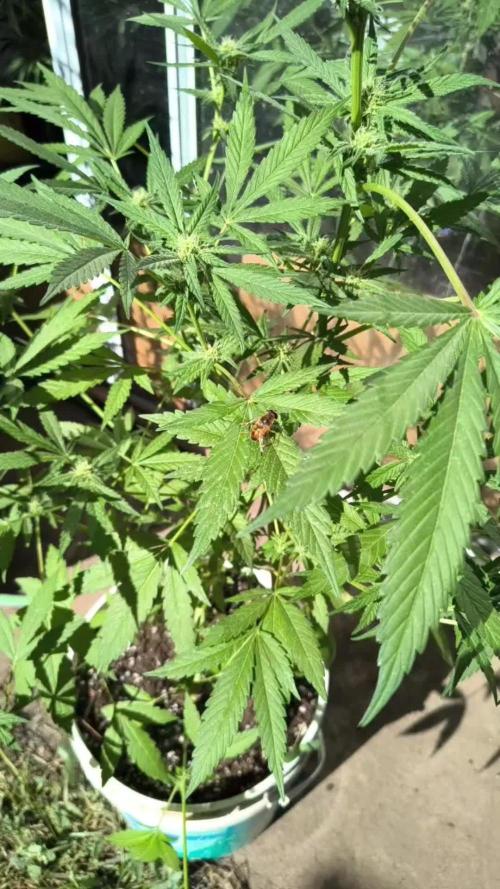
week 14 / 2 weeks of flowering
Give them BioNeem from Namasté nutrientes to keep them really Green.. I think it Is a great product to mantain your plants free from plagues.
also I have used tricomas and Flora Booster to them. Will apply surely one dose More in two weeks and no More...
not too much smell but they are growing nice.
Likes
4
Share


@Sadom
Follow
29.09.: Da es sich langsam dem Ende neigt bekommen beide nur noch Wasser zu trinken. Leider ist mir bei näherer Untersuchung der G41 aufgefallen, dass sie im oberen Bereich naher der Lampe Bananen ausgebildet hat. Ich hoffe und vermute, dass noch keine Pollen freigesetzt wurde, allerdings wird es nur eine Frage der Zeit sein, bis ich eine übersehe. Es ist natürlich sehr schwer zu sagen, woran es liegt, aber ich hoffe, dass es nicht noch sehr viel mehr werden. Auf den Blüten sind bisher noch keine braunen Trichome zu erkennen, also brauchen sie noch ein wenig.


Likes
22
Share


@PuffPuffPass_517
Follow
Start of week 3 for the girls @fastbuds 🙌🏻🙌🏻 Growing and looking strong 💪🏻 !

Likes
5
Share


@Reng420_vn
Follow
Có vẻ như pheno wedding cake đã vô tình quay trở lại thời gian ăn chay
Hay số N dư thừa là flower bị phát triển lá ?

Likes
21
Share

@Brujha77
Follow
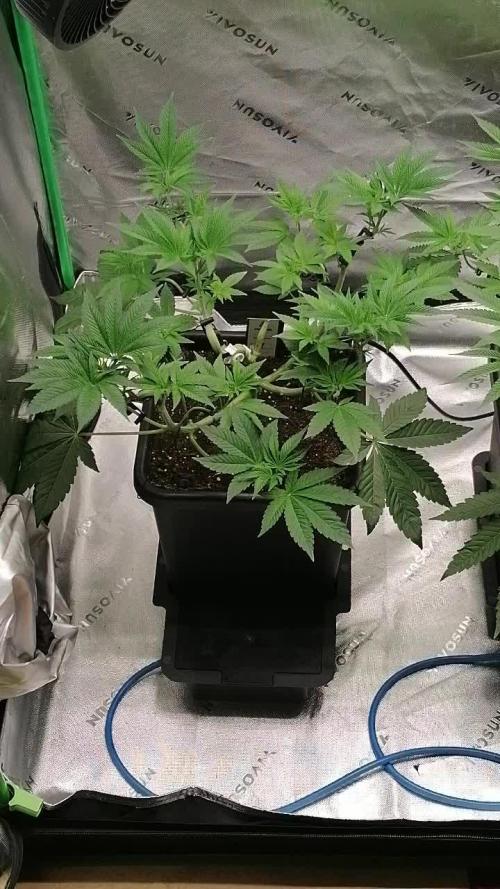
Beginn Woche 6
Die 3 bekamen heute ihr Topdress mit je 4g/l Greenhouse Feeding BioBloom.
Ich werde sie Ende der Woche dann auf 12/12 Umstellen.
Tag39
Es wurde nochmal etwas Entlaubt.
Sonntag geht's dann auf 12/12.
Likes
18
Share


@JeyGanesha
Follow
Terza settimana di fioritura inoltrata..andiamo più che bene con lo sviluppo.buona genetica anche questa papaia cookie...bravi 👏 fast buds. Continuate così .,💪✌️


Likes
16
Share


@Naujas
Follow
girl, from the beginning she was watered with water from the tap, the value of which is almost 350ppm. and a lot of lime, which prevents me from growing it bigger, but I'm happy with the result :) it's a small pot and only 50 w :) the flowers look very beautiful and sticky :) super
Likes
44
Share


@XperencdGmanXG
Follow
lots of work went into moving these girls outside. They are in a nice sunny and protected spot now. Can't wait to see these girls grow up. Gave them the best start I could. Season is a bit late here this year too.
Likes
Comments
Share


@RatmanJR
Follow
June 21st update. 28 days since flip.
Plant is growing phenomenal. Was able to crank the lights up to 80% for the first time in this grow without her throwing a fit.
All of the banana peels I’ve fed her the last few weeks have disappeared and have been feeding my soil mites and my worms. I have not had any bad pests since I started using these predator mites I love it.
I can’t even begin to describe the smell of this thing. It’s like a raspberry tart mixed with just a little hint of gas. I’m so excited to give this a try when the time comes
Noticing Trichomes going all the way down some of the fan leaves so that is always cool to see.
Also I noticed this is common with living soil but I’m done bothering trying to defoliate. I will do one more in two weeks at day 42. But anything I remove at this point is just going to come right back.
As always nothing but water. Will give her some tea tmmr like every Sunday with some big 6, worm castings, molasses, and some cow cal 24.
Likes
141
Share


@Eyeduno
Follow
Just plain water now there proper getting there fade on the self restraint I’ve had not to cut these down early 🤣

Likes
59
Share

@JeyGanesha
Follow
Gente !! sono arrivate alla 4° Settimana di fioritura...pensavo diventassero hermafrodita, per il forte stress subito,ma invece ho visto che ha solo fatto un paio di nanners(bananine)...sto controllando giornalmente che non c'è n'è altri e specialmente che non rilasciano polline altrimenti mi impollina tutto.e per ora non ho bisogno di semi,🤣😂💪.cmq stanno bene
Likes
39
Share


@J_diaz420
Follow
Se hace defoliación extrema 5 días antes del corte para intentar hacer madurar la planta de forma mas pareja.✌️👨🌾🏻
Likes
154
Share


@Tropicannibis_Todd
Follow
💩Holy Crap Growmies We Are Back💩
Code Name FBT2311
Well growmies we are at 42 days in and everything is going great 👌
👉So the low stress training been going well 👈 We got some major flowering already 👌💪she's the top of of the lot 💪
Lights being readjusted and chart updated .........👍rain water to be used entire growth👈
👉I used NutriNPK for nutrients for my grows and welcome anyone to give them a try .👈
👉 www.nutrinpk.com 👈
NutriNPK Cal MAG 14-0-14
NutriNPK Grow 28-14-14
NutriNPK Bloom 8-20-30
NutriNPK Bloom Booster 0-52-34
I GOT MULTIPLE DIARIES ON THE GO 😱 please check them out 😎
👉THANKS FOR TAKING THE TIME TO GO OVER MY DIARIES 👈
Likes
12
Share


@Archieballs
Follow
Started LST today but as of Day 22 Mazar was 24 cm Daiquiri was 13 cm and Auto Ultimate was 22 cm. They are doing really well and growing fast!! Daiquiri is definitely shorter then the other two but I believe that is her nature.

Processing
Likes
13
Share


@VALHALLA
Follow
Northern Light & Quick one - Week 3 vegetation
Box 60x60x180cm
Bio - bizz light mix
Mars hydro TS600 - 18/6
Plagron alga grow 3ml/L
Plagron Vita race 5ml/L , once a week
I'm happy with the RQS strains for my first time :)
Likes
14
Share


@TOMI08
Follow
142.nap
A trainwreck szépséges😁😁a héten megfogom ajándékozni őket egy kis vitaminnal💚💚💚
Mit gondolsz adjak nekik lő port?
