


Likes
Comments
Share


@GroW_o_MaT
Follow
I'm very satisfied. 402 grams of wet buds. That could be over 100 grams dry.
I have 4 plants in my 0,64 m² tent, it only had 0,16 m² space for its own.
The result will come in about 2 weeks.



Likes
2
Share


@KEVS_BEST
Follow
Woche 4 - Weiteres Wachstum und kräftigere Blätter
In der vierten Woche setzte sich das beeindruckende Wachstum der Pflanzen fort. Die Nährstoffe blieben dieselben wie in der Vorwoche, mit der Zugabe von 30 ml Canna Terra pro 10 Liter Wasser. Das Licht wurde schrittweise weiter erhöht, bis es die maximale Leistung für die Vegetationsphase erreichte, mit einem PPFD-Wert von knapp 500.
Die Pflanzen wuchsen immer kräftiger und gesünder, und die Blätter waren mittlerweile größer als meine Hände – und ich habe wirklich große Hände! 😄 Die Luftfeuchtigkeit und Temperatur blieben konstant und bewegten sich weiterhin im optimalen Bereich wie in der Vorwoche.
Die Pflanzen zeigten eine merkbare Veränderung in ihrer Farbe: Sie wurden deutlich dunkler grün, ein Zeichen für eine optimale Versorgung mit Nährstoffen und ein gesundes Wachstum. Insgesamt war dies eine sehr erfolgreiche und erfreuliche Woche im Grow, mit weiterhin sichtbaren Fortschritten.
ENGLISH
Week 4 - Further Growth and Stronger Leaves
In the fourth week, the plants’ impressive growth continued. The nutrients remained the same as the previous week, with 30 ml of Canna Terra added per 10 liters of water. The light was gradually increased until it reached the maximum intensity for the vegetative phase, with a PPFD value of around 500.
The plants grew even stronger and healthier, and their leaves were now larger than my hands – and I have really big hands! 😄 Humidity and temperature remained stable, staying within the same optimal range as the previous week.
The plants also showed a noticeable change in color, becoming significantly darker green, indicating an optimal nutrient supply and healthy development. Overall, it was a highly successful and satisfying week, with clear progress visible.
Woche 4 - Weiteres Wachstum und kräftigere Blätter
In der vierten Woche setzte sich das beeindruckende Wachstum der Pflanzen fort. Die Nährstoffe blieben dieselben wie in der Vorwoche, mit der Zugabe von 30 ml Canna Terra pro 10 Liter Wasser. Das Licht wurde schrittweise weiter erhöht, bis es die maximale Leistung für die Vegetationsphase erreichte, mit einem PPFD-Wert von knapp 500.
Die Pflanzen wuchsen immer kräftiger und gesünder, und die Blätter waren mittlerweile größer als meine Hände – und ich habe wirklich große Hände! 😄 Die Luftfeuchtigkeit und Temperatur blieben konstant und bewegten sich weiterhin im optimalen Bereich wie in der Vorwoche.
Die Pflanzen zeigten eine merkbare Veränderung in ihrer Farbe: Sie wurden deutlich dunkler grün, ein Zeichen für eine optimale Versorgung mit Nährstoffen und ein gesundes Wachstum. Insgesamt war dies eine sehr erfolgreiche und erfreuliche Woche im Grow, mit weiterhin sichtbaren Fortschritten.
ENGLISH
Week 4 - Further Growth and Stronger Leaves
In the fourth week, the plants’ impressive growth continued. The nutrients remained the same as the previous week, with 30 ml of Canna Terra added per 10 liters of water. The light was gradually increased until it reached the maximum intensity for the vegetative phase, with a PPFD value of around 500.
The plants grew even stronger and healthier, and their leaves were now larger than my hands – and I have really big hands! 😄 Humidity and temperature remained stable, staying within the same optimal range as the previous week.
The plants also showed a noticeable change in color, becoming significantly darker green, indicating an optimal nutrient supply and healthy development. Overall, it was a highly successful and satisfying week, with clear progress visible.

Likes
4
Share


@adam_pawloski87
Follow
At a total of 79 days this Sangria is a beautiful one! A cross between The GOGO and Ogreberry she is super delightful, Dense resiny heavy covers trichome buds , with the smell of Gassy rotten fruit funk on the nose! She a stanky one ! Other then that she was a pretty easy grow , y’all don’t sleep on it an better get your hands on it , at @Twenty20Mendocino they got you covered

Likes
1
Share

@BluntTrauma416
Follow
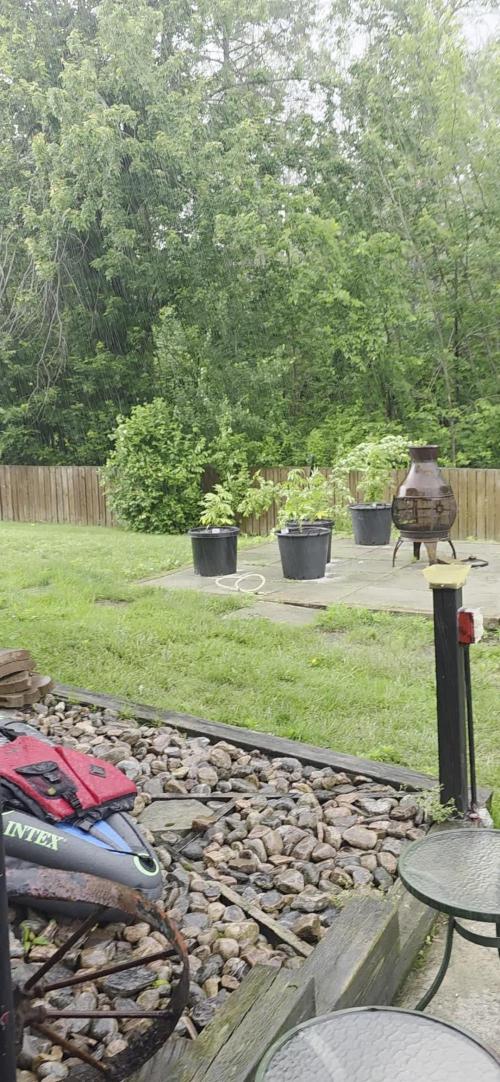
Just transplanted minutes before pics, into 15 gallon pots with promix hp and gai green all purpose 444 and 10% 20% worm castings.
Likes
43
Share


@TheCannaProphet
Follow
~ GG4 SHERBET FAST FLOWER by FastBuds ~
Well fam, here we go again with another epic strain from FastBuds Fast Flowering stable. After having such tremendous success growing their Gorilla Cookies Fast Flower outdoors last year, I've decided to run another of their fast flowering strains outdoors this year... GG4 Sherbet Fast Flower!
The best description of this awesome cultivar comes directly from my friends at FastBuds which is as follows:
"Bred from extremely potent and flavorful Gorilla Glue and Orange Sherbet genetics, GG4 Sherbet FF (Fast-Flowering) takes all the best traits to the next level, offering a high-yielding strain that can produce up to 600 g/m2 in a 7-week flowering time. This super resilient Indica-leaning hybrid thrives indoors and outdoors, and in all types of climates while producing mouth-watering sweet, fruity, spicy and earthy terps that translate into a delicious sugary hazelnut aroma. Expect an extremely relaxing and overall happy effect that’ll leave you with a huge smile from ear to ear. It’s the perfect strain for growers of all levels of experience seeking low-maintenance yet highly productive photoperiod varieties that deliver quality and quantity without extra effort.
GG4 Sherbet FF grows chunky buds with long dark orange hairs and spade-shaped calyxes that get encrusted with trichomes by harvest time, giving them a gorgeous silvery-white appearance. This medium-sized photoperiod can reach up to 200 cm in height and yields up to 650 g/m2 while developing that typical hybrid structure. GG4 Sherbet FF grows with a stocky, bushy appearance, developing one sturdy main cola and fat side branches that support huge yields without much effort. This super-fast variety produces distinctive light-green buds with a high bud-to-leaf ratio, making your trimming sessions a breeze. It’s a top-notch resin producer that doesn’t need much maintenance and will thrive in almost every climate, rewarding growers of all levels with extremely flavorful resin that makes for outstanding hash end extracts."
________________________________________________________________________________________________________________________________________________________________________________________________________________________________________________________________________________________________________________________
The Setup:
This is going to be an outdoor grow, but I have started the GG4 Sherbet Fast Flower indoors as our weather is still too cold to put her outside (nighttime temp's dipping regularly into the 30's℉).
The plan is simple... let her grow inside under a 19/5 light schedule until the nighttime temperatures stay above the mid 40's℉, at which point she'll be moved outside and transplanted into the soil which I have already setup and inoculated with beneficial microbes, and then let the fun begin!🤪💚
________________________________________________________________________________________________________________________________________________________________________________________________________________________________________________________________________________________________________________________
Weekly Updates:
8/10- Wow! Here we go into Week 4 of flower for the GG4 Sherbet Fast Flower by FastBuds and this lady is on a mission! The GG4 Sherbet FF has large cola's forming all over her and they are rapidly stacking up. Her flowers are continuing to develop and are beginning to get a thick layer of trichomes on them!
8/12- Today, the daily watering routine continues at sunset with around 5g of well water from the hose. I also went into the canopy and removed a bunch of dead and/or completely yellowed leaves to keep the foliage clear of debris which can cause insect and fungal issues if allowed to get out of hand.
8/14- I am continuing to water the FastBuds GG4 Sherbet Fast Flower daily with 5-8 gallons of well water from the garden hose.
Yesterday, I top dressed the FastBuds GG4 Sherbet FF with 3 cups of Gaia Green 2-8-4 Power Bloom which I watered in with well water from the hose. I then applied 1/2 gallon of a nutrient mix I made up in 2 1/2g of well water consisting of: 1/4 cup Neptune's Harvest Seaweed(kelp) plant food and 2 1/2 tsp. of Plantonics Amino Bliss.
8/16- We have rain in the forecast over the next three days. There were a couple of passing light rain showers today which didn't provide a lot of rain so I went ahead and watered the GG4 Sherbet FF with approximately 5g of well water just to make sure that she didn't get thirsty.
There's a month in flower for this beautiful fast flowering cultivar from the experts at FastBuds and all I can say is WOW! I can't say enough positive things about this strain and will, for sure, be running it again! See you next week!😎✌️
Thank you for checking out my diary, your positive comments and support make it all worthwhile! 💚Growers Love!💚😎🙏

Likes
5
Share

@PapaTerps
Follow
Black Cherry Gushers - Barney's Farm
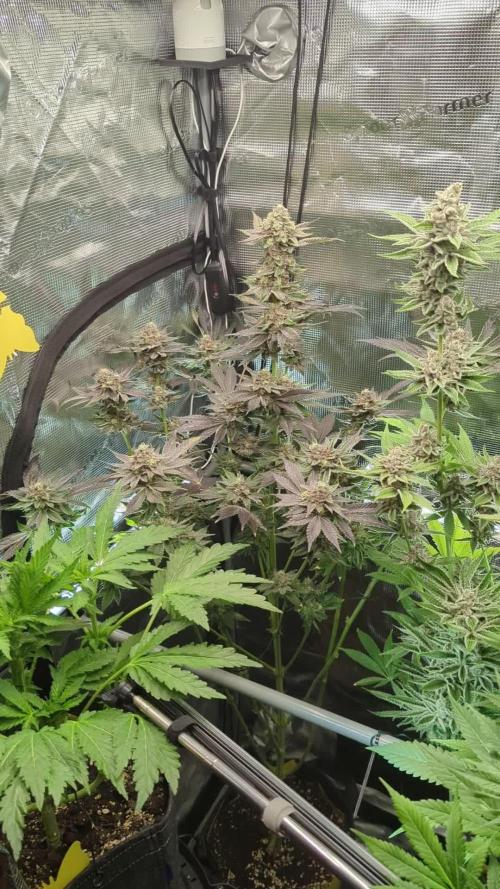
Day 102 - watered with 3L of RO tap water with nutrients, mixed individually, in order and then pH'd to 6.3. She has finished bulking her flower and is now maturing, her leaves and part of her flower have started to take on a dark purple colour indicating that she coming close to the end of her lifecycle. I have started to reduce the amount of nutrients I've been giving her, as I prepare her for harvest. I will continue to do this untill her final week, when she will be given just plain RO tap water; this is known as the flushing process.
Day 104 - she's about eight to ten days from harvest; about 60% of her pistils have turned amber and her trichomes are mostly milky - so today she'll be getting her first flush! 🤘🏻 I watered her with 5L of RO tap water with just a half measure of Bio Bloom and Top Max nutrients, and then pH'd to 6.3. Her next watering, the nutrients will be halved again, and from then on, she'll only receive water.

Likes
10
Share


@Dreadnug
Follow
Coming along nicely - weekly nutes continue. Training the 4 offshoots and trimmed at the 3rd node. She is long on most sides so it will be interesting training her back to get ready for scrog.
Likes
Comments
Share


@midnighters420
Follow
good week, no issues and noticeable growth. fed the girls and kept things stable.



Likes
9
Share


Likes
16
Share


@HowtoBubatz
Follow
The plant is growing very good i dont see any problems.
I started with the LST training and cut 1 branch of wich wouldnt get much light.

Likes
37
Share


@yan420
Follow
FERMAKOR BARREL MIX – BASE IN USE
(Testing on the Fantasy Feast girl we pulled out of another diary
https://growdiaries.com/diaries/274722-grow-journal-by-yan402 )
(FERMAKOR BASE SYSTEM KOH VERSION diary
https://growdiaries.com/diaries/278391-grow-journal-by-yan402)
(Urea & Micros on the way — first week running without them)
🍶💧🍶💧🍶💧🍶💧🍶
💧 30 L Barrel – Current Working Mix
🍶💧🍶💧🍶💧🍶💧🍶
Step 1 – Calcium Nitrate (Part A)
7 L warm water (~35–40 °C) → added 45 g Calcinit, stirred until fully clear.
That’s the calcium + nitrogen backbone for the feed.
Step 2 – FERMAKOR PK Base (Part B)
15 L water in the main barrel → added 30 ml FERMAKOR PK Concentrate, mixed well.
This forms the main P + K part of the formula.
Step 3 – Combine Solutions
Slowly poured the Calcinit mix into the barrel while stirring — no reaction, still crystal clear.
That confirms the mix is stable and precipitation-free.
🌿 Step 4 – FPJ / FFJ Batch
Added 30 ml homemade FPJ (fish + veg batch) ≈ 1 ml/L.
Color shifted to a light-amber tone — looks alive and active.
🍋 Step 5 – Citric Acid Balance
Added 1 tsp citric acid after everything was blended to fine-tune pH and help chelate micros later on.
📦 Step 6 – Top Up & Check
Filled to the 30 L mark with plain water → pH tested with drops, showing yellow-green — roughly 5.8 – 6.0 range.
Nice clean look, stable smell, no residue.
💧 Current Base Ingredients (Active Mix)
Warm Water ≈ 22 L total
Calcinit 45 g → N + Ca foundation
FERMAKOR PK Base 30 ml → P + K support
Citric Acid 1 tsp → Chelation + pH balance
FPJ / Fish Emulsion 30 ml → Organic enzyme booster
Result: clean amber mix, mild and balanced.
I’ll let this version run for a week before adding anything.
👀👀👀👀👀👀
Observations and changes
👀👀👀👀👀👀
27.10.25 VW27 noticed some min burnt tips so I decreased Calcium Nitrate 45 to → 40g, decided to add two more elements micros and Epsom salts just to make sure they got everything, Fetrilon Combi 1 (Micros): 0.5 g, Epsom salts: 8 g
28.10.25 VW27 she seems devoid of any deficiencies, seems ready for the flip to 12/12
02.11.25 VW27 girl is looking good so I decided to stop making daily videos and do a standard once a week update.
09.11.25 aVW28 7 days since flip,stretch in full swing, first pistils showing, leaf color deep and healthy. Slight tip burn early week → gone after pH stabilized.
Feed stayed clear, no residue, roots clean and sweet-smelling, did what I hope is a last cleanup and pruning🎥
10.11.25 VW29 added Phosphoric acid pH down to the schedule for flowering stage.
14.11.25 FW1 FERMAKOR PK Micros 40 → 50 ml
🌱💦🌱💦🌱💦🌱💦🌱💦🌱
🌿Day to day tasks & actions 🌿
🌱💦🌱💦🌱💦🌱💦🌱💦🌱
16.11.25 VW29 – no feed no water
17.11.25 FW1 – Fed 3l of #1 → 1l runoff
18.11.25 FW1 – Fed 3l of #1 → 1l runoff
19.11.25 FW1 – Fed 3l of #1 → 1l runoff
20.11.25 FW1 – Fed 3l of #1 → 1l runoff
21.11.25 FW1 – Fed 3l of #1 → 1l runoff
22.11.25 FW1 – Fed 3l of #1 → 1l runoff
23.11.25 FW1 – Fed 3l of #1 → 1l runoff
🍶💧🍶💧🍶💧🍶💧🍶
💧 Nutrients in 30 L #1 Veg — FERMAKOR
🍶💧🍶💧🍶💧🍶💧🍶
💧 Calcium Nitrate (Calcinit / Nitcal):
45 g → 40 g → 35 g
= 1.33 g/L → 207 ppm N + 253 ppm Ca
= 1.17 g/L → 183 ppm N + 224 ppm Ca (current)
💧 PK Concentrate (FERMAKOR Base):
30 ml → 40 ml → 50 ml
= 1.00 → 1.33 → 1.66 ml/L
→ balanced 1:1 P:K + light micros (from extract)
💧 Home-made FFJ/FPJ (Fish + Veg):
30 ml
= 1.00 ml/L
Epsom Salt (MgSO₄·7H₂O):
8 g
= 0.27 g/L → 26 ppm Mg + 35 ppm S
💧 Fetrilon Combi 1 (Micros):
0.5 g
= 0.017 g/L
→ Fe 0.7 ppm • Mn 0.7 ppm • Zn 0.3 ppm • Cu 0.3 ppm • B 0.1 ppm • Mo 0.02 ppm
Phosphoric Acid (pH down) + Citric Acid (chelation):
→ First set pH with phosphoric acid
→ Add a little citric only if extra chelation is needed
💧 Target pH: 5.8 – 6.0 (drop test yellow-green)
📦 TOTAL Inputs:
60 ml → 70 ml → 80 ml / 48.5 g per 30 L
= 2.00 → 2.33 → 2.66 ml/L + 1.62 g/L (current)
YouTube Link: https://youtube.com/-m8h?si=A7x4Zlr2kj-_ga31
Likes
15
Share


@valiotoro
Follow
Hello everyone😎
Week 6 of flower for the LCC🍋🍒🍪
All the top buds harvested✂️
I had a lot of fun growing this strain🤩
The smell is absolutely out of this world…the colors…💜
I have 3 different pheno,all purple,some smells more citrus and the others more ripe cherries!
One more week for the lower buds and finito I already feel nostalgic😜
*what’s coming out of the yuzu is essentials oil,every year I make Yuzucello feel free to ask me the recipe🍸🍋
Processing
Likes
18
Share


@bono420
Follow
DAY 53
Had to take out of the room the Amnesia XXL hermaphrodite; cant take the risk of turning the rest into males too.
DAY 54
FUUUCKKK!! The wind dropped a piece of heavy wood onto the plants!!!
1 of the Moby Dick was totally broken. Some branches of the neighbour plants were affected too.
So that's 2 plants lost at the moment (the hermaphrodite and the broken one).
Day 56
Two days after the tragedy. Had to reorganize the room to prevent similar accidents in the future 🖤😢 Saved the most I could but definately this stressing event will influence the plant’s development.
Also, considering taking out the claw leaved plant, which has signs of hermaphroditism (FML again 😫).
Hope these 7 make it till the end.
PS: Also, there’s 1 Moby Dick which has no signs of flowering at day 56, cant figure out what’s happening with it. I’m starting to think that it’s an Regular Feminized seed instead of an autoflowering.

Likes
19
Share


@eldruida_lamota
Follow
Vamos familia primera semana de floración de estás apollo black cherry de SeedStockers.
Que ganas tengo de ver el progreso de esta variedad, las plantas están sanas, se ven con buen color.
La cantidad de agua cada 48h entre riegos.
Esta semana añadimos nutrientes de la gama Agrobeta.
Ya puedo confirmar que elimine la plaga de tripa con aceite de nene jabón potásico e insecticida para ácaros.
Las plantas están bastante bien ya llevan una semana en 12 horas de luz 12 oscuridad.
Estas próximas semanas veremos como avanzan.
Mars hydro:
Code discount: EL420
https://www.mars-hydro.com/
Agrobeta:
https://www.agrobeta.com/agrobetatiendaonline/36-abonos-canamo
Hasta aquí todo, Buenos humos 💨💨.

Processing
Likes
51
Share


@Silverback_Guerilla
Follow
1/4:
Crazy stink suddenly erupting from the closet over the past few days..ordered a new carbon filter and replaced all other carbon filters in the house...and 3 jars of skunk scrubber...worth a shot...
1/5:
Now just have 13 plants in the closet, so maybe I can increase mass and density on the lowers a little better now.
Moved the Platonium, Velvet Sugar Breath (Sugah Bref), and the GG4 into the tiny tent under a pair of Mars Hydro TS1000W's. They spent the first month of their lives in this tent, and they'll spend the last month in there as well.
There's barely enough headroom for them, but they have a little more elbow room than they did in the closet. I think I'll put one of my 70w 3000k waterproof boards on the floor of the tiny tent facing upwards tomorrow and see if the temps are still manageable on mild days.
1/10:
Very happy with all these girls! Even the Berry Bomb is showing potential, but the Wicked Stix plants are absolute stellar whoopass
The trichs on the green Sucrose Overdose pheno look like river sand, or maybe brown sugar. Sexy. The red-leaved pheno has frost half way out its fan leaves and smells amazing. The Muscadine Wines are my favorite plants in the crop, though. Every bit as frosty as the SOs, but the sexy burgundy colorations make them special. Platonuium and Sugah Bref are also coming along very nicely. You can tell they've got something special brewing...wonderful aromas. The GG4 is the slowest flowering of the bunch, but she's gonna produce very well. Her branches are all over the place.

Likes
28
Share


@TrueNorth
Follow
-Strain: Purple Lemonade - Fast Buds
-Tent: 5x5 Gorilla Grow Tent
-Lights: Budget LED Grow Lights 2 x 250 Watt
LED Full Spec/Red Spec mixed boards
-Light Cycle: 18/6
-Soil: Fox Farm
-Air Circulation: AC Infinity Cloudline T6 Inline Duct Fan
WECLOME BACK GROWMIES! Week 11 here with our PURPLE LEMONADE by Fast Buds!
February, 02, 2020 (DAY 71) - What up what up growmies! Welcome to week 11 where we see this beast is just swelling up. I cant believe i got the turn around i wanted. Remember the panic i had in the first couple weeks of how ugly it was and blabla. LOOK AT HER! She is starting to purple up i think. She is still 5L a day with out a drop coming out the bottom its absolutely mind blowing.
Im sorry the last two weeks werent filled with updates, life has been busy and complicated i truly am sorry and will do better i promise.
February
Likes
4
Share

@Growfather1
Follow
Hello everyone,
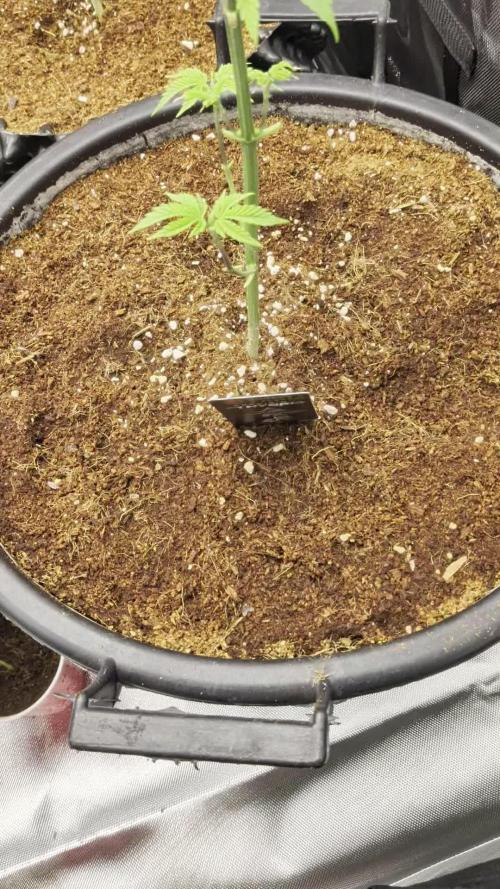
The Banana Runtz F1 hybrid is entering week five.
I’ve noticed some minor burned leaf tips, possibly from the neem oil treatment.
The humidity is holding around 63%, while temperatures stay between 23 and 25°C, though they peak at 27 to 28°C for about two hours in the afternoon.
Lights are on 24/7, and I've just introduced the Spider Farmer G5000 to provide more sunlight.
She spent her first four weeks hiding under the canopy of a flowering plant, so she’s definitely enjoying her new, brighter life.
Best regards,
Growfather.
Likes
21
Share


@Rap_a_cap
Follow
No rain from April, it rains the day before the harvest........WTF
Perfectly ripened, this half of a plant will become among the prettiest buds ever grown. See U in few days for harvest.
Spoiler: great smoke!

Likes
9
Share


@DeepRootsGrowTrees
Follow
KICKASS AUTO by KANNABIA
Week #5 Apr 30th- May 7th
This week was the last week of veg as she started to pre-flower towards the end of the week she's 16 inches and so growing she has side branches that are also growing at a good rate she going to be a shorter busy lady. She looking 👍 nice and green no issues this week. She's loving being outside!! Stay Growing!!
KANNABIA.COM KICKASS AUTO

Likes
20
Share


@MrWolfe
Follow
These lights are a bit hot so I’m gonna upgrade to my Luxx 645s for the rest of this run.


