


Likes
Comments
Share


@Kmikaz420
Follow
La recolte été pas mal du tt pour le peut de place disponible^^ j ai eu 160 g d herbe seche et curred
Et après le curring le goût est tt simplement sublime !!! Ressemble beaucoup à la mère de chez soma seed 😀 bon vous aurez compris je ne peut juste rien dire de négatif sur cette strain hors mis *qu on la fume beaucoup beaucoup trop vite ^^


Likes
11
Share


@Hix57
Follow
La semaine 5 s'est déroulée plutôt bien, même si on a eu un petit excès d'azote.
J'ai décidé de stopper complètement l'apport d'azote et de passer à une alimentation exclusivement dédiée à la floraison pour le moment.
Mes plantes ont fini leur phase d'étirement et se concentrent désormais sur la formation des fleurs.
En douceur, je commence à retirer une à deux feuilles par jour.
Un grand merci à louloutre pour son précieux coup de main !
🌱

Likes
7
Share


@Cthoff
Follow
Fed Flower Girl Tea this past week 1x.
One plant has reached 28in and there are plenty of bud sitings all around.
Defoliated a lot (did my version of lollipopping), I wanted to isolate the bud spots for maximum light.
Watering every 2 days, plants are drinking up real quick!

Likes
52
Share


@MeaCulpa
Follow
The first thing I did was disinfect everything and put it in the shower.
Then I calmly rewired the tent and filled the pots. 20% clay balls at the bottom as drainage.
On top 50% Biobizz All- and 50% Biobizz Lightmix. I mixed the whole thing well beforehand.
3 seeds came out great, one is currently fighting through and I don't think anything will happen to the last.
I planted them all today. Let's see if the last one can still make it.

Likes
10
Share


@CzAlmighty
Follow
Veliká škoda že jsem neměl víc semínka . Tahle indica stojí za to ji zkusit .. DOPORUČUJU😎🍀💚

Likes
13
Share


@wheedtobeus420
Follow
She’s finally finished I’m so happy to have her. She smells like red starburst and zkittlez. She taste like she smells. I’m very happy how she turned out. Beautifully. Super sweet and right up my alley. Fastbuds hits it out of the park once again!
Likes
18
Share


@Luca90
Follow
Today 23/07/22 We are two days into week 5, never talked about nutrient or water’ problems I had some leaves with few yellow marks but very small one beside that I always saw my plants green and happy, here you can see the scrog I set up yesterday not sure if this will work better but I think will help the branches grow further from the others increasing the light they riceve! I made it myself I will order one for the next grown when I will get my grow box! The watermelon is already flowering but the northern light no so today I started feeding the plants with different preparations.. I kept on giving the grow booster with a bit of bloom booster and viceversa for the watermelon! If you have any tips anything you think I’m doing wrong or you see it’s not ok let me know I don’t grow in a box I grow between the curtains and my window so the environment wasn’t always the perfect one

Likes
54
Share

@Natrona
Follow
Godfather OG- MSNL
👉Sponsored Grow 👈
W6F3 11/9-15
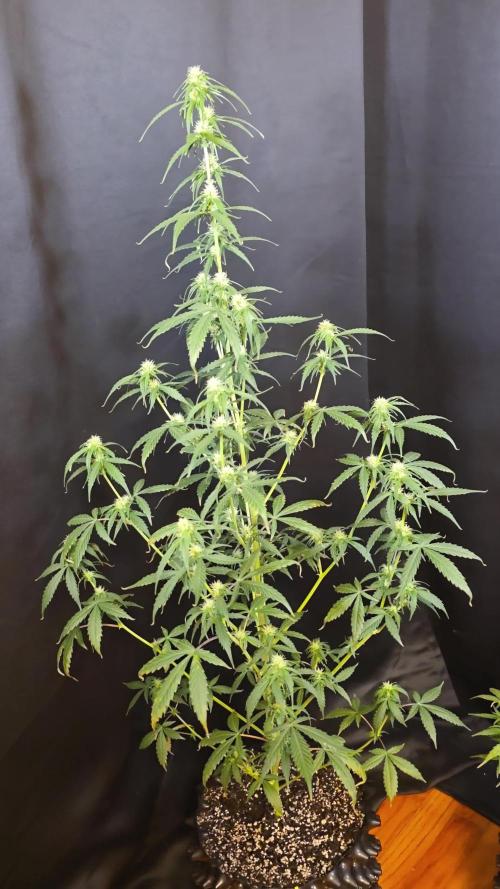
This week I had to increase watering on GFOG #2 4.5 liters and #1 3 liters.Since NYC Diesel leaves look so dark green with some clawing and all the gals in the tent are receiving the same nutrients as NYC Diesel, I determined I ‘ve overfertilized. The Godfather OGs have some leave with mottling so to be cautious I gave them Calmag the first time and the second only PH 6.15 water with a 1 gallon flush. I defoliated some large fans that were damaged by low cal mag. GF OG #1 has roots growing out of the base of the stalk.
Stay green, growers love 💚🌿
💫Natrona💫

Likes
1
Share

@Mo_Powers
Follow
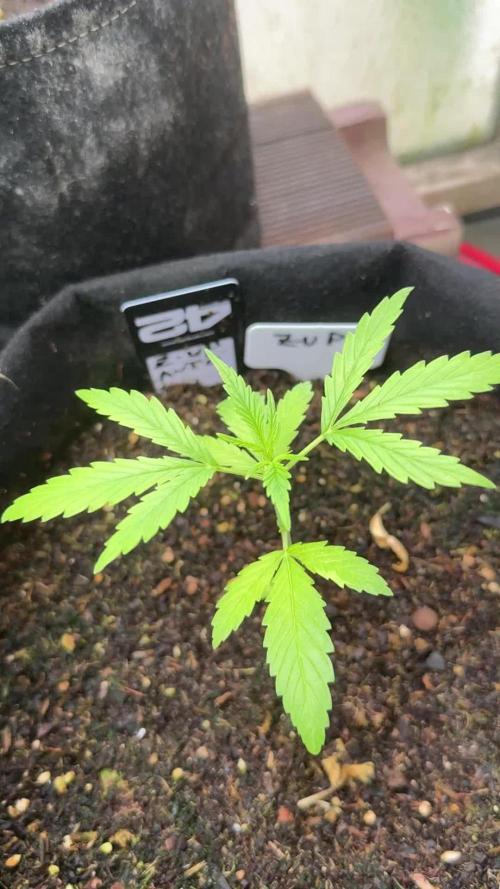
The cold days are behind us and summer is just around the corner. It’s only a small step so far, but with the warming sun, it’s set to take off in the coming weeks.
Likes
42
Share


@noodle
Follow
Yo ho ho things are getting a little out of control here. By the end of this week the single plant has grown from the windows to the waaaaallls, measuring 30 inches across and somewhere around 20 inches tall. Humidity is a real problem now with all that transpiration, and because my house is 60-65% RH it is pretty hard to keep the tent humidity below 70% even with ventilation and a dumb thermoelectric peltier dehumidifier. The dehumidifier pulls 160-170ml of moisture out of the air each day but I feel like I might need something bigger (although I'm pressed for space already). VPD ranges from 7.6hPa in the morning and climbs to around 9.5hPa by lights out as the tent warms up.
I've seen a lot of people who use the Growmau5 / RapidLed "Far Red Initiator Puck" to help kick their plants into bloom but $37 shipped and it doesn't even have built-in scheduling? I designed my own puck with 4x Cree XPE-2 Far Red (730nm) LEDs, a driver, wifi access and control for scheduling and setting brightness, and while I was at it I added in 0-10V dimming with override dimmer potentiometer, as well as a DHT22 temperature and humidity sensor for logging. I call it the Initgnokt.
I am also seeing pairs of fine little hairs coming out at nodes, we definitely got a ladyplant here, hope to get some blooms coming soon?

Likes
14
Share


@Gamepichayut420
Follow
สัปดาห์สุดท้ายละ ใกล้จะเชือกกันแล้วนะ ผมคนไทยปลูกเองสูบเอง มีดอกดีๆสูบ กับความเมาที่เราสร้างขึ้นมาเอง เราเจอปัญหาก็แก้ปัญหาทั้งหมดด้วยตัวเอง
มีความสุขทุกครั้งเวลาที่ดอกไม้เบ่งบานสะพรั่ง และส่งกลิ่นที่หอมเย้ายวนชวนฝัน ลิ่มลองรสชาติที่แสนหวานหอมจากพลัง Aeroponics ซึ่งไม่น่าเชื่อว่าจะเจ๋งมากขนาดนี้ และสามารถรีดศักยภาพของสายพันธุ์ออกมาได้อย่างน่าเหลือเชื่อ และนี่ก็คือครั้งแรกที่มาลองกับระบบ Aeroponics
ปลูกสนุกมาก แต่ก็มีปัญหาบ้างแต่ก็แก้ได้ ถ้ามีความอดทนในการปลูกและการควบคุมระบบ และนี่ปลูกโดยไม่ได้ควบคุม VPD เอาง่ายๆคือปลูกเล่นแต่ดันปังซะงั้น ☺️


Likes
20
Share


@Ultraviolet
Follow
Not particularly growing for speed or any dedicated reason this time round, just adding water and a abundande of positivity, gotta admit I do like the autoseed logo. Off we go again into the magical forest.
(Arthrospira platensis) cultivated in high-alkaline, mineral-rich water in Kailua-Kona, Hawaii. It is renowned for having a higher nutrient content, including more carotenoids and essential fats, compared to other spirulina brands. It is frequently cited as a "complete food" due to its dense concentration of proteins, vitamins, minerals, and pigments.
The nutritional profile of standard dried Spirulina platensis biomass. 3kg of spirulina powder has an approximate NPK ratio of 10-2-1 (or 10% Nitrogen, 2% Phosphorus, and 1% Potassium).
Here is the breakdown of the nutrient content for 3kg of powder:
Nitrogen (N): ~300g (10% of total mass)
Phosphorus (P): ~60g (roughly 2% of total mass)
Potassium (K): ~30g (roughly 1% of total mass)
3kg of spirulina powder is more than enough nitrogen for 4 cannabis plants in a 100-gallon pot—in fact, it is likely excessive and could cause severe nutrient burn or toxicity if not properly managed. Spirulina has a very high protein content (46% to 63% dry weight), which translates to a significant nitrogen source. It is often described as a 5-1-1 NPK fertilizer.
3kg (3000g) of powder in 100 gallons means 30g per gallon. General organic recommendations for potent amendments (like frass) are often around 1–3 tablespoons per gallon. 30g of powder is roughly 2-3 tablespoons, making this a very high-strength application rate if added all at once. Balance this with calcium/magnesium, and organic nutrient delivery in soil growing can lead to deficiencies in these nutrients.
Not all of that 100 gallon is used, so figuring out precise measurements was ballpark, but there is about 10kg of engineered biochar in that pot. Mostly in the top half. Ideally, I'd have 25kg in a full active 100-gallon, but......... don't mess with something that is not broken. Roots do not utilize the entire 100 gallons. This has been a couple of years of trial and error, mostly error. The amount of cations you can add in grams depends entirely on the specific cation exchange capacity (CEC) of your biochar and the type of cation being added. Biochar CEC values vary widely, typically ranging from 4 to over 300cmolc/kg. Multiple Biochars in use, ranging upwards of 100cmolc/km.
Different cations have different atomic weights
Potassium K+ 39.1g/mol.
Calcium Ca2+ 40.1g/mol.
Magnesium Mg2+ 24.3g/mol.
Nitrogen NH4+ 18.04g/mol.
You get more nitrogen bang for your buck. It all depends on the CEC of the biochar you use, but brrrrrrrrrr roughly I'm looking at 500-600 grams worth of elemental cation exchange capacity, give or take. That's just for the biochar alone. Elemental cation exchange capacity refers to the ability of materials—such as soil, minerals, and biochar to adsorb, hold, and release positively charged ions Ca2+, Mg2+, K+, Na+, Al3+, and Zn2+. This capacity is a critical measure of nutrient availability in soil and energy density in electrochemical systems.
Added calmag 2:1 to complement spirulina.
Calcium (Ca): Approximately 150g - 300g of elemental calcium.
Magnesium (Mg): Approximately 75g - 150g of elemental magnesium.
So long as pH stays in 6.3 to 6.7 ish, the plant will unlock hydrogen. Plants will be able to cycle CEC for their own needs. Hydrogen ion pumping (proton pumping) is a fundamental mechanism used by plant roots to facilitate the cycling of nutrients within a medium's Cation Exchange Capacity (CEC), directly increasing nutrient availability. A growing medium's Cation Exchange Capacity (CEC) does not contribute directly to Electrical Conductivity (EC). CEC represents potential nutrient storage, while EC represents active nutrients in the water/soil solution. A medium with a high CEC can hold many nutrients, but if there is no water present, the EC will be low.
98% of plant nutrient uptake comes directly from the soil solution.
2% of nutrient uptake is directly from soil particles.
Nutrients held on exchange sites (CEC) are not directly measured by EC until they are released into the soil solution through exchange with other ions (e.g., hydrogen ions from roots or fertilizer).
Plants source the H+ ions (protons) used in cation exchange primarily by exuding carbon sugars into the rhizosphere, then microorganisms perform root respiration, which reacts with soil water to form carbonic acid H2CO3 that dissociates into H+ and bicarbonate. Roots also actively pump out H+ ions directly to acidify the rhizosphere, plants trade hydrogen produced through metabolism for essential nutrients held by the soil.
In plant cells, the H+ (protons) used in proton pumping across the plasma membrane come primarily from the cytoplasm (cytosol). The protons are derived from internal cellular sources, including metabolic processes that release H+, and the regulation of intracellular pH homeostasis.
Distilled water is highly useful in managing the electrical conductivity (EC) of a growing medium by allowing for precise control over nutrient concentration and assisting in the mobilization of nutrients from the cation exchange capacity (CEC) into the active, plant-available nutrient solution.
Just add water & positive energy.
Potential hydrogen. pH. + - , potential charge balance for hydrogen.
So long as there is adequate oxygen in the soil and air and water moves at a decent interval, its practically impossible for the pH to skew in a soil that is taking in oxygen and releasing CO2 and nitrogen, I say practically, but meh, even with plenty of oxygen, the process of converting ammonium NH4+ to nitrate NO3- by bacteria releases hydrogen ions H+, which directly causes acidification (lowering pH). While water movement is necessary, consistent water moving through the soil can leach away basic cations Ca2+, Mg2+, K+, Na+, leaving behind acidic hydrogen and aluminum ions, causing pH to drop, especially in humid regions. High levels of CO2 in the soil (from intense respiration) dissolve in soil water to create carbonic acid, H2CO3, which lowers the pH. (barometric pumping removes that possibility) The pH in a cannabis cultivation environment, particularly in hydroponic or soilless setups, will often naturally drift towards acidic (lower pH) over time. Understand how to know when to lime the pH back up. Complex but critical. Once I understood this it helped ease the pain of understanding pH.
Base saturation directly reflects the percentage of CEC occupied by base cations. Generally, as base saturation increases, soil pH increases because fewer acidic cations, H+ and Al3,+ are present on the soil colloid surfaces.
At a pH of 7 or higher, the soil colloids are saturated with base cations, resulting in a base saturation of 90+%.
While many sources include Sodium Na+ as a base cation, some calculations focused specifically on plant nutrients (like in some nutrient management contexts) may focus solely on the "Big 3": Ca2+, Mg2+, and K+. However, in soil science and CEC (Cation Exchange Capacity) measurements, sodium is usually included in the definition of total base cations, making it the "Big 4" base cations.
At a pH around 5.5, soils often have a 45–55% base saturation, while a soil with a pH between 6.5 and 6.8 generally has an 80–90% base saturation.
Base saturation is considered a reliable, albeit complex, indicator of soil fertility and the degree of soil weathering, acting as a crucial metric in soil classification and management.
Once you take full control of the pH, so long as there is oxygen, and one keeps tabs on base saturation levels. Its near impossible for anything to go wrong. All you are essentially doing is adding water and waiting for any sign of deficiency. Not so much growing as eliminating the possibilities of things going sideways. Can't over or under water, can't skew pH, can't go anaerobic. Everything runs in optimal cycles, watering every 2 to 3 days or as required, depending on the rate of combined ET. A little warmer, a little drier, but never short on water. All the nutrients are already there in the medium, we still focus on the water, just not adding salts, but to mobilize nutrients held in the Cation Exchange Capacity (CEC) and move them into the active soil solution for plant uptake, the best supplements to add to water are fulvic acid, humic acid, or seaweed/kelp extract. Liquid solutions with high concentrations of essential trace elements. Distilled water has no alkalinity or minerals to help buffer or release nutrients. Adding these supplements turns the "empty" water into an active agent that forces nutrients off the CEC colloids into the solution for plant uptake.
When to water? When Electrical Conductivity of soil gets low. No water, no conductivity.

Likes
40
Share


@GYOweed
Follow
Looking kinda poopy. I fimmed it, maybe doesnt like the small pot. Maybe overfed. Will feed ro for now and foliar if needed.

Likes
71
Share


@SlowpokeFuegobud
Follow
😈 💄 🐊 🐙 💚 😈 💄 🐊 🐙 💚 😈 💄 🐊 🐙 💚
Madame Medusa is really sweet actually!! 😍 Very short! 😈 💄 🐊
Thanks @James for the goodie pack, always an honor and pleasure to grow for RoyalQueenSeeds! 🙏 💚 💨
Thanks @Green_Buzz_Nutrients for sponsoring the nutrients for this grow!! 💚 💚 💚 Amazing product line!! 🌞 🌱
If you like to try them, you can find a generous discount on their products in my setup description!! ⬇️
Thanks @MedicGrowLED 💚 I love the Light!! 🌞
___________________________________________________________________________________________________________________
Medusa F1
Medusa is a true F1 hybrid created from pure, inbred cannabis lines. She boasts uniform grow traits, mouthwatering aromas and flavours, and plenty of potency. If you're looking to bring stable, elongated plants into your room, tent, or garden, look no further.
Medusa F1: Mouthwatering Aromas, High Potency, and Mid-Size Plants
Though she won't turn you to stone like the mythical goddess after which she's named, Medusa F1 is bound to get you plenty stoned in her own special way. Combining genetics from inbred lines deriving from Sugar Magnolia, a thick and sweet indica, and American Beauty, a fast, fruity hybrid loved for its well-balanced, positive high, the result is an autoflowering F1 variety that produces fresh flavours, a unique cannabinoid profile, and large yields.
Aromas, Flavours, and Effects of Medusa F1: Mint, Pepper, and Fresh Fruit With a Balanced Cannabinoid Profile
Medusa F1 is a very aromatic cultivar with a vibrant concentration of terpenes bearing notes of fresh mint alongside an upfront peppery kick, backed up by hints of fresh fruit, berries, and tangy fuel. Her thick, frosty flowers consistently produce high levels of THC and CBG, as well as high concentrations of myrcene, ocimene, farnesene, and caryophyllene. As a result, Medusa F1 has strong effects that relax and stone the body from head to toe (brought on by particularly high concentrations of myrcene and farnesene) while motivating the mind with an uplifting, creative, and motivating kick (thanks to high concentrations of ocimene).
Growing Medusa F1: Tall Yet Manageable Plants With Heavy, Easy-to-Trim Flowers
Medusa F1 seeds produce elongated autoflowering plants with long, strong branches and well-spaced internodes. Plants regularly grow up to 80–85cm tall and boast a fast flowering time of just 42–45 days (72 days from germination to harvest). Thanks to her genetics, Medusa F1 produces plenty of thick flowers with big, swollen calyxes that make for very easy trimming. Medusa F1 is very stable, handling stress and unfavourable growing conditions with ease, though she is somewhat susceptible to Botrytis, so make sure to keep tabs on the humidity in your grow room/garden.
Flowering time: 40-45 days 🚀
https://www.royalqueenseeds.com/f1-hybrid-cannabis-seeds/621-medusa-f1.html
_______________________________________________________________________________
SETUP:
80x80x180 cm Zelsius
Medic Grow MINI SUN-2
240W Full Spectrum LED
Built-in Timer
LCD Display
high PPFD of 2300μmol/m2/s
@ 6 ’’ in height, efficacy is up to 2.8μmol/J, and PPF is up to 672μmol/s
built in controller with timer and dimmer
www.medicgrow.com
Green Buzz Nutrients
Shouts go out to my sponsors @GreenBuzzNutrients, thanks so much for your support! 💚 💚 💚
If anyone would like to try their amazing organic products, use code GD42025 for generous 25% discount (for orders of minimum 75€) ✨
https://greenbuzznutrients.com/
custom exhaust fan 320/270cm³/h
Carbon Active Granulate 240cm³/h
tab water pH 8 - EC 0,25 with Calmag to 0,5
Advanced Hydroponics pH minus Grow + Bloom to pH 6.2
Likes
1
Share

@Organic_bud21
Follow
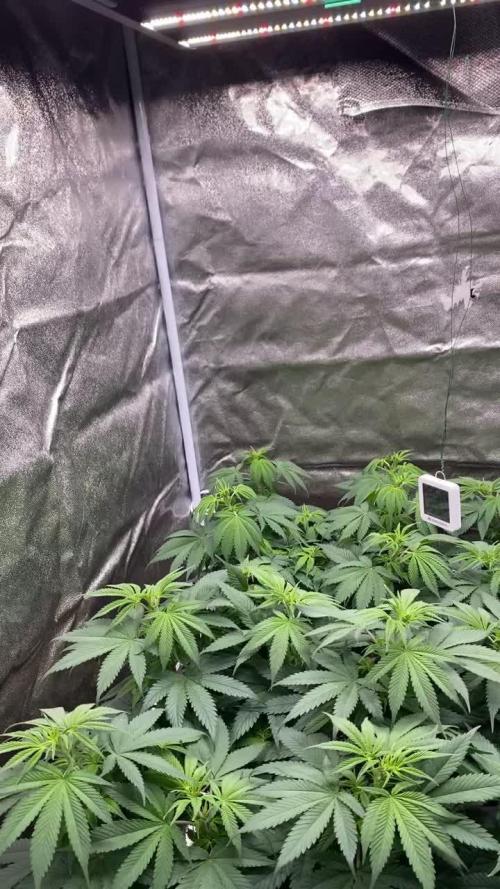
Endlich ist es soweit und die erste Blütewoche stand auf dem Plan. Insgesamt muss ich die vegi nächstes Mal etwas verkürzen. Diese Woche hat sich viel geändert. Angefangen habe ich mit der Einleitung der Blüte unter 24h Dunkelheit. Meine Zeitschaltuhr war noch im Sommer Modus, also lief Nachts. Den Zyklus habe ich auf den Tagesverlauf angepasst um die hohe außen Feuchtigkeit von momentan 85-90% ideal über den Tagesverlauf nutzen zu können. 6Uhr Licht an, 18:15 Uhr Licht aus. 30min auf und Untergang. Natürlich habe ich auch einen Entfeuchter, der dadurch nur selten lief. Die Nährstoffe habe ich Angepasst auf ein 1:1:1 Verhältnis, um langsam Stickstoff raus zunehmen und dafür Kalium reinzubringen. Mit Bud Ignitor habe ich direkt 1 Tag vor Blüteumstellung mit 2 ml pro L begonnen und Bud Faktor X kam auch dazu, Voodoo Juice wieder mit ins Schema und B-52 raus. Außerdem habe ich noch die 2 Ts 1000 gegen 1 FC E 3000 gewechselt, da sie momentan frei war. Gleiche Leistung, gleiche LED, aber bessere Lichtverteilung. Die Temperaturen habe ich auf 27 Grad über Tag und 24 Grad in der Nacht gehoben um das Wachstum zu fördern. Der EC ist quasi gleich geblieben.


Likes
35
Share


@Santica_Garden
Follow
So, it's the end of Week 4 of Flower, and the ladies are doing really great. Only issue I'm encountering at the moment is with the Carbon Filter which doesn't seem to be exhausting as much air as I'd like it to. I have attached a video which explains everything.
Happy Growing guys


Likes
8
Share


@Yukon_Pico
Follow
So far so good. Seems to have taken well to the LST. I did notice the early signs of CO² deficiency and added an organic CO² producer on day 37. Hopefully that spurs the growth.
Last frost is in a little over a week. After that I hope the power of the Yukon sun can really give it a boost in its final weeks.

