


Crazy strain for outdoor | Top quality | Living soil



Soil
Custom

Perlite
Custom

Vermiculite
Custom

Other
Custom

Outdoor
Room Type
Topping
weeks 3, 6
Defoliation
weeks 6
HST
weeks 6-7
LST
weeks 6-8
55 liters
Pot Size
5 liters
Watering
Start at Harvest
G
Germination2y ago

Itashish /
10 likes
2 comments
Share
2
Week 2. Vegetation2y ago




5 liters
Watering Volume
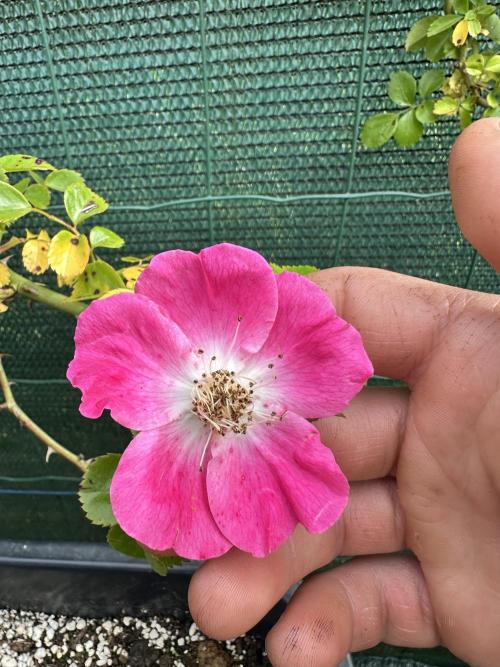
Itashish Freaky se porte bien pour l’instant, elle n’a pas l’air d’attirer les limaces.
Je vais commencer à l’alimenter en thé de compost oxygéné pour la booster un petit peu
12 likes
5 comments
Share
3
Week 3. Vegetation2y ago


15 cm
Height
18 hrs
Light Schedule
22 °C
Day Air Temp
70 %
Air Humidity
20 °C
Solution Temp
15 °C
Night Air Temp
55 liters
Pot Size
5 liters
Watering Volume
Nutrients 1
The de compost oxygen
5000 mll
Itashish Pour l’instant la Frosty purple freak a une bonne croissance, les changements de température en belgique n’ont pas l’air de lui posé problème, les feuille sont saines , croissance visible quand tu repasse le lendemain, les limaces sont encore présentes mais ne s’attaque plus au plantes saines, mise à part la vigne à kiwi qui doit être le saint graal de ses bestiole sinon à part ça plus de problème à déplorer
12 likes
6 comments
Share
Used techniques
Topping
Technique
4
Week 4. Vegetation2y ago



15 cm
Height
18 hrs
Light Schedule
22 °C
Day Air Temp
70 %
Air Humidity
20 °C
Solution Temp
15 °C
Night Air Temp
55 liters
Pot Size
5 liters
Watering Volume
Itashish —
10 likes
2 comments
Share
5
Week 5. Vegetation2y ago


50.8 cm
Height
18 hrs
Light Schedule
22 °C
Day Air Temp
70 %
Air Humidity
20 °C
Solution Temp
15 °C
Night Air Temp
55 liters
Pot Size
5 liters
Watering Volume
Itashish Eeeewwww what’s that brother ?
13 likes
comments
Share
6
Week 6. Vegetation2y ago


50.8 cm
Height
18 hrs
Light Schedule
37 °C
Day Air Temp
70 %
Air Humidity
20 °C
Solution Temp
15 °C
Night Air Temp
55 liters
Pot Size
5 liters
Watering Volume
Itashish —
13 likes
1 comment
Share
Used techniques
Topping
Technique
LST
Technique
HST
Technique
Defoliation
Technique
7
Week 7. Vegetation2y ago




25 cm
Height
18 hrs
Light Schedule
31 °C
Day Air Temp
70 %
Air Humidity
20 °C
Solution Temp
15 °C
Night Air Temp
55 liters
Pot Size
5 liters
Watering Volume
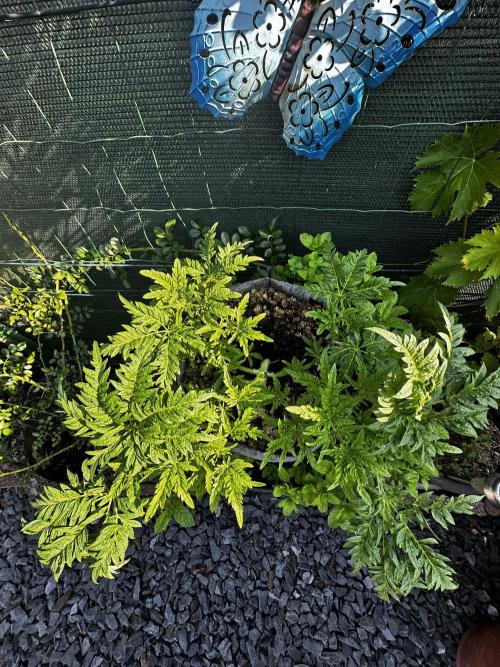
Itashish Bonne reprise depuis la semaines dernière, du fait que j’ai tailler les feuilles, les secondaires se sont plus développés, il forme une belle canope actuellement
Là floraison devrait pas tardé à arriver, on est actuellement à 14h d’ensoleillement quotidien , plus qu’à attendre que le sexe se déclare
Pas de problème à déclarer, elle semble en très bonne santé, belle couleur de feuille, pas de tache, structure solide
Elle commence à avoir une bonne odeur, j’aime beaucoup le parfum qu’elle dégage. En plus comme j’ai de la menthe marocaine dans le pots si dessous, ça se mélange très bien les deux ensemble. J’ai hâtes de pouvoirs faire un thé mauve mutant marocain avec ses deux beau bébé qui poussent
11 likes
comments
Share
Used techniques
LST
Technique
HST
Technique
8
Week 8. Vegetation2y ago




25 cm
Height
13 hrs
Light Schedule
31 °C
Day Air Temp
70 %
Air Humidity
20 °C
Solution Temp
17 °C
Night Air Temp
55 liters
Pot Size
5 liters
Watering Volume
Nutrients 1
Only water
5000 mll
Itashish V
12 likes
1 comment
Share
Used techniques
LST
Technique
9
Week 9. Flowering2y ago


25 cm
Height
13 hrs
Light Schedule
31 °C
Day Air Temp
70 %
Air Humidity
20 °C
Solution Temp
17 °C
Night Air Temp
55 liters
Pot Size
5 liters
Watering Volume
Nutrients 1
Only water
5000 mll
Itashish On ne voit pas encore les pistils mais on sent qu’ils vont pas tarder à arriver, elle s’étire grandement de jour en jour
13 likes
comments
Share
10
Week 10. Flowering2y ago


40 cm
Height
13 hrs
Light Schedule
28 °C
Day Air Temp
70 %
Air Humidity
20 °C
Solution Temp
17 °C
Night Air Temp
55 liters
Pot Size
5 liters
Watering Volume
Nutrients 1
Only water
5000 mll
Itashish 🧟♂️❄️
13 likes
comments
Share
11
Week 11. Flowering2y ago


50 cm
Height
13 hrs
Light Schedule
28 °C
Day Air Temp
Normal
Smell
55 %
Air Humidity
20 °C
Solution Temp
17 °C
Night Air Temp
55 liters
Pot Size
5 liters
Watering Volume
Nutrients 1
Only water
5000 mll
Itashish Que dire mise à part que se strain est tous simplement magnifique ? Il porte bien son nom, il commence à être bien Frosty! Et la couleur violet commence à apparaître de plus en plus! Les bud sont beau et dégagent une belle odeur fruité, le plant a une sacré couverture résineuse, je pense qu’elle pourrais être parfaite pour faire des extraction!
Cette semaine je lui ai donné un thé de compost oxygéné, on va voir comment elle va réagir.
Recette du tco pour 20 litres. (Grammes : gr)
50gr biochar
250gr zéolite
3gr granulé Micro-Organisme IT45
10gr pollen d’abeilles
10gr levure de bière
3gr endomychorize
10gr consoude
20gr vers de farine
10gr cendre coque de ricin
12gr ortie microniser
15gr Kelp
10gr spiruline
10gr de cbd living soil
20ml de miel liquide
30ml de mélasse
20ml d’acide humiques et fluvic
Mettre tous les ingrédients (sauf la mélasse ,l’acide h/f et le miel) dans un filtre 400micron, le placer dans un seau avec de l’eau (10litres). Rajoutez le miel et 10ml de mélasse
Y mettre un micro bulleur alimenter sur une pompe à air et faire oxygéné le mélange pendant 24h. Rajout de 10ml de mélasse après 12h le début de la mise en route de la pompe.
A la fin des 24h rajoutez le restant de mélasse et d’acide h/f, mettez y en plus 10litres d’eau au mélange.
Reste plus qu’à arroser!
Pour la Frosty j’y ai incorporé 7litre de mélange
La veille j’ai préparé le pot à l’arrosage avec 500ml d’eau et 2gr de Bacillus IT35 Amyloliquefaciens X5
Bacillus Amyloliquefaciens : rhyzosphère, probiotiques. Aspersion et arrosage. Utilisable pour toutes cultures.
La bactérie Bacillus Amyloliquefaciens se fixe dans la rhizosphère en se nourrissant des exsudats racinaires. En contrepartie, elle stimule la croissance racinaire en sécrétant des métabolites de croissance et solubilise le phosphore en sécrétant des phytases (enzymes).
Effet probiotique consistant en l’utilisation de micro-organismes bénéfiques pour la nutrition et la santé des plantes.
La spiruline, le plus riche et le plus complet des amendements organiques
La Spiruline est une algue aquatique connue comme complément alimentaire, la Spiruline est aussi un amendement organique et écologique très complet.
D'une grande qualité nutritive, elle apporte à vos plantes une quantité de nutriments, dont l'azote, phosphore, potassium, minéraux, acides aminés, vitamines, chlorophylle et protéine.
Le charbon végétal actif est capable d’absorber jusqu’à cinq fois son poids propre en eau ainsi que les éléments nutritifs qui s’y trouvent. Il joue ainsi le rôle de catalyseur et d'amplificateur pour les fertilisants traditionnels, qu'ils soient d'origine organique ou minérale. Ce pourquoi il est idéal pour activer un sol et pour les thés de compost oxygénés.
Le charbon végétal améliore la diffusion et la disponibilité des éléments nutritifs dans le sol et offre des conditions propices au développement des micro-organismes.
Le Biochar peut être introduit dans une grande variété de sols. Il est particulièrement efficace dans les sols pauvres, difficiles et acides.
Pour faire agir rapidement et efficacement sa capacité d’amendement, le charbon végétal est enrichi et biologiquement activé avec des micro-organismes. Le Biochar se comporte ainsi comme un structurateur et un activateur dans le but de valoriser les sols.
Composition :
• Charbon végétal actif 31%
• Matière organique 33%
• Matière sèche 75%
• C/N : 17
• PH : 7,2
• Azote (N) : 2,1 % dont 1,2 % azote organique
• Phosphore (P205) : 0,74%
• Potassium (K20) : 1,18%
• Calcium (Ca) : 6,8%
• Magnésium (MgO) : 0,65%
Le pollen est l'ingrédient de base de la fabrication du miel par les abeilles. Riche en vitamines et minéraux, il est qualifié « d'aliment parfait », y compris pour les plantes !
Les zéolithes sont des roches cristallines, présentant des capacités d'adsorption particulièrement importantes vis à vis des polluants que l'on rencontre dans l'eau et dans certains liquides, ainsi que dans l'air et les gaz. Elles sont extrêmement poreuses comme les charbons activés et elles peuvent être chargées électriquement pour opérer comme des échangeurs d'ions.
La zéolithe est un produit naturel qui respecte notre environnement. Utilisé dans le milieu industriel depuis de longues années déjà, ce minerai aux propriétés filtrantes particulières commence à se vulgariser dans le domaine de la piscine privée, de l'aquariophilie, des bassins d'agrément, de la récupération des eaux de pluie, ou encore de la culture des bonsaïs et autres plantations diverses par exemple...
4 points techniques majeurs :
- Grâce à leur propriété hydrophile, les zéolithes peuvent adsorber l'eau jusqu'à 30% de leur poids total et sans aucune variation de volume : pas de gonflement en présence d'eau ni de craquement en cas de déshydratation comme certaines argiles. Les zéolithes sont d'ailleurs de puissants agents anti-mottant (anti-agglomérant). Cette propriété est très appréciée dans le cas des terrains de golf et autres aires de jeux.
- Les zéolithes ne captent pas l'eau de façon irréversible, elles se comportent comme une réserve au voisinage des racines. Celles-ci peuvent capter l'eau en fonction de leur besoin. Les zéolithes permettent ainsi de réduire les besoins d'arrosage jusqu'à 35 %.
- Une zéolithe se comporte comme une "Zone de Stockage" qui retient l'azote et les éléments minéraux nutritifs au voisinage des racines et les relâche lentement en fonction des besoins de la plante. Cela se traduit par une croissance harmonieuse mais rapide du végétal.
- La capacité d'adsorption et l'énorme rapport surface/volume des zéolithes, vont permettre à la fois la rétention de la solution du sol et une bonne oxygénation au voisinage du système racinaire. Les zéolithes favorisent donc l'organisation biologique des sols en contribuant au développement de la micropopulation. L'apport en nutriments (N, P, K) est réduit de 20 à 25 %. Ces derniers, adsorbés par la zéolithe, sont beaucoup moins sensibles au lessivage et à l'évaporation.
Composition minéralogique :
* Chabasite 70 %
* Phillipsite 2 %
* Feldspath 5 %
* Augite 3 %
* Illite - Mica 2%
Analyse atomique:
* Sio2 52 %
* AL2o3 17 %
* CaO 5,7 %
* K2O 6,1 %
* MgO 2 %,
* Na2O 0,6 %
* Fe2O3 3,6 %
Amendement calcaire, dolomie et gypse avec préparation microbienne à base de Bacillus Amyloliquefaciens IT45 et Saccharomyces cerevisiae LYCC6420
Formulation : micro granulés (1 – 1,6 mm) à base de rhizobactéries favorisant la croissance des plantes qui se multiplient et colonisent rapidement la zone des racines, et de levures Saccharomyces cerevisiae souche LYCC ayant un effet probiotique.
Les PGPR produisent des enzymes qui solubilisent le phosphore à partir de complexes inorganiques et organiques dans le sol et stimulent la croissance des racines efficaces augmentant ainsi la zone d'interception des éléments nutritifs. Les levures LYCC permettent une occupation de la rhizosphère par une flore bénéfique.
Composition :
• Matière sèche : 96,8%
• Matière organique : 91,5%
• N total : 6,6% dont N soluble dans l'eau 0,17%
• P total : 2%
• K total : 1,7%
Micro-granulés :
• Oxyde de calcium (CaO) total : 30%
• Oxyde de magnesium (MgO) total : 7%
• Anhydride sulfurique (SO3) : 13%
La levure de bière est une matière vivante qui permet un meilleur fermentation pour les thés de compost oxygénés notamment conseillé pour accompagner les croissances ou apporter un gros coup de pousse pendant la floraisons.
La levure stimule la vie des sols également à l'arrosage direct en apportant tout aussi bien que dans le TCO sa population l'espèce micro-bactérienne positive pour votre sols ainsi que des oligo-éléments et diverse vitamines.
Composition :
• 2,8% (N) total dont 1% (Norg),
• 2,3% (P205)
• 1,6% (K20)
• 35% de MO
• C/N : 8. PH : 8,4.
Sous forme de poudre mouillable. Il contient des spores du champignon mycorhizien Rhizophagus Irregularis MUCL57891 avec des levures inactivées spécifiques. 2000 spores/gramme d’endomycorhize Rhizophagus Irregularis MUCL57891 et Saccharomyces Cerevisiae LYC6420 inactivée. Se connecte efficacement au système racinaire et forme un vaste réseau souterrain de filaments, qui agissent comme des extensions pour atteindre les nutriments et l’eau au-delà de la rhizosphère
Composition :
• Poudre contenant 2000 spores/g. d’endomycorhizes Rhizophagus irregularis
La Consoude (Symphytum Officinale) est une plante présentant de nombreuses propriétés.
Particulièrement riche en Potassium (K) organique, la consoude est une alliée idéale pour les périodes de floraison. La consoude a tout pour plaire : riche en vitamine B12, elle agira également comme stimulateur racinaire, mais aussi comme biostimulant cellulaire, grâce aux alcaloïdes, aux allantoïnes et jusqu'à 30% de protéine !
100% déjection de vers de ténébrions.
Très riche en microorganismes, le guano de vers de farine est une matière directement composté par les vers. En effet, c'est bien la digestion de matières végétales par des larves, insectes ou autres arthropodes qui valident le processus de compostage, que ce soit en zone de production de cultures d'insectes, pour le compost maison ou la dégradation de litière forestière.
Les bactéries et autres champignons obtenus grâce au système digestif de nos vers, permettent la dégradation accélérée des éléments nutritifs dans vos supersoils, et les symbioses permettant l'assimilation des éléments nutritifs.
Cette bio-activation intense mettra dans vos sols, à la disposition de vos plantes, un panel tellement varié de nutriments frais qu'il nous est aujourd'hui technologiquement impossible de pouvoir tous les nommer et de les compter.
Le guano de vers de farine fournit une grande polyvalence. Très équilibré, il s'utilise en entretien ou en apport ciblé seul ou en complément de d'autres amendements ou fertilisants organiques.
Il agit comme un puissant activateur de sol et/ou de substrat.
Cendre coque de ricin NPK 0,1-18,6-16,5. 0,1% (N-Azote), 18,6% (P205-Phosphore), 16,5% (K2O-Potasse), 11,7%(Ca0), 9,1 (Mg0) - Origine : Inde
ACTION SOL • rend rapidement accessible au sol Phosphore, Potasse, Magnésium et Calcium.
ACTION PLANTE • Apport aux stades agronomiques propices. • Produit riche en éléments fertilisants : combinaison NPK 35%. • Régularité de l’apport, milieu et fin de floraison. . Favorise la sénescence.
Analyse chimique :
• NPK 0,1-18,6-16,5
• N-Azote 0.1%
• P205-Phosphore 18,6%
• K2O-Potasse 16,5%
• CaO-Calcium 11,7%
• MgO-Magnésium 9,1%
Ortie bio micronisée Stimule la vie du sol et la végétation.
Composition :
• 2,8% (N) total dont 1% (Norg),
• 2,3% (P205)
• 1,6% (K20)
• 35% de MO
• C/N : 8. PH : 8,4
KELP poudre
ascophyllum nodosum
- amendement sol
Croissance et floraison - Meilleure germination - Meilleur développement racinaire Meilleure assimilation - Résistance aux stress osmotiques - Augmente la production de chlorophylle = plantes plus vertes = lumière mieux captée - Lutte contre le stress osmotique - Développement des Micro-Organismes dans le sol – Riche en vitamines, fer, iode, oligo-éléments, hormones de croissance auxines et cytokinines - Idéal en épandage et pour les thés de compost oxygénés.
Important : notre Kelp est un goémon noir mais il n'est pas le varech bien moins fertile de la même famille qui est l'algue qui pullule et pollue la Bretagne, notre algue pousse uniquement à plus de 50 mètres de fond dans les grands courants froids au large de la Norvège.
10 likes
2 comments
Share
12
Week 12. Flowering2y ago
50 cm
Height
13 hrs
Light Schedule
15 °C
Day Air Temp
Normal
Smell
65 %
Air Humidity
20 °C
Solution Temp
3 °C
Night Air Temp
55 liters
Pot Size
5 liters
Watering Volume
Nutrients 1
Only water
5000 mll
Itashish /
12 likes
6 comments
Share
13
Week 13. Flowering2y ago


50 cm
Height
13 hrs
Light Schedule
15 °C
Day Air Temp
Normal
Smell
85 %
Air Humidity
20 °C
Solution Temp
6 °C
Night Air Temp
55 liters
Pot Size
5 liters
Watering Volume
Nutrients 1
Only water
5000 mll
Itashish Elle est extrêmement résistante 85% d’humidité tous le mois de septembre et beaucoup de jour de pluie, je ne l’ai pas protégé et elle tien le choque à merveille
Les couleurs deviennent sublime elle devient entièrement violet et givrée de trichomes
L’odeur est très fruité on peut pas rêver mieux en termes de terpènes j’ai hâte de goûter ça!
J’en suis amoureux
J’ai mis les données du mois de septembre en photo
21 likes
7 comments
Share
14
Week 14. Harvest2y ago
Happy Harvest Day!


10/10
Rated
Très heureux du résultat
La variété est très bien travaillé, elle a toute les caractéristiques décrites, elle est Frosty, purple et freak.
Elle est parfaitement adapté pour l’extérieur, discrète, touffue, résistant à beaucoup de ravageur avec odeur répulsif
Tien très bien les haut pique d’humidité (85%) en floraison ,pareil pour la pluie et le vent
Réponds très bien a tous type de taille, lst et hst
Idéal à travailler, elle est relativement souple, pour du hard stress training , veuillez à appuyer progressivement et sur une plus longue partie de la plante, la peau est légèrement fine, et peux « fissurer » qui peux être une porte d’entré pour les maladies
Après le stretch les trichomes commencent déjà a apparaître en même temps que les pistil
les tête et feuilles en sont énormément couvert
Elle est très résineuse, parfaite pour les extraction
Vers la fin de Flo elle a attrapé de sublime couleur
L’odeur est changeante elle a un côté tropical/fruit rouge, et un autre qui me rappelle un certain type de mélange de plante fraîche et odorante style lavande mais sans l’odeur de celle ci (ca remonte bien dans le nez), qui donne une certaine douceurs sur le côté fruité, un beau mélange organoleptique
Je pense que j’aurai pu lui donner plus de nutriments afin qu’elle produise plus, elle étais très saine et de haute qualité mais je pense que j’aurais pu avoir plus
Plus qu’à attendre que ça sèche
J’ai tailler grossièrement les branche en retirant majoritairement les gourmand et certaine résineuse
Les déchets de feuilles serviront à l’extraction
Une fois extrait les feuilles me serviront de paillage pour ma prochaine session intérieur
Rien ne se perd rien ne se crée tous se transforme
Pour finir cette variété a été mon coup de cœurs, j’ai hâte d’avoir les prochain patch de graine pour pouvoir plus travaillé le strain et ainsi en sortir un meilleur produit
L’équipe Khalifa Genetic et CaliFrosty ont fait un remarquable boulot pour le travail de cette variété, ils sont très professionnel dans leur produit, ont une bonne éthique de travail, offre de bon conseil sur le sites et ils sont réactif au message et n’hésite pas à répondre
Bonne communication sur les réseaux et beau suivis sur les projets en cours avec de magnifiques photo
Je souhaite à tous un bon stone, que vos culture soit prospère amis growers
Show more
Translate
Spent 86 days
Ger Veg Flo Har
249 g
Bud wet weight per plant
1
Plants
1 m²
Grow Room size
Easy
Difficulty
Height
Day air temperature
Air humidity
Light schedule
Solution temperature
Night air temperature
Pot size


Itashish ❤️
25 likes
10 comments
Share
42 comments
Sort by
popularity
popularity
newest
oldest

Khalifa_Genetics commentedweek 22y ago
Nice Garden !
likes 5

BrigadeDesTerps commented2y ago
@Khalifa_Genetics, 🌹⚜️
likes 6

Ultraviolet commentedweek 02y ago
Wow, loving the soil amendments.
likes 4
Ultraviolet commentedweek 22y ago
Life seems to thrive around you, one might say you have a green thumb.
likes 3
BrigadeDesTerps commented2y ago
@Ultraviolet, she's starting to be, she's not at the top, there's still a lot of knowledge to learn 🙏🏻
likes 2

Djaysweed commentedweek 32y ago
Beau travail, j'ai vue quelque structure de Frosty's purple incroyable.
Une belle variété 👌🏻👊🏻
Je suis impatient de voir cette fille en floraison ❤️
Bonne chance mon frère et je te souhaite tous le meilleur 👊🏻👊🏻👊🏻
likes 3
BrigadeDesTerps commented2y ago
@Djaysweed, je te remercie, espérons que ça tienne le temps 👌 j’adore même pas récolter que c’est déjà ma préférée c’est surprenant de voir les feuilles la première fois! Hâte de la voir fleurir aussi! Encore merci que t’es culture soit prospère 👌
like 1

Sadhus commentedweek 32y ago
Génial j'ai hâte de la voir grandir !
likes 3
BrigadeDesTerps commented2y ago
@Sadhus, de même 👌
like 1

BarneyRumble420 commentedweek 142y ago
Congratulations on your harvest mate 🎊 keen to see how you report the smoke 🤩
likes 2
BrigadeDesTerps commented2y ago
@BarneyRumble420, je n’en ai pas fait , mais je n’ai pas été déçu!
likes
BarneyRumble420 commentedweek 132y ago
Looking awesome growmie 🔥🌱 love this plant 🙌
likes 2
BrigadeDesTerps commented2y ago
@BarneyRumble420, je vous remercie, très belle plante 🙏🏻
likes

Le_Duc_Du_Bud commentedweek 122y ago
Magnifique plante 🍁
Dame nature peut vraiment nous surprendre 🧡🍀
likes 2
BrigadeDesTerps commented2y ago
@Le_Duc_Du_Bud, elle cessera jamais d’étonner 💚
likes 2
Le_Duc_Du_Bud commentedweek 112y ago
C'est impressionnante mais elle ressemble à une fougère mdrr
likes 2
BrigadeDesTerps commented2y ago
@Le_Duc_Du_Bud, elle se camoufle bien dans la verdure, j’ai hâte qu’elle soit complètement violet, et bien givrée, sa couverture résineuse est folle! Et son odeur impressionnante ! Très fruité et d’une douceur!
likes
Ultraviolet commentedweek 42y ago
Maybe you are a little hard on yourself. Money comes and money goes but the knowledge sticks with you. I thought it looked awesome, I've always wanted to try, but I'm also aware its way harder than it looks. Are you going g to try again?
likes 2
BrigadeDesTerps commented2y ago
@Ultraviolet, I need to be hard on myself, that's how I can progress best, I have to tame myself. I'm going to start again, but not as complex as the others, so as not to stress freaky mother, and I won't do aerial rooting, it seems difficult but it's simple, you have to listen to the plant and look carefully its growth to analyze when to work it, I don't yet know the shape I want to make it
likes 2
Sadhus commentedweek 32y ago
On dirait presque une tomate 😂
likes 2
BrigadeDesTerps commented2y ago
@Sadhus, c’est vrai c’est bluffant, j’aimerais tester aussi l’australian bastard cannabis et le Duck foot qui sont deux autre mutant avec des feuilles tous aussi camouflés la plus impressionnante est la abc
likes 4

Hattiwatti commentedweek 22y ago
Beautiful flowers 🌹
likes 2
BrigadeDesTerps commented2y ago
@Hattiwatti, tank’s bro
like 1
Sadhus commentedweek 82y ago
likes 2

Organic_G commentedweek 62y ago
Whats up Growmie, nice Grow keep up the good work 👌🏽🍀 check out mine, maybe you got some tipps 🙏🏽 don‘t forget to Like & follow if you like my organic grows 💯
likes 2

Gefjon_Grow420 commentedweek 122y ago
She is looking good 😊🙏
like 1
BrigadeDesTerps commented2y ago
@Gefjon_Grow420,
likes 2
BrigadeDesTerps commented2y ago
@Gefjon_Grow420, so far so good, no signs of deficiencies or rot, the leaves are starting to turn purple
likes

ZoobZoob_farmZ commentedweek 131y ago
Jolie fougère 👌💪🌱🌲🧑🌾
like 1
BrigadeDesTerps commented1y ago
@ZoobZoob_farmZ, je te remerci grower !👨🏻🌾💪🏻
likes 2

Pierrougarou21 commentedweek 141y ago
elle est magnifique. tu as du faire de jolie extractions ?
like 1
BrigadeDesTerps commented1y ago
@Pierrougarou21, merci 🙏🏻 malheureusement non je n’avais pas de matériel adéquat :/
likes
Khalifa_Genetics commentedweek 142y ago
Un vrai journal de passionné, plein de couleurs et de résine. Une plante heureuse, une maitrise des techniques de taille et une bonne nutrition, merci beaucoup pour votre soutien.👌
like 1
BrigadeDesTerps commented2y ago
@Khalifa_Genetics, merci à vous pour ses strain de qualité et de votre passage sur le compte 🙏🏻
like 1

Papablob commentedweek 142y ago
félicitation pour la récolte. 😁👍
like 1
BrigadeDesTerps commented2y ago
@Papablob, je te remercie 🙏🏻👨🏻🌾
likes 2

DjAmanda commentedweek 132y ago
What strain is this
like 1
BrigadeDesTerps commented2y ago
@DjAmanda, Frosty’s purple freak de chez Khalifa Genetic
likes 3

the end.
Enjoying this diary? Follow for more updates!

Prefer the old Diary view?
Go back to the old Diary view