


Likes
Comments
Share



Likes
51
Share


@Mr_und_Ms_Lue_Roots
Follow
Hallo liebe Gartenfreunde,
Ja insgesamt gibt es nicht ganz soviel zu sagen. Die Purple Coockie Kush auf dem Balkon wächst kaum noch da sie sich in re vege befindet.
Die Schwester und die CBD sonnen sich täglich gediegen im Gewächshaus.
Zudem haben die Ameisen 🐜 defentiv mehr Spaß wie wir Grower 😮💨 Wir haben auch schon sehr viel versucht... grrrrr
Na gut, desweiteren sind nur auch kurz mal wieder ein paar Bilder aus dem Gewächshaus mit angehangen.
In diesem Sinne euch noch ein terpigen Sonntag Abend und eine neue erfolgreiche Woche gewünscht!
Vielen Dank im Voraus an all die, die unseren Report verfolgen, kommentieren und liken! 😉
VG ✌️ 😎

Likes
139
Share

@GreenHobbit
Follow
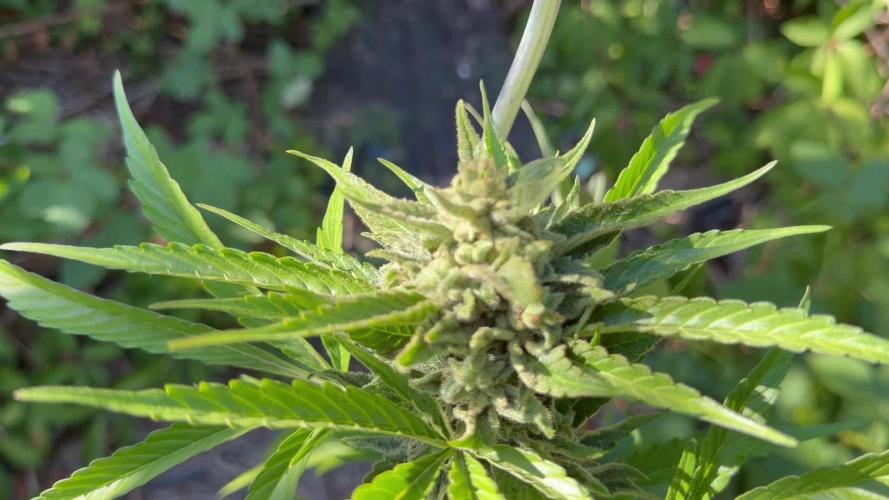
🌿 The Hobbit Hole – Woche 11
Woche 11 ist geschafft – und langsam wird es ernst im Hobbit Hole. 🍂
Die drei Damen sind inzwischen deutlich in der späten Blüte angekommen. Das Wachstum spielt praktisch keine Rolle mehr, stattdessen geht es jetzt nur noch um Reife, Trichome und darum, wie lange das Wetter mir noch erlaubt, sie draußen stehen zu lassen.
Diese Woche habe ich deshalb nicht nur die Pflanzen und Buds fotografiert, sondern mir auch verschiedene Main- und Seitenbuds unter starker Vergrößerung angesehen. Der Unterschied zwischen den drei Pflanzen wird dabei immer deutlicher.
🌿 Cinderella
Cindy lässt sich von den dreien weiterhin am meisten Zeit.
Ihre Blüten sind inzwischen ordentlich mit Harz überzogen und auch die Pistillen verfärben sich zunehmend, insgesamt wirkt sie aber noch etwas weniger weit als ihre beiden Nachbarinnen.
Die Buds haben weiterhin eine eher offene Struktur und sie wirkt insgesamt noch nicht so „fertig“ wie Purple Punch oder Gelato.
Bei ihr sehe ich momentan keinen Grund zur Eile. Wenn das Wetter mitspielt, darf Cinderella noch eine ganze Weile weiterreifen.
💜 Purple Punch
Purple Punch wird optisch immer interessanter.
Zwischen der dicken Trichomschicht kommen inzwischen wunderschöne dunkle bis lilafarbene Kelche zum Vorschein. Gerade in der Sonne sieht das teilweise wirklich spektakulär aus.
Ihre Buds wirken kompakter und deutlich weiter entwickelt als bei Cindy. Gleichzeitig beginnt auch die Pflanze selbst langsam sichtbar in den Herbstmodus zu wechseln.
Noch ist sie für mich nicht die erste Kandidatin für die Schere, aber sie steht inzwischen klar zwischen Cinderella und Gelato.
🍨 Gelato
Gelato bleibt die Spitzenreiterin – zumindest beim Rennen Richtung Ernte.
Sie zeigt inzwischen das deutlichste Fading der drei Pflanzen und ihre Buds sehen zunehmend ausgereift aus. Viele Pistillen sind bereits braun und eingezogen, die Blüten sind angeschwollen und komplett mit Harz überzogen.
Beim Trichom-Check an verschiedenen Main- und Seitenbuds konnte ich neben vielen milchigen Köpfen auch bereits die ersten eindeutig bernsteinfarbenen Trichome finden. 🔬?
Eigentlich könnte man langsam anfangen, über die Ernte nachzudenken.
Aber genau das werde ich noch nicht tun. 😏
Ich habe keinen Zeitdruck und möchte die Gelato bewusst etwas weiter ausreifen lassen. Mein Ziel ist diesmal nicht der möglichst frühe Erntezeitpunkt, sondern eine deutlich schwerere, entspanntere Wirkung.
Solange die Pflanze gesund bleibt und das Wetter es zulässt, bekommt sie deshalb noch Zeit.
🔬 Trichom-Check
Diese Woche habe ich mehrere Buds jeder Pflanze kontrolliert und nicht nur jeweils einen besonders schönen Mainbud. Dadurch bekomme ich hoffentlich ein etwas realistischeres Bild vom Reifezustand der gesamten Pflanzen.
Besonders bei Gelato zeigen sich inzwischen erste Amber-Trichome, während gleichzeitig noch klare Köpfe vorhanden sind. Der Großteil bewegt sich zunehmend Richtung milchig.
Genau diese Entwicklung möchte ich in den kommenden Tagen weiter beobachten.
🌧️ Jetzt entscheidet auch das Wetter
Und damit kommt langsam der schwierigste Teil eines Outdoor-Grows.
Die Pflanzen können noch Zeit gebrauchen – aber das Wetter muss diese Zeit auch erlauben.
Für die kommende Zeit sieht die Vorhersage deutlich unbeständiger aus. Regen, höhere Feuchtigkeit und schlechtere Abtrocknung werden bei den inzwischen reifen und teilweise recht dichten Blüten zunehmend zum Risiko.
Ab jetzt wird deshalb regelmäßig auf verdächtige Stellen kontrolliert.
Ich werde keine Pflanze nur wegen ein paar Regentagen vorschnell umhauen. Aber zusätzliche Reife ist es natürlich auch nicht wert, dafür am Ende einen schönen Bud an Botrytis zu verlieren.
Das Hobbit Hole geht damit langsam in seine spannendste Phase:
Cinderella darf noch reifen.
Purple Punch kommt näher.
Und bei Gelato läuft ab jetzt der Countdown. ⏳🍨
Noch stehen alle drei.
Mal sehen, ob das am Ende von Woche 12 immer noch so ist. 😏🌿

Likes
8
Share


@TensorDestroyer
Follow
Week 10 oh my gosh. Some pistols have became brown. I will wait to 50% of them beign that color in order to wash and then harvest!
I hope to Top Max does its job fattening the buds :D


Likes
12
Share


@Pinhead9169
Follow
This is week 3 with the addition of a purple kush auto (middle) I'm amazed at how well they are doing outside 😊
Likes
12
Share


@rickhaZe
Follow
debido a quemaduras que encontre en las plantas el dia 14/06, dia 29 desde germinacion, debi regar con cal max, ya que creo que hay falta de calcio - magnesio. aplique 1.2 ml por litro de agua.
no creo que sea exceso de ferti ya que todos riegos se han preparado con la dosis minima que indica.
se sigue regando con 0.4 L cada 48hrs
una tecnica que he hecho es ir acomodando o doblando las hojas hacia abajo dando prioridad a los bracitos de cada planta.
Dia 30: riego de agua 600 ml de agua
Dia 32: todas las plantas en floracion
Aplicamos solo tek groow ya que las manchas en las plantas se debian a falta de azúfre lo concluimos con un grupo de amigos todos growers y un agrónomo.
Por que queremos continuar con la tabla de grotek nutrients y el domingo dia 34 aplicar blossom blaster

Likes
4
Share


@Lazuli
Follow
There was one tiny branch not growing so i cut it off now i got 3 main branches
Likes
9
Share


@burnercorona
Follow
Tiny pots are hard. She's not the prettiest lady but she's doing something.
Processing
Likes
9
Share


Processing
Likes
12
Share


@2Stones1Bird
Follow
Checkout my Instagram @smallbudz to see the Small budget grow setup for indoor use, low watt, low heat, low noise, step by step.
30/01/2020 - One more week to go ! Trichomes still transparent.
01/02/2020 - Gave her 1,5l RO water
Likes
18
Share


@Canna96
Follow
Hey now, I hope everyone is having a safe weekend. The ladies are still doing well, and starting to pack on some weight. The Sundae Driver, Bubble Runtz, and Durban Nights still look like they will be the biggest yielders, with the Green Crack 2.0 and Red Hot Cookies being on the lower end in yield, but I am definitely looking forward to having so many strains to sample and to share with friends. The Bubble Runtz looks like it will have the most dense nugs and smells absolutely amazing already and we are still probably 3 weeks out or so. I am thinking 2 weeks to ripen , then another week MAX to flush in the Coco Coir.
I am still feeding silica, cal mag, maxi bloom, and liquid kool bloom. I will switch to the dry kool bloom this week week then I will flush with plain water for about 5-7 days before harvesting them around mid December. I am running two full size dehumidifiers outside the tent currently just to keep the relative humidity in the tent right around 50% or slightly below. I also have two very powerful fans blowing one above and one below the canopy to keep the air moving as well as an 8" inline fan keeping fresh and cool air into the 5X5.
I am still taking a few fan leaves here and there but mostly just keeping the reservoir full, and cleaning it once per week which only takes 10-15 minutes. I mix one 5 gallon bucket of nutes per day and dump it in the reservoir and then they auto feed 4 times per day.
I hope everyone has a great rest of your weekend, Thanks for stopping by, Stay Safe and Blaze On!!! 💪
Website: https://medicgrow.com/
https://growdiaries.com/grower/medicgrowled



Likes
175
Share


@love_2_grow
Follow
Day 22 Flower (Day 64)
Today is the first day of week four of flower.
I gave the right girl 3 liters of pH 6.2 water, but the left girl didn't need any. She doesn't drink much since the light is turned way down not to fry her canopy more than it already has. Unfortunately, her new tent didn't show up today — hopefully, tomorrow.
I also put half of an avocado on top of the soil in each pot to feed my worms. It should be a nice little treat for my worm buddies.
Most of my cover crop has died now when the girls are blocking out all the lights, and I really should cover the soil in mulch, but as I'm changing to larger pots next run, I would have to remove it again in about a month, so I haven't bothered.
Day 23 Flower (Day 65)
Yay! The new tent finally arrived today. It is still a tiny 40x40 cm tent as that is all I can fit inside the wardrobe, but the new tent is 40 cm taller. The plant really needed the extra height since she was pressing against the light and roasting the top buds.
It was a bit tricky to get the left girl out of the old tent, but by combining some McGyverism with a bit of brute force, I got her out in mostly one piece. The damage from the light wasn't as bad as a feared, although three tops were fried and a few fan leaves. Not great, but it could have been worse.
I took the opportunity when she was between tents and did some defoliation/lollipopping before moving her into her new space and giving her 1.5 liters of ph 6.7 water to help her deal with the shock of being manhandled.
It is lovely to have some space again, and I was finally able to turn up the light to 100%. Now those buds can start to fatten up!
All I did with the right girl today was to give her 3 liters of pH 6.5 water.
Day 24 Flower (Day 66)
The left girl loves her new home and looks to be bouncing back nicely. She didn't need any water today, but it was the first time a tiny weed smell came out of the tent as I opened it.
The right girl in my main tent is further along in flower and technically should smell more than the small tent, but the CO2 bag still overpowers everything with its sh*t smell. lol
I gave the right girl 3 liters of pH 6.4 water today, and I also "shaved her legs" by removing some pointless leaves and branches low down on her.
Finally, I started brewing some compost tea with the same recipe as last week (worm castings, rock dust, biochar, lime, bentonite, neem meal, kelp meal, alfalfa meal, and molasses). Still, this time it will be filtered as it is too soon for additional topdressing. The tea will brew for 24 hours, and I'll feed it tomorrow.
Day 25 Flower (Day 67)
All I did today was to feed each girl 3 liters of pH 6.6 compost tea as well as rearranging the main tent (moved the CO2 bag so I could move the clip fan, attached the ratchet hangers to the lights differently, and did some LST to get a branch out of the way) so I could raise the lights another 5 cm.
Day 26 Flower (Day 68)
Today was a really easy day. I just gave the right girl 3 liters of pH 6.1 water. That was it.
Day 27 Flower (Day 69)
I gave each girl 3 liters of pH 6.6 water today. I also took out my proper camera and tried a few quick bud shots. Just as an experiment though - handheld, no tripod, just the grow lights so no proper lighting, etc. Would love some feedback on these photos though as I'm completely new to bud photography and am looking to improve.
Day 28 Flower (Day 70)
The last day of the fourth week of flower and all is well in the tents.
The left girl is 97 cm tall (12 cm increase in a week), and the right girl is 120 cm tall (a 3 cm increase in a week). The left girl has been stretching this week since she got her new tent (which allowed me to turn up the light.) She certainly is loving those extra photons! On the other hand, the right girl seems done with stretching and is working on fattening up the buds.
All I did today was to snap some pics and videos and give the right girl 3 liters of pH 6.2 water.

Likes
3
Share

@GrowinSho
Follow
Had to zip tie the light to the top of the tent. Still only at 30% though. Couldn't get a proper ppfd reading.
Likes
Comments
Share


@Canha_Patch
Follow
I made this week's feed to reach around 550 to which was a big jump from 250 ppm.
This was my usual start out but once I saw the information on the Royal Queen Seeds Website I decided to up my juice!
Check out my Instagram page for more of my home grow!
@Canha_patch🌿🌿🌿
Likes
2
Share


@Ninjabuds
Follow
Purple Kush might be the runt of the bunch right now, but I have high hopes for it. Even though it's lagging behind the others, it has these super vibrant, dark green leaves. There's something about them that tells me this plant is a fighter. I'm excited to see how it develops and if it'll catch up to its siblings.
Last week was awesome! I finally got around to giving all my plants a little upgrade – I repotted them into some bigger homes. They're all looking so happy and healthy now, it's crazy. I can't wait to see how much they grow this year!

Likes
10
Share


@RookieGrower65
Follow
Day 35 Noticed true flowers on 3 of 4 plants. Turned lights up to 100%. 5 or 6 large leaves removed from each during past week. Increased nutes for two feedings during this past week. Photos and video from day 36. Noticed brown spots and tip burn Day 38 on some leaves mid plant on BB2 and GG2. I'm guessing start of Potassium lock out because of too much Cal mag. Flushed all 4 with one gallon each of 6.5 ph water on Day 38 and removed all LST. By Day 40 all new growth was healthy and all were growing quickly. Defoliated BB2 of 8 large fan leaves and a few on the others.

Likes
5
Share


@C4NN4815_030
Follow
All good :) very frosty and smells so good. She‘s so happy. At day 35 end of week 4 approaching week 5, i flush her to remove salt buildups since i didn’t had runoff the entire grow ever. She has crazy 2.6EC run off the ph is on the spot though. So lets see how will she react after heavy flush with runoff 1.6EC by week 5. i am now lowering my nuts half of the manufacturers recommendation.

Likes
61
Share


@MadeInGermany
Follow
Hi everyone 😎.
Everything is going great 🤗
You look very healthy and feel very comfortable.
This week I trimmed everything underneath and cleaned everything :-) All spare parts were replaced, as after a while from using the aero tool all the screw threads were bruised.
At the same time, the entire tank was emptied, cleaned, and freshly filled this time with flower fertilizer :-) this week the stretch will decrease and the energy will be put into the flower production.
I have with clean up take the chance right away, and take photos of the root carpet ich At the moment I am considering getting a CO2 system for the Aero tent, because I used to have one, but it had to be given when the boxes were not moving :-(
Otherwise I wish everyone a nice weekend, and health for you and your families in this scheis corona time 😷
Let it grow 😎