


@ZzTooRightOGzZ
Follow
She's not doing the best this week but I'm trying to fix her.
If everyone nows what's up with her can yous leave a comment.


@CanadianFillmore
Follow
Welcome to week 4 of flower for the outdoors grow. Green Crack and LSD are continuing to pack on buds, the plants are still hungry and I've stepped up the total amount of feed I'm giving them, #gaiagreen power bloom.
Thanks for stopping by growfessors 👽🌳💚

shorts_status_processing


@Highdro
Follow
I had a busy week moving the plants into NFT once roots started to show, put them into a tent give them a fan.
Freebie seed shown slow recovery but decided to use it anyway.


@Sudo17
Follow
10.15.23 - Both plants watered with 6.4 pH + 3ml CalMag + 10ml Bloom + 0.5 TSP RECHARGE. I'll be going up to 15ml/bloom from now on. I did a pretty aggressive "final" defoliation and pruning of lower bud sights. Plants are still very green and happy. :)
10.17.23 - Girls are getting thirsty. Soil was nearly bone dry - gonna have to start watering more frequently. Watered today @ 6.4pH + 3ml CalMag + 15ml Bloom + 0.75 TSP Recharge. Did some additional pruning and the leaves are still very green and praying
10.19.23 - Both watered with 6.3pH + 3ml CalMag + 15ml Bloom. No recharge this feed, in a time crunch. Officially done defoliating / pruning. Time to just feed and let them go from now on :) Day 19 flower
10.21.23 - Both watered with 6.35pH + 3ml CalMag + 15ml Bloom + 1 TSP RECHARGE. The early developing trichomes are already over the fan leaves and are wildly sticky. The new smells are incredible and can't wait for them to get stronger over the next few weeks
10.21.23 - UPDATE: I took my 'end of week 3' photos and noticed that a lot of the leaves are showing early signs of overfeeding of P/K or both. Will be carefully measuring input/output from here on to ensure a slight lowering of soil EC.


@Hattiwatti
Follow
Unlucky but Lucky.
Auto night queen DNF. After 9 days its time to go on. 1/5 seeds germinate from that package 😀
Luckily I happened to find treasure at Saint Patricks day 🍀 3 blue streak seeds. All germinate in 48h in same place than night queen spend that 9 day.
In facts Aprox 10years ago i bought 5 of these seeds. Made f2 from them and when raised there was phenotype that was producing much more branches than others so i made f3 seeds from the bushy f2. Lovely blueberry taste and smell. Not feminised so i go with 3 seeds at beginning. Had once 6/6 Males. these seeds are 7 years old.
Planted 20.3.24
Sprouted 26.3.24
Lets see what we got.
To be continued...


@CanadianFillmore
Follow
Week 8 begins for Green Crack. She has a pungent smell that is a mix of fruit and chemical. Last week of feed before flushing.
Thanks for stopping by, tune in next week! 👽🌳🔥


@willertex
Follow
Havested about 90 days after seed posed. She is a kind of giant: about 1.8 Kg of buds and branches from only one plant. The buds seems a little bit dry. I hope this will be not a problem after cure.


@YouCannaBlowMe
Follow
Not sure if I did this LST training correctly, we’ll see. I’ve been following the fox farms 12 nutrient chart religiously along with their mackerel and
Kelp me and they seem to be enjoying it. I’m noticing more yellowing than I’d prefer so I ordered some cal mag on Amazon which should be arriving soon.




@Ultraviolet
Follow
What's in the soil? What's not in the soil would be an easier question to answer. 16-18 DLI @ the minute. +++ as she grows.
Probably not recommended, but to get to where it needs to be, I need to start now.
Vegetative @1400ppm 0.8–1.2 kPa 80–86°F (26.7–30°C) 65–75%, LST Day 10, Fim'd Day 11
CEC (Cation Exchange Capacity):
This is a measure of a soil's ability to hold and exchange positively charged nutrients, like calcium, magnesium, and potassium. Soils with high CEC (more clay and organic matter) have more negative charges that attract and hold these essential nutrients, preventing them from leaching away.
Biochar is highly efficient at increasing cation exchange capacity (CEC) compared to many other amendments. Biochar's high CEC potential stems from its negatively charged functional groups, and studies show it can increase CEC by over 90%. Amendments like compost also increase CEC but are often more prone to rapid biodegradation, which can make biochar's effect more long-lasting. biochar acts as a long-lasting Cation Exchange Capacity (CEC) enhancer because its porous, carbon-rich structure provides sites for nutrients to bind to, effectively improving nutrient retention in soil without relying on the short-term benefits of fresh organic matter like compost or manure. Biochar's stability means these benefits last much longer than those from traditional organic amendments, making it a sustainable way to improve soil fertility, water retention, and structure over time. Needs to be charged first, similar to Coco, or it will immobilize cations, but at a much higher ratio.
a high cation exchange capacity (CEC) results in a high buffer protection, meaning the soil can better resist changes in pH and nutrient availability. This is because a high CEC soil has more negatively charged sites to hold onto essential positively charged nutrients, like calcium and magnesium, and to buffer against acid ions, such as hydrogen.
EC (Electrical Conductivity):
This measures the amount of soluble salts in the soil. High EC levels indicate a high concentration of dissolved salts and can be a sign of potential salinity issues that can harm plants.
The stored cations associated with a medium's cation exchange capacity (CEC) do not directly contribute to a real-time electrical conductivity (EC) reading. A real-time EC measurement reflects only the concentration of free, dissolved salt ions in the water solution within the medium.
98% of a plants nutrients comes directly from the water solution.
2% come directly from soil particles.
CEC is a mediums storage capacity for cations. These stored cations do not contribute to a mediums EC directly.
Electrical Conductivity (EC) does not measure salt ions adsorbed (stored) onto a Cation Exchange Capacity (CEC) site, as EC measures the conductivity of ions in solution within a soil or water sample, not those held on soil particles.
A medium releases stored cations to water by ion exchange, where a new, more desirable ion from the water solution temporarily displaces the stored cation from the medium's surface, a process also seen in plants absorbing nutrients via mass flow. For example, in water softeners, sodium ions are released from resin beads to bond with the medium's surface, displacing calcium and magnesium ions which then enter the water. This same principle applies when plants take up nutrients from the soil solution: the cations are released from the soil particles into the water in response to a concentration equilibrium, and then moved to the root surface via mass flow.
An example of ion exchange within the context of Cation Exchange Capacity (CEC) is a soil particle with a negative charge attracting and holding positively charged nutrient ions, like potassium (K+) or calcium (Ca2+), and then exchanging them for other positive ions present in the soil solution. For instance, a negatively charged clay particle in soil can hold a K+ ion and later release it to a plant's roots when a different cation, such as calcium (Ca2+), is abundant and replaces the potassium. This process of holding and swapping positively charged ions is fundamental to soil fertility, as it provides plants with essential nutrients.
Negative charges on soil particles: Soil particles, particularly clay and organic matter, have negatively charged surfaces due to their chemical structure.
Attraction of cations: These negative charges attract and hold positively charged ions, or cations, such as:
Potassium (K+)
Calcium (Ca2+)
Magnesium (Mg2+)
Sodium (Na+)
Ammonium (NH4+)
Plant roots excrete hydrogen ions (H+) through the action of proton pumps embedded in the root cell membranes, which use ATP (energy) to actively transport H+ ions from inside the root cell into the surrounding soil. This process lowers the pH of the soil, which helps to make certain mineral nutrients, such as iron, more available for uptake by the plant.
Mechanism of H+ Excretion
Proton Pumps: Root cells contain specialized proteins called proton pumps (H+-ATPases) in their cell membranes.
Active Transport: These proton pumps use energy from ATP to actively move H+ ions from the cytoplasm of the root cell into the soil, against their concentration gradient.
Role in pH Regulation: This active excretion of H+ is a major way plants regulate their internal cytoplasmic pH.
Nutrient Availability: The resulting decrease in soil pH makes certain essential mineral nutrients, like iron, more soluble and available for the root cells to absorb.
Ion Exchange: The H+ ions also displace positively charged mineral cations from the soil particles, making them available for uptake.
Iron Uptake: In response to iron deficiency stress, plants enhance H+ excretion and reductant release to lower the pH and convert Fe3+ to the more available form Fe2+. The altered pH can influence the activity and composition of beneficial microbes in the soil. The H+ gradient created by the proton pumps can also be used for other vital cell functions, such as ATP synthesis and the transport of other solutes. The hydrogen ions (H+) excreted during photosynthesis come from the splitting of water molecules. This splitting, called photolysis, occurs in Photosystem II to replace the electrons used in the light-dependent reactions. The released hydrogen ions are then pumped into the thylakoid lumen, creating a proton gradient that drives ATP synthesis.
Plants release hydrogen ions (H+) from their roots into the soil, a process that occurs in conjunction with nutrient uptake and photosynthesis. These H+ ions compete with mineral cations for the negatively charged sites on soil particles, a phenomenon known as cation exchange. By displacing beneficial mineral cations, the excreted H+ ions make these nutrients available for the plant to absorb, which can also lower the soil pH and indirectly affect its Cation Exchange Capacity (CEC) by altering the pool of exchangeable cations in the soil solution.
Plants use proton (H+) exudation, driven by the H+-ATPase enzyme, to release H+ ions into the soil, creating a more acidic rhizosphere, which enhances nutrient availability and influences nutrient cycling processes. This acidification mobilizes insoluble nutrients like iron (Fe) by breaking them down, while also facilitating the activity of beneficial microbes involved in the nutrient cycle. Therefore, H+ exudation is a critical plant strategy for nutrient acquisition and management, allowing plants to improve their access to essential elements from the soil.
A lack of water splitting during photosynthesis can affect iron uptake because the resulting energy imbalance disrupts the plant's ability to produce ATP and NADPH, which are crucial for overall photosynthetic energy conversion and can trigger a deficiency in iron homeostasis pathways. While photosynthesis uses hydrogen ions produced from water splitting for the Calvin cycle, not to create a hydrogen gas deficiency, the overall process is sensitive to nutrient availability, and iron is essential for chloroplast function.
In photosynthesis, water is split to provide electrons to replace those lost in Photosystem II, which is triggered by light absorption. These electrons then travel along a transport chain to generate ATP (energy currency) and NADPH (reducing power). Carbon Fixation: The generated ATP and NADPH are then used to convert carbon dioxide into carbohydrates in the Calvin cycle. Impaired water splitting (via water in or out) breaks the chain reaction of photosynthesis. This leads to an imbalance in ATP and NADPH levels, which disrupts the Calvin cycle and overall energy production in the plant. Plants require a sufficient supply of essential mineral elements like iron for photosynthesis. Iron is vital for chlorophyll formation and plays a crucial role in electron transport within the chloroplasts. The complex relationship between nutrient status and photosynthesis is evident when iron deficiency can be reverted by depleting other micronutrients like manganese. This highlights how nutrient homeostasis influences photosynthetic function. A lack of adequate energy and reducing power from photosynthesis, which is directly linked to water splitting, can trigger complex adaptive responses in the plant's iron uptake and distribution systems.
Plants possess receptors called transceptors that can directly detect specific nutrient concentrations in the soil or within the plant's tissues. These receptors trigger signaling pathways, sometimes involving calcium influx or changes in protein complex activity, that then influence nutrient uptake by the roots. Plants use this information to make long-term adjustments, such as Increasing root biomass to explore more soil for nutrients. Modifying metabolic pathways to make better use of available resources. Adjusting the rate of nutrient transport into the roots. That's why I keep a high EC. Abundance resonates Abundance.


@Lapolda
Follow
Hello to all growers.
This week has been quiet.
Otherwise, I am very satisfied, a beautiful big and thick mallet 😍
Just water, I think it will be ready in a week.
Keep it growing friends 👊🌱🌴


@Dunk_Junk
Follow
Day 18 - FIM cut made.
Day 20 - Repotted to her 38 litre airpot. I planted her quite deep to help with stability so she has 'shrunk' 0.5cm this week 😂


@Boomdrawfyah
Follow
78 dias de vida hace dos semanas que empezaron la floración la 1051 esta mucho mas avanzada que sus hermanas han sacado un lado genetico más sativo y van a tardar mucho mas en cogollar en general esta todo bien, ha sido temporada de lluvias, tormentas y hay una humedad constante el clima no ayuda, en el mediterraneo siempre en final de temporada vienen lluvias y hay que pelear con el tiempo para poder sacar buenos resultados y evitar plagas


@Ultraviolet
Follow
Refurbished soil HVAC system, and increased airflow.
To maximize your yield, always aim for 40 moles, or 40,000,000 μmol, per day. Here is how much PPFD is needed per second for each phase of cannabis growth to achieve the DLI of 40 moles of light per day.
I picked up a Quantum PAR Meter, very happy!😁 PAR Meter will show me how much useful radiation between 4-700nm the plant is getting from any given direction.
Seedling phase (18hr cycle): 200–300 μmol m-2 s-1
Vegetative phase (18hr cycle): 617 μmol m-2 s-1
Flowering phase (12hr cycle): 925 μmol m-2 s-1, (1500 μmol m-2 s-1 @1500ppm co2) (ballpark). Anything above 2000 PPM is harmful to both the grower and the crops.
The tent is currently reaching 3-400umol ms 1s at soil level (42" inches from light) and 1100umol-1300umol @ 25" Inches.
The Corpus Hermeticum
translated by G.R.S. Mead
V. Though Unmanifest God Is Most Manifest


@Naujas
Follow
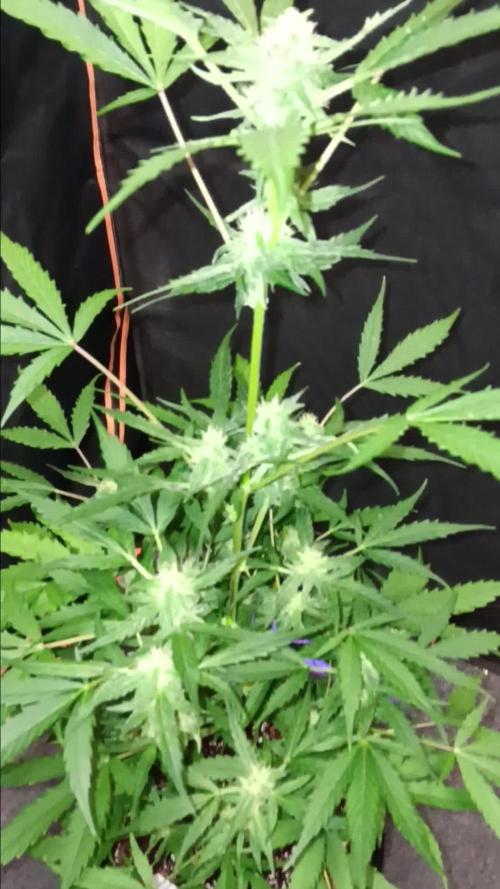
everything is going quite well, there were problems with lack of potassium, but that error has already been fixed :) the girl has already started sugar leaves :)



@JVKdopegrow
Follow
Blooming! I really enjoy this stage. These buds already have some color to them so I am hopeful they turn out well. A bit more growth all around as she puts her effort into the flowers.


@PapaBlob
Follow
04/12 Demain je l'effeuille puis je la coupe à raz du sol..😊 Après viens le plus dur en cette saison par ici, arrivé à la sécher.🙄 La dernière sortie (10 jour) en est Loing. J'ai du la rentrer à la maison. (Je profite de l'absence de la patronne.) 😊👍✨



@Terp-A-Derp
Follow
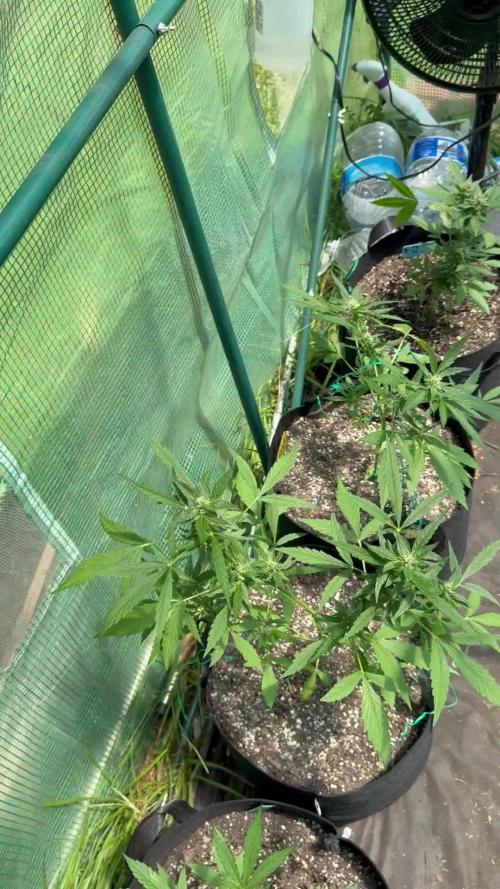
Plants are growing well big difference in height in the frost banger and northern light. Both holding up to the heat and humidity very well just a few heat spots. Watering cycle slowed due to humidity not letting plants dry out at night. Thanks following.