






Likes
14
Share


@MWHomegrow
Follow
Vegetative Woche 3:
Tag 29 gab es das erste LST nach dem Umtopfen für die Ladys, damit sie das Zelt bald schön ausfüllen zu viert 😊
Hierfür einfach bodenhaken für die Triebe und am Hauptstamm nutze ich gerne die roten Clips.
Tag 30+31 gab es nichts besonderes zu tun 😊
Tag 32 wurde das erste Mal gegossen nach dem Umtopfen mit 2l ph 6.2 Wasser mit 0,8g/l Enhancer, das Wasser habe ich zum ersten Mal mit meiner neuen Akkugießlanze verteilt und ich hoffe so noch gleichmäßiger gießen zu können 😊
Tag 33 wurden wieder mit LST gearbeitet und die Triebe mit den Bodenhaken weiter nach außen gebogen, damit ich möglichst bald ein relativ gleichmäßiges Blätterdach habe welches die gesamte Grundfläche des Zeltes ausfüllt.
Tag 34 war wieder Ruhetag
Tag 35 wurde wieder gegossen und zwar wieder mit 2l pro Pflanze mit ph Wert von 6.2 und 1ml/l Calmag und auch hier wurde zum Gießen di Akkulanze verwendet.
Und so endet Woche 3 der Veg

Likes
1
Share

@burnbae420
Follow
*🌸 Flip / Day 1 of 12/12: Sept 12, 2026
* 📅 Today: Oct 3, 2026
* 🔢 Day 22 from flip — Week 4, Day 1
* 🌱 Week 1: Sept 12–18
* 🌱 Week 2: Sept 19–25
* 🌱 Week 3: Sept 26–Oct 2
* 🌸 Week 4 starts: Oct 3 📌📌
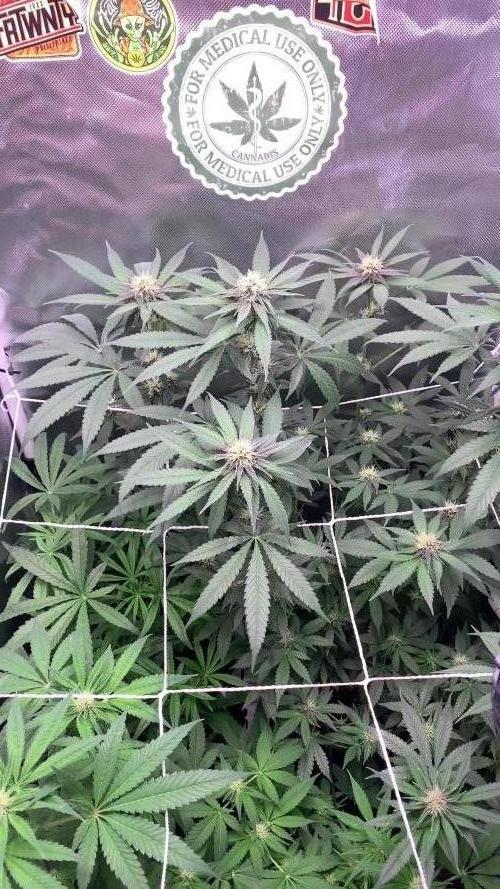
* CP #1: bushier/taller; I did the major strip/defoliation at Day 21 (Oct 2).
* CP #2: smaller, but developing visible bud sites.
* 1× Purple Afghan
* Smaller/leafier and developing more slowly; still showing mostly pistils compared with the CPs.


Likes
9
Share

@BushDoctor740
Follow
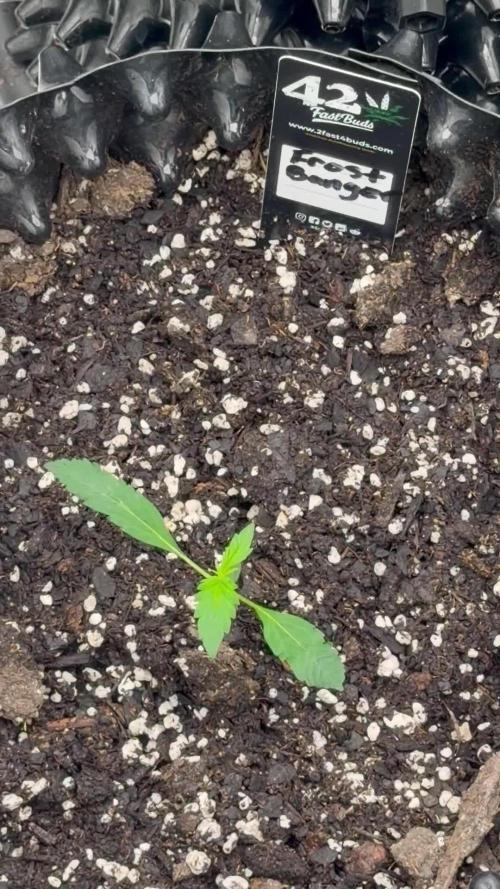
These 3 beautiful young ladies are developing nicely.Se7000 set at 30 percent power and they are loving it.I did a light feeding of 1 ml of advance nutrient line and a dose of recharge tea this week.They are off to a great start which I noticed as well on the last run of frostbanger :)

Processing
Likes
24
Share


@GrowGuy97
Follow
Day 14 - Everything seems to be going great, not much to say right now! Will be feeding tomorrow! Happy growing friends!✌️🏼🌱
Day 15 - Feeding day, started a nutrient comparison test between fox farm & technaflora which is why I have both of them listed but I am not mixing them! I have 2 plants on the fox farm & 1 on technaflora! We shall see which comes out better!
Day 16 - Ladies are looking great!✌️🏼
Day 17 - Got watered with PH at 6.4 today, all 3 ladies are coming along nicely😍
Day 18 - 🌱✌️🏼
Day 19 - Ladies got watered again today with PH at 6.4, will probably be starting some LST in the next week sometime! Thanks for following friends & happy growing!✌️🏼🌱
Day 20 - End of week 3 & could not be happier with how things are going! Can’t wait to see some buds on these ladies!😍

Processing
Likes
7
Share


@DigitalJockeyKing
Follow
got bitten by a spider and realized i was always wondering what my spiritual animal was, and realized it was spiders after that awakening of asking mother natures help me and spiders made a blood pack and since then nature has been helping me out by protecting my plants, from thieves and bad rotten people. and nature gave me spiders to protect my children. one of my spiders thats protecting the rooibaard is called GREGGK.


Likes
150
Share


@RussianGrower
Follow
Hi, everybody. Well, that's the long-awaited day of harvest Bubblelicious Auto. First of all, I want to thank all those who supported me during this time, your support gave me a lot, and also gave me the motivation to do better and more beautiful. 👏
You know what I have encountered problems with smell when growing this marijuana strain because of considerations of privacy and personal security, I couldn't give extra days of life to these plants. So I made a harvest for the 70th day of life of these plants, exactly 10 weeks.
When I harvested, I had to move the inflorescences to another place to dry. I put their Bank and Packed in several layers of garbage bag and tightly sealed it with sticky tape.
When I came home, I dried the inflorescences, and I prefer to separate the inflorescences from the large branches, and the inflorescences themselves slightly pressed to make them easier to store and they do not crumble during transportation. So the inflorescences are obtained dense and hard as a tree, but do not lose their smell and taste, but the inflorescence should be compressed very gently and gently for several days as they dry.
In General I'm okay and I'm safe. The final product gives me pleasure, so I think that my risk was justified. Now in my tent matured 3 plantsNeville Haze Auto. I'm not going to stop, I'm planning to keep growing.
However, due to force majeure and weather conditions, my idea of guerrilla cannabis cultivation is at risk. So I don't know what's next. But in any case, soon there will be new interesting diaries. Now my friend has 23 plants for the first week. 10 days. we urgently need to relocate them to new homes or to the outdoor.
In General, add to the followers, follow my diaries, it will be interesting.

Likes
10
Share


@asstonmartian
Follow
Fifth week of flower and it was time to defoliate the indoor units as they were starting to get bushy and block exposure to the lower bud sites. Quick work with the bonsai shears and they were ready to soak in the sun. I left the rooftop plants alone as I believe having additional leaf mass enables them to withstand temp and environmental fluctuations better. Whether or not this is the case, it was an experiment.


Likes
8
Share

@GoodTimesOrganics
Follow
Hi liebe Community and Welcome Back! 💚
Woche 9 im Vergleichsgrow!
Bio Tabs NL. vs. Weedefix (Stuttgart/ Germany)
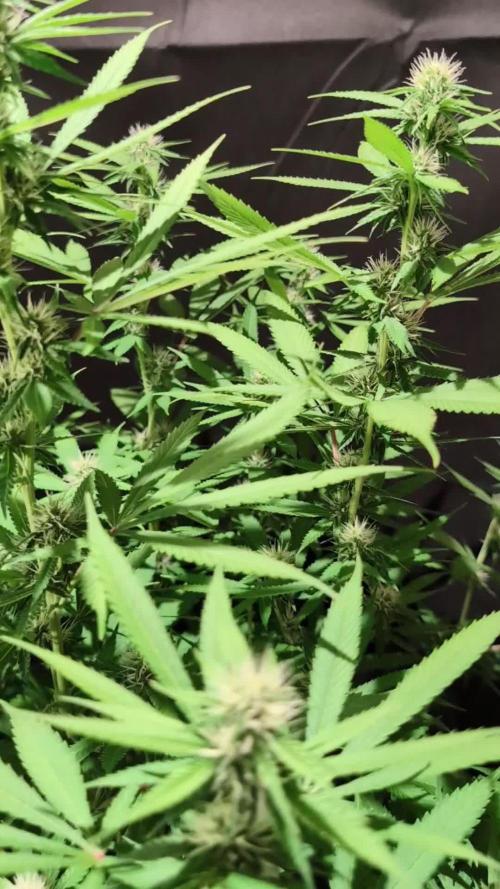
Hier im Weedefix Grow haben wir nun nach 66 Tagen des Einpflanzens eine Höhe von 118cm erreicht.
Blütetag: 21 (BW3)
Nach der dritten Blütewoche, lässt sich eher ein unterschiedliche Performance der beiden Düngersysteme beobachten.
Der Stretch bei dieser Pflanze verläuft sehr homogen und alle Triebe sind im Schnitt 118cm hoch. Hier geht der Stretch nicht so in die Höhe.
Die Blütenentwicklung bleibt bisher sehr ähnlich.
Es bleibt spannend!
Diese Woche, habe ich einmal mit Wasser und 5ml Wachstum (Ferment mit Melasse und Hefeextrakten) gegossen.
Außerdem habe ich nochmal 4 Tabs für die Blüte in die Erde gesteckt 20g für den 9L Topf.
Zudem kamen nochmal 5g Trichoderma von Mack pro Liter Wasser hinzu.
Ansonsten nur Wasser.
Die Bedingungen im Growzelt sind aktuell wieder top!
—————
🌞 Temp: 26
🌚 Temp: 18°C bis 19°C
💨 RH: 62%
VPD: 0,74 kPa
💡ppfd: 630 mpm
—————

Likes
11
Share


@MadeInGermany
Follow
Leider habe ich die Ernte Bilder verpasst weshalb es diesmal nur welche von den Resten gibt 💚😃

Likes
36
Share


@Ferenc
Follow
Day 80, 2nd of December 2020:
Beautiful bushy, great genetics. Well done.
Nice buds are on the way and the smell is great. I am absolutely excited :)
All good the lamp is now on 11 hours and off 13 hours. Every week 15 minutes was taken off and after 4 weeks here we go. Strated 12/12 and now 13/11 wanted try to imitate the nature as the light days are getting shorter.
Fertilization has changed no more epsom salt from this week and I will stop giving nitrogen as well from next week.
All good :)

Likes
6
Share

@00110001001001111O
Follow
Total days above ground: 70
Total flower nights: 31
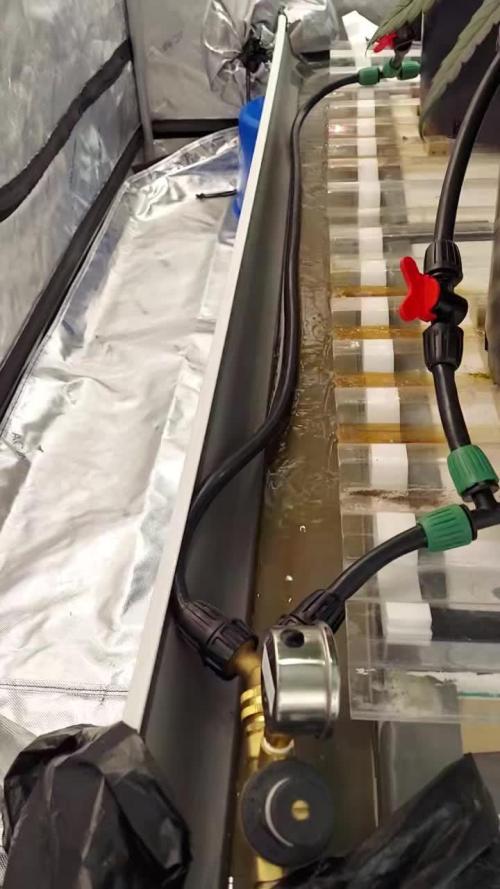
Vege growth stopped around FD25. Started feeding 1/2 strength fertilizer FD26 (last 6 irrigations including today). Excellent development across the canopy. Tried to get some pictures showing how the colas are stacking up along with a couple shots of terminal buds. Included some photos and videos of irrigation setup, drainage and other half of the tent setup that is not often visible in weekly updates. Also, a video showing the canopy with some grateful dead background music. Last week including progression pictures as they are full size.
Well, I still don't like the structure, but this plant has really turned on the jets in mid flower. More bud sites than I expected but because I had to HST it, It is crowding AM3 and probably not helping the runt of the litter by doing so, lol. The smell on this plant is a mix of fuel and a hint of mint at one time, but the gas smell is overtaking it at this stage. The aroma is a big reason why i'll use it as a pollen-donator and hope that the lanky trait gets toned down with hybridization. My bets fem-seed outcome was two lanky plants and that most certainly got toned down in the offspring. I think it's related to too much inbreeding because of the much better structure found in the F1 offspring.
Smell is starting to ratchet up. Bud sites are mostly formed at this point and we will see some noticable ripening by next week's update. Might see a hint of fattening calyxes in the bud pictures this week.
2026-2 starts in 8 days. Will have some Blue Cookies and Pineapple Express from MSNL running along side some Vanilla Creme Pie from HSC. Can't believe winter-2 is already starting. Time is flying by. Breeding cycle is doing well. Will update that when the pollen-receivers join the pollen-donator on a 12/12 light schedule.
Side note -- looks like I avoided any issues from accidentally leaving port hole opened about 8 or 9 days ago. I have it marked in notes and will feel 100% confident 2-weeks out from the incident. So far, so good. The lung room is mostly dark and light would have to travel a difficult path to get in the tent, but still mildly concerned about it.

Likes
8
Share


@organically
Follow
Keep on growing anywhere, anytime.
I just love the kind f how they grow.
BTW. this is my first potless Outdoor project.
-
Greetings your organically
» tried and true, since simple is the best!

Likes
11
Share

@BlaKX
Follow
Ai Gude Growmies,
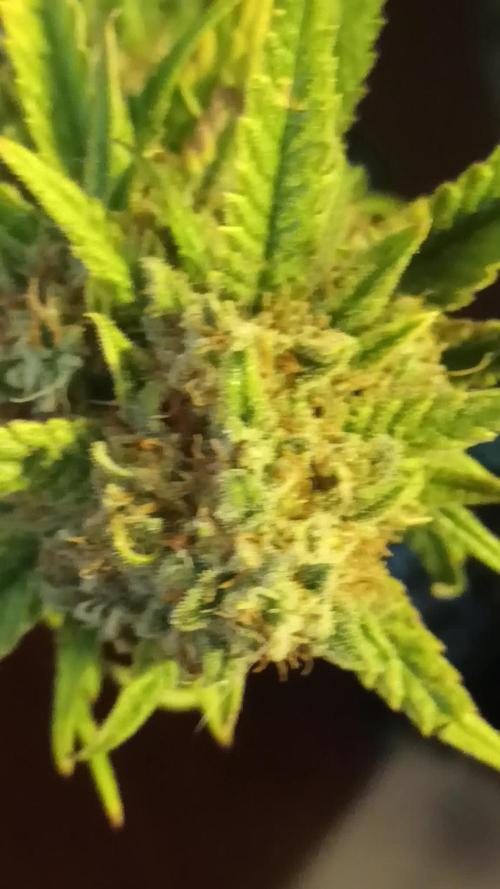
Sir stinkt einfach wunderbar mit einem Hauch Skunk/Cat piss Chemie



Likes
29
Share


@CanadianFillmore
Follow
Harvest time for LSD! What an awesome strain, incredible fruity and citrus smell, amazing bud development and loaded with frost! Growing this strain was pure joy. I'll update in 7-10 days with dry weight and smoke report.
Thanks for stopping by and checking out the grow. 👽🌳🔥💚
Update - 105 grams dry, minus 2-3 grams for the smoke test. What an amazing smell and taste, fruity, berries, sweet, it's like a bouquet of fruity pebbles! Very impressed by this strain and she'll be a keeper in my garden.

Likes
5
Share


@DrGanj
Follow
Another round of topping. Tied her all back to spread out for LST. Going to flip to flower next week. Used the Kushman technique and Supercropped all her stems every inch on the way up, without bending. Gives her muscles to flex <3
Likes
12
Share


Likes
1
Share

@HK_OG
Follow
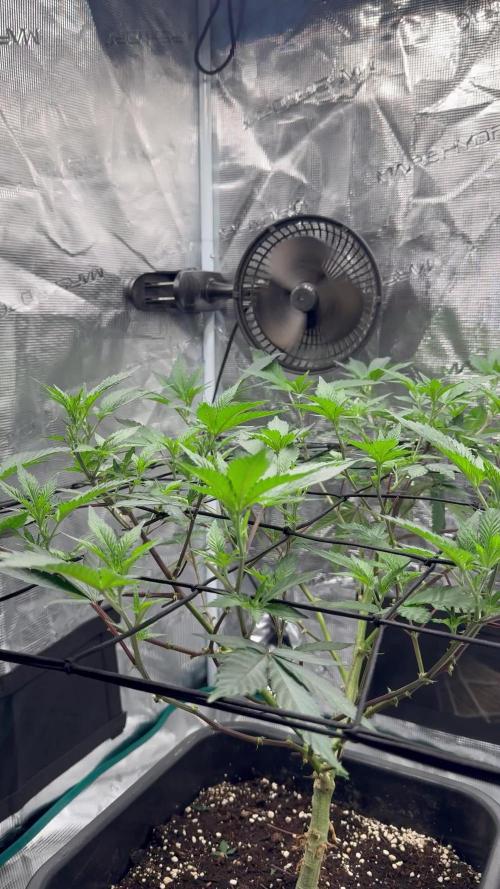
Mein 1. Steckling von meiner TAX Bracket.
Wir starten direkt in der 1. Blütewoche.
Ich weiß was uns erwartet und freu mich drauf es hoffentlich noch besser als beim 1. Run machen werde.