The Grow Awards 2026 🏆 










Likes
Comments
Share
@Boomdrawfyah
Follow
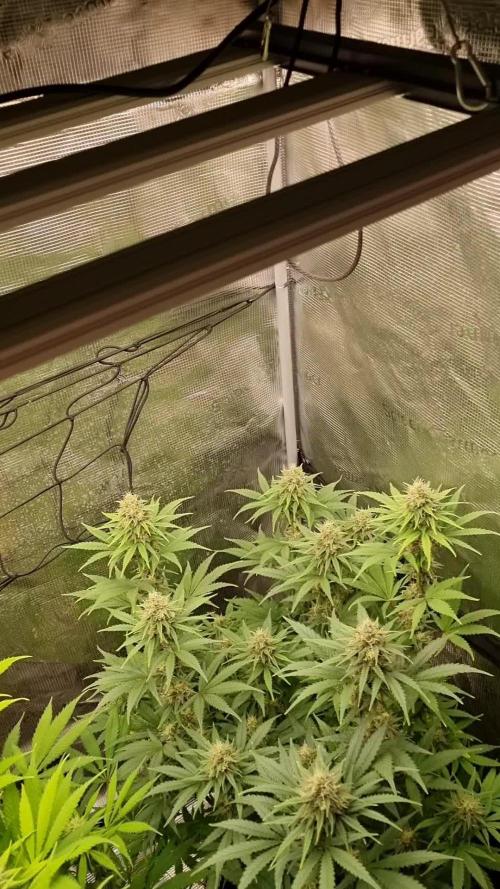
78 dias de vida hace dos semanas que empezaron la floración la 1051 esta mucho mas avanzada que sus hermanas han sacado un lado genetico más sativo y van a tardar mucho mas en cogollar en general esta todo bien, ha sido temporada de lluvias, tormentas y hay una humedad constante el clima no ayuda, en el mediterraneo siempre en final de temporada vienen lluvias y hay que pelear con el tiempo para poder sacar buenos resultados y evitar plagas

Likes
45
Share
@masterofsmeagol
Follow
6/26 Rained last night. Might have showers bur the sky is clear. Real good weather coming. I need to transplant those seedlings. Plants are noticeably bigger every day. I see small spits of damage but it's isolated and in a high wind area. I'll address it and watch for nute deficiencies. Also need to transplant those seedlings. At leastcones an auto.
6/27 Rained overnight again. Looks clear today but we did get some rain yesterday. Tomorrow is all sun. I'm planning to transplant those 3 seedlings today. Also noticed some ragged holes so I've got a few pests. Looks like grasshoppers or something. With all the rain could be slugs or pillars I guess. Need to get ipm up amd running. I've got work to do. Found a plant on my gmo in the 30 bag. It got sun burnt and wind burnt but came out of it and they're all doing great. At first this one was a little behind after transplant but so were the other gmo's. Originally, it was one of my best plant prior to transplant outdoors. That one leaf I found during a thorough inspection of the garden. I'm hoping it's not tmv. Plants growing vigorously and better than but I'll keep an eye on it. I also transplanted the 3 seedlings. I added half new 707 in the 50 (prior soil was this same mix from last year) and transplanted one in that. One in a 10 gallon bag and the auto in a 5 gallon bucket. It will be interesting ingredients seeing how they turn out. All transplants went really smooth.
6/28 It's gonna be a hot one today. I haven't watered in over a week due to rain. Wind was whipping this morning! Looked like plants MIGHTVE been drooping but now that I think about it it was probably just the wind. ANYWAY I WATERED TWO AND A HALF GALLONS on the clones. That wind dries the bags out fast. Some still had some heft to them. Lately I've been going by my intuition which has seemed to be on point. All the seedling transplants look good and show no signs of stress.
6/29 The site was down so I couldn't update. Looks like it's gonna rain. It's noontime. This morning i found and killed two inch worms. There's not much damage so I'm wondering whether bt is necessary. Birds sit on the frame and dart I'm and grab them. I'll have to think on it. I also need to decide what I'm going to use for nutes this year. Don't need it yet. GMO's and sherb pie is putting out pistols everywhere. Same with the event horizon. Looks like I may have an early harvest this year. I certainly hope so. Still.....only did half what I did last year but with everything going on its all I can handle.
6/30 Site was down and it doesn't want to pet me upload my pictures
7/1 Trying to keep this updated. Need to spray bt. I'm seeing some damage. Not much but I need to get a handle on it now. Poured yesterday. Super sunny today. Plants seem to be flowering early this year while I still have a 2 seedlings that haven't shown their sex yet (they are fems but still). The clones are beginning to flower it looks like so I may have an early harvest this year.
7/2 WATERED THE GARDEN WITH 4 GALLONS. Spent some time looking over the plants and decided to hold off on the bt seeing as there isn't much damage. I spoke to a few shop owners and after seeing my garden this wad their advice as well. While watering I noticed red ants coming out of the soil of my GMO in the 30 gal. Some of these strains will be early finishers. The only time I've had stigmas like tjis was when I grew mendo breath and that was a super early harvest. Either way things are looking fantastic. The auto seedling finally showed a stigma. One seedling left (they should ALL be females) but I cant tell by the preflower yet. It looks female but I need to see that little white hair emerge to be sure.

Likes
4
Share


Likes
30
Share
@Grileon
Follow
Back home.
All 8 branches looking well. Thay have grown fast during this 7 days.
The roots look healthy and white. This week want to try not to change full res. Just going to add some nutrients so that the ppm goes to 600. Let's see how it will work.
Also did some lst on every branch. Trying to make them as horizontal as possible for now. Hope to start scrog next week.

Likes
3
Share
@Ninjabuds
Follow
I got me a new 2025 ELUFAH UAP-1500 for my 2x2 tent. This light has all kinds of cools features for a small 150watt light. It has a switch to change the spectrum and when you flip the switch the color of the light changes so much you can easily tell with your eyes that it changed alot

Likes
30
Share
@Sonic_Y
Follow
Day 29:
Pre-flowering did start. Changing now to Hesi Nutrients. Watered them with 1,25 l. Since they are not dried completely out. Wanted to boost them into flower now!
Letting them dry out now to the half of total weight. I'm a bit nervous about the nutrients cocktail though. :)
Day 32:
music for plants:
"Jules Reidy - Trances"
"Cousin - HomeSoon"
"Yara Asmar - synth waltzes and accordion laments"
Likes
29
Share
@CannbellFarms
Follow
Monday 12/12
- week 3 bloom begins, light height is 14” from canopy but only 6” from main colas
- small plants is far far behind in height now sadly don’t think it will catch up now
Tuesday 13/12
- heavy defoliation on the 3 large plants
- light defoliation on the small one
- raised the SCRoG and moved sites around to space them out
- cleared some small and stringy sites from the bushy back right plant


Likes
98
Share
@OrganicNature420
Follow
Germination date 🌱 28/11/2021
Day 98 09/03/2022
Strain 🍁 Solfire Gardens Bahama Bussdown
(Runtz x Bahama Mama)
THC% • Unknown
💡 Mars Hydro FC-E6500
• Power draw 650W + 5%
• Max coverage 5 x 5
• LED 3978 pcs high quality chips
• Max Yield 2.5g / watt
• Noise level 0 DB
• Removable Driver & Light bars
• Daisy chain
• Fast cool system
https://marshydroled.co.uk/ 🇬🇧
PROMO CODE • (organicnature420) DISCOUNT
https://www.mars-hydro.com/ 🇺🇲
PROMO CODE • (ORG420) DISCOUNT 👍🏻
⛺ Mars Hydro 150 x 150 x 200cm
📤📥 AC infinity 6inch
💧 10lt dehumidifier
❄️ 3.1kw air con system
💉 Nutrients GreenBuzzLiquids 🇩🇪
⭐⭐⭐⭐⭐
Organic Grow Liquid • 1-4ml until 2wk flower
Organic Bloom Liquid • 2-4ml flower stage
Organic More PK • 2-4ml +wk3 of flower
Organic Calmag • 1-2ml/lt whole grow
Fast Plants Spray • first 2wks at night lights off
More Roots • 2-5ml veg +2wks flower
Fast Buds • 5ml 12days before flower until wk1
Humic Acid Plus • 2-5ml whole grow
Growzyme • 2-5ml whole grow
Big Fruits • 2-5ml flower stage
Clean Fruits • 5ml flush 1wk
Ph powder
Root Gel
Living Organics
https://greenbuzzliquids.com/
PROMO CODE • organicnature420 15% off ✌️🏼
🥥 Growing Media • Coco Coir
💡 80%
Notes 📝
It's not been a good week. Had some family time last week and unfortunately caught covid with all the symptoms. I've been bed bound since Monday and today I'm starting to feel slighty better. Not asking for sympathy 🤣 but this explains why some of my girls have switched on me...
Looks like all 3 Frosted Biscotti have gone into reveg. Obviously have a light leak but think I've sorted it now. The mystery is just well under feed as I've run out of Bloom and big Buds and its also gone into reveg. The other coco ones haven't gone into reveg and almost look done. Biscotti Mintz and Bahama Bussdown look 🔥 well impressed. The mutant Biscotti Mintz (soil) has come along nicely and looks amazing. I don't get why that hasn't revegged as its surrounded buy the others that have. The 2 at the back, (Bahama Bussdown) ones taken a slight knock and revegged and the other one has just got to heavy and collapsed. Again looks near enough done so now need to think of a plan of action for curing as tent will be occupied for at least another month. So I think that's it with the problems 🤣 ..
Apologies again for not getting back to anyones dairys over the last 2weeks. I'm going to spend the weekend catching up with you all and sorting out the tent as long as I'm covid clear. My partner has been doing so much for my son and I I couldn't ask her to maintain the tent aswell. She did give them a water but no nutrients 🙈 half effort still wins my heart ❤️
✌️🏼 if your thinking of changing nutrient company's please think of GreenBuzzLiquids. They honestly are a game changer and you can thank me later 😉
Discount codes in bio for Mars and GreenBuzzLiquids 👍🏻

Likes
2
Share
@nickeri
Follow
9.7.2k24✅ 💚 Flowering 🌸👌
Nutri:
Plagron Alga Bloom = 4 ml/l
Plagron PK 13-14 = 1,5 ml/l
Plagron Sugar Royal = 1 ml/l
🌹🌹🌹
Fan adjusted and large leaves torn off 🌿
13.7.2k24 + Biobizz Alg-a-Mic = 4 ml/l

Likes
10
Share
@Stacy_smokez
Follow
Finishing up week 1 all of them but one have made it above soul except lot o bear by fox genetics .. germinated fine but just a late bloomer .. water with very little water not nutrients at all yet

Likes
12
Share
@MichaelPearson
Follow
Day 11. Week 2.
Hello. I'm a little late with the report.
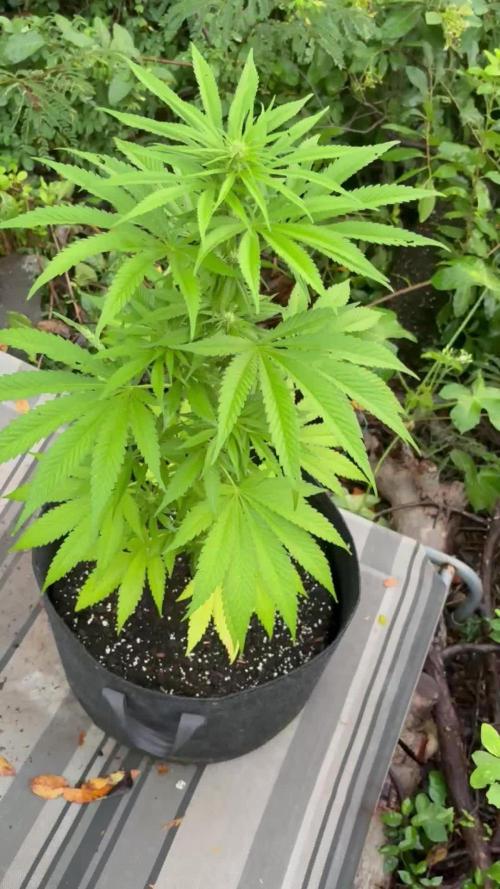
I see growth, but slow. I think the soil was of poor quality. I added fertilizer to the water, after a day I saw improvements. You may need to water less.
On the second video on April 15th.
Share your experience. I will be glad.


Likes
9
Share
@LilCeeDaWeedGod
Follow
Week 9
April 9
-a lot of progress since last weeks flip. She is stretching but it seems manageable right now prolly about to get crazy come next week
-did a lil defoliation to open up bud sites to light but that’s all
-number 85 and 86 stem rubs have that soap astringent smell to leave and are the loudest outta the bunch
- 88 and 86 have great structure the side branches are coming up to fill in the net very well so looking at them for possible breeding in the future
-while defoliating the purple stems bleed purple/purplish red. I thought sour d was strictly an all green plant but it may be because this is an f2 generation and these plants are showing recessive traits. We shall see
-it’s strictly watering 2 times a week (Sunday and Wednesday) alternating between recharge, stash blend and FPJ. FPJ is top watered in to help break down organic amendments
-Just switched to FPJ of a past harvest will use throughout flower to see if it makes a difference compared to PK booster
Likes
Comments
Share
@TTerpz
Follow
One has a helmet hat gonna keep an eye out on her
Update: Helmet hat came off
2/16 update: all 3 doing well
Likes
9
Share
@Turtleinweed
Follow
Woche 14 – Blüte Woche 8–9 – Endspurt, Trichome fast ready!
Tag 99–105 / Blüte Tag 44–50
Höhen: Sunset Sherbet 110 cm · Amnesia Mac Ganja 110 cm · Gush Mintz 90 cm
Licht: Mars Hydro FC-4000 Evo @ 78%, Abstand GM 60 cm, die anderen ~40 cm
Feed: Tag 99 1L Compost Tea pro Topf (48h gelüftet + PK Boost) → sonst nur entchlortes Wasser
Umwelt:
Tag: 22–23 °C / RH 44–48 %
Nacht: 18 °C / RH 48–50 % → super für Harzproduktion & Farben
Gesundheit: Ruhige Woche, leichter Light Burn (verbrannte Tips) bei Gush Mintz + Sunset Sherbet
Trichome-Check: Fast alle milky (~70 %), noch keine Bernsteinfarbenen entdeckt
Ernte-Schätzung: Gush Mintz & Sunset Sherbet ~noch 7–10 Tage (je nach Amber-Entwicklung) · AMG wahrscheinlich 10–14 Tage länger


Likes
2
Share
@Dabking
Follow
Chopped on day 80
Strong terps
Dried for 7 days
Yield was 70.8 grams dry weight

Likes
25
Share
@NorseGrower
Follow
Week 8: Everything is going great. I didn't plan on taking them all out again till they got chopped, but decided to get them out one at a time today and give them a good thorough defoliation, peeled off any undergrowth and water and feed them all. Temps remain completely under control and no longer an issue, even in 90 degree weather here. I've continued to alternate between feeding and just water, cal mag and fish shit. The only plant of the 6 to show any deficiencies was the #1 Skunk. Every leaf on leaf chart looks same to me lol. I upped today's feeding to 3/4 strength instead of half strength. If I had to guess, I would say that this is the last feeding for the Creme de la Chem, Strawberry Couch and the Double Grape. Those three will likely all fall in the 70-80 day harvest range and those three are at day 58. Not 100% on the #1 Skunk or not, it may get one more feeding, along with the Watermelon Skittles. The Fruit Punch? Well there is a chance I will be smoking cured Creme de la Chem before that one gets chopped lol. It will continue to get fed for a while as buds still very under developed. Today's defoliation was barely anything for a couple plants like the Watermelon Zkittles. A few big fan leaves blocked bud sites, but the Skunk needed thinned out badly and I took a good 20 minutes to go around the outside them come in from over top to really get in there and try to make some airflow and better light penetration. These are definitely drinking at different rates but in order to not be mixing up stuff daily, I feed them all on the same day and the couple that still had some weight to them just get less. I think these will all meet and exceed my 2 ounce goal per plant and 5 of the 6 after topping and training have conformed to the types of plants I really want to grow with the space I have. Thats 6-8 tops on a short compact plant. The Fruit Punch went off the reservations waiting till day 50 to start flower and is acting like this is a 3 plant grow not a 6. But shoving it in corner and putting short Skunk plant by it on bucket to raise up canopy along with raising one side of my TSL2000 and lowering other side towards shorter plants appears to be working great. Its great to be thinking about the flush. Having plants out, I did check trichomes on a couple just for the fun of it and mainly clear so got couple weeks or more for most of these.


Processing
Likes
4
Share
