


Likes
Comments
Share


@6ix6ix6ix
Follow
07/09 - 3 days after breaking ground
On the second day had to remove the residue of the seed that was gluing the leaves together. Video attached
Turned the light to 50% and around 50cm from the plants.
All systems - check

Likes
17
Share

@TrickzCutz
Follow
Servus Moin!
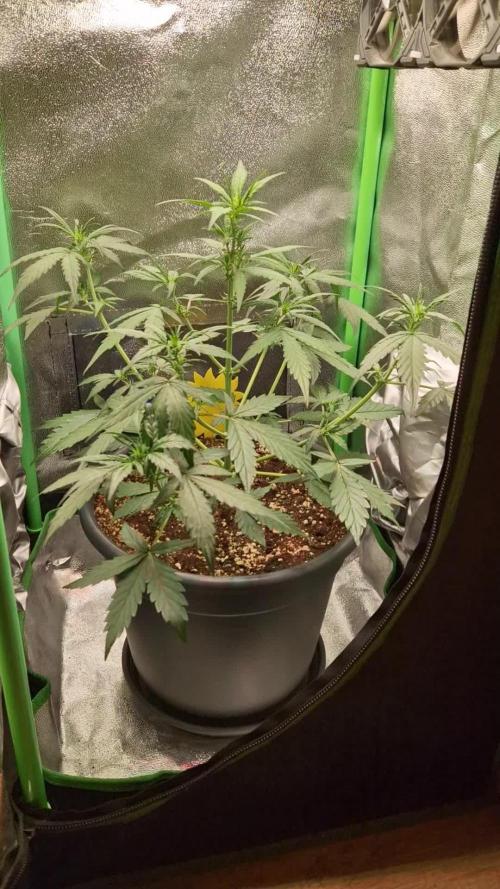
Die Deep Jealousy Auto macht sich prächtig. Sie macht jetzt richtige Meter. Sie Füllt bereits das 40cm x 40cm Zelt gut aus. Sie bekommt ab dieser Woche Blütedünger und PK Booster.

Likes
99
Share


@DevilsBud
Follow
Hallo fellow Growmies
Welcome to blackberry Moonrock by @Anesia_Seeds seeds
Blue Moonrock x Blackberry
Genetics: 80% Indica, 20% Sativa
Yield: 550g/m² • up to 700g per plant
Flowering time: 8-9 weeks
Harvest outdoors: end of september
suitable for indoors and outdoors
Height: 110-130cm
THC: 33%
Aromas / flavors: blueberry, lavender
18/9/21
Putting them in soil and hope for the best banana Mac didn't make it
🤘🏻😎🤘🏻 🤘🏻🤩🤘🏻 🤘🏻🤘🏻
muchas gracias compañero por el gran paquete. Haré mi mejor esfuerzo
visit www.marshydro.eu
for your best gear and use the PROMO CODE: DEVILSBUD
Fully marshydro supported Setup:
Marshydro GT100X100X180
Marshydro Ts 1000 LED lamp
soil :Plagron batmix
Advanced Nutrients
pH Perfect Bloom
pH Perfect grow
pH Perfect micro
B-52
Voodoo Juice
Rhino Skin
Big bud
Bud candy
Overdrive
flawless finish
Sensizym
Likes
10
Share

@DogDoctorOfficial
Follow
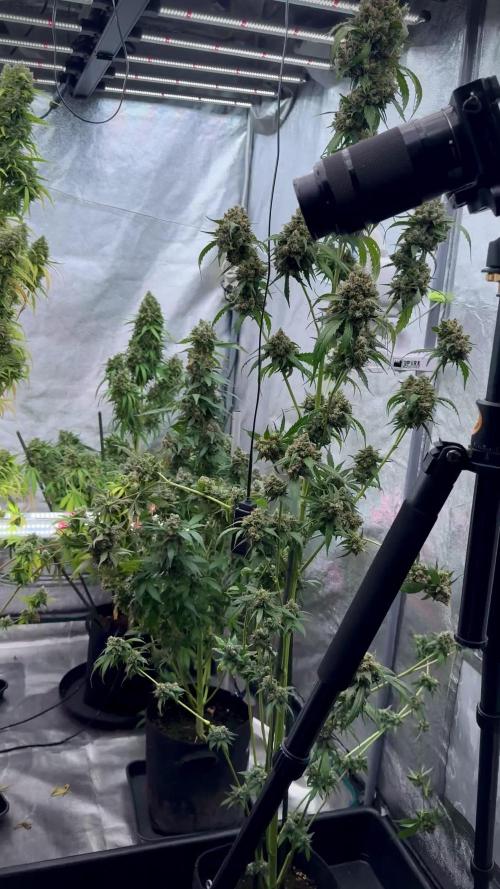
🌸 Week 7 Flower – Crystals, Aromas & Monster Buds
Welcome, friends, to the final pre-harvest chapter for our Mango Kush sisters. Week 7 Flower is where everything comes together: weight, density, aroma, and frost. And let me tell you — these girls are absolute monsters.
⸻
🌱 The State of the Sisters
• Pheno #1 – The trailblazer. Her colas are enormous, dense, and sparkling like snowy peaks under the lights. The macro shots reveal a glittering layer of trichomes, covering buds, sugar leaves, and even little fan leaves near the canopy. She’s showing phenomenal resin production, and her pistils are thick and curling.
• Pheno #2 – The younger sister, but catching up fast. Her buds are dense and sticky, the frost is appearing more heavily, and every macro shot reveals the same dazzling crystal coverage. She’s slightly behind Pheno #1 in maturity, but don’t be fooled — she’s a true powerhouse in her own right.
The smell in the room is so strong that if it weren’t for the carbon filters, we’d probably be calling the fire department thinking someone baked 100 mango pies at once! 😅
I mean the frost on these buds? Looks like Mother Nature had a snow day in the grow tent — pure white crystals everywhere, like the plants are wearing winter coats in July! ❄️
⸻
🔬 Trichome Watch – Macro Details
Week 7 is all about trichomes. Here’s what we’re seeing and monitoring:
• Clear trichomes: Still present, mainly on the lower bud sites, indicating some time left before peak potency.
• Cloudy/milky trichomes: The majority of bud surfaces are now showing full milkiness, a sign of peak THC potential.
• Amber trichomes: Small percentages on the tips of pistils — this is the first sign of cannabinol conversion, giving the slightly more sedative effect.
🌱 Educational takeaway: Trichome inspection is the golden key to deciding harvest timing. Macro photography helps us see nuances invisible to the naked eye. We’re aiming for a balance: mostly milky with a touch of amber for that perfect Mango Kush high.
⸻
💧 Feeding & Nutrition
At this stage, feeding is minimal but precise — we don’t want to push excess nutrients, only support the plant as it finalizes resin and bud density:
• Just water lol the rest they can find in soil and else were
Educational takeaway: Week 7 feeding is about support, not growth. The girls have all the energy stored; now we just help them transform it into resin, aroma, and density.
⸻
🌡️ Environment
• Temps: 28–30°C, slightly warmer in the canopy under heavy buds.
• Humidity: 50–55% — perfect for trichome development.
• CO₂: 620–650 ppm, steady, helping photosynthesis and sugar production.
Observation: Trichome production loves a slightly drier mid-to-late flower environment. Too much humidity can reduce resin and promote mold on dense buds.
⸻
💡 Lighting
The lighting orchestra is still performing beautifully:
• ThinkGrow Model One → penetrating the canopy
• ThinkGrow ICL-300s → mid-canopy perfection
• Future of Grow Black Series 600W → full-spectrum balance
• Lumatek Zeus 465W Compact Pro → evening out footprint
Result: every bud site is kissed by light, maximizing sugar leaves and resin density.
⸻
🔄 Recap – Seed to Here
For anyone joining now, here’s the full journey of our Mango Kush sisters:
1. Seed germination: Smooth, fast, with Aptus Start Booster.
2. Vegetative stage: Strong branching, two phenos selected, transplanted into super soil + Aptus Mycor-Mix.
3. Early Flower (Weeks 1–3): Pistils forming, Power Buds introduced, lighting expanded, TrolMaster ecosystem established.
4. Mid Flower (Weeks 4–6): Bulking, simplified nutrition, aroma starting, trichomes appearing, All-in-One Liquid and CalMag adjustments.
5. Week 7: Buds heavy, frost everywhere, aroma exploding, trichomes mostly milky with hints of amber — the final week before harvest.
⸻
🔮 What to Expect
✅ Expect:
• Buds heavy and dense, needing support
• Aroma extremely potent, filling the tent
• Trichomes mostly milky, some amber
• Sugar leaves sparkling with frost
❌ Don’t expect yet:
• Complete amber conversion (full sedative effect)
• Final cured aroma or flavor (only post-harvest)
Educational takeaway: Week 7 is the climax of flower maturation. Now is the time to inspect, support, and admire — patience will yield the perfect harvest.
⸻
🙏 Gratitude
To the GrowDiaries community: thank you for joining this journey from seed to near-harvest. The sisters have taught us patience, observation, and joy in every stage.
To the gear: TrolMaster, ThinkGrow, Lumatek, Future Of Grow with the Black Series — thank you for letting the plants reach their full potential.
💚 Grower’s Reflection:
These girls are monsters, monsters of beauty, resin, and aroma. Every macro shot shows why we love this process. And yes… if it weren’t for the carbon filters, we’d probably be evacuating the neighborhood from sheer Mango Kush smell! 😅 Frosty, dense, magical — week 7 Flower is everything I hoped for.
📲 Don’t forget to Subscribe and follow me on Instagram and YouTube @DogDoctorOfficial for exclusive content, real-time updates, and behind-the-scenes magic. We’ve got so much more coming, including transplanting and all the amazing techniques that go along with it. You won’t want to miss it.
• GrowDiaries Journal: https://growdiaries.com/grower/dogdoctorofficial
• Instagram: https://www.instagram.com/dogdoctorofficial/
• YouTube: https://www.youtube.com/@dogdoctorofficial
There’s a new series blooming and it’s more than just plants. It’s about process, patience, and paying attention.
⸻
Explore the Gear that Powers My Grow
If you’re curious about the tech I’m using, check out these links:
• Genetics, gear, nutrients, and more – Zamnesia: https://www.zamnesia.com/
• Environmental control & automation – TrolMaster: https://www.trolmaster.eu/
• Advanced LED lighting – Future of Grow: https://www.futureofgrow.com/
• Root and growth nutrition – Aptus Holland: https://aptus-holland.com/
• Nutrient systems & boosters – Plagron: https://plagron.com/en/
• Soil & substrate excellence – PRO-MIX BX: https://www.pthorticulture.com/en-us/products/pro-mix-bx-mycorrhizae
• Curing and storage – Grove Bags: https://grovebags.com/
⸻
We’ve got much more coming as we move through the grow cycles. Trust me, you won’t want to miss the next steps, let’s push the boundaries of indoor horticulture together!
As always, this is shared for educational purposes, aiming to spread understanding and appreciation for this plant. Let’s celebrate it responsibly and continue to learn and grow together.
With true love comes happiness. Always believe in yourself, and always do things expecting nothing and with an open heart. Be a giver, and the universe will give back in ways you could never imagine.
💚 Growers love to all 💚
📌 P.S. – About the Timeline
A quick note for clarity: Mango Kush #1 and Mango Kush #2 are slightly offset in their flowering timeline — there’s about a week difference in their development.
For the purpose of GrowDiaries, this Week 7 Flower report combines both sisters to provide a full picture of the tent and the ongoing bloom. While Mango Kush #1 is slightly ahead, and #2 a bit behind, this report reflects both in their mid-to-late flowering stage.
Why combine them now? GrowDiaries updates are sometimes tricky, and combining the sisters allows us to share their progress together, making it easier for readers to follow the story and observe the similarities and differences.
🌱 Rest assured: When harvest comes, we’ll present a complete follow-up report covering harvest, dry, trim, cure, and smoke review — highlighting each sister’s unique traits and final results.
Honesty is part of the journey, and transparency helps everyone learn and apprecilove the full picture.
💚 Growers love to all 💚

Likes
18
Share


@BobtheBUDbuilder
Follow
-Notes
Green crack is over 34 inches while the La chems around 24. Next time i do a diary i will do each plant differently.
Light height is 12 inches from highest colla which belongs to GC1. And let me say wow. Not only did she bounce back but she has went back to outgrowing all the other plants with stride. If a pro grower had this seed she would have got her own 3x3 cause that is a 1 pound plant.
So.. I flushed TD2, GC2 and TD1. Nothing major just about 3 gallons fush each. Most of the ppm readings where already low. Its a good idea to flush out the soil. Already the lime green color is gone from gc2. Td2 is starting to frost golden brown. So far all the plants are on the road to good health.
My ppm is around 600 but going to bump up to 900. We will see. We did the final defoliate. Mainly cleaned up the bottom of the plants and a few of them got pruned. Also cleaned out the tent and wiped down and moved fans around.
-GC1 has grown almost 20 inches this week. Insane. I am about out of room in my tent. My light is near max and the colas are 10 inches away. Just going to have to deal with the fox tail later on those sadly. Any advice message me. Td2 has grown a few inches only in 2 weeks but the buds are fattening up. The La Chems finally started stretching. I am guessing 3 or 4 weeks on td1 and 2 weeks after gc and la chems. We will see.


Likes
34
Share


@BOMbolenath
Follow
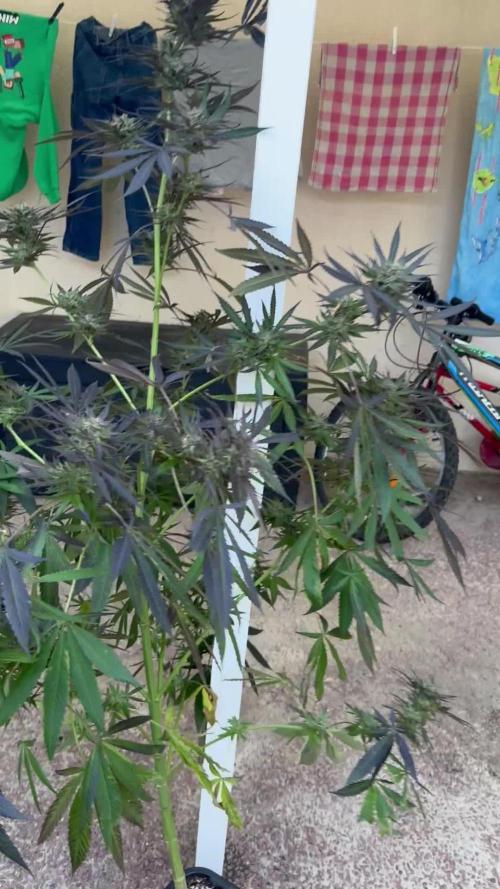
First week of flowering. The plant will stretch, so i adjusted the LED dimmer to 100%. Did a good defoliation too. Doing good, very healthy. Smell very good.


Likes
37
Share


@eezeegrow
Follow
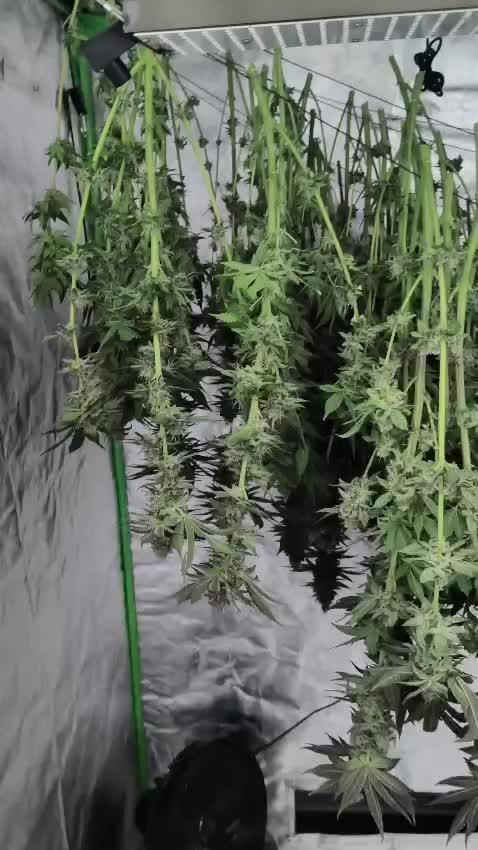
Plants are growing fast and and buds are quite big in this stage. Leaves are green and the grower is happy... 😬



Likes
9
Share


@Bud_Koenig
Follow
Hey everyone, quick update on my Hulk in living soil! It’s growing like crazy, and I’m starting to get a bit concerned it might get too big once the flowering stretch kicks in 😅. Other than that, I’ve just been watering occasionally and adding some beneficial microorganisms . I’m thinking in about 1-2 weeks, I’ll switch to 12/12.


Likes
11
Share


@DixTheReal
Follow
Giorno 50 - la carenza di Fosforo e Potassio é sempre più evidente sulle foglie di “Caramel” che ha una crescita rallentata dei fiori; al contrario “Cream” sta crescendo bene e i fiori sono decisamente più grossi, non mostra carenze per il momento
Giorno 51 - niente da segnalare, procede bene
Giorno 52 - la resina inizia a vedersi bene sulle foglie, i fiori stanno gonfiando
Giorno 53 - ho fertilizzato solo “CREAM” perché “CARAMEL” ha carenze ed é inutile mettere ancora fertilizzante, ho dato solo acqua. Invece a “CREAM” ho dato 1 litro di fert (1ml bio grow, 1,5 bio bloom e 1,5 top max mischiati in 1,5L d’acqua. L’altro mezzo litro rimasto l’ho buttato perché era troppa)
Giorno 54 - sembra abbia reagito bene alla fertilizzazione “CREAM”, invece “CARAMEL” continua ad avere le foglie sempre più gialle, ma prosegue bene
Giorno 55 - nulla da segnalare, l’odore é molto forte, si percepisce anche fuori dalla grow box
Giorno 56 - i fiori si stanno gonfiando bene, ho dato circa 750ml di acqua a testa e defogliato la parte bassa dove c’erano tante foglie morte e secche. Ho iniziato il flush delle radici, spero di tagliare tra una quindicina di giorni

Likes
33
Share

@McBubatz
Follow
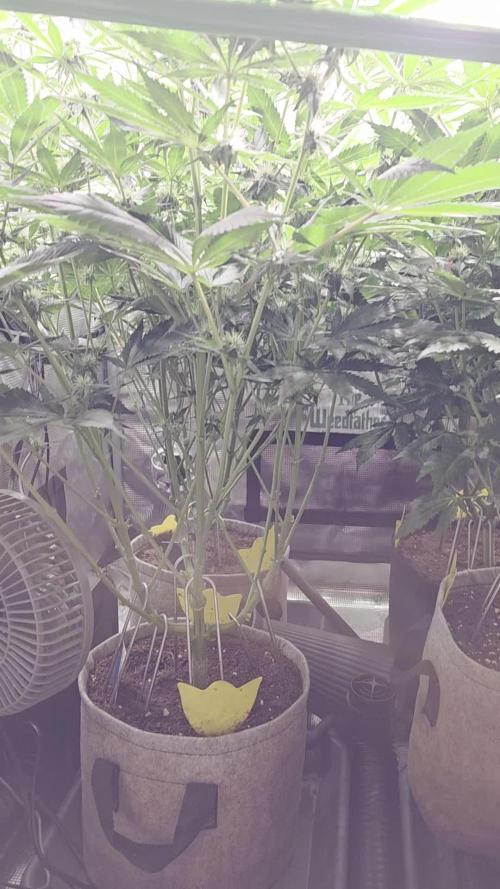
10 Woche, BW 4. Straw Limez is eine richtige Macherin, schon richtig harzig, so schöne stabile Triebe und ordentlich Masse. Jetz geht langsam in die heiße Phase, hoffentlich bekommt sie auch schöne Buds.
BW 4 Tag 5, Bild 5 und Video, Straw Limez hinten rechts.
Wünsche euch allen eine schöne Woche und bleibt gesund 🙏, bis nächste Woche dann.
Likes
7
Share


@x_grower
Follow
Last week the plants grew looking very healthy although I still have a feeling the low humidity is slowing their growth, by the end of the first week I started raising the EC to make the increasing for this week smoother, run-off EC is substantially increasing so I will start to fertigate them twice a day for this week.
Likes
Comments
Share


@cookingwithninja
Follow
30% indica, bagseed, amazing smell, berry, fruit punch. So sticky, beautifully cured. Was smoking immediately 2 days into jars.
Likes
20
Share


@Tracie67
Follow
It's been a pretty easy week. Enjoying watching the buds get thicker! Just going to coast to the end at this point....hoping to harvest within the next 2 weeks. Already getting excited for my next grow...thinking Ethos Planet of the Grapes or Ethos Crescendo.
Likes
35
Share


@nonick123
Follow
Día 80 (19/08) Riego 1 Litro H2O pH 6,55
Día 81 (20/08) Riego 250 ml H2O pH 6,55
Día 82 (21/08) Riego 500 ml H2O pH 6,55
Día 83 (22/08) 💥Comienza la floración! 💥
No riego. Día nublado y de bajas temperaturas
Día 84 (23/08) Riego 500 ml H2O pH 6,55
Día 85 (24/08) No riego. Día nublado y de bajas temperaturas
Día 86 (25/08) Riego con 1 Litro de Té Floración de Lurpe Solutions. Preparación: 24 horas con bomba de aire (oxigenación) con ingredientes:
Healthy Harvest 8 ml/L + Insect Frass 16 ml/L + Hummus Lombriz 8 ml/L + Melaza 1 ml/L + Kelp Hidrolizado 0,25 g/L
💦Nutrients by Lurpe Solutions - www.lurpenaturalsolutions.com
🌱Substrate PRO-MIX HP BACILLUS + MYCORRHIZAE - www.pthorticulture.com/en/products/pro-mix-hp-biostimulant-plus-mycorrhizae

Likes
8
Share


@Mo_Powers
Follow
when you grow a feminised photoperiodic outdoors you have to bring time and patience. she is growing and is strong. still no sign of sex. she hasn't really had much stress, so i'm not worried about her turning male. i'll just keep growing her. her sister, RQS Northern Light is also doing very well. both have been given a homemade fertiliser made from aquafaber, coffee grounds and banana peel. they liked it very much.

Likes
86
Share


@Tropicannibis_Todd
Follow
Alright Then
REMINDER I DO 2 UPDATES PER WEEK 👉WEEKLYROUNDUP👈👉MIDWEEKLY UPDATE👈
We just hit week 5 and all is well , for the most part , having a little magnesium issue but hopfully with some adjustments I got under control 😃 .......
Middle of last week I have decided to start with her little sister and started a little training by pulling her over to the side 👌 And will continue to LST this week👈 And she's looking fantastic and she's already begun next faze by preflowering 😲
Pheno #2 is about 10 to 12 days behind
rain water to be used entire growth👍
Lights being readjusted and chart updated .........👍
I GOT MULTIPLE DIARIES ON THE GO 😱 please check them out 😎


Likes
4
Share


@handsammich
Follow
Definitely would’ve been better had I not moved but nonetheless it was a great run overall, super frosty and sticky with not very dense buds which made for a difficult trim but I didn’t mind.
