Likes
Comments
Share
@DRO420
Follow
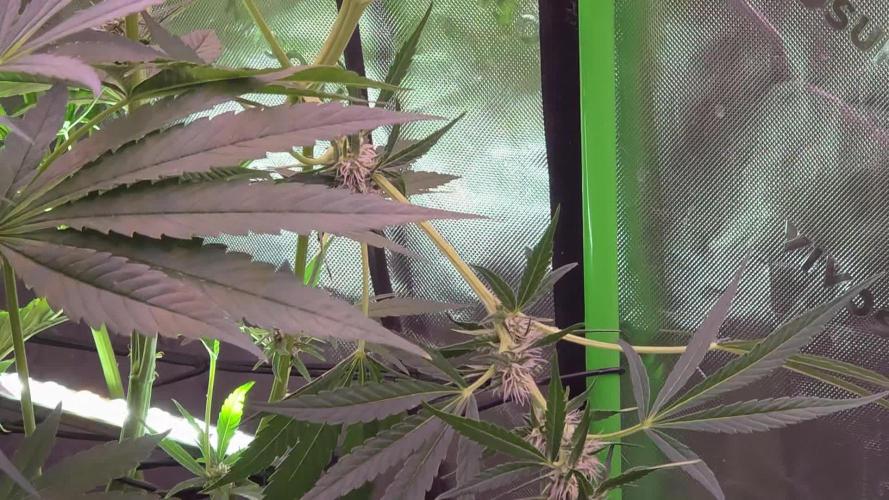
Coming into the final weeks here, about a week and a half until harvest. Trichomes are looking just about ready.
Likes
6
Share
@Elpicor
Follow
Mi aspetto molta dolcezza da queste due piantine😇 se viene come la prima sarò molto contento!
Likes
3
Share
5/21/22 - 5/27/22 5/21/22 Refilled the resivore with water nutrient mix. 4 gallons was needed to fill her tote back up. 5/22/22 Took a video of her beautiful buds today. She is so beautiful 😍 5/24/22 My beautiful girl is thriving measurng in at 52" today 5/25/22 Made another cute video of this gorgeous lady. 😍 5/27/22 This girl is getting too big to full photograph. She is drinking 3 gallons every other day. Look at that top cola
Likes
10
Share
@Borberad
Follow
Woche 6 Tag 36 Die Topffläche ist weitestgehend ausgefüllt. Es wird umgestellt, nicht nur die Zeit sondern auch physisch. Das Blümchen wandert aus dem Keimzelt, was diesmal auch Veggizelt war, in ihr Blütezelt. Da beide Zelte zeitversetzt laufen, wird die erste Nacht auf etwa 21h verlängert indem sie in ein unbeleuchtetes Zelt zwischen geparkt wird. Anschließend wird im üblichen 12h Takt beleuchtet.
Likes
39
Share
Wie man sieht hatte ich viel zum wegschneiden, das erste mal wurde gedüngt die Woche, ansonsten läuft alles ganz gut denke ich, bin sehr zufrieden bisher 😊 As you can see, I had a lot to cut away, fertilized for the first time this week, otherwise everything is going quite well I think, I'm very satisfied so far 😊
Likes
71
Share
Week 11 Flower Report for the Anesia Run 🌸🌿 Hey Grow Diaries fam! 🌱✨ Welcome back to another exciting update on our Anesia run. We’re deep into Week 11 of flower, and let me tell you, the garden is absolutely thriving! The girls are showcasing their full potential, and the canopy is a vibrant sea of frosty buds. Grab a cup of your favorite brew, sit back, and let’s dive into this week’s report filled with fun facts, details, and a sprinkle of positivity! 🌟🌸 Nutrient Update 🌿🔬 This week, we’ve continued with our nutrient regimen, making a few key adjustments to ensure the plants are getting everything they need to produce those sticky, resinous buds. Our mix includes: • Regulator: Keeping the plants’ stress levels in check and ensuring optimal growth. • CalMag: Providing essential calcium and magnesium for strong cell walls and overall plant health. • P-Boost: Enhancing flower development and increasing bud size. • K: Introducing potassium to boost bud density and improve overall flower quality. • Top Booster: Supporting the final push in flower production, ensuring those buds are as big and healthy as possible. Our TDS has been adjusted to 500, with a pH of 6.0, keeping the environment perfect for nutrient uptake. 🌿💧 Environmental Control 🌞🌡️ Temperatures have been steady at 21°C, creating the ideal environment for our girls. Consistency is key in these final stages, as we want to avoid any stress that could affect bud development. 🌡️ Fun Facts & Details 🌸✨ 1. Trichome Wonderland: The trichomes on these ladies are sparkling like diamonds. Did you know that trichomes are the plant’s way of protecting themselves from UV rays and pests? They also contain the highest concentration of cannabinoids, making them the heart of the plant’s potency. 2. Pistil Party: The pistils are starting to turn a beautiful amber, signaling that harvest time is approaching. Fun fact: pistils are the female part of the flower and are responsible for catching pollen to produce seeds. In our case, no seeds, just beautiful, potent buds! 3. Aroma Explosion: The terpene profile is off the charts. Walking into the grow room is like stepping into a fragrant garden. Each strain has its unique scent, from the sweet and fruity notes to the pungent and earthy undertones. Did you know terpenes not only provide aroma but also enhance the effects of cannabinoids through the entourage effect? 4. Leaf Yellowing: Some of the lower leaves are beginning to yellow and fall off. This is perfectly normal as the plant focuses its energy on bud production. It’s a sign that our girls are nearing the end of their life cycle, putting all their effort into flowering. 5. Bud Density: The buds are getting denser by the day. Proper potassium levels have been crucial in achieving this. Dense buds mean more weight and better quality, making all our efforts worthwhile. Special Shoutouts 🌟❤️ A massive thank you to our amazing community and all the support we get on Grow Diaries! Your comments, tips, and encouragement mean the world to us. 🌍✨ Anesia Seeds, thank you for these incredible genetics. Each plant is a masterpiece in its own right. 🌱❤️ To our sponsors Aptus Holland and Future of Grow LED, your products have been pivotal in creating this green oasis. And let’s not forget the TrolMaster for keeping our environment in check. For everyone following along on YouTube, don’t miss out on our series Welcome to the Green Oasis. This week’s episode dives deep into the latest updates, techniques, and everything you need to know about growing these beautiful plants. 🎥🌿 Invitation 🌟 Don’t forget to check out our YouTube channel for more detailed insights and exclusive content. Let’s grow together and spread the positivity! 🌿🌞 Conclusion 🌸✨ Week 11 has been a journey of growth, learning, and joy. The girls are almost ready to reward us for our care and patience. Stay tuned for the final stages as we approach harvest, and as always, keep growing and glowing! 🌟🌱 Thank you all for being part of this journey. Until next time, happy growing! 🌿❤️ #GrowDiaries #AnesiaSeeds #AptusHolland #FutureOfGrowLED #TrolMaster #CannabisCommunity #HomeGrow #CannabisCultivation #PositiveVibes #KeepGrowing #WelcomeToTheGreenOasis #Episode11 Apricot Oreoz = AO Zoomiez = Z Future#1 = F https://anesiaseeds.com/ Plant nutrition - Aptus Holland - https://aptus-holland.com LED Photons - Future of Grow - https://www.thefuturofgrow.com/ Controls - Trol Master - https://www.trolmaster.eu/ Watering - Autopot - https://autopot.co.uk/ Tent - Mars Hydro - https://marshydro.eu/ Love and attention - Me, myself and i As always thank you all for stopping by, for the love and for it all , this journey of mine wold just not be the same without you guys, the love and support is very much appreciated and i fell honored and blessed with you all in my life, With true love comes happiness. Always believe in your self and always do things expecting nothing and with an open heart , be a giver and the universe will give back to you in ways you could not even imagine so More info, the ocasional give-away and exclusive updates from all my adventures can be found - links in the profile description Friendly reminder all you see here is pure research and for educational purposes only Growers Love To you All
Likes
29
Share
@EXZELENS
Follow
1st of November, HARVEST, D91 So, after the 24 hours of darkness, she is now beautiful and ready. After chopping her, I hung her for some hours – I had some stuff to do – and after that I did wet trimming since I find it more convenient and I don´t like to trim dry buds. I guess the best way for me would be to leave it drying for some days, do the trimming, then leave it drying some more, but, I sincerely don´t have patience lol. When I was in the last stock to trim (which was the main btw) the top bud looked strange to me so I opened it and it was starting to rot.. I got really sad but what can I do except for trying to save it, right? So I took all the rotten parts out of the top bud and tore it to pieces to watch it closely and keep it from getting any more mold. D94 Today I weighed the half part of the top bud that was already dry and it remained without any mold: 3.6 grams. D97 Everything is dry and now curing, the total weight is 68.6, 65 of the whole plant and 3.6 of what I saved from the rotten bud. I´m really happy with the results, the buds aren´t much dense but they look beautiful. D111 Today is the 14th day of curing. D120 Today I´ll be doing the smoke report, it´s been curing for 3 weeks and the smells is quite good already, I know it can be better but the taste is good already so I´ll be doing it today. More info on growing in the previous weeks and a summary of growing and also the smoke report are on the top at the strain review. Thank you very much for reading my diary!
Likes
1
Share
@ibbzy
Follow
Processing
Likes
11
Share
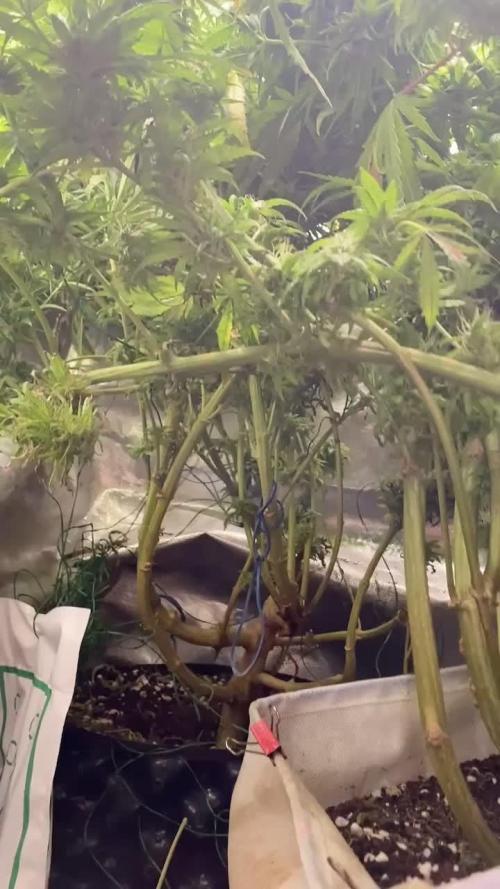
They’re looking extremely healthy..gave em their first nute feed with the last watering seem to be doing fairly well..fimmed the GG and LST. Did not touch the unkown as it looks smaller to be the same age. Running GHE base line with few extra supplements. ****UPDATE**** Both are LST’d..might rethink the way I tie them. Going for a “coil” type look, we’ll see though. They’re looking great! Hoping for females!
Likes
52
Share
Its time to prepare for war. *Blows bagpipe* FISH SH!T THE ORGANIC SOIL CONDITIONER (used twice before and always noticed instantly) Fish Shit is a living product! It provides a complex Microbial profile that includes thousands of different species of bacteria, fungi, and protozoa. This profile is closer to a natural ecosystem than anything you will find on the market. Fish Shit helps release essential oils and terpenes which contribute to the building of a myriad of flavonoids. Flavanoids play a key role in the development of the most potent aromas and tasteful flavors of a plant and its fruit. Fish Shit contains beneficial microorganisms that help plants maximize nutrient uptake. It does this by transforming nutrients into more usable forms and keeping these nutrients in the soil longer. During photosynthesis plants naturally produce exudates (chemicals that are secreted through their roots). Through these exudates, plants can attract the types of good bacteria that are beneficial to them at different points in their growing cycle. These good bacteria cover the roots and act as a barrier to the invasion of disease-causing organisms that may harm the plant. What Are Enzymes? Before we dive headfirst into how, exactly, enzymes can benefit cannabis plants, it helps to understand a little about what these microscopic proteins do. Essentially, enzymes facilitate chemical reactions. They do so by binding with a substrate and forming or breaking molecular bonds. In this context, the substrate is the molecule upon which an enzyme acts to boost the efficiency of a reaction. •substrate /sŭb′strāt″/ •noun •The material or substance on which an enzyme acts. A surface on which an organism grows or is attached. An underlying layer; a substratum. Enzymes are proteins with complex 3D shapes that feature regions called active sites. When the substrate binds to these active sites, it forms an enzyme-substrate complex that causes a chemical reaction to take place, temporarily changing the structure of the enzyme and ultimately causing molecules to either come together or break apart. As a result, molecular products are released, and the enzyme returns to its original shape. Specific enzymes are capable of binding with certain substrates, as the substrate fits into the active site more or less via a lock-and-key principle. Although, new research suggests a more accurate theory of "induced fit", in which enzymes and substrates undergo structural changes to facilitate the reaction. If you take the human body as an example, we have an abundance of enzymes in our saliva and digestive system. These molecules bind with substrates in these regions (food particles), working to break down the food we eat into usable parts before converting them to energy. Enzymes in cannabis work in a similar way to the example highlighted above. Typically, enzymes occur in soil naturally, but if your soil mix is lacking organic material, or you're growing hydroponically, then adding enzymes directly to the substrate is crucial. By using them in cannabis growing, enzymes not only help break down essential nutrients into smaller, more readily available pieces, but they also support the digestion of dead root cells, clearing a direct path for nutrients. Overall, enzymes make it easier for your cannabis plants to absorb all the elements they need to reach their full potential. For growers, a plant that reaches its full potential means a bucketload of juicy buds come harvest. This is essential if you want to reuse a pot with old systems left over like mine. Common plant enzymes include: •Cellulase •Xylanase •Beta-glucosidase •Hemicellulase •Amidase Amino acids are a crucial, yet basic unit of protein, and they contain an amino group and a carboxylic group. They play an extensive role in the gene expression process, which includes an adjustment of protein functions that facilitate messenger RNA Nitrogen, phosphorus, and potassium are the three main pillars of nutrient solutions and fertilizers, but there are countless other nutrients that your cannabis plants need to produce the best possible harvest. Amino acids are one of them. You may have noticed that amino acids get a lot of attention from bodybuilders and other athletes. That’s because they play a key role in the synthesis of protein, which, as you probably know, is super important for sports recovery and muscle growth. Amino acids are the building blocks of protein and the foundation of both plant and animal life. But what do amino acids do for cannabis? WHY IS PROTEIN IMPORTANT FOR CANNABIS? Just like proteins are important for the human body, they are equally important for the growth and development of plants. For example, proteins help plants: •Facilitate the growth of intracellular plant structures •Promote energy generation •Stimulate metabolic processes •Facilitate the absorption and transportation of nutrients So, where do plants get these vital proteins from? Well, unlike humans, plants can’t source proteins or amino acids from other organisms. Instead, they need to create their own amino acids, and then use these to build protein. That's why gardeners, much like athletes, go wild for amino acid supplements. Amino acids help plants by… • Increasing their production of chlorophyll, which ultimately improves their ability to photosynthesize • Serving as an easily absorbable form of nitrogen • Stimulating the synthesis of key vitamins • Improving their resistance to pests and diseases • Boosting the strength of their cells Amino acids also serve as the precursors to auxins, a group of plant hormones produced in the meristems—the apex of the stems where new leaves and stems are born. Auxins play a key role in the plant, activating genes for plant growth and development by triggering a multitude of vital plant functions. In other words, they determine what its size and architecture will look like. Auxins influence the development of branches, flowers, and roots, and even help to regulate the photoperiod response of the plant. Some amino acids, like cysteine, also work together with antioxidants like glutathione to help cannabis plants deal with oxidative stress, which can be caused by high-intensity lighting, some nutrient solutions, and high levels of CO₂. Unlike humans, plants can synthesize all the amino acids they need to survive and develop properly. Unfortunately, however, amino acid synthesis is a really high-energy process, and plants may struggle to produce enough amino acids when exposed to stress. WHAT FACTORS AFFECT A PLANT’S ABILITY TO SYNTHESISE AMINO ACIDS? Any kind of stress can affect a plant’s ability to produce enough amino acids. This includes: • Drought • Temperature extremes • Poor soil health • Pests • Diseases • Poor lighting • Lack of space • Poor root health WHAT DOES ALL OF THIS MEAN FOR WEED PLANTS? If you want to push your plants to their extreme in terms of floral growth and resin production, you should look into amino acid fertilizers. By making amino acids readily available to your plants, they’ll be able to use crucial energy to grow and bloom, rather than focusing on synthesizing amino acids themselves. Game of Inches, this is another Plants can absorb amino acids via their roots and leaves. They can also benefit from amino acids during both their vegetative and flowering phases. The fastest way for plants to absorb amino acids is via their leaves. The foliar application of amino acids is believed to improve the transportation of nutrients, increase transpiration, and boost photosynthesis. Hence, I recommend feeding your plants with foliar amino acid fertilizers. When doing so, however, carefully measure the amount of fertilizer you use, as—like with any nutrient—overfeeding can damage your plants. FOLIAR FEED AND SOIL SOAK • 1 crushed queen anne carrot • Add 2 tbsp of NPK Raw powdered water-soluble cane molasses • 20ml h2o2 • 1 crushed radish • 0.25 tsp NPK Enzymes • 0.25 tsp NPK Amino Acids • 50ml coconut water ( nature's own amniotic fluid packed with amino, enzymes ) + The sound of songbirds. Onto the predators 1250 -Green Lacewings Lacewings are extremely voracious predatory insects that feed on several pests. In adulthood, it feeds on pollen and nectar. In the larval stage, it feeds on aphids, thrips, and mealybugs at all stages of growth. It can also attack spider mites in moderate quantities. It is initially an aphid predator, but very effectively controls thrips and mealybugs infestations. It is so voracious that in the absence of prey, it will feed on its congeners. Lacewings are cannibalistic if there is no food available for them. It is therefore important to introduce them into an infestation situation, and not just preventively. •congener /kŏn′jə-nər/ •noun •A member of the same kind, class, or group. •An organism belonging to the same taxonomic genus as another organism. •A thing of the same kind as. or nearly allied to, another; specifically, in botany and zoology, a plant or an animal belonging to the same genus as another or to one nearly allied. Ideal temperature 20°C – 26°C Ideal humidity 60% – 70% Predatory stage life cycle 21 days Introduction rate 4 weeks Storage Refrigerator Use Immediately Are there any specific instructions on how to use this predator? Lacewings are available on small paper cards that you can hang to plant stems. On the cards are dozens of eggs ready to hatch. There are also sterile eggs they can feed on once they have hatched before they are ready to disperse in the foliage. It is important to use them quickly upon receipt to avoid cannibalism. If you don't use them right away, you can store the cards in the refrigerator for 24 to 48 hours to prevent the eggs from hatching too quickly. Avoid storing them for longer than this or you risk losing eggs. 1250 eggs are divided into 7.5 cards, 2500 eggs on 15 cards, and 5000 on 30 cards. The application rate is one card per square meter of growing surface. Is this predator best used for preventive or curative treatments? Lacewings are used as a curative solution. Anything else I should know? Lacewing eggs hatch approximately 24-72 hours after the cards are exposed to room temperature. When they emerge, the lacewings are just 1.5-2 mm long. They are very small so they are difficult to see. Once hatched, they will stay on the cards for a few hours and then disperse in the foliage. You quickly lose sight of them if you have not witnessed the hatching. They then live in the foliage for about 3 weeks. Often, you will see them towards the end of their larval cycle. After feeding for 3 weeks, they will triple and even quadruple in size. At that point, they are easier to see. But they remain very discreet insects, it is not abnormal not to see them. Egg carcasses left behind on the cards do not disappear after the hatching has happened. It's normal to see eggs still on the cards. Visually it is very similar before and after hatching. Also, on the boxes, there are sterile ephestia eggs which are used to feed the lacewings once hatched. Not all lacewing eggs are viable either. Only a certain percentage of lacewing eggs will hatch. Once hatched, the eggs are white. You can observe this using a magnifying glass. With, 5000 Stratiolaelaps Scimitus It is used to prevent or control thrips pupae, fungus gnats larvae, and root mealybugs in the soil. It can also be used for red mites in bird farms or hen houses. The adult is about 1 mm long and is medium brown with a beige triangle on its back. Another fun fact about them is they can survive without prey. They can eat algae and plant debris. This is why they can reproduce and stay in plants for long periods. Ideal temperature 15°C – 23°C Predatory stage life cycle 18 days Introduction rate 2 weeks Storage Room temperature Use Within one week Are there any specific instructions on how to use this predator? Sprinkle directly on the growing media. They can live in all types of substrates like potting soil, coconut fiber, rock wool, cedar mulch, etc. Stratiolaelaps establish easily so they are permanently fighting pests. One introduction is generally enough unless you have an infestation. In this case, introduce them at least twice at a 2-week interval for best results. If you grow your plants in a 100% mineral substrate, it will have to be released more often since there is less organic matter than in traditional soil. Do I need to take any specific precautions? Stratiolaelaps breed in the top layer of the soil. So it is important not to disturb them in the first days following their introduction. They don't like temperatures below 8 ° C. So be sure not to introduce them in a water-saturated or cold environment. Release them 24-48 hours after your last watering. They are very sensitive to chemical acaricides and diatomaceous earth. These methods are incompatible with their use.
Likes
6
Share
@Hempcules
Follow
WEEK 5 This last week of vegetation went pretty well for my Zoapaya. It didn’t react very well to topping and ended up with a rather unbalanced structure. Still, a few strong shoots managed to establish themselves. The single feeding this week was probably a bit too early for her, but I think she’ll handle it. Over the course of the week, I lightly trimmed and defoliated the lower area to keep the focus on the good shoots. By the end of the week, I was also able to spot the first pistils. I’m now looking forward to the flowering phase and hope the stretch won’t get too wild. PPFD: 500µmol/m²/s Water: 2x water 1x nutrient solution Vpd: 1,2Kpa
Likes
7
Share
@Grisly
Follow
Harvest 2024 Total Hash: 102g Total Kief: 95g Total Flower: 3868g/138oz/8.6lb Total Yield: 4065g/145oz/9lb/4kilo ———-/-////////—vs———-/////————/ Sugar Diesel #1: 117g Sugar Diesel #2: 313g White widow Clone: 14g Dual OG: 112g LA Affie North Field: 248g Granddaddy Purple N: 63g Black Raspberry Kush N: 210g ————————————————- Total North: 1077g/38oz/2.5lb ————————///——/—————-/ Fruity Pebbles: 184g Granddaddy Purp S H2: 54g Granddaddy Purp S H1: 275g Granddaddy Purp Total: 329g/12oz Black Rasp Kush S H1: 160g Black RaspKush S H3: 70g Black Rasp Kush S H2: 511g Black Rasp Kush S H4: 17g Black Rasp Kush S: 758g/27oz Blue Cheese S H1: 281g Blue Cheese S H3: 83g Blue Cheese S H2: 285g Blue Cheese Total: 649g/23oz Dr Grinspoon S H1: 485g —————————————————- Total South: 2405g/85oz/5.3lb ————————///——/—————-/ North Popcorn: 148g BC Popcorn: 100g GP Popcorn: 73g BRK Popcorn: 65g —————————————————- Total Popcorn : 386g/14oz/0.9lb ————————///——/—————-/ Trim: 8lb ————————————————— ————————///——/—————-/
Likes
14
Share
@Kakui
Follow
11 Noviembre: Primer riego con 2.5EC y 5.9pH, runoff de 2.9EC y 6.2pH, en una semana más ya deberían estar recibiendo 3.0EC y seguir con esa concentración por todo el cultivo. Alturas están entre 15cm y 20cm. 13 Noviembre: Riego 2.5EC y 5.9pH, runoff de 3.3EC y 6.2pH. Hoy se removieron los primeros nodos de cada planta y se les hizo poda apical. 14 Noviembre: Riego 2.5EC y 5.9pH, runoff de 3.3EC y 6.2pH en la mañana. En la tarde se realizó transplante a maceteros definitivos de 5 litros con 4 litros de sustrato aprox. el cual fue pre cargado hasta la capacidad de campo, con 3.0EC y 5.8pH, desde este punto se debe esperar un par de días hasta que el dryback(secado) del sustrato sea de un 35-40%, lo cual vendría siendo el primer P3 del cultivo, una vez se alcance ese porcentaje de secado, se comenzará con los primeros riegos de precisión llamados P1.
Likes
58
Share
Wetter war gut, nur einmal Regen, 3 fat banana sind im trockenraum, die anderen beiden kommen in den nächsten Tagen dazu.sind fast fertig. Die zz legen an buds zu, wie sie sollen, Nr.5 schon im fading... special queen macht sich langsam. Toppen war die richtige Entscheidung. Critical verzweigt sehr gut 👍. Lst funktioniert. Nächste Woche kommt der erste erntebericht... ich freu mich. Bis nächsten Freitag ✌️
Likes
34
Share
@Almora
Follow
I switched to new fertilizer, I used a little too much, but it's not a problem, I gave around 900 ppm to each plant, but I don't mind, flawless finish is available.
Likes
24
Share
Week 5 of Flower 8/5-8/12 ~Average~ Temp: 76-84f RH: 40%-50% PH: 5.9-6.2 NOTES: All is going well💪🏽 The flowers are starting to really put on the weight and smell. I’m a huge fan of Walter white. Happy cultivating🤙🏽
Likes
165
Share
💩Holy Crap Growmies We Are Back💩 So what do you say we have some fun 👈 We got some EXOTIC SEEDS 👉 👻👻👻MONSTERMASH👻👻👻 😛 Well my friends we are just at the 56 mark and as you can see shes doing great 👈 👉 So folks , she's been quite the little monster , and she's building some nice buds 👈 Shes the only one that hasn't had any issues 😎 Lights being readjusted and chart updated .........👍 👉I used NutriNPK for nutrients for my grows and welcome anyone to give them a try .👈 👉 www.nutrinpk.com 👈 NutriNPK Cal MAG 14-0-14 NutriNPK Grow 28-14-14 NutriNPK Bloom 8-20-30 NutriNPK Bloom Booster 0-52-34 I GOT MULTIPLE DIARIES ON THE GO 😱 please check them out 😎 👉THANKS FOR TAKING THE TIME TO GO OVER MY DIARIES 👈
Likes
24
Share
Hello, Grow Diaries fam! 🌿✨ We’re now in Week 10 from seed, and what a journey it’s been. This week, the grow room has transformed into a breathtaking display of autumnal beauty, with the plants showcasing stunning fades and vibrant colors as they enter their final stages of life. It’s a true celebration of nature’s cycles, and the energy in the room is palpable. Let’s dive into this epic week! 🌟 Week 10 Highlights 🌟 The plants are embracing their last days with grace, each one revealing a unique spectrum of colors and expressions. The transition to 12/12 light cycle continues to push them toward their full potential, all thanks to the Big Demon, who’s still leading the charge with her massive stature. Here’s a closer look at what’s been happening: 1. Moon Rock 🚀: • Appearance: Moon Rock is a sight to behold, with her compact buds now radiating deep purples and blues. The fading leaves add a touch of gold and burgundy, creating a gorgeous contrast. • Maturity: Trichomes are nearing their peak, with a beautiful mix of milky and amber hues. The plant is exuding a rich, earthy aroma that’s both soothing and powerful. • Notes: Moon Rock’s structure remains solid, with every bud dense and resinous. She’s almost ready to harvest, but we’re giving her a bit more time to fully mature and express her genetics. 2. Opium 🌸: • Appearance: Opium has embraced the autumn spirit with a stunning display of fiery reds, oranges, and purples. The buds are heavy, covered in a thick layer of trichomes, and the leaves are curling into a final, beautiful farewell. • Maturity: The buds are at their densest, with pistils mostly curled and darkened. The scent is intoxicating, with sweet and spicy notes filling the room. • Notes: Opium is reaching her final form, with the fade adding to her allure. She’s almost ready to give up her bounty, and we’re closely watching the trichomes to catch the perfect harvest moment. 3. Big Demon 💪: • Appearance: Big Demon continues to dominate, with her towering colas still swelling and gaining density. Her leaves are just beginning to show signs of fade, with a mix of deep greens and light yellows starting to emerge. • Maturity: She’s not quite there yet, still pushing out new growth and adding weight to her massive buds. The trichomes are mostly clear, indicating that she’s got more to give before she’s ready. • Notes: Big Demon is the reason we switched to 12/12, and she’s proving to be worth the wait. Her potential is enormous, and we’re excited to see how much more she’ll develop in the coming weeks. 🌟 The Beauty of the Fade 🌟 This week, the grow room has become a canvas of color, with each plant expressing its own unique fade: • Moon Rock: Deep purples and blues with a touch of gold. • Opium: Fiery reds, oranges, and purples, creating a warm, autumnal palette. • Big Demon: Still mostly green, but with hints of yellow signaling the beginning of her fade. The fade is not just a visual treat—it’s also a sign that the plants are nearing the end of their life cycle. As the leaves lose their chlorophyll, they reveal the hidden pigments underneath, resulting in the stunning colors we see now. It’s a reminder of the natural process of life, death, and renewal, all happening within the grow room. 🌟 Environmental and Nutrient Strategy 🌟 We’re continuing with our tried-and-true strategy: • Water: • TDS: 400 ppm • pH: 6.2 • Temperature: 18°C • Grow Room Conditions: • Temperature: 30.3°C • Relative Humidity (RH): 51% The Lumatek Zeus 465 Compact Pro LED is still our powerhouse, providing the perfect light spectrum for these final weeks. The TrolMaster Hydro X controller keeps the environment stable, ensuring that the plants have everything they need to finish strong. 🌟 Reflecting on the Journey 🌟 As we approach the end of this run, it’s amazing to see how far the plants have come. From tiny seeds to these magnificent, flowering beauties, it’s been a journey of growth, learning, and appreciation for the magic of cultivation. Each plant has its own story, and the fades we’re witnessing now are like the final chapter of a well-written novel. 🌱 Next Steps 🌱 • Monitoring Maturity: We’re keeping a close eye on the trichomes and the overall appearance of the plants to determine the perfect harvest window. • Final Feed Adjustments: We’re starting to consider a flush for the plants that are nearing harvest, ensuring the smoothest, cleanest smoke possible. • Harvest Preparations: With harvest just around the corner, we’re getting everything ready for a seamless transition from plant to drying room. Thank you for following along on this incredible journey. The finish line is in sight, and we can’t wait to share the final results with you all! Happy growing, and may your gardens be ever green! 🌿💚 #DivineSeeds #Week10FromSeed #Week7Flower #AptusHolland #MoonRock #Opium #BigDemon #GrowDiaries #PlantMagic #GreenThumb #Inspiration #LumatekZeus #TrolMasterHydroX Germination method 🌱 @thecannakan Nutrition @aptusholland 🌿 @aptus_world 🌎 @aptus_es 🌍 @aptusbrasil 🌱 @aptus_thailand 🌿 @aptus_portugal 🌳 @aptususa_official 🍀 @aptusplanttechnz 🌺 @aptusplanttechaus 🍃 Ambient controls🎮 @trolmaster.eu @trolmaster.eu.support @trolmaster.support @trolmaster.agro Soil @promix_growers_eur @promix_cannabis LED - @lumatekeu Watering- @autopot_usa @autopot_global Love and attention- @dogdoctorofficial #aptus #aptusplanttech #aptusgang #aptusfamily #aptustrueplantscience #inbalancewithnature #trolmaster #trolmastereurope #trolmastersecrets #Autopots #GreenJoy As always thank you all for stopping by, for the love and for it all , this journey of mine wold just not be the same without you guys, the love and support is very much appreciated and i fell honored and so joyful with you all in my life 🙏 With true love comes happiness 💚🙏 Always believe in your self and always do things expecting nothing and with an open heart , be a giver and the universe will give back to you in ways you could not even imagine so 💚 More info and complete updates from all my adventures can be found ⬆️ link in the profile description ⬆️ Friendly reminder all you see here is pure research and for educational purposes only 💚Growers Love To you All 💚
Likes
23
Share
I thought of it fungus gnats 😡 but I've already started deratization with nimba oil 😉 who helped me last time.