The Grow Awards 2026 🏆
Likes
Comments
Share
@Uwish
Follow
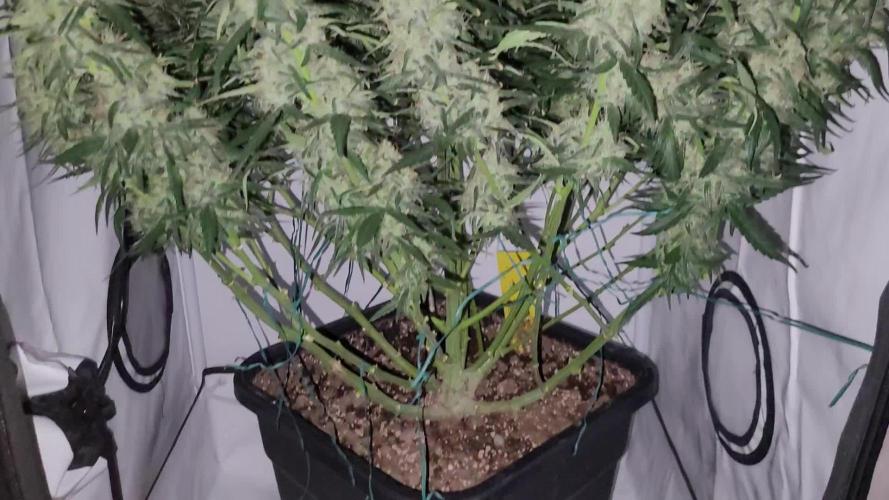
The run continues nicely, we still had some temperatures of nutritive solution a little high with the heat of Danielle. It drops drastically in 2 days so I will finally finish this growth in the calm one and will be able to begin my bloom on September 24th. I apply hydrogen peroxide at a rate of 0.5ML/L, twice a week as a treatment. The root Rot X is used every ten days when changing the nutritive solution. I put less water in my system, in order to create a wet zone and a dry zone, I make sure that the roots are always immersed of course. As soon as the temperature drops, I will switch to 800 ppfd for the end of growth and depending on the evolution of the plants I may add some sensi grow a and b to increase the ec a little. If you are attentive, you will observe on the tips of the leaves or even on the leaves, spots of burns or deficiencies, it is simply the consequence of the pythium a few days earlier. The last growth update will be around September 24/25.
Likes
Comments
Share
Likes
32
Share
the last week before weather goes bad:/ cold rainy days without sun are coming so cut them next weekend and do the best for this year
Processing
Likes
26
Share
Que pasa familia, hemos vuelto para actualizar las skunk que ya tenemos cosechadas. Que gran genética, y muy típica entre fumadores de hierba, un crecimiento más indico pero floración lenta bastante lenta, en teoría se supone que es Sativa, 17% thc en la tas con un tamaño medio pequeño pero flores mi compactas y dulces, un cultivo ni fácil ni difícil, sin más, bastante neutral para los cambios climáticos algo sensible con el aspecto alimentación. La recomendaría en verdad, sobre todo para aquellos amantes del dulce. Nos vemos en próximos proyectos fumetillas
Likes
295
Share
@Ju_Bps
Follow
Hello growmies 👩‍🌾👨‍🌾🌲🌲, 👋 Senesence in progress, but not yet ready for harvest, Harvest next week ! Continue flushing, 💪 Not too much work, just removed some leaves. 💧 Give water each 2/3 day 1.5 l Water + Flash Cleaner PH @6 RQS - Easy Bloom Booster Tabs 1 tabs/5 l RQS - Easy Grow Booster Tabs 1 tabs/5 l RQS - Easy Micronutrients Plus 1 tabs/5 l (1 watering each 10 days.) 💡Mars Hydro - FC 3000 50% 50 cm. Mars Hydro Fan kit Setting 7 Have a good week and see you next week 👋 Thanks community for follow, likes, comments, always a pleasure 👩‍🌾👨‍🌾❤️🌲 Mars Hydro - Smart FC3000 300W Samsung LM301B LED Grow Light💡💡 https://www.mars-hydro.com/fc-3000-samsung-lm301b-led-grow-light Mars Hydro - 6 Inch Inline Fan And Carbon Filter Combo With Thermostat Controller 💨💨 https://www.mars-hydro.com/6-inch-inline-duct-fan-and-carbon-filter-combo-with-thermostat-controller RQS - Titan F1🌲🌲 https://www.royalqueenseeds.com/f1-hybrid-cannabis-seeds/624-titan-f1.html
Likes
4
Share
Ich habe die Erde austrocknen lassen und sie noch 3 Tage in dunkeln gelassen und Dan abgeschnitten auf gehongen habe mal 2 Knospen Nass getrimmt und Rest mache ich trocken trimmen weil ich im Internet gelesen habe das es die Qualität besser erhalten bleibt deswegen mach ich Bilder wenn sie fertig getrocknet sind. Aber die 2 nass trimmungen sehen echt schön aus😁😁😁😁✌️🏼✌️🏼✌️🏼✌️🏼
Likes
5
Share
@johnwill
Follow
Finally got a grow tent. Still using the shitty lights though, that'll be fixed another pay day !
Likes
5
Share
@prem895
Follow
Well here we are at the beginning of week 8. Super windy today but I got my new rain tarp up. June 25th gave all the plants pretty good snip except for Cinderella number 2 which is still slow but coming along tomorrow I may top all the other little branches not quite sure yet. just fucked up my pH metre by hitting the calibration button by accident and now I have no solution to recalibrate it so I'm going to have to wait and kind of wing it until the new one gets here in a couple of weeks but my pH in my house water is around 7- 7.5 12 ml of vinegar in 12 qts should be the ticket. Friday June 26th well I found a way to use clothes pins to use them as wait to hold the branches down I kind of like it tell me what you think. well looks like everything is coming along okay I keep the newts down I rather have them a little too lower than too high. well this is the last day of week 8 in July 1st and everything seemed to be going along fine but it looks like my Cinderella 99 run into a bit of a deficiency on the nitrogen and somebody let me know if this is right or not and if there's somebody in Toronto who can test the tap water for pH levels and let me know my pH metre is broken right now
Likes
7
Share
@Kagesan
Follow
👋👋👋 ➖➖➖➖➖➖➖➖➖➖➖➖➖➖➖ Time marches on and we are already in flowering week three. The lady has stopped gaining height and is now putting all her energy into the buds. ➖➖➖➖➖➖➖➖➖➖➖➖➖➖➖➖ 💚💚💚
Likes
16
Share
Seedling managing 93F 30%RH, around 20 DLI. Vpd is in the 3's. No I don't recommend. Signum Magnum. "A great sign appeared in the sky a woman clothed with the sun with the moon under her feet and on her head a crown of twelve stars. Sing ye to the Lord a new canticle: because He has done wonderful things. Glory to the Father, and to the Son, and to the Holy Spirit As it was in the beginning, and now, and ever shall be, world without end." The plant nutrient nitrogen exists in forms with both positive and negative charges. Ammonium (NH4+)(immobile in soil)(Cation) has a positive charge, while nitrate (NO3-) (highly mobile in soil)(Anion)has a negative charge. Nitrogen is unique among plant nutrients in that it can exist in both positively charged (ammonium, NH₄⁺) and negatively charged (nitrate, NO₃⁻) forms in the soil. This makes it a special nutrient. In that it is responsible for providing balance for reactionary trade offs when it comes to ph. Because ph itself in the medium will always slowly drift towards acidicity, such is nature. 80% of nitrogen should be nitrate and no more than 20% ammoniacal nitrogen. Ca, mg, and K are the big 3 cations related to soil composition, pH & base saturation. When nitrogen is in the form of ammonium, it can compete with calcium, magnesium, and potassium for absorption sites in the plant root. This competition can lead to a reduction in the uptake of these other essential nutrients. Nitrogen, particularly in its nitrate form (NO3-), can increase soil acidity, which can also affect the availability of calcium, magnesium, and potassium. The form of nitrogen applied (ammonium vs. nitrate) can influence its interactions with other nutrients. Ammonium nitrogen can have a more pronounced negative effect on the uptake of calcium, magnesium, and potassium compared to nitrate nitrogen. Common forms of ammonium nitrogen include ammonium ion (NH4+), urea, and ammonium compounds like ammonium nitrate, ammonium sulfate, and ammonium phosphate. Common forms of nitrate nitrogen include potassium nitrate (KNO3), sodium nitrate (NaNO3), calcium nitrate (Ca(NO3)2), and ammonium nitrate (NH4NO3). Phosphorus is an essential plant nutrient, and its availability in the soil is strongly linked to the presence of oxygen. Plants primarily absorb phosphorus as phosphate (PO4), and oxygen is a key component of this molecule. Furthermore, the availability of phosphorus in the soil can be impacted by factors like soil aeration and temperature, which in turn affect the oxygen supply to the roots. Phosphorus uptake in plants is most critical during the early stages of growth, particularly within the first few weeks of plant development. Young plants actively growing tissues have a high demand for phosphorus. They may absorb up to 75% of their total phosphorus requirements within the first few weeks of vegetative growth, with up to 51% of uptake happening overnight, primarily in the first few hours or early nightfall. ⑨Anaerobic root respiration, or respiration without oxygen, is detrimental to plants because it's less efficient and produces toxic byproducts, leading to reduced energy production, nutrient uptake issues, and ultimately, root damage and plant stress. ⑨Anaerobic respiration, unlike aerobic respiration, doesn't utilize oxygen as the final electron acceptor in the electron transport chain. This results in a significant drop in the amount of energy (ATP) produced, which is necessary for various plant functions, including growth, nutrient uptake, and maintenance of cellular processes. ⑨In the absence of oxygen, plants produce byproducts like ethanol and lactic acid during anaerobic fermentation. These byproducts can be toxic to the roots and inhibit their function, ⑨When oxygen is depleted in a medium, the pH tends to decrease (become more acidic) due to the production of metabolic byproducts. This is particularly relevant in biological systems where aerobic respiration relies on oxygen as the final electron acceptor. ⑨When oxygen is scarce, plants may switch to anaerobic respiration. This process produces carbon dioxide (CO2) as a byproduct. ⑨CO2 dissolves in water to form carbonic acid (H2CO3). This acid lowers the pH of the medium, making it more acidic. ⑨Anaerobic conditions can impair a plant's ability to regulate its internal pH, leading to a drop in cytoplasmic pH and potentially cellular acidosis. ⑨The change in pH can also affect the availability of certain nutrients to the plant, as pH influences the solubility of micronutrients like iron, manganese, zinc, copper, and boron. ⑨The lack of oxygen in the plant medium leads to a decrease in pH due to the production of carbon dioxide during anaerobic respiration and impaired pH regulation within the plant. In plant cells, cellular acidosis, a drop in the internal pH of the cytosol, is a significant stress response, particularly during conditions like flooding or hypoxia. This acidification can be triggered by a decrease in oxygen levels, leading to the production of metabolic byproducts like lactic acid and CO2. The plant's ability to tolerate and recover from these conditions depends on its cellular mechanisms to regulate pH and mitigate the effects of acidosis. When plants are subjected to low oxygen environments, such as those experienced during flooding, anaerobic metabolism, which produces lactic acid and ethanol, becomes the primary source of energy. This can lead to a build-up of these acidic metabolites in the cytosol, causing a drop in pH. OXYGEN Atomic oxygen (single oxygen atom, O) is the lightest form of oxygen, as it has the lowest mass of the oxygen molecules. Oxygen also exists as a diatomic molecule (O2) and an allotrope called ozone (O3), which have higher masses due to the number of oxygen atoms combined. Atomic Oxygen (O): This refers to a single oxygen atom, which is the most fundamental form of oxygen. Molecular Oxygen (O2): This is the common form of oxygen we breathe, consisting of two oxygen atoms bonded together. Ozone (O3): This is an allotrope of oxygen, meaning it's a different form of the same element, consisting of three oxygen atoms bonded together. Since atomic oxygen has the fewest oxygen atoms, it naturally has the lowest mass compared to O2 or O3. Ozone (O3) Lifespan: Ozone has a relatively long lifespan in the stratosphere, particularly at lower altitudes. For example, at 32 km in the middle latitudes during spring, ozone has a lifetime of about 2 months. Oxygen (O) Lifespan: Atomic oxygen, on the other hand, has a much shorter lifespan. At the same altitude, its lifetime is about 4/100ths of a second. Ozone-Oxygen Cycle: The ozone-oxygen cycle involves the rapid exchange between atomic oxygen (O) and ozone (O3). UV radiation can split molecular oxygen (O2) into atomic oxygen (O), which then reacts with O2 to form ozone (O3). Ozone can also be photolyzed by UV radiation, creating atomic oxygen again, which can then react with O3 to reform O2. Dominant Form: The partitioning of odd oxygen (Ox) between ozone and atomic oxygen favors ozone in the lower stratosphere. This means that a much larger proportion of odd oxygen exists as ozone than as atomic oxygen, especially in the lower stratosphere. Recombination: Atomic oxygen has a high energy and reactivity. When it encounters another oxygen atom, they can combine to form O2. This process releases energy, contributing to the heating of the atmosphere. Ozone Formation: Atomic oxygen can also react with molecular oxygen (O2) to form ozone (O3). Ozone plays a significant role in absorbing harmful UV radiation. Other Reactions: Atomic oxygen can react with various other molecules in the atmosphere, like nitrogen (N2), water (H2O), and carbon dioxide (CO2), forming different compounds. UV light below 240nm (peak 185nm) creates ozone (O₃) through a process called photolysis, where UV light breaks down dioxygen molecules (O₂) into single atomic oxygen atoms (O). These single oxygen atoms then react with other oxygen molecules to form ozone (O₃). Specifically, UV-C light with wavelengths shorter than 240 nm can cause this photolysis. UV light with wavelengths between 240-280 nm, (peak 254 nm) breaks down ozone (O₃) into dioxygen molecules (O₂) and atomic oxygen atoms (O). 280nm does not have the energy potential to break apart the stable bond of (O₂) into enough (O) to make (O₃) At ground level, atomic oxygen (single oxygen atoms) has a very short lifespan. This is because it's highly reactive and quickly combines with other molecules to form stable diatomic oxygen (O2) or other compounds. While the exact timeframe varies depending on the specific circumstances, its lifespan is typically measured in nanoseconds or picoseconds.
Likes
19
Share
Day 56! Watering 2.5gallons dosage every 5 days(top 1.5 centimeters media dry)--since 13 days ago! Flush starting day 58(next watering).
Likes
2
Share
@Ninjabuds
Follow
Man, that Skunk Apple runtz plant is giving me some trouble. It's still really small and hasn't grown much at all. I think I might've messed up a little because the leaves are looking kinda rough. Hopefully it can bounce back. Well, it's Christmas again. This year feels a little different, though. Maybe it's the snow blanketing everything, or the way the tree lights up the whole living room. Either way, it's cozy and warm, even when it's freezing outside. I'm really looking forward to seeing what Santa brings. I hope I get that new video game I've been wanting. But most of all, I can't wait to spend time with my family. We always have so much fun This past week was a good one for the plants. They started the first week of their stretch, and they've already grown a decent amount. I can really see them filling out. It's cool to watch them grow so fast. I can't wait to see how big they get by the end I always get a little worried at this stage, like they're not gonna get as big as I want them to. But then I remember how they always end up surprising me. By the end, they're always perfect.
Likes
24
Share
Planning on the harvest! Trichomes Mostly milky seeing a little amber maybe around 5% Pictures taken with iPhone SE.. looking into some new cameras like the Nikon COOLPIX p1000 or Sony A6700
Likes
17
Share
Germinación clásica en tupper con papel absorbente, solo agua de ósmosis inversa.. 48 horas y estuvieron listas!
Likes
307
Share
@Ju_Bps
Follow
Hello growmies 👩‍🌾👨‍🌾🌲🌲, 👋 Girls continue to grow well, for moment really easy 👍 💪 we can see the difference between this week and last week on the canope I need to do big defoliation each week, they are really invasive, Will turn in flower in couple of Days. 💧 Give water each 2/3 day And vaporise plant with water + Plagron Roots (1ml/l) 1.5 l Water + Roots + Grow + Zym + Sugar Royal (1 + 5 + 1 + 1 ml/l) PH @6 💡Mars Hydro - FC 3000 37% 40 cm. Mars Hydro Fan kit Setting 4 Have a good week and see you next week 👋 Thanks community for follow, likes, comments, always a pleasure 👩‍🌾👨‍🌾❤️🌲 Mars Hydro - Smart FC3000 300W Samsung LM301B LED Grow Light💡💡 https://www.mars-hydro.com/fc-3000-samsung-lm301b-led-grow-light Mars Hydro - 6 Inch Inline Fan And Carbon Filter Combo With Thermostat Controller 💨💨 https://www.mars-hydro.com/6-inch-inline-duct-fan-and-carbon-filter-combo-with-thermostat-controller Anesia Seeds - High Mars 36% THC🌲🌲 https://anesiaseeds.com/product/high-mars/
Processing
Likes
13
Share
@rainman
Follow
Plant is looking and feeling great. Buds are full of trychomes, sticky icky icky stuff. This week i'll give ripening nutrients and will begin flushing, so i can harvest in the end of next week. Peace.
Likes
3
Share
My long vegging. Pheno of Fat Banana Auto is finally ready for harvest. Top Buds got nice purple leaf tips. Smell and bud structure is 10/10. I did wet trimming because of high humidity levels.