The Grow Awards 2026 🏆
Likes
Comments
Share
@Uwish
Follow
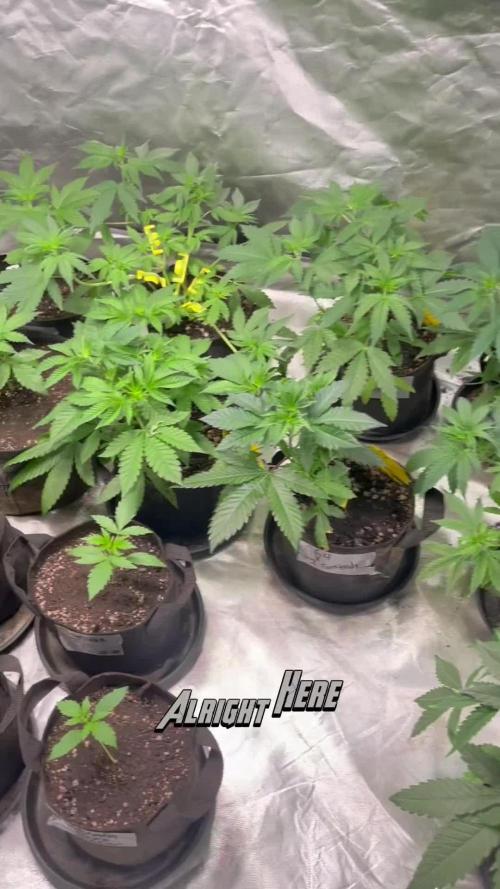
The run continues nicely, we still had some temperatures of nutritive solution a little high with the heat of Danielle. It drops drastically in 2 days so I will finally finish this growth in the calm one and will be able to begin my bloom on September 24th. I apply hydrogen peroxide at a rate of 0.5ML/L, twice a week as a treatment. The root Rot X is used every ten days when changing the nutritive solution. I put less water in my system, in order to create a wet zone and a dry zone, I make sure that the roots are always immersed of course. As soon as the temperature drops, I will switch to 800 ppfd for the end of growth and depending on the evolution of the plants I may add some sensi grow a and b to increase the ec a little. If you are attentive, you will observe on the tips of the leaves or even on the leaves, spots of burns or deficiencies, it is simply the consequence of the pythium a few days earlier. The last growth update will be around September 24/25.
Likes
7
Share
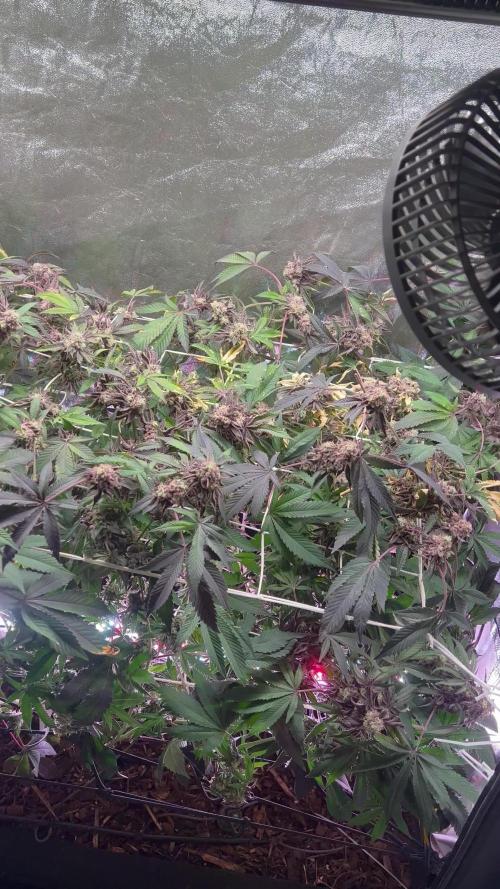
Everything is going well for the ladies so far. Really can't complain. Plenty of stretching for the durban kinda put me in a situation like this strain usually does to me lol. Looks like I'll be tieing her down around the tent supports again to keep her from kissing the lights. No,I think we're all done stretching and we should be able to kick back and watch the buds stack!
Likes
Comments
Share
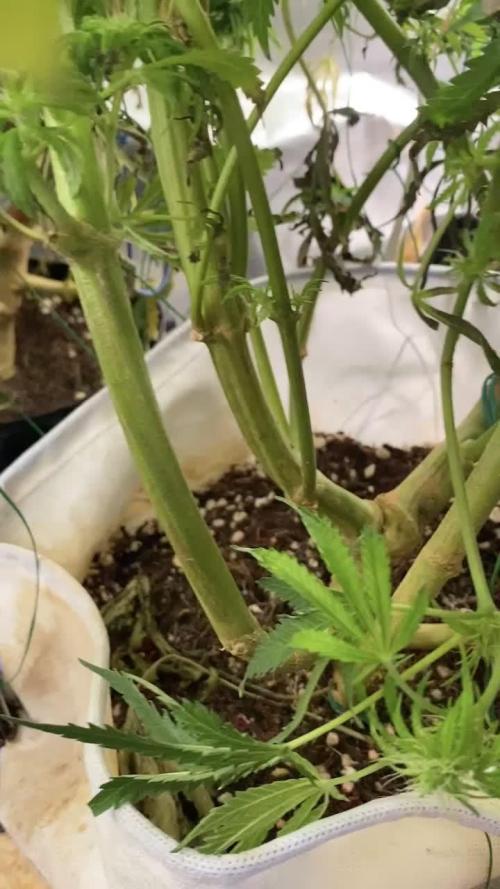
First solo week for this plant doing well with regular feedings. Tapering off of Nutrients as well.
Likes
12
Share
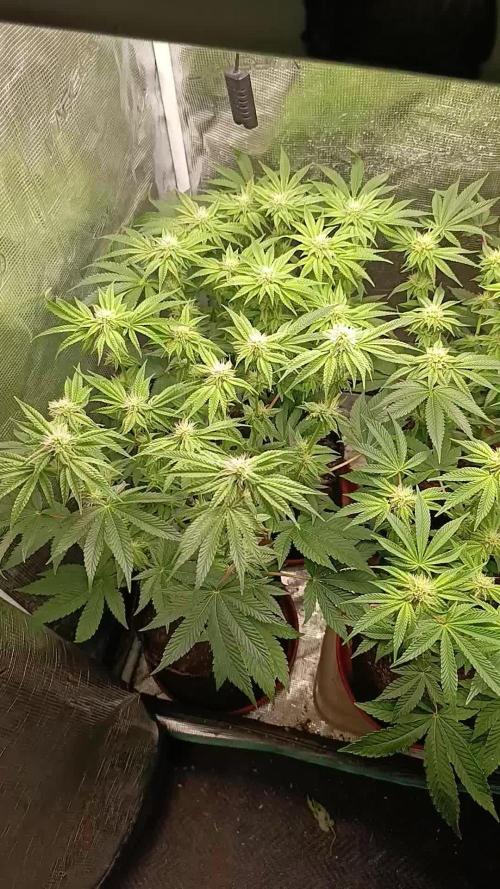
4 Super 🍋 In middle added feather meal 12-0-0 for that stretch baby lets go , also watering with molassas for the microbes to eat other than the extradites the roots ooze thats what there working so hard for , but unfortunately this 3 gal pot cant be no till style i need at least a 15 gallon, but were going to do it anyways haha Last foliar feed for her my own super mix fulvic acid, kelp, yucca, aminos, coconut water, and aloe
Likes
2
Share
@Luke_Lee
Follow
——————————————— WEEK 9 / DAY 58-64 BLOOM WEEK 2 / DAY 8-14 Mars Hydro FC-E3000 Floragard Professional GrowMix 11L fleece bags Light: 50cm Schedule: 12/12; PPFD: 875umol/m2/s DLi: 38mol/m2/d 20° C - 65RH 2L per Plant Hesi Bloom Complex (5ml/2L water) Hesi BOOST (2ml/2L water) PH 6,5 Fan, extractor and pump ON 24/0. ———————————————————— - DAY-58 / Bloomday-08 The second week of flowering begins. The plants are doing very well so far and are developing magnificently. They have gained a lot of leaf mass since the time change. The light has been adjusted PPfd: 875 / DLi: 38. - DAY-59 / Bloomday-09 Today each plant was watered with 2L of water with 4ml Hesi Bloomcomplex and 2ml Hesi BOOST. - DAY-62 / Bloomday-12 Today, at the end of the second week of flowering, the plants were little defoliated. They were then each watered with 3 liters of water with 2 ml HESI BOOST and 4 ml HESI Bloomcomplex. - DAY-64/ Bloomday-64 The last day of the second flowering week.
Likes
45
Share
2nd net is up. Early bud formations are promising. holding up to the extremes pretty well, some leaves taking minor damage, but overall, she is holding up, gave her 1 night at 50F see how she would react, stressful. Not advised as it messes with her metabolism, but I want to see if it triggers any anthocyanin response. Love to see her purp up but no signs yet. Homework. If Rubisco activity is impaired and it cannot properly function or regenerate its substrate, the plant's leaves are likely to turn a pale green or lime green, a condition known as chlorosis. Essentially, Rubisco activity is highly regulated and susceptible to various environmental and metabolic factors that can cause it to become inhibited, leading to an apparent failure in RuBP regeneration due to a lack of consumption. Rubisco regeneration is intrinsically linked to nitrogen supply because Rubisco is a major sink for nitrogen in plants, typically accounting for 15% to over 25% of total leaf nitrogen. The regeneration phase itself consumes nitrogen through the synthesis of the Rubisco enzyme and associated proteins (like Rubisco activase), and overall nitrogen status heavily influences the efficiency of RuBP regeneration. RuBisCO is a very large enzyme that constitutes a significant proportion (up to 50%) of leaf soluble protein and requires large investments in nitrogen. Insufficient nitrogen supply limits the plant's ability to produce adequate amounts of RuBisCO, thereby limiting the overall capacity for photosynthesis and carbon fixation. Maintaining the optimal, slightly alkaline pH is crucial for the proper function and regeneration of Rubisco. Deviations in either direction (too high or too low) disrupt the enzyme's structure, activation state, and interaction with its substrates, leading to decreased activity and impaired RuBP regeneration. (LIME GREEN CHLOROSIS) Structural Component: Nitrogen is an essential building block for all proteins, and the sheer abundance of the Rubisco protein makes it the single largest storage of nitrogen in the leaf. Synthesis and Activity: Adequate nitrogen supply is crucial for the synthesis and maintenance of sufficient Rubisco enzyme and Rubisco activase (Rca), the regulatory protein responsible for maintaining Rubisco's active state. Nitrogen deficiency leads to a decrease in the content and activity of both Rubisco and Rca, which in turn limits the maximum carboxylation rate, Vmax, and the rate of RuBP regeneration Jmax, thus reducing overall photosynthetic capacity. Nitrogen Storage and Remobilization: Rubisco can act as a temporary nitrogen storage protein, which is degraded to remobilize nitrogen to other growing parts of the plant, especially under conditions of nitrogen deficiency or senescence. Nitrogen Use Efficiency (NUE): The allocation of nitrogen to Rubisco is a key determinant of a plant's photosynthetic nitrogen use efficiency (PNUE). In high-nitrogen conditions, plants may accumulate a surplus of Rubisco, which may not be fully activated, leading to a lower PNUE. Optimizing the amount and activity of Rubisco relative to nitrogen availability is a target for improving crop NUE. Photorespiration and Nitrogen Metabolism: Nitrogen metabolism is also linked to the photorespiration pathway (which competes with carboxylation at the Rubisco active site), particularly in the reassimilation of ammonia released during the process. To increase RuBisCO regeneration, which refers to the process of forming the CO2 acceptor molecule Ribulose-1,5-bisphosphate (RuBP) during photosynthesis, the primary methods involve optimizing the levels and activity of Rubisco activase (Rca) and enhancing the performance of other Calvin-Benson-Bassham (CBB) cycle enzymes. Biochemical and Environmental Approaches: Optimize Rubisco Activase (Rca) activity: Rca is a crucial chaperone protein that removes inhibitory sugar phosphates, such as CA1P (2-carboxy-D-arabinitol 1-phosphate), from the Rubisco active site, thus maintaining its catalytic competence. •Ensure optimal light conditions: Rca is light-activated via the chloroplast's redox status. Adequate light intensity ensures Rca can effectively maintain Rubisco in its active, carbamylated state. •Maintain optimal temperature: Rca is highly temperature-sensitive and can become unstable at moderately high temperatures (e.g., above 35°C/95F° in many C3 plants), which decreases its ability to activate Rubisco. Maintaining temperatures within the optimal range for a specific plant species is important. •Optimize Mg2+ concentration: Mg2+ is a key cofactor for both Rubisco carbamylation and Rca activity. In the light, Mg2+ concentration in the chloroplast stroma increases, promoting activation. •Manage ATP/ADP ratio: Rca activity depends on ATP hydrolysis and is inhibited by ADP. Conditions that maintain a high ATP/ADP ratio in the chloroplast stroma favor Rca activity. Enhance Calvin-Benson-Bassham (CBB) cycle enzyme activity: The overall rate of RuBP regeneration can be limited by other enzymes in the cycle. •Increase SBPase activity: Sedoheptulose-1,7-bisphosphatase (SBPase) is a key regulatory enzyme in the regeneration pathway, and increasing its activity can enhance RuBP regeneration and overall photosynthesis. •Optimize other enzymes: Overexpression of other CBB cycle enzymes such as fructose-1,6-bisphosphate aldolase (FBA) and triose phosphate isomerase (TPI) can also help to balance the metabolic flux and improve RuBP regeneration capacity. Magnesium ions, Mg2+, are specifically required for Rubisco activation because the cation plays a critical structural and chemical role in forming the active site: A specific lysine residue in the active site must be carbamylated by a CO2 molecule to activate the enzyme. The resulting negatively charged carbamyl group then facilitates the binding of the positively charged Mg2+ion. While other divalent metal ions like Mn2+ can bind to Rubisco, they alter the enzyme's substrate specificity and lead to dramatically lower activity or a higher rate of the non-productive oxygenation reaction compared to Mg2+, making them biologically unfavorable in the context of efficient carbon fixation. The concentration of Mg2+ in the chloroplast stroma naturally increases in the light due to ion potential balancing during ATP synthesis, providing a physiological mechanism to ensure the enzyme is activated when photosynthesis is possible. At the center of the porphyrin ring, nestled within its nitrogen atoms, is a Magnesium ion (Mg2+). This magnesium ion is crucial for the function of chlorophyll, and without it, the pigment cannot effectively capture and transfer light energy. Mg acts as a cofactor: Mg2+ binds to Rubisco after an activator CO2 molecule, forming a catalytically competent complex (Enzyme-CO2-Mg2+). High light + CO2) increases demand: Under high light (60 DLI is a very high intensity, potentially saturating) and high CO2, the plant's capacity for photosynthesis is high, and thus the demand for activated Rubisco and the necessary Mg2+ cofactor increases. Mg deficiency becomes limiting: If Mg2+ is deficient under these conditions, the higher levels of Rubisco and Rubisco activase produced cannot be fully activated, leading to lower photosynthetic rates and potential photo-oxidative damage. Optimal range: Studies show that adequate Mg2+ application can enhance Rubisco activation and stabilize net photosynthetic rates under stress conditions, but the required concentration is specific to the experimental setup. Monitoring is key: The most effective approach in a controlled environment is to monitor the plant's physiological responses e.g., leaf Mg2+ concentration, photosynthetic rate, Rubisco activation state, and adjust the nutrient solution/fertilizer to maintain adequate levels, rather than supplementing a fixed "extra" amount. In practice, this means ensuring that Mg2+ is not a limiting factor in the plant's standard nutrient solution when pushing the limits with high light and CO2. Applying Mg2+ through foliar spray is beneficial to Rubisco regeneration, particularly in alleviating the negative effects of magnesium (Mg) deficiency and high-temperature stress (HTS). While Mg can be leached from soil, within the plant it is considered a mobile nutrient, particularly in the phloem. Foliar-applied Mg is quickly absorbed by the leaves and can be translocate to other plant parts, including new growth and sink organs. Foliar application of: NATURES VERY OWN MgSO4 @ 15.0g L-1 in a spray bottle. Foliar sprays are often recommended as a rapid rescue measure for existing deficiencies or as a supplement during critical growth stages, when demand for Mg is high. Application in the early morning or late evening can improve absorption and prevent leaf burn. The starting point [of creativity] is curiosity: pondering why the default exists in the first place. We’re driven to question defaults when we experience vuja de, the opposite of déjà vu. Déjà vu occurs when we encounter something new, but it feels as if we’ve seen it before. Vuja de is the reverse—we face something familiar, but we see it with a fresh perspective that enables us to gain new insights into old problems. Come walk in the enchanted forest.
Processing
Likes
10
Share
@HisHope
Follow
12/28 Week 9 Maddie is on a water only diet not making her cranky yet Tammy is still stuffing her face at the buffet table happy as she can be 12/29 Picture day!
Likes
28
Share
End of week 2 flower. I moved her into the larger grow space & she is HAPPY!!! Stacking up nicely and taking over the new space. She smells wonderful.
Likes
3
Share
@Hempcules
Follow
WEEK 6 This Black Runtz is growing at a vigorous pace and has handled all training perfectly so far. I’ve topped her to 16 shoots, and she’s developed with a very even structure. Overall, her growth has been quite stretched up to this point. I’m hoping she won’t get too tall later during flowering. Everything still looks really promising and gives hope for a great bloom phase. Next week, I’ll switch the lights to 12 hours to initiate flowering. This week, my lamp ran at 500 PPFD, and I watered once with plain water and once with nutrient solution.
Likes
7
Share
One of them could be a keeper.
Likes
53
Share
@MistaOC
Follow
07.04. Day 71 Day 31 of flower and things are holding steady. The girls are progressing nicely – buds are bulking up, resin production is picking up, and that sweet, fruity aroma is getting stronger. Four out of five plants are thriving with no major issues. One, however, still shows a strong CalMag deficiency – no improvement so far, so it’s under close watch. Environment stays dialed in: 26 °C during the day, 21 °C at night, 50–60% RH, and a VPD of around 1.5. LED is still running at 70%. All in all, the setup is stable and the buds keep stacking – we stay patient and focused! ******************************************* 10L RO Water // ph 6,2 // 1ml/L Regulator // 2ml/L CalMag // 10ml Green Sensation // ph- //
Processing
Likes
41
Share
@Enki_Weed
Follow
Our beautiful girls have plant louses 😱 So yesterday we made a brew of garlic and sprinkeld all of the plants, also the ground of the growbox - after cleaning up everything. So we hope this works. Have anyone experience with the small green monsters? We would be grateful for some suggestions.
Likes
11
Share
@goeser
Follow
More details and photos are coming when all buds are dried in about 6-7 days00
Likes
10
Share
@Satax
Follow
Everything is still going well overall. I’ve always had an issue with a Cal/Mag deficiency that I had to monitor for some of the plants. Otherwise, they’re swelling nicely — the Green Poison is starting to look really good and is showing signs of maturity, earlier than the others. I’m starting the flush on all the plants since I’ve fed them well during the grow, and I think they still have enough nutrients left in their systems. The smell is very strong, and the buds are dense and resinous — it’s looking promising.. I’m going to start applying my stress technique on the plants by inserting screws into the stems and using a small scalpel to remove some bark along the trunks, in order to push the resin production even further.
Likes
8
Share
@ktkoi
Follow
Day 30: Just got back from vacation, left the girls on their own for 4 days. Watered before I left, came back and they look fine. BL is at 19cm and PB is 10cm. BL's stem is getting thicker, and stray spiders and ants are becoming more and more attracted to her. Odour is still weak and no signs of flowering. I may have to keep an eye out on her leaves starting from now and consider adding some liquid fertilizer. While I was on vacay I kept them at 12/12 artificial light. Usually I give them 3hrs of supplemental sunlight on the windowsill. Day 33: The foliage is starting to show signs of nutrient deficiency, spotting on the top leaves and yellowing on the bottom leaves on both plants. I'm adding a low dosage of orchid fertilizer and a bit of chamomile tea. Will also sprinkle some coffee grounds to the top layer of the soil. (7PM: I am seeing white pistils come out! Thinking it will start flowering very soon.) Day 34: Sprayed with a neem solution last night night and turned on the fan. Removed the yellowing leaf, looked like a powdered mold growth, and seeing if the spots are from bug meals. Hoping that the fan and the neem will reduce bugs. Day 35: The white spots definitely look like bugs taking bites out of the leaves. I'm going to spray her with neem daily and look out for critters now, and do all the rest of the household plants too. Started doing LST on PB as well. Looking forward to seeing BL enter her flowering phase as she is clearly pre-flowering now. Day 36: Might have been a bit too intense with PB's first LST session, she needs some recovery. Good thing I can just keep her in vegetative for a while. Neem spray went well, no new leaf damage. BL has done her pre-flower stretch. Will be able to keep these girls pretty small. Landlord may visit this week so I'll have to hide them.
Processing
Likes
35
Share
Week 11 has been exactly the same as week 10. There has been some light yellowing one Girl #1 and some of the hairs are starting to turn orange. The colas aren’t very dense. Girl#1 has been doing some weird fox tailing on all the colas.My temperatures haven’t been over 77 and my humidity hasn’t been over 55. I have seen this before in other diaries with other stains. Guess that’s just comes with the territory of ruderalis crossed strains. Can’t really complain cause this is my first rodeo with Autos so I’m just happy to have this experience. I officially think the delayed Pineapple Express auto might not even have the autoflower trait. It’s been 11 weeks and she hasn’t showed the slightest chance of ever flowering. This is really frustrating and deflating. I’m gonna definitely have to put this girl into 12-12. That will have to be after girl #1 is finished. I’m very appreciative of all who show your continued support and give insightful infomation. Can’t wait to see what this harvest will be. This is my first official auto grow. I wouldn’t change it at all. Thank you all for your support and time. More to come soon 💚👊
Likes
14
Share
@reirrac1
Follow
She started out rather slowly, and waited pretty long to get into preflower. After some patience feeding and doing foliars, she turned into a behemoth! I can’t even count the number of times I had to defol or the amount of larf I had to remove. She produced a massive amount of semi-dense, fragrant, and frosty buds. Not the craziest I’ve ever seen, but very nice for lower THC genetics. Smells of strong earth with undertones of sweet berries and skunk.
Processing
Likes
Comments
Share
@maxpain
Follow
Looking good smelling great ....
Likes
5
Share
Estamos en la última etapa del cultivo. Eliminamos la dieta de fertilizantes y regamos con Canna Flush, para lavar las raíces. Bajamos la potencia lumínica al 50%.
Likes
4
Share
@Cukito
Follow
The plant had to recover because of a defoliation but it's still doing amazing. Depending on how it is going I will think about changing the pot