


Likes
Comments
Share


Likes
2
Share


@EyeMKing
Follow
Started the first top dressing of Gaia Green All Purpose and Power Bloom at a 50/50 ratio of 1tbsp/gal each.

Likes
23
Share

@foxbberg
Follow
Day 29:
Low VPD due to shitty weather....... about 0.8 kPa at 23C.
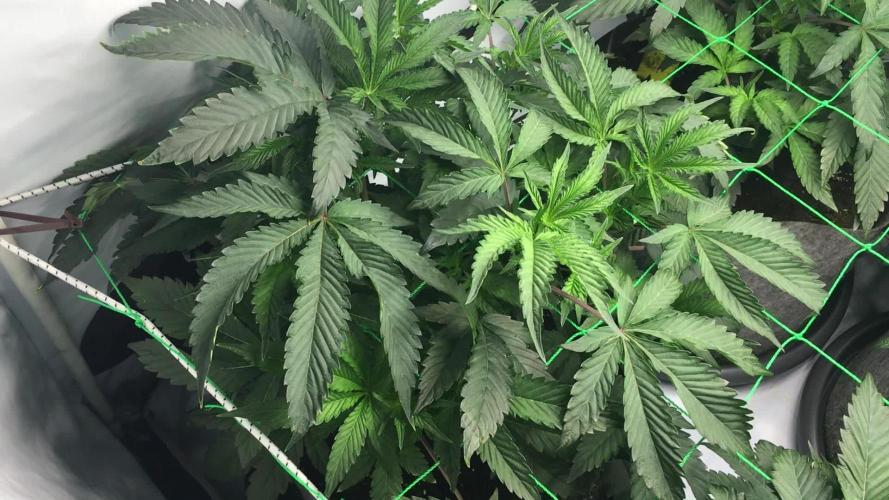
Girls happy - nothin' to bend or weave today. Still dark green - no signs of overfeeding in new foliage.
Drain (average): pH 5.9; EC 2.7
Roots keep pentrating the pots.
👍
Day 30:
Girls happy - nothin' to bend or weave today. Still dark green - no signs of overfeeding in new foliage.
Drain (average): pH 5.8; EC 2.7
Roots keep pentrating the pots.
👍
Day 31:
Girls happy - nothin' to bend or weave today. Still dark green - no signs of overfeeding in new foliage.
Drain (average): pH 5.9; EC 2.7
Roots keep pentrating the pots.
👍
Day 32:
Did a little defoliation - just cut a few odd lookin' fanleafs and some smaller foliage at the bottom of the stem. 65g total.
Further i keep opening the canopy by moving some shoots to the next square of the net
Still watering daily. Plant 3 is way thirstier and bigger than the others. Plant 2 spills out the largest amounts of drain...... but she's not far behind them other girls.
Had to crank up the vent to get humidity out..... i'll keep defoliating carefully - that'll help it ;-)
Day 33 & 34:
Now they really wanna get tall...... since they so bushy, it's a bit tricky to feed them to the 'right' next square in the net....... LST-wise i have to admit, it would have been better to 'open' the canopy by binding the shoots down, instead of just flatten it out, by supercropping. Though it produces a lot of growth, it's kind of a chaos - hard to organize and almost impossible to open up for more light. Huge fanleafs pushing out everywhere. Plenty of foliage in the lower canopy - it's a mess somehow😶
Numbers in the drain are fine now (about 6.5; 1.2) so i'll start feeding nutrients again.
Day 35:
Fed nutrients - PH 6.4; EC 1.1
Drain (avg.): pH 6.3; EC 1.8
i'm taking out some leafs of different sizes - just a few at a day...... so there will be a bit more light and air over time......
Plans for week 6:
- Organize canopy/scrog
- carefully take leafs out
- keep checking for nutrient levels


Likes
46
Share

@German_GrowLab
Follow
Soooo, nach langem Warten (ich bitte um Entschuldigung, es kam immer irgendwas dazwischen), nun die Ernte! Nachdem ich jetzt alle Sorten verkostet habe, kann ich euch nun mein Fazit präsentieren.
Im Großen und Ganzen bin ich eigentlich ganz zufrieden mit dem Ergebnis, muss aber auch gestehen, dass ich bei der ein oder anderen Strain doch etwas mehr erwartet habe. Bei den nun folgenden Bewertungen möchte ich noch anmerken, dass sich diese rein auf den Outdoor-Anbau der jeweiligen Sorte und nur auf den einen bekannten Phäno beziehen. Man kann grundlegend behaupten, dass sich alle Sorten doch sehr solide geschlagen haben, und das bei diesem … naja, sagen wir mal wechselhaften Sommer. Allerdings merke ich einfach, dass sie lange nicht ihr volles Potenzial ausgeschöpft hatten, was ich immer etwas schade finde. Ich bin trotzdem froh, dieses Projekt durchgezogen zu haben, und gehe mit reichlich neuen Erkenntnissen sowie einem abwechslungsreichen Stash in die besinnliche Zeit.
Was hat mich grundlegend bei den meisten Sorten gestört?
Bei fast allen Sorten, mit Ausnahme der Hella Jelly und der Lemon Tree (wer hätt's gedacht), waren die Terps doch sehr flüchtig. Im Vape kamen sie wirklich gut zur Geltung, wenn man sie allerdings im Joint (pur, versteht sich) geraucht hatte, haben sie oft nach den ersten Zügen an Präsenz verloren, was wirklich schade ist. Dies ist aber wahrscheinlich auf die Anbaubedingungen zurückzuführen und soll den Breedern keinesfalls ihre Qualität absprechen. Wie schon in einem vorigen Kommentar erwähnt, haben sie einfach nicht ihr volles genetisches Potenzial erreichen können.
Ich bin mir des Weiteren auch nicht sicher, ob ich beim nächsten Mal wieder auf die Dryferm-Bags setzen werde. Es war doch ein ziemliches Gefummel, bis man die Blüten ohne Kontakt zueinander in die Beutel verfrachtet hatte. Außerdem hat es meiner Meinung nach die Trocknungszeit eher verkürzt, obwohl ich mich an die Temperatur- und Luftfeuchtigkeitsrange gehalten hatte, was ich auch nicht unbedingt begrüße. Und zu guter Letzt sind sie auch echt nicht billig, wenn man bedenkt, dass ich pro Pflanze teilweise über 4 Beutel benötigt hatte (pro 3 Stk. ca. 25 Euro) und sie laut Hersteller nur dreimal verwendet werden sollten. Das ist doch auf Dauer ein ganz schönes Investment. Aber das sind nur meine 2 Cent zu dem Thema :).
Nach und nach sollten jetzt hier die Erntereports eintrudeln. Ich hoffe, ich schaffe alles heute. Falls nein, seht es mir bitte nach. Falls ihr noch spezifische Fragen zu einer Sorte habt, lasst es mich einfach wissen, dann bekommt ihr noch eine ausführlichere Beschreibung.
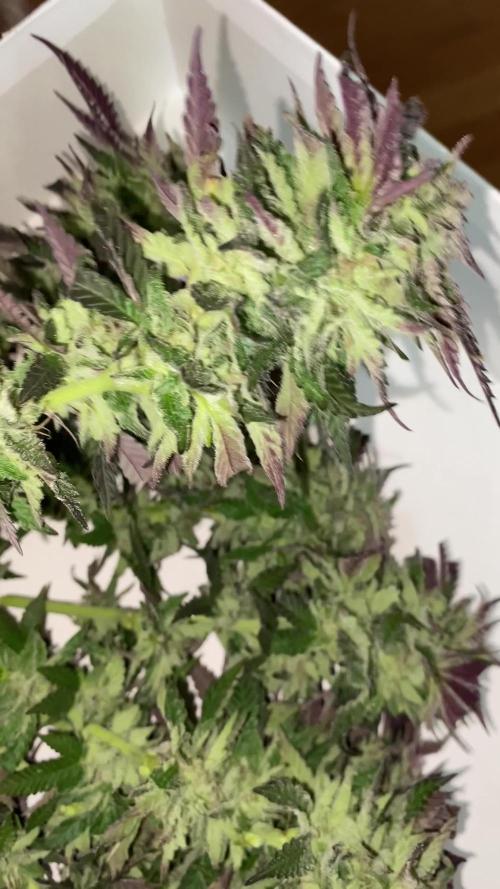
PS: Die Filmore-Slim musste ich leider fast komplett entsorgen. Sie hatte die festesten Blüten, die ich je bei einer Outdoorpflanze gesehen habe, was ihr leider zum Verhängnis geworden ist (durchgeschimmelt). Von ihr hatte ich leider keine rauchbaren Blüten. Von der Optik war sie auf jeden Fall ein Champion!
Ich habe von allen Sorten Fresh Frozen in der Gefriertruhe, die ich in der kommenden Zeit wachsen möchte (auch von der Filmore Slim). Also kann ich sie hoffentlich als Konzentrat verkosten.
Das soll es gewesen sein. Ich wünsche euch viel Spaß mit den folgenden Ernteberichten und eine ruhige, besinnliche Weihnachtszeit mit euren Liebsten! Wir hören uns dann hoffentlich im nächsten Jahr wieder, mit vielen neuen spannenden Projekten.
Peace!


Likes
6
Share


@ZombieKushAddicted
Follow
June25:🤦♂️🏿🤦♂️🏿
June27: the lizards have attacked again... for this... today we are going to raise the girls and place a mesh
June28: I have no idea how they did it... but they got in again!
Likes
19
Share

@NoVC01
Follow
Week 10 - 07/18/2025
Plants topped for between 10 and 12 leads. AzaMax treatment positive. Give BrediniGreeny credit for reviewing last video and calling broad mites. Really helped. Placing cedar mulch around perimeter for critter control. Home remedy foliar spraying entire garden. Otherwise foliar with AzaMax.
Moth repellent spray
Water 4 ounces
Essential oil of cedar – 20 to 30 drops
Essential oil of lavender - 10 to 20 drops
Essential oil of peppermint - 5 to 10 drops
Essential oil of eucalyptus - 10 to 20 drops
Optional: Citronella essential oil - 5 drops
Likes
21
Share


@gr3g4l
Follow
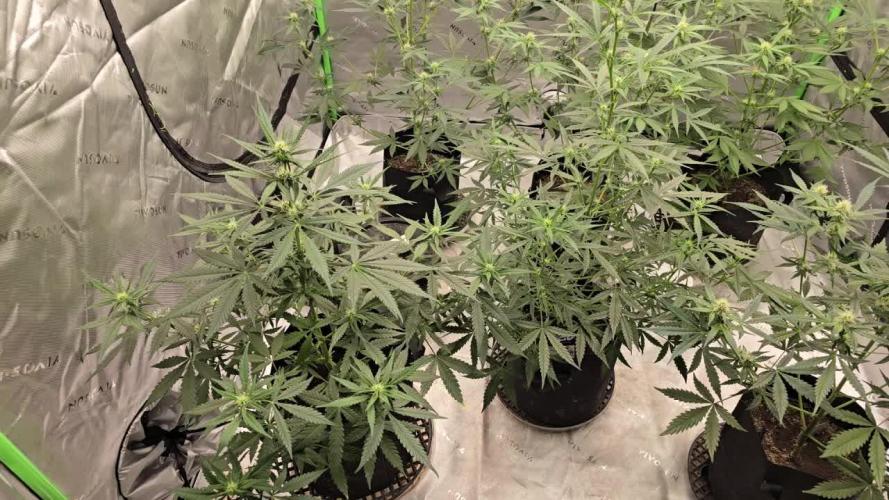
Nueva poda de apicales y una de silicio.
Con 26 dias Harto de los plomos me deshice de ellos y así seguiran creciendo , tal cual quedaron. No pretendo hacerles mucho más, más adelante igual doblamos alguna rama para guiarla y quitar algun chupóptero.
A los 26 dias también se subió la potencia del lumatek al 75%. unos 220 W. áprox. y así pasaran hasta que se cambie el fotoperiodo.



Likes
16
Share


@Northern_Ent
Follow
Aug 17: Auto Overdose is a nice plant but it’s not an auto. I started this one late and only topped it once thinking it was an auto. Other growers have noticed it isn’t an auto too, so I forced it in the dark garage. Flowering has to be started by the end of July here or it won’t finish in the fall.
The flowers are forming quickly and I suspect this is actually Overdose Fast.
So far so good, and good genetics for a Fast plant.
Aug 18: no UV light today unfortunately but it was decently sunny. Scrog net certainly seems like a good idea. This plant is asymmetrical because I broke one of the two main stems a couple weeks after topping. This changed the shape of the plant so it’s become one-sided as if I was growing it up against a wall. Lots of nice lower branches came up so she looks pretty good now.


Likes
11
Share


@HerrnBubatz88
Follow
We’re done! Thanks a lot again to Zamnesia and Greenhouse, next big shoutout to Spiderfarmer and Biobizz.
For further updates and more stuff hit me up with a follow on IG @herrnlubitz88
Stay tuned for next run!

Likes
57
Share


@Regenwurm
Follow
Nichts besonderes! Die Seeds sind gekeimt wie geplant, wurden dann sofort in Steinwolle gesetzt. Nach 3 Tagen in der Steinwolle waren alle Ladies am Tageslicht. Nach nur 2 Tagen in der Steinwolle direkt in coco töpfe 1 l eingesetzt. Klima ist nicht ganz perfekt, bekomme es aber nicht besser für diese Phase hin. Ventilator läuft 24/7, besonders für die kritische Zeit ohne Wärme der HID Lampe arbeite ich in den Wochen 1-5 mit CO2 Bags, da ich wegen dem Klima (draußen 0 Grad) keine direkte Zuluft nutzen kann.

Likes
9
Share


@Rizik86
Follow
Day 10 - 2 inches tall seedling. 3rd set of leaves. 4th set emerging from center. PPM 268 2 mL CalMag 4 mL Micro Grow Bloom B52 Voodoo Tarantula Piranha Rhino Skin Sensizym and Bud Candy.
Day 12 - Checked PPM 255. First visible roots sticking out from netpot. Plant is green and happy. Added 2 mL CalMag PPM 300.
Day 14 - Checked PPM 268. Raised bucket and plant. Light is 26 inches from top of plant. Adjusted light duration to 20 hours on and 4 hours off. Half a dozen roots sticking out from bottom of netpot. 3rd set of leaves have 5 fingers. I believe this means its no longer a seedling. Now entering VEG.

Likes
5
Share


@PETEROG
Follow
Hey guys everything is going great with these ladies all 6 germinated and popped up in 3 days after planting 1 of the six shooters is a lot smaller than its sisters so I've order LEMON PIE from FASTBUDS should be here tomorrow to take its place and I'm going to move the six shooter outside so if you would like to see its journey comment and like bellow ⤵️
The only thing I wish I did differently would of been starting these girls under a cfl or a cheap led to stop stretching but lesson learned if anyone has any question's please comment and thank-you all for your support ✌️


Likes
1
Share


@El_gordito99
Follow
•Seconda settimana•
Ciao ragazzi !! Dopo i primi 15 giorni di vita (totali) le piante presentano una bellissima cera, sinonimo di irrigazione e nutrimenti corretti (nonostante il PH fosse alto).
Ricordo che mantenere livelli ottimali di umidità, temperatura e PH mette la pianta in condizioni perfette per poter aumentare il rendimento finale.

Likes
9
Share


@Call_Me_Vaan
Follow
Day 36 😋
- Defoliationed 20% (Start from below)
💪ROUGH FEED SCHEDULE💪
VEG
Week 1 (day 1-6) : Just 6.5Ph balance H2O
Week 2 (day 9) : ( 1ml Micro , 1ml Grow , 1ml Bloom , 2ml B-52 , 2ml Voodoo Juice) / 1 lite H2O
Week 2 (day 14) : ( 2ml Micro , 1ml Grow , 1ml Bloom , 2ml B-52 , 2ml Voodoo Juice) / 1 lite H2O
Week 3 (day 19) : ( 4ml Micro , 4ml Grow , 4ml Bloom , 2ml B-52 ) / 1 lite H2O
Week 4 (day 23) : ( 4ml Micro , 4ml Grow , 4ml Bloom , 2ml B-52 ) / 1 lite H2O
FLO
Week 5 (day 32) : ( 4ml Micro , 4ml Grow , 4ml Bloom , 2ml Voodoo , 2ml Bud Candy , 2ml Sensizym)/ 1 lite H2O
Week 5 (day 38) : ( 4ml Micro , 4ml Grow , 4ml Bloom , 2ml Voodoo , 2ml Bud Candy , 2ml Big bud , 2ml Sensizym)/ 1 lite H2O
(👉one time per 5-7days👈)
😏EQUIPMENT USED😎
- QB288 v2 Powered by Samsung LM301B LED (240watt) 💪
- Mars Hydro grow tent (1mx1mx1.8m)
- 6" Duch fan HF-150P
- The Aroma diffuser
I'm a beginer grower 👽
Please LIKE 👍 & FOLLOW ME 🙌

Likes
5
Share


@eldruida_lamota
Follow
Que pasa familia, vamos con la primera semana de floración de estas GG4 Sherbet Fast Flowering, de FastBuds.
Agradezco a Agrobeta todos los kits obtenidos de ellos 🙏.
Vamos al lío, El ph se controla en 6.2 , la temperatura la tenemos entre 21/24 grados y la humedad ronda el 50%, 7 litros de sustrato. Iremos viendo cómo avanzan.
Agrobeta:
https://www.agrobeta.com/agrobetatiendaonline/36-abonos-canamo
Hasta aquí todo, Buenos humos 💨💨💨
Likes
18
Share


@FrostRailz
Follow
Organic 💯💖, very excited about this lady! Going through a little shock had to transplant while in transition 😒 so she doesn't have root issues in near future , will bounce back quickly , all is well 😁🌱🖤

Likes
10
Share


