


Likes
Comments
Share


@TheSurfBud
Follow
Enjoyed this grow, easy with no dramas. All were topped grew very vigorous, stretched and filled out nicely. They all displayed differences in growth style but yielded same quality 👌
Cant wait to blaze one down..🔥💥

Processing
Likes
1
Share


@Teddy01500
Follow
Bonjour à tous, ces derniers jours ce sont bien passé pour mes petit bébés elles grandissent doucement mais sûrement.C’est la première fois que je travail avec cette gamme de produits (je vous est mis des photos des produits 😉) pour l’instant j’en suis satisfait après, il faut voir le résultat final ce qui est moins facile 😂. Mes petit bébés commence leurs 5ème semaine (je me suis trompé d’une semaine 😕 désolé 😉) trop pressé!!! 😂 de mettre de nouvelles photos 😜. Je vous dis à là semaine prochaine vivement 😉 bonne journée à tous. Je vous remercie 😉.


Likes
19
Share


@green_impression
Follow
All three strains doing really well all the time. Now er are in week 7 of flower and you can guess how the buds will looks when finished. All over good trichome and fruity terpene production!


Likes
13
Share


@Krautbauern
Follow
Flowers are growing great. All the plants have been given 2 small shovels of compost. The compost was mixed into the soil on top.
Likes
1
Share

@Anthonythegrower
Follow
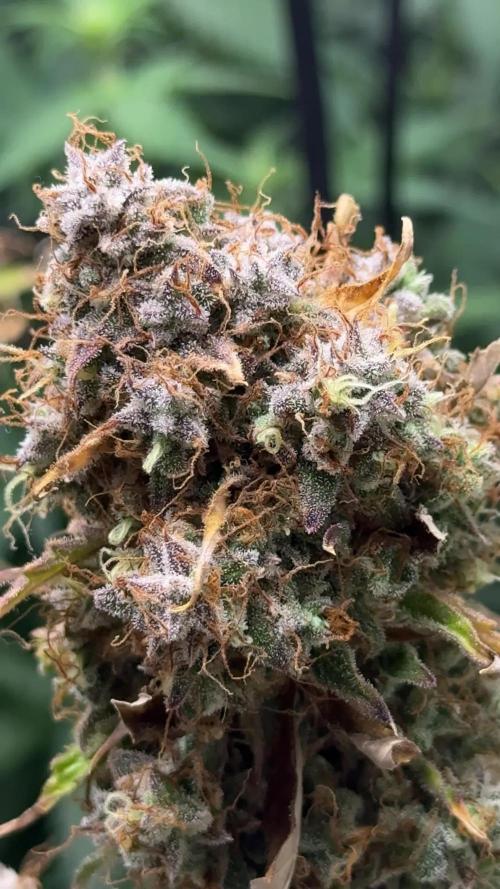
It’s another week of flowering for my plant, and it’s turning out beautifully. You can slowly see purple colors appearing on almost all the buds. All the buds are covered with tons of trichomes — I can hardly believe it, such a beautiful plant.
Likes
7
Share


@Ruuddata
Follow
Ph problems. Having difficulty monitoring ph . Not been much around to watch plant about a week or 2 . Aero garden set up a lil bit difficult to get into reservoir to check ph daily. Going to change system to deep water culture RDWC.

Likes
9
Share


@Bread_n_Buds
Follow
This is one of the strains that is doing very well in both the technical/free versions, we are talking about the Fruti Punch Automatic by Zamnesia.
Remember that we are growing a plant worked with the techniques indicated and another left to grow without pruning to preserve its speed; in the previous/next diary you will find the other plant of the same variety.
In this diary we find a plant worked with a technique that I have recently become passionate about thanks to my friend Yan402 who in a discussion convinced me to study it further also on autoflowering plants, now I am having a lot of fun. This plant is eure being a medium low internode it has been worked with a very precise Main Lining, I have also done much better in terms of elegance but I like this one a lot too.
Comparison is the salt of experience, so the plant in the other diary will be treated very differently, go and see it to make a comparison.
We started the Plagron fertilization program, we are in 100% organic configuration, the soil is made up of recycled Promix + 1/3 fresh soil + 10% Perlite + RQS Mycorrhizae Mix (4 g in the mix, 1 g under the small fiber pot).
In the middle of the week the pre-flowering started so I decided to start the program for this phase: 1 ml/l of Power Roots - 1 ml/l of Pure Zym - 1 ml/l of Sugar Royal - 1 ml/l of Power Buds - 4 ml/l of Alga Bloom
Remember the Green Sensation from the 3rd/4th week of flowering depending on the flowering speed or how you see the calyxes composing, when the calyx is in the swelling phase it is used.
We sprayed 5 ml/l of Vita Race foliar fertilizer once a week.
-------------------------------------------------
https://plagron.com/it
We always have the excellent RQS mycorrhizae running through the soil.
https://www.zamnesia.io/it/5778-mix-micorrhiza-easy-roots.html
One of the best in recent years with a very high THC level
--------------------------------------------------------
https://www.zamnesia.io/en/10965-zamnesia-seeds-fruit-punch-automatic.html
Brief description of Zamnesia // Sativa strains are very rewarding to grow, but their long flowering times and their greater susceptibility to disease and overfertilization can make them a little more difficult to manage. Also, their imposing heights are less suitable for indoor use and can attract unwanted attention if grown outdoors. However, with the arrival of Fruit Punch Automatic, growing sativa strains at home just got a whole lot easier. Combining Skunk #1, Haze and ruderalis, Fruit Punch Auto is 70% sativa dominant and produces up to 21% THC, along with a delicious blend of terpenes. Plus, it can be grown indoors, outdoors and in greenhouses. With their bright green hues, golden pistils and thick layer of resin, Fruit Punch Auto buds always have a great appeal. When you smoke her, you will be amazed by her flavours, aromas and effects! As the name suggests, Fruit Punch Automatic boasts delicious tropical aromas reminiscent of banana, pineapple, mango and citrus. When you open the jars you will feel like you are in a tropical cocktail bar on an exotic beach. Fruit Punch Auto will delight your palate with pungent fruity notes followed by light notes of Skunk and spice on the exhale. Within minutes of your first hit, this potent sativa will stimulate your mind, leaving you in an energetic and carefree state, ideal for morning or daytime sessions, as well as social settings or creative pursuits.
The whole world of growing and much more is on Zamnesia: just take a look at the site and you will find "all the best that nature has to offer" in various shapes and colors.
---------------
www.zamnesia.com


Likes
6
Share


@Themaryjanelounge
Follow
End of Week 4,
Defoliated and more training, first feed at 378 ppm.
Humidity is high so added the dehumidifier.
Hoping for another week of veg before flower but some are looking ready to go.
Just started another journal with Papaya Cookies and Pound Cake.
Likes
114
Share


@RockoCalenberg
Follow
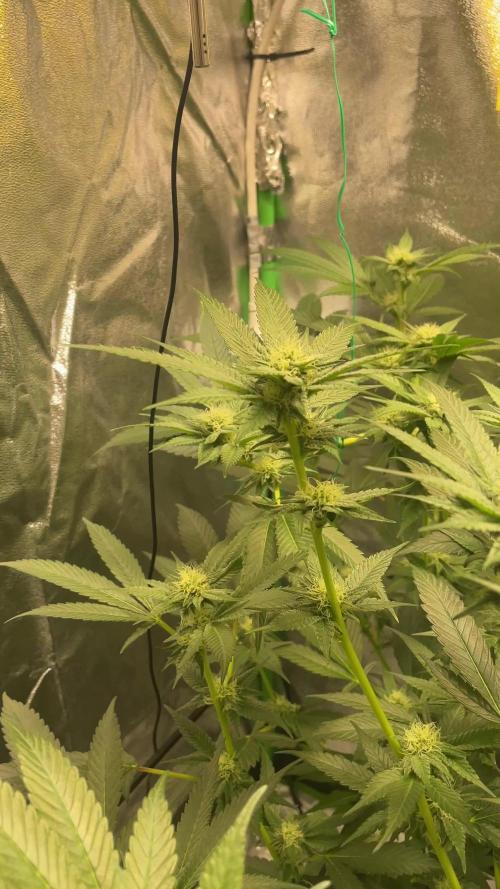
Letzte Tage vor der Ernte
Auch hier in den letzten Tagen kaum noch Entwicklung.
Die Pflanze stand optisch fertig,
hat aber nicht mehr wirklich weitergereift.
Foxtailing lief weiter auf bereits entwickelten Buds,
ohne dass sich die Reife sichtbar nach vorne bewegt hat.
Der Chop erfolgte ebenfalls aus praktischen Gründen,
da ein weiteres Warten keinen klaren Mehrwert gezeigt hätte.
👉 Optisch fertig, aber ohne echten Abschluss.
Kurzfazit:
👉 Unruhiger Finish-Verlauf ohne klaren Reifepunkt.
Grow on 🌱
Last Days Before Harvest
Again, very little development in the final days.
The plant looked finished,
but did not continue ripening in a meaningful way.
Foxtailing continued on developed buds,
without real progress in maturity.
Chopped as well for practical reasons,
since waiting longer showed no clear benefit.
👉 Looks done, but never fully completed.
Quick summary:
👉 Unstable finish without a clearly defined ripening point.
Grow on 🌱




Processing
Likes
13
Share


@Hawkbo
Follow
Pics and video were taken a few days ago been busy as shit lately so the update is a little late. I'm gunna put the video up first on all of them then go back and upload the pics so if come back if the pics arent up yet.
Likes
51
Share


@MadeInGermany
Follow
Flowering day 44
since time change
to 12 / 12 h
Hey guys :-)
The buds are becoming incredibly beautiful and smelling better and better ☺️.
Today there was again the full load of food and will be slowly driven down as soon as it comes to an end :-)
Was watered 3 times a week with 1.2 l each (nutrients see table above)
Otherwise everything was cleaned.
Have fun and stay healthy 💚💚💚
👇🏼👇🏼👇🏼👇🏼👇🏼👇🏼👇🏼👇🏼👇🏼👇🏼👇🏼👇🏼
You can buy this Nutrients at :
https://greenbuzzliquids.com/en/shop/
With the discount code: Made_in_Germany you get a discount of 15% on all products from an order value of 100 euros.
👇🏼👇🏼👇🏼👇🏼👇🏼👇🏼👇🏼👇🏼👇🏼👇🏼👇🏼👇🏼
You can buy this strain at :
Clearwater Seeds
Water 💧 💧💧
Osmosis water mixed with normal water (24 hours stale that the chlorine evaporates) to 0.2 EC. Add Cal / Mag to 0.4 Ec Ph with Organic Ph - to 5.8 - 6.5
MadeInGermany

Likes
3
Share

@IlseImWeedland
Follow
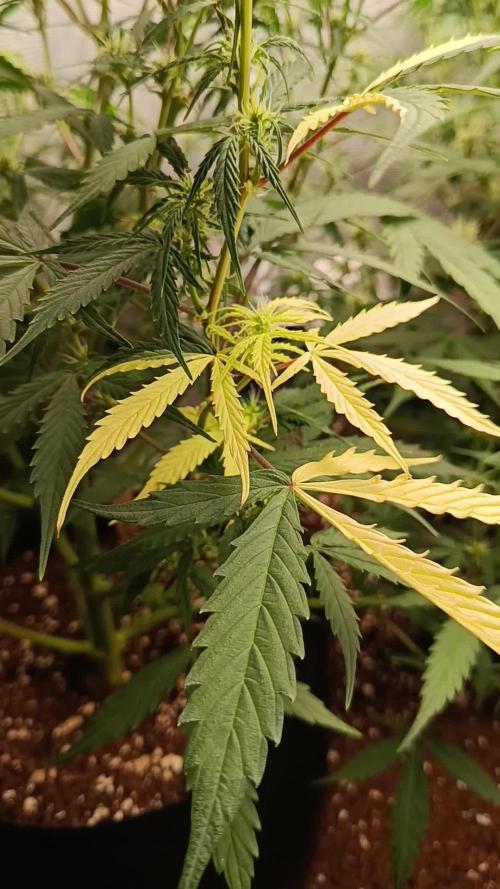
Der Topf ist unten geöffnet die Wurzel kann sich entfalten. Nach Oben ist nicht so viel Platz. Die Pflanze zeigt sehr interessante ,, Albino" Ansicht. Dünger wird verlangt. Blätter zeigten Magnesiummangel, mehr als gewöhnlich (2x in 4 Wochen) zugefügt.

Likes
16
Share


@CookiesAndCake
Follow
Week 17
Day 113 (04/12/2020)💧:
Nice start to the week with a watering. Just as last week, I will be giving her the increased nutrients until the flush. So today I gave her 1.5ml of BioGrow, 6ml of BioBloom, and 6ml of TopMax.
Day 114 (05/12/2020):
The trichomes were looking beautiful today! You can see in the pictures that some are getting more amber now which is a great sign as I thought this girl was going to develop them later than the others in the tent. But it looks like she will ripen right on schedule, at the same time as the others.
Day 115 (06/12/2020):
Took a quick pic of the tent but didn’t have much time to check the girls properly. I’m sure they are great as always 👌
Day 116 (07/12/2020)💧:
I watered the girl today with the same nutrients: 1.5ml of BioGrow, 6ml of BioBloom, and 6ml of TopMax. The buds on this girl are looking super dense! I hope that this 6ml of TopMax will fatten them up even more in the next few weeks before harvest 😄
Day 117 (08/12/2020):
Didn’t have time to take pictures today actually
Day 118 (09/12/2020):
At first this girl was smelling the least out of all the others but now it is actually getting a much stronger earthy smell which I am loving! This one is definitely a couch-lock girl 🛀
Day 119 (10/12/2020)💧:
Watered the girl today with the same nutrients as last time giving her 1.5ml of BioGrow, 6ml of BioBloom, and 6ml of TopMax. I took some videos and close-up pictures and she looks incredible! Also looking from the trichomes, I noticed some more amber ones so I am thinking to even start the 2 weeks flush from next watering onwards and prepare for harvest! Will assess the trichomes in a few days and decide.

Likes
17
Share

@StonedSteve
Follow
Zdarec všichni✋
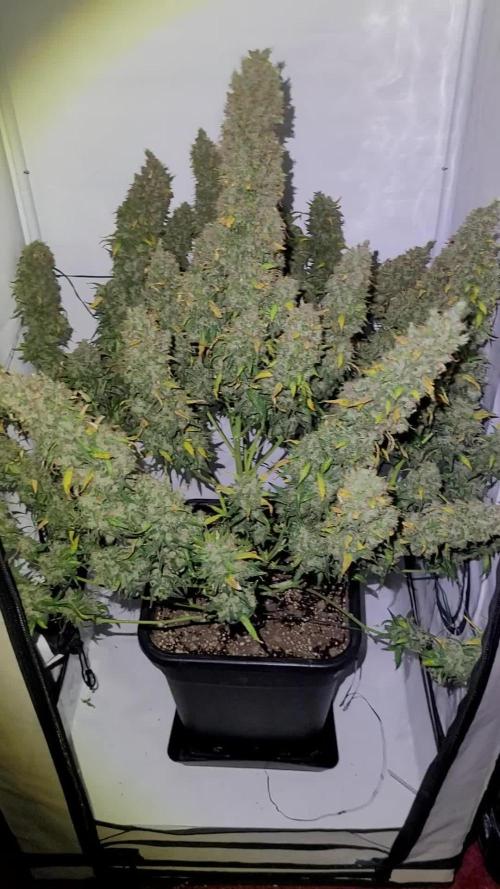
tak je to tady, dnes po 92 dnech pěstu, 13.7. proběhla sklizeň.
Co k tomuto growu říct, nebyl náročný a probíhal hladce. Tenhle strain ''Major Toke''💪 můžu jen doporučit, je hladovější na hnojky hlavně na CalMag😏, krásně voní, vyhovuje mu když se na něj minimálně šahá (kromě nutné defoliace a nějakýho toho přeložení listů nic víc nepotřebuje), na konci to všechno vrátí v podobě obrovských tvrdých palic. Nevím jestli jsem měl jen kliku na semínko, nebo je to tím že jsem na něj pražil 24/7, ale za mě tenhle mini grow 60x60 dopadl brutálně shout-out "Mephisto Genetics"
Tady je pár fotek a 1 video, zbytek přidám po usušení.
Speciální poděkování patří "Hombre_Seeds" ,kterej nám začátečníkům, ale i pokročilým growerům věnuje mrtě času na deníkách a nejen tam a taky všem na Discord skupině, kteří když je potřeba ihned a dobře poradí bez týhle berličky by to nešlo, děkuju všem a ať se vám daří.
Likes
11
Share

@The710Garden
Follow
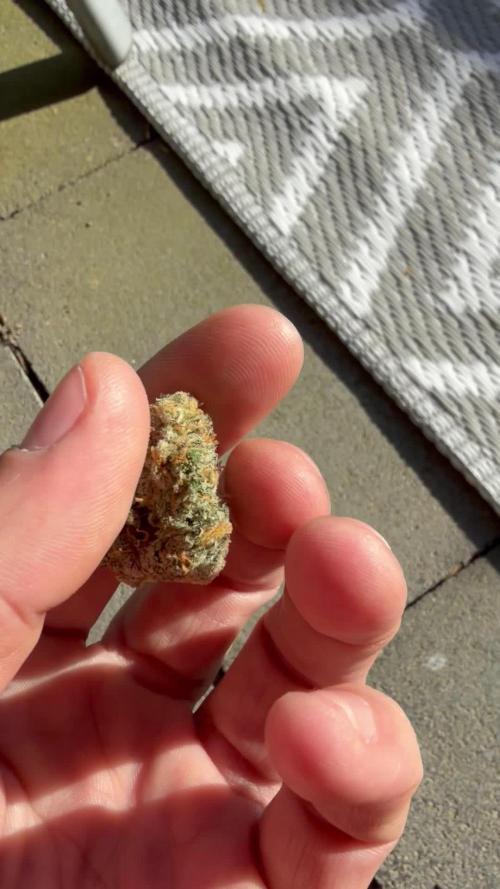
Buds von Pheno #1 (Tribute•D•Cut) mein absoluter Favorit wenns um die reinen Blüten geht haptik terps appeal 1a !
Folgen in kürze,in ein paar Tagen wenn sie ca 20 Tage curen konnte,werde ich ein paar meiner Favorit Buds von dem cut hochladen!
