


Likes
Comments
Share


@SeshHouseCannabis
Follow
This week we lost one of the Slurricane due to rotten root that were caused by the electricity blackout. Other plant were doing fine. Hope everything will be good until harvest.


Likes
2
Share

@letmegrow85
Follow
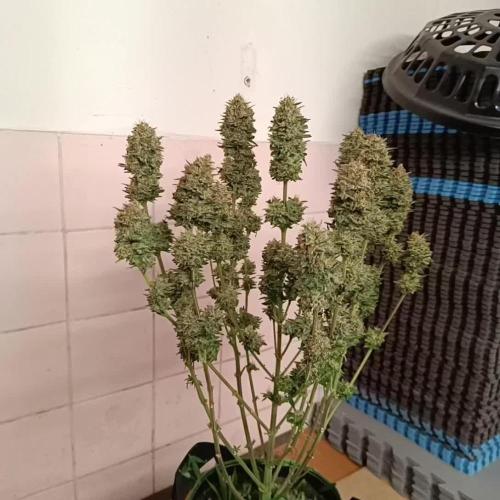
So, das war die letzte Woche, nun hängt die eine zum trocknen, die andere ist im trocken Netz, leider musste die 1. Von den 3 Zwittern, somit hab ich hier und da nen Samen mit drin.

Processing
Likes
14
Share


@Weedig_Weedigson
Follow
So langsam kommen die kleinen in Schwung. Riechen schon sehr lecker 😅 heute wurden noch ein paar Triebe von unten weg genommen. Ab jetzt in der interessanteren Phase werde ich auch Close up Bilder machen. Schönes Growen euch allen. 😊🤗


Likes
4
Share


@IIWeezyII
Follow
Bueno después de no poder poner las últimas etapas, sobre la semana 8/9 hicimos el corte de la planta, dos semanas antes de lo pensado ya que tuve que recoger todo el armario para montar el nuevo proyecto la verdad la cortamos con dos semanas antes de tiempo. Un sabor rico muy a especias. La cantidad en seco fue nada más ni menos que 64,5g, unos 20gs por planta muy bien. Buen sabor, no rasca y muy buen colocón. La verdad la volvería a repetir!
Likes
23
Share


@Piorkeed
Follow
Week 4 (06/04 - 12/04)
D22: -
D23: -
D24: added 1ml of Root-juice and 1 ml of Bio-Bloom to 0.5 l of tap water @ pH 6
D25: -
D26: -
D27: added 1ml of Root-juice and 1 ml of Bio-Bloom to 0.8 l of tap water @ pH 6
D28: -

Likes
16
Share


@DreamIT
Follow
Sponsored by:
💫PARADISE SEEDS💫-💡VIPARSPECTRA💡-💐GREEN BUZZ LIQUIDS💐-🛠️WEDRYER🛠️
15/8 Today I moved it into flowering in the small box that I haven't used in a while.
17/8 water
19/8 water
__________________________________________
Personal advertising (contains affiliate links)
__________________________________________
🦄 winners and holders of the most prestigious awards, since 1994 they offer genetics of the highest quality! Anonymous shipping!
✅https: //bit.ly/Paradiseseeds_
__________________________________________
Did you know that Green Buzz Liquids fertilizers are 100% vegan? A complete line of products ready to give the best to each of your plants! Visit the site and see my journals to see how they work 🦄
🤯 And with the code "dreami t" you will immediately receive a 15% discount on your purchases
✅https: //bit.ly/GreenBuzzLiquidsPro
__________________________________________
👀 Are you looking for a good lamp to start with? 👀
🌞Viparspectra has something more than the others, take a look at their site.
⏩ Use "GDVIP" for an extra discount or "DREMIT3" for an extra 5 %% discount
👀 Search for it on Amazon
✅Amazon USA: https://amzn.to/30xSTVq
✅Amazon Canada: https://amzn.to/38udUVe
✅Viparspectra UE: bit.ly/ViparspectraUE
✅Viparspectra USA: bit.ly/ViparspectraUS
______________________________________________
🌈 Tired of blowing on your weed hoping it dries quickly? Check out the Wedryer website! You will find a well-made accessory that will help your weed dry in just 8-10 days without the annoying risk of finding mold or other annoyances! (no affiliate links)
✅https: //bit.ly/Wedryer_
______________________________________________
📷🥇Follow the best photos on Instagram 🥇📷
https://www.instagram.com/dreamit420/
Backup
https://www.instagram.com/dreamit4200/
🔻🔻Leave a comment with your opinion if you pass by here🔻🔻
🤟🦄💚 Thank you and good growth 💚🦄🤟

Processing
Likes
9
Share


@LittleBigTrees
Follow
Popped direct in the soil after 24 hrs.
Nice looking start.,
Likes
8
Share


@zspl0it
Follow
General
——
Plant is doing fine. Had no issues this week and the devlopment looks solid. Hope she will stretch a bit more in the next week so that the fems can use the trellis once they are far enough.
Nutes
——
Gave her Bio PK 5-8 for one time which was a harsh feeding as I mixed it with all the other nutrients. Other than that I'm watering 1.5L of Water every 3 days with CalMag and Horsetail Extract.
A bit of nutrient burn on the lower leaves but nothing to worry about
Light
——
Bumped light from 120W and 30cm distance to 210W and 40cm distance by end of this week. DLI is around 40 at the moment.
Defoliation
——
Removed some leaves in the middle so that everything gets light. Also removed some leaves from the bottom which were shaded. Will remove branches that don’t make it end of Week 6
Likes
42
Share

@AsNoriu
Follow
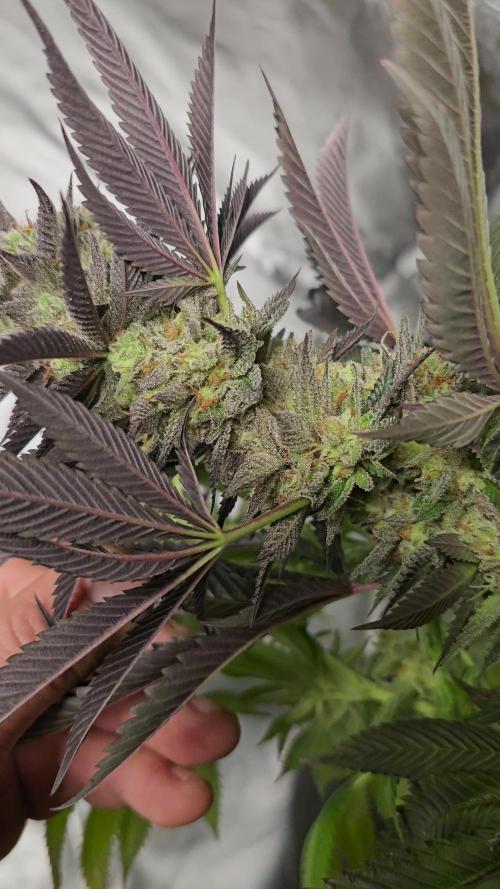
Day 145. Will update later. 3 rows 120 cm long hanging !
Day 154. 206 g , very solid nugs mostly, amazing colours during grow, fantastic genetics !
Happy Growing !!!
Use code ASNORIU at https://fastbuds.com/ to get extra 15% discount for this great genetics !!!


Processing
Likes
14
Share


@Dunk_Junk
Follow
What the hell happened this week? Last week she was 70cm, this week 120cm!!!!!!!!
She must be very happy!!! 😍
Incredible growth. I hope she slows down soon or I'm going to have to bend her main cola over 😐

Likes
8
Share


@Arcadium
Follow
Cooled off a bit, trellis has been great! I made it modular so I can just slide it up the supports and she grows. It has really helped develop a nice even canopy and will help with support in the long run.
Seen a few ants and aphids, nothing major, may up the Lost Coast sprays to every 5 days.
Heavy top dress of homemade screened compost mixed with Gaia Green 70/30 AP/PB.
All in all super happy with this strain, very easy, uniform growth. My other 7gallon same time/strain is 2 weeks into flower, but hates being contained, unlike this girl. Love the early flower in a smaller pot with the same strain to really see how she flowers.

Likes
48
Share


@710_Squish
Follow
Harvest has went well. I will be hanging in a temt with a controlled environment at 50-55% rh to dry for 5-7 days. I hung the entire plant and didn't do any wet trimming. The cure went well, she maintained that sweet berry haze aroma. I would definitely recommend this high yielding strain.

Likes
6
Share

@carlitoshaze44
Follow
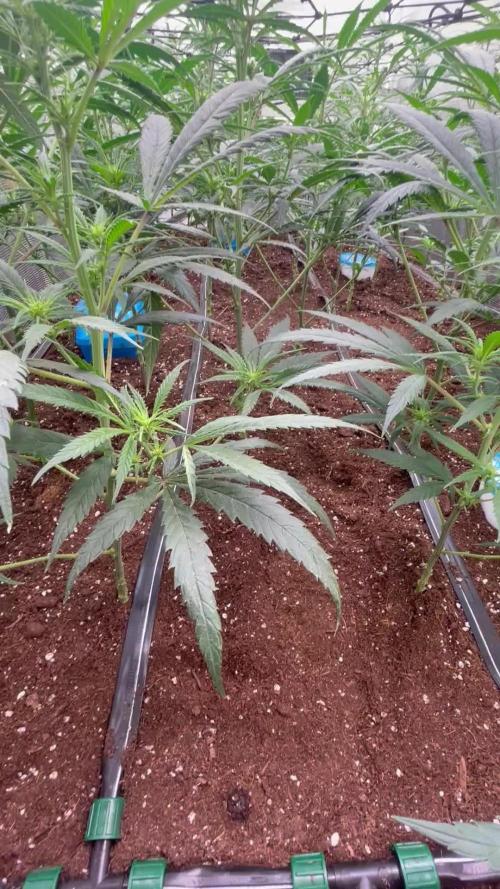
Así es como empezamos la tercera semana,seguimos con humedad alta pero la vamos controlando..
Estos días da buen tiempo la humedad en la calle será mucho más baja así podré meter aire sin tanta humedad..
De momento todo bien en el cultivo ningún problema hasta la fecha.
Ya podéis ver,y comentar sobre algo que veáis que yo no!
Como dicen! Ven veinte ojos mejor que dos!
🖖
Día 12
Último fungicida prevención mutritis,hongos humedad.
Primer riego foliar hormonas producción de flores.
🌹
Día 13
Nada en especial solo observar si veo algún cambio tras las hormonas,aún no veo grandes observaciones fuera de lo natural del paso de los días.
En el día de mañana por lo que me recomendó el fabricante se verán los resultados a la vista!
Comentar que seguimos con la iluminación al 100x100 de capacidad
Marshydro sp3000 x2
Hero led Ignator t720
Yxo led 60w ir+un espectro completo
En la siguiente semana me llega el nuevo driver de philips para poder conectar la lámpara de IR que pude adquirir a Yxo nuevamente! Lampara led espectro completo + IR 70w .
Me vendrá muy bien para el pequeño espacio de la puerta que necesita más iluminación para poder desarrollar bien esas dos plantas,de la entrada.
La humedad fue cosa del pasado.
Evite el uso de desumificador eléctrico añadiendo varios de sales,deciros que funcionan muy bien no dan un control exacto pero mantienen una humedad interior estable para todo el periodo de floración!
50% de humedad lo demuestra!
Hoy añadi un poco más de sustrato. 110 litros exactamente sobre la cama de cultivo que tenía de topcrop con humus de lombriz,tierra diatomeas y alimentada con npk.
Después de eso tengo en mi cama de cultivo 810 litros de sustrato para mis 44haze. 💐
Saludos
Día 14
Anulado el intractor,ya que el propio extractor mete aire fresco por las rendijas de ventilación..
En lo largo de la noche iré viendo el resultado en datos..
Ya coloque los soportes para la nueva iluminación que en estos días llega su driver de sustitución
E visto que algunas plantas en estos dos días están en 67-70cm..
Ya colocado el sistema de riego para evitar más pisadas en el cultivo ya que algunas se realentizaron por pisar encima de sus raíces..
Le e metido una pequeña poda de bajos para airear más la zonas bajas del cultivo.
Pequeño riego de folacion con remedio de agua azúcar para dos que estaban más estresadas.


Likes
16
Share


@Rangi_Kijani
Follow
Momma is just about ready for her 36-hr pre-harvest dark period. Going to give her 1, maybe 2, more short light cycles (~10 hrs).
Trichomes are mostly cloudy with some amber. Pistils have darkened and curled in. Buds are plump and firm. It’s time! 😎
Processing
Likes
15
Share


@Luv2Grow
Follow
Day 71 - Not much going on today but is is starting to smell a bit more. Kinda sweet with a little bit of funk is the easiest way to explain it. Noticed some of her top leaves were tacoing a bit so raised the light up a little bit to try and relax her.
Day 72 - She’s still chugging along and she’s packing in nicely. Other than that, not much else happening. I raised the lights a little more cause still have a few leaves up top folding like tacos. Have the high temps no higher than 78 and around 69 at night so I don’t think heat is the cause, I think I had the lights way to close.
Day 73 - Nothing much to update today. She’s gonna need some more water tomorrow. Still have some tacoing of the leaves but did about all I can do now so just hoping it doesn’t bother her the last couple weeks.
Day 74 - Almost waited a day to late to give her some water and nutrients. She was just starting to drop a bit but got her fed before she really had any big issues. She took 2 full gallons of water and nutes so that should hold her over for about 2-3 days.
Day 75 - All looks great since watering, no more droopy leaves but man oh man the buds are getting fat and dense as hell. There’s still plenty of clear trichs and most pistils are still thick and white so still at least two week left but can’t wait for this harvest.
Day 76 - Will probably be attaching some of those plant yoyo’s soon because these buds are getting fat and heavy and don’t want anything bad happening to them. This is turning out to be one of my best grows to date. The top few leaves are really tacoing and getting brittle, not a lot but a few so I raised the lights a bit more. Probably too late for the couple that are damaged but overall she should be ok.
Day 77 - No major updates today, she’ll be needing some water for sure tomorrow. Other than that, I’ll be attaching some plant yo-yo’s today to support the massive buds.

Processing
Likes
7
Share


Coming along nicely in a week or so I will Super crop and scrog shortly thereafter flip to 12-12
Supercropped November 9th 2018
Sugar Black Rose clones humidity dome
Lollipoped and Topped and Scrogged
Nov. 11, 2018

Likes
4
Share


@adam_pawloski87
Follow
@twenty20mendocino Ateam R&D Update ~ Let’s go day 91 an these girls are doing amazing! Looking nice an healthy we will let these girls recover for a few more days from the heavy defoliation and on Sunday we will be giving them the big flip , Let’s go flower!! Updates coming soon !
Sangria has been doing her thing , been drying for12 days now so Sunday we will be giving her the trim and jar her up, but updates coming soon yall!! Let’s have an amazing productive day as well as a great safe weekend, peace love an positive vibes to y’all Cheers an blaze on 😶🌫️💨💨💨💨
