


Likes
Comments
Share



Likes
2
Share


@KeemBboomin
Follow
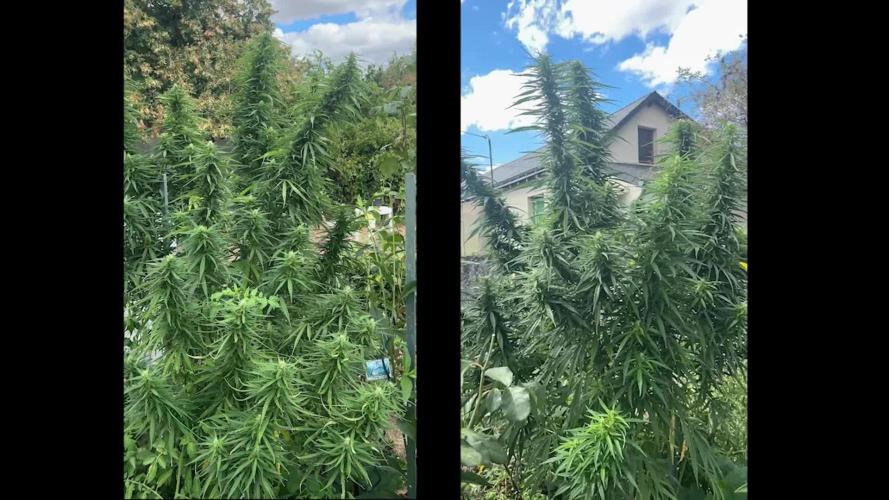
Once again these girls don’t really need much just watering when dry but other than that we are on cruise mode. I have been checking trichomes for about a week now and man is she almost there I should be giving them lights out with in another week or two can’t wait

Likes
107
Share


@Tropicannibis_Todd
Follow
Alright Then
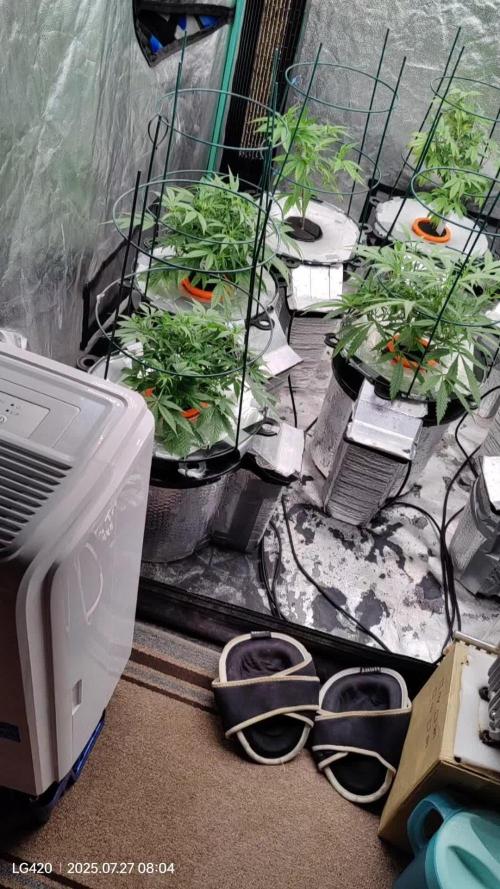
We just hit week 2 and all is well , have to admit she's showing great , Growth in just 14 days😃 .......
Middle of this week I have decided to start a little training by pulling her over to the side and have decided to top it 👌
Very little water given ,so far and rain water to be used entire growth
Lights being readjusted and chart updated .........👍
👉I WISH GD HAD DISCORD SERVER SO GROWMIES COULD HAVE A PLACE TO HELP AND TALK THINGS RELATED TO GROWING IN REAL TIME .....👈
👉SO I CREATED ONE ALL YOU NEED IS TO JOIN THE GROWDIARIES DISCORD SERVER !!!!!!!!!!!👈
LINK IS 👉 https://discord.gg/zQmTHkbejs
AND SEE HOW IT PLAYS OUT !!!!!!!



Likes
8
Share


@Easygrower
Follow
Hello growers day 49 in the garden with the blue monster she is popping off she is standing at 83cm at the moment she looks very healthy thought I was going to have problems outside but she’s taking it very well loving the zami genetics I’m just going to keep feeding her and let her ride it out staring to get some nice buds starting to form now getting excited can’t wait to try her buds so until next week be safe and happy growing ✌️

Likes
11
Share


@LapsekiliTayfur
Follow
Day in and exit fan 15 min off 15 min on Van is full on
Night in and exit fan 30 min off 15 min on Van is full on

Likes
21
Share


@Trickybis82
Follow
Would definitely recommend esp if you don't want to do nothing else. Because this strain will put you on the sofa making you do nothing else for the day. I smoke this after work and it sends me to sleep straight away I love it

Likes
69
Share


@nonick123
Follow
Cosecha
Reporte de Peso húmedo & Peso Seco de LemonPaya by FastBuds!
⚖️ Total peso húmedo 186
⚖️ Total peso seco TBD
💦Pérdida de H2O durante el proceso de secado TBD
🎨Colores
Un color verde claro brillante!
👃Olores
💐Floración Papaya (predominante) con un toque (potente) de delicioso limón
🏜️ Secado TBD
🍗 Curado TBD
🍽️Sabor
A definir cuando esté bien curada en el reporte de humo
Variedad
💪Resistencia
Resistente 9/10! - Floración detenida por 10 días por el bloqueo de nutrientes que se ha presentado en la mayoría de plantas de este ciclo.
Pero ella se recuperó muy bien y ha hecho unos cogollos densos al final de floración!
🏋️♂️Entrenamiento:
Se ha adaptado bien al topping (en 2 ocasiones), supercropping y LST!
Una crack!
🌱Vegetativo:
Un vegetativo sin incidencias, con una bonita estructura!
Ya en vegetativo al frotar las ramas, se desprendía olor a Papaya 😍
💐 Floración:
Cogollos muy densos a pesar del bloqueo de nutrientes que superó sin problemas en 10 días!
El olor a Papaya y fondo de limón es impresionante!
Genética:
Estupendo trabajo de breeding de FastBuds!
👨⚖️Conclusión:
Una cepa deliciosa a plantar una vez en la vida! Muy interesante el perfil de Papaya y Limón!
Likes
11
Share


@JoeyGonz
Follow
My only regret is not mainling all. Everything is growing great still got couple few weeks left. But the difference in bud growth is still my topic cause there really no other issues. Buds from the bottom to the top of the mainline ones are all basically the same size. All on the same growth rate. I know due to shape and open canopy yada yada.. Fimmed, the canopy is more bushy. I mean I can see the bottom from the top, I know that's one of the main rules.. But just the leaf growth is different too... So of course buds on bottom still gonna be more popcorny. I still defoliate a little every few days.. Nothing crazy, just wanna irritate her a little. So going forward I'll only do one fimmed with my grows the rest mainlined..Just to get an idea how each one reacts to both grow techniques but still get my weight.
Likes
9
Share


@TheBulldozerSicily
Follow
Inizio nuovo ciclo
Giovedì 26 settembre 2024
Aggiungo 75 lt acqua osmosi inversa ec 146 ph 9
Aggiungo tutti I nutrienti ottenendo ec 908 ph 6.5

Likes
9
Share


@datrobspeoria
Follow
It was a easy strain to grow and was happy with the several watering she needed! I was feeding her every couple of days and she rewarded me with some immense dense buds! I have one more of this strain that might be heavier!
I just got done with my 2nd plant and she was a big one! Got 792grams or 27 Ozas Wet weight! My best so far with a 5 plant limit this is the weight of only 2 of the 5 I grew..


Likes
2
Share

@peterfly98
Follow
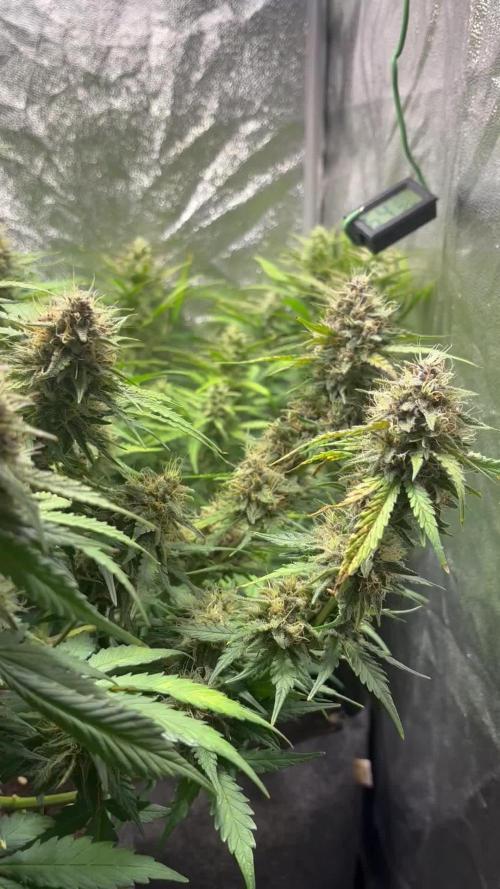
Very hot week here so I turned the light down to 75% to manage the heat in the tent.
Guava 1 is still showing a phosphorus deficiency but is still bulking up nicely. She is frosty and dense. For being at day56 she is very fast!
Guava 2 still needs to swell those buds but it will get there.
Frostbanger turned out a beast and is in full flowering mode. Being so tall it will need some support for the buds in the coming weeks.
I defoliated the girls a bit and lollipopped frostbanger cutting some insignificant larf at the bottom.
Likes
8
Share


@Creme_De_La_Creme
Follow
Autopot system was turned on day 15 !!
Now everything is on automatic 🍭🍭🍭🍭🍭
Im not touching this girl until day 50 or some like that, no LST, no topping, just a stress free VEG, lets go !
Likes
15
Share


@Trueorganics84
Follow
I love this girl. She grows tall and fast. Super easy grow so far. Just starting to lst her a little bit more.
Posted 4 videos on how I make my tea. I use this When I start seeing hairs until the last 2 weeks.
Then I flush
Just a compost tea you see here.

Likes
16
Share


@MadeInGermany
Follow
Flowering day 19
since the time
change to 12/12.
Hey all together 😀.
This week she has developed beautifully ☺️.
I poured it 3 times with 1.2 l this week.
Tomorrow I will add the 2 g GHSC Powder Feeding Bio Bloom because the first blossoms are coming :-).
I checked all the leaves thoroughly for pests or diseases and everything is fine ☺️.
Next week I'll look at your roots as soon as the coconut is completely rooted.
As every week, the tent was cleaned and the entire technology checked.
The humidifier was also refilled every day 👍.
In the next few days I will remove the bottom shoots so that the energy doesn't end up being wasted in the small popcorn buds.
I wish you a lot of fun with the update.
Stay healthy 🙏🏻 and let it grow 🍀
You can buy this Strain at
https://www.barneysfarm.com/blue-cheese-34
Type:
Blue Cheese
☝️🏼
Genetics:
Blueberry
X
Original Cheese
👍
Vega lamp:
2 x Todogrow Led
Quantum Board 100 W
💡
Bloom Lamp :
2 x Todogrow Led
Cxb 3590 COB 3500 K 205W
💡💡☝️🏼
Soil :
Canna Coco Professional +
☝️🏼
Fertilizer:
Green House Powder Feeding
☝️🏼🌱
Water:
Osmosis water mixed with normal water (24 hours stale that the chlorine evaporates) to 0.2 EC. Add Cal / Mag to 0.4 Ec Ph with Organic Ph - to 5.5 - 5.8

Likes
65
Share


@Mrs_Larimar
Follow
March, 11th.
The Nicole Kush Seedlings are growing vigor and nicely
I forgot to make Pics of all... But they arte to see in the Video
Tomorrow iam going to do that... Iam setting up another " Babytent" with a new Light
Stay courious
You can have a Sneak -Peak on the new Viparspectra XS-1000,
wich is going to be released on March 15th
March 13th.
Iam done with setting up
Now i have another Babytent. and Inside the New Viparspectra XS-1000
and the other Stuff to run the Envoirement
I already ca see a difference between both Tents. If you stand outside and just look with Eyesight
the Viparspectra seems to be brighter// has another color of Light.
I made a Unboxing Video for more informations.
Amazon: http://url-9.cn/0y9i
Amazon US: https://amzn.to/3e0P2bk
Amazon CA: https://amzn.to/3bTnEJC
Amazon discount Code:
it10mlarimar XS1000 10%
it15mlarimar XS1500 5%
it20mlarimar XS2000 5%
it40mlarimar XS4000 5%


Likes
5
Share


@CalGonJim
Follow
12/18 4am CANNAKAN!!!! Giving my FAST Flowers a try. A late spring early summer grow. CannaKan is my new best friend, I had a 100 per cent success rate last time!!! Ok I got it all done at 5:30 am, I set the Temp to 88 MPH or the Time Machine wont work, EVERYBODY KNOWS THAT! Marty will meet me in the parking lot at the mall, I have a great feeling about this. 11am Room temperature is 73. Heating Pad set to 88. Water temp 77.7 PERFECT!!
2:30pm blue dream is already starting to open. I think Tropicana cookies looks like she’s opening a little bit. They should all be open by tomorrow. It’s only been about nine hours.👍👍. 11:30pm They all opened. I drained the water put in new distilled water, made sure water level was right. Looks great!!!!
12/19 4am The temp looks good, all are opening nicely. I have to get the pots ready now, put on new stickers, they help identify the plants from different angles, especially in photos. Im doing a low power fast turn around grow in easy to move 1 gallon pots. They will all be topped above the 3rd node, then the bottom or 2nd to the bottom branches will be cut off to achieve a 4 cola grow. Very simple, easy to manage.
11am. 2:30pm, 5:30pm..so tired, finish in the morning.
12/20 12 am 1:30am Just finished TC & GS I had a little trouble seating GS, TC no problems, takes a while to learn. BD is still sprouting, not a long enough tail to bury yet.
9am I think im getting another CannaKan. 10am 👍👍👍
12/21 Put BD in the pot, not sure if she will go or not, I'm firing up the CannaKan and doing another, since its a photo I will keep it in Veg until my next grow cycle. I may do a full 3 gallon grow with this one and take clones, this is fun!!!! gardening, who knew? The new filter paper I got is a little thicker than what came with it takes longer to sink, more dramatic, I got medium in that blue box from amazon.
7am Tropicana Cookies is the Winner of fastest to sprout, she looks great! GS has the shell and skin, it could still fall naturally so I'll wait. BD is unchanged.
Micro-surgery on TC got the skin off and she popped right open!!
12:30pm SUCCESS!!! 4 hours later, she's PERFECT, worked GREAT!!! I NEVER thought I would be able to do seed surgery. That was my 3rd time doing that, success every single time! 4pm looks good.
12/22 9am. all look great, GS is taking off VERY strong overnight, TC has taken root her main stalk is already thick!! BD #2 is almost ready. I kept BD#1 underwater too long...then I accidentally ripped her head off this morning......so really not my fault......shhhhh.....
1 pm BD looks perfect 🤩 almost ready. 330pm Did the transplant...I really need to work on that....so nervous when I do it. Im not paid for this but CannaKan is one of the best products Ive ever used. I need lots of practice planting the radicles ...""In botany, the radicle is the first part of a seedling (a growing plant embryo) to emerge from the seed during the process of germination. The radicle is the embryonic root of the plant, and grows downward in the soil (the shoot emerges from the plumule)""..... I had to look radicle up... It makes a complete difference, I dont lose seeds now It just a million times easier using CannaKan.


Likes
22
Share


@Slobasian
Follow
Love every plant each one is growing differently stacking different even the visual difference of one strain growin two different ways combined smells of diesel, pez candy and lemons


