Likes
Comments
Share


@TeknoRanger
Follow
🌱 Sour Apple⠀⠀⠀
🌸 flowering 9 weeks⠀⠀⠀⠀⠀⠀
💚 70% Indica, 30% Sativa⠀⠀⠀⠀⠀
💣up to 27% THC⠀⠀⠀⠀
👅Apple, lemon⠀⠀⠀
⚖️ 550g/m²⠀
Sour Apple was created by an intersection of the original Sour Diesel and a Pure Kush. It is an indica dominant hybrid with a combination of both indica and sativa effects. It has an delicious intense taste of sour apples and lemon and a gigantic potency.
The rockhard buds are covered in a thick layer of milky white trichomes and are packed with sweet resin. Users describe the high of the sour Apple as a strong mental shift, a uplifting head high that leaves you motivated and focused with a sense of overwhelming euphoria and social tendencies. This is followed by a slow fade into an intensely overwhelming couch-lock. Sour Apple sends her 27% of THC stright to your mind to kick you in other psychedelic spheres. We proudly present this unique goddess to all the growers in the world.
GROWING SOUR APPLE
When growing indoors it is a good idea using screen of green or sea of green methods. You can expect big yields of 500g or more per squae meter indoors, 700g per plant outdoors. The flowering time is 9-11 weeks. Indoors, Sour Apple is a vigorous grower with many side stems which can be trimmed to keep the plant in bounds. Indoors, the plants grow between 1,00-1,50 m depending on the introduction of the flowering phase, outdoors Sour Apple can reach four metres of hight.
MEDICAL USE
Because of its strong effects Sour Apple is an ideal strain for treating patients who suffer from conditions such as chronic stress or anxiety, chronic pain due to injury or illness, and sleep disorders (insomnia and sleep apnea). In low doses it is daytime suitable for medical applications, at higher doses, it is the ideal weed for medication at the evening.

Processing
Likes
10
Share

@CrackinBeans
Follow
Well I'm a bit upset last week I ended up dropping my ph meter in a tank of nutes I was mixing and by the time I got it out the meter was junk. I was planning on flushing the crystal but had to wait another week for the meter.
I suppose the good thing to take from this was I found out why I was having issues with my plants. When the new ph meter came in I went to check my run off and my nutes that I had all ready mixed up. It turns out that my meter i had been using this whole grow was off by about -2-2.5 so this whole time I had been feeding the plants at around 3ph smfh. I cant believe they look how they do knowing what went on this whole time.
Fastbuds crystal meth is 3days into flush and i will be cutting it down this weekend most likely.
Mephisto hubbabubbasmelloscope is smelling like sweet sweet candy and is thick in resin
Bighead seeds freeze berry/ blueberry crumble has a dank pungent stank to it and also is frosty but larrfy
Big bomb is still growing thick and have bud sites everywhere
Now I'm ready for the next batch and ready to get dialed in!


Likes
Comments
Share

@Albinius
Follow
🌱 GROW LOG: Gorilla Cookies Auto (x3)
╭────────────────────────────────────╮
🗓️ MONDAY 18/08/25 - DAY 26
╰────────────────────────────────────╯
→ All stats in range, no attention needed
→ Picture data gone so only webcam pictures this week
🌡️Temp (Day/Night): 24°C / 23°C
💦 Humidity (RH): 63%
🔁 VPD (Vapor Pressure Deficit):1.1
⚡ Soil EC mS/cm: 0.3
💧 Soil Water Content (WC): 21%
💡 Light: 40% @ 25cm from canopy
🔆 PPFD (μmol/m²/s): 490
🌬️ CO₂ (ppm): 580
╭────────────────────────────────────╮
🗓️ TUESDAY 19/08/25 - 💧BATCH & WATERING - DAY 27
╰────────────────────────────────────╯
→ WC Dropped to 20%
→ Prepared batch 10L (3L Deminiralized + 7L tap feeding: 1.2 EC / 590PPM / 6.6 PH / 24C
→ Stats within range
→ Fed plant with fabric pot 3L: Runoff: 4.2 EC / 2140 PPM / 6.0 PH -- High Again
→ 2 plastic pot plants WC still in range, no watering
→ 2 plants in fabric pot seem a bit behind
🌡️Temp (Day/Night): 27°C / 25°C
💦 Humidity (RH): 68%
🔁 VPD (Vapor Pressure Deficit):1.2
⚡ Soil EC mS/cm: 0.5
💧 Soil Water Content (WC): 28%
💡 Light: 45% @ 30cm from canopy
🔆 PPFD (μmol/m²/s): 480
🌬️ CO₂ (ppm): 700
╭────────────────────────────────────╮
🗓️ WEDNESDAY 20/08/25 - DAY 28
╰────────────────────────────────────╯
→ No Action Taken
🌡️Temp (Day/Night): 23°C / 20°C
💦 Humidity (RH): 55%
🔁 VPD (Vapor Pressure Deficit):1.4
⚡ Soil EC mS/cm: 0.4
💧 Soil Water Content (WC): 26%
💡 Light: 65% @ 30cm from canopy
🔆 PPFD (μmol/m²/s): 480
🌬️ CO₂ (ppm): 500
╭────────────────────────────────────╮
🗓️ THURSDAY 21/08/25 - DAY 29
╰────────────────────────────────────╯
→ No Action Taken
🌡️Temp (Day/Night): 23°C / 20°C
💦 Humidity (RH): 55%
🔁 VPD (Vapor Pressure Deficit):1.4
⚡ Soil EC mS/cm: 0.4
💧 Soil Water Content (WC): 22%
💡 Light: 65% @ 30cm from canopy
🔆 PPFD (μmol/m²/s): 480
🌬️ CO₂ (ppm): 500
╭────────────────────────────────────╮
🗓️ FRIDAY 22/08/25 - DAY 30
╰────────────────────────────────────╯
→ No Action Taken
🌡️Temp (Day/Night): 23°C / 20°C
💦 Humidity (RH): 60%
🔁 VPD (Vapor Pressure Deficit):1.3
⚡ Soil EC mS/cm: 0.4
💧 Soil Water Content (WC): 20%
💡 Light: 65% @ 30cm from canopy
🔆 PPFD (μmol/m²/s): 480
🌬️ CO₂ (ppm): 500
╭────────────────────────────────────╮
🗓️ SATURDAY 23/08/25 - DAY 31
╰────────────────────────────────────╯
→ No Action Taken
→ Got back after a few days, plants seem to halted growing due lack of attention.
🌡️Temp (Day/Night): 23°C / 20°C
💦 Humidity (RH): 60%
🔁 VPD (Vapor Pressure Deficit):1.3
⚡ Soil EC mS/cm: 0.4
💧 Soil Water Content (WC): 16%
💡 Light: 65% @ 30cm from canopy
🔆 PPFD (μmol/m²/s): 480
🌬️ CO₂ (ppm): 500
╭────────────────────────────────────╮
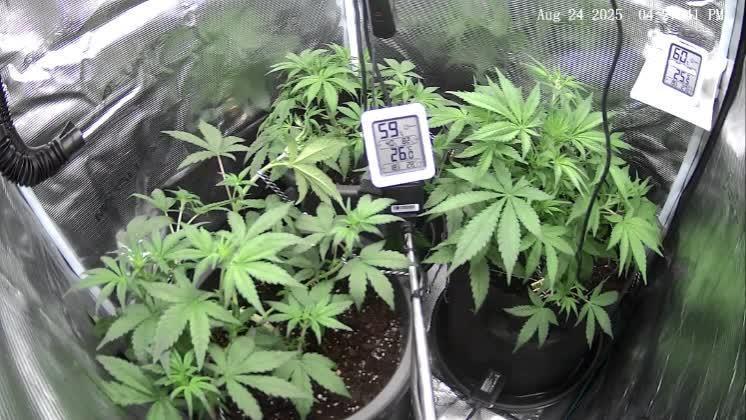
🗓️ SUNDAY 24/08/25 - DAY 32 💧WATERING
╰────────────────────────────────────╯
→ Prepared batch 10L (3L Deminiralized + 7L tap feeding: 1.6 EC / 800PPM / 6.5 PH / 23C
→ Stats within range
→ Fed plants 3L: Runoff: 1.5 EC / 800 PPM / 6.5 PH -- Much better
🌡️ Temp (Day/Night): 27°C / 26°C
💦 Humidity (RH): 68%
🔁 VPD (Vapor Pressure Deficit):1.2
⚡ Soil EC mS/cm: 0.5
💧 Soil Water Content (WC): 28%
💡 Light: 50% @ 30cm from canopy
🔆 PPFD (μmol/m²/s): 480
🌬️ CO₂ (ppm): 550
╭────────────────────────────────────╮
🌿 OVERVIEW
╰────────────────────────────────────╯
The Gorilla Cookies Auto trio hit a rough patch but pulled through! 🌿 Monday was smooth sailing, but Tuesday’s 3L feed to the fabric pot plant went overboard—runoff screamed 4.2 EC / 2140 PPM, way too spicy! 🔥 Plastic pot plants chilled, no water needed. Fabric pot plants still trailed their plastic pals. Midweek (Wed–Sat) was a ghost town, and by Saturday, growth stalled hard—soil water crashed to 16%. Sunday’s 3L feed (1.6 EC) saved the day, with runoff at a happy 1.5 EC / 800 PPM. Conditions stayed decent, but a high VPD (1.4) midweek and low CO₂ (500 ppm) didn’t help. Light bumped to 65% but dropped to 50% Sunday. 😅
Lessons:
→Nutrient Alert: Overfeeding keeps haunting the fabric pot—use lighter feeds (1.0–1.2 EC) for autos.
→Don’t Ghost: Midweek neglect killed momentum. Set reminders or automate watering to avoid stalling. ⏰
→VPD Matters: High VPD (1.4) stressed plants. Boost humidity to keep it 1.0–1.2. 💨
Fabric Pot Woes: Dries faster than plastic—check soil daily to keep it consistent. 👀
Takeaway: Overfeeding and a hands-off midweek slowed things down, but Sunday’s fix got ‘em back on track. Stay on top of feeds and water! 🚀😉
Likes
117
Share


@PEAKYPLANTERS
Follow
Hello everyone.
sisters and brothers gardeners!
You missed me?
here I am for you in a new explosion of colors in my contents ....
I hope you like them
holy god .... how much glue I see on those fantastic shoots
feel free to leave any comments or questions.
the best harvests at all


Processing
Likes
13
Share


@GrowGuy97
Follow
Flower day 17 - All the ladies are looking great, starting to see a lot of bud sights & the smell is definitely getting stronger everyday I open the tent! Thanks for following & happy growing friends!🌱✌️🏼
Flower day 19- Got a bigger dehumidifier because I was having problems on days I would water the humidity would go through the roof at night so to prevent mold I bought a bigger dehumidifier but now it is throwing off so much heat the tent is pushing 90 degrees F at some points throughout the day so I’m not exactly sure how to fix the issue! Will definitely not be running so many plants in the next run for the 5x5! Hopefully things get better!😅😅


Likes
14
Share


@grower1212
Follow
Comenzando la semana 6
Usando full co2 para el engorde final.
Con el hit de calor en el que estamos, lo aprovecharé para preparar un input KNF, el FFJ de cherries, beetroot y damascos para entregarle el potasio que necesita para estas últimas semanas.

Likes
2
Share


@EtnoGrow
Follow
As the oldest one looks with 25 days of more approx 2 and a half weeks in advance as we can see, all calm advancing at the moment, enduring the high heat temperatures, the ones that were missing were transplanted into larger improvised pots.
Likes
10
Share


@I_Identify_As_A_Dan
Follow
Week 3 of flower for White Widow
Hard not to love this girls structure to be honest...😍
Also showing purple signs from the could nights i think not ideal.
Bottom feeding just over a litre of water a day on her drip tray.

Likes
8
Share


@GarciasGarden
Follow
All in all this was an amazing harvest I usually have around 8-10 plants and harvest anywhere from 24-36 ozs per harvest with the 8 plants I had this harvest including the biscotti mintz and cookies USA I ended up with 898g total dry weight with all top quality flower. I’ve learned some things with all my previous runs when it comes to dialing in my quality and yield and definitely watching for those herms because I like to push my plants to the max when it comes to training !
GMO PUnch -Greenpoint
I’m giving this a total score of 7-10!
Biscotti Mintz- Barney’s farm
Total score 10-10
Cookies USA score
7-10


Likes
7
Share


@Dunk_Junk
Follow
Flowering stretch stopped by the look so she will get no taller.
Trichomes just showing this week.
Likes
1
Share

@in_a_few_weeks
Follow
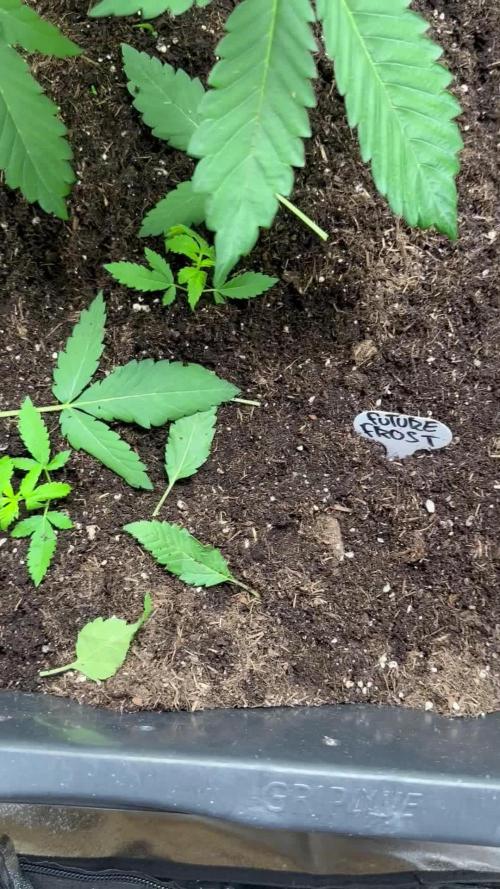
I seperated them now. The bigger one stays in the 90ltr Pot. The other got in a 13ltr pot. Later in 20ltr. Topping the small on in 1 or 2 weeks. Than LST and 12/12. Its a bit hot the next weeks. Have to look more after the plants.
Likes
33
Share


@StickyFingah420
Follow
Día 88 y penúltimo antes del corte.
Ya se aplicó Flawless Finish para un acabado impecable como su nombre lo indica. Siempre prefiero hacer el lavado de raiz solo aplicando agua en las últimas 2 semanas, pero esta vez lo hice aplicando el finalizador y luego los últimos riegos con agua purificada.
La verdad es que estoy contento con los resultados de esta nena, que es hermosa por cierto, desprende olores ácidos, cítricos, dulces.
Los colores son hermosos y las flores están rebosantes de tricomas, lo que la vuelve muy vistosa.
Es todo por ahora, estaré manteniendoles informados en estos últimos días.
Buenos humos! 👽
Likes
39
Share


@Roberts
Follow
Bubba OG Gum auto is doing good. I think I have a pest problem. It was starting to move its way to her. So I sprayed her down with neem oil mix and rinsed her off after about a half hour. Hopefully it eliminates them all over the course of the week treating her. It is last minute, but I want to get it done so the neem oil don't effect the taste of the bud. I also lollipopped the canopy today. Thank you Ganja Farmer, Spider Farmer, and Athena. 🤜🏻🤛🏻🌱🌱🌱
Thank you grow diaries community for the 👇likes👇, follows, comments, and subscriptions on my YouTube channel👇. ❄️🌱🍻
Happy Growing 🌱🌱🌱
https://youtube.com/channel/UCAhN7yRzWLpcaRHhMIQ7X4g







Likes
29
Share


@Belverde
Follow
Welcome growers
This is the last day of the firsmonth in blooming for the PINK KUSH 🌳
She dosen't suffered to much after the defoliation
But i think isn't a good technique using with her
I mean...maybe a light defoliation can be great, but not too much 🙌
Anyway.
The flowers are forming well and she already has rich of sticky trichomes 💯
Also a very particular aroma is coming...i have never smells some similar
I cant wait the end for enjoy it 😍
This will be my 2022 first flowers 🎉🎉
About nutrients 👇
I still using organic/veganic nutrients at any watering 💧
A little bit of silicium (Bionova) / Crescita (Biomagno) / Activera (Biobizz) / Grow vegan (Bionova) / The Missing Link (Bionova) / X-Cell (Bionova) / Bioheaven (Biobizz) , a little bit of P-K 3-5 (Bionova) /Fioritura (Biomagno) / Bloom vegan (Bionova) / Biomassa (Biomagno) / Florastimo (Biomagno) and i started to use some enzymes present in the Sensizym (Advanced Nutrients)
That's it dor the week..
And that's all...
See you next..
Thanks for tge support 😎👍👍
FC ✌️
🇮🇹