


Likes
Comments
Share


@SAC87
Follow
Hey Growers.
It’s going great around here. These girls are happy, healthy and growing like mad. They’ve chunked up so much that they’re starting to lay down. It’s just a couple at the moment so I’ll keep an eye on them and see if intervention is needed. The trichomes are so gritty it feels like table salt between your fingers and the Cali has a orange/lemon citrus and woody scent. The Jack is sour skunk and the cookies Kush is a sweet sugary scent.
I’m not 100% sure if they’re fox tailing from light stress or just natural Kush characteristics. I’ll be keeping an eye out for hermie’s and stress. I’ve added some Green Planet Rezin, as I think it’s awesome and helps with aroma and makes oily terps. I’m thinking this will be my last top dress and I’ll probably just do half dose and top up with monster bloom for the next couple waters then drop everything except cal and Rezin.
Happy Growing 🌱


Likes
132
Share


@Anonymous_2022
Follow
Thanks for stopping by.. Please hit the like button if you like what you see and ill be sure to check you out too Growmies 🌱
First of all would like to give a BIG thanks to Mars Hydro for the TS1000 sponsor 👍👍
What a transformation in LED lights ..you can see just from the pictures alone that the light spectrum from the TS1000 is such good quality 🏆
🌟🌟🌟🌟Mars Hydro TS1000🌟🌟🌟🌟
Low Energy-Consuming LED Grow Light Consuming 150w and also mounted with 354 chips, TS1000 has the ability to replace a 250w HPS light while reducing 40% power intake,
High Efficiency LED with overall light output PPF 343umol/S as well as amazing PPE 2.3 umol/j, it's 50% even more photon efficient and can assure a 30% more return than the old HPS/MH lights.
🌟🌟🌟🌟🌟🌟🌟🌟🌟🌟🌟🌟🌟🌟
Week 5 from seed and shes in the 11L pot under the Mars TS 1000 150 watt..
Shes in flower and currently having her last veg feed as its the last of it so may as well finish it up but will be starting on the bloom 2 feed from week 2 flower 👍
Starting to get abit of a smell but nothing to shout about just yet ..
temperatures around 22 - 27 ✅
Humidity around 45 - 60 % ✅
Overall all going good 🏆
Thanks for checking in 👍👍👍

Likes
10
Share


@Icedoutgreen
Follow
Wie man auf dem Video sehen kann ist so langsam der Herbst eingekehrt und die Blätter beginnen ganz natürlich zu welken. Jetzt freue ich mich noch auf zwei Dinge, zum einen die Ernte und zum anderen die neue Upgrades für mein Set-Up einzubauen und den nächsten Run zu beginnen, mit Pflanzen die ich von der Pike auf gezogen habe und nicht einen Run mit dreibeinigen Hunden zu fahren.


Likes
Comments
Share


Likes
Comments
Share

@Lontra
Follow
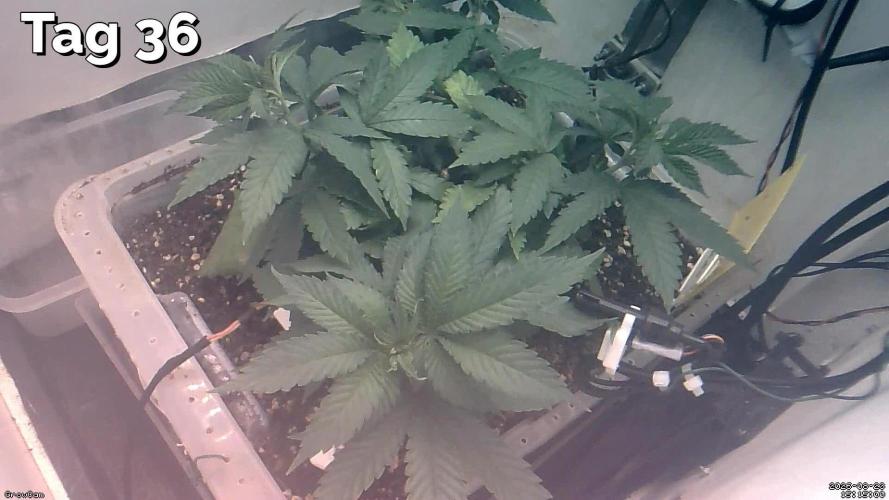
Die Woche verlief gut. Mittlerweile scheint es der Pflanze wirklich gut zu gehen, daher wurde auch wie zuvor geplant an Tag 36 das zweite mal getoppt.
Zusätzlich zum Toppen an Tag 36 gab es an den Tagen 40 und 42 noch 2 Entlaubungsrunden. Da ich festgestellt habe, das ich aufgrund der aktuell bereits erreichten Größe der Pflanze nicht mehr viel Zeit habe bis ich die Blüte einleiten muss, wollte ich in dieser Woche noch möglichst nah an meine gewünschte Mainlining-Struktur herankommen. Ich denke das ist mir auch ganz gut gelungen, auch wenn das teilweise asymmetrische Wachstum das etwas erschwert hat. Nach der zweiten Entlaubung an Tag 42 wurde hierzu auch das LST noch mal runderneuert.
Gewässert wurde diese Woche nur 1 Mal an Tag 39, insgesamt ~3 Liter nach dem bereits zuletzt genutzten Schema (2.5ml/l Fish-Mix, 1ml/l Alg-A-Mic, 2ml/l Bio-Heaven, ca. 0.24g/l Bittersalz, pH-Wert ~6.4). Der Drain liegt mittlerweile sehr stabil bei ~6.4
Der Abstand zur Lampe wurde zwischendurch etwas vergrößert (jetzt ca. 40cm) und die Leistung so eingestellt, dass an den Triebspitzen ein DLI von ~30-33 erreicht wird.
Zu Beginn der nächsten Woche erfolgt eine erneute Bewässerung, wobei ich damit beginnen werde so langsam das Düngeschema in Richtung Blüte anzupassen. Ansonsten gönne ich ihr jetzt erst mal 2-3 Tage Erholung, mit nur leichtem nachjustieren des LST. Vermutlich lasse ich die 8 Triebe dann noch ein paar cm einfach vertikal wachsen und werde dann im Lauf der nächsten Woche das Licht auf 12/12 umstellen.


Likes
8
Share


@VanillaGorilla
Follow
OCT 14 - DAY 51 - She's starting to stack the buds tight and fat. great fun!
Likes
33
Share


@AshBrand
Follow
3/25/21 - Today I fed with a little bit of Big Bloom. They really seem to respond well to it.
3/26/21 - They look great! No feeding today. I removed the humidity dome today. We are transplanting into the grow closet on 4/01/21. They will be in the grow closet until harvest under LED.
3/27/21 - Autopilot today. No feeding. I’ll feed tomorrow with more Big Bloom. They could be transplanted today but we are going to run the rest of this week.
3/28/21 - Fed with Big Bloom. All plants have roots coming out of the bottom of the cups. We’ll be moving them to 5 gallon fabric pots in a few days.
3/29/21 - No water today. They all look good. Transplant day is coming!
3/30/21 - I put some water in the tray so the plants could get water if needed. I don’t think they need any water today.
3/31/21 - I gave each plant a small feeding of Big Bloom. Tomorrow they will be transplanted into 5 gallon fabric pots of Fox Farm Ocean Forest and be given water for at least 2 weeks. See ya on week 4!

Likes
4
Share


Likes
19
Share


@GoldenWeedGrower
Follow
Legend
Timestamp: 📅
EC - pH: ⚗️
Temp - Hum: 🌡️
Water: 🌊
Food: 🍗
pH Correction: 💧
Actions: 💼
Thoughts: 🧠
Events: 🚀
Media: 🎬
D: DAY, G: GERMINATION, V: VEGETATIVE, B: BLOOMING, R: RIPENING, D: DRYING, C: CURING
________________________________
📅 D70/B08 - 24/01/24
⚗️
🌡️
🌊
🍗
💼
🧠 pH is finally stable on the lower side (hopefully)
🚀 The Tent-X is on its way, I can't wait to get it..
🎬 Added Timelapse video
________________________________
📅 D71/B09 - 25/01/24
⚗️ EC: 1.2 pH: 5.6
🌡️ T: 23 °C H: 45%
🌊
🍗
💧
💼 I put T-H Sensor of TrolMaster on the SCroG net
🧠
🚀Tent-X from TrolMaster received, I'm going to set it up tomorrow
🎬 Added Timelapse video
________________________________
📅 D72/B10 - 26/01/24
⚗️ EC: 1.2 pH: 6
🌡️ T: 23 °C H: 40%
🌊 Added 6L
🍗 Added Bloom A-B - CalMag - Big Bud - Bud Candy - B52
💼 Tent-X set up done !
🧠 It works perfectly and as I just see so far, from now on, I'm going to experiment a new way to grow !
🚀
🎬 Added Timelapse video and Set-Up videos and pics
________________________________
📅 D73/B11 - 27/01/24
⚗️ EC: 1 pH: 5.5
🌡️ T: 23 °C H: 40%
🌊
🍗
💧 Added a little of pH-
💼
🧠
🚀
🎬 Added Timelapse video
________________________________
📅 D74/B12 - 28/01/24
⚗️ EC: 1 pH: 5.5
🌡️ T: 23 °C H: 35%
🌊 Added 4L
🍗 Added CalMag - Bloom A-B - B52 - Bud Candy - Big Bud
💧 Added some pH-
💼
🧠
🚀
🎬 Added Timelapse video and 4 pics
________________________________
📅 D75/B13 - 29/01/24
⚗️ EC: 1 pH: 6.0
🌡️ T: 23 °C H: 50%
🌊
🍗
💧
💼
🧠
🚀
🎬 Added Timelapse video and "TM+ Pro" App screenshots. This is the app used to monotoring the Tent-X controller
________________________________
📅 D76/B14 - 30/01/24
⚗️ EC: 1.2 pH 6.1
🌡️ T: 18-26 °C H: 30-55% (from now on, I'll put the Min-Max values of T-H as I can easily read them from the app.)
🌊 4L
🍗 CalMag - Bloom A-B - Bud Candy - Big Bud - B52
💧
💼 I added a Humidifier as the H falls down to 30%
🧠 With the help of Humidifier, according with "TM+ Pro" app, I got the perfect VPD (Vapor Pressure Deficit) rate !! (see screenshots)
🚀 I have to face a very low rate humidity of the external enviroment
🎬 Added Timelapse video and T-H values daily graph, and perfect VPD from the Tent-X controller
________________________________

Likes
3
Share


@Bluemels
Follow
Tag 22: getoppt bei 4 Nodien.
Tag 24: Umgetopft in einen 15L Topf.
Tag 25: Ich fange an die Zweige runterzubiegen.


Likes
4
Share


@DogDoctorOfficial
Follow
🌿 Lava Cake – Week 6 (2nd Week Flower) | Morphing Into Bloom 🌿
The Lava Cakes are officially stepping deeper into flower mode. Stretch is slowing down, morphology is shifting, the leaves, the stance, the energy of the plants are clearly moving toward bloom. Even without a huge photo set this week, the video walkthrough tells the full story: happy, thriving plants under carefully tuned conditions.
⸻
📖 A Quick Recap – From Seed to Here
• Seedling Stage: Strong germination, started in solo cups with Aptus support, rooting fast.
• Veg Growth: Transplanted into fabric pots, lush branching, topped and trained with ease.
• Environment Setup: TrolMaster ecosystem dialed in step by step — exhausts, intakes, carbon filters, sensors.
• Lighting Evolution: Black Series 600 → Future of Grow LEDs → ThinkGrow Model 1 → now with a Lumatek Zeus Compact Pro 465W and the ThinkGrow ICL-300 added to the lineup. The room is a galaxy of light.
• Nutrition Journey: From Aptus start boosters to super soil base, steadily adapted feeding. Now, the recipe grows richer for flowering.
Each step has built the foundation for what’s happening now, the Lava Cakes standing strong in early flower.
⸻
🍽️ This Week’s Feeding Recipe
We swapped Start Booster for Top Booster and layered in a new experiment: Plagron trio support.
Current Mix (per L water):
• Aptus Regulator – 0.15 ml
• Aptus CalMag Boost – 0.25 ml
• Aptus Top Booster – 0.25 ml
• Plagron Power Buds – 1 ml
• Plagron Sugar Royal – 1 ml
• Plagron Green Sensation – 1 ml
The Aptus All-in-One Liquid is on pause for now, pellets in the soil still provide baseline nutrition. This new combo is about flower initiation + terpene support + bio-stimulants. It’s partly science, partly intuition — but that’s how discoveries are made.
⸻
🌡️ Environment This Week
• Room Temp: Up to 34°C (AC unit coming soon to stabilize)
• Humidity: 60–70% at times
• VPD: ~1.89 kPa
• Soil Moisture: Watered when dry-down hits 19–20%
• Monitoring: TrolMaster WCS Substrate Sensor → reading EC, moisture %, and soil temp straight to Tent-X brain
Conditions aren’t perfect, but the girls are handling it gracefully. Warmth makes them thirsty, and with careful irrigation + sensor data, they’re drinking daily and staying strong.
⸻
💡 Lights of the Garden
• Future of Grow LED
• ThinkGrow Model 1 and ICL-300
• Lumatek Zeus Compact Pro 465W
All tied into the TrolMaster network. The room is now a layered ecosystem of precision — light spread, airflow, and CO₂ distribution tuned for a canopy that can handle big flower production ahead.
⸻
🐝 A Note for Nature – The Bees
Alongside all this controlled technology, we can’t forget the real farmers of the world: bees.
A photo this week shows a bee at work, pollinating. Without bees, there would be no flowers, not in the garden, not in the fields, not in the orchards. They are nature’s TrolMaster, carrying genetics forward, balancing ecosystems, ensuring that plants fulfill their destiny.
In our indoor rooms, we simulate everything: light, water, air, food. But bees remind us of the real story outside, a world built on quiet pollination, day by day. A fairytale where the smallest wings sustain the biggest cycles of life.
So this week, the Lava Cakes bloom under LEDs, and the bees bloom under the sun. 🌞🐝
⸻
🚀 Looking Ahead
• AC will stabilize the room climate and drop stress levels.
• Flowers will set fully, with pistils stacking over the next 7–10 days.
• Plagron trio will show its effects, watching closely for flavor, resin, and density changes.
• More light power may be added as the canopy demands.
⸻
✨ Closing Thought: Even on a busy week, even with just a video instead of many photos, the story of these Lava Cakes is alive. They’re moving into flower with strength, under lights, with data guiding them — but always with love as the main ingredient.
📲 Don’t forget to Subscribe and follow me on Instagram and YouTube @DogDoctorOfficial for exclusive content, real-time updates, and behind-the-scenes magic. We’ve got so much more coming, including transplanting and all the amazing techniques that go along with it. You won’t want to miss it.
• GrowDiaries Journal: https://growdiaries.com/grower/dogdoctorofficial
• Instagram: https://www.instagram.com/dogdoctorofficial/
• YouTube: https://www.youtube.com/@dogdoctorofficial
⸻
Explore the Gear that Powers My Grow
If you’re curious about the tech I’m using, check out these links:
• Genetics, gear, nutrients, and more – Zamnesia: https://www.zamnesia.com/
• Environmental control & automation – TrolMaster: https://www.trolmaster.eu/
• Advanced LED lighting – Future of Grow: https://www.futureofgrow.com/
• Root and growth nutrition – Aptus Holland: https://aptus-holland.com/
• Nutrient systems & boosters – Plagron: https://plagron.com/en/
• Soil & substrate excellence – PRO-MIX BX: https://www.pthorticulture.com/en-us/products/pro-mix-bx-mycorrhizae
• Curing and storage – Grove Bags: https://grovebags.com/
⸻
We’ve got much more coming as we move through the grow cycles. Trust me, you won’t want to miss the next steps, let’s push the boundaries of indoor horticulture together!
As always, this is shared for educational purposes, aiming to spread understanding and appreciation for this plant. Let’s celebrate it responsibly and continue to learn and grow together.
With true love comes happiness. Always believe in yourself, and always do things expecting nothing and with an open heart. Be a giver, and the universe will give back in ways you could never imagine.
💚 Growers love to all 💚
Likes
11
Share


@SpaceGorilla_01
Follow
here we go here a lil vid of in the garden the 5x5 with our 4 photo periods we have 2 cindy 99 in 8lt pots 1 cindy in a 2.5lt pot
along with there growmie orange 🍊 cream 🍦 also in 8 litre pot.
these are all feed on nonw other than the best on the market thats @indica.nutrients @danindicanutrients some amazing line they have not ever disappointed and now with all the testimonials📝 rolling in from across the globe 🌍🗺️🌐🌍 its blowing up 🌋 in a good way growers across the planet are seeing 1st hand results and they are loving it.
with a range of feed schedules to choose from with 1 part for soil that (MESSIAH ting going on 😏


Likes
2
Share


@Gingerbeard
Follow
So the majority is already in jars just the largest tops still hanging and will need a few more days. Smells great, really nutty with a sour sharpness. Smooth smoke, had one pheno which produced dark solid buds but the other 3 were lighter in colour and had a somewhat airier bud structure, still very resinous and smelly though.
Likes
30
Share


@WeWantItToGrow
Follow
It was another great week here in the grow room plants have come leaps and bounds low stress training is really having a huge effect on canopy density and i cannot be happier

Likes
10
Share


@Ultraviolet
Follow
Voltage, also known as electric pressure, electric tension, or (electric) potential difference, is the difference in electric potential between two points. In a static electric field, it corresponds to the work needed per unit of charge to move a test charge between the two points. In the International System of Units (SI), the derived unit for voltage is named volt.
The voltage between points can be caused by the build-up of electric charge (e.g., a capacitor), and from an electromotive force (e.g., electromagnetic induction in generators, inductors, and transformers). On a macroscopic scale, a potential difference can be caused by electrochemical processes (e.g., cells and batteries), the pressure-induced piezoelectric effect, and the thermoelectric effect. Since it is the difference in electric potential, it is a physical scalar quantity.
A voltmeter can be used to measure the voltage between two points in a system. Often a common reference potential such as the ground of the system is used as one of the points. A voltage can represent either a source of energy or the loss, dissipation, or storage of energy.
Dropping the temps will slightly raise the humidity, air holds less % water the colder it is. Lights on 25-35rh% the same water content will spike to 50rh% + at night just by dropping the temps.
At night all the juice photosynthesis has been storing up is mashed and mixed up to make all the goodies we need for bud, water is used to transport all these things everywhere, like little solvent transport devices, once a nutrient/protein has been delivered to destination the plant needs to get rid of all this excess water molecules it was using to transport. The only solution at night is to spit it back out into the air at night. During the peak of flower, this can catch a grower unaware, with a 4x4 full tent it can be a challenge to control all that moisture exhaust overnight especially if you're really pushing the limits.
We live in a water world, above or below, our misconception is we live on dry land, we don't live in less watery conditions than above or below. We fit into a very narrow band of moisture that just so happens to be full of lots of air and everything else required for life.
Got my first full whiff of the smell of purple lemonade, always surprises me how accurately the smell fits names, the dominant terpenes in the Purple Lemonade weed strain are carene, linalool, limonene, and myrcene. Carene gives this strain its sweet, citrus flavor and some woody notes, whereas the linalool I recognize so well from Granddaddy Purp. Myrcene has been shown to have sedative qualities while bringing musky, earthy elements to the flavor profile.
Trichome production started to ramp up, and the plant that grew taller/closer to UV showed noticeably thicker coatings. The taller plant shows slight yellowing of lower leaves, and the smaller plant is green and lush but the buds are slightly less progressed, interesting.
I super-cropped the main stem of the tall one just over a week ago (clean). I expected it to be the one slightly behind in development.
The plant has roughly 10-15% "Total resources" that it keeps in case emergencies arise. Reserves if you will.
My rationale behind breaking anything goes hand in hand with slowing things down as production is lost due to the time it takes to repair damage.
I recall watching a YouTube video, where a curly hair gentleman would super crop in a manner to damage but not disrupt using a twisting method, using fingers and thumbs placing them close together one goes clockwise other counter clock this varies a lot depending on the thickness of stem but what you wait for is a tiny snap, it may take several rolls to weaken if walls are tough I found. No snapping or bending of the stem, you want just to fracture it but not puncture this way the xylem and phloem channels remain flowing,the damage is repaired almost instantly and the 10-15% is dispatched with very little repair time. Everything in the general vicinity of the stress will now grow stronger so as to prevent further similar damage.
This is why I had expected the tall one to lag behind in development once I had cropped it but low and behold it worked and the tall one has slightly more developed buds.
The effects of birdsong on plant life may at first glance be far-fetched. Nigh on ten years ago an article appeared in Nexus Magazine on the discovery or invention of a method of growing plants using bird sounds. Christopher Bird and Peter Tompkins describe the development of Dan Carlson’s Sonic Bloom in their book The Secret Life of Plants. Many others have, it seems, recognized the role of birdsong in the growth of plants, and influenced or directly helped Carlson to develop his invention.
Dan Carlson’s desire to see that no one need be hungry through shortage of food sought to understand the optimum growth of plants. He discovered that plants also feed from ‘the top down’ as well as the roots. Underneath all leaves are pores called stomata which open to take in nutrients and moisture from the air. Carlson’s observation that the more bird life there is on the farm, the more abundant is plant life, has been echoed by farmers throughout history, except in modern times. Where there is little bird life, plants are stunted, and dwarfed. Nature has the birds sing at dawn and dusk, which dilates the stomata, and so feeds the plants. One can immediately see the importance of trees.
The development of Sonic Bloom was to create birdsong, which is played to the plants, while a foliar nutrient is sprayed onto the plants at the same time as they are being stimulated by the sound, to enhance their growth. This method produced fantastic results in the amount of abundantly nutritious produce from one plant, often in poor soils and in drought conditions. Carlson showed that the breathing leaves of plants are the source of the nutrient intake for growth. This of course is also true for humans—the breath is food. We shall discourse on this on another occasion. Plants transfer nutrients to the soil via this breathing, and Carlson showed that his plants improved the soil and helped earthworms proliferate.
The secret of Sonic Bloom was the development of the music of the same frequency as the dawn chorus of the birds. With the help of a Minneapolis music teacher, Michael Holtz, a cassette was prepared. It seems that both birds and plants found Indian melodies called ragas delightfully suitable. This is actually quite profound, although the American farmers, especially women, who had to endure this music whilst it was played to the plants, found it irritating. Holtz found the “Spring” movement of Vivaldi’s The Four Seasons appropriate and concludes: “I realized that Vivaldi, in his day, must have known all about birdsong, which he tried to imitate in his long violin passages.
Holtz, it is related by the authors Bird and Tompkins, also realized that the violin music dominant in “Spring” reflected Johann Sebastian Bach’s violin sonatas broadcast by the Ottawa University researchers to a wheat field, which had obtained remarkable crops with 66 percent greater yield than average, with larger and heavier seeds. Accordingly, Holtz selected Bach’s E-major concerto for violin for inclusion on the tape. “I chose that particular concerto,” explained Holtz, “because it has many repetitions but varying notes. Bach was such a musical genius he could change his harmonic rhythm at nearly every other beat, with his chords going from E to B to G-sharp and so on, whereas Vivaldi would frequently keep to one chord for as long as four measures. That is why Bach is considered the greatest composer that ever lived. I chose Bach’s string concerto, rather than his more popular organ music, because the timbre of the violin, and its harmonic structure, is far richer than that of the organ.
Birdsong has long been loved but also studied with reference to the musical scale and harmonics. As Holtz deepened his study he said, “I began to feel that God had created the birds for more than just freely flying about and warbling. Their very singing must somehow be intimately linked to the mysteries of seed germination and plant growth.
The spring season down on the farms is much more silent than ever before. DDT killed off many birds and others never seem to have taken their place. Who knows what magical effect a bird like the wood thrush might have on its environment, singing three separate notes all at the same time, warbling two of them and sustaining the others.
Tree and bird life are essential to Earth's existence, which Carlson, Holtz, and others have shown, but indeed others see and feel. “Plants”, says Steiner, “can only be understood when considered in connection with all that is circling, weaving, and living around them. In spring and autumn, when swallows produce vibrations as they flock in a body of air, causing currents with their wing beats, these and birdsong, have a powerful effect on the flowering and fruiting of plants. Remove the winged creatures, Steiner warns, and there would be stunting of vegetation. Nothing more needs to be added here.
It has been said that you cannot hurt the humblest creature or disturb the smallest pebble without your action having a reaction upon something else...You cannot think of an evil thought, no matter how private, without it having an effect upon somebody else. Whatsoever you do in life sets up some form of resonance.
When I say the morning chorus of the birds awakens the earth I mean that the characteristic song of the birds sets in motion a series of vibrations which react upon other forms of life. Remember, the soil of the earth is full of living microorganisms. The plants are also living organisms. You, yourselves, are living organisms. Now, this is the beauty and wonder of it all—when one aspect of nature has been moved into a state of resonance it immediately relays its vibrational motion to something else.
So when I say the dawn chorus awakens the earth I literally mean what I say. I do not suggest that the earth would come to a standstill without the bird song, but I do mean that life on earth would be sluggish and ineffectual without that first instigating outburst of vibrational power poured forth at just the right pitch and tone to set off a chain effect.
I know some of you will say, what happens in those parts of the world where there are no birds? Well, what does happen? Very little, I assure you. The hot deserts and the polar regions where there are few, if any, birds are not renowned for their wonders of nature. It is as though they are asleep. Nothing grows, few things live. Little resonates and there is a great stillness over everything.
You see, that outburst of sound just before dawn is like the little lever that works the bigger lever which turns the wheel which moves the machine…and so on. Never underestimate small things.
Animals are blessed with instantaneous and unthought-out wisdom. They are in direct contact with God and they act and live as though they are fully aware of it. Men are also in contact with God, but most of them act as though they have never heard of God because they are largely veiled from their divine center by their own thinking minds of which they are so proud.

Likes
6
Share

@Phatlad187
Follow
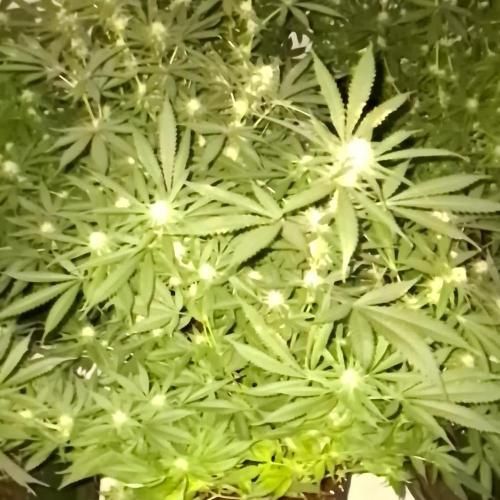
Week 4 of flower now plants are stoped the strech now and growing and packing on some size. Av struggled with some heat stress due to weather but they seem to be growing good and fine
@growerchoice
@SHOGUN COCO A 4ml/L 160ml
@SHOGUN COCO B 4ml/L. 160ml
@SHOGUN ACTIVE BOOST 2ml/L. 40ml
@SHOGUN CAL MAG 1ml/L 20ml
@SHOGUN PK WARRRIOR 1ml/L 20ml
