


Likes
Comments
Share


@Rinna
Follow
As said before, I'm incredibly happy that I got to harvest a little bit. Never expected her to make it, but she kind off did! The smell was pungent and sweet like an amnesia haze should be, hoping that will be even better after drying and curing!

Processing
Likes
4
Share


Likes
Comments
Share


@UDUDUDUDU
Follow
We iz ready for da big leagues ! Godzilla Ganjah is go for ?🐲LauncH 🚀
Likes
17
Share


@Gasoliere_sama
Follow
Yesterday I started the radical washing. In about 2 weeks it will be ready to be cut.

Likes
31
Share


@Chubbs
Follow
SuperSativaSeedClub
PurplePunchOG Auto
Week 3
Weekly update on these 3 little ladies. For week 3 on autos I'm used to them being a little bigger but still a lot of time left so hopefully they'll surprise me. I did a defoliation this week taking off the bigger leafs that where at soil level. I also topped one to see how it reacts to it before I do the other two. I still might try some LST training once a little bigger still undecided at the moment. All in all Happy Growing

Likes
15
Share

@eldruida_lamota
Follow
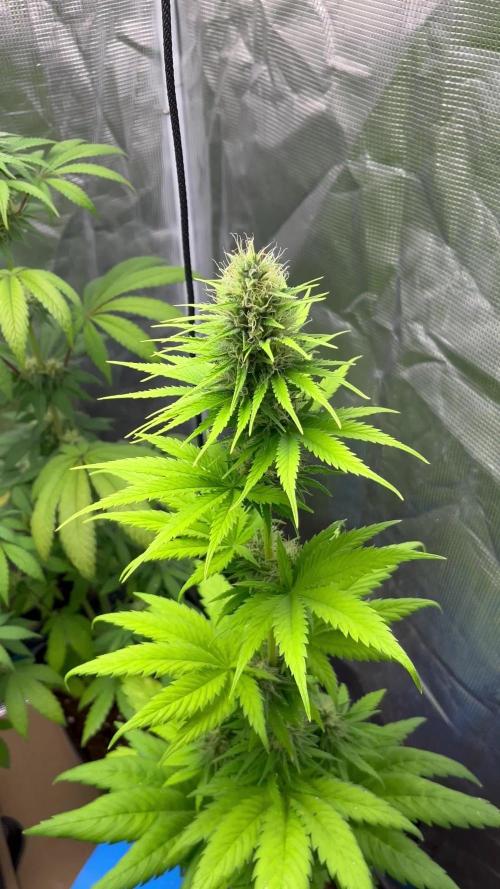
Que pasa familia, vamos con la cuarta semana de floración de estas Green Gelato feminizadas de RoyalQueenSeeds.
Vamos al lío ,se trasplantaron en macetas de 7 litros definitivamente.
El ph se controla en 6.0 , la temperatura la tenemos entre 24/20 grados y la humedad ronda el 50%.
El ciclo de floración puse 12h de luz, el foco está al 80% de potencia.
De momento van creciendo a buen ritmo y tienen un buen color.
La flor también va formándose y engordando, también empieza a producir tricomas, estaban muy bien enraizadas al realizarle el trasplante se notaba la abundancia radicular.
Agradecer Agrobeta por el envío del kit gold series en cuestión, unos maestros 🙏
- os dejo por aquí un CÓDIGO: Eldruida
Descuento para la tienda de MARS HYDRO.
https://www.mars-hydro.com
Hasta aquí todo, Buenos humos 💨💨💨
Likes
16
Share


@DeepRootsGrowTrees
Follow
Week 11 I though she was gonna be done this week only gave her RO water for the last 2 weeks but looking through the loop her trichomes are still mostly clear so I think I'll give her one more week. She looking great, smelling great, buds look amazing. Tried to get some good video so you can see how lovely she is!!

Processing
Likes
42
Share


@Dunk_Junk
Follow
This bush is a beast.
Take a look at her stem. Monster.
So many leaves!! 😲
On she goes!

Likes
29
Share


@Spliffing_Around
Follow
This has been going for more than intended, but I lack light still to fill in the whole tent. I will continue for more weeks in order for all the plants to mature and be able to dry it at the same place.

Likes
10
Share


@jenijane
Follow
Glad I kept a record of my first grow. I bought the clones on a whim to observe their growth cycle. Enter free time. Significantly less bud than I thought but I did have way more time vegetating than flowering... forced to trigger it early.


Likes
262
Share


@TheBudWhisperer
Follow
Nov. 5 - start of week 6 and this grows so far gone off without a hitch. Third node on each side come’n out now so expect to be topping some time this week. Until then it’s all keepn er spread and low until we have our last 4 tops. The clone experiment is a 2/3’ds fail. The last one is hangn in there but probably just dying slower than the other 2. THANKS FOR CHECKn er out. More pics and video to follow.👊👍😎👌
Nov. 6 update - photos and weekly vid uploaded. Added a little blurb about topping in response to a fellow grower's question. This community rocks and the constant support and advice from everyone is greatly appreciated. Cheers y'all!😎👊✊
Nov. 7 update - so I lied and she stretched out from her second nodes over night. Bent er down a little and reset the thing ties. Alls good!
Nov. 10 update - they’re drinking a consistent 3L a piece on a 3:1 nute feed to ph/calmag only regimen and loving it. Trimmed off some fan leaves dragging in the dirt and covering the first set of tips. Was hoping to top again this week but it’s starting to look more and more like next week at the this point. That 4th node just hasn’t stretched stretched out enough yet. Alls good!👍
Background
After the batshit nonsense with this years outdoor grows getting jacked, I need some kush and I need it fast! This girls an indoor grow in the cabinet and she'll be manifolded and defo'd for 8-10 fat ass colas. They’ll spend a first week or so under a cfl assembly while the last harvest dries out in the cabinet. This grow is going to be nute sched. heavy and will hopefully test the limits of my smaller grow space (2sq/ft). Ive had my eye on a critical & kush cross for awhile and really looking forward to seeing this one grow out. Thanks for take'n a peek, stayed tuned, and happy grow'n folks! 👊
Likes
33
Share


@420DeepGrow
Follow
Gracias al equipo de Sweet Seeds, Marshydro, XpertNutrients y Trolmaster sin ellos esto no sería posible.
💐🍁 Sweet Mandarine Zkittlez F1 FV :
Genética feminizada y fotodependiente de floración ultrarrápida. Primera generación filial (F1) resultante del cruce entre un clon élite de Zkittlez (muy potente y resinoso, con un marcado aroma tipo Sour Diesel cítrico, entre naranja y mandarina) y nuestra Sweet Mimosa XL Auto (SWS94) que también tiene tonos aromáticos cítricos entre naranja y mandarina.
El resultado del cruce es una vigorosa variedad híbrida fotodependiente muy resinosa, potente y aromática.
El aroma de esta variedad es delicioso, con tonos Sour Diesel muy especiados, tonos de naranja y mango, fondo amaderado y lejanas pinceladas frescas como de pino o hierba recién cortada.
Algunos individuos pueden mostrar flores y hojas con tonos púrpuras y rojizos al final de la floración.
El efecto es enérgico, alegre y estimulante de la concentración y la creatividad.
💡TS-3000 + TS-1000: se usaran dos de las lámparas de la serie TS de Marshydro, para cubrir todas las necesidades de las plantas durante el ciclo de cultivo, uso las dos lámparas en floracion para llegar a toda la carpa de 1.50 x 1.50 x 1.80.
https://marshydro.eu/products/mars-hydro-ts-3000-led-grow-light/
🏠 : Marshydro 1.50 x 1.50 x 1.80, carpa 100% estanca con ventanas laterales para llegar a todos los lugares durante el grow
https://marshydro.eu/products/diy-150x150x200cm-grow-tent-kit
🌬️💨 Marshydro 6inch + filtro carbon para evitar olores indeseables.
https://marshydro.eu/products/ifresh-smart-6inch-filter-kits/
💻 Trolmaster Tent-X TCS-1 como controlador de luz, optimiza tu cultivo con la última tecnología del mercado, desde donde puedes controlar todos los parametros.
https://www.trolmaster.com/Products/Details/TCS-1.
🍣🍦🌴 Xpert Nutrients es una empresa especializada en la producción y comercialización de fertilizantes líquidos y tierras, que garantizan excelentes cosechas y un crecimiento activo para sus plantas durante todas las fases de cultivo.
Consigue aqui tus Nutrientes:
https://xpertnutrients.com/es/shop/
📆 Semana 1:
Ha sido una buena semana, ella ha dado otro gran cambio en su lugar definitivo 😎.
La carpa está ocupada al 75% y comienza una floracion explosiva gracias a @Marshydro y @Xpertnutrients y @Trolmaster con esta gran genética 💪.
A partir de ahora se riega manualmente con las dosis recomendadas por el fabricante.
Likes
5
Share


@pzwags420
Follow
I had to top Cantaloupe haze and White widow as they were too close to the lights and I didn't want to loose any ppfd on my lowers. My GSC seems perfect for not topping. next time I would top those strains at least once. I have been flushing the CH and getting run off around 1200ppm which seems like the max she can take the others like it stronger so I have been flushing them every 2-3 days. CH is tough to keep happy but will continue to monitor. All plants are in week 4 of flower 12/12 from seed.


Likes
3
Share


@DrJekyll_MrHydro
Follow
Those kind lights make all the difference... Especially when Power is included in rent. Lol.
Not quite my pound goal, but still from just one plant. Can't complain.
Gonna lose some weight during cure, I'm sure. Can't wait to smoke.
Likes
45
Share

@JaramnieJazz
Follow
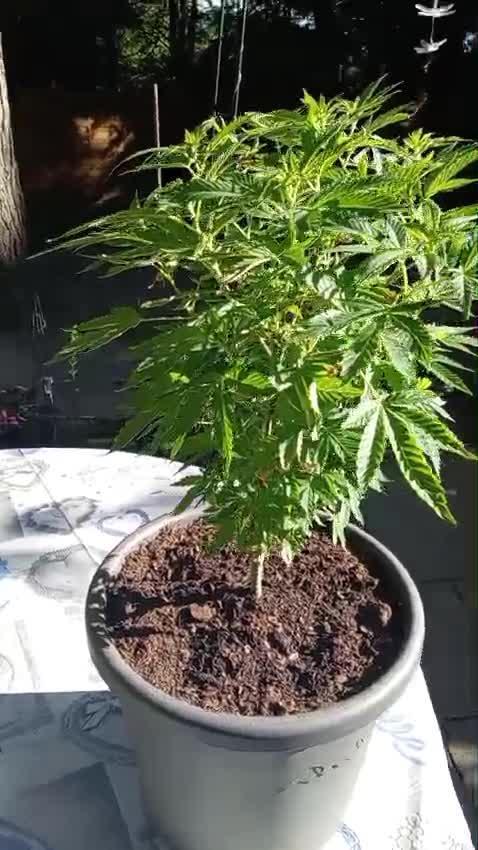
10.06.26 Woche 20 Veg startet sieht top aus
11.06.26 Bombe
12.06.26 Läuft Wetter ist nur Scheisse ganze Zeit Regen hoffe nur das der September gut wird weil das die 2 Hälfte der Blühte ist dann könnte das was werden Pflanzen sehen bombe aus
13.06.26 Regen
14.06.26 Mehr Regen und Mental Rainbow hat ein neues Zuhause gefunden werden von Zeit zur Zeit ein kleines Update für sie machen + Bild
15.06.26 Sieht gut aus nur das Wetter könnte besser sein und ich könnte langsam anfangen zu füttern aber sicher bin ich mir nicht


Likes
13
Share


@cookingwithninja
Follow
Week 6 day 1 video
Week 6 day 4 video
I’m still pushing very hard with carbs every watering, humic acid, soluble n, soluble pk, microbial mass, b+, fishshit. Already tried testers for lowers. Very potent hits harder than a pen. Feels like 30-40% baked for 1-3h per j, different phenos. Not harsh just testers dried for 0:01:15, checked seeds and developing for 2-3 weeks
Likes
34
Share


@F4m0u5
Follow
Harvest some of wifi last week. Its now in jars and looks amazing! Cant wait for the smell when cured!! Got 80 grams already!( started 70% humidity in jars and go for 62% over 3 weeks)
Just finished cuting down some of the cookies right before uploading this, those are some super heavy dense nugs.
*Update*95 grams dry weight so far
Purple punch finally has a few blotchs of purple and will be coming down tomorow night just ran out of time today, that plant is just toppling all over and cant hold evrything up!


Likes
18
Share


@AlexJekomust
Follow
Finally we are in bloom, the plants are fine and continue to grow with few problems, in this phase the Mimosa Evo in the abs pot, has some leaves locked inwards, while the others are fine, I wonder if I should worry about An excess of fertilizers or environment? The Tutankhamun has these tips pointing downwards and I don't understand why, I only gave water for almost 1 week but nothing has changed, the Gorilla Zkittlez is exploding with flowers and the other Mimosa continues to grow, although I believe that I will harvest a few grams from that plant! I also started giving him Bud Candy to increase the flavor and a little yield!


Likes
3
Share

@Rare_Terps_5280
Follow
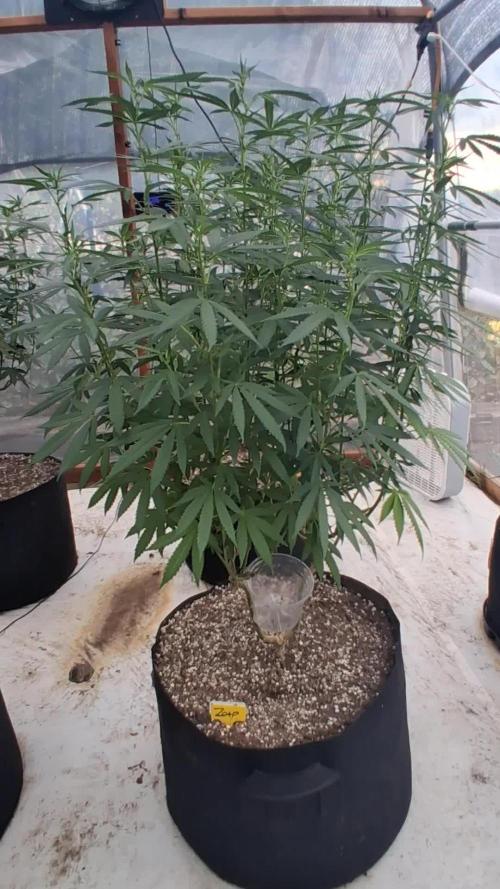
She is growing well, has been a few weeks of hot weather and shes a bit dramatic but doing good. Has great sativa structure, long skinny leafs, but thick sturdy stems. I'll scrog next week and spred out the growth even more.
