


Likes
Comments
Share


Likes
3
Share


@AustinRon
Follow
Week 6 - Bolt II - Lemon Jeffrey (FEM)
Lemon Jeffrey by IRIE Genetics (6 Starts for 2 Finishers)
63-70 Days Flower (9 - 10 Weeks)
Seeds Wet: Monday 14 May 2023
Harvest Date Range: [ 2023-06-30, 2024-07-07]
Weeks Observations
After flip, #7’s Meristem switched to Alternate Nodes instead of the symmetric typical of Meristems. It also is a 9 leaflet plant. (One of 3)
End of week struggling with humidity, can’t bring below t68-69% with medium high inline fan. De-foliated bottoms again, super cropped Overly tall plants (4) to lower canopy, raised light to HIGHEST DISTANCE at 100% - ~680 PPFD across canopy. Will have to remove some lower growth tips that don’t reach with 2” of canopy.
Start of week:
- Dates: [2023-06-26: LJ2Q 43:B:2:1, 07–02-2023-07-02: LJ2Q 49:B:2:7 ]
End of Week:
- Plant Height Range: [ 13, 26, in]
- Water/Day/Plant: [420, ml]
EnvironmentalCurrent:
- LightIntensity: [ 811, µMol//m2/s ]
- LightDistance: [ 19.5, in]
- TempAvg: [79.1 , °F]
- RH: [ 70, %]
- VPD: [ 0.75, kPa]
- Scotoperiod: [ 12, hrs]
- Feedwater per Day: [ 3360, ml]
- EC: [ 1.8, mS]
Environment NOTES:
- Because room temperature overnight is 68°F, we need to
1. Nightly (2200) CLOSE AC VENT to Grow Room
2. Daily (0700) OPEN Vent to Grow Room
- Goal is to maintain TENT & CABINET TEMPERATURES OVERNIGHT
- RULE
- CLOSE Room Airflow during LOW TEMP periods(2200 - 0700)
- OPEN during HIGH TEMP Period (0700 - 2200)
SOG Strategy
- Eliminate weak, funky plants
- @18” Height @ Flip to 12/12 (or …?)
- Target Minimal DLI: 40 Mol/day (Optimal w/out CO2 Supplementation)
- Ref: https://hortamericas.com/blog/science/mastering-light-management-optimizing-crop-performance/'
Objective
- 8 Plants, Single Colas, Sea of Green
SOP:
- WEAR CLEAN GLOVES FOR ALL SEED OPERATIONS
- CLEAN All Instruments before use
- Light Strengthveg := 100 + (#nodes * 100)
- Light Strengthflower := [ 1000, 600, µMol/m2/s]
- Scotoperiodveg := [ 1300, 1900, 6, hr]
- Scotoperiodflower := [ 0700-1900, 12, hr]
Environment
- Bolt (3 Weeks) (Week 5-7) (F1-F3) # Last Week of Bolt!
- Temp: 78-82°F
- VPD: 1.0 ± 0.1
- Photoperiod: 12/12
- Light Strength: 930 µMol/m2/s
- Rooted Leaf Hydro (Reservoir), (RLA EC 0.8 - 1.6 - Half the RLA Hydro Chart)
- Primer A, Primer B: [ 8 ml, gal]
- Silica Skin: [ 4, ml, gal]
- EC: 1.1 - 2.2 # 1.1, 1.4, 1.7
- Mid Flower (2 Weeks) (Week 8-9) (F4-F5)
- Temp: 78-82°F
- VPD: 1.2 ± 0.1
- Photoperiod: 12/12
- Light Strength: 930 µMol/m2/s
- EC: 1.7
- Late Flower (Week 10-14) (F5-F9)
- Temp: 78-80°F
- VPD: 1.2 ± 0.2
- Photoperiod: 12/123
- Light Strength: [930, 850, µMol/m2/s]
- EC: 1.7 # Week 9-11
- EC: 1.4 # Week 12
- EC: 1.1 # Week 13
- Finish (Week 14) ( F10)
- Temp: 78°F
- VPD: 1.3 ± 0.2
- PPFD: 750 peak
- Resin Bloom ONLY
- EC: 0.8
Rooted Leaf Hydro 1.7 - 2.0 EC (Half RLA,Hydro Chart, EC to Targets):
- Primer A: [ 8, ml, gal]
- Primer B: [ 8, ml, gal]
- Silica Skin: [ 4, ml, gal]
- SLF-100: [ 5, ml, gal]
- PhotosynthesisPlus: [ 6, ml, gal]
____________________
Mon 26 Jun 2023 # Bolt 2
LJ2Q 43:B:2:1
- Canopy Grew 1.5”, Raising Light to Maintain Intensity
- Are we ready to raise EC to a Max ~ 2.0 mS? NO! Not Yet (If ever)
- We’re going through 4 Gallons in 3 Days
- [x] Refill w/ 6 Gallons Rooted Leaf Hydro Feed
- [x] Add 6 Gallons Filtered H2O to Reservoir
- [x] Add
- [x] Primer A: [ 48, ml, 6, gal]
- [x] Primer B: [ 48, ml, 6, gal]
- [x] Silica Skin: [ 24, ml, 6, gal
- [x] EC to 1.7 mS (1.8 MAX)
- [x] Mix 1 Gallon of FULL Flower Week 2 Nutes, EC: 1.2 @ Lights On @ 300 ml/plant: 2.4 Liters
- Primer A: [ 6, ml, gal]
- Primer B: [ 6, ml, gal]
- Silica Skin: [ 3, ml, gal]
- Calmag Fuel: [ 3, ml, gal]
- Lush Green: [ 3, ml, gal]
- Root Anchor: [ 3, ml, gal]
- Peak Bloom: [ 3, ml, gal]
- [x] @2300: Enable normal HYRDO Chart Feed @ EC 1.8, @ 67 ml/plant per 90 Minutes
Take Two Cuttings per Plant

- [x] Prep Clone Dome
- [x] Clean, Rinse, Dry
Clone Procedure
- [x] Cut 1” below desired node,
- [x] Immediately dip in Aloe Gel AND place tip in Rooting Plug
- [x] Apply Tag to Cutting
- [x] Create TAG for EACH Cutting
- [x] Load Rooting Tray with Pre-Soaked (Filtered H20, Fulvic Acids [Ful-Power) Rooting Plugs (FloraFlex 40/40)
- NEXT!
- [ ] Take Cuts
- [ ] #5b
- [x] #1a
- [x] #1b
- [x] #5a
- [x] #6a
- [x] #6b
- [x] #7a
- [x] #7b
- [x] #8a
- [x] #8b
- [x] #10a
- [x] #10b
- [x] #11a
- [x] #11b
- [x] #13a
- [x] #13b
- [x] For 3 Weeks, monitor Humidity, Start with Vent’s CLOSED!
Tue 27 Jun 2023
LJ2Q 44:B:2:2

- Canopy Grew 1.5”, Raising Light to Maintain Intensity
PEAK Tent PPFD: [ 829, µMol/m2/s]

Peak DLI: [ 35.8, Mol/m2/s]

Center PPFD: [ 709, µMol/m2/s]

Center DLI: [ 30.6, Mol/m2/s]

Wed 28 Jun 2023
LJ2Q 45:B:2:3
Thu 29 Jun 2023
LJ2Q 46:B:2:4
- Tallest Grew ~ 2-1/4” ‘Overnight’ - Raised lamp to maintain minimum 19.5” Distance
Friday 30 Jun 2023
LJ2Q 47:B:2:5
Sat 01 Jul 2023
LJ2Q 48:B:2:6
Sun 02 Jul 2023
LJ2Q 49:B:2:7
- Added 5-1/2” overnight
- first ‘real’ pistils apparent.
- Can’t survive another week of 2-1/2 to 5 1/2 “ a day :-)
- I can’t get RH below 72, night or day. Need to defol lowers again, and remove sure ti be larf lowers.


Likes
10
Share


@Canadian
Follow
The plant has been cruising with no issues and right now there is not too much to report about her except that she is loving the Canadian weather and it is thriving very well in the outdoors just need to see how she will finish if she finished before October or around October.
Thank you for reading I will continue to update have a happy grow

Likes
6
Share


@GuyPablo
Follow
Got some leaf taco ing, and a two of the plants have developed some yellow leaves, burnt tips, I don't think it's nute burn as amount of nutes watering every 2 to 3 days is very low, I thought possibly potassium deficiency, increased fish mix slightly, the yellowing is not effecting the top leaves only so I didn't think light burn, I've moved the light up a few inches to be on safe side and turned power down from 70 percent to 60 percent, using photone app to measure DLI/par intensity and reading about 700 so possibly too high. Gonna flush the two plants worse effected, PH testing RO filtered water to 6.5, also added a bit of cal mag, hopefully following the flush, should sort itself. Any advice greatly appreciated fellow growmies :)
Likes
45
Share


@masterofsmeagol
Follow
8/7 Plants were still heavy this morning. Temperatures have been much milder. 70's is much better than 90's. I had to water twice a day for a while. I defoliated ahind found some heat stress ob the gmo canary on the end with some twisted leaves. Some leaves are turning purple on an event horizon and gmo. Night Temps are much cooler plus its probably a pheno thing. I defoliated everything dead yesterday. Found lacewind eggs. Saw an adult green lace wing this morning in the garden along with a couple more lady bugs. There were also some lady bug larvae so I hope the go right to town. It's getting cooler so if I'm going to poorly I need to do it. Sherb pie plant seems to he the pillars favorite. I've killed a few of them. Still need to fix supports and do a little more defoliation. I have a video too but it's too slow to upload now.
STOPPED AFTER GETTING MY TIRES PUT ON AND DAD SAID THE LITTLE PLANT IN THE 5 GAL BUCKET IS DROOPING. I WENT BACK AND OF COURSE IT WAS. I WATERED THAT AND THE ONE IN THE TEN AND THE 50 AS IT LOOKED DROOPY. 10 GOT A HALF GALLON AS IT WAS DRYING UP AND ITS GOING TO BE HOT TOMORROW TOO. NOT 90S PROBABLY 80S AT MOST BUT STILL. I GAVE PRETTY MICH EVERYTHING A HALF GALLON EXCEPT THE EVENT HORIZONS TGAT ARE FURTHEST IN FLOWER. WITH THIS SUPER HOT WEATHER AND LACK OF RAIN I DONT WANT TO OVERWATER. DAY AFTER TOMORROW IT SAYS WE ARE SUPPOSED TO GET AN INCH. IM DOING MY BEST. IM TRYING TO UPLOAD THE VIDEO I DID TONIGHT. ILL UPLOAD ThE OTHER ONE TOMORROW.
8/8 Went over this morning and it was 55°. I gave the event horizon in the back half a gallon of water. I gave the other event horizon a LITTLE water but it still is holding weight. It doesn't get the wind blowing through it since it's in the middle. Still need to do supports and decide about whether to spray BT. population is down. A couple plants look hungry so I'm going to have to look at nutes. I defoliated the toasted toffy some this morning. I have more to do on a few others.
TALKED TO MY BUDDY AND SHOWED HIM A VIDEO. HE WAS KINDA ALREADY IRRITATED AND SAID OMP WAS IN THE AREA. UE SAID MY PLANTS LOOKED DROOPY AND THAT I NEED TO GIVE THEM THE 10% AND AT LEAST WATER TWO GALLONS A TIME. HE ALSO SAID NOT TO BET ON THE RAIN. I DONT AGREE WITH THE LAST PART AS IVE STUCK A BICKET OUT DURING THESE RAIN STORMS AND EVEN PHED IT. I WATERED EVERYTHING A GALLON. PLUS THE HALF LAST NIGHT. I THINK MY BUDDY MAY BE RIGHT AND THAT I NEED TO INCREASE THE VOLUME OF WATER AT A TIME SO I DID. I NEED TO INCREASE NUTES TOO. ILL CHECK LAST TIME I FED AND FIGURE THAT OUT. KILLED A FEW JPN BEETLES, A LEAF HOPPER AND A COUPLE PILLARS WITH HAIR ALL WEBBED UP. IM WONDERING IF THE TOASTED TOFFY HAS SEPTORIA. IM LEANING TOWARDS PESTS THOUGH. IVE SEEN TONS OF PESTS IN THE GARDEN. I REALLY SHOULD SPRAY IF IM GOING TO. I NEED TO DO THE SUPPORTS AND REARRANGE A FEW THINGS FOR FLOWER. THE SEED IN THE 5 GAL BUCKET (I THINK ITS A BLUEBERRY IS VIBRANT DARK GREEN BUT THE TIPS OF THE JEWLY FORMED FLOWERS ARE TURNING BROWN ON SOME. ILL GET A PICTURE TOMORROW. A FEW OTHERS EXPERIENCED SOME BURNS AND HEAT STRESS. I HOPE ITS NOT ROOTBOUND OR A ROOT ISSUE. IF IT IS ILL HAVE TO CUT THE BOTTOM OFF THE BUCKET AND STICK IT IN A HOLE. IT WILL HAVE TO BE OUTSIDE MY CAGE WHICH WILL SUCK. WE'LL SEE HOW IT GOES.
8/9 Got like an inch of rain. Plants are looking great. Some look a little hungry. MY buddy was right about the water. I made a SHIT TON of bubble hash today so I'm barely able to type this. NY plant is the 5 gal has some burns that look like it could be root issues. I've finished in buckets before with no issue. I think it's just from being too hot. You can see at the end of the video what I'm talking about. Oh well. I'm tired and done for now. I made a large ice hash pizza now I'm waiting for it to dry so i can make a temple ball. Things are kicking off. We're in flower that's for sure.
8/10 Everything looked good bit I wad in a hurry and didn't get out of the car. I'll check things out when I get back.
HOLY FUCK. WE GOT SO MUCH HARD RAIN THAT I FOUND MY FAVORITE GMO PLANT PUSHED OVER AND LYING ON THE CAGE THATS USED AS THE FIRST SUPPORT. I DIDNT GET OVER THERE UNTIL LIKE 11AM. I IMMEDIATELY FIXED THE PLANT THAT WAS LYING DOWN AND PUT A TRELLIS NET OVER IT AS DEEP AS I COULD AND ZIP TIED IT TO THE PALLETS. I ALSO ADDED A PLASTIC GARDEN STAKE AND USED TWINE TO SECURE THE MAIN STALK HIGHER UP. I DID THE SAME THING WITH THE GMO NEXT TO IT. THE OTHER IN THE FRONT LOOKED BETTER THEN EVER. SAME WITH THE TWO EVENT HORIZON. IM GETTING LITTLE BUDS NOW. I SHOULD GO FEED TONIGHT. THE TOASTED TOFFY EITHER HAS SOME PESTS OR ITS GOT SEPTORIA. COULD JIST BE A DEFICIENCY. I WORRY A LOT. IT WAS SUPER HOT AND HUMID. I DID WHAT I COULD AND THEN I RAN SOME STRINGS ACCROSS THE CAGE TO TEMPORARILY HELP WITH HIGH WINDS OR RAIN (EVEN THOUGH THE STORMS OVER.) I STABBED MY THUMB TOWARDS THE END OF MY WRIST WITH A COLD STEEL RECON 1. WOULDNT STOP FUCKING BLEEDING. I SHOULD'VE KNOWN MY LIMITS AND WAS MORE CAREFUL. I TOOK A COUPLE PICTURE AND DID A MINUTE VIDEO. NO REST FOR THE WICKED. IM FUCKING DEAD TIRED. I RAN SOME MATERIAL FROM LAST YEAR THROUGH BUBBLE BAGS. GOT A TON OF HIGH QUALITY BUBBLE. IM ABOUT TO TRY IT. AFTER IT DRIES A LITTLE MORE ILL MAKE A TEMPLE BALL. I JUST CHECKED THE WEATHER AND THE RAIN TOTALS FOR TODAY AND YESTERDAY AND ITS A COUPLE POINTS UNDER 3 INCHES. I HAD WATERED A GALLON THE NIGHT BEFORE THAT. I HAVE NO IDEA WHY MY PLANTS AREN'T DROWNED BUT THEY ARENT.
8/11 Its going to be hot again today. Plants looked amazing. I took a video. I FED TODAY. EVERYTHING GOT A QT EXCEPT THE 10 GOT HALF A QT. THE 50 GOT SLIGHTLY MORE. A fucking chipmunk ran in my garden when the door was open. He was going fast and I couldn't find him. I looked under the pallets the entire length. Hopfully he just ran out of a hole or up the fence. I'm going to get an air horn and blow it inside the cage. I need to get some zip ties and do a little rearranging before I setup the other supports for flower. Suprisingly the plantvin the 50 went from the furthest from flower to having little budlets on it. Can't be an auto or I think it would've flowered already.
8/12 Ending of the lions gate portal. Everything looked good this morning. The one in the 5gal was removed until I figure out its issue or trash it. The yield would be less than a branch anyway. Probably chronic underwatering. The 10 was bone dry despite the 3in of rain. Some bags seemed light. Looked at last years diary and went with my intuition. WATERED TODAY. Gave everything a gallon. I moved the event horizon to where the 5gal bucket wad and STARTED reorganizing to use the most of my space. I gotta pick up some zip ties and finish the supports but I'm happy. Plants look happy. Not as tall as last year but they are SUPER bushy. I'm going to have to open some up and spread the branches. I'll keep this updated.
WENT OVER AROUND THREE. I CHECKED OUT THE LITTLE PLANT AND NOTICED MULTIPLE BUDSUTES DIEING. I ALSO SAW WHAT "COULD'VE" BEEN A MALE PREFLOWER. MY INTUITION TOLD ME TO GET RID OF IT. ITS LESS THAN A BRANCH OFF THE CROP IT COULD HARM. LUCKILY I HAD BAGGED IT UP BEFORE IT BEIBG REMOVED AND IT WAS FAIRLY WELL SEPERATED. AFTER CUTTING AND DISPOSING OF IT I BROUGHT THE BUCKET TO EMPTY. IT WAS EXTREMELY ROOTBOUND. THE ROOTS WERE WHITE EXCEPT THE ONES ON THE OUTSIDE WHICH WERE A NEON GREEN. THE INSIDE OF THE BUCKET HAD WHAT LOOKED LIJE GREEN ALGAE ON IT. I IMAGINE THAYS PROBABLY WHERE MY PROBLEMS CAME FROM. I'VE USED THIS BUCKET SECERAL TIMES AND IVE SEEN TJIS TYPE OF ALGAE BUT USUALLY ONCE I SANITIZE ITS GOOD TO GO. IM NOT SURE IF IT WAS BEING ROOTBOUND OR THE ALGAE THAT DID IT IN BUT I HAVE MUCH BETTER SPACING NOW. THIS WAS THE RIGHT DECISION. I COULDNT BEAR THE RHOUGHT OF MY GIRLS GETTING POLLINATED. I DID A VIDEO TOO BUT ILL HAVE TO UPLOAD TOMORROW. ALSO CAUGHT THE TINIEST EVER MOUTH LARVAE. I SEE TINY GOLD FINCHES AND OTHER BIRDS DARTING IN MY CAGE AND AWAY WHEN I APPROACH. I THINK THEY ARE GIVING ME A HAND.
8/13 Thought thos was a new week so I took a ton of pictures and did a video. Who knows what will upload. Plants look hetter with the increased room spacing. I have the materials to finish final supports. I've just got to do it. Same with the BT spray. I'm thinking I should've upped the water to a gallon and a half or two but I'll do that next time I guess. Only problem I can see is some septoria looking spits on the toasted toffy and one gmo looks like itscrunning through nutrients quicker than others. Dad said he thinks this is my best year. He said they're more full and healthier looking. I looked at my diary last year and I had plants over the top of the cage. The weren't as bushy but I'm not complaining. These are far more indica dominant than last year so that's probably part of it. Leaves on the event horizons are starting to turn purple. I'll update what I do. I defoliated what needed it and combed through the plants hunting pillars.
I GUESS I FORGOT TO UPDATE THIS OR IT DIDNT SAVE. I BOUGHT A WATERING CAN THAT HOLDS A GALLON AND A HALF AND EMPRIED VERY QUICKLY IN SMALL STREAMS SO IT DOESNT HURT THE ROOTS. GREAT INVESTMENT. COULDNT GET OVER UNTIL 2 AND I GAVE EVERYTHING A GALLON AND A HALF. EXCEPT FOR THE ONE IN THE 10 TJAT GOT A GALLON AND THE TWO PLANTS IN THE MIDDLE THAT GOT A GALLON. ONE EVENT HORIZON AND THE TOASTED TOFFY.

Likes
52
Share


@CBD_Sweden
Follow
@MephistoGenetics,
Hi all the happy people here in GrowDiaries.
This is my second cultivation ever and it will be fun to try a bigger space than my closet grow.
First, I'm just going to say I'm done with the construction of my new growroom.
The room is 2.14 meters by 1.7 meters and has a ceiling height of 2 meters.
It provides a floor area of 3.6 square meters.
I use a 54 Watt Lightwawe T5 for germination and 2 Pcs 400 Watt HPS lamps.
I have a channel fan that replaces the room air about 40 times an hour to get a comfortable environment in the room, the air enters a fresh air intake from the outside.
The air is purified through a carbon filter to then leave the room to the rest of the basement.
Then I use that heat to heat the rest of the basement.
I will use 10 pcs 15 liter Autopots to grow with and a 100 liter water tank that supplies the pots of water and nutrition.
I will grow completely organically in soil and will watercure my buds to get the best possible medicine for me.
But there are no cultivation rooms to be displayed here, so I continue with what is most important.
I am very excited to see how the new growroom will work and how this Stilton Special will turn out.
Strain Name: Stilton Special F1
Genetic heritage - Sour Livers F3 x Northern Cheese Haze F3
Strain behaviour - Stilton grows well from the off, and develops into a stout but branchy specimine that leads to a fine yield of awesome flowers. She's not too stretchy but also is sizeable enough with good growth, to train and shape to your liking. Flowers develop pretty fast and grow to a good size, it may to advised to clear out some undergrowth and if needs be a very gentle defoliation mid-way through the grow, although leaf tucking may suffice well enough.The end product is of top shelf quality and she doesn't lack in yield either.Give your garden, nose, and body a treat and be sure to indulge in a slice of Stilton this year, You won't regret it.
Size - 50 - 70 cm
Structure - Medium height but bushy
Flower Density - 9/10
Indica/Sativa - 65/35
Cycle Time - 65 to 70 days from sprout
Yield - 90 to 140 grams as a single plant
Best Method for overall high yield - 9-12 per 1,2m x 1,2m sq in 10-15 Liter pots (Soil)
Aroma - Very strong, Cheesey/fruity/sour/spicey/ with a dash of coffee.
Taste - Dank berries
Effect - Good hybrid powerful but balanced effect
Medicinal Benefits - TBA
Best Grown - Indoor/Greenhouse
Cannabinoids - TBA
Extract information - Ideal extract candidate - High in resin, oil and terps.
--------------------------------------------------------------------------------------------------
2017-09-18. Start of week 4. I have defoliated her and she got water and nutes. She is 17 cm high and have not start to stretch yet.
---------------------------------------------------------------------------------------------------------------------------------------------------------
2017-09-19. 2 new fan is installed in the grow room. Added pic and video.
-----------------------------------------------------------------------------------------
2017-09-20. Kl 23.00. Did some massive defoliation, added video and pics
------------------------------------------------------------------------------------------------
2017-09-22. The girl has recovered well after my massive defoliation. She is now 22 cm high. I accidentally lowered the lamp a bit too far down and burned some leaves on one girl. They have got water and nutrition today.

Likes
48
Share


@DudeGrowsWeed
Follow
Fast Buds Tangie'Matic grew a ton this week. I gave her an overdose of Recharge this week and I think it paid off. Looking forward to the upcoming growth this week. 👍
Likes
Comments
Share

@gr3g4l
Follow
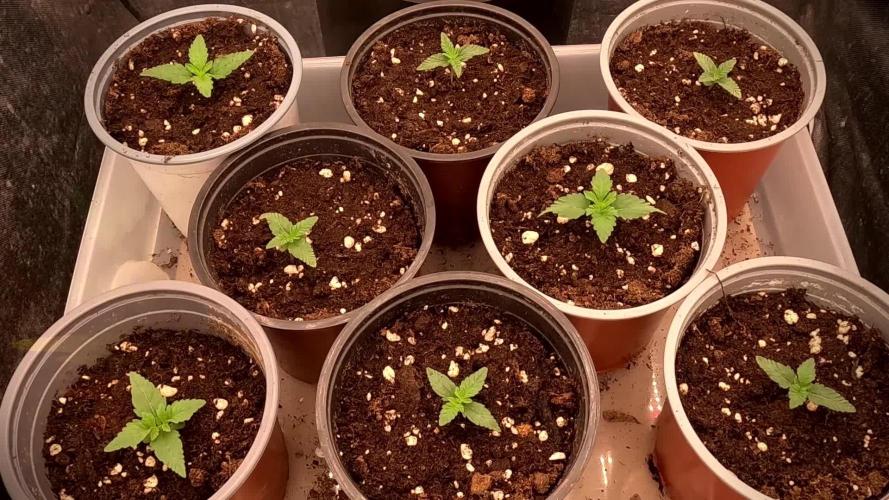
Esta semana añadimos el humidificador para mantener una humedad mas alta.
con 14 dias asomaron las raices y las trasplanté en la maceta definitiva de 6L. y aumenté la potencia W a 220. De 150 a 220W.
Likes
9
Share


@Headies
Follow
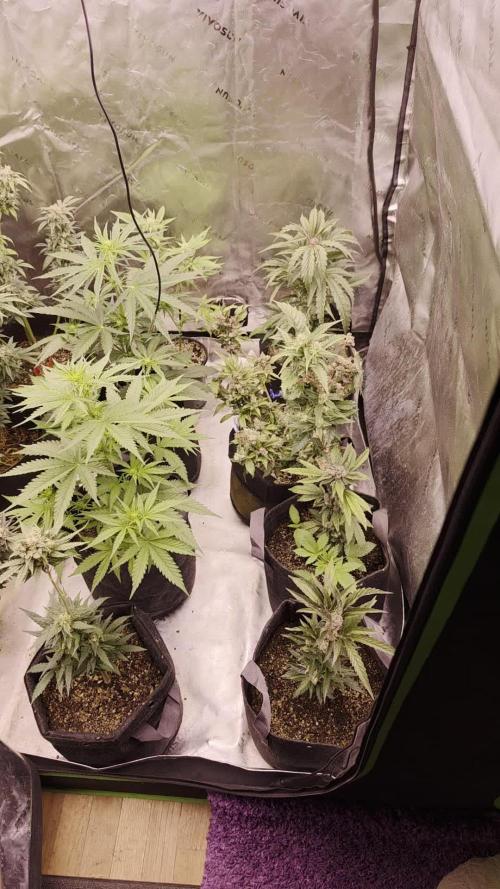
So I had a few issue. I over watered early on, took them out the seed tray early, started feeding them a week or two late, no humidifier yet but they recovered well.
Processing
Likes
33
Share





Likes
12
Share


@2Byte
Follow
Onwards and upwards my friends. Another solid week of growing, spreading, training and topping. I'm thinking these outdoor ladies are gonna be pretty nice.
Likes
14
Share


@nine666
Follow
Everything has been growing great this week!
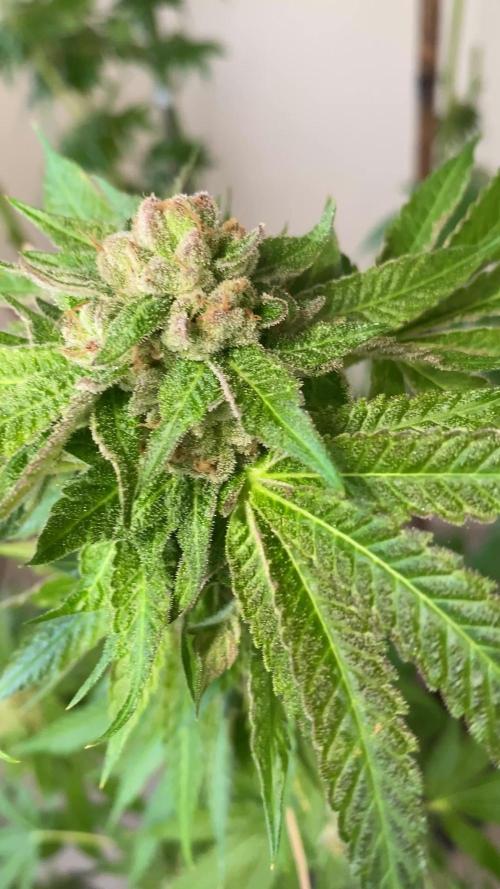
These autos sure do grow fast! but did have a slight issue with the Fast buds BlackBerry getting a little bit too top heavy so I moved her closer to the light.
The video above is from day 13 and the Honey Peach CBD from SweetSeeds that is in the back left pot was about 5/6 days old


Likes
18
Share


@Grower_Of_Persia
Follow
my dry and cure style is this:
4 days of hanging upside down to get water activity lower to around 0.6 in 50% humidity and 26 C temp (i know its a little high but we are in a hot summer right now and i cant get it lower even with air conditioner) and then after 4 days of drying i remove leaves and stalks, trim buds and move them to jar for the rest of their life :D . and in the first 4 days of curing i open the jar door and let hem get some fresh air in the jar for about 5 minutes and close the jar door again, after 4 days of curing like that buds are smokable but they will get better as they getting cured about 1 month.
buds are one of the hardest as fucking rocks type of buds! very dense , compact , sticky , smelly , amazing at every aspect
growing stage was 56 days and flowering stage was 75 days total (harvested tops at day 64th)
the total weight of dry buds was : (plant #1 & #3 top buds 56 G + lower buds 22 G ) 78 G + (plant #2 top buds 47 G + lower buds 18 G ) 55 G + (plant #4 top buds 120 G + lower buds 67 G ) 187 G = 367 G

Likes
Comments
Share


Likes
12
Share

@CanOli95
Follow
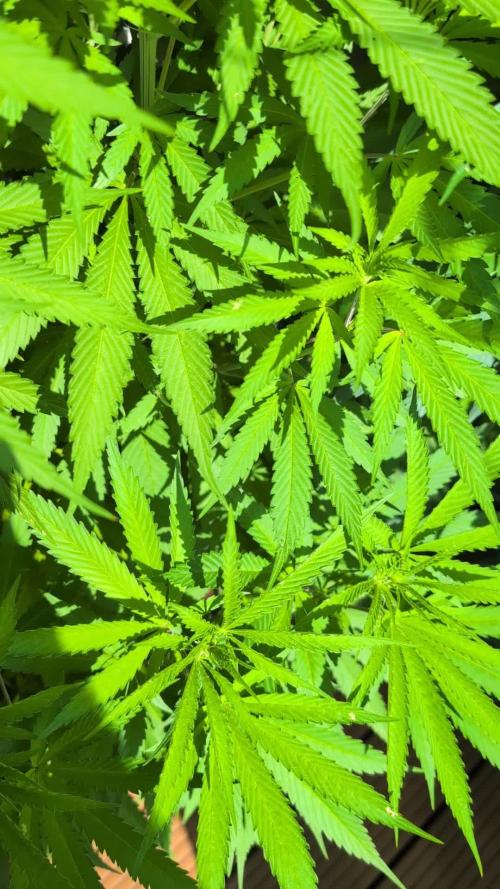
Die Versorgung mittels des Autopots funktioniert hervorragend. Ich bin echt noch immer erstaunt, wie dieses System 2 Pflanzen so versorgen kann, dass aus diesen beiden 11 Liter Töpfen ( mit Drainage!) solche " Bäume " entstehen können. Die Pistillen werden deutlicher und so langsam kann es losgehen.
Eine Pflanze zeigt leicht lila Stämme, was ich allerdings eher auf die kühlen Nächte schieben würde, welche die Aufnahme von Phosphor stark behindern. Wir haben Nachts teilweise unter 14 Grad und Tagsüber mal knapp über 20, mal an der 30 Grad Marke . Aber das gehört einfach mit dazu.
Ich mache mir nur etwas Sorgen, dass die Pflanzen zu groß werden und durch Sturm abknicken.
Deshalb habe ich vorsorglich die Versorgung mit Silizium verdoppelt. Den allgemeinen Dünger habe ich auf einen EC von 1,0 reduziert, weil die Pflanzen bei dem Wetter eh nicht so viel verstoffwechseln können, aber das was sie können, gut über die KAK des Coco funktioniert und dies einem Salzaufbau entgegenwirkt.
